


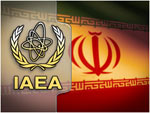
 Reuters: The U.N. atomic watchdog is expected to spell out in more detail soon the reasons for its growing concern that Iran may be working covertly to develop a nuclear missile, diplomats say.
By Fredrik Dahl
VIENNA (Reuters) – The U.N. atomic watchdog is expected to spell out in more detail soon the reasons for its growing concern that Iran may be working covertly to develop a nuclear missile, diplomats say.
Such a move by the International Atomic Energy Agency, possibly in a new quarterly report on Iran due early next month, could raise pressure on Tehran and offer more arguments for Western powers to tighten sanctions on the major oil producer.
The United States and its allies have urged IAEA Director General Yukiya Amano to declare plainly whether he believes that there have been military aspects to Tehran’s nuclear activities and whether such work may still be going on.
It remains to be seen whether the report’s conclusion will be sufficiently clear-cut to prompt the agency’s 35-nation board of governors to take action at a November 17-18 meeting, possibly by reporting Iran once again to the U.N. Security Council.
“Many countries have called on Amano to give his best possible assessment of the possible military dimension of Iran’s nuclear program,” one Western envoy said.
But it is hard to know now what Amano will say and it is “much too early to make a judgement” on whether it could provide the basis for referring the issue to the Security Council in New York, as happened in 2006, the diplomat added.
A divided board decided in June to report Syria, Iran’s ally, to the Security Council for stonewalling an IAEA probe into a suspected reactor site that was bombed by Israel in 2007.
Russia and China opposed the U.S.-led diplomatic crackdown on Syria, highlighting big power rifts that the West would want to avoid in any similar IAEA board vote on Iran.
“Russia and China appear to be in no mood for imposing additional pressure on Iran without a pressing reason for concern,” said Ali Vaez, an Iran expert at the Federation of American Scientists think-tank.
Iran says it is enriching uranium solely for peaceful electricity generation. But its history of concealing sensitive nuclear activity, continued restrictions on access for IAEA inspectors and its refusal to suspend work that also can also yield atomic bombs have drawn four rounds of U.N. sanctions, as well as separate U.S. and European punitive steps.
Western analysts and diplomats say Iran has no logical civilian use for the enriched uranium it is stockpiling because it would take many years for it to launch even one of a series of nuclear power stations it says it is planning.
Iran’s only existing nuclear power plant, at Bushehr, was built by Russia and is fuelled by Russian enriched uranium.
Pierre Goldschmidt, a former IAEA deputy director general, said Iran’s “nuclear-related activities and uncooperative behaviour make more sense if their objective is to become a nuclear threshold state rather than developing an exclusively peaceful nuclear program.”
SUPREME LEADER’S THINKING?
Amano said last month that he was “increasingly concerned” about possible activity in Iran to develop a nuclear payload for a missile and that the agency continued to receive information adding to those fears.
The veteran Japanese diplomat, who has taken a more pointed approach to Iran than his predecessor Mohamed ElBaradei, said he planned to “set out in greater detail the basis for the agency’s concerns,” in order to keep member states informed.
For several years, the IAEA has been investigating Western intelligence reports indicating Iran has melded efforts to process uranium, test explosives at high altitude and revamp a ballistic missile cone to accommodate a nuclear warhead.
Nuclear expert Greg Thielmann said he hoped the IAEA would provide more clarity about the timeline of the information it has received, and also about the number of sources.
A controversial 2007 U.S. National Intelligence Estimate assessed with “high confidence” that Iran halted a nuclear weapons program in 2003 and with “moderate confidence” it had not been restarted as of mid-2007.
Many conservative foreign policy experts criticized the 2007 report as inaccurate and naive, and U.S. intelligence agencies now believe Iranian leaders have resumed closed-door debates over the last four years about whether to build a nuclear bomb.
Thielmann said he suspected that any military dimensions of Iran’s nuclear program were “quite compartmentalized” and that not even all those contributing to any such an effort would know about the ultimate purposes of their work.
“But the most difficult intelligence challenge is getting into the mind of the Supreme Leader,” Thielmann said, referring to Ayatollah Ali Khamenei, Iran’s highest authority.
“He would be the one to make the critical decisions and my guess is that he has approved development of a nuclear weapon breakout option, but has not yet decided to go all the way,” said Thielmann, of the U.S.-based Arms Control Association.
(Editing by Mark Heinrich)


