


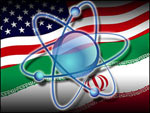
 Washington Post: New U.S. sanctions have broadened the front in the West’s escalating economic conflict with Iran, targeting large swaths of the country’s industrial infrastructure even as Iranian leaders are indicating a willingness to resume negotiations on the country’s nuclear program.
The Washington Post
By Joby Warrick
New U.S. sanctions have broadened the front in the West’s escalating economic conflict with Iran, targeting large swaths of the country’s industrial infrastructure even as Iranian leaders are indicating a willingness to resume negotiations on the country’s nuclear program.
With Iran’s economy already reeling from previous sanctions, the new measures passed by Congress and signed by President Obama last week are intended to deliver powerful blows against key industries ranging from shipping and ports-management to the government-controlled news media, congressional officials and economic experts say.
While some previous U.S. sanctions targeted individuals and firms linked to Iran’s nuclear industry, the new policies are closer to a true trade embargo, designed to systematically attack and undercut Iran’s major financial pillars and threaten the country with economic collapse, the officials say.
“This is effectively blacklisting whole sectors of the Iranian economy,” said Mark Dubowitz, executive director of the Foundation for the Defense of Democracy, a think tank. “The goal is to create a chilling effect on all nonhumanitarian commercial trade with Iran.”
By broadening the focus to entire industries, the new effort is intended to make it harder for Iran to evade sanctions through front operations, a time-honored practice in the Islamic republic, said Dubowitz, author of several studies on sanctions policy. “It was a game of whack-a-mole that the United States could never win,” he said.
The tightening of the economic noose comes amid new signs that Iran may be ready to resume negotiations with the United States and other world powers on possible limits to its nuclear program. Iran’s top nuclear negotiator said on Friday that his government had agreed to new talks that would likely take place this month, although the date and location remained unclear.
“We have accepted that these talks should be held in January,” Saeed Jalili, president of Iran’s Supreme National Security Council, told reporters during a visit to the Indian capital, New Delhi.
A spokesman for the European Union, which facilitated three previous rounds of nuclear talks last year, confirmed that new negotiations were expected “very soon.”
Iranian officials in recent weeks have been unusually candid in acknowledging the extraordinary toll of Western sanctions on the country’s economy. The country’s currency has shed more than 40 percent of its value since August, while exports of petroleum — Iran’s chief source of hard currency — have fallen by half.
But Iran has refused so far to accept significant cuts in its nuclear program, prompting a race by Congress to find even more painful measures. The latest package of sanctions drew rare bipartisan backing in both house of Congress, despite initial qualms by Obama administration officials who feared that some of the sanctions would harm allied governments and undermine support for what has been a largely successful international effort to isolate Iran.
The new law imposes sanctions against international companies that do business with Iranian firms in the targeted industrial sectors, and also seeks to block Iran from obtaining aluminum, steel, coal and other materials critical for construction and vehicle manufacturing. It seeks to block Iran from engaging in barter trade with other countries for its oil, and imposes sanctions on some state-run media organizations.
Despite reservations, Obama signed the measure, which had been attached to a defense spending bill passed in the waning hours of the 112th Congress. Admistration officials said the new sanctions would be implemented within the 180 days required by Congress.
“We’ll obviously implement the letter and the spirit of the law to the best of our ability,” State Department spokeswoman Victoria Nuland said.
U.S. sanctions policy has come under criticism from various groups, some of whom argue that the such measures are counterproductive and disproportionately harmful to ordinary Iranians. Others have argued that they are not strong enough to deter Iran’s nuclear progress and advocate tougher measures, including military action.
The Obama administration is under pressure to reach a deal with Iran that would severely limit its ability to use its nuclear facitlities to make nuclear weapons. Last month a group of 24 prominent U.S. diplomats, policy experts and national security officials urged Obama in a letter to “pursue a robust diplomatic initiative” in the coming weeks to fulfill his campaign pledge to resolve the Iranian nuclear impassed.
“Behind the tough rhetoric that continues to emanate from both sides, there are also hidden signals of greater readiness to embrace a compromise that accepts the other’s red line,” said Trita Parsi, president of the National Iranian American Council and one of the signers of the document.
Sanctions continue to have a deep impact on Iran’s economy, but not to the point of creating widespread poverty or inspiring protests as some have predicted.
Iran’s rial dropped sharply in value against the dollar in October, losing more than half its value in less than a month. Since then, the country’s financial difficulties have increased and there has been a slow slide toward lower consumer spending and higher unemployment.
The automobile industry has seen a 40% decrease in production since last year. Medical imports have taken a particularly big hit and the cost of many essential treatments have more than doubled.
Food, however, is generally available, if more expensive, as price controls remain in place for the most basic goods such as bread and cooking oil.
Jason Rezainan contributed from Tehran.


