


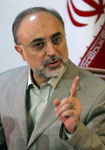
 Reuters: Iran will have no choice but to step up its uranium enrichment if a bill now moving through parliament is approved, even though it has no current need for such highly-enriched uranium, its nuclear chief said on Saturday.
By Babak Dehghanpisheh
BEIRUT (Reuters) – Iran will have no choice but to step up its uranium enrichment if a bill now moving through parliament is approved, even though it has no current need for such highly-enriched uranium, its nuclear chief said on Saturday.
The bill has received expressions of support from at least 218 of parliament’s 290 members and, if passed, could threaten progress toward a resolution of Iran’s long-running row with the international community over its nuclear program, on which a landmark interim agreement was struck last November.
The parliament is much more hawkish than Iran’s new president Hassan Rouhani on the nuclear issue, although some see the proposal, put forward last month, as a response to a bill introduced by conservatives in the U.S. Senate that would impose new sanctions on Iran.
Iran has stockpiles of uranium enriched to 5 percent fissile purity, sufficient for nuclear power stations, and 20 percent, of great concern to major powers because it is a relatively short technical step from weapons-grade.
The bill would call for enrichment to 60 percent, sufficient for use in the reactors that power nuclear submarines. Iran says it plans to build one of these, but the think-tank GlobalSecurity.org says this would require a vast leap in Iran’s manufacturing capacity.
Salehi told the Iranian Jaam-e-Jam network in an interview that Iran did not currently need such highly-enriched uranium, according to the state news agency IRNA.
But he added: “If the members of parliament see that it’s in the interests of the country that 60 percent enrichment could be useful, and they turn this desire into a law, then we will have no choice but to obey.”
The semi-official Fars News agency said lawmakers were scheduled to discuss the bill next week.
Under the terms of the interim deal struck with the United States, Russia, China, Germany, France and Britain, Iran must limit its high-level enrichment for a period of six months in exchange for relief from some international sanctions.
The deal is meant to buy time for a full pact to be agreed to end more than a decade of tension over Western concerns that Iran may be trying to develop an atomic weapons capacity under cover of a program that it says is wholly peaceful.
Salehi, appointed by Rouhani, made clear that he favored a negotiated deal:
“Overall, there’s no option other than coming to an agreement. The next choice would be disagreeing, which would not benefit us, them, the region or anyone else.”
Separately, Iranian Foreign Minister Mohammad Javad Zarif has invited European Union foreign policy chief Catherine Ashton, who liaises with Tehran on behalf of the six powers, to visit Iran, Deputy Foreign Minister Abbas Araqchi told the Mehr News agency.
Ashton’s spokesman, Michael Mann, said she “noted with interest” the reports of a possible invitation, adding that Ashton “has already indicated that she intends to visit Tehran as the work towards a comprehensive agreement progresses”.
(Additional reporting by Justyna Pawlak in Brussels; Editing by Kevin Liffey)


