


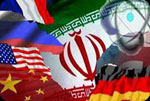
 AP: Iran has agreed to limit uranium enrichment and to open its nuclear program to daily inspection by international experts starting Jan. 20, setting the clock running on a six-month deadline for a final nuclear agreement, officials said.
The Associated Press
By Nasser Karimi
TEHRAN, Iran (AP) — Iran has agreed to limit uranium enrichment and to open its nuclear program to daily inspection by international experts starting Jan. 20, setting the clock running on a six-month deadline for a final nuclear agreement, officials said.
In exchange, the Islamic Republic will get a relaxation of the financial sanctions that have been crippling its economy.
The announcement that Iran and six world powers had agreed on the plan for implementing an interim agreement came first from Iranian officials and was later confirmed elsewhere. Some U.S. lawmakers have been leery of the agreement, calling for tougher sanctions against Iran, rather than any loosening of controls.
Iran’s official IRNA news agency on Sunday quoted Iranian Deputy Foreign Minister Abbas Araghchi as saying the deal, which sets the terms of a landmark agreement reached in November, would take effect from Jan. 20. IRNA said Iran will grant the United Nations’ watchdog – the International Atomic Energy Agency – access to its nuclear facilities and its centrifuge production lines to confirm it is complying with terms of the deal.
Araghchi later told state television that some $4.2 billion in seized oil revenue would be released under the deal. Senior officials in President Barack Obama’s administration put the total relief figure at $7 billion.
In a statement, Obama welcomed the deal, saying it “will advance our goal of preventing Iran from obtaining a nuclear weapon.”
“I have no illusions about how hard it will be to achieve this objective, but for the sake of our national security and the peace and security of the world, now is the time to give diplomacy a chance to succeed,” Obama said.
Under the November agreement, Iran agreed to limit its uranium enrichment to 5 percent – the grade commonly used to power reactors. The deal also commits Iran to stop producing 20 percent enriched uranium – which is only a technical step away from weapons-grade material – and to neutralize its 20 percent stockpile over the six months.
In exchange, economic sanctions Iran faces would be eased for six months. During that time, the so-called P5+1 world powers – Britain, China, France, Germany, Russia and the United States – would continue negotiations with Iran on a permanent deal.
The West fears Iran’s nuclear program could allow it to build a nuclear bomb. Iran says its program is for peaceful purposes, such as medical research and power generation. Iran’s semi-official ISNA news agency reported Sunday that under the terms of the deal, Iran will guarantee that it won’t try to attain nuclear arms “under any circumstance.” However, Araghchi stressed Iran could resume production of 20 percent uranium in “one day” if it chose.
The senior U.S. officials said U.N. inspectors would have daily access to Iranian nuclear sites and would make monthly reports. Iran will dilute half of its nuclear material during the first three months of the agreement, the officials said, and all of it by the end of the agreement.
In exchange, Iran would have access to parts for its civilian aviation and automotive industries. Iran also would be allowed to import and export gold, as well as export petrochemicals, the officials said. The deal also gives Iran access to international humanitarian and medical supplies, though Iran still could not use U.S. banks and the majority of sanctions would remain in place, they said.
The senior U.S. officials spoke on the condition of anonymity because the specific terms of the agreement were not released publicly.
European Union negotiator Catherine Ashton praised the deal in a statement, saying “the foundations for a coherent, robust and smooth implementation … have been laid.” German Foreign Minister Frank-Walter Steinmeier called the deal “a decisive step forward which we can build on.”
U.S. Secretary of State John Kerry also welcomed the deal in a statement, saying further negotiations “represent the best chance we have to resolve this critical national security issue peacefully, and durably.”
But Kerry cautioned that despite a fledgling detente with Iran, the nuclear negotiations have all but exhausted both sides’ time, keeping them from being able to work on other shared global interests, including the civil war in Syria.
“We have been so focused and so intent on the nuclear file that we really have not dug into (Syria) in any appreciably substantive way,” Kerry told reporters in Paris, where he was meeting with other Western foreign ministers and the head of the main moderate opposition group, which is seeking to oust Syrian President Bashar Assad, ahead of peace talks scheduled in just over a week in Switzerland. Iran is the main backer of Assad’s regime.
Suspicions remain high in both Tehran and Washington after decades of hostility dating back to the 1979 Islamic Revolution in Iran that ousted the U.S.-backed shah dynasty. Iran’s new reformist president, Hassan Rouhani, has reached out to the West, but must depend on support from Iran’s top decision-maker, Supreme Leader Ayatollah Ali Khamenei, for his initiatives amid criticism from hard-line factions.
Obama must fend off efforts by U.S. lawmakers, including many of his fellow Democrats, who want to pass new sanctions legislation. The measure proposes to blacklist several Iranian industrial sectors and ban banks and companies around the world from the U.S. market if they help Iran export any more oil. The provisions would only take effect if Tehran violates the interim nuclear deal or lets it expire without a follow-up accord.
However, that has caused anxiety in Iran, where hard-liners have already called the deal a “poison chalice” and are threatening legislation to increase uranium enrichment. Araghchi also said any new sanctions would halt the deal.
In his statement, Obama said “unprecedented sanctions and tough diplomacy helped to bring Iran to the negotiating table,” but cautioned against implementing any more.
“Imposing additional sanctions now will only risk derailing our efforts to resolve this issue peacefully, and I will veto any legislation enacting new sanctions during the negotiation,” he said.
—
Associated Press writers Philip Elliot in Washington, John-Thor Dahlberg in Brussels, Geir Moulson in Berlin, Lara Jakes in Paris and Jon Gambrell in Cairo contributed to this report.


