


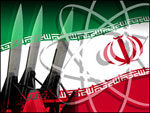
 Daily Caller: A founder of Iran’s Revolutionary Guards now admits that the Islamic Republic was seeking to acquire nuclear weapons. This is the first time any regime official has made such an admission, even as another report claims that one of Iran’s most radical clerics was the spiritual overseer of the nuclear weapons program.
The Daily Caller
A founder of Iran’s Revolutionary Guards now admits that the Islamic Republic was seeking to acquire nuclear weapons. This is the first time any regime official has made such an admission, even as another report claims that one of Iran’s most radical clerics was the spiritual overseer of the nuclear weapons program.
“We pursued ways in order to gain nuclear arms,” Gen. Mohsen Rafiqdoost told the regime’s Mehr News on Saturday. “I asked Imam [Ayatollah Ruhollah Khomeini] what his opinion was. He said do not pursue atoms, and we stopped.”
But that claim falls short of the truth. In the late 1980s, a letter by Mohsen Rezaei, then the chief commander of the Guards, asking Khomeini, the founder of the Islamic Revolution, for approval of the nuclear bomb program was revealed. It showed the leader had approved of seeking nuclear weapons.
Rafiqdoost became the first minister of the Guards and was in charge of purchasing arms on the black market.
Iranian officials have for a long time denied that there ever was a nuclear bomb program and have consistently insisted that the country’s nuclear program is for peaceful purposes to help feed its only existing nuclear power plant and ones the country plans to build.
This author, who spied for the CIA in the Revolutionary Guards, revealed in the book “A Time to Betray” that during the Iran-Iraq war in the 1980s, the Guards’ intelligence division had received information that Iraq’s Saddam Hussein was trying to acquire nuclear weapons. That’s when Rezaei received Khomeini’s approval to do likewise. Another Guard commander, Ali Shamkhani, then approached Abdul Qadeer Khan, the father of Pakistan’s nuclear bomb, offering billions of dollars, which helped access the nuclear blueprint and Iran’s first centrifuges.
After this revelation and publication of the book, the Islamic regime, through its daily paper Aftab, published an article about this author calling the revelations “a plot against the Islamic regime of Iran by the CIA.” However, it refused to deny that the country was seeking nuclear bombs.
Two weeks later, Ali Akbar Velayati, the special adviser to the regime’s new supreme leader, Ayatollah Ali Khamenei, said in an interview with the Iranian weekly Panjereh that Iran bought its first centrifuges from Pakistan in 1986 and then transported them in Khomeini’s private jet.
Rafiqdoost is involved in funding terrorism through drug trafficking, and it’s been reported that one of his companies transfers drugs in small packages from Iran via boats and airplanes to Albania, Romania and Bulgaria. These packages are then distributed throughout Western Europe in trucks belonging to Albanian and Romanian companies. Reports suggest that the Guards’ drug operation nets $20 billion annually.
Several years after the 1983 Marine Corps Barracks bombing in Beirut that killed 241 American servicemen, Rafiqdoost boasted, “Both the TNT and the ideology, which in one blast sent to hell 400 officers, NCOs, and soldiers at the Marines’ headquarters, were provided by Iran.”
Meanwhile, another report out of Iran suggests that one of Islamic regime’s most radical Shiite clerics, who reputedly had the attention of the 12th Imam, was the spiritual father of Iran’s nuclear program. (Shiite clerics, who are the de facto rulers of Iran, believe that Mahdi, who was born in 869, will descend to earth at the time of Armageddon.)
Rasa, an Islamic regime media outlet, reports that Ayatollah Rouhollah Gharahi, who teaches jurisprudence and philosophy in the country’s seminary, stated that, “Ayatollah Azizollah Khoshvaght was the spiritual father of the Islamic regime’s nuclear program who advised the country’s nuclear scientists.”
“The nuclear scientists would approach Ayatollah Khoshvaght and at times would state that they were facing a problem. [Khoshvaght] would tell them something to go and do certain things, telling them that they would have no problems. Ayatollah Khoshvaght had the special attention of the 12th Imam.”
The regime’s clerical establishment believes that soon Mahdi will come and there will be worldwide wars and the flag of Islam will be raised across the globe. Some analysts believe Iran is seeking nuclear weapons to hasten that conflagration.
Iran and the 5+1 world powers, the five permanent U.N. Security Council members plus Germany, reached an interim agreement in Geneva in November over the regime’s illicit nuclear program. Under the six-month agreement, Iran, in return for billions of dollars in sanctions relief, will keep much of its nuclear infrastructure and is limited to enriching uranium at the 5 percent level for six months.
Although the Obama administration hopes that in the final agreement Iran will agree not to continue the enrichment process, Islamic regime officials have consistently announced that nuclear technology was Iran’s inalienable right and that under no circumstances would Iran destroy its centrifuges.
Reza Kahlili is a pseudonym for a former CIA operative in Iran’s Revolutionary Guard and author of the award-winning book “A Time to Betray” (Simon & Schuster, 2010). He serves on the Task Force on National and Homeland Security and the advisory board of the Foundation for Democracy in Iran (FDI).


