


 UNF Spinnaker: In short, this treaty is about more than just keeping a leash on tiny saber-rattling theocracy. It’s a small step on the path to finding solutions to the complex problems in the Middle East that affect the interests of the powers to be.
UNF Spinnaker
By Daniel Woodhouse
Times are changing again. Enemies are becoming friends, and friends are becoming enemies. Old alliances wither and die, and new ones are born.
A few weeks ago our old Persian friends of the Islamic Republic of Iran were in the news again for signing a new Joint Plan of Action (JPOA) treaty by the United States and Iran. According to the most recent report on the U.S. State Department’s website from Under Secretary for Political Affairs Wendy Sherman, the agreement “…is sequenced over the next six months to explicitly block near-term Iranian pathways to a nuclear weapon, while creating space for further negotiations to reach a long-term comprehensive solution.” That means if Iran stops trying to make nukes then the U.S. will begin to lift some of the economic sanctions imposed on Iran. It seems like a fair trade. But the big question looming over this exchange is why exactly did this come about now?
Well, there are three recent events that set the chains in motion, which led to this new deal.
First and foremost is the recent change in leadership. On June 15, 2013, Hassan Rouhani was elected president of the Islamic Republic of Iran. Unlike his predecessor Mahmoud Ahmadinejad, Rouhani has desired to develop friendlier relations with the United States. This is purely out of necessity though, because Rouhani realizes that the international sanctions are wrecking his country’s economy. By agreeing to discard his nation’s nuke program in exchange for reduced sanctions, Rouhani will be able to use the oil exports to build and grow the Iranian economy. CNN quoted Mr. Rouhani in a recent article, “What we have achieved is not merely a temporary agreement but a prelude to future agreement and engagement.”
Second is the Syrian civil war, which is now in its third year. The carnage has become a nest for hordes of Sunni Jihadists. Thousands of religious zealots from Baghdad to Berlin have flooded over the borders to join in a holy war against the authoritarian Assad regime. So the U.S. and its allies are a bit on edge regarding this. If they want any chance of ending the bloodshed, they need the Iranians’ help. Why? Because Iran, for years now, has been trying to form an alliance with its Shia pals in Syria and Iraq. This is an attempt to counter the influence of the powerful Sunni Gulf kingdoms (Saudi Arabia, Qatar, etc.). Yes, that 1400-year civil war the Muslims have going isn’t ending anytime soon.
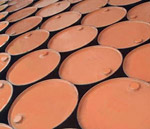
Third, and probably the greatest contributing factor of the United States drumming up this treaty, is, of course, oil. Yes, I’m sure you’re all very surprised at this reasoning. Sarcasm aside, one might say “why do we need Iranian oil when we have the Saudis for that?” In 2011 The Guardian published one of the leaked U.S. diplomatic cables, which included a statement from veteran geologist and former head of exploration at the Saudi oil monopoly Aramco Sadad al-Husseini. He revealed that the Saudis have been lying about their ability to produce product and their petroleum reserves could be as much as 40 percent lower than what is being reported. To make matters worse the Saudi King Saud and his potential successors are all getting old. According to an article from the Al-Monitor, the Saudi Kingdom could be headed for a succession crisis and it is “…a kingdom in regression, plagued by regular reshuffling of princes and lacking energetic leadership with a serious vision for the future.” It’s a royal mess and we could see civil war break out in a generation or so between the various princes. Getting oil in the U.S. is too much trouble since Texas and Alaska are drying up, offshore drilling is risky, and ‘fracking’ costs a lot of money. America needs a cheap, reliable, and safe place to get our precious ‘black gold’ from and Iran can provide that. Though it should be noted that the Middle East won’t have oil forever, as best stated by the late Emir of Dubai Rashid Maktoum, “My grandfather rode a camel, my father rode a camel, I drive a Mercedes, my son drives a Land Rover, his son will drive a Land Rover, but his son will ride a camel.”
In short, this treaty is about more than just keeping a leash on tiny saber-rattling theocracy. It’s a small step on the path to finding solutions to the complex problems in the Middle East that affect the interests of the powers to be.


