


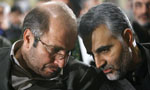
 Washington Post: With the sudden rise of the terrorist Islamic State , a little-noted aspect is that Gen. Qassem Suleimani, the supposed strategic genius of the Iranian Revolutionary Guard Corps, has blundered disastrously. By overreaching in Iraq and Syria and triggering a violent reaction, Iran now faces dangerous instability on its border for years to come.
The Washington Post
By David Ignatius
With the sudden rise of the terrorist Islamic State , a little-noted aspect is that Gen. Qassem Suleimani, the supposed strategic genius of the Iranian Revolutionary Guard Corps, has blundered disastrously. By overreaching in Iraq and Syria and triggering a violent reaction, Iran now faces dangerous instability on its border for years to come.
Most commentary on the Iraq situation has focused on U.S. errors and the potential dangers to U.S. interests, and there are plenty of both. But perhaps we can put aside our national myopia and look at what recent events mean for Iran, which shares a 900-mile border with Iraq and desperately wants political hegemony there. It’s not a happy picture.
“Suleimani’s orchestration of brutal military campaigns in both Syria and Iraq set the stage for the Sunni Arab response turning to extremism,” explains Derek Harvey, a longtime Iraq intelligence analyst who now teaches at the University of South Florida. Harvey lists some of Suleimani’s mistakes: “He missed opportunities for moderation while still protecting Iranian interests. His partnership with extremism in Syria resulted in the threat growing in Syria and rebounding to Iraq. His refusal to counsel some moderation and inclusion by [Iraqi Prime Minister Nouri al-]Maliki developed a fertile environment for [the Islamic State] and others to exploit.”
Suleimani’s reversals are significant because he has become something of a cult figure among those who follow the paramilitary Quds Force he directs. I have likened him in past columns to John le Carré’s fabled spymaster, Karla. The New Yorker’s Dexter Filkins chronicled what Arabs call Suleimani’s “khilib, or understated charisma,” in a memorable profile in September. Suleimani seemed a man who could run circles around rival commanders. Not anymore.
Viewed from Iran’s perspective, there was a catastrophic aspect to the Islamic State’s declaration of a caliphate in northwestern Iraq and neighboring areas of Syria. Iran is now rushing to mobilize its Iraqi allies to stop the marauding Sunni insurgents from seizing Baghdad’s airport. The Iranians, watching the collapse of the U.S.-trained Iraqi army, have turned to Shiite militias that are trained and run by Suleimani’s operatives. But this reliance on sectarian militias only deepens the potential for violence; indeed, it’s probably the polarizing response the Islamic State hoped to trigger.
Another aspect of Suleimani’s unfolding disaster is that the rise of the Islamic State has hastened Kurdish independence. After the collapse of Iraqi government forces in Mosul and Tikrit, the Kurds quickly pushed west to seize the disputed area of Kirkuk and its oil fields. Kurdish leader Massoud Barzani has called for a referendum on Kurdish self-determination, and Israel’s prime minister has already declared support for a sovereign Kurdistan. A Kurdish state could rouse nationalist feelings among Iranian Kurds, who make up at least 10 percent of Iran’s population, creating domestic instability.
Unfortunately for Suleimani, his best chance to keep Kurdistan part of Iraq is by reducing his Shiite allies’ control in a future Iraqi federal state. Similarly, the best way to suppress the Islamic State — short of a potentially ruinous, all-out attack by Iranian-backed troops — is by empowering Sunni tribal fighters and their patrons in Saudi Arabia. For Suleimani, it’s a lose-lose situation.
The Quds Force chief has preferred a “light footprint” in Iraq and Syria, operating through proxies such as Lebanon’s Hezbollah and the Iraqi Shiite militias, argues Farzan Sabet in the “War on the Rocks” blog. But this light touch won’t be sufficient now, with Iranian allies overstretched on two fronts. “The creation of [a] hostile Sunni Arab state on Iran’s frontiers may give its regional foes the perfect vehicle for destabilizing its already fragile western border,” writes Sabet.
Gone, too, is Suleimani’s hope that Iran can avoid being seen as a Shiite, Persian power in a predominately Sunni, Arab world. Suleimani tried to convey that secular breadth by allying with Christians in Lebanon, Alawites in Syria and Sunnis in the Palestinian territories. “What they’ve done in Syria and Iraq has exposed Iran as a sectarian power,” argues Karim Sadjadpour of the Carnegie Endowment for International Peace.
“Suleimani is a reflection of an Iranian political culture that believes compromise projects weakness and that tends to prioritize tactics over strategy,” says Sadjadpour. It’s this unyielding culture that has crashed against the rocks of the Islamic State.
These reversals come as negotiations over Iran’s nuclear program are hitting a decisive final stage in Vienna. It must be said that Iran is playing a somewhat weaker hand than it might have hoped a few months ago.


