


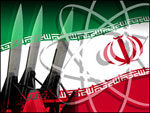
 The Hill: Iranian Supreme Leader Ali Khamenei recently said in a high-profile speech that Iran has a “definite need” for tens of thousands of more uranium enrichment centrifuges than it already has. The statement was made ahead of a July 20 deadline for a deal between Iran and the 5+1 countries. Detecting indecisiveness among western powers, Khamenei was clearly raising the stakes to gain as many concessions as possible.
The Hill
By Soona Samsami
Iranian Supreme Leader Ali Khamenei recently said in a high-profile speech that Iran has a “definite need” for tens of thousands of more uranium enrichment centrifuges than it already has. The statement was made ahead of a July 20 deadline for a deal between Iran and the United States, Britain, France, Germany, Russia and China. Detecting indecisiveness among western powers, Khamenei was clearly raising the stakes to gain as many concessions as possible.
On July 18, both sides agreed to extend the negotiations for another four months, without any clear prospects of an agreement that would serve the objective stated by President Obama: to deny the Iranian regime the ability to develop a nuclear weapon.
The extended interim agreement requires the United States to ease sanctions on Tehran while granting mullahs access to nearly three billion additional dollars. The cash could be used to fund the regime’s terror network, particularly in Syria and Iraq, and suppress its own population. The number of executions has jumped significantly since the talks started under the regime’s president Hassan Rouhani.
Even worse, Iran has no current burden to dismantle any of its centrifuges, to give up enriched uranium stockpiles, or to dismantle the Arak heavy water reactor that a former senior Obama administration official, Robert Einhorn, labeled a “plutonium bomb factory.” Secretary of State Kerry told the House Committee on Foreign Affairs in December 2013 that “Arak is unacceptable,” adding “you can’t have a heavy-water reactor” in Iran under a comprehensive agreement. This would mean that the topic of dismantling the heavy-water reactor should under no circumstances be negotiable.
Also unclear is the level of access granted to international inspectors for a number of highly sought nuclear sites, documents, and experts. The State Department has made no reference since the extension of the talks to “possible military dimensions,” a pseudonym used by the International Atomic Energy Agency (IAEA) to refer to the development of a nuclear weapon by Tehran.
In June, the National Council of Resistance of Iran (NCRI), the main Iranian opposition, whose widespread network inside the country enabled it to uncover many of the regime’s nuclear sites, beginning with Natanz and Arak facilities in 2002, triggering IAEA inspections, released a new report. Entitled How Iran Regime Cheated the World: Tehran’s Systematic Efforts to Cover Up its Nuclear Weapons Program, the report outlines three decades of Iran’s systematic deceptive practices, specifically the weaponization dimension of the nuclear program, and the formation since 2011 of an organization operated by the Defense Ministry, known as SPND, whose mandate of SPND is to develop Iran’s nuclear weapons program.
Iran’s rulers had no choice but to negotiate because they were extremely vulnerable in the face of growing public discontent, escalating factional feuding, deteriorating economic situation and increasing regional and international isolation. Any concessions now would have the opposite effect because it would embolden Tehran to conceal, cheat and get closer to the bomb.
“Endless marathon of talks will bear no fruit other than giving this regime the opportunity to engage in further deception,” NCRI’s President-elect Maryam Rajavi warned, adding that the regime must “fully implement the UN Security Council resolutions, particularly a complete halt of uranium enrichment, acceptance of the Additional Protocol, and securing of free access to IAEA inspectors to the regime’s suspicious nuclear installations and sites.”
Nuclear talks must be coupled with holding the religious dictatorship to account for the flagrant violations of human rights in Iran and the genocides in Syria and Iraq. Nuclear concealment, human rights abuses, and the export of fundamentalism and terrorism are three indispensable attributes of the regime.
If pressure worked to bring the faltering and loathed regime into the negotiating room, more pressure will be even more effective in thwarting the nuclear threat. The U.S. has significant diplomatic or non-military leverage that it has not tapped. Washington can make life miserable for the mullahs and compel them to give up their weapons program by helping to further empower the organized democratic opposition to the Iranian regime.
The current policy is clearly not working to Washington’s favor. A major shift in U.S. policy on Iran is long overdue. Without it, a nuclear-armed Iran seems almost inevitable.
Samsami is the representative in the United States for the Paris-based National Council of Resistance of Iran, an opposition coalition formed in 1981, and committed to a democratic, secular and non-nuclear republic in Iran.


