Home Blog Page 104

Forced Transfer of Five Political Prisoners Sentenced to Death in Iran

Following orders to transfer five political prisoners sentenced to death from Evin Prison to Ghezel Hesar Prison, tension and unrest broke out in Ward 4 of Evin. According to informed sources, prison guards entered the ward and cracked down on the protests by using force against the inmates.

The names of these political prisoners are Mohammad Taghavi, Pouya Ghobadi, Vahid Bani-Amrian, Ali Akbar (Shahrokh) Daneshvarkar, and Babak Alipour. These individuals were previously sentenced to death by Judge Iman Afshari on charges of affiliation with the People’s Mojahedin Organization of Iran (PMOI/MEK).

Iranian Regime’s Contradictory Justifications for Executing Political Opponents 

According to witnesses, prison guards, under the orders of Heydatollah Farzadi, the warden of Evin Prison, locked the ward doors and created a security-heavy environment to prevent other inmates from protesting. Human rights sources have reported that the transfer was carried out in coordination with the Ministry of Intelligence.

This move comes as the European Union, on April 14, placed Heydatollah Farzadi on its sanctions list for his role in the systematic repression of prisoners.

Previously, in February 2025, two other political prisoners, Mehdi Hasani and Behrouz Ehsani, were also transferred to Ghezel Hesar without prior notice. In recent months, political prisoners Ali Moezzi, Khosro Rahnama, Asadollah Hadi, and Abolhassan Montazer have also been similarly moved to Ghezel Hesar.

The six political prisoners sentenced to death who have recently been transferred to Ghezel Hesar or are awaiting execution have extensive records of political arrests and convictions.

In response to these developments, families of several political prisoners sentenced to death gathered outside Evin Prison, demanding a halt to the executions and sudden transfers.

Names and Status of the Six Political Prisoners Sentenced to Death

Seyed Mohammad Taghavi

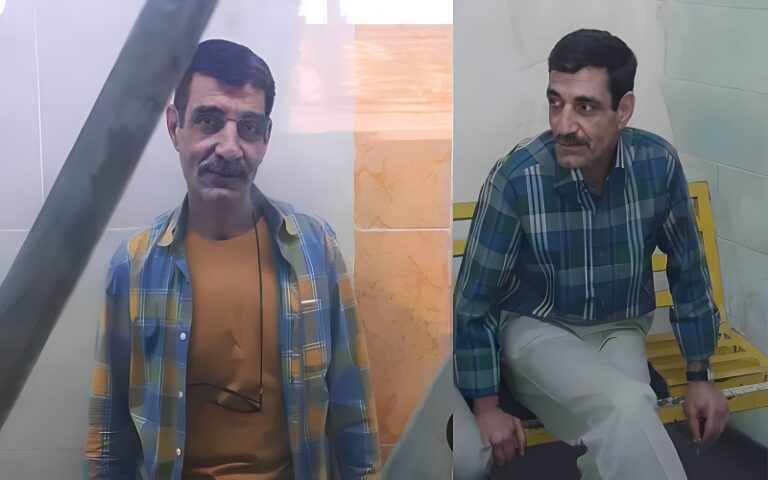
Seyed Mohammad Taghavi, 57, is a political prisoner from the 2000s. He graduated in graphic design from the University of Tehran and had previously been imprisoned due to his political activities. In March 2024, he was rearrested and transferred to Ward 209 of Evin Prison. He had also been imprisoned in 2020 for approximately three years in Evin, charged with affiliation to the People’s Mojahedin Organization of Iran (PMOI/MEK).

Pouya Ghobadi

Pouya Ghobadi, born in 1992 in Sonqor, is an electrical engineering graduate from Sanandaj University. He was arrested on February 23, 2024, while attempting to cross the border in Chaldoran and transferred to Maku Prison. On March 1, 2024, he was moved to Ward 209 of Evin Prison, where he remained for several months. Ghobadi had previously been arrested in 2018 on charges of “propaganda against the state” and “insulting the Supreme Leader,” and was sentenced to 18 years in prison and exile to Nikshahr.

Babak Alipour

Babak Alipour, born in 1991 in Amol and a law graduate, was arrested in January 2024 and transferred to Ward 209 of Evin Prison. He had previously been arrested on November 4, 2018, along with his brother, Roozbeh Alipour, at the produce market in Rasht. He was sentenced to seven years in prison on charges of “membership in the PMOI” and “insulting the Supreme Leader,” and was released in 2023 after serving two years of his sentence.

Shahrokh Daneshvarkar

Akbar (Shahrokh) Daneshvarkar, born in September 1966, is a dismissed civil engineer. He was arrested at his home on January 3, 2024. Daneshvarkar, who resides in Tehran, is married and has a 12-year-old son. Following his arrest, he was transferred to Evin Prison.

Seyed Abolhassan Montazer

Seyed Abolhassan Montazer, born in 1959 and an architecture graduate, was arrested by security forces in Tehran on December 22, 2023, and later transferred to Ward 4 of Evin Prison. He is a political prisoner from the 2000s and had also been arrested in 2018. Montazer has been sentenced to five years in prison.

Vahid Bani-Amrian

Vahid Bani-Amrian, born in 1992 and a native of Sonqor, holds a master’s degree in management from K. N. Toosi University of Technology in Tehran. He had previously been arrested in 2017 and 2018. In January 2019, he was sentenced to five years in prison on charges of “propaganda against the state” and “insulting the Supreme Leader.”

These prisoners have been sentenced to death due to political charges and alleged affiliation with the PMOI, and their situation has attracted significant international attention.

Human rights activists, warning of the imminent possibility of executions, have called for immediate intervention by international bodies to prevent widespread human rights violations in Iran’s prisons.


Grossi: Iran’s Regime Is Not Very Far from Building a Nuclear Weapon

Rafael Grossi, Director General of the International Atomic Energy Agency (IAEA), arrived in Tehran on Wednesday evening.

Prior to his trip, Grossi said that the IAEA is not part of the bilateral discussions between Abbas Araghchi, the Iranian regime’s foreign minister, and Enrique Mora, the EU’s coordinator for nuclear talks, but it is not indifferent to them either.

Grossi added that they are well aware that the IAEA must provide its opinion on any potential agreement, as the agency will be responsible for its verification.

Before his trip to Iran, Rafael Grossi expressed his willingness for the IAEA to be involved in the nuclear negotiations between the United States and Iran’s regime in an interview with the French newspaper Le Monde.

Iran’s Nuclear Power Dream: From Fantasy to Reality

Grossi said the IAEA has already initiated informal exchanges with the negotiating parties and added that once there is a text with concrete content, the agency will be asked to give its opinion regarding the procedures and the extent of inspections conducted.

Grossi emphasized that without the presence of the IAEA, any agreement regarding Iran is merely a piece of paper… For such an agreement to be meaningful, there must be credible systems and strong monitoring mechanisms, which only the IAEA can provide.

Regarding the nuclear capability of Iran’s regime, Grossi said that although the regime possesses enough material to produce not just one, but several nuclear bombs, it does not yet have a nuclear weapon. He likened it to a puzzle: they have the pieces, and they may one day be able to put them together.

He emphasized that while the Iranian regime is still some distance away from acquiring a nuclear weapon, it must be acknowledged that it is not very far from it either.

According to Grossi, over the past four years, the Iranian regime has significantly accelerated its uranium enrichment process, while at the same time, the scope of the IAEA’s intervention has diminished.

He stated that for the international community, it is not enough for Tehran to simply say, “We do not have a nuclear weapon”; in order for the world to believe it, the IAEA must be able to verify that claim.


Massive Data Breach Exposes Personal Information of 30 Million Hamrah Aval Users in Iran

0

A hacker group has claimed to have infiltrated the customer database of Mobile Communications of Iran (commonly known as Hamrah Aval), the largest mobile phone operator in Iran, gaining access to the personal information of 30 million of its users.

According to reports, the hacked data includes customers’ personal information such as full names, dates and places of birth, national identification numbers, birth certificate numbers, and complete postal addresses.

The hacker group, named ShadowBits, also announced that it has obtained information about Hamrah Aval’s employees.

As of now, neither Hamrah Aval nor any state-affiliated media outlets in Iran have issued any statements or reports on the matter.

The Iranian technology news website Digiato initially reported the breach but later removed the article from its platform.

ShadowBits shared a screenshot of the deleted Digiato article on their Telegram channel, claiming that “pressure from intelligence agencies” led to the article’s removal.

Telecommunication companies in Iran, including Hamrah Aval, maintain close ties with intelligence and security agencies, and telecom data is often used for surveillance of citizens.

These companies have reportedly provided means for security services to intercept two-factor SMS authentication codes without the phone owner’s knowledge, allowing them to secretly access citizens’ online accounts.

Iranian Regime Presidency Servers Taken Over By Dissidents, Exposing Regime Vulnerabilities

This is not the first time that Mobile Communications of Iran has been targeted in cyberattacks.

In October 2022, during a wave of cyberattacks on websites affiliated with Iran’s regime, Hamrah Aval’s website was hacked and customer billing information was altered to show zero charges.

In July 2016, Iranian media reported that “information pertaining to 20 million users” of a mobile operator had been hacked.

In June 2020, MAHER (Iran’s Computer Emergency Response Team Coordination Center), which is affiliated with the Ministry of Information and Communications Technology, confirmed the leak of data for over five million users of Rightel, another Iranian mobile operator.

In January 2024, anonymous hackers put up for sale a dataset of 160 million customer records from 23 Iranian insurance companies on the internet.

Leakfa, an Iranian data breach tracking platform, confirmed the authenticity of the leaked data and stated that it was obtained through a cyber-infiltration of the infrastructure of “Fanavaran Etela’at Khebreh” (a technology service provider), which occurred shortly before.

At the time, none of Iran’s official institutions—including the Security Office of the Central Insurance Organization and the regime’s cyber police—published any official report on how the hackers accessed the private data of citizens.

This attack has raised serious concerns about privacy and data security for Iranian citizens.

The structure of the leaked dataset indicates that the breach revealed both current and historical customer records, likely affecting both current and former subscribers of Hamrah Aval.


Iranian Regime’s Contradictory Justifications for Executing Political Opponents 

In yet another attempt by Iran’s regime to mask its crimes against political activists under a legal pretense, a recent report submitted by the judiciary to the United Nations High Commissioner for Human Rights reveals yet another layer of the systematic and nationwide crackdown on freedom-seekers. This time, the justification centers around the execution sentences handed down to two political prisoners, Mehdi Hasani and Behrouz Ehsani—activists whose charges are based not on justice, but on a strategy of intimidation and suppression of dissent.

The 12-page report by the so-called “Human Rights Headquarters of the Judiciary”—which laughably introduces itself as the “High Council for Human Rights of the Islamic Republic of Iran”—is a web of contradictions and lies aimed at legitimizing the executions. The Iranian regime claims in the report that since 2022, some street protests, allegedly involving groups such as the People’s Mojahedin Organization of Iran (PMOI/MEK) and domestic collaborators, have led to terrorist activities.

The regime further claims that Mehdi Hasani and Behrouz Ehsani were arrested as the “main planners and perpetrators” of these acts and lists serious charges against them, including:

  • Membership in the PMOI/MEK
  • Propaganda against the regime
  • Chanting anti-regime slogans
  • Insulting state officials
  • Collecting classified information
  • Producing and sending videos to opposition media
  • Participating in live programs on affiliated networks
  • Establishing safe houses
  • Destruction of public property
  • Constructing launchers and mortars
  • Possession of firearms

These allegations pointless to a fair judicial process and more to fabricated national security cases and forced confessions.

Blatant contradiction by the Iranian regime

On one hand, the regime has consistently claimed in international forums that the PMOI has no presence in Iran. Yet in this very official report, it amplifies and dramatizes the group’s activities to justify the executions.

The regime’s judiciary claims that these sentences “do not contradict the International Covenant on Civil and Political Rights” and that “all principles of fair trial have been upheld.” It also calls the allegations of torture and forced confessions “completely unfounded,” insisting that there are no signs of torture in the case files.

The absurdity lies in the regime citing its own constitution, which declares that “torture is prohibited,” despite thousands of documented cases of torture, inhumane treatment, prolonged solitary confinement, and denial of legal counsel reported by international human rights organizations.

The regime also claims that the defendants “had official legal representation throughout the proceedings.” However, in national security cases, defendants are only allowed to choose attorneys from a list approved by the head of the judiciary—effectively stripping them of the right to independent legal counsel.

Meanwhile, Iran’s regime has been condemned at least 71 times in international forums for systematic human rights violations.

Iran’s regime cannot quell the wave of protests through repression and executions. On the contrary, such actions only deepen its political and international isolation. The issuance of death sentences for Mehdi Hasani and Behrouz Ehsani is merely one more page in the regime’s extensive record of human rights abuses.


New EU Sanctions Target Iranian Regime Judiciary Officials 

0

On Monday, April 14, the European Union announced new sanctions against seven judicial and security officials of the Iranian regime, as well as two affiliated institutions, in response to Iran’s organized policy of hostage-taking and gross human rights violations.

According to Reuters, EU foreign ministers decided at their recent meeting to respond firmly to the growing trend of arbitrary detentions—especially those targeting European citizens. The EU described these arrests as “state-backed hostage-taking” and demanded an immediate end to the practice. This policy, combined with the regime’s dark record of mass executions, torture, and horrifying prison conditions, has become a symbol of Iran’s systematic repression.

Diplomatic sources confirmed that the sanctions include travel bans and asset freezes within EU territory. All sanctioned individuals are key figures in Iran’s judiciary and security apparatus, directly involved in suppressing dissent, issuing death sentences, and executing hostage-taking policies.

Sanctioned Individuals by the European Union
The following figures were named among the sanctioned:

  • Abbasali Houzan, judge at Branch 36 of Tehran’s Appeals Court, played a central role in upholding harsh sentences against political dissidents, women protesting compulsory hijab laws, and religious minorities, especially Baha’is.
  • Hedayatollah Farzadi, head of Evin Prison, was sanctioned for imposing severe restrictions on political prisoners, including cutting off communication and visitations, and widespread use of solitary confinement.
  • Mehdi Nemati, head of protection and intelligence for Fars Province prisons, oversees Shiraz Central Prison (Adelabad), which has become a site for mass executions—especially of ethnic and religious minorities—and the detention of foreign hostages.
  • Kamran Zare, an appellate court judge in Shiraz, is accused of issuing unfair rulings against political protesters and followers of persecuted religions.

Human Rights Violators

  • Mahmoud Sadati, a judge in Shiraz, played an active role in issuing death sentences, securing forced confessions, and broadly violating fair trial standards for political activists and religious minorities.
  • Ali Salehi, Tehran’s public prosecutor, is a key figure in the systematic prosecution of women protesting mandatory hijab, university students, and civil movement activists. He is also accused of issuing and enforcing execution orders and employing torture.
  • Mohammad Khosravani, special prosecutor at the Shiraz court, has been involved in arbitrary detentions, pressuring political defendants, and suppressing minorities.

In addition to these individuals, two institutions were also sanctioned:

  • Shiraz Central Prison (Adelabad), for systemic human rights abuses, large-scale executions, inhumane detention conditions, and unlawful imprisonment of European hostages.
  • Branch One of the Shiraz court, for issuing unjust rulings, suppressing protesters and minorities, and implementing the Iranian regime’s repressive policies.

Dark Record of Human Rights Violations

These sanctions are a symbolic response to only a fraction of the Iranian regime’s repression machinery—a regime with a long history of hostage-taking, from diplomats and dual nationals to tourists and journalists, and one of the world’s highest execution rates.

The EU’s latest sanctions—alongside over 70 international resolutions condemning the Iranian regime for human rights violations—indicate that the international community can no longer remain silent in the face of ongoing repression. Although these measures have yet to include more decisive actions like referring regime officials to international courts, they highlight the growing erosion of the regime’s legitimacy on the world stage.


The Expansion of The “No to Executions Tuesdays” Campaign To 40 Prisons Across Iran

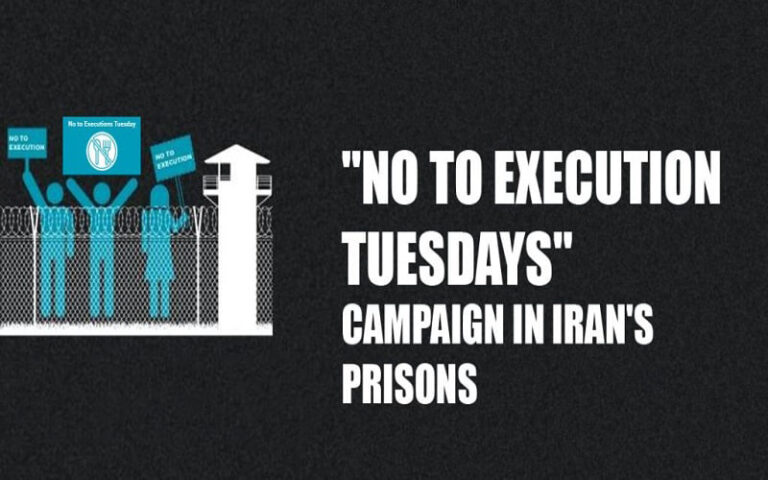
In the 64th week of the “No to Executions Tuesdays” campaign, female prisoners in Zahedan prison and Ezbaram prison in Lahijan also joined this protest movement. With this development, the number of prisons participating in the campaign has reached 40.

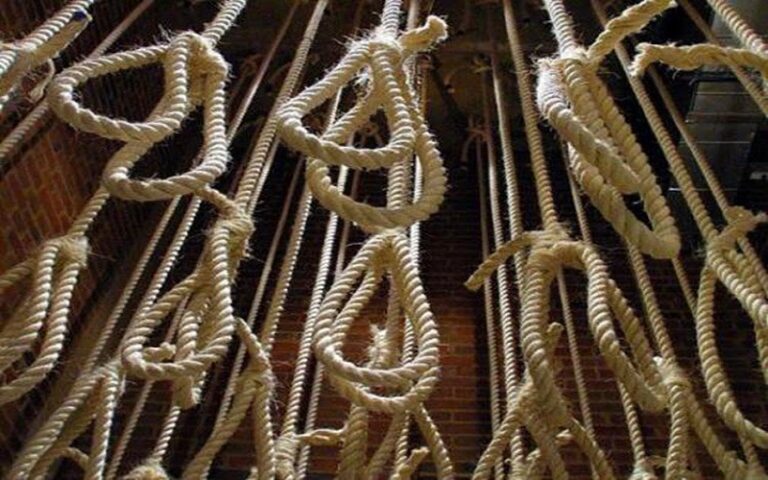
The hunger strike by political prisoners continues while a new wave of executions in Iran has heightened human rights concerns. On just April 8 and 9, 29 prisoners were executed across the country. Among them were five political and ideological prisoners and a 22-year-old Baluch inmate. Additionally, a juvenile offender was hanged in Gonbad-e Kavus prison.

Human rights activists have warned about the scope of this brutal repression and have called on international bodies not to remain silent in the face of systematic human rights violations in Iran.

“No to Execution Tuesdays”: Hunger Strike in 38 Iranian Prisons

Below is the full statement from this week’s campaign:

With the women’s ward of Zahedan prison and Ezbaram prison in Lahijan joining the “No to Executions Tuesdays” campaign, the movement has expanded to 40 prisons in its 64th week.

The paralyzed regime, now entangled in a swamp of domestic and international crises, has intensified executions to prevent public uprisings—as is its usual approach. On April 8 and 9 alone, it executed 11 and 18 prisoners, respectively.

Furthermore, on the morning of Monday, April 14, a 22-year-old Baloch prisoner named “Ali Dehmani” was executed in Zahedan Central Prison. He had been arrested in November 2022 during nationwide protests following the brutal massacre of nearly 100 people in the “Bloody Friday” events in Zahedan and Khash. He was accused of killing four regime agents in the town of Bampur and was executed without access to a fair trial.

Additionally, a juvenile prisoner named “Behzad,” who was under the legal age at the time of his alleged crime, was hanged in Gonbad-e Kavus prison.

From April 8 to 14, the number of executed Baluch prisoners totaled at least 18. The vast and ongoing human rights violations in Iran are a dire warning to society, human rights defenders, and international organizations that any inaction or neglect toward this oppressive regime will cost the lives of more oppressed people and prisoners.

The “No to Executions Tuesdays” campaign, which has now expanded to 40 prisons with the participation of female prisoners from Zahedan and Ezbaram prisons, continues to resist the inhumane death penalty with all its might. It calls on all international human rights and political organizations to be the voice of the people and prisoners in Iran, as dozens of political and ideological prisoners, along with thousands convicted of ordinary crimes, remain under death sentences and are deprived of even the most basic rights to a fair trial.


Iran’s Nuclear Power Dream: From Fantasy to Reality

Despite Iran’s immense potential in hydrocarbon resources and renewable energy, the country remains heavily dependent on natural gas to meet its electricity needs. Nuclear energy, despite massive investment, does not play a significant role in Iran’s energy security.

The Iranian regime, under its long-term strategy, has planned to increase its nuclear power generation capacity to 20 gigawatts by 2041.

Currently, the Bushehr nuclear power plant, with a capacity of 1,000 megawatts, has been the country’s only operational nuclear power facility since 2013. Two additional units are under construction at the same site, each also designed for 1,000 megawatts.

The regime has launched new nuclear power projects. The most significant is a 5-gigawatt plant planned in Hormozgan Province, consisting of four units, each with a capacity of 1,250 megawatts. This project, expected to take about nine years to complete, requires an investment of over $20 billion. Additionally, a smaller 300-megawatt plant is under construction in Khuzestan Province.

Challenges Facing the Iranian Regime’s Nuclear Program

Currently, nuclear power contributes only 1% to Iran’s electricity supply, amounting to 1,000 megawatts. To cover the existing 25,000-megawatt shortfall in the national grid, Iran would need to construct 25 plants similar to Bushehr—a plant that took about 20 years to build with Russian assistance. Since its commissioning in 2011, Bushehr has only produced 70 terawatt-hours of electricity, with a regional market value of under $6 billion.

This limited electricity output pales in comparison to the massive costs Iran has borne to develop its uranium enrichment program under the guise of nuclear power generation. The regime’s nuclear program has led to extensive international sanctions, which are estimated to have caused between $2 to $3 trillion in direct economic losses.

Iranian Regime Accelerates Uranium Enrichment to Concerning Levels

The Potential of Renewable Energy in Iran

Iran, with over 300 sunny days per year and access to windy coastal and mountainous regions, possesses a high potential for developing solar and wind energy. However, these renewable sources account for only 1% of the country’s electricity generation.

Meanwhile, according to the International Energy Agency, in 2024, more than 75% of newly built power plants worldwide were based on renewable sources, while nuclear power accounted for only 5% of new global electricity generation capacity.

Economic Analysis of Iran’s Nuclear Program

Every program, including the nuclear initiative, must be assessed based on cost-benefit analysis and associated risks. While nuclear energy could help reduce the electricity supply-demand imbalance, the heavy direct and indirect costs it has imposed on Iran’s economy have rendered it economically unviable.

According to conservative estimates, the Iranian regime has spent around $300 million annually on its nuclear program over the past three decades—totaling approximately $9 billion. However, the indirect costs have been significantly higher, with the program serving as a major driver behind international sanctions and a sharp decline in foreign investment. It is estimated that due to these sanctions, Iran has lost over $450 billion in oil export revenues alone. Over the last 20 years, it has also had one of the lowest foreign investment-to-GDP ratios globally.

Despite official claims of the program being peaceful, Iran’s pursuit of uranium enrichment up to 60% and continuation of its nuclear activities under the harshest sanctions suggest that deterrence and boosting its bargaining power in foreign policy outweigh economic and developmental interests.

The regime’s massive investments in a program with minimal economic return and negligible contribution to electricity production, combined with the damaging effects of sanctions and international isolation, indicate that decision-makers in Tehran are more focused on regime survival and external deterrence than on actual energy goals.

Iran’s secret nuclear program was first exposed by the National Council of Resistance of Iran (NCRI), the largest Iranian opposition group. Prior to that, the program was unknown. If the regime’s intentions had been peaceful, it would have had no reason to hide nuclear sites or enrich uranium to weapons-grade levels.

The reality is that the regime’s nuclear strategy, which centers on deterrence and intentions to develop nuclear weapons, has sidelined economic and energy priorities.

The Iranian regime sees nuclear weapons as essential to its survival and to suppress the growing domestic unrest. All current claims about nuclear energy production are nothing but a mirage, and the regime has consistently proven this approach over the years.

Western governments must realize that the only effective way to confront this regime and its destructive and terrorist policies in the region is through firmness. The remaining path toward regime change will be taken by the people of Iran themselves. In this regard, the only request from the Iranian people to the West is to refrain from interfering, assisting, or granting concessions to the ruling clerics in Iran.


The Exchange Rate for Importing Medical Equipment in Iran Increased Sevenfold

Amid reports of a new wave of rising healthcare costs in Iran, Mehdi Pirsalehi, head of the regime’s Food and Drug Administration, announced that starting this year (which began on March 21), the 42,000-rial exchange rate per US dollar for importing medical equipment has been eliminated. This decision effectively means a sevenfold increase in the exchange rate used for importing medical equipment.

It is worth noting that the current market rate for one US dollar in Iran is approximately 1,050,000 rials.

On Sunday, April 13, in an interview with Tasnim News Agency—affiliated with the Islamic Revolutionary Guard Corps (IRGC)—Pirsalehi stated that the 42,000-rial (or 4,200 toman) exchange rate for importing medical equipment will be replaced with a new rate of 285,000 rials, marking a sevenfold increase.

He added that this year, the Central Bank will allocate $3.5 billion in preferential currency at the rate of 285,000 rials and about $1.5 billion in negotiated exchange rate funds for the provision of medicine and medical equipment.

Earlier, in February 2025, Hossein Samsami, a member of the regime’s Majlis (parliament), reported a more than tenfold increase in the cost of importing medical supplies due to fluctuations and increases in the official exchange rate. He stated that hospitals can no longer afford to purchase such equipment.

According to Samsami, insurance providers largely lack the capacity to cover these costs, and as a result, the impact of the currency crisis has extended from people’s livelihoods to matters of life and death.

In the remainder of his interview with the regime-affiliated Tasnim News Agency, the head of the Food and Drug Administration acknowledged that, under current conditions, the change in the allocated exchange rate will ultimately be paid out of the pockets of patients.

He added: “The exchange rate difference for equipment will be paid to patients through insurance and within the healthcare system globally, and we hope the increase in out-of-pocket costs will be controlled, although naturally we will see some increase in the cost of medical equipment.”

In such circumstances, the regime is seeking to offset its financial burdens by eliminating the preferential exchange rate—shifting the costs directly onto the public.

Severe Shortage of Medicines in Iran Reaches 150 Items

Mohammad Jamalian, a member of the Health, Treatment, and Medical Education Commission of the regime’s Majlis, stated in an interview with ILNA (Iran Labour News Agency, affiliated with the regime) on April 12 that the prices of some medicines have increased by up to 50 percent.

Jamalian said that the prices of certain medications have doubled or tripled, and there is a “severe shortage” of 150 types of medicine.

Iranian Regime MP Warns About Intensified Medicine Shortages

Referring to last year’s crises in the pharmaceutical sector, he added that timely allocation of foreign currency is crucial to preventing medicine shortages.

Reports in domestic Iranian media also indicate that amid a new wave of price hikes, the cost of 75 types of medicine has increased by an average of 33 percent—with official approval from the Food and Drug Administration.

On April 12, the Boursepress news outlet reported that Darou Pakhsh Pharmaceutical Company received authorization from the Food and Drug Administration to increase the prices of 75 of its products by between 5 and 147 percent.

Additionally, based on information from pharmacies in Tehran, the prices of more than 200 types of medicine have risen by at least 20 percent since the beginning of the new Iranian year (March 21).

According to these reports, most pharmaceutical companies have submitted official requests to the Food and Drug Administration for price increases and are awaiting formal approval of the new rates.


Nationwide Protests by Retirees Highlight Deepening Economic Crisis in Iran

With the continued failure of Iran’s regime to address the demands of retirees, groups of retirees from the steel and social security sectors held protest gatherings and marches in various cities across the country, voicing grievances over unmet professional and livelihood demands. Retired oil industry workers also issued a call for protest gatherings.

The protests by steel and social security retirees took place on Sunday, April 13, in several cities, including Isfahan, Ahvaz, Tehran, Sari, Rasht, Shush, and Kermanshah.

In Ahvaz and Shush, protesting retirees not only gathered in front of the governor’s office buildings but also marched in the streets, chanting slogans such as “Only on the streets do we win our rights.”

The Soaring Price of the Dollar Has Crushed Iranian Retirees

Other slogans heard at the protests included: “Retirees, rise up to end discrimination,” “We sacrifice our lives for freedom death to this life, death to this life,” “Under the weight of inflation the people’s backs are broken,” “No nation has seen so much injustice,” “Neither the government nor parliament care about the people,” and “Enough of oppression our table is empty.”

The retirees’ protests have expanded due to the disregard shown by Iranian regime officials toward their demands, now encompassing retirees from a variety of professions.

Call for protest by oil industry retirees

Retired oil industry workers, in response to the worsening economic and livelihood crisis, called for a large protest gathering in front of the Ministry of Oil in Tehran on April 16.

The organizers of the oil industry retirees’ protest stated in their call: “Officials must understand that there will be no appeasement, and retirees will demand their rights in the streets, through shouting and protest.”

Videos circulated on social media show a group of contract workers from the Gachsaran Oil and Gas Company protesting in front of the company’s headquarters on Sunday, April 13.

The gathering was held to protest the lack of change in workers’ employment status and to demand the removal of contractor intermediaries.

In recent years, retirees and workers have repeatedly staged protests and marches in cities across Iran over unfulfilled demands.

The economic hardships faced by workers, retirees, and pensioners have caused a sharp increase in the number of protests in recent years.


First Round of Fruitless Iran Regime–U.S. Talks in Oman

In the first round of negotiations between the Iranian regime and the United States in Oman, both sides left for their respective capitals without reaching a specific conclusion. However, the continuation of the talks was postponed to the upcoming Saturday.

Ali Khamenei, the supreme leader of Iran’s regime, had previously described negotiations with the United States as unwise and illogical. However, under American pressure and threats, he agreed to participate in the talks. This round of negotiations has sparked various reactions within the regime.

Mohammad Reza Ahmadi Sangari, a member of the regime’s Majlis (parliament), said on Sunday, April 13: “I ask the negotiating team to consider the principles and fundamentals of the Islamic Revolution, and ensure that the interests of the Islamic Republic (Iran’s regime) regarding nuclear energy, missiles, and the resistance front are prioritized.”

The issue of the Iranian regime’s terrorist groups in the region has always been a point of contention. Western countries had previously turned a blind eye to the regime’s terrorist interventions in the region and elsewhere in the world, but this round of negotiations will address the matter. Earlier reports indicated that Hezbollah’s military bases had been evacuated from southern Lebanon ahead of the talks.

Esmail Kowsari, a member of the National Security Committee of the Majlis, referring to the Oman negotiations, said: “If the U.S. tries to bring up issues outside the nuclear topic, such as defense and missile matters, the talks will definitely be halted.”

According to a CNN report citing White House sources present in the negotiations, the Trump administration is eager to advance the talks swiftly. Steve Witkoff, the U.S. representative in the negotiations, aims to make a political decision to advance the agreement without delving into complex technical details that could slow down the process.

Abbas Goodarzi, the spokesperson for the regime’s Majlis presidium, said that if the U.S. chooses to speak from a position of force and threats, “it will certainly bring more harm to its own position.”

Goodarzi added: “Today, the Islamic Republic is capable of legitimately targeting any point of American interests.”

The spokesperson for the regime’s Majlis presidium concluded that if the other party in the negotiations tries to address the Iranian people with “threats and the language of force; if it makes even the slightest mistake, the response of the Islamic Republic will be equally crushing.”

The Javan newspaper, affiliated with the Islamic Revolutionary Guard Corps (IRGC), also commented on the Oman negotiations, writing that the talks would benefit the regime under two scenarios.

The paper added: “A deadlock in negotiations would signify Iran’s resistance against U.S. bullying, while the continuation of the talks would mean American acceptance of the Islamic Republic’s terms.”

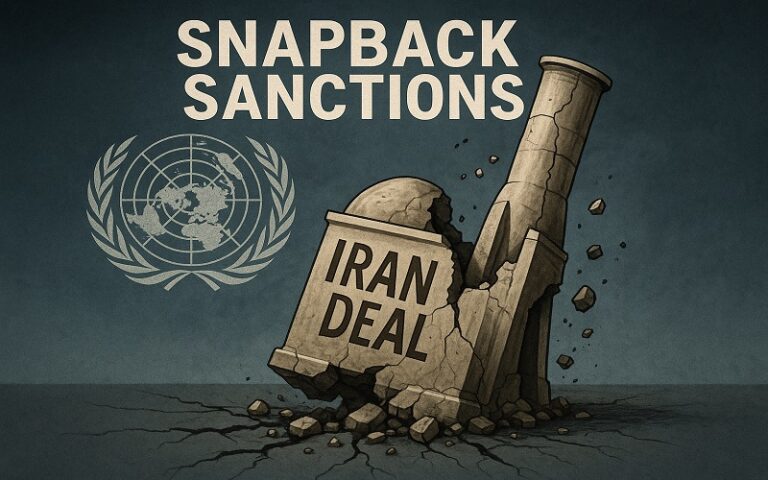
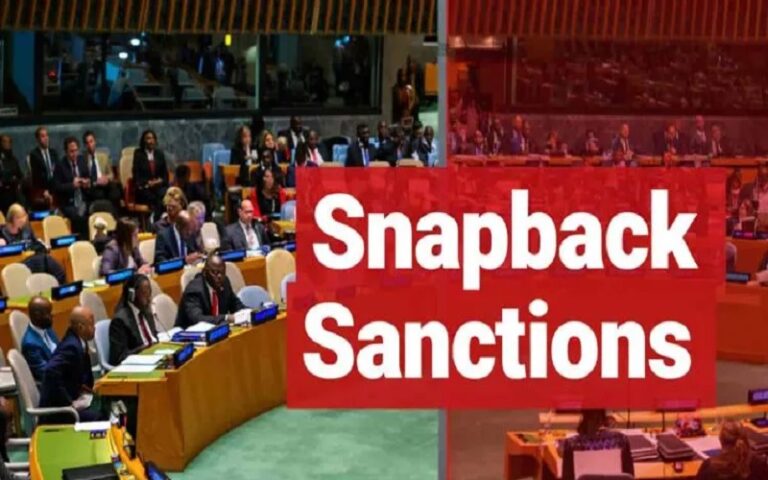
The Iranian regime has a long history of buying time and circumventing international sanctions, and this time it will likely attempt to use the same tactics to avoid the reactivation of the snapback mechanism. 

Meanwhile, the regime faces a legitimacy crisis and the threat of nationwide uprisings within Iran. Regardless of the outcome of the negotiations, it is ultimately the people of Iran who will deliver the final verdict.