Home Blog Page 109

The Exchange Rate for Importing Medical Equipment in Iran Increased Sevenfold

Amid reports of a new wave of rising healthcare costs in Iran, Mehdi Pirsalehi, head of the regime’s Food and Drug Administration, announced that starting this year (which began on March 21), the 42,000-rial exchange rate per US dollar for importing medical equipment has been eliminated. This decision effectively means a sevenfold increase in the exchange rate used for importing medical equipment.

It is worth noting that the current market rate for one US dollar in Iran is approximately 1,050,000 rials.

On Sunday, April 13, in an interview with Tasnim News Agency—affiliated with the Islamic Revolutionary Guard Corps (IRGC)—Pirsalehi stated that the 42,000-rial (or 4,200 toman) exchange rate for importing medical equipment will be replaced with a new rate of 285,000 rials, marking a sevenfold increase.

He added that this year, the Central Bank will allocate $3.5 billion in preferential currency at the rate of 285,000 rials and about $1.5 billion in negotiated exchange rate funds for the provision of medicine and medical equipment.

Earlier, in February 2025, Hossein Samsami, a member of the regime’s Majlis (parliament), reported a more than tenfold increase in the cost of importing medical supplies due to fluctuations and increases in the official exchange rate. He stated that hospitals can no longer afford to purchase such equipment.

According to Samsami, insurance providers largely lack the capacity to cover these costs, and as a result, the impact of the currency crisis has extended from people’s livelihoods to matters of life and death.

In the remainder of his interview with the regime-affiliated Tasnim News Agency, the head of the Food and Drug Administration acknowledged that, under current conditions, the change in the allocated exchange rate will ultimately be paid out of the pockets of patients.

He added: “The exchange rate difference for equipment will be paid to patients through insurance and within the healthcare system globally, and we hope the increase in out-of-pocket costs will be controlled, although naturally we will see some increase in the cost of medical equipment.”

In such circumstances, the regime is seeking to offset its financial burdens by eliminating the preferential exchange rate—shifting the costs directly onto the public.

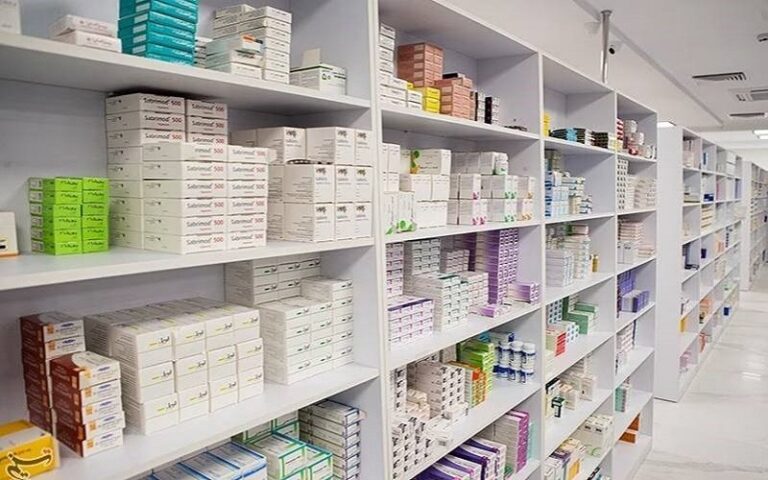
Severe Shortage of Medicines in Iran Reaches 150 Items

Mohammad Jamalian, a member of the Health, Treatment, and Medical Education Commission of the regime’s Majlis, stated in an interview with ILNA (Iran Labour News Agency, affiliated with the regime) on April 12 that the prices of some medicines have increased by up to 50 percent.

Jamalian said that the prices of certain medications have doubled or tripled, and there is a “severe shortage” of 150 types of medicine.

Iranian Regime MP Warns About Intensified Medicine Shortages

Referring to last year’s crises in the pharmaceutical sector, he added that timely allocation of foreign currency is crucial to preventing medicine shortages.

Reports in domestic Iranian media also indicate that amid a new wave of price hikes, the cost of 75 types of medicine has increased by an average of 33 percent—with official approval from the Food and Drug Administration.

On April 12, the Boursepress news outlet reported that Darou Pakhsh Pharmaceutical Company received authorization from the Food and Drug Administration to increase the prices of 75 of its products by between 5 and 147 percent.

Additionally, based on information from pharmacies in Tehran, the prices of more than 200 types of medicine have risen by at least 20 percent since the beginning of the new Iranian year (March 21).

According to these reports, most pharmaceutical companies have submitted official requests to the Food and Drug Administration for price increases and are awaiting formal approval of the new rates.


Nationwide Protests by Retirees Highlight Deepening Economic Crisis in Iran

With the continued failure of Iran’s regime to address the demands of retirees, groups of retirees from the steel and social security sectors held protest gatherings and marches in various cities across the country, voicing grievances over unmet professional and livelihood demands. Retired oil industry workers also issued a call for protest gatherings.

The protests by steel and social security retirees took place on Sunday, April 13, in several cities, including Isfahan, Ahvaz, Tehran, Sari, Rasht, Shush, and Kermanshah.

In Ahvaz and Shush, protesting retirees not only gathered in front of the governor’s office buildings but also marched in the streets, chanting slogans such as “Only on the streets do we win our rights.”

The Soaring Price of the Dollar Has Crushed Iranian Retirees

Other slogans heard at the protests included: “Retirees, rise up to end discrimination,” “We sacrifice our lives for freedom death to this life, death to this life,” “Under the weight of inflation the people’s backs are broken,” “No nation has seen so much injustice,” “Neither the government nor parliament care about the people,” and “Enough of oppression our table is empty.”

The retirees’ protests have expanded due to the disregard shown by Iranian regime officials toward their demands, now encompassing retirees from a variety of professions.

Call for protest by oil industry retirees

Retired oil industry workers, in response to the worsening economic and livelihood crisis, called for a large protest gathering in front of the Ministry of Oil in Tehran on April 16.

The organizers of the oil industry retirees’ protest stated in their call: “Officials must understand that there will be no appeasement, and retirees will demand their rights in the streets, through shouting and protest.”

Videos circulated on social media show a group of contract workers from the Gachsaran Oil and Gas Company protesting in front of the company’s headquarters on Sunday, April 13.

The gathering was held to protest the lack of change in workers’ employment status and to demand the removal of contractor intermediaries.

In recent years, retirees and workers have repeatedly staged protests and marches in cities across Iran over unfulfilled demands.

The economic hardships faced by workers, retirees, and pensioners have caused a sharp increase in the number of protests in recent years.


First Round of Fruitless Iran Regime–U.S. Talks in Oman

In the first round of negotiations between the Iranian regime and the United States in Oman, both sides left for their respective capitals without reaching a specific conclusion. However, the continuation of the talks was postponed to the upcoming Saturday.

Ali Khamenei, the supreme leader of Iran’s regime, had previously described negotiations with the United States as unwise and illogical. However, under American pressure and threats, he agreed to participate in the talks. This round of negotiations has sparked various reactions within the regime.

Mohammad Reza Ahmadi Sangari, a member of the regime’s Majlis (parliament), said on Sunday, April 13: “I ask the negotiating team to consider the principles and fundamentals of the Islamic Revolution, and ensure that the interests of the Islamic Republic (Iran’s regime) regarding nuclear energy, missiles, and the resistance front are prioritized.”

The issue of the Iranian regime’s terrorist groups in the region has always been a point of contention. Western countries had previously turned a blind eye to the regime’s terrorist interventions in the region and elsewhere in the world, but this round of negotiations will address the matter. Earlier reports indicated that Hezbollah’s military bases had been evacuated from southern Lebanon ahead of the talks.

Esmail Kowsari, a member of the National Security Committee of the Majlis, referring to the Oman negotiations, said: “If the U.S. tries to bring up issues outside the nuclear topic, such as defense and missile matters, the talks will definitely be halted.”

According to a CNN report citing White House sources present in the negotiations, the Trump administration is eager to advance the talks swiftly. Steve Witkoff, the U.S. representative in the negotiations, aims to make a political decision to advance the agreement without delving into complex technical details that could slow down the process.

Abbas Goodarzi, the spokesperson for the regime’s Majlis presidium, said that if the U.S. chooses to speak from a position of force and threats, “it will certainly bring more harm to its own position.”

Goodarzi added: “Today, the Islamic Republic is capable of legitimately targeting any point of American interests.”

The spokesperson for the regime’s Majlis presidium concluded that if the other party in the negotiations tries to address the Iranian people with “threats and the language of force; if it makes even the slightest mistake, the response of the Islamic Republic will be equally crushing.”

The Javan newspaper, affiliated with the Islamic Revolutionary Guard Corps (IRGC), also commented on the Oman negotiations, writing that the talks would benefit the regime under two scenarios.

The paper added: “A deadlock in negotiations would signify Iran’s resistance against U.S. bullying, while the continuation of the talks would mean American acceptance of the Islamic Republic’s terms.”

The Iranian regime has a long history of buying time and circumventing international sanctions, and this time it will likely attempt to use the same tactics to avoid the reactivation of the snapback mechanism. 

Meanwhile, the regime faces a legitimacy crisis and the threat of nationwide uprisings within Iran. Regardless of the outcome of the negotiations, it is ultimately the people of Iran who will deliver the final verdict.


Storm and Turmoil in Iran’s Car Market

Over the past month and during the early days of the Iranian calendar year (which began on March 21), Iran’s car market has gone through one of its most volatile periods.

The unchecked rise in the prices of both domestic and imported cars in the open market has raised widespread concerns among the public and economic experts. Many analysts believe the root causes lie in poor policymaking, excessive government taxation, chronic inflation, the persistent rise of the U.S. dollar against the rial, and the monopoly held by domestic car manufacturers.

Imported car prices have surged dramatically in recent weeks. For instance, the cheapest used imported car in the open market has been priced at a minimum of 18 billion rials (approximately $17,143), while the prices of some high-mileage SUVs have surpassed 40 billion rials (about $38,100). Since the beginning of the new year, the price of certain foreign vehicles has increased by as much as 4 billion rials (around $3,800) in just 20 days. This is despite the fact that, according to automotive industry insiders, the car market is in a state of complete stagnation with very few buyers.

The situation with domestic cars is not much better. Price reviews show that the Peugeot 206 Type 2, which was trading at around 6 billion rials (about $6,000) in March, has now surpassed 7.2 billion rials (around $7,200). The Saina EX has increased by 200 million rials (approximately $190) in just four days, reaching 4.45 billion rials (roughly $4,239). The Shahin, one of the cheapest models produced by SAIPA, has also exceeded 6 billion rials (about $5,715) in the open market, and its Plus version is being sold for at least 6.5 billion rials (about $6,190).

What has sparked the most public anger and discontent is the vast gap between car prices and the income of salaried workers. This year, the minimum official wage for workers has been set at about 111 million rials (approximately $106)—a figure that doesn’t even cover the monthly installment of a low-cost domestic car. For Iran’s working and middle classes, owning an affordable car has become a distant and unattainable dream.

Causes of Uncontrolled Surge in Car Prices

Experts believe the continuous rise in car prices in Iran stems from various factors, the most important of which are chronic inflation and economic instability. In an environment where the exchange rate constantly fluctuates and monetary and fiscal policies lack clarity and stability, the car market is always among the first sectors to react to economic shocks.

Another major factor is the car manufacturing monopoly. For years, Iran’s auto market has been dominated by two large state-owned automakers—Iran Khodro and SAIPA—or companies managed by their executives. The import of foreign vehicles is also heavily restricted and controlled by these same domestic car industry managers. Under such conditions, the lack of competition has allowed domestic car prices to continuously rise without any improvements in quality or standards. These two companies, which are affiliated with the Islamic Revolutionary Guard Corps (IRGC), also control the production, distribution, and import of cars and their parts.

Restrictions and delays in importing vehicles, especially economical and fuel-efficient ones, have also exacerbated the problem. While many countries balance their markets through strategic imports and reasonable tariffs, in Iran, car imports over the past decades have faced numerous obstacles and heavy duties, alongside a domestic industry that lags behind modern automotive technologies. Even during brief periods when imports were allowed, the vehicles that entered the market were few and more expensive, making no real impact on reducing prices.

The rise in car prices, alongside increases in the cost of other essentials, has made car ownership unaffordable even for Iran’s middle class.

Runaway inflation, production monopoly, import bans and restrictions, chronic inflation, and weak oversight are the key reasons behind the current disarray.

Meanwhile, the Fararu news website reported: “The rising prices of Iran Khodro and SAIPA’s products directly influence the offers made by sellers in the open market, and this price hike has essentially become an annual routine for the automakers. Based on their own justifications, they cite the rising exchange rate and increasing labor costs as reasons for raising factory prices. As a result, even within the first few days of the new year, the prices of domestic cars in the open market have jumped significantly.”


U.S. Sanctions Iranian Oil Transfer Network Ahead of Direct Talks with Tehran

The U.S. Department of the Treasury’s Office of Foreign Assets Control (OFAC) has sanctioned Jugwinder Singh Brar, an Indian national based in the United Arab Emirates, who owns several shipping companies operating a fleet of nearly 30 vessels. Many of these ships are part of the Iranian regime’s so-called “ghost fleet.”

Simultaneously, the U.S. Department of State imposed sanctions on four companies for conducting major transactions related to the purchase, sale, transportation, or marketing of Iranian oil or petroleum products, and designated two of their vessels as blocked property.

In a statement released on Thursday, April 11, the U.S. Department of the Treasury also announced sanctions against two companies based in the United Arab Emirates and two companies based in India. These firms either own or operate ships tied to Singh Brar and have been transporting Iranian oil on behalf of the National Iranian Oil Company and the Islamic Revolutionary Guard Corps (IRGC).

These sanctions come as the United States and Iran’s regime are scheduled to hold direct negotiations in Oman on Saturday, April 12. On Wednesday, the U.S. Treasury also imposed sanctions on five companies and the CEO of one of them for their ties to Iran’s Atomic Energy Organization.

U.S. Sanctions on Iran Ahead of Bilateral Talks in Oman

According to the U.S. Treasury, ships managed by Singh Brar have participated in risky ship-to-ship transfer operations in waters around Iraq, Iran, the UAE, and the Gulf of Oman. These cargoes are then handed off to intermediaries who blend Iranian oil or fuel with products from other countries and falsify shipping documents to conceal their Iranian origin. This process enables the shipments to enter global markets.

Scott Bessent, the U.S. Treasury official, said on the matter:
“The Iranian regime relies on its network of unscrupulous shippers and brokers like Brar and his companies to enable its oil sales and finance its destabilizing activities. The United States remains focused on disrupting all elements of Iran’s oil exports, particularly those who seek to profit from this trade.”

This action was carried out under Executive Order 13902, which targets Iran’s oil and petrochemical sectors. It marks the fifth round of sanctions against Iranian oil sales since U.S. President Donald Trump issued the executive order on February 4, 2025, to resume the maximum pressure policy against the Iranian regime.

In its statement, the U.S. Treasury declared its firm determination to aggressively target the Iranian regime’s oil sales network, including sanctioning individuals and entities that facilitate Iranian oil exports to third countries and the global market. The network involves complex shell companies, covert smuggling, ship-to-ship transfers, storage and blending of oil, and document forgery.


Institute for Science and International Security: Iran’s Nuclear Program Has Reached Extremely Dangerous Stage

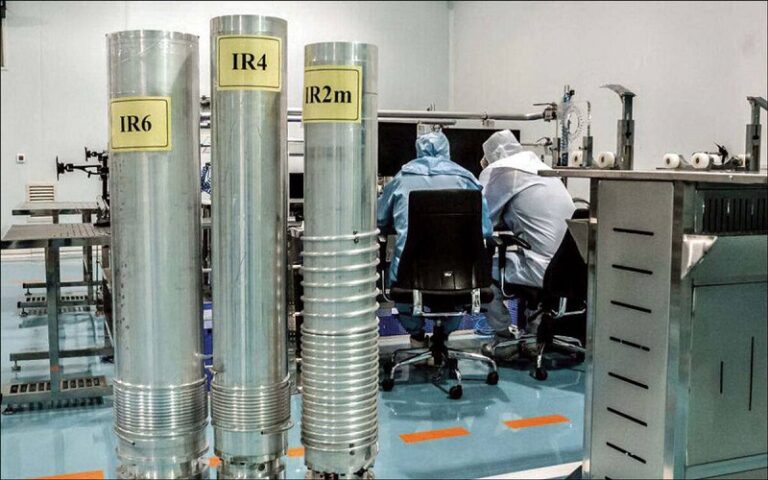
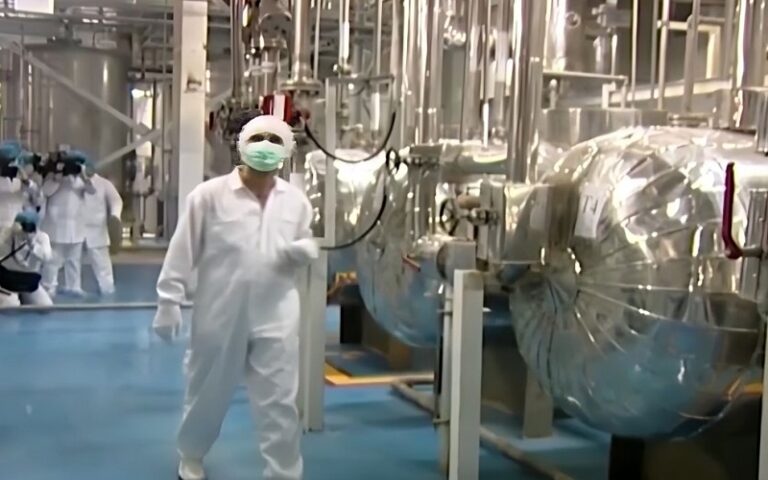
The Washington D.C.-based Institute for Science and International Security, ahead of nuclear negotiations between Iran’s regime and the United States on Saturday, April 12, in Oman, warned in a report that Iran’s nuclear program has reached an “extremely dangerous” stage and could take on military and weapons-related dimensions at any time.

The Institute released its detailed and alarming report titled “The Iran Threat Geiger Counter: Extreme Danger Grows.” A Geiger counter is a device used to detect and measure levels of radioactive radiation. When radiation is detected, the device begins counting and beeping—faster and louder as the radiation level, and danger, increases.

The report states: “Since February 2024, the date of the last edition of the Geiger Counter, the threat posed by Iran’s nuclear program has worsened significantly. Major negative factors include Iran’s greater nuclear weapon capabilities, its shorter time frames to build nuclear weapons, and the growing normalization of internal Iranian discussions favoring building nuclear weapons.”

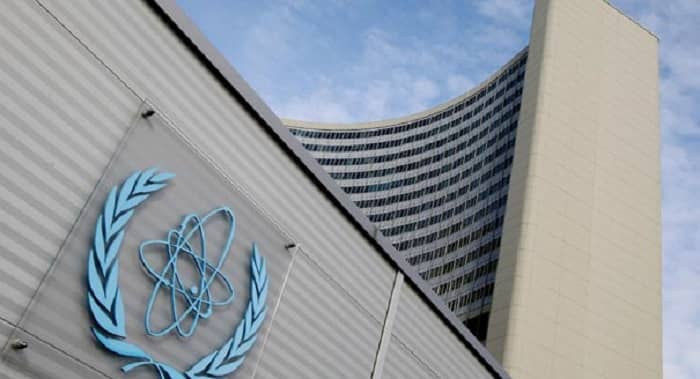
IAEA Report: Iran’s Uranium Mining Suggests Much Larger Reserves

According to the Institute: “The possibility of Iran deciding to build nuclear weapons has been increased by the ongoing military conflicts in the Middle East, pitting Iran and its proxy forces against Israel and its allies, a conflict Iran is losing. The volatile security situation is now combined with the perception, if not the reality, that Iran is preparing to build nuclear weapons.”

The report states: “The uncertainty is worsened by Iran’s refusal to cooperate with the IAEA as it tries to establish that Iran’s nuclear program is peaceful. With Iran making thousands of advanced centrifuges outside the monitoring of the IAEA, as witnessed by deployments at declared enrichment sites, the chance has risen that Iran is also building, or laying in place, a secret enrichment plant. As uncertainty grows, this or a black swan event could occur. This uncertainty could also feed narratives that exaggerate the threat, further increasing tensions.”

The term “black swan event” refers to rare, unpredictable events that have a massive and disruptive impact.

The Institute further added: “The ongoing conflicts have led to an increased urgency of eliminating the Iranian nuclear weapons threat, whether through renewed negotiation, increased pressure and threats of military force, or actual military force. But no clear path forward has emerged, and the success of any path is not guaranteed, and, at any moment, the Iranian leadership may launch a secret crash program to build nuclear weapons.”

The Institute warned that at any moment, the leaders of Iran’s regime may initiate a secret and accelerated nuclear weapons development program.

The Institute called these developments “serious and concerning,” raising the overall threat score from 151 in February 2024 to 157 out of 180.

This marks the second consecutive time the Institute has rated the threat level as “extreme danger.”

The Institute calculated this score based on several factors: the Iranian regime’s hostile actions (current score: 20), hostile rhetoric (29), short time required to acquire nuclear weapon capability (30), progress in developing sensitive nuclear capabilities (27), lack of transparency in the nuclear program (24), and efforts toward weaponization beyond merely breaching limitations (27). The total score has increased since February 2024 and remains at the “extreme danger” level.

Iran: Unemployment Rate Among University Graduates Higher Than National Average

While the overall unemployment rate for the active population of Iran, aged 15 and above, was reported at 7.8 percent during the past winter, around 795,000 university graduates remain unemployed.

The latest report by the Iranian regime’s Statistical Center on employment in winter 2025 indicates that the unemployment rate among higher education graduates reached 10.7 percent. Although this figure reflects a 0.9 percent decrease compared to the same period last year, it still exceeds the national average unemployment rate.

Although the general unemployment rate for the active population aged 15 and above stood at 7.8 percent during the past winter, approximately 795,000 university graduates were still unemployed. Women and residents of rural areas make up a larger share of this statistic. Additionally, 38.9 percent of the total unemployed population during this period held university degrees.

Growing Wave of Professor Migration Poses Serious Challenge To Iran’s Scientific Future

Although those with higher education account for 27.3 percent of the total employed population, this proportion has decreased by 0.5 percent compared to the previous year. This comes despite the Iranian regime’s 2024 promise—through the Supreme Employment Council and the creation of a “National Committee for Graduate Employment”—to allocate 25 percent of new job opportunities to university graduates.

With the end of the 13th administration last year, the fate of this resolution and the extent of its actual implementation remain unclear. The key question now is what concrete plans the Ministry of Labor under the new government has to address unemployment among university graduates, and to what extent it will focus on resolving this structural crisis in Iran’s labor market.


Educational Disaster in Iran: 70% of Students Suffering from Learning Poverty

0

On April 7, the regime-affiliated newspaper Etemad published a report exposing the state of education in Iran. More than 70% of Iranian students lack adequate literacy skills compared to global standards. This figure is an alarming warning for Iran’s future.

Iran at the Bottom of Global Rankings

The Etemad report cites the results of the TIMSS (Trends in International Mathematics and Science Study) and PIRLS (Progress in International Reading Literacy Study), which assess student performance worldwide every four to five years. Iran ranks among the lowest-performing countries in these assessments. In the 2023 TIMSS and 2021 PIRLS, four out of every ten Iranian students failed to meet the minimum learning standards in reading, math, and science, and more than 70% performed below the global average. These statistics reflect a focus on quantitative expansion of education without concern for quality—a policy that has led to widespread learning poverty and educational backwardness.

750,000 Students Out of School in Iran

The report highlights the widespread nature of educational poverty. The poor quality of education in public schools, lack of resources, and neglect of infrastructure have deprived students of their most basic rights.

Sistan and Baluchestan: A Symbol of Educational Deprivation

In some provinces, the situation goes beyond disaster. In Sistan and Baluchestan, 58.4% of the population under the age of 24 do not hold a high school diploma. While elementary school enrollment exceeds 95%, actual attendance drops to 90.1% in lower secondary and just 80% in upper secondary. Following Sistan and Baluchestan, the provinces of West Azerbaijan (41%) and Golestan (38%) rank next in this crisis. These figures show that as students’ progress to higher levels of education, poverty and deprivation increasingly prevent them from continuing their studies.

According to the Ministry of Education yearbook, in the 2020–2021 academic year, over 980,000 students in primary, lower, and upper secondary education dropped out, and another 270,000 officially withdrew. The statistics for the 2019–2020 year were similarly grim. This widespread dropout rate is a direct result of economic poverty and governmental neglect.

The chart of average final exam scores (scored between 1 and 20) from June 2024 shows that Sistan and Baluchestan (7.59), Kohgiluyeh and Boyer-Ahmad (8.59), and Khuzestan (9.04) had the lowest performance among Iran’s provinces. These figures not only reflect the failure of the education system but also mirror regional discrimination and systemic injustice rooted in overarching regime policies.

A Regime That Condemned People to Poverty and Ignorance

This report reveals only a glimpse of the bitter reality of Iran’s education system—a system that, under the shadow of an incompetent and unrepresentative regime, has condemned students to learning poverty and deprivation. When more than 70% of students lag behind global standards and hundreds of thousands drop out of school, this disaster can no longer be blamed on external factors.

The Next Generation at the Edge of a Cliff

The current state of education in Iran is a dire warning for the next generation, which, under the devastating policies of Khamenei’s regime, is being deprived not only of knowledge and skills but also trapped in a never-ending cycle of poverty and backwardness.

If this situation persists, the educational and social divide will deepen further, and millions of today’s children and adolescents will grow into illiterate adults, incapable of facing global challenges—a catastrophe that will impact not only Iran but the entire region.


Iran’s Escalating Crises in Energy, Water, and Economy Now Deemed National Security Threats

0

Iran is undergoing a rapid and multidimensional internal collapse. Decades of neglect, mismanagement, and systemic corruption under the mullahs’ regime have crippled the country’s vital infrastructure. From nationwide electricity blackouts and the collapse of agriculture to a worsening water crisis and deepening economic turmoil, the regime’s catastrophic policies are fueling fears of a major social upheaval—one that could be the most severe in decades.

Electricity: A Strangling Crisis Threatening the Economy and Stability

Among the most immediate threats confronting Iran is the intensifying electricity crisis. Regime-affiliated energy expert Mohammad Hossein Didban has warned of a 32,000-megawatt power shortfall—equivalent to 45% of the country’s generation capacity—predicting that 2025 will see even worse outages than previous years.

Warnings About Iran’s Drought Crisis Coinciding with World Water Day

On April 7, Javan, a newspaper aligned with the Islamic Revolutionary Guard Corps, acknowledged that “power outages are no longer a mere inconvenience—they’ve become a crisis undermining the economy, industry, and national security.”

Estimates suggest that industrial losses due to electricity disruptions exceeded 440 trillion rials in 2024, severely impacting domestic production and employment.

On April 8, MP Ali Kord from Sistan and Baluchestan declared: “People are collapsing in darkness. There is no comfort, no livelihood, no stability.”

MP Behnam Saeedi from Kerman added that agriculture has become a direct casualty: “Cutting power to farms means wiping out crops. Farmers are left without water, without fuel, without electricity—only ruin and loss.”

Water Crisis: A Resource Seized by Corrupt Elites

In parallel with the energy collapse, Iran is grappling with an intensifying water crisis—one that is increasingly monopolized by corrupt networks. Academic Mohammad Hassan Bablizadeh stated: “A mafia of elites close to the ruling circles controls the water economy, profiting from consumption rather than conservation.”

He revealed that 97% of the Energy Ministry’s budget is allocated to surface water projects, with just 3% spent on groundwater resources.

In Khuzestan Province, MP Mohammad Amir exposed a secretive plan initiated in March 2025 to divert water from the Karun River, without consulting local communities or conducting an environmental assessment. He warned that this project threatens ecological devastation and poses a grave risk to national food security.

Iran’s Economy: Collapsing from Within

On the economic front, all indicators point to impending collapse. Economist Masoud Nili warned: “We’ve reached a critical tipping point… As long as the economy is run with an iron grip and riddled with distortions, its survival beyond this year cannot be guaranteed.”

One glaring symptom is the scandal surrounding export revenues. On April 9, MP Mohsen Zanganeh, deputy head of the parliamentary budget committee, revealed that state-owned and semi-governmental companies are hoarding billions of dollars in export income and refusing to repatriate the funds—despite critical shortages of foreign currency.

In the metals and petrochemical sectors, repatriation evasion rates skyrocketed in 2024—up to 80% and between 30–40%, respectively.

These figures demonstrate that Iran’s economic downfall stems not only from international sanctions, but also from entrenched corruption at the heart of the regime. Insulated power circles are profiting from currency speculation, while ordinary citizens are suffocating under inflation, poverty, and hunger.

A Society on the Brink of Eruption

From soaring food prices to crops rotting in fields, from widespread outages to rural flight, Iranians face a daily nightmare in their struggle to survive.

In southern Kerman, cucumber and onion harvests are left to rot due to plummeting prices. MP Saeedi asked: “Is it worth harvesting cucumbers that sell for 40,000 rials?”

In Sistan and Baluchestan, families endure brutal conditions—no refrigeration, no fuel, and no access to diesel for farmers to operate irrigation pumps. Meanwhile, the regime pours billions into drones and proxy wars abroad, abandoning its own people to darkness, thirst, and hunger.

A Regime With No Future… A Nation on the Edge

It has become evident that the regime lacks any long-term strategy. As the economy collapses, water sources dry up, and the power grid fails, these converging crises are forming an unprecedented existential threat for the regime. History shows that such explosive conditions eventually compel people to act. 


Iran: Text Messages Sent to Families of Girls Regarding Hijab

Although the Iranian regime’s new mandatory hijab law has not yet been officially announced, Mohsen Mazaheri, Secretary of the Enjoining Good and Forbidding Evil Committee in Isfahan (central Iran), defended the practice of sending text messages to the families of women and girls who engage in civil disobedience against the mandatory hijab. He stated that this is a routine action and is done for various issues.

On Tuesday, April 8, Mazaheri told the state-affiliated newspaper Ham-Mihan that he supports sending hijab-related text messages to families of women and girls, saying: “Giving a warning is, above all, about preserving the dignity of individuals. The warnings are given very privately and confidentially, so that no one else finds out.”

He added: “This is a normal action and, according to the law, it is carried out for all issues, not just this one (hijab).”

Amnesty International Condemns Iran’s Mandatory Hijab Law as a Violation of Women’s Rights

This Iranian regime official continued: “This was one of the issues where families were genuinely thankful, saying ‘We didn’t know about our children’s wrong behavior. Now that we know, we’ve taken steps to correct it.’ It doesn’t matter—even messages are sent for boys under the age of 15.”

Previously, on April 6, Mazaheri reported that during Nowruz (the Iranian New Year, which began on March 21), the “enjoining good and forbidding evil Committee” in Isfahan issued hijab warnings to over 97,500 people in the province.

He added: “The campaign of enjoining good and forbidding evil was implemented at 23 locations in Isfahan city and 50 spots across the province, totaling 9,750 person-days of enforcement.”

In another part of his interview with Ham-Mihan, he denied the use of facial recognition cameras to identify women who defy the mandatory hijab, stating that no cameras are used in this matter.

Mazaheri also denied that the text messages were sent directly by the Isfahan branch of the “enjoining good and forbidding evil”, claiming: “These messages are sent by the respective committees within each government department—like the “enjoining good and forbidding evil” in the Water Department or the Gas Department—which remind their own employees to comply.”

Regarding his earlier statement about the 97,500 hijab warnings during Nowruz, he clarified that the warnings were not sent via text messages. Instead, his colleagues were physically present at 25 locations in Isfahan city and more than 50 points in the province to deliver the warnings in person.

Previously, on March 26, the Didban Iran website reported that facial recognition cameras had been installed in some urban areas, and that text messages regarding hijab compliance were being sent to women who do not adhere to the mandatory dress code.

On March 3, 2025, Volker Türk, the United Nations High Commissioner for Human Rights, called for the complete and permanent abolition of the mandatory hijab law and other discriminatory laws against women in Iran.