Home Blog Page 111

Iran Has Enough Uranium for 6 or 7 Nuclear Weapons

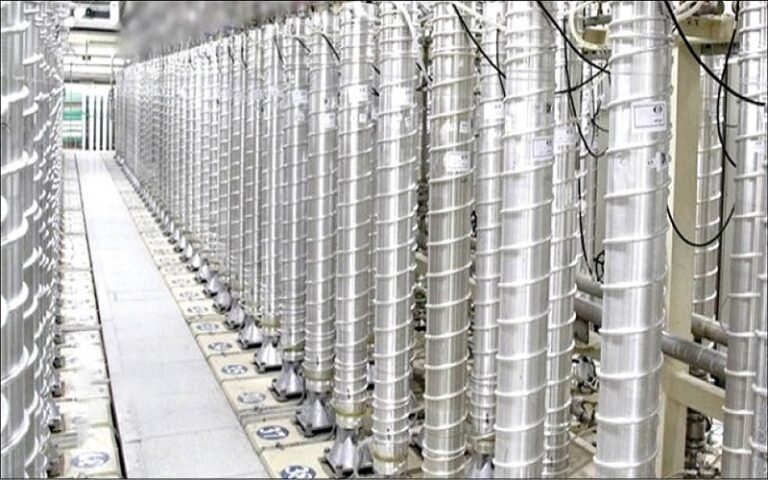
Rafael Grossi, Director General of the International Atomic Energy Agency (IAEA), stated in an interview that while Iran’s regime currently does not possess a nuclear weapon, it has enough enriched uranium to produce six or seven nuclear warheads.

On Saturday, April 5, Rafael Grossi spoke with an Argentine media outlet about the Iranian regime’s nuclear program and the new U.S. policies regarding it.

In the interview, Grossi emphasized that the Iranian regime currently has no nuclear weapons but has acquired the equipment and materials needed to build them. According to him, the amount of enriched uranium in Iran is sufficient to construct six or seven nuclear weapons.

Iranian Regime Accelerates Uranium Enrichment to Concerning Levels

Grossi referred to ongoing correspondence between Tehran and Washington, saying that the United States has presented Iran with two choices: reaching an agreement on the nuclear program or facing airstrikes.

Grossi expressed his concern about the current situation. According to U.S. officials, the Iranian regime has two months to make a decision.

In a phone call between Grossi and the Iranian regime’s Foreign Minister, it was agreed that Grossi would travel to Iran in the coming weeks.

Grossi stated that the main reason for his trip to Iran is to prevent a direct confrontation between the Iranian regime and the United States. He said Iran has agreed to clarify the disputed issues as soon as possible in hopes of avoiding “any destructive conflict.”

Contrary to the regime’s official position of not pursuing nuclear weapons, Ali Larijani, the former Speaker of the Iranian regime’s Majlis (Parliament), said last week: “If the United States makes a wrong move regarding Iran’s nuclear issue, it will force Iran to pursue nuclear weapons, because Iran must defend itself.”

Ali Larijani, who is a member of Iran’s Expediency Council and an advisor to the regime’s Supreme Leader Ali Khamenei, said in a televised program, following discussion of the current situation and recent communications from Donald Trump: “The Supreme Leader’s fatwa (a legal ruling on a point of so called Islamic law) is that we will not pursue [nuclear] weapons. A fatwa is different from political instructions, and his letter [on this issue] has also been registered once at the United Nations. But when they apply pressure, then [building a nuclear bomb] will have a ‘secondary justification’.”


Iranian Regime Media Repeats Call for Murdering Trump

Kayhan, a state-run newspaper managed by a representative of Ali Khamenei, Iranian regime’s Supreme Leader, once again defended the idea of shooting the President of the United States in the head, despite widespread criticism.

In its “Dialogue” column, the newspaper repeated its statement from the previous day that Donald Trump would soon be shot in the head in revenge for Qasem Soleimani. It defended this controversial remark that had received strong backlash.

In the Kayhan article, presented as a fictional conversation between two people, the character proposing Trump’s assassination claimed that critics were expressing their objections because they were “scared.”

The article described the killing of Trump as a “good event” that would bring joy to the people of Gaza and the so-called “resistance forces.”


Syria, Hezbollah, and Iran’s Regime Obstructed Lebanese Reconciliation for Years

Coinciding with the visit of Morgan Ortagus, Deputy U.S. Special Envoy for Middle East Affairs, to Lebanon and her meetings with Lebanese officials, Sami Gemayel, leader of the Lebanese Kataeb Party, declared that the disarmament of Hezbollah is no longer open for discussion.

On April 5, Gemayel told Lebanon’s LBCI television channel that the presence of weapons outside government control violates the constitution, the rule of law, and the principle of equality among citizens.

He emphasized that national reconciliation must not become a cover for the continuation of this situation.

Iran and Hezbollah’s Cyber Attacks on Israel Have Tripled Since October 7 Attack

Gemayel also stated that the Syrian government, Hezbollah, and the Iranian regime have for years obstructed reconciliation among the Lebanese. However, he said that today, after five decades, there is a genuine opportunity for joint dialogue and building a shared future.

This Lebanese political figure stressed that reconciliation must be based on truth-telling and mutual respect for the diverse narratives of the Lebanese people. He added that as long as some believe they can impose their will through the force of arms, national consensus cannot be achieved.

According to Arabic-language media outlets, the Lebanese presidency announced that President Michel Aoun met with Ortagus on Saturday to discuss the situation in southern and eastern Lebanon, financial and economic reforms, and strategies for combating corruption.

A private meeting between Aoun and Ortagus took place prior to the official talks.

It had been anticipated that discussions on the disarmament of Hezbollah and limiting the group’s activities would be among the topics of the meetings.

Earlier, on February 7, Ortagus had stated at the Baabda Presidential Palace in Lebanon that the United States has drawn a red line: Hezbollah must not be part of Lebanon’s future government.

Referring to what she called Hezbollah’s “defeat” in its conflict with Israel, she stated that “Hezbollah’s era of terror is over.”

On February 8, Mohammad Raad, head of the “Loyalty to the Resistance” parliamentary bloc representing Hezbollah, described Ortagus’ remarks as “blatant interference in Lebanon’s sovereignty” and “entirely outside diplomatic norms and the principles of international relations,” calling them full of malice and irresponsibility.

On April 3, senior Republican and Democratic senators on the U.S. Senate Foreign Relations Committee warned that the Lebanese Army must accelerate the implementation of the ceasefire between Hezbollah and Israel, brokered by the United States, or else Washington’s military aid to Beirut will be reconsidered.

Under the terms of the ceasefire agreement between Israel and Hezbollah, the group is required to move its forces and weapons at least 32 kilometers away from the Lebanon-Israel border. In return, Israel is to fully withdraw from the remaining occupied Lebanese territories, and the Lebanese Army will take control of the vacated areas.

During the meeting between Aoun and Ortagus, the two sides discussed matters related to southern Lebanon, the activities of the international monitoring committee, Israel’s withdrawal process, and the security situation along the Lebanese-Syrian border.

According to Al Hadath TV, financial and economic reforms, as well as the Lebanese government’s anti-corruption efforts, were also part of the negotiations.

Ortagus also met with Lebanese Prime Minister Nawaf Salam during her trip and discussed enhancing economic cooperation, implementing structural reforms, and promoting financial transparency.

The U.S. envoy’s return visit to Lebanon comes at a time when the country continues to face economic stagnation, political turmoil, and a severe collapse in public infrastructure.


Large-Scale Farmers’ Protests in Iran Against the Policy of Drying Up the Zayandeh Rud River

0

On Friday, April 4, a group of farmers in the Khorasgan area, located in eastern Isfahan, held a protest and march to voice their objection to the government’s failure to allocate water rights from the Zayandeh Rud River and to protest officials’ disregard for their demands. This gathering, which included the chanting of protest slogans, is part of a series of demonstrations that farmers have held in recent days and weeks regarding the water crisis in the region.

The protesting farmers chanted slogans such as “Zayandeh Rud’s water is our rightful claim!” and “No nation has ever seen such injustice!” They demanded that the authorities fulfill their earlier promises regarding the provision of agricultural water rights and stated that they would continue their sit-ins and protests until their demands are met.

Warning About the Possibility of Water Rationing in Iran

On April 3, farmers in the town of Ziyar also held a similar demonstration. The protesters strongly criticized the government and certain officials, chanting slogans such as “Death to Pezeshkian,” referring to regime president Masoud Pezeshkian, and warned about the continuous neglect of their livelihoods and water resources.
On the same day, a number of residents in Natanz also gathered in front of the county courthouse to protest the activities of mining companies in the region. These citizens cited excessive extraction of rural water resources, environmental damage, and the support these companies receive from the Ministry of Industry, Mines and Trade as well as the Forests and Rangelands Organization as reasons for their demonstration.

Background of Farmers’ Protests in Isfahan

The protests by farmers in Isfahan province—particularly in its eastern parts—have a long history. The main issue at the heart of these demonstrations is the government’s failure to allocate the legal water rights of farmers from the Zayandeh Rud River. This river has faced drought for years due to water diversion projects that prioritize the steel industry and military systems of the Islamic Revolutionary Guard Corps (IRGC), along with ineffective water resource management policies.

In recent years, farmers have repeatedly held protests in areas such as Varzaneh, Khorasgan, Ziyar, and other parts of eastern Isfahan. These protests have taken the form of multi-day sit-ins, marches, road blockades, and demonstrations in front of government offices. However, the authorities have yet to provide a clear response to the demands of these producers, and the crisis remains unresolved.

On Thursday, farmers expressed their strong dissatisfaction with the policies of Pezeshkian’s administration by chanting “Death to Pezeshkian.”

Iran’s 2025 Budget: Massive Oil Revenues for Military, State Assets Transferred to IRGC

The detailed text of Iran’s new budget bill (which started on March 21) was released by the Iranian government on Monday, March 31. It not only highlights the massive share of oil revenues and national budget allocated to the military and security forces but also facilitates these institutions’ acquisition of state assets.

For several years, a portion of Iran’s oil exports has been allocated to military forces, particularly the Islamic Revolutionary Guard Corps (IRGC), under the “Strengthening National Defense” program. However, this year, not only has the military’s oil share increased significantly, but government budget expenditures to finance them have also grown. Additionally, the authorization for direct crude oil deliveries has expanded to include other institutions and projects, such as Iran’s nuclear program.

Furthermore, the budget law text indicates that the government has allowed IRGC-affiliated institutions, such as the Khatam al-Anbiya Construction Headquarters, as well as organizations under the control of Iranian regime’s Supreme Leader Ali Khamenei, including the “Execution of Imam Khomeini’s Order” (EIKO), to settle government debts through the transfer of state assets.

The Military’s Oil Share

The government of Masoud Pezeshkian, the President of Iran’s regime, has planned for daily oil exports of 1.85 million barrels this year. One-third of this amount (valued at $12.4 billion) will be directly allocated to the armed forces and their special military projects. This figure is three times higher than last year.

The remaining exported oil (along with all exported gas) will be shared among the government budget, the National Development Fund, and the National Iranian Oil Company, totaling $33.5 billion.

The Iranian Regime’s Economic Crisis in a Critical Year

Another crucial point is that the government has set the exchange rate for the oil given to the armed forces at approximately 600,000 rials per euro, while the euro’s current free market rate in Iran is 1,140,000 rials.

This creates a massive financial advantage for the military, allowing them to sell oil and generate significant profits by exchanging the revenue at free market rates.

Moreover, the military has priority in selling oil. Any decline in Iran’s oil exports will primarily impact the non-military sector. If the armed forces fail to export the oil they receive, the government must compensate them with equivalent cash payments.

While Masoud Pezeshkian has planned for daily oil exports of 1.85 million barrels for the current fiscal year, data from commodity intelligence firm Kpler indicates that Iran’s daily oil offloading at Chinese ports—its only customer—was about 1.34 million barrels in the first three months of this year. This is down from an average of 1.5 million barrels per day last year.

Meanwhile, the administration of U.S. President Donald Trump launched a “maximum pressure” campaign aimed at reducing Iran’s oil exports to zero. Several oil tanker tracking firms and energy consultancy companies had previously predicted that Iran’s oil exports could drop by about 500,000 barrels per day in the coming months.

The decline in Iran’s oil exports to China comes as the government has also granted direct oil export rights (from the state’s share) to five other entities and projects, including “nuclear energy projects.”

Given that Iran’s regime has no new nuclear power plant construction projects planned for this year, the allocated funds are likely to be used for nuclear activities unrelated to electricity generation, such as uranium enrichment, a highly sensitive part of Iran’s nuclear program.

Another point is that, in addition to revenue from direct oil sales under the so-called “Strengthening National Defense” program, Iran’s military and security forces receive a 10% share of the government’s general budget for paying military personnel salaries.

Transfer of State Assets to the Military

In the absence of transparency in the economic activities of the IRGC and institutions controlled by the regime’s Supreme Leader, Ali Khamenei, unofficial reports suggest that these entities dominate nearly half of Iran’s shadow economy.

Over the past two decades, a significant portion of the government’s privatization initiatives has deviated from its original goal of transferring assets to the genuine private sector. Instead, state-owned assets have been handed over at deeply discounted prices to the IRGC and entities under Khamenei’s control.

Organizations under the IRGC and Khamenei’s leadership have extensive involvement in Iran’s construction and infrastructure projects.

The exact amount of government debt owed to the IRGC and entities under the Supreme Leader’s office for construction projects remains unclear. However, Iran’s 2025 budget law (effective from March 21, 2025) explicitly names the IRGC-affiliated Khatam al-Anbiya Construction Headquarters and the Execution of Imam Khomeini’s Order (EIKO), which operates under Khamenei. These institutions are allowed to claim up to $2 billion worth of state assets in exchange for government debt sum equivalent to roughly 13% of the government’s total asset sales plan for this year.

Given the weakened and marginalized state of Iran’s private sector, it is expected that once again, institutions under the IRGC and the Supreme Leader’s office will dominate the acquisition of state assets during the privatization process, just as they have in the past.


The Iranian Regime’s Economic Crisis in a Critical Year

The Iranian year 1404 (starting on March 21) begins with a widespread consensus among Iranians of all political beliefs that the country is in an economic crisis. This crisis indicates an even grimmer future. One of the signs of this is a budget deficit of 8,700 trillion rials (approximately $8.7 billion) and an inflation rate exceeding 40%.

Continued Inflation Growth

According to the Iranian regime’s Statistics Center, the price of goods and services used by the public has increased by 35% compared to last year. The situation for workers’ wages is even more painful, as their value has dropped by nearly 50% over the past 14 years.

“The minimum dollar wage of workers, which was nearly $300 in 2012, has dropped to below $150 in 2025, nearly halving. In other words, Iranian workers’ purchasing power has drastically declined during this period.” (State-run EcoIran, March 29, 2025)

Surging Inflation in the New Iranian Year

Last year was, in fact, the year of economic bankruptcy for the Iranian regime. The financial imbalance, particularly in the energy sector, led to the shutdown of industries, schools, and even government offices.

Continuous Money Printing by the Government

Mahdi Pazouki, a government-affiliated economist, stated:
“The most critical economic problem Iran faced in 2024 was economic instability. The key indicator of this instability is rising inflation. Another issue is the budget deficit. When government expenditures exceed revenues, it results in a deficit, which in turn fuels inflation. When the Central Bank is ordered to print money, it leads to increased liquidity.”

Governments’ Addiction to Raiding the National Development Fund

The administration of Masoud Pezeshkian, the current president of the Iranian regime, like previous governments, turns to the National Development Fund whenever it fails in economic policies.

The electronic voucher program, which had been suspended since early last year, will now be reinstated under a new cabinet decision, financed by a $1 billion withdrawal from the National Development Fund.

The Banks of Iran: Serving the Economy or Corrupt Capitalism?

Electronic vouchers will provide low-income groups (bottom three deciles) with 5 million rials per person (~$5) and middle-income groups (deciles 4–7) with 3.5 million rials per person (~$3.5) to purchase 11 essential goods.

The voucher program covers meat, chicken, eggs, rice, pasta, cooking oil, milk, cheese, yogurt, legumes, sugar, and sweeteners.

Billion-Dollar Withdrawals from the Fund

In September 2024, at the start of Pezeshkian’s presidency, the Iranian regime’s supreme leader, Ali Khamenei, approved his request to withdraw $8 billion from the fund to settle government debts to wheat farmers, nurses, and truck drivers.

More recently, a $17 billion withdrawal from the fund was approved to finance the South Pars gas pressure-boosting project and to channel funds to the Khatam al-Anbiya Construction Headquarters (a branch of the Islamic Revolutionary Guard Corps) and several front companies.

Economy in Crisis, Without an Economy Minister!

Meanwhile, the Minister of Economy has been impeached and removed from office.

“An economic expert stated: One of the major challenges facing businesses is the performance of the Industry Minister, who, due to foreign currency shortages, has restricted currency allocations. This situation has led to reduced production, rising prices, and increased inflation.” (State-affiliated newspaper Eghtesad Online, March 27, 2025)

Iran Heading Towards More Crises

The Iranian’s problems extend far beyond the economy. Weak foreign policy, fears of potential wars, uncertainty over succession for the regime’sSupreme Leader, and the possibility of popular uprisings have made the Persian year 1404 (March 2025-March 2026) a year of crisis and potentially the beginning of the regime’s downfall.


U.S. Treasury Secretary Consults Global Banks on Iranian Oil Sanctions

Scott Bessent, the U.S. Treasury Secretary, met with representatives of 16 global banks and federal law enforcement agencies to discuss U.S. sanctions policies against the Iranian regime, particularly efforts to reduce Iran’s oil exports. He also hinted at the possibility of increased sanctions against Tehran.

On Wednesday, April 2, in Washington, D.C., Bessent announced that the Trump administration is exerting maximum pressure on the Iranian regime to prevent it from accessing financial resources, which are used to fund Hamas and other militant groups in the Middle East, as well as the Iranian regime’s nuclear program.

He stated that these financial resources include billions of dollars that the Iranian regime earns annually from oil sales, which it uses to fund its dangerous programs and support several terrorist groups.

U.S. Imposes New Sanctions on Iran’s Drone Supply Network

On February 4, former President Donald Trump issued an executive order to resume the maximum pressure policy on the regime. This order specifically emphasized that Iranian oil exports must be reduced to zero.

U.S. Sanctions

In March, the U.S. Treasury Department imposed sanctions on oil tankers carrying Iranian oil and an independent Chinese refinery known as “Teapot,” which processes Iranian oil. Due to concerns over U.S. sanctions, China’s state-owned refineries have stopped purchasing Iranian oil.

Bessent, in his remarks, referenced sanctions on the small Shandong refinery and its CEO, who had purchased and processed hundreds of millions of dollars’ worth of Iranian crude oil. This oil included shipments from vessels linked to the Houthis and Iranian regime’s Ministry of Defense.

The U.S. Treasury Secretary stated that the purchase of Iranian oil by small Teapot refineries serves as a major economic lifeline for the Iranian government.

Warning About Iran’s Secret Banking Network

Bessent also warned banks that the Iranian government conducts its foreign currency transactions through a shadowy and secret banking network. He added that his message to financial institutions worldwide is clear: Protect your institutions from exploitation by this malicious network so that you can serve your legitimate customers with integrity.

Washington’s Tools to Counter Iran

Bessent stated that the U.S. Treasury Department utilizes tools such as the meeting held on Wednesday, April 2, to bring together financial institutions, regulatory bodies, and law enforcement agencies to counter what he described as Iran’s illegal revenue channels.

He also told Bloomberg in an interview that additional sanctions might be imposed on the Iranian regime.

The U.S. Treasury Department did not disclose which banks and institutions participated in the meeting.

In an interview with NBC News, Donald Trump threatened to impose secondary tariffs on buyers of goods from Iran and Russia. In March, he signed an executive order to enforce similar tariffs on buyers of Venezuelan oil.


U.S. Imposes New Sanctions on Iran’s Drone Supply Network

The U.S. Department of the Treasury, in coordination with the Department of Justice, announced a new round of sanctions against an international network linked to Iran’s drone program. This network includes six entities, and two individuals based in Iran, the United Arab Emirates, and China, all involved in supplying components for Iran’s drone industry.

According to U.S. officials, this network operated in support of Qods Aviation Industries, one of Iran’s primary military drone manufacturers. It also played a role in supplying equipment to other entities affiliated with Iran’s military-industrial complex, including the Iran Aircraft Manufacturing Industries Company (HESA) and Bagheri Industrial Group.

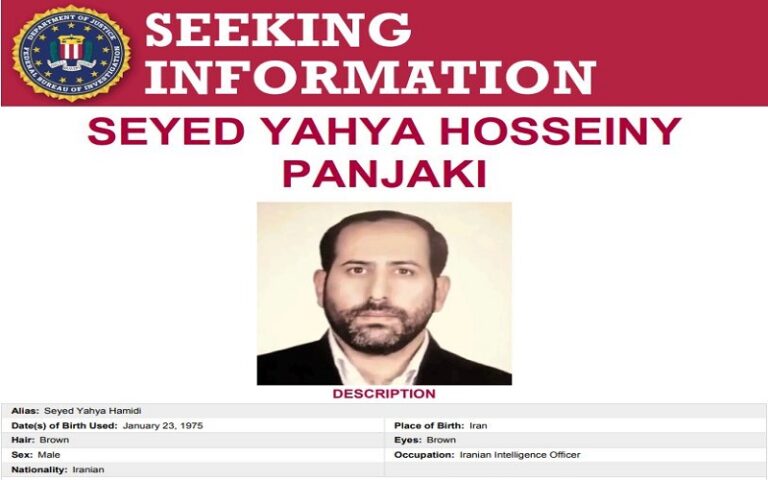
The U.S. Department of Justice also announced that an indictment has been issued in the Eastern District of New York against Hossein Akbari (63) and Reza Amidi (62), both Iranian nationals, as well as an Iranian company named Rah Roshd.

According to the indictment, they are accused of attempting to provide material support to the Iranian regime’s Islamic Revolutionary Guard Corps (IRGC) and participating in a scheme to transfer U.S. technology for use in Iran’s attack drones. Akbari and Omidi remain fugitives and are currently at large.

History of Drone-Related Sanctions

Russia’s extensive use of Iranian drones in its invasion of Ukraine has drawn global attention to this aspect of Iran’s weapons program.

The U.S. Department of the Treasury has published a comprehensive guide on Iran’s drone industry, identifying 13 customs tariff codes for components that could be used in drone manufacturing.

However, Iran continues to import essential drone components on a large scale through private companies.

History of Drone-Related Sanctions Against Iran

In November 2023, the U.S. Department of the Treasury sanctioned 10 entities and four individuals based in Iran, Malaysia, Hong Kong, and Indonesia for supporting Iran’s drone production program. Among those sanctioned were Hossein Hatefi Ardakani, chairman of Kavan Electronic Behrad Company, and the Saman Industrial Group, affiliated with Iran’s Ministry of Defense.

In March 2024, the U.S. imposed sanctions on 16 individuals and two additional entities involved in facilitating Iran’s drone production. The U.S. Treasury stated that the sanctioned individuals were acting on behalf of the Islamic Revolutionary Guard Corps-Quds Force (IRGC-QF) in collaboration with drone manufacturers.

In April 2024, following Iran’s drone and missile attack on Israel, the United Kingdom announced sanctions against Iran’s military drone industry. The U.S. and Canada also imposed new sanctions targeting Iran’s Ministry of Defense’s drone production sector.

In October 2024, the U.S. Department of the Treasury sanctioned two individuals and two entities for their involvement in the development and supply of critical navigation systems for Iran. Additionally, the U.S. State Department imposed sanctions on the deputy commander of the IRGC Aerospace Force and two Iranian entities for supporting Tehran’s ballistic missile and drone development programs.

The most recent sanctions prior to the latest round came on February 27, 2025, when the U.S. Department of the Treasury sanctioned six entities based in Hong Kong and China for their role in purchasing and supplying key drone components to Iran.

In its statement, the Treasury Department emphasized that this action was part of Donald Trump’s “maximum pressure campaign” against the Iranian regime.


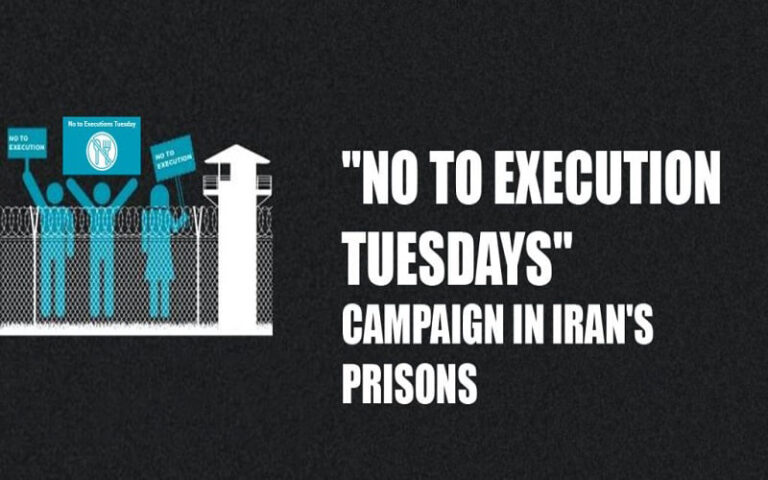
“No to Execution Tuesdays”: Hunger Strike in 38 Iranian Prisons

The “No to Execution Tuesdays” campaign, in its 62nd week, continued its protest against the implementation of death sentences in Iran, with the participation of prisoners from 38 prisons across the country.

This campaign, which began in February 2024, is held every Tuesday through a hunger strike by political prisoners in protest against the expansion and continuation of executions by Iran’s regime.

“No to Execution Tuesdays” Campaign; Prisoners’ Hunger Strike in Iran

In its latest statement, the campaign announced that the Supreme Court has upheld the death sentence of Hamid Hosseinnejad Heidaranlou, a political prisoner from Chaldoran.

The “No to Execution Tuesdays” campaign, noting that executions continue even during the Persian New Year (Nowruz) and the holy month of Ramadan, has called on all freedom-loving people and families of prisoners sentenced to death to organize protest gatherings in public places and in front of prisons to demand the abolition of this inhumane punishment. The campaign emphasizes that protesting against death sentences is a natural and legitimate right of every free human being.

The full statement of the campaign is as follows:

“The Iranian regime has not stopped the inhumane punishment of execution even during Nowruz and Ramadan. In recent days, several prisoners have fallen victim to the insatiable appetite of Iran’s rulers for executions and repression.

“In this period, the death sentence of political prisoner Hamid Hosseinnejad Heidaranlou from Chaldoran, who has been accused of ‘armed rebellion (baghi),’ was upheld by the Supreme Court of the regime and was officially communicated to him on March 24. The risk of his execution is therefore very serious, and it is essential that we raise our voices for him and other death row inmates.

“We warn against the likelihood of resuming after the holidays, especially for those whose unjust sentences have been confirmed.

“The case of Varisheh Moradi is currently in the Supreme Court. We demand the immediate annulment of Varisheh Moradi’s death sentence by the Supreme Court, as this is not a judicial decision but rather a premeditated state-sanctioned murder. We express our deep concern over the confirmation of this sentence and that of other prisoners and will resist it.

“The ‘No to Execution Tuesdays’ campaign strongly condemns the brutal executions and inhumane death sentences regardless of the charges and calls for the abolition of the death penalty in Iran.

“As we have witnessed in recent weeks, families of prisoners sentenced to death have gathered in protest in front of Lakan Prison in Rasht, Evin Prison in Tehran, Saqqez Prison, and in the city of Sonqor. In solidarity with these families, we call on all freedom-loving people and families of prisoners sentenced to death to organize protest gatherings in public places, in front of prisons, or any other location to demand the abolition of the inhumane death penalty.

“This is the most natural, legitimate, and logical right of families, all free individuals, and the general public to protest against the cruel death sentences.”

On Tuesday, April 1, in its 62nd week, the ‘No to Execution Tuesdays’ campaign will hold a hunger strike in 38 prisons.


Iran’s Power Shortages Will Not Be Resolved Within One or Two Years

0

As the Iranian regime continues to struggle with supplying electricity to the country, Mostafa Nakhaei, a member of the Energy Commission of the Majlis (parliament), highlighted growing concerns about the energy crisis expected in the upcoming summer. He emphasized that resolving the electricity shortage will not be possible within one or two years.

On March 30, Nakhaei stated in an interview with the regime’s ISNA News Agency, affiliated with the Basij paramilitary force: “Electricity shortages, especially in the summer, are an undeniable reality that have accumulated over the years, and naturally, they cannot be resolved within one or two years.”

The Ongoing Electricity Crisis in Iran

He pointed out that electricity consumption in the country increases by about five percent annually, while power generation capacity has not seen significant growth in recent years.

In recent months, multiple reports have emerged regarding Iran’s energy shortages and the government’s inability to effectively manage various sectors of the country.

Hamidreza Salehi, Secretary General of the regime’s Energy Export Federation, warned on March 25 that, due to the potential shutdown of hydroelectric power plants caused by water shortages, the country will face a power deficit of 24,000 megawatts this summer.

In another part of his interview with Daneshjoo News Agency, Nakhaei stated that Masoud Pezeshkian’s administration has declared in commission meetings that developing renewable energy sources, particularly solar power, is a “key solution” on their agenda. However, this solution appears to be far removed from the current reality.

As Iran’s regime continues to struggle with electricity supply challenges, Abbas Aliabadi, the Iranian regime’s Minister of Energy, urged citizens on March 22 to invest in the country’s electricity industry to help overcome this crisis.

Between March 21, 2024, and March 21, 2025, there were 291 working days in total, but some provinces declared 72 of those days as non-working due to gas or electricity shortages.

In recent months, many citizens have staged protests in various parts of the country in response to the Iranian regime’s inefficiency in energy supply and repeated power outages.