Home Blog Page 119

Fuel Smuggling Mafia and the Policy of Concealment in Iran  

Fuel smuggling has become one of the most pressing economic crises in Iran today. Official reports indicate that 20 to 30 million liters of fuel “disappear” daily. However, the reality is that this fuel is not lost but systematically smuggled. The true beneficiaries of this illicit trade are powerful institutions and influential groups within the ruling system. The existence of a complex and deeply rooted fuel smuggling mafia is no longer a secret—even high-ranking officials of the regime openly acknowledge it.  

Masoud Pezeshkian openly questioned this phenomenon, stating:  

“How can nearly 20 million liters of fuel disappear daily when the state itself is both the producer and distributor? These thieves should be executed.”  

Similarly, Mohammad Bagher Ghalibaf, the head of the regime’s parliament, admitted:  

“Between 25 to 30 million liters of fuel are smuggled out of the country every day. There is no doubt that this smuggling is conducted in an organized manner, as the main producers and consumers of this fuel are the very entities behind this trade.”  

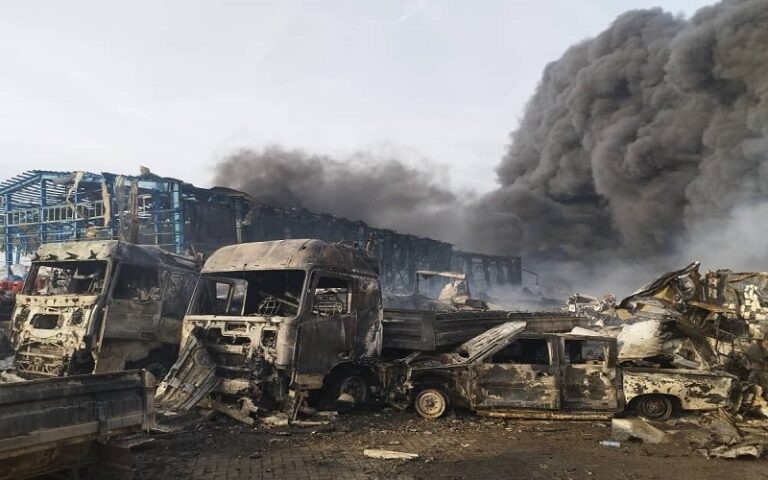
Iran: Theft of “70,000 Liters” of Jet Fuel Per Day from Bandar Abbas Pipeline

The Organized Structure of Fuel Smuggling  

These statements point to the existence of a well-organized smuggling network operating freely across Iran’s borders. While everyone is aware of this network, a policy of concealment and cover-ups is actively employed to protect those involved.  

On December 20, 2023, the Iranian regime’s newspaper Arman Melli shed light on the nature of this network, stating:  

“These smuggling operations are carried out by organized groups that exploit weaknesses in oversight systems. These networks have strong communication structures and wield influence at the highest levels of decision-making in the country.”  

The fundamental question remains: How can such a network smuggle tens of millions of liters of fuel daily when all border crossings and energy transport routes are under the strict control of security and military agencies?  

 Iranian Regime’s Role in Iraq’s Oil Smuggling Network  

Adding to the evidence of the regime’s involvement in large-scale fuel smuggling, Reuters published a report on December 3, 2024, revealing a sophisticated oil smuggling network in Iraq. This network reportedly generates between $1 billion and $3 billion annually for the Iranian regime and its affiliated groups. The report, based on information from five informed sources and three Western intelligence reports, indicated that the network exploits Iraqi government policies that allocate subsidized fuel to asphalt factories. Instead of using the fuel for its intended purposes, smuggling networks redirect it for export to other countries.  

According to Reuters, between 500,000 to 750,000 tons of heavy fuel oil—equivalent to 3.4 to 5 million barrels of crude oil—are smuggled monthly from Iraqi factories and primarily exported to Asian markets. A common tactic used by this network involves blending smuggled Iraqi fuel with Iranian fuel and selling it under the label of an Iraqi product. This allows the Iranian regime to bypass strict U.S. sanctions on its oil exports while reaping enormous profits. Notably, when Reuters sought comments from Iranian regime and Iraqi authorities, both governments declined to respond.  

 Government Complicity in Fuel Smuggling  

Perhaps the most shocking admission regarding the Iranian regime’s involvement in fuel smuggling came from Pezeshkian himself, who revealed during a parliamentary session that the government purchases approximately 9 million liters of fuel daily from smugglers. This statement confirms that the authorities are fully aware of these smugglers’ identities. Instead of combating them, the government engages in direct business transactions with them. If the regime knows who these smugglers are, why does it not take action against them? The answer lies in the deeply entrenched interests that profit from this trade.

The Iranian Regime’s Security Forces: The Key Players in Fuel Smuggling  

Despite repeated claims of ignorance and denial from regime officials, it is evident that smuggling 20 million liters of fuel daily is not the work of small-scale criminals or disorganized groups. Fuel smuggling has become a highly structured operation controlled by entities with the resources to manage, regulate, and even legitimize these transactions. At the forefront of this operation is the Iranian regime’s security forces, which play a primary role in this illicit trade.  

By controlling ports, border crossings, and international smuggling networks, these forces have turned fuel smuggling into a multi-billion-dollar industry. A significant portion of the profits is funneled into military entities and proxy groups, while key officials and influential figures within the regime receive their share of the enormous revenues. Meanwhile, the Iranian people bear the consequences—suffering from fuel shortages, soaring prices, and economic crises exacerbated by corruption and sanctions.  

 The Policy of Concealment and Misinformation  

A deeper analysis of Iran’s fuel smuggling crisis reveals that it is not merely an economic problem but a structural and political one. Although government officials publicly acknowledge large-scale smuggling, no concrete actions have been taken to curb it. Everyone knows who is responsible, yet a policy of cover-ups and misinformation continues to shield the real perpetrators.  

The state-run Ham Mihan highlighted this deception in its editorial, criticizing the government’s inaction:  

“Can you publish a report exposing the true scale of this network? Why the silence? Does it conflict with political interests? Who are these smugglers you keep threatening without taking any real action? If these threats had ever been enforced, there would be no need to repeat them daily. The day you publish an official report listing the names and photos of these so-called ‘respectable’ smugglers, only then will the people believe that you are serious about ending this crisis.”  

As long as this powerful smuggling mafia remains active, fuel smuggling will persist, intensifying economic pressure on the Iranian people. After all, a knife cannot cut itself.

Protests in Iranian Cities: from Economic Hardships to Unmet Demands

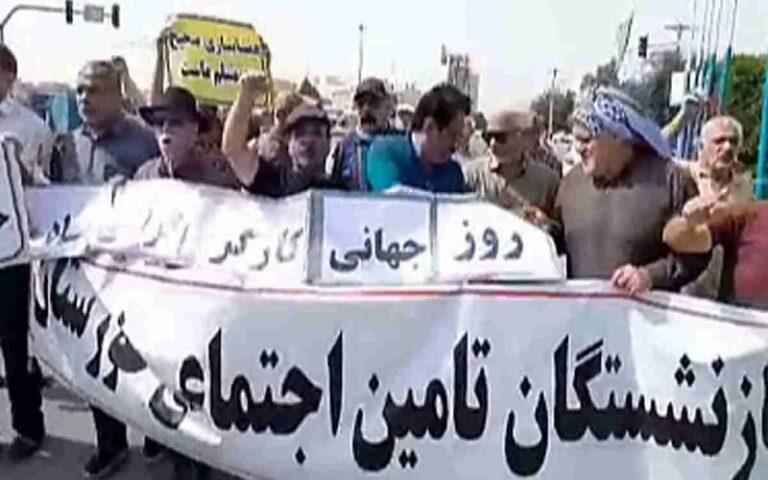
On Saturday, March 1, various cities across Iran witnessed protests by different segments of society. These protests stem from economic hardships, poor working conditions, and the government’s failure to fulfill its promises. The demonstrations, involving nurses, workers, retirees, and housing applicants, reflect widespread dissatisfaction with the current situation and the people’s efforts to claim their rights. Below are the details of these events.

Nurses’ Protest in Chaharmahal and Bakhtiari

On Saturday, nurses in the Chaharmahal and Bakhtiari province held a protest in front of the governor’s office. These healthcare workers protested against economic hardships and poor working conditions. According to informed sources, intelligence forces intervened, threatening the protesters and dispersing the gathering.

Protests Continue as Iran’s Regime Neglects Teacher’s Woes

Housing Applicants Protest in Neyshabur

Applicants of the National Housing Plan in Neyshabur, eastern Iran, also staged a protest due to delays in receiving their residential units. One protester stated, “We registered for the National Housing Plan two years ago and made payments, but not only have the units not been delivered, the final delivery date and total cost remain unclear.” This uncertainty has fueled the applicants’ anger.

Protest by Workers of Transmission and Distribution Posts

Workers operating at the country’s transmission and distribution posts also held a protest in front of the Administrative and Recruitment Organization. These workers demanded a change in their employment status, the elimination of discrimination in bonuses and benefits compared to their officially employed colleagues, and the fulfillment of longstanding demands that have yet to be met.

Nurses’ Protest at Chamran Hospital in Isfahan

Nurses at Chamran Hospital in Isfahan also staged a protest in the hospital courtyard due to meager overtime pay (200,000 rials per hour, approximately 21 cents) and other unmet demands. They voiced their dissatisfaction with chants such as “Incompetent official, shame on you!” and “Nurses are not beggars, this low salary is not what we deserve!”

Protest by Retirees of Iran Air

On Wednesday, February 26, retirees of Iran Air (the national airline of Iran) staged a protest in front of the Ministry of Cooperatives to object to the illegal seizure of their pension fund assets. They chanted slogans demanding the protection of the fund’s assets and the prevention of the unlawful transfer of shares from its subsidiary companies. The head of the Iran Air Retirees’ Association stated during the protest: “Uninformed decisions by managers of the National Pension Fund, including the transfer of Chabahar Airlines to the Atieh Saba Holding, have harmed 10,000 employees and 13,000 retirees.”

The recent protests in various cities across Iran highlight the deep dissatisfaction of different social groups with economic conditions, discrimination in wages and benefits, and government neglect of legal demands. From nurses and workers to retirees and housing applicants, all are raising their voices for justice and better living conditions. These demonstrations underscore the reality that Ali Khamenei’s government has utterly failed to improve the livelihood of the people and different segments of society.


Severe Inflation and Economic Instability Overshadow Iran’s Nowruz Market

Iranian media have reported extensively on the severe recession and rising prices overshadowing the Nowruz market (the Persian New Year which starts on March 21), noting that demand has dropped to a minimum in the final days of the year. The state-run website Etemad Online, in a report titled “Nowruz Nuts More Expensive Than Gold,” wrote that weak government oversight and insufficient support for domestic producers, along with excessive exports of certain nuts such as pistachios, have exacerbated price hikes ahead of Nowruz.

53% Inflation in Imported Goods: Economic Crisis and Governance Failure in Iran

Etemad Online reported that the price of nuts has reached 16.5 million rials per kilogram (approximately $17). Meanwhile, the minimum wage for a worker supporting two children is around $116.

The state-run website Tabnak also highlighted the turmoil in the holiday market, stating that the deep recession in the nuts and dried fruit sector has not prevented price increases. According to the latest inflation data for February, the dried fruit category saw a 7.8% monthly price increase, making it one of the highest inflation rates among food items.

Meanwhile, Gholamreza Nouri Ghezeljeh, the Iranian regime’s Minister of Agriculture has acknowledged the rising prices, stating that “price increases are natural.”

On March 1, Nouri Ghezeljeh, said in a meeting with provincial governors: “Right now, people are talking about the high prices of legumes and tea. At the beginning of the year, these items were imported at an exchange rate of 285,000 rials per USD, but now it’s about 680,000 rials. Naturally, this 2.5-fold increase affects prices.”

Currently, the U.S. dollar is trading at approximately 950,000 rials in the market.

“These are decisions that have been made, and we must defend them. We need to understand the issue and not blame everything on why prices rise ahead of Nowruz,” Nouri Ghezeljeh added.

Market players and experts attribute part of the ongoing price hikes to the exchange rate and express concerns about future prices. In this regard, Mohammad Hashemi, a regime insider, stated that the exchange rate could reach 1.1 million rials per USD by Nowruz and may continue rising afterward. 

Based on this, experts and economic analysts foresee difficult days ahead for Iran’s economy. In this regard, Hossein Selahvarzi, an economic expert, told the state-runwebsite Donya-e-Eqtesad that Trump’s “maximum pressure” policy will put additional strain on China, Iran’s sole oil buyer.

According to this economic expert, Iran’s oil exports could drop significantly to below 500,000 barrels per day, leading to a severe decline in government revenues. As a result, the government will face serious difficulties in meeting the country’s essential needs.


Iran: Government Managers Enjoy Stellar Salaries While Workers’ Wages Still Undecided

As the Iranian calendar year nears its end (March 21) and the minimum wage for the upcoming year remains undecided, reports of government managers receiving multi-million toman salaries have sparked widespread criticism.

The state-run ILNA news agency reported: “Workers ask: What level of expertise, effort, and work has led managers—many with unrelated academic degrees—to receive salaries exceeding 800 million to 1 billion and, more recently, over 2 billion rials (approximately $2,105)?”

The Spread of Poverty in Iran

Currently, the exchange rate for one U.S. dollar is approximately 950,000 rials. The minimum wage for a worker with two children is around $116.

ILNA highlighted the leaked salary slip of a senior human resources manager at a state-owned company, amounting to 2.47 billion rials (approximately $2,600). The report noted that part of the company’s shares are linked to a pension fund, and the revelation has triggered a wave of public outrage.

Quoting a labor activist from a petrochemical company in Asaluyeh, ILNA reported: “We don’t have any directly contracted employees receiving less than 800 million rials (around $843) in wages.”

Majid Rahmati, a board member of the regime’s Coordination Center of Islamic Labor Councils in Tehran, also reacted to this issue, saying: “Wasn’t the legal salary cap for government payments set at 700 million rials by parliament?” Rahmati added that salaries exceeding this amount are being paid from government funds. These multi-million-rial salaries are being distributed despite the law stipulating that the net salary, including fixed and variable benefits and any other payments from any source or under any title, should not exceed 700 million rials (approximately $737) this year.

Meanwhile, the minimum wage for workers for the upcoming year has yet to be determined, and the delay has caused concern among workers. Critics believe that the government and employers are deliberately postponing the decision until the last minute to avoid raising wages to the level necessary to strengthen workers’ purchasing power.

In this regard, the regime’s Etemad newspaper wrote on March 1 that with less than 20 days remaining until the end of the year, there is still no clear news on how workers’ wages will be determined for the next year. In his latest statement, the Minister of Cooperatives, Labor, and Social Welfare has promised that workers’ wages will be finalized within the next two weeks.

Iran Struggles with Theft and Poverty

Etemad emphasized that it remains unclear on what basis the cost of living basket for the next year will be determined and questioned the justification for the prolonged “delays” in setting workers’ salaries and benefits—especially when they are already earning far below the absolute poverty line.


Critical Shortage of Healthcare Workforce in Iranian Cities

According to academic officials in Hamadan province, Hamadan University of Medical Sciences is facing a critical shortage of nursing and medical staff.

Behrouz Karkhanei, president of Hamadan University of Medical Sciences, warned that the ongoing shortage of personnel is making it increasingly difficult to provide medical services to patients in the province.

The state-run Khabaronline website quoted Karkhanei as saying that staff shortages and heavy workloads have made it difficult to provide “adequate services” to patients. He emphasized that the university’s situation in terms of nursing and medical staff is “critical” and that the current payment system for medical personnel is “unworthy of the healthcare workforce.”

Iran: Some Nurses Are Homeless and Sleep in Their Cars

Reports indicate that the human resource situation in the healthcare sector is poor in other provinces as well. In recent days, nurses have once again staged protests over their dire economic conditions and unpaid wages.

On February 25, as part of ongoing nurses’ protests across various provinces over low wages and officials’ neglect of their livelihoods, a number of nurses and staff at Aria Hospital in Ahvaz staged a protest.

The state-run ILNA news agency reported that a group of nurses, administrative staff, and service workers at Aria Hospital in Ahvaz went on strike for the second consecutive day to protest their wages.

Similarly, several nurses in Zanjan province went on strike to protest their poor living conditions and unpaid wages. In Tehran’s Milad Hospital, nurses and hospital staff held a protest against salary reductions.

Ongoing Issues in the Healthcare Sector and Officials’ Neglect Have Driven Many Medical Staff Out of the System

Reports indicate that a significant number of healthcare professionals have either shifted to other occupations or migrated abroad due to these problems.

A professional representative of the nursing community stated that “every year, 4,000 nurses in Iran leave their jobs, and 50,000 nurses remain unemployed” because they are unwilling to work under low wages and harsh working conditions.

On February 18, Mohammad Sharifi Moghadam, the regime’s Secretary-General of the House of Nurses, told the state-run Khabaronline that financial mismanagement in the nursing budget has occurred. He stated: “Funds were withdrawn from the National Development Fund under the name of nursing, but the money was redirected elsewhere and never reached the nurses.” He also revealed that nurses who protest their low wages face threats, summonses to disciplinary boards, and pressure from hospital security units.

Sharifi Moghadam, like the president of Hamadan University of Medical Sciences, warned about the severe shortage of nurses and healthcare workers. He stated that Iran’s healthcare system is facing a nursing crisis and, according to World Health Organization (WHO) standards, there should be at least three nurses per 1,000 people. However, in Iran, the ratio is only 1.7 nurses per 1,000 people, which is lower than neighboring countries like Armenia and Georgia.

The previous wave of nurses’ protests in public hospitals across various Iranian cities began in September and lasted for weeks.

During these protests, nurses demanded the fulfillment of their rights, including “reforming the payment system within the Ministry of Health,” “eliminating discrimination in the slight increase of nursing wages,” “abolishing mandatory overtime,” “prompt payment of overdue salaries,” “reducing workload through hiring more nurses,” and “improving unsafe working conditions.”


Iran Struggles with Theft and Poverty

0

The debate over the link between poverty and violent muggings in Iran has intensified following reports of several citizens being killed by robbers. Some legal experts are calling for harsher penalties in the law, while some observers blame the Iranian regime for the worsening economic crisis.

In a report on Thursday, February 27, Didbaniran website, citing “available statistics,” emphasized that “in recent years, due to worsening economic problems and poverty, muggings and thefts have increased.”

The report identifies poverty, economic inequality, unemployment, and mental health issues stemming from these crises as “the main reasons for crimes such as violent muggings.” It also references incidents of mugging in public places and highways, including an “armed robbery on Sadr Expressway” and the killing of Amir Mohammad Khaleqi, a young university student in Tehran.

According to the Islamic Penal Code, which Iran’s judiciary uses as the basis for sentencing crimes, “if theft involves violence or threats, the perpetrator will be sentenced to three to fifteen years in prison and 74 lashes.”

The Didbaniran report quotes Abdullah Samami, a defense lawyer, stating that if mugging “involves the use of a firearm or cold weapon and causes public fear,” it is considered “an instance of moharebeh” (waging war against God).

As Widespread Poverty Grips Iran, Household Expenses Continue to Rise

Under the Iranian regime’s law, the charge of moharebeh can carry the death penalty.

In recent days, the state-run Mizan news agency, affiliated with the Iranian regime’s judiciary, reported the execution of a prisoner on charges of “moharebeh” (waging war against God) for using a cold weapon in a robbery. However, Iranian legal expert Mohsen Borhani wrote on X that, under Iran’s Islamic Penal Code, “defendants accused of theft and murder” in such cases do not fall under the category of moharebeh. He argued that these individuals were charged with this crime only after footage of the incident was “widely circulated online,” leading to “public psychological insecurity.”

Social media users have also expressed different opinions on the link between poverty and theft.

A significant number of users view the increasing use of violence by thieves as “the convergence of multiple crises” in Iran, arguing that “the Iranian regime is responsible for poverty and insecurity.”

Another citizen highlighted that inefficiencies in authoritarian governments—due to factors such as “lack of accountability and transparency, extreme centralization of power, corruption benefiting insiders, and suppression of criticism”—ultimately affect the entire system. Writing on X, they pointed out that issues like “power outages, gas shortages, inflation, currency fluctuations,” and even the murder of Amir Mohammad Khaleqi, a 19-year-old University of Tehran student killed by muggers, all “point the finger of blame at the entire Iranian regime.”

Violent crimes such as mugging and armed robbery have been on the rise in Iran in recent years. Some analysts attribute this trend to poverty and insecurity caused by the actions of government officials.

Experts have repeatedly stressed in recent years that “class inequality, lack of action against high-level corruption, weak laws, and the demotivation of law enforcement” are among the main reasons behind the rise in violent thefts.


U.S. Treasury Imposes Sanctions on a Covert Iranian Drone Procurement Network

In a new measure to curb the destabilizing activities of the Iranian regime, the U.S. Treasury Department has imposed sanctions on a covert network involved in procuring drone components for the Iranian regime’s IRGC. These sanctions targeted individuals and entities across multiple countries, including China and Turkey, who have been supplying the Iranian regime with advanced components to enhance its drone program.

The Treasury Department confirmed that this network used shell companies and complex routes to evade previous sanctions, further proving the Iranian regime’s continued violations of international laws and its support for proxy militias in the region. Reports indicate that Iranian drones have been used in attacks on civilian and military targets, including in Ukraine, highlighting the growing threat posed by this technology in the hands of the IRGC.

A Lethal Iranian Regime Drone Displayed at Major Republican Event in the U.S.

These sanctions reflect the United States’ commitment to cutting off funding and technological support to the Iranian regime, reducing its military capabilities that pose a threat to regional and global security. Washington also called on the international community to take similar steps to prevent the Iranian regime from expanding its influence through its armed proxies.

This move is part of a series of sanctions imposed on the IRGC and affiliated institutions, particularly as tensions in the region escalate and the Iranian regime continues to defy international resolutions. Despite these sanctions, numerous reports suggest that the Iranian regime is still seeking alternative ways to acquire banned military technology, necessitating intensified efforts to halt its illicit activities.

U.S. Citizen Sentenced for Illegally Exporting Equipment to Iran

In a related development, U.S. authorities have sentenced Ray Hunt, a 71-year-old American citizen from Alabama, to five years in prison for illegally exporting industrial equipment to Iran, violating sanctions imposed under the “International Emergency Economic Powers Act.”

According to court documents, Hunt pleaded guilty in July 2024 to conspiring to export prohibited American goods to Iran through his company, “Vega Tools”, which he established in 2014 under the guise of trading energy equipment. From 2015 until his arrest in November 2022, he worked with two Iranian companies based in Tehran, sending advanced equipment for Iran’s oil, gas, and petrochemical industries using intermediary companies in Turkey and the UAE to conceal the true destination of shipments.

The court found that Hunt employed deceptive methods, including transferring funds through Emirati banks and providing false information to shipping companies regarding the final destination of the goods. He also misled U.S. officials about his business operations when returning from Iran in March 2020.

His case was pursued by federal prosecutors in Alabama and the Counterintelligence and Export Control Section of the U.S. Department of Justice, leading to his conviction and sentencing.


Resolution 166 of the U.S. Congress Signed by 150 Members in Support of the Iranian People

On Wednesday, February 26, Maryam Rajavi, the President-elect of the National Council of Resistance of Iran (NCRI), participated in a meeting of the Parliamentary Group for Human Rights and Democracy in Iran at the U.S. Congress.

Tom McClintock from the Republican Party and Brad Sherman from the Democratic Party are the co-chairs of this parliamentary group.

Maryam Rajavi participated in the hearing online, emphasizing that the solution to Iran’s crisis is regime change by the Iranian people and their resistance.

Rajavi stated that the nationwide resistance network and the rebellious units form the main force of change and the freedom fighters in Iran, determined to pay the highest price for the liberation of their captive homeland.

During the meeting of the Parliamentary Group for Human Rights and Democracy in Iran, it was announced that Resolution 166 of the U.S. Congress had been registered with the signatures of more than 150 members of Congress.

At this session, Rajavi’s roadmap for the process of change in Iran was presented, which had been introduced in the European Parliament in November 2024.

This plan outlines practical steps for the Iranian people to bring about regime change and establishes a democratic process for the transfer of power to the Iranian people.

In part of her remarks, Rajavi stated:

“We would greatly welcome it if the regime were to change its behavior through negotiations because any form of retreat accelerates the regime’s downfall. But such an expectation is an illusion. On February 4, Ali Khamenei said, ‘Negotiations are neither wise, nor intelligent, nor honorable.’”

Maryam Rajavi at the Hearing of the US Congressional Caucus

She furthermore added: “The Iranian people’s desire and the only solution to the Iranian crisis is the regime’s overthrow and by the Iranian people.
“Overthrowing the regime does not happen by itself.
“Although comprehensive sanctions have a considerable impact by weakening the regime but they do not lead to its overthrow. An organized Resistance and a force on the ground are the necessary elements to do the job.

“The People’s Mojahedin Organization of Iran and the Iranian Resistance’s nationwide network inside the country, with the Resistance Units where women play a pioneering role, undertake brave and daring activities.
“In confronting a misogynistic regime, women play the leading role.
“These resistance units are Iran’s freedom fighters and the driving force for change.
Any decisive policy on the Iranian regime needs to recognize the role of the Iranian Resistance in order to be effective and lead to the liberation of Iran and the region from a terrorist, fundamentalist regime.”

At the end Mrs. Rajavi concluded: 

In these circumstances, a firm policy should include a series of necessary steps:
1. Activation of the snapback mechanism leading to the re-implementation of all the UN Security Council resolutions, and shutting down of the regime’s entire nuclear program.
2. Placing this regime under Chapter VII of the UN Charter due to its threats to global peace and security.
3.Recognizing the Iranian people’s Resistance for regime change and the Resistance Units’ fight against the IRGC.


Spanish Senate Unanimously Condemns Human Rights Violations in Iran

0

In a significant political move, the Spanish Senate unanimously condemned executions and gross human rights violations in Iran, according to a report published by La Vanguardia. The resolution, which received broad support from various parties, affirmed Spain’s firm stance against the brutal repression exercised by the Iranian regime and its systematic violations of fundamental freedoms.

The resolution passed without any opposition, reflecting the growing international concern regarding the Iranian regime’s treatment of political dissidents, activists, and ethnic minorities. Lawmakers from across the political spectrum expressed their condemnation of these violations, emphasizing the need for a strong and unified response to Tehran’s practices.

Broad Political Consensus Against Iran’s Violations

This resolution was issued amid a tense political atmosphere in Spain, where debates over financial policies and governance dominate parliamentary discussions. Nevertheless, lawmakers managed to unite in their opposition to Iran’s human rights violations.

One senator stated, “Spain must take a clear stance against the atrocities committed by the Iranian regime; our silence would mean complicity.”

The unanimous vote sent a strong message to the Iranian regime’s leaders, demanding an end to executions and compliance with international human rights obligations.

Escalating Repression in Iran

The Spanish Senate’s decision comes at a time when international concerns about the rise in executions and continued repression of opposition figures in Iran are mounting. Human rights organizations have reported a sharp increase in state-sanctioned executions targeting political activists, ethnic minorities, and women’s rights defenders.

A Spanish legislator affirmed, “This is not just a legal issue; it is a moral responsibility,” highlighting the systematic repression practiced by the Iranian regime to intimidate its citizens.

Spanish senators stressed that Iran’s violations extend beyond executions, encompassing arbitrary detentions, torture, and suppression of freedom of expression—practices that have alarmed the international community.

“The Iranian people are suffering under one of the most repressive regimes in the world,” said one parliamentarian. “We cannot turn a blind eye to their suffering.”

International Repercussions

Spain’s condemnation of Iran’s human rights record aligns with broader international efforts to hold Tehran accountable. The European Union and the United Nations have repeatedly criticized Iran’s human rights abuses and imposed sanctions on Iranian officials involved in executions and political repression.

“We stand in solidarity with the Iranian people,” a senator declared. “They deserve justice, dignity, and the right to live without fear.”

Lawmakers also urged the Spanish government to coordinate with European and international partners to exert diplomatic pressure on Tehran.

A Spanish official added, “Our foreign policy must reflect our commitment to human rights, and Iran’s leaders must realize that the world is watching them.”

A Symbolic yet Powerful Step

Although the resolution is not legally binding, it carries significant political weight. Spanish political leaders emphasized that defending human rights transcends party differences.

“Our message to the Iranian regime is clear: stop the executions, end the repression, and respect human rights,” a legislator asserted.

The Spanish Senate also expressed its support for Iranian civil society, including human rights defenders and activists risking their lives for change.

“These brave individuals are fighting for their fundamental freedoms,” a senator noted. “They should know that the world stands with them.”

This resolution reinforces Spain’s broader commitment to defending human rights globally, positioning the country among the most vocal critics of oppressive regimes.

A Spanish lawmaker concluded, “Iran’s leaders must understand that their actions have consequences and that the international community will not remain silent.”

As global condemnation of Iran’s human rights violations intensifies, the Spanish Senate’s unanimous decision serves as a strong rebuke of the Iranian regime, reaffirming the need for continued international vigilance and action to stop the ongoing repression.


Iranian Regime Accelerates Uranium Enrichment to Concerning Levels

A new report from the International Atomic Energy Agency (IAEA) reveals that Iran’s stockpile of highly enriched uranium, nearing weapons-grade levels, has significantly increased, with no progress made in resolving outstanding disputes.

The IAEA states that since Donald Trump’s victory in the U.S. elections, Iran’s regime has accelerated its uranium enrichment to levels close to those required for nuclear weapons production.

Iran Escalates Nuclear Rhetoric as U.S. Reinstates ‘Maximum Pressure’ Campaign

According to this confidential report, obtained by the Associated Press on Wednesday, February 26, Iran’s stockpile of 60% enriched uranium had reached nearly 275 kilograms by February 8—an increase of 92.5 kilograms since November 2024.

The IAEA report states that approximately 42 kilograms of 60% enriched uranium, if further refined to 90% purity, would be theoretically sufficient to produce a nuclear bomb. At this rate, Iran’s high-purity uranium stockpile, as of February 8, could provide enough material to build more than six nuclear bombs.

Thus, in just the past three months, Iran’s regime has increased its 60% enriched uranium stockpile by 50%.

The IAEA’s new quarterly report, prepared for the agency’s Board of Governors, further states that Iran’s significant increase in high-enriched uranium production and accumulation—making it the only non-nuclear state producing such material—is a serious concern.

Iran’s 50% surge in high-enriched uranium stockpiles over the past three months comes after a growth of only 11% in the previous quarter.

Rafael Grossi, Director General of the IAEA, warned on February 14 that the Iranian regime plans to increase its uranium enrichment speed “sevenfold” and that time is running out to reach an agreement to contain Iran’s nuclear program.

On February 20, he also called the JCPOA “ineffective” and likened it to “a hollow shell,” which triggered a reaction from Iranian regime officials, who dismissed his remarks as “biased and unprofessional.”

In addition to 60% enrichment, Iran’s regime is also enriching uranium at 3.5% and 20% levels.

The IAEA report states that Iran’s total uranium stockpile across all these enrichment levels has reached nearly 8,295 kilograms, marking a 25% increase compared to three months ago.

Tehran officials have yet to provide an explanation for the purpose of enriching uranium to 60%—a level very close to what is needed for nuclear weapons—only stating that the Iranian regime abandoned its nuclear commitments due to the U.S. withdrawal from the JCPOA.

Grossi: The JCPOA Is an Empty Shell

Meanwhile, for several years, the IAEA has been unable to persuade the regime to provide a reasonable explanation for traces of uranium found at its undeclared sites.

In response to U.S. sanctions, the Iranian regime has also restricted the IAEA’s access to surveillance camera data at its nuclear facilities and has limited the entry of certain international inspectors for several years.

The IAEA’s Wednesday report also noted that Iran has not reversed its September 2023 decision to ban some of the agency’s most experienced inspectors from entering the country.