Home Blog Page 140

Iran’s Regime Preparing “Chastity and Hijab” Law and Financial Penalties for Girls Aged 9 to 15 

The “Chastity and Hijab” law, set to be implemented soon, is regarded as one of the most significant measures aimed at reinforcing compulsory hijab in society. It has sparked widespread reactions and protests. This law is seen as a tool for exerting increased pressure and control over women.

This law consists of 74 articles, detailing various duties and responsibilities related to enforcing compulsory hijab and monitoring compliance.

The second section of the law explicitly outlines different penalties and fines for those who do not comply with hijab regulations.

These penalties include hefty financial fines, imprisonment, deprivation of certain social rights, and even “educational measures” for women and girls who fail to observe the hijab. Alongside fines, there are restrictions on accessing government services such as passport issuance, driver’s licenses, and other civil rights.

Additionally, building managers and ride-hailing drivers are required to monitor and report hijab compliance among the public, illustrating a widespread and oppressive surveillance system.

The “Chastity and Hijab” Law: A Repressive Plan

One controversial aspect of this law is its focus on girls aged 9 to 15, who are required to abide by hijab rules. This not only directly violates children’s rights but also imposes psychological pressure on this vulnerable group.

Additionally, financial penalties are imposed on them, raising widespread concerns about the erosion of children’s rights and the violation of their privacy.

The law has drawn criticism from legal experts, civil activists, and even some former Iranian officials. Many have described it as an example of “gender apartheid” and a violation of women’s rights and individual freedoms.

The passage of this law comes against a backdrop of heightened political and social repression, particularly since the 2022 uprising after the killing of Mahsa Amini by the Morality Police.

This law continues a pattern of using tools such as widespread executions and other repressive measures to instill fear and silence in society.

The main objective of these measures is to suppress society, particularly women, and create an atmosphere of fear and silence in the face of any opposition or protest.

Penalties and Fines

This parliamentary bill must be signed by the Iranian regime’s president by December 18. According to the law, the Ministry of Interior is responsible for its coordination, but numerous governmental and non-governmental agencies, from the Ministry of Roads and Urban Development to the police and even the Atomic Energy Organization, have roles in its implementation.

Penalties for not wearing the hijab include: “Receiving two warning SMS messages about improper hijab results in a fine of 150 million rials (approximately $215). Sixth-degree financial penalties range from 200 million to 800 million rials (approximately $285 to $1,140), while fifth-degree fines range from 800 million to 1.65 billion rials (approximately $1,140 to $2,357).”

Shockingly, individuals who fail to pay these fines are barred from accessing administrative, financial, and social services.

Those who do not pay their fines are denied access to social services, including passport issuance or renewal, vehicle registration or plate replacement, exit permits, vehicle release, and driver’s license issuance or renewal.

It is noteworthy that the minimum wage for a worker with two children is approximately 110 million rials (around $157).

Iran’s Oil Smuggling Network and Its Proxies in Iraq Generate $1 Billion Annually

Five intelligence sources have told Reuters about the activities of a complex oil smuggling network in Iraq that has been operating during the tenure of Prime Minister Mohammed Shia al-Sudani. According to these sources, the network generates at least $1 billion annually for Iran and its proxies.

According to these five sources and three relatively recent reports from Western intelligence agencies, the network exploits an Iraqi government policy of providing low-cost fuel oil to asphalt companies. It involves a wide range of companies, groups, and individuals in Iraq, Iran, and Gulf countries.

Reuters states that each month, between 500,000 to 750,000 tons of heavy fuel oil, including high-sulfur fuel oil (HSFO), equivalent to 3.4 to 5 million barrels of oil, are diverted from asphalt companies and exported to Asian countries.

One of the routes involves mixing Iraqi fuel oil with Iranian fuel oil and exporting it as a purely Iraqi product.

According to the five sources who spoke to Reuters, Tehran uses this method to partially circumvent stringent U.S. sanctions on its energy exports.

Due to the striking similarity between Iranian and Iraqi fuel oil, it is scientifically impossible to distinguish between homogeneous or blended exported materials.

The second route involves exporting fuel oil that is legally allocated at a very low cost to asphalt companies under Iraqi government regulations.

According to the report, Tehran “directly benefits” from the first method. Iran has long been forced to sell its oil at deep discounts to a limited pool of customers, such as China, due to sanctions. By passing it off as Iraqi oil, it can achieve higher revenues.

The second method primarily serves as a source of income for Tehran-backed militia groups, which control the entire smuggling network in Iraq.

Three sources, based on an approximate calculation of the volume of oil passing through this network and its average price, estimate the network’s annual revenue at between $1 billion and $3 billion.

Iran views Iraq as a critical economic lifeline, leveraging powerful militia groups and its supported political parties to exert significant political, military, and economic influence in the neighboring country.

In recent years, Baghdad has tried to maintain close ties with Tehran while also being a reliable ally for Washington. However, with Donald Trump’s return to the White House and his potential crackdown on Iran’s sanction-evading efforts, Iraq’s cooperation with the Iranian government will come under greater scrutiny.

Iraqi leaders’ heavy reliance on Iran-backed Shia militias to remain in power has made it extremely difficult for them to address illegal activities, including oil smuggling.

The “No to Executions Tuesdays” Campaign: 28 Executions in One Week

Prisoners participating in the “No to Executions Tuesdays” campaign in 25 prisons across the country went on hunger strike on Tuesday, December 3, marking the 45th week of the campaign.

In a statement, they highlighted the execution of over 28 prisoners in the past week and emphasized their commitment to continuing the campaign.

A portion of the statement reads: “As usual, the government’s execution machine of crime and oppression continues its killings unabated. Since last Tuesday, over 28 individuals, including two juvenile offenders, have been hanged in various prisons. According to published reports, the total number of executions since March 21 has reached approximately 743.”

The statement continues: “In recent days, the judiciary issued a death sentence against a political prisoner named Mehrab Abdollahzadeh in Urmia prison, detained since 2022. Additionally, six political prisoners in Evin Prison have been sentenced to death on charges of rebellion.” 

The names of these political prisoners are: Vahid Bani-Amerian, Pouya Ghobadi, Babak Alipour, Ali-Akbar Daneshvar, Abolhasan Montazer, and Mohammad Taghavi. They are supporters of the People’s Mojahedin Organization of Iran (PMOI).

These death sentences come just weeks after similar rulings were issued against six political prisoners known as the “Ekbatan Kids.”

The political prisoners asserted that these sentences and brutal crackdowns will not go unanswered, and the brave men and women of Iran, as proven in the past, will not be intimidated and will act more resolutely for freedom and liberation.

The “No to Executions Tuesdays” campaign, aimed at opposing the inhumane death penalty for any charge, views the right to life as inherent to human dignity and calls for the abolition of executions and an end to violence and repression in Iran.

The “No to Executions Tuesdays” campaign calls on all human rights organizations and authorities to take immediate and effective action to save the lives of prisoners and secure the release of all political detainees. Perpetrators and instigators of these crimes must be held accountable before justice.

The political prisoners expressed their support for the protests of various social groups and called for the continuation of these demonstrations against the Iranian regime.

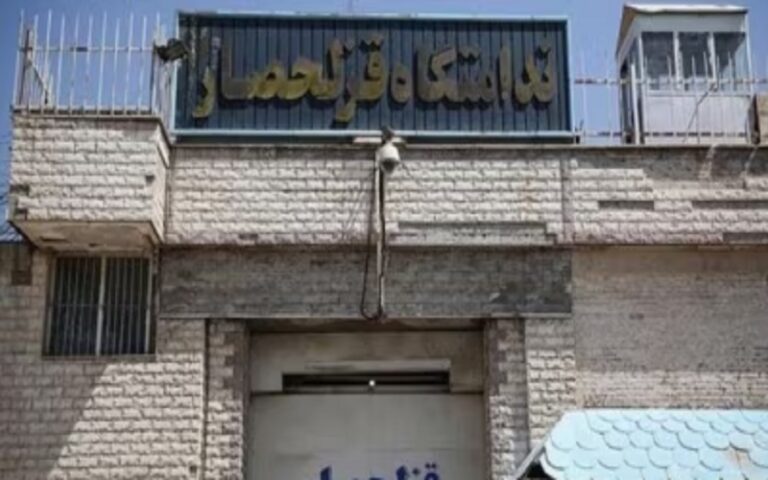
The political prisoners’ hunger strike campaign began in February 2024 with political detainees in Ghezel Hesar Prison in Karaj, later joined by prisoners from other facilities.

Iran’s Regime is Increasing Its Cyberattacks

0

The Israeli internal security and intelligence agency (Shin Bet) announced that it has identified more than 200 phishing cyberattacks by the Iranian regime aimed at obtaining personal information of senior Israeli officials.

According to Shin Bet, senior security, political, academic, and media figures in Israel were among the victims of these cyberattacks.
Phishing is a type of cyberattack often used to steal user information.

The Times of Israel reported that hackers attempted to access personal information by persuading Israelis to install software and, in some cases, used this information for future attacks against these individuals.

Shin Bet stated that hackers fabricated a separate story for each victim to avoid suspicion. For example, in one case, a hacker posed as a cabinet minister and told the victim they were coordinating a meeting between them and the Israeli Prime Minister.

Shin Bet reported that it has identified the victims of this cyber campaign and informed them.
In recent months, the Iranian regime has sought to establish contact with Israeli targets and officials through a series of deception operations and the dissemination of fake information.

On November 24, Israeli media reported that Iranian regime agents sent fake invitations to two Israeli ministers to collect information or establish contact with senior Israeli officials.

In September, Reuters reported on hacking groups known as “APT42” or “Charming Kitten,” associated with the intelligence arm of the Islamic Revolutionary Guard Corps (IRGC), emphasizing that their activities against high-value targets in Washington and Israel are significant.

In February 2024, Mandiant, a cybersecurity and IT company owned by Google, reported identifying a new threat linked to Iran-Nexus espionage activities targeting the aerospace, aviation, and defense industries in several countries, including Israel, the UAE, Turkey, India, and Albania.

Widespread Protests by Retired Telecom Workers Across Iran 

Economic protests by retired telecommunications workers took place on Monday, December 2, in several provinces of Iran, with demonstrators chanting slogans against the Iranian regime’s policies.

According to reports on social media on Monday, protesting retirees participated in gatherings in at least six provinces: Tehran, West Azerbaijan, Gilan, Zanjan, Kermanshah, and Kurdistan. They emphasized that the Parliament and the government do not care about the Iranian people and demanded the dismissal of the minister.

In Tehran, protesting retirees chanted: “Retiree, shout out, demand your rights!”

In Urmia, protesters objected to ongoing misconduct by officials and their disregard for the retirees’ demands.

As the Parliament reviews the national budget bill for the Persian calendar year 1404 (starting in March 2025), with analysts warning about worsening living conditions, protesting telecommunications retirees in Kermanshah chanted: “Neither the Parliament nor the government cares about the people!”

Economic protests by retired telecommunications workers were also held on Monday in Zanjan.

In Rasht, the capital of Gilan Province, protesters chanted: “Indifferent minister, we don’t want you!”

In Kurdistan, retired protesters carried signs with slogans such as: “Boastful government, where are the results of your promises?”

Weekly protests by retired telecommunications workers have been ongoing for months. Their grievances include the lack of updates to welfare allowances in 2022 and 2023, management’s disregard for the 2010 regulations, issues with supplementary insurance, and the failure to pay past dues adjusted for current rates.

The expansion of sectoral protests by various groups, including retirees, industrial workers, teachers, defrauded investors, and nurses and healthcare workers, highlights the worsening economic hardships in Iran and the indifference of the regime authorities.

Iranian regime-Backed Militias Enter Syria to Support Besieged Syrian Army

The militias backed by the Iran’s regime enter Syria from Iraq to assist the besieged Syrian army.

Reuters, quoting two Syrian army sources, reported that Iran-backed militias entered Syria from Iraq overnight and moved towards northern Syria to reinforce Syrian army forces besieged in battles against rebels.

A senior Syrian army source told Reuters, “Dozens of fighters from Iraq’s Popular Mobilization Forces (Hashd al-Shaabi), linked to the Iranian regime, entered Syria through a military route near the Al-Bukamal crossing.”

The officer stated, “These are new reinforcements being sent to assist our comrades on the front lines in the north.” He added that the militias include Iraq’s Kata’ib Hezbollah and the Afghan Fatemiyoun Brigade.

During the Syrian civil war, the Iranian government sent thousands of its terrorist proxy forces to Syria and, alongside Russia with its air force, enabled Bashar al-Assad, Syria’s dictator, to suppress uprisings and reclaim much of his territory.

According to the same report, two other army sources said that a shortage of manpower to counter recent rebel attacks contributed to the Syrian army’s swift retreat and withdrawal from Aleppo city. Iranian-backed militias, led by Hezbollah, have a strong presence in the Aleppo region.

Hezbollah, which is supported and affiliated with the Iranian regime, has been significantly weakened over the past year in its conflict with Israel.

Iran’s Regime Sentences 6 Political Prisoners to Death

Six political prisoners have been sentenced to death by Branch 26 of the Revolutionary Court of Tehran on charges of “armed rebellion through membership in anti-regime groups.”

Iman Afshari, the judge of Branch 26 of the Revolutionary Court, sentenced Akbar Daneshvar Kar, Mohammad Taghavi Sangdehi, Babak Alipour, Pouya Ghabadi Bistooni, Vahid Bani Amerian, and Abolhasan Montazer to death.

Two other prisoners, Ali Taghavi Sangdehi and Mojtaba Taghavi Sangdehi, were sentenced to two and three years of imprisonment, respectively, on charges of “membership in anti-regime groups.”

The charges against these prisoners include “membership in the People’s Mojahedin Organization of Iran (PMOI/MEK),” “gathering and conspiring to disrupt national security,” “armed uprising against the government,” “forming a group or organization to disrupt national security,” and “destroying public property using a launcher weapon.”

In Iranian regime law, “armed rebellion” (Baghi) refers to encroaching on the rights of others or rebelling against the “Imam” or Islamic ruler.

In a statement, the National Council of Resistance of Iran (NCRI), the opposition coalition to which the PMOI belongs, called on the United Nations Security Council, the High Commissioner for Human Rights, the UN Human Rights Council, and other relevant UN bodies, as well as the European Union and its member states, to “take immediate action to save these prisoners’ lives and secure the release of all political prisoners.”

Several human rights organizations issued a joint statement on November 28 calling for the immediate annulment of all death sentences for political prisoners in Iran.

The signatories of this statement emphasized that following the nationwide uprising in 2022, the Iranian regime has initiated a new wave of executions aimed at instilling fear in society.

Iran’s Per-Capita is Declining Rapidly 

Statistics from the Iranian regime’s Statistics Center indicate that Iran’s “national income per capita” in 2023 decreased by 20% compared to 2011, reaching approximately 884 million rials (around $1,263).

The report explicitly reflects the impact of sanctions on Iran’s oil sales. Since 2011, national income per capita declined but slightly improved with the implementation of the JCPOA (Joint Comprehensive Plan of Action). However, following the reinstatement of sanctions in 2017, this indicator remained stagnant and volatile until 2023.

The report’s findings suggest that by 2023, Iran has become more of a “poor country” than ever before.

The Statistics Center’s report on per capita income, using constant prices with 2021 as the base year, allows for comparisons across different years by adjusting for inflation. This comparison shows that the net per capita income of Iranians has decreased by up to 20% over the past 13 years.

Since 2011, with increased pressure from sanctions on oil sales, per capita income dropped by 847 million rials (approximately $1,210). Following the U.S. withdrawal from the JCPOA and the onset of the COVID-19 pandemic, the national income per capita fluctuated, ultimately regressing to levels below those of 13 years ago by 2023.

Since per capita income is expressed relative to population size, the “increase in population” over the past years has also contributed to the decline in this indicator. According to the 2011 census, Iran’s population was approximately 75 million, but over the past 13 years, at least 10 million more people have been added without a corresponding increase in income.

While the Global Finance website reports Iran’s national income per capita as $20,000 based on an exchange rate of 42,000 rials per dollar, data from the Statistics Center based on real exchange rates tell a different story. Multiple exchange rates in Iran complicate international comparisons of “per capita income.” Using the average NIMA rate of 380,000 rials per dollar in 2023, Iran’s per capita income can be estimated at approximately $2,326. However, with the free market rate exceeding 700,000 rials per dollar, the per capita income would be even lower.

A look at per capita income in Iran’s neighboring countries shows that this indicator was higher in most of these nations in 2023. According to IMF data, Iraq’s national income per capita was about $6,000, Oman $21,000, Saudi Arabia $32,000, the UAE $51,000, Qatar $82,000, and Turkey about $10,000 in the same year. In contrast, at the start of the Statistics Center’s measurement period in 2011, the gap between Iran and these countries was much smaller, and Iran’s per capita income was nearly equal to Turkey’s.

Data on per capita income in Iran show that contrary to global and regional trends, Iran’s wealth has not increased but has actually declined.

Another report from the Statistics Center on the “household income and expenditure” index in 2023 indicates that the average annual living cost in Tehran has reached 3.3 billion rials (approximately $4,714).

Iran’s Income Decline Post-2018

Ahmad Meydari, Minister of Cooperatives, Labor, and Social Welfare, recently stated that until the mid-2000s, absolute poverty in Iran ranged from 12% to 15%. This increased to about 20% following the first wave of sanctions by the mid-2010s. However, with the onset of the second wave of sanctions and severe inflation, it sharply rose, reaching 30% in 2019. Per capita income data also corroborate this claim, showing no significant growth in Iranians’ income from 2018 to 2023.

According to official reports, Iran’s oil sales in the first quarter of 2024 were the highest in six years.

However, oil sales have experienced significant fluctuations over the past 13 years. Recently released data by the international firm Vortexa indicate that Iran’s oil exports fell below 200,000 barrels per day in early 2020.

Preferential Currency for Medicine Will Be Removed in Iran

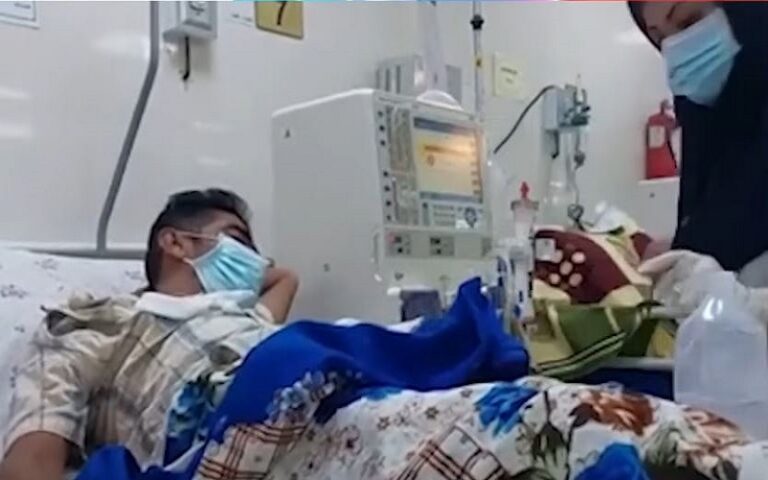
Mohammad Reza Zafarghandi, the Iranian regime’s Minister of Health, Treatment, and Medical Education announced that the preferential currency for medicine will be removed starting next year.

Zafarghandi stated on Friday, November 29, that his ministry is preparing and planning to manage this change.

This comes after the Central Bank had claimed in September to have provided $1.5 billion in preferential currency for “medicine and medical equipment” by September 9. Zafarghandi had previously declared that the preferential currency for medicine had been removed.

Earlier, the previous health minister had announced the removal of the preferential currency for medicine imports under a plan called “Daruyar” starting in 2022. However, Iranian officials have made contradictory statements regarding the allocation of the “42,000 rial” currency for medicine.

Currently, the exchange rate for the dollar in the free market is approximately 700,000 rials.

At that time, it was announced that instead of providing currency for medicine, an equivalent budget would be allocated to insurance companies to expand insurance coverage and eliminate the need for people to buy unsubsidized medicines.

However, in practice, this plan led to significant increases in the prices of many medicines, a crisis for pharmaceutical companies in importing raw materials, shortages of many medicines, and crippling out-of-pocket expenses for the public.

In recent months, following growing criticism of the medicine crisis, Mohammad Jafar Ghaem-Panah, the executive vice president and acting chief of the Presidential Institution, announced that regime president Massoud Pezeshkian had ordered the Central Bank governor to address the liquidity issues in procuring raw materials for pharmaceutical factories and importing medicine.

The next day, Mohammad Reza Farzin, the Central Bank governor, stated during a coordination meeting with officials from the Food and Drug Organization of the Ministry of Health and representatives of the pharmaceutical sector that the Central Bank had allocated financial facilities to resolve liquidity and currency issues for importing medicine, with a report on the matter subsequently published.

Nevertheless, representatives of the Chamber of Commerce and pharmaceutical companies have harshly criticized the Central Bank and the government in recent months for failing to allocate currency for essential goods, particularly medicine.

The critical medicine shortage has long reached alarming levels, with Mohammad Ali Bandpei, a member of the Health and Treatment Commission’s board, announcing months ago that the number of scarce medicines had exceeded 200 items.

Now, the Minister of Health has also acknowledged the medicine shortage but stated that medical supplies are monitored daily, and if a pharmacy lacks certain medicines, “patients will be referred to another pharmacy where the medicine is available if possible.”

Mohammad Reza Zafarghandi also noted that if shortages occur nationwide, it is due to a lack of raw materials or reduced production in factories, which will be addressed and rectified on a case-by-case basis.

He did not elaborate on the methods or strategies to address the shortage of raw materials and medicine across the country.

Domestic medicine production in Iran is also facing a crisis due to the lack of liquidity for procuring raw materials for manufacturing plants. According to the head of the Iranian Pharmacists’ Association, more than 60% of domestic medicine production is “low-quality.”

750,000 Students Out of School in Iran

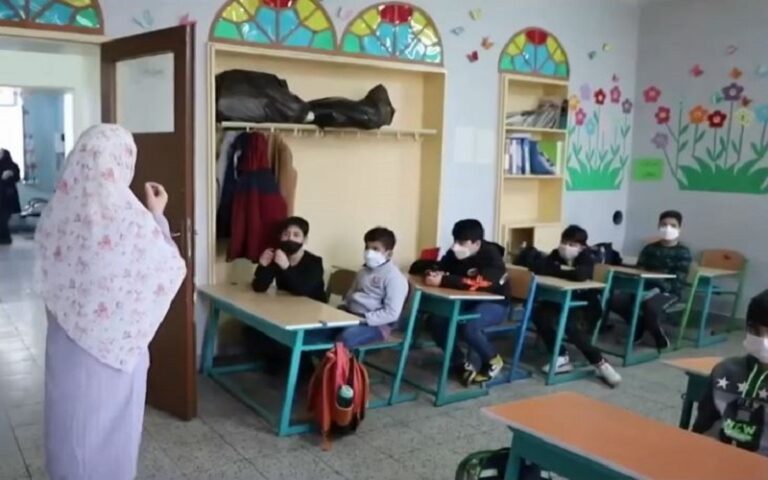
Alireza Kazemi, the Iranian regime’s Minister of Education reported that 750,000 students are out of school, noting that “approximately 150,000” of these are in primary education, while the rest are in middle school.

Kazemi stated that the issue of out-of-school students is unrelated to the Ministry of Education, claiming that those dropping out at the middle school are seeking work and vocational skills.

Several experts believe that school dropouts to enter the labor market have accelerated in recent years, coinciding with rising inflation and worsening poverty.

In this regard, the state-run Shargh newspaper reported on September 22: “Students consider dropping out and entering the labor market as a win, while attending school and spending hours in class feels like a loss to them.”

The state-run Khorasan newspaper also addressed this issue on August 1, writing: “Economic hardship and poverty are the most significant reasons for dropping out of school.”

Regarding the issue of girls being excluded from education in deprived areas and rural regions, social activists link it directly to poverty and child marriage.

In this context, the state-run Donya-e-Eqtesad newspaper published the results of a study on child marriage on August 13, stating: “In Iran, factors such as low per capita income, high inflation, and income inequality are among the primary causes of early child marriage.”

Meanwhile, the education system suffers from a shortage of teachers, insufficient classrooms, and deteriorating educational infrastructure. In this regard, the Deputy for Physical Education and Health of the Ministry of Education reported a shortage of approximately 8,000 physical education teachers nationwide.

As these shortages and educational crises have intensified in recent years, the regime’s officials have focused on changing the content of school textbooks.

Modifying textbook content and altering educational approaches in schools have been longstanding concerns of the Iranian regime’s Supreme Leader. Ali Khamenei has frequently expressed sensitivity to textbook content and called for their revision.

In May 2022, during a meeting with teachers and educators from across the country, he stated, “Useless content in textbooks must be removed.”

In November 2023, the Secretary of the Collaboration Headquarters between the Seminaries and the Ministry of Education told ISNA news agency about the hiring of 3,000 male and female seminary students as teachers. He stated, “Seminary students cooperating in the ‘Amin’ program with this ministry are entirely ‘voluntary,’ ‘devoted,’ and work in school counseling without receiving any financial assistance from the Ministry of Education.”