Home Blog Page 214

Policies of Iran’s regime cause shortage and rationing of infant formula

0

While the Iranian regime’s officials, under the orders of the regime’s supreme leader, Ali Khamenei, are trying to compel society to have more children through the adoption of various laws and incentive policies, they have still failed to provide an adequate supply of infant formula, the primary source of nutrition for infants.

On Tuesday, Sajjad Esmaili, the advisor to the head of the Food and Drug Organization, announced the entry of the first shipment of imported infant formula. This comes after several industry experts had previously warned of the shortage and “rationing” of infant formula, describing the situation as critical.

According to the semi-official ISNA news agency, citing Esmaili, the distribution program for infant formula, based on the adjusted birth rate for 2023, has been communicated to all provincial food and drug departments, and these departments are tasked to monitor and conduct field inspections. In addition, all infant formula distributors have been instructed to distribute infant formula even on holidays.

This Ministry of Health official has promised that “approximately four million cans of infant formula” will be imported within the next two weeks. However, ISNA news agency reported that “four million cans of infant formula have already been imported from Turkey and will be distributed within the next two weeks.”

Esmaili attributed the shortage of infant formula in recent months to currency problems and stated that “the currency problems have been resolved” and producers have “entered the market with seriousness and increased their production.”

While the Deputy of the Food and Drug Organization has stated that the infant formula crisis will be resolved soon, Abdulhussein Rouh-al-amini, a member of the Majlis (parliament) Health and Treatment Commission, announced on Tuesday the promises of officials regarding infant formula and the disagreement between the Food and Drug Organization and the settlement of previous currency accounts.

Rouh-al-amini discussed the currency disputes between infant formula producers and the Food and Drug Organization in a television program. According to this lawmaker, infant formula producers attributed the crisis to the lack of necessary foreign exchange resources. Rouh-al-amini also claimed that the production capacity of infant formula in Iran is over 100 million cans, and the demand and consumption are 60 to 70 million cans, which have even been exported to neighboring countries in recent years.

Alongside the statements made by officials from the Ministry of Health and the Food and Drug Organization, Alireza Salem, a member of the High Council of Pharmacies and the Secretary of the Association of Pharmaceutical Employers of Tehran Province, referred to the critical conditions of infant formula supply in Iran and told the regime’s online newsletter Faraz that “in many pharmacies, the receipt and provision of infant formula are done with the national identification card, and the shortage of infant formula compared to previous years is strongly felt.”

According to Salem, infant formula “is either not available on the shelves or, if available, it is unpopular.” He attributed the main cause of the shortage of medicine and infant formula to the pricing policy of the Pricing Commission.

According to this Iranian regime official, the government’s foreign exchange allocation is only for the “active ingredient of medicine.” Salem emphasized in this interview that “a medicine does not consist of only the active ingredient, and it has production costs, packaging, transportation, etc. The [government allocated foreign currency] does not cover these costs.”

Following reports of the scarcity of infant formula in Iran, the Food and Drug Organization, a subsidiary of the Ministry of Health of the Islamic Republic, announced that as of October 12, the sales of infant formula in pharmacies in Iran would only be possible with the presentation of the infant’s national identification code. Some sources have referred to this measure as “rationing of infant formula.”

556,000 Iranian Adolescents Drop Out Before High School Due To Poverty

The Statistical Center of Iran has announced that at least 556,000 Iranian adolescents are forced to drop out of school before entering high school due to reasons primarily related to “poverty and deprivation.”

According to a report published by Iran’s Statistical Center, titled “Social and Cultural Status of Iran, Spring 2023,” during the academic year 2022-2023, more than 556,000 children between the ages of 15 and 17 remained out of school, including 295,000 boys and 261,000 girls.

According to this report, the “dropout rate” in elementary education in the academic year 2016-2017 was “0.99 percent,” but after five years, during the academic year 2022-2023, it reached “1.2 percent,” and in the first cycle of secondary education, it was “4.11 percent,” gradually increasing to “5.47 percent,” indicating an upward trend.

These statistics were published at a time when, according to the regime’s Etemad newspaper, Ali Asghar Fani, the former Minister of Education, on September 10, based on the statistics from the Majlis (parliament) Research Center, declared the number of “school dropouts” in Iran as “930,000 individuals,” stating that they constitute the “illiterate future.”

Furthermore, according to Didban Iran website, the latest report from Iran’s Statistical Center emphasizes that due to the expansion of poverty and further reduction in children’s access to educational resources and facilities during the COVID-19 pandemic, the deprivation of Iranian children from education has intensified.

On the other hand, the Fars province Teachers’ Guild Association wrote in a message on September 23 that they are starting the reopening of schools while “thousands of children are left out of education for various reasons,” and child labor, as the “victims of poverty,” are among the consequences of these dropouts.

According to the “Tajarat News” website on September 20, based on a survey by the “Sarmayeh polling agency”, the average price of stationery items has increased by 50 percent.

According to the results of this survey, about 60 percent of Tehran households pay tuition fees for their children’s education, and more than 53 percent of students in Tehran Province walk to school because the cost of school transportation has increased by more than 50 percent compared to the previous year.

Simultaneously with the increasing trend of dropping out and discontinuation of education among Iranian children, the Iranian regime takes actions such as expulsion, suspension from teaching, detention, or deprivation of certain members of the teaching staff from engaging in educational activities under the pretext of demanding trade union rights or expressing civil protests.

The information from the Statistical Center of Iran also indicates that the number of students dropping out of elementary education has been steadily increasing over a three-year period. In the academic year 2016-2017, the number of dropouts from elementary education was close to 162,000 individuals, which increased to over 210,000 individuals in the academic year 2020-2021.

Statistics also reveal that 70 percent of dropouts are associated with low-income brackets ranging from one to five.

Rafael Grossi: The Experience of North Korea Should Not Be Repeated with Iran

The U.N. nuclear watchdog’s chief, Rafael Grossi, reminded on Monday that “North Korea kicked out International Atomic Energy Agency inspectors and developed nuclear weapons.”

“The world must not fail in Iran as it did in North Korea,” He added.

Mr. Grossi’s reference to Iran’s recent action of “revoking the activity permits” of some International Atomic Energy Agency inspectors and preventing their presence in Iran.

“The IAEA is the eyes and ears and presence of the international community in Iran,” Grossi told an annual U.S. State Department arms control conference in a recorded message on October 16 adding he was extremely concerned about Iran’s nuclear program.

“We have to deploy every effort to prevent this problem, this current debate on what is happening and what can be done in Iran (from) becoming a failure on the part of the international community to prevent a country that has capabilities which could potentially lead to the development of nuclear weapons from doing it,” he added.

The Director-General of the International Atomic Energy Agency, referring to the experience of North Korea, stated that, “We saw the failure of this type in the Democratic People’s Republic of Korea, North Korea.”

Since North Korea expelled IAEA inspectors in 2009, the agency has been denied access to the country. As a result, the IAEA now monitors North Korea’s nuclear advancements from a distance, primarily relying on satellite imagery.

However, the IAEA still maintains “regular access to declared nuclear facilities” in Iran. Over the past five years, however, Iran has taken steps to remove installed monitoring equipment within the framework of the 2015 nuclear agreement, leading to a deadlock in the revival of the agreement. As a result, the agency no longer has the capability to conduct “snap inspections of undeclared sites” in Iran.

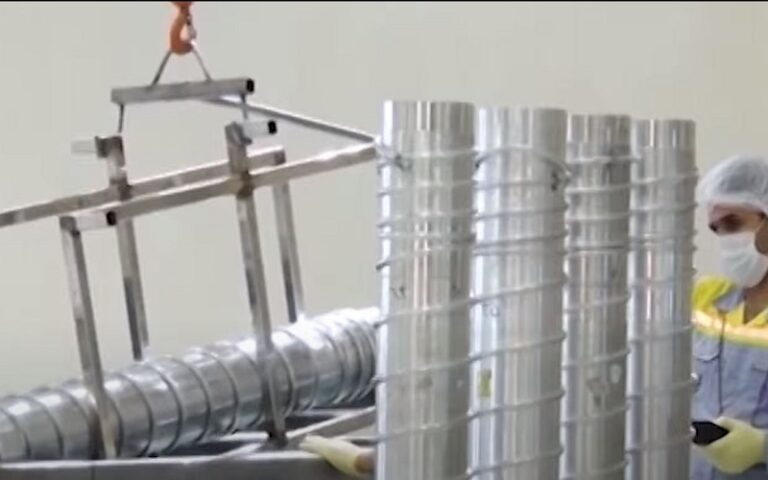
In his latest quarterly reports on Iran, Mr. Grossi indicated that the Iranian regime has achieved a significant level of uranium enrichment at 60% purity. This is close to the threshold of approximately 90% required for weapons-grade enrichment and would hypothetically provide enough material for the production of nearly three nuclear bombs, according to the IAEA’s theoretical definition. The regime denies any intention of pursuing nuclear weapons.

The IAEA is currently engaged in several disputes with Tehran, including the identification of the source of uranium particles discovered at two undeclared sites, the reinstallation of monitoring equipment that has been removed, and the regime’s recent decision to “de-designate” certain IAEA inspectors.

Furthermore, on September 16, the regime announced the “revocation” of the activity permits for some inspectors of the IAEA in Iran. Grossi strongly condemned this action on the same day, stating that these inspectors are among the “most experienced” experts of the IAEA, possessing unique knowledge in the field of enrichment technology. They were previously engaged in “essential verification activities” at Iran’s enrichment facilities.

On September 17, the European Union issued a statement, urging an immediate reconsideration of the decision from Tehran.

On August 14, 2002, The National Council of Resistance of Iran (NCRI) unveiled the Natanz nuclear site and the heavy water project in Arak during a press conference in Washington. The revelation of these projects was confirmed by the IAEA and triggered worldwide condemnation and scrutiny that dramatically slowed down the clerical regime’s pace for nuclear weapons.

Iran: Anger at medicine shortage and Raisi’s remarks  

0

The statements of the regimes’ president, Ebrahim Raisi, regarding the shortage of medicine for specific patients, have led to criticism from a wide spectrum of the people.

In his speech at the “Thirteenth National Elite Conference,” Ebrahim Raisi responded to the parents of individuals with special diseases who had protested against the shortage of medicine, saying, “First, life is in the hands of God,” and “Second, how do you know that we cannot produce the necessary medicines ourselves?”

Of course, the regime’s senior officials have made such similar statements before. For example, Hassan Ghazizadeh Hashemi, the Minister of Health of Hassan Rouhani’s government, had said to a baker who complained about the medical and physiotherapy expenses, “Massage it yourself!”

Recently, Bahram Eynollahi, the regime’s Minister of Health, claimed that Iranian medicines will be exported to “40 countries around the world,” and many countries consider Iranian medicines to be “effective and successful.”

The remarks of Raisi and his Minister of Health about the production of Iranian medicine are being discussed while the country has repeatedly faced the problem of shortage and high prices of medicine, and the medicine for special patients is still scarce.

Many people lose their lives due to the lack of medicine, including Akram Amini, a cancer patient journalist who complained about the lack of cancer medicine and eventually passed away.

In June, Younes, the head of the Iranian Thalassemia Association, said that the mortality rate of this disease has increased six fold since May 2018, and annually 260 thalassemia patients lose their lives due to “shortage and unavailability” of medicine.

Arab added that Iranian-made medicines do not work for these patients.

The use of substandard raw materials in the production of domestic medicines and the side effects resulting from their consumption are among the issues raised regarding domestically produced medicines.

The regime’s authorities blame the problem of medicine shortage on Western sanctions. However, some experts in the past have pointed out that authorities, under the pretext of sanctions, prevented the import of the drug “Desferal” for thalassemia patients so that the “low-quality” domestic product, including the production of the “Osve” company, could be sold.

The United States has stated that the export of humanitarian items, especially medical and even sanitary supplies, to Iran is exempt from sanctions. According to official statistics from the European Union, 27 members of this union exported over $2.4 billion to Iran from March to November 2021.

Iran ranks 85th in terms of pharmaceutical exports worldwide.

Data from the “World’s Top Exporters” website in 2022 shows that Israel, with $3.471 billion in sales, ranks 21st globally and first in the region in terms of pharmaceutical exports. According to this statistic, Turkey ranks 29th, Cyprus ranks 46th, Pakistan ranks 52nd, and the United Arab Emirates ranks 61st.

Behram Eynollahi, in his recent statements, once again referred to Iran as “one of the most successful countries in the region” in controlling COVID-19 and mentioned the production of six domestic COVID-19 vaccines.

Official mortality statistics obtained from countries by “Our World in Data” – which, according to experts, are significantly lower than the actual figures in Iran – show that Iran has had the highest COVID-19 mortality rate in the region.

Iran has had the highest COVID-19 mortality rate in the region

In terms of vaccination, a recent study conducted by Iranian researchers focusing on “vaccination speed” has been published, which indicates that if Iran follows the COVID-19 vaccination model of Turkey, it could prevent an additional 50,000 deaths compared to the current mortality rate.

According to the same model, if Iran adopts the vaccination model of Bahrain, it could prevent 75,300 deaths, especially among individuals over the age of 50.

The preference for domestic vaccine production and the prohibition of Western vaccines by Ali Khamenei were among the reasons for the slow pace of COVID-19 vaccination in Iran, leading to the deaths of tens of thousands of people.

French Parliamentarians Champion Iranian People’s Quest for Democracy

During a conference held on Wednesday, October 11, at the French National Assembly, participants including French parliamentarians, members, and supporters of the Iranian Resistance, alongside human rights activists and politicians, convened to address and engage in discussions concerning the severe human rights conditions prevailing in Iran. The occasion coincided with the World Day Against Death Penalty, emphasizing the urgent need for attention and action.

The President-elect of the National Council of Resistance of Iran Mrs. Maryam Rajavi stated in her speech:

“The world must stand against the mullahs’ warmongering. Instrumentalizing the Palestinian issue is a well-known tactic of this deceitful regime. Today, Khamenei and Raisi want to transform the Iranian people‘s uprising and struggle against religious fascism in Iran into a Muslim-Jewish war.

“Khamenei has openly stated that if the regime does not engage in conflicts in Gaza, Lebanon, Syria, Iraq, and Yemen, it will have to confront the angry people and rebellious youth in Kermanshah, Hamedan, Isfahan, and Tehran.

“The massacre of innocent civilians fuels religious fascism in Iran and serves as a shield and cover to suppress the uprising and avoid its downfall. To achieve peace and freedom, one should target the head of the snake (leadership) in Tehran.

“The time has come to revise European politics.”

André Chassaigne, head of the Communist bloc in the French Parliament, highlighted the MEK Resistance Units’ 414+ operations in Tehran against the regime’s repression during the anniversary of the nationwide uprising. He emphasized their role as the sole unified force opposing the regime and noted that the death penalty in Iran serves as a political tool for widespread suppression.

Ms. Marietje Schaake, a member of the National Assembly from the Socialist Party, stressed the need for France to consistently address the issue of executions in the Parliament and the Senate. She argued that this struggle is ongoing and must be highlighted to showcase opposition to such crimes occurring worldwide.

Émile Blessig, a former senior MP and co-founder of the parliamentary Committee for Democratic Iran, emphasized the crucial role of the NCRI, in the quest for a free and democratic Iran with a separation of religion and state. He stressed that the world cannot ignore the rising number of executions in Iran, and the perpetrators, including the IRGC, will face prosecution.

“By supporting the Iranian people’s struggle, we are also fighting for peace in the world”, Mr. Blessing concluded.

MP Philippe Gosselin, the deputy head of the parliamentary Committee for Democratic Iran, expressed that he has roots with General de Gaulle, and on this international day against executions, like him, “I want to tell you that the flame of resistance that you have lit should not be extinguished.”

“We are all working together to ensure it does not go out, and we stand by you to achieve victory for freedom as soon as possible, victory for Iran and its people against the regime,” Mr. Gosselin added.

MP Cécile Rilhac, from the majority party (Renaissance), expressed pride in supporting the Iranian people’s struggle for a democratic republic. The initiative received widespread support from representatives across political movements. Despite facing opposition from those advocating appeasement with the mullahs.

Mrs. Dominique Attias, head of the European Lawyers’ Foundation, highlighted Ebrahim Raisi’s involvement in the massacre of 30,000 prisoners. Mrs. Attias mentioned that Mrs. Rajavi had been calling for the abolition of executions since 2006.  She also mentioned that with its lies, the regime is attempting to discredit the resistance that Mrs. Rajavi represents.

Professor Aude de Thuin, former president of the Supreme Education Union,  emphasized that the fight in Iran is about fundamental human rights, not just the hijab. Professor de Thuin noted the ongoing revolution of Iranian women, regardless of the hijab. She called on the United Nations to investigate the large number of arrests and disappearances, urging France to support the UN’s investigative mission.

Jean-François Legaret, former mayor of Paris’s first district, noted the resilience of the MEK despite the dreadful and brutal repression. He commended the organization and its efforts.

Jacques Bouthier, a unionist in the educational and university sector, stressed that the struggle for a democratic Iran is the cornerstone of the future of humanity and freedom in all countries.

Tahar Boumedra, the director of the Committee for Justice for the victims of the 1988 massacre (JVMI) and former representative of the United Nations Secretary-General in Iraq for Ashraf, highlighted the need for the Iranian regime’s president Ebrahim Raisi to be prosecuted and tried for his direct involvement in the extrajudicial executions of thousands of political prisoners. He also mentioned the rise in executions in Iran despite global progress in abolishing the death penalty.


10,000 Iranian Healthcare Professionals Migrate Every Year

Evaz Heydarpour, a physician and former member of the Iranian regime’s Majlis (parliament), stated that every day we hear about “a professor or associate professor of medical schools” migrating. He told the regime’s “Khabar Online” website: “Every year, 10,000 individuals from the Iranian medical workforce (physicians, nurses, midwives) migrate.”

He declared that the “best geriatric specialists” are leaving the country due to the wave of migrating doctors. Heydarpour added, “If I were the Minister of Health and witnessed this number of doctors migrating every day, I would resign.”

An advisor to the Minister of Health and Medical Education of the Iranian regime, citing the “Youth, Population, and Family Support Law,” announced that the country’s healthcare system is facing a shortage of 20,000 midwives.

Shahla Khosravi, an advisor to the Minister of Health and Medical Education of the Iranian regime, stated on September 10 to the semiofficial ISNA news agency that the treatment sector requires “12,000 midwives,” and the health sector also needs “8,000 midwives.”

Reza Laripour, the spokesperson for the regime’s Medical Council, had previously stated on September 3 that the “migration of the medical community” had doubled compared to the years before the coronavirus pandemic, and now Iran sends doctors to five continents.

The increase in the migration trend of Iranian healthcare professionals is due to dissatisfaction with the current situation and the disorder in the country’s affairs. During recent years, they have faced intensified confrontation by security and military institutions due to their declarations of opposition, expression of protest, or treatment of injured protesters. Some have also been killed by the Iranian regime’s repressive forces.

Professional and economic pressures on nurses in Iran continue, and the latest report from the semiofficial ILNA news agency highlights the issue of low rates of “mandatory overtime.” According to the report, nurses are required to work 130 hours of overtime for a payment of 19 million rials (approximately $37.25).

The news agency quotes members of the “Nurse House” who state that “nurses work overtime every month according to their duty hours, but the amount they receive is very insignificant.”

Based on an “overtime work deposit” text message, a nurse mentioned in the ILNA report that after several months of delay, the February overtime payment was 19 million rials for 130 hours.

The situation of nurses’ rights and wages has been one of the challenging issues since the beginning of the year. On April 16, the state-run Etemad newspaper quoted a nurse who said that for every 197 duty hours and 155 overtime hours in a month, they received approximately 18 million rials (approximately $35.29) as the nursing service fee.

In March, the continuation of discriminatory and “illegal” payments to Iranian nurses led to protests. Nurses in various provinces held protest gatherings.

In this regard, the Free Workers’ Union of Iran reported on April 17 that nurses in five provinces gathered in protest against the “government’s violation of nursing fees” and chanted slogans calling for the resignation of the “incompetent minister.”

The dire conditions for nurses and the failure to meet their minimum demands ultimately led to the President of the Iranian Nursing Organization mentioning on September 18 that the necessary “attraction and retention” conditions for nurses in the country were not being met and that “five to six Iranian nurses” are migrating daily.

Mohammad Mirzabeygi, speaking about the migration of nurses to the ILNA news agency, stated that between “100 to 150 nurses” migrate abroad monthly, which is a matter of concern for the country.

Iran: Government debt reaching three years’ worth of general budget

In its latest quarterly report on the economic situation in the Middle East and Central Asia, published on October 12, the International Monetary Fund (IMF) has predicted that Ebrahim Raisi’s government’s debt this year will reach 30.6 percent of the country’s gross domestic product.

Iran’s gross domestic product this year, according to the assessment of this international institution, will be approximately $366.4 billion. Therefore, the government’s debt exceeds $112 billion, which is equivalent to more than three years’ worth of the government’s general budget.

According to the IMF’s forecast, Ebrahim Raisi’s government’s debt will increase by approximately another $6 billion next year.

During the past two governments, extensive borrowing from the central bank and other financial institutions of the country was carried out to compensate for budget deficits. This has led to a surge in liquidity and, consequently, rampant inflation.

Since Ebrahim Raisi’s inauguration, he has claimed to halt government borrowing and has also claimed that the government’s general budget will not have a deficit this year.

However, the International Monetary Fund says that the Iranian government needs the price of oil in the global market to be above $307 in order to prevent a budget deficit. This figure is more than three times the current oil prices in the global market.

The international institution also states that liquidity in Iran had a growth rate of 31 percent in the past year but will experience a 47 percent surge this year. This indicates the acceleration of printing banknotes without backing by the regime’s Central Bank.

According to the statistics of the IMF, the inflation rate in Iran was close to 45.8 percent last year, but it will reach its peak at 47 percent this year. Liquidity is the most significant factor in the price growth of goods and services.

For years, the Iranian regime has been compensating for budget deficits by pressuring the central bank to print money without sufficient backing, leading to rampant inflation in the country.

The evaluation by the IMF indicates that Iran’s inflation rate this year will be the highest after Venezuela, Zimbabwe, Sudan, Argentina, Suriname, and Turkey. The IMF estimates that Iran’s accessible foreign exchange reserves this year will be around $21 billion, which is only $1.5 billion higher than the previous year. Iran’s average foreign exchange reserves from 2000 to 2019 were over $70 billion.

New statistics from the Central Bank of Iran reveal that the country’s liquidity reached its peak in July, with a 27.5 percent increase compared to the same month last year, amounting to 66,940 trillion rials (approximately $129.854 billion). The Iranian regime’s Central Bank mentioned the growth of liquidity on August 12 without specifying its volume. However, an examination of last year’s statistics from the bank shows that liquidity reached the threshold of 67,000 trillion rials (approximately $129.854 billion).

Liquidity is the most important factor in inflation. The World Bank recently published a report indicating that Iran has the highest inflation rate for food items after Venezuela, Lebanon, Zimbabwe, and Argentina.

The latest update from the World Bank on global food inflation shows that food inflation in Iran during May of this year was 78 percent.

Since Ebrahim Raisi took office, liquidity in the country has grown by over 70 percent, equivalent to 27,730 trillion rials (approximately $53.792 billion).

The IMF states that in order to prevent a budget deficit this year, the Iranian government would need global oil prices to be $351, which is more than four times the current oil prices in international markets.

For the next year, Iran would require global oil prices to be $375; otherwise, the debt of Ebrahim Raisi’s government would increase by over $9 billion in 2024, and liquidity in Iran would experience a jump of approximately 33 percent.

Iran’s Multi-faceted Crisis During the 44-Year Rule of the Mullahs’ Regime

0

The Mullahs’ regime’s four-decade rule has plunged Iranian society into a web of crises, some of which have reached catastrophic proportions. While it’s challenging to quantify the exact number of crises, experts in social economics within the regime have identified at least seven mega-crises. These encompass issues such as pensions, bank failures, insurance, water and environmental concerns, energy shortages, hyperinflation, and investment pitfalls. Occasionally, additional crises like government debts, the non-oil economy, and unemployment are added to the list, further accentuating the grim statistics.

What’s noteworthy in this context is the intricate interplay and mutual influence of these mega-crises on each other. For instance, inflation and the worsening poverty rate are intimately connected, with rising inflation pushing more families below the poverty line every day. The colossal bank bankruptcy crisis, akin to an iceberg of unknown depth and size, is directly linked to the government’s mounting debts. The government, often portrayed by the regime’s media as treating banks like inexhaustible piggy banks, is ironically the largest debtor within the Iranian banking system.

Moreover, the super-aging crisis is inextricably linked to the pension crisis, with both issues surging in parallel. The aging population is further exacerbating the retirement crisis.

Pension funds represent the sole source of financial security for hardworking individuals who have diligently saved over the years. However, almost all of Iran’s 18 pension funds find themselves in dire straits. Despite legal constraints against withdrawing funds except for retirees’ monthly payments, these funds have become susceptible to theft and embezzlement under the rule of Supreme Leader Ali Khamenei.

A glaring example is the grand embezzlement within the cultural reserve fund, initially reported as an 8 trillion rial corruption case, later revised to 15 trillion rials, and ultimately settled at 14 trillion rials. To understand the culprits behind this astronomical embezzlement, one needs to consider that this fund comprises four holdings in ‘petrochemical and energy, finance and investment, construction and services,’ encompassing over 30 companies in total.

When petrochemicals are mentioned, it’s impossible to overlook the close ties between the IRGC and petrochemical holdings, exemplifying the reach of this entity into every corner of the country’s economy, bolstered by Khamenei’s unwavering support.

Retirees have consistently taken to the streets in recent years to assert their rights. Their protests, borne out of frustration with the government’s indifference to their pleas and legal requests, symbolize an ongoing uprising among the Iranian people. Recognizing that they make no progress within the confines of the government’s bureaucracy, they have adopted the slogan ‘only on the street, we will get our rights’ and united their demands with those of other segments of Iranian society. In recent days, cities across the country have witnessed retiree gatherings.

The state-run daily Ham-mihan aptly states, “None of Iran’s major challenges, including the formidable pension fund crisis, can be resolved in isolation. These mega-challenges are so interconnected that expert methods alone cannot tackle them. They demand comprehensive political solutions. Without such solutions, these crises will only deepen and broaden, rendering conventional remedies increasingly limited and ineffective.”

Therefore, the mega-crisis surrounding retirees and their depleted funds, a consequence of mullah-led embezzlement, finds no resolution within the corrupt structure. Not long ago, a social insurance manager suggested a disturbing solution: “We may have to sell Qeshm and Kish [islands] to pay retirees’ salaries.”

16-year-old Armita Geravand in critical conditions after police assault

An official news agency affiliated with the Iranian regime, in a report that was later deleted, announced that Armita Geravand‘s “vital signs” have “changed and deteriorated to some extent” in the past few days.

On October 1st, the 16-year-old schoolgirl was transferred outside a Tehran subway car while unconscious, moments after entering the subway with her friends. A video released by the Tehran Subway company shows that shortly after Armita Geravand entered the subway car, she was transferred outside by several individuals while she was unconscious. However, news circulating on social media suggests that security agents pushed her because she was not wearing a hijab, resulting in her head hitting a metal bar and becoming unconscious. After the incident, she was transferred to Tehran’s Fajr Hospital, and no one is allowed to approach her.

The regime’s Borna news agency, affiliated with the Ministry of Sports and Youth, announced on October 11 in a brief report based on its “journalist’s investigations” and despite “the continuous efforts of the medical staff at Fajr Hospital” that Armita Geravand’s “relatively stable vital signs have changed and deteriorated to some extent in the past few days.”

Borna later removed this news from its various platforms after its publication. The news agency also stated that “the medical team’s efforts to improve” the condition of this 16-year-old student “are still ongoing.”

Despite the removal of this report, some domestic media outlets in Iran, including regime’s Khabar Online news website, have published this report, quoting the Borna news agency.

In the latest reactions of the regime’s officials regarding Armita’s incident in the Tehran subway, Ahmad Vahidi, the regime’s Minister of Interior, said: “This issue is completely clear and obvious. It was an accident that could happen every day anywhere in the country. The enemies of the country do not want the atmosphere of our country to be calm. They tried to create chaos.”

Armita Geravand, a 16-year-old student who was going to school with two of her friends on October 1, collided with an iron pole as a result of being pushed by a Morality Police officer at the “Shohada” metro station and fell into a state of coma. She has been hospitalized in Fajr Hospital, affiliated with the Army Medical Sciences University, under “security” conditions for the past 11 days.

According to reports, Armita Geravand’s friends and family have been threatened not to speak to any media unless authorized by the authorities.

The area surrounding Fajr Hospital is under “strict security,” and plainclothes forces are stationed there.

Michael McCaul, the chairman of the Foreign Affairs Committee of the U.S. House of Representatives, expressed concern about the attack on Armita Geravand and, while expressing disgust, considered it similar to an attack that led to the killing of 22-year-old Mahsa Amini a year ago, which led to nationwide protests.

The regime’s morality police arrested her on September 13 for allegedly improperly wearing a hijab, the mandatory head covering imposed upon Iran’s women. Two hours after her arrest, she was taken to a hospital where, three days later, she succumbed to skull injuries that had been sustained during her detention.

In addition, Amnesty International also criticized the “cover-up” by the Iranian regime and called for an independent international investigation into the “serious injury” of Armita Geravand. Raha Bahreini, a researcher for the organization, told Voice of America that there is serious concern that this schoolgirl has also become a victim of forced hijab violence.

Canada’s minister of foreign affairs, in a message posted on X, said, “The Iranian regime continues to prove itself as a ruthless and autocratic state with no regard for its own citizens.”

Iran’s morality police returned to the streets earlier this year to enforce mandatory veiling laws.

Amnesty International wrote in a report dated July 26, 2023: “The Iranian authorities are doubling down on their oppressive methods of policing and severely oppressing Iranian women and girls for defying degrading compulsory veiling laws. Countless women have been suspended or expelled from universities, barred from sitting final exams, and denied access to banking services and public transport. Hundreds of businesses have been forcibly closed for not enforcing compulsory veiling. The intensified crackdown exposes the dubious nature of the Iranian authorities’ previous claims of disbanding the ‘morality’ police, amid contradictory official statements over its return to Iranian streets.”


Former Secretary of State Pompeo Urges Support for Iranian Opposition in NCRI Speech

0

In a gathering of the National Council of Resistance of Iran (NCRI) on October 6, former Secretary of State Mike Pompeo delivered a speech commemorating the anniversary of the Iranian uprising and expressing solidarity with the brave Iranians who have fought against the oppressive regime. Pompeo praised the resilience and sacrifice of the Iranian people, acknowledging the atrocities committed by the regime to suppress their voices.

“We are here to mark a special anniversary, and I of course want to acknowledge the bravery and sacrifice of so many brave Iranians over the past year. The brutal regime has committed a great many atrocities to silence their voices,” he said.

Pompeo emphasized the importance of supporting the opposition movement within Iran and recognized the significant progress made over the past year.

“We will never forget the responsibility we have to support what you are doing inside of that country,” Secretary Pompeo said. “I last spoke to you back in July, just three months ago, and yet much has happened since then. It’s a short time, but yet one year after the beginning of the uprising, the regime is in a complete deadlock. It has no way out of the crisis, the conflict between the people and the government, which in fact in those 90 days has only intensified.”

Pompeo stressed that despite the regime’s attempts to quell civil unrest through executions, repression, imprisonment, and torture, the people’s determination has only grown stronger.

“The civil unrest has become more powerful. The regime responded with more executions, more repression, more imprisonment, more torture, exactly what one would expect from a scared set of leaders. This has indeed deepened the divide between the regime and its people, just as we know it would,” he said. “I believe with all my heart for the Iranian people and the resistance informed and encouraged by the folks in this room today is stronger than they are.”

The former Secretary of State highlighted the shared objective of establishing a democratic and free republic in Iran, free from dictatorship.

“We, each of us, everyone around the world must recognize what these uprisings are aimed at. They’re aimed at a democratic, free republic of Iran that is devoid of any form of dictatorship. That’s our objective. Everyone here shares that goal,” he said.

He asserted that the regime is destined to fail and that lasting change can only be achieved by those who have dedicated themselves to the cause over many years.

“First, no matter what the regime does, it is doomed to fail. Second, even as important, change in Iran can only be achieved by those who have been working toward it for decades, those who have paid the price for it and contain the organizational structure to accomplish that objective,” he said.

Pompeo praised the People’s Mojahedin Organization of Iran (PMOI/MEK) for its growing capabilities and its role in impeding the regime’s brutal tactics.

“The organized resistance led by the MEK, every day is increasing its capability. It is delivering an even bigger push. Your work has made it far more difficult for the IRGC to inflict its brutal terror and mayhem on the people of Iran,” Pompeo said.

He acknowledged the organization’s efforts in organizing rallies near the United Nations.

“You all, the MEK, and your supporters have organized rallies abroad, too. One such rally, numbering in the thousands, happened on September 19th. It took place just across the street from the United Nations, protesting Raisi’s visit and in support of President Rajavi and her Ten-Point Plan for the future of Iran,” he said.

Pompeo stressed that appeasement has been a major obstacle to ending Iran’s state-sponsored terrorism.

“That appeasement has been and remains the biggest outside obstacle to ending Iran’s state-sponsored terror, its rogue regional behavior, and its support for the Iranian people’s desire to struggle to bring about change in Iran,” he said. “Appeasement will not work.”

Pompeo expressed concern over the Biden administration’s decision to provide six billion dollars in appeasement to Iran.

“Six billion dollars of appeasement. More evidence that the Biden administration’s recent decision to pay to get Americans home to their families, something that I worked so hard to do for so long,” he said. “We know this. There is zero chance this money is going to benefit the Iranian people. None. You all know this. And they’ll use this money to go after Iranian dissidents both outside of the country and inside of the country. Six billion dollars to fund its brutal oppression of the organized resistance inside of Iran.”

Furthermore, Pompeo revealed that individuals within the United States government took directives from the Iranian regime’s former Foreign Minister Zarif and his associates.

“We now know that operating inside the United States government were people working on behalf of the United States ostensibly, but who were taking guidance from Foreign Minister Zarif and his henchmen inside of Iran,” he said. “This policy to which we have returned, not just to America, but to large European powers as well, it’s totally counterproductive. Iran’s newfound wealth, we’ll see it in the months and years ahead, it’ll fund terror abroad and oppress people at home.”

Pompeo stressed that it is time for the West to listen to the real voice of the Iranian people.

“Listen to the voices of the Iranian people. In over 280 cities across all 31 provinces of Iran, they have rejected the ruling theocracy and made clear that the mullahs are not a permanent feature of this nation,” he said. “Chants, chants like you all have said here today of down with the oppressor, be it the Shah or the Ayatollah, we do not need dictators.”

In conclusion, Pompeo emphasized the importance of supporting the resistance movement both inside and outside of Iran:

“As we seek to support the resistance movement inside Iran and out, we must consider what the future should hold for Iran, what it should look like, and what is it we want. Everyone here wants freedom for the Iranian people. Let’s talk about how we can achieve it, how we can build something that can not only replace the regime but do so in a way that is lasting and secures freedom for everyone inside of that beautiful nation.

“As I’ve said before, Iran will never return to the dictatorship of the Shah, nor will it settle for the current theocracy in Iran. The remnants of the past monarchy have failed to gain any traction during the uprising over the past year. The Shah’s supporters were exposed when they heavily relied on collaboration with the IRGC. What Iran needs is something that looks and feels like the people in this room. People who simply want freedom for all. A governance model that is reflective of the people’s will. We don’t need dictatorships. We need freedom.

“It’s our moment. It’s the time. I’m confident. Our ask should be simple. We should ask every leader to support the brave Iranians who are inside of the country and who stand daily at great risk to themselves and their families against this theocracy. We’ve seen what happens in one year, a year of powerful, unyielding protests. These protests ride on the backs of those who have gone before them, forty years of organized opposition to Iran.”