Home Blog Page 226

Iran’s Regime Is Unable To Eradicate Protests

Totalitarian governments, whether be it a monarchy or a clerical regime, and their international supporters are pursuing the same goal, which is the elimination of the Iranian people’s values, national identity, independence, and culture. Of course, one with the excuse of creating a modern civilization and the other under the shade of religion.

By losing its credibility among the people after the 1953 coup d’état overthrowing the democratically elected Prime Minister Mohammad Mosaddegh, Pahlavi’s dynasty decided to implement a few worthless reforms which he called the “White Revolution.” This was followed by the slogan “Great Civilization,” and the maltreating of Cyrus’ ‘charter of human rights’ to establish its so-called “Island of Stability” with the brutal presence of a police intelligence apparatus.

After the fall of the Pahlavi dynasty, the remaining officials cited and tried to justify that the reason for the failure of Pahlavi was not its incompetence, human rights violations, and lack of freedom, but the people’s unreadiness and incomprehensibility to accept the modern world which was represented by Shah.

However, the people understood that what the Shah did was auction the country’s independence to a few small and big companies, especially in the oil and gas industry. The dynasty relied on Cyrus to hide its thefts, corruption, widespread poverty, national industry destruction, and opponents’ imprisonment and execution, and this was nothing more than a political ploy.

For this reason, independence and freedom were the main slogans of the nationwide uprising against the Shah. Observers and Western public opinion have also assessed the fall of the Shah as the result of dictatorship and governmental corruption.

National identity in its modern sense is precisely derived from the liberation struggles of the people in a specific geographical area, with the aim of participating in political power and eliminating the power of dictators. This process started with constitutionalism in Iran to get rid of British colonialism and royal tyranny.

This unfortunate fate should have not ended for Iran’s people after the demise of the Shah. Following the fall of the dynasty, it was Khomeini’s and his successor’s turn to grab the people’s revolution and continue the Shah’s dark era, which has turned out to be much more destructive. This happened thanks to Shah’s decision to wipe out all the country’s intellectuals and true democratic and freedom-loving people.

Khomeini supported every step of the Shah’s tyranny; because of that, he and other medieval clerics benefited from the extensive financial support of the Shah. From the monthly provisions to the exemption of Qom seminary students from military service.

All the hidden and visible hands came together to force Iran’s people to accept that they should not dream of another revolution. Billions of dollars have been spent to make the Iranian people believe that ‘the era of revolutions is over’, and ‘Iranians, as civilized people, do not resort to violence against violence’.

Is this really the whole truth? Are the Iranian people doomed to accept such a fate? Is the fate of Iran people supposed to be closed in the tyranny of the Shah and the mullahs circle? Never.

Iran’s present history is embellished with four decades of resistance, battles, and epics to keep the flames of freedom flourishing. Internationally disclosing the regime’s crimes and the introduction of a political alternative are complementary to the battle and the ongoing resistance inside Iran.

With the efficient hits of the resistance, the mullahs’ regime lost all its unjustified social, political, and religious legitimacy, which it had acquired before seizing the anti-royalty revolution.

To get out of this crisis, the mullahs, like the Shah, turned to fake reformism and fraudulent maneuvers such as ‘religious democracy’, ‘dialogue among civilizations’, and ‘resistance front’. At the same time, they have spent a huge amount of money to demonize their main opposition group, the People’s Mojahedin Organization of Iran (PMOI/MEK), by spreading lies.

Thankfully, none of this has worked and over the past few years, the world has witnessed the courage of the people and the MEK’s Resistance Units in their fight against the regime. We are now witnessing the outcome of this resistance with much sacrifice.

Regime elements, like MP Jafar Ghaderi, have been forced to confess that, “there is no doubt that we cannot eradicate the current protests.”

Yes, this time is different, and the people of Iran and all supporters of a democratic republic will be the winner without any doubt, and that is why people in their ongoing revolution and protests all over Iran are chanting, “Death to the oppressor, be it the Shah or the Leader (Khamenei).”

Ten Percent of Iran’s Nation Is Ready To Sacrifice Itself for Freedom

According to estimates by the Iranian regime’s main opposition group, the People’s Mojahedin Organization of Iran (PMOI/MEK), more than 550 people have been killed in the nationwide protests, 47 of whom were minors. The names of 492 of the victims have been published by the MEK.

In addition, more than 25,000 people have been arrested by the regime’s security forces. The ongoing protests have been taking place in more than 220 cities across the country since mid-September.

The trigger for the mass protests was the death of a young Iranian woman named Mahsa Amini. The 22-year-old died in Tehran in mid-September after being arrested by the so-called ‘morality police’ for allegedly wearing a headscarf improperly. Since her death, thousands of Iranians have been demonstrating against the government’s repressive course across the country for a Free Iran.

Despite the massive violence with which the regime’s security forces proceed, people are continuing to take to the streets. Even with threats of imprisonment or death, these brave citizens cannot, and will not, be moved or forced to back down.

The Javan newspaper, which is published by the Revolutionary Guards (IRGC), wrote on Thursday that the young demonstrators were going against the norms of the Islamic Republic. They wrote, “They are neither religious nor satisfied with their situation. They don’t believe in the past and that’s why they’re on the streets.”

The Revolutionary Guard commander Hossein Salami threatened revenge on “enemies who interfere,” he stated on Friday, “But we cannot say how and where we will take revenge.”

His remarks show the regime’s desperate situation, in which they do not know how to deal with the angry people, so instead, they decide to make foreign enemies responsible for the ongoing protests.

For the first time, figures have been published on how the leadership of the regime is assessing the wave of protests. While the regime never delivers accurate statistics, publishing figures about society’s situation reveals the regime’s critical situation and the expansion of the protests, as well as the people’s dissatisfaction.

55 percent of the population is said to be in support of the protests, and as many as 83 percent had sympathy for them in principle, without having taken part in them.

More importantly, 10 percent of people are supporting the riots, which the regime is referring to as ‘the people’s rebellion’. This shows that around 8 million people of Iran’s population are ready to sacrifice themselves for freedom. This is a huge number of people who are seeking fundamental changes, while according to scientific estimates only 3.5 percent is needed for the victory of a revolution.

According to media reports, Mostafa Rostami, the representative of the regime’s supreme leader Ali Khamenei at the country’s universities, gave these figures at a meeting with student associations at the university in the western Iranian city of Ilam.

The regime’s survey showed that 60 percent of Iranians who express sympathy say the poor economic living conditions are the main reason for the protests. More than 20 percent have identified administrative corruption and structural reform as the reason for these protests.

The 10 percent of rebellious people show that the country is on the path of a revolution, and their main demands are not simply administrative, structural, and economic reforms as the regime’s survey claims.

Rostami did not specify who conducted the survey. It is known that the regime’s intelligence service regularly conducts surveys without publishing the results. Rostami belongs to the inner circle of Ali Khamenei’s confidants.

For the first time, Khamenei did not describe the protests as ‘unrest’ but as a ‘hybrid war’ against Iran. Meanwhile, attacks on the regime’s clerics, its bases, repressive forces, and symbols are increasing. Alireza Arafi, head of the theological centers in the pilgrimage site of Qom, said many regime officials no longer dare to leave their homes.

They have shaved their beards and refrained from wearing their robes in public. Numerous recordings are circulating on the Internet of mullahs being harassed and insulted by the angry people who are fed up with these representatives of the regime.

Almost every night, rebellious youths are attacking the regime’s bases, torching and destroying its symbols. Their main target has become the supreme leader. Months before the current unrest, in previous protests, people addressed the regime’s president Ebrahim Raisi, but since the start of these protests, the main target of the people is Khamenei.

In a tweet, Rahmatollah Bigdelli, a regime cleric from the so-called ‘reformist’ party, reflected the people’s fury against the regime’s foundation while asking:

“What is the position of Ebrahim Raisi and Mohammad Baqer Qalibaf in the equation of the country?
In a republic, the government and parliament are the manifestations of the national will, and the head of the government is the president, and the parliament is the house of the nation, and its president is considered the head of the nation!
So why is the nation ignoring them? Why are they not the audience of the nation?!”

Some comments gave him the right response:

One user stated, “The problem of the nation with this system is bigger than the exclusion or criticism of these insignificant elements. The top of the pyramid is the cause of all the troubles of the nation and the country.”

Another person explained, “Because the rioters (which you wrongly call the nation) are not protesting, but demand overthrow. That is why their slogans are against the principle of the system and not the parts of the system.”

This simple conversion shows the “10 percent” which have rebelled against the regime to overthrow it, and this is the main difference from past protests.

Khamenei Deceitfully Compares Coup 1953 With Revolution 2022

On November 2, the Iranian regime’s Supreme Leader Ali Khamenei once again attributed the ongoing revolution to foreign foes. This speech was Khamenei’s fifth public appearance since the anti-regime demonstrations resumed on September 16.

He claimed, “The U.S. and its allies are planning to overthrow the regime! The people of Iran slammed them and will do so from now on.”

As is the case with many dictators before him, Khamenei has deliberately ignored his regime’s 43 years of heinous crimes, systematic corruption, and merciless suppression and misogyny. Canadian historian, Gwynne Dyer explained, “When dictators who deem themselves infallible make mistakes, there’s a steep cost for all.”

Khamenei laid the blame on the U.S. and its ‘allies’, even though the current U.S. administration has significantly appeased the regime. The U.S. has done whatever it took, such as offering political and financial concessions, in a bid to resume nuclear negotiations. However, the mullahs have stressed their maximalist demands, failing many of the talks in Vienna, Muscat, etc.

Khamenei futilely tries to portray his regime as a national government, comparing it with the Mosaddeq government, but the Islamic Republic regime has done nothing but auctioned national resources to ensure its sovereignty.

What Mosaddeq Did for Iran; What Mullahs Do Against Iran?

Dr. Mosaddeq was the leader of Iran’s oil nationalization movement, which inspired several countries, including Egypt, to struggle for independence. In comparison, Khamenei’s ‘Look at the East’ theory diminished Iran’s resources and contributed the lion’s share of the Caspian Sea to Russians, the Chabahar Port to Indians, and significant parts of Iran’s fishing right in the Persian Gulf to the Chinese.

His theory severely destroyed the country’s industry and agro-industrial fields, leaving thousands of farmers, fishermen, and employees unemployed. It also resulted in unaffordable damages to the country’s nature.

In November 2019, Khamenei ordered the Revolutionary Guards and State Security Forces to quell gas protests at all costs. The regime’s atrocities led to more than 1,500 victims, with many more citizens being disappeared or jailed. A few months later, his regime sent several flotillas of oil cargo to Venezuela and Syria for free.

During the recent street protests, demonstrators posted footage of security forces’ bullets that the regime had acquired from the U.S. and UK in 2020, around the same time that Khamenei banned imported Covid-19 vaccines from those same countries, driving thousands of citizens to their deaths.

Khamenei deliberately ignores the role of mullah Abulqassem Kashani, the political-ideological mentor of the regime’s founder Ruhollah Khomeini. There is footage showing Kashani hosting Khomeini at a lunch party. Another video shows the toppled Shah Mohammad Reza Pahlavi kissing Kashani’s cheek after the coup.

Remarkably, the regime avoided naming a street ‘Mosaddeq’ for decades while the mullahs named highways “Kashani,” “Sheikh Fazlollah Nouri,” etc., people who resisted the people’s will for freedom and independence in favor of foreign powers.

On March 13, 2018, Mojtaba Shakeri, the Tehran City Council’s Naming Committee chair, said, “The Islamic Republic founder’s remarks were the main reason for not naming a street ‘Mosaddeq’.”

In his well-known sermon, Khomeini thanked God for “slapping Mosaddeq” during the 1953 coup. He also described the massive commemorating rally for Mosaddeq on March 5, 1979, as a “holding meeting for a bunch of bones.”

Meanwhile, Khomeini’s hostage-taking of U.S. personnel aimed to purge the theocracy’s dissidents, paving the path for mullahs’ monopolizing all means of power. As he immediately released all American hostages following then-U.S. President Ronald Reagan’s sensible warnings, showing his “enemy is not in the U.S.,” Jerusalem, or Iraq, but “the enemy is in Tehran.”

Khamenei’s Comparison Fails, Revolution Continues

Despite Khamenei’s rhetoric and devious comparison, large crowds of citizens took to the streets on November 4, paying homage to the revolution’s slain protesters. The late Hadis Najafi’s commemoration ceremony became a significant revolutionary momentum in Karaj, Alborz province.

Footage from Karaj shows defiant citizens confronting the security forces’ attacks and shootings. Responding to the regime’s atrocities, outraged protesters severely beat members of the IRGC forces and pro-regime mullahs, overthrew and torched security forces’ vehicles, and destroyed and set an oppressive forces’ kiosk ablaze.

In Bandar Anzali, Gilan province; Amol, Mazandaran province; Qasr-e Shirin, Kermanshah province; Isfahan and Qazvin provinces, citizens bade farewell to their loved ones with chants of “Death to Khamenei,” “This is the year [Khamenei] is to overthrow,” and “Death to [Khamenei] for all these years of crime.”

The regime’s supreme leader has tried his chance to mob his disparate forces, intimidate protesters, and saber-rattle against the international community. In response, defiant protesters purely stated that the “Mullahs must get lost!” and “We will not go back home until the revolution concludes!”

Today, Khamenei is reaping what he, his predecessor, and their entire rule of crime and corruption have sewn in the past 43 years. As the citizens say, addressing the dictator, demonstrating their will to overthrow the entire regime, “You cannot whitewash crimes with color.”

The Iranian Regime Is Sitting on the Top of an Erupting Volcano

The ongoing protests in Iran are the volcano that the Iranian Resistance has spoken about for many years. They have often warned that the Iranian regime will face more severe protests, with greater participation from Iran’s women and a starving nation.

The Iranian people are fighting for a different life and values while pursuing different goals than those introduced by the regime over the past four decades.

This regime is a group of medieval thugs who think they can run the country based on fabricated rules from a thousand years ago.

The truth is that Iranian society is a modern society, women want equality, and they are tired of gender apartheid. This is not a new ideology, they were sick and tired two years ago, ten years ago, and better said from the beginning of the reign of this regime.

It doesn’t take effort to see that this is a volcano. The country has witnessed eruptions before, and this time we are witnessing the most serious eruption of them all.

In the 2009 and 2019 uprisings, the regime was able to extinguish the fire of the protests. Today, despite all the regime’s efforts and even the fast trial of the thousands of arrested people and the killing of more than 450 protesters, the people are not stepping back and do not tolerate the violence that has been unleashed on them. As a result, the regime is no longer able to push back the people off the streets.

This is happening across the country, in over 218 cities. All the efforts of the people have been responded with violence, not only in the past few years but, most importantly, at the beginning of the reign of this regime, when it first massacred the people’s protests on 20 June 1981.

The regime has made it perfectly clear that it does not tolerate any objecting voice, despite the people sending any possible message they can.

From the outset, the regime had made its decision to rule the country with an iron fist, and like any other dictatorship, they did not understand the reality and have become increasingly deluded in their own image.

An image that is the interpretation of medieval Islam, which they thought would be winning not only in Iran but internationally, and they believed that they could simply rule by divine fear.

The people’s demand in the ongoing protests is not asking for simple and primitive demands; they seek a true democracy. Society is different, and the political landscape has changed. Fear has vanished, which is detrimental to the mullahs’ regime considering that is what their rule is based on.

The moment this fear dissipated; the dictatorship was forced to search for the next room to hide in. The people have nothing more to lose and they have no fear anymore.

While the regime has done everything in its power to crush the uprising, it has failed to achieve its objectives. There are several reasons for this. First, the protesters have gained a great deal of experience from previous uprisings, especially the one in November.

There is a high degree of organization and coordination among them. Second, the fear factor seemed to have been greatly diminished.

The protesters are only challenging the security forces, knowing full well that it will entail the risk of being arrested or killed.

Third, the staying power, expansion, diversification, and casualties suffered by the security forces have greatly demoralized their ranks.

The many directives issued by the IRGC commander-in-chief Maj. Gen. Hossein Salami and his lieutenants to offer guidance on how to deal with the uprising have proven ineffective. Indeed, Salami has directed his subordinates not to deploy “demoralized, disaffected, and disgruntled personnel.”

Interestingly, a telegram post by a member of the IRGC’s paramilitary Basij commander complained that only half of the Bassij members called to action had shown up on duty, meaning that they are fearful of being targeted by an increasingly defiant and radical crowd, especially the youths, and, at the same time, are concerned about the prospects of the regime’s overthrow which is drawing closer by the day.

Poverty and Lack of Freedom, Reasons for Iran’s Continuing Protests

0

Protests across Iran have become chronic, and one of the reasons for this is the increase in poverty and critical livelihood conditions among the people.

Poverty and corruption are now the main problems of the country’s economy. Even the Iranian regime’s supporters are criticizing the promises of regime officials to find a solution, which have not gone beyond hollow promises.

The situation of the deprived people is getting worse. In a country of 84 million people, over 65 million people are struggling with the effects of poverty in various ways. It begs the question of how can the regime continue to pretend that this situation is normal, and given the issues society is facing, how can the regime expect the people to stop their protests?

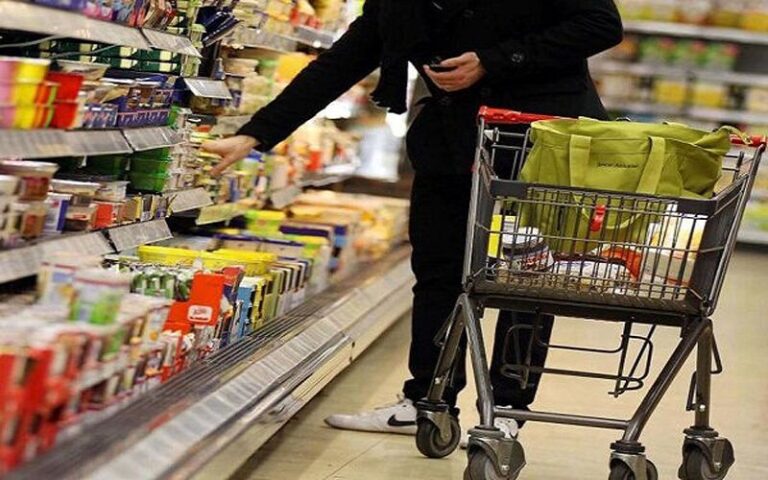
Let’s assume that chicken can be found in the market at the best price of 60,000 tomans ($1.7) per kilo, to buy a three-kilogram chicken, you must pay 180 thousand tomans ($5.1). The minimum daily wage of workers in 2022 is about 140,000 tomans ($4). If we add the wage benefits to this figure, the daily wage reaches a maximum of 200,000 tomans ($5.7). How can a worker with a daily wage of 200,000 tomans, and a small cash subsidy, be able to afford all the components of a basic livelihood basket and feed their families?

More than 63 percent of the country’s population can’t even cover half of their living expenses, and despite this, livelihood problems have become the latest concern of the regime.

Today, if a family of three has a fixed monthly income of 17.6 million tomans ($500), they should be able to afford living expenses, rent a house, buy a few kilos of meat and chicken a month, and cover the costs of education and medical treatment. However, the wage gap of around 70 percent of employed workers with this minimum figure is more than 63 percent.

According to the latest calculations, while average working families earn around 17.6 million tomans, a huge gap between living expenses and wages equates to more than 63 percent. Based on indicators and available statistics announced by the regime, 9 out of 10 families receive subsidies, which includes nearly 74 million people of the country’s population.

During the gasoline price increase, the regime announced that based on statistics and organizational indicators, it would conduct a national survey and identify the people entitled to receive gasoline subsidies. Based on this, the regime’s institutions announced that 60 million people of the country’s population had the right to receive gasoline subsidies.

The salaried population, employees, workers, and retirees have lost the possibility of maintaining life on minimum wages without support. The country’s absolute poverty line includes people classified as contacts of support organizations. At present, the absolute poverty line has reached 8 to 9 million tomans ($260) per month.

The relative poverty line also includes households that, in addition to the prerequisites related to livelihood and general food costs, are also faced with the challenge of meeting the basic expenses of education, welfare, or housing.

According to published indicators, the cost of rent in Tehran is consistently over 7 million tomans ($200). The average share of the cost of providing housing in the urban areas of 31 provinces last year was equal to 36 percent, which means that the said share has gone far beyond the conventional value of less than 30 percent across the world.

Even though the relative poverty line in Tehran and big cities is 20 million tomans, 65 percent of the country’s retirees earn less than 8 to 9 million tomans ($260), which means they are in the absolute poverty zone. Apart from certain groups, most of the employees are paid well below 14 million tomans.

According to the statistics announced by the regime’s supporting organizations, 30 million people in the country are reliant on the services of the relief and welfare committee and charities.

The liquidity growth indicator currently shows a 160 percent increase. All these factors, along with rampant inflation and the incompetence and corruption of the regime’s officials, have caused poverty in Iran to turn into a super crisis. This, along with the lack of basic human rights, has led to the Iranian people taking to the streets in recent months to fight for their rights and bring an end to the theocratic regime, not just to protest the compulsory hijab rules.

As Protests Continue, Iran’s Regime Breaks Apart

0

The world has been captivated by the bravery and resistance of Iranian protesters, especially the younger generations who are now on the frontline against the regime. The Iranian regime’s security forces have constantly been attacking the people who have been demonstrating against the regime over the past few months.

Javaid Rehman, the UN Special Rapporteur on the Human Rights Situation in Iran, reiterated calls for an independent investigation to hold the regime responsible for the violence being carried out against the people.

Having witnessed and been involved in many mass protests over the past years, the Iranian people know how to respond to the regime’s violence. Their response is reflected in the slogan ‘fight fire with fire’, which has created widespread desperation and dissension among the regime’s forces.

Concurrently with the ongoing protests, the regime is facing a large shortage of manpower. As a result, they are resorting to recruiting everyone they can, even children, to help them overcome the protests. Fear among the regime’s officials is widespread. Many of them are now using face masks when out in public so that they are not recognized by the people for fear of revenge and retaliation attacks, which clearly shows the regime’s growing weakness.

Many of the regime’s IRGC and Basij members are currently hiding from the Iranian people. The regime’s clerics are also desperate to disguise themselves, avoiding being in public with turbans, as they fear being attacked by the people. A number of video clips circulating on social media show the massive confrontations between the people and officials.

These nationwide protests are starting to, and will, change many things in the future of Iran. These latest demonstrations differ greatly from the past protests, many sectors of society have openly supported the protests, including unions, artists, lawyers’ guilds, and other civil society groups.

We are seeing a tectonic shift in the anger of the population. Protests have broken out in areas and cities that were traditionally famous for their support of the regime, where the regime has historically recruited militias who were used to recruit militias for the regime’s malign goals across the Middle East.

By precisely monitoring the situation for the past 47 days, it is evident that the regime’s forces are losing their effectiveness. The attack on Shah Cheragh shrine, who the regime claimed ISIS was behind of it, a foiled bomb attack in Shiraz, and a gas explosion in Ahvaz, were the subject of the protestors’ slogans as facts of a conspiracy by the regime to divert the attention from the protests and give them an excuse to repress the Iranian people further. Following recent attacks, regime officials warned the protesters that the attempts were linked to the riots and called for seizures.

This lack of accountability is nothing new for this regime. A simple example is the bombing of the Imam Reza shrine on June 20, 1994. The regime claimed that this was implemented by its main opposition group, the People’s Mojahedin Organization of Iran (PMOI/MEK).

Later, Abdollah Nouri, a cleric who once occupied the opposition of the regime’s Ministry of Interior, confirmed that the attack was a false flag by the regime to blame the MEK. This happened in the so-called ‘Chain murders of Iran’, where a number of dissident intellectuals had been critical of the regime. As a result, around 80 writers, translators, poets, political activists, and ordinary people were killed by the regime between 1988 and 1998.

Decades later, recent activities have shown that the regime has lost a significant portion of its power and is using terror as a tool to suppress the people.

Until now, none of its attempts to control the situation have had the expected result. This is because the people do not believe the regime’s claims anymore and their fear of the ruling theocracy is fading. The continuation of the protests for more than seven weeks is the best proof of this.

It should be noted that these protests will ultimately lead to the regime’s demise. The regime’s state-run television network has analyzed the protests and counted some of its main characteristics as follows:

  • It is nationwide, almost all cities are involved, and it is ongoing.
  • One of the main differences from the past protests is the participation of schoolchildren.
  • In this uprising, the revolutionaries ‘launched two wars, a combined and hybrid war from outside and a multifaceted war from inside.’
  • And finally, all social classes are participating in the protests.

Iranians Loudly Say to West: No More Appeasement!

During recent months in Iran, the mullahs have faced various crises, both domestically and abroad. Since September 16, the nationwide protests following the tragic murder of Mahsa Amini, 22, by the “morality police” have shaken the entire theocracy.

Anti-government demonstrations have shown the mullahs’ vulnerability to a firm response. Time and again, barehanded citizens have pushed fully armed security forces to flee, and the Islamic Revolutionary Guard Corps’ atrocities remain futile.

U.S. President Joe Biden said, “It’s stunned me what it awakened in Iran. I didn’t expect the turn of events in Iran following the death of Jina Mahsa Amini‌.”

When he took the presidential office, Biden built his foreign policy on an immediate return to the 2015 Iran nuclear deal, known as the Joint Comprehensive Plan of Action (JCPOA), which ensured authoritarians in Iran that the U.S. government would do nothing against them aside from financial concessions.

Iranian Authorities’ Baseless Claims Over a Nuclear Deal

Recently, authorities in Iran have made differing statements about a near nuclear deal. As a part of their systematic suppression, officials have deceitfully claimed that the country’s economic situation will improve as soon as possible.

Speaking from the Armenian capital of Yerevan on October 23, Foreign Minister Hossein Amir-Abdollahian said, “Three days ago, we received a message from the United States, and told them that the (International Atomic Energy) Agency (IAEA)’s accusations against Iran’s nuclear program should be resolved before any agreement.”

He stressed, “We do not give any concessions to the American side, and we move within the framework of logic and the framework of an agreement that respects the red lines of the Islamic Republic of Iran, but at the same time, we never leave the negotiating table.”

Iranian citizens have experienced such claims before, believing that another nuclear deal only benefits authorities and their relatives. The people have grasped that they will never fulfill a decent life in Iran under this ruling system.

“For a normal life… for [removing] poverty… for future,” citizens from different walks of life recite as a protesting piece against the 43 years of ruthless crime, systematic corruption, and horrendous misery under the rule of the mullahs.

Citizens have been targeting the entire ruling system and its high-ranking officials, including Supreme Leader Ali Khamenei, in their slogans. Among the chants heard at demonstrations are: “Death to Khamenei”; “This is the year Seyyed Ali [Khamenei] is overthrown!”; “Four decades of crime; down with this regime”; and “Khamenei is a murderer; his rule is illegitimate.”

Outraged citizens also chant against the IRGC and its paramilitary Basij agents, who are responsible for the oppressive and plundering policies. Remarkably, in an effort to ensure his rule, Khamenei has filled all government positions, including MPs, ministers, and governors, with former IRGC commanders.

Amir-Abdollahian is notorious for his close ties with the slain IRGC Quds Force chief Qassem Soleimani, who was responsible for many crimes inside Iran and across the Middle East. Footage of the foreign minister kissing Soleimani’s forehead has been circulating on social media.

Foreign Correspondents Discover Tehran’s Vulnerability

For more than two decades, Western observers have wrongfully considered the mullahs’ attempts to acquire nuclear weapons as a means of power. They have also attributed bloody crackdowns on defenseless citizens, and Tehran’s malign behavior and terrorism, to this illusionary force.

Recent demonstrations and strikes in around 200 cities across Iran have plainly shown that these aggressive and oppressive measures are signals that the Iranian regime’s reign is profoundly shaky.

In such circumstances, even JCPOA architects and advocates have withdrawn from negotiations, saying, “We prioritize the Iranian people’s protests and their human rights.”

On October 13, the AFP quoted U.S. White House National Security Council Coordinator John Kirby, citing that a return to Iran deals is unlikely in the near future.

He said, “It’s not that we don’t want to see the JCPOA reimplemented; we, of course, do. We’re just not in a position where… that’s a likely outcome anytime in the near future. What we’re focused on is holding the (Iran) regime accountable for what they are doing to these innocent political protesters.”

A day earlier, U.S. State Department spokesperson Ned Price said the Iran nuclear deal is “not our focus right now.” He added that the administration’s current focus “is on the remarkable bravery and courage that the Iranian people are exhibiting through their peaceful demonstrations, through the exercise of their universal right to freedom of assembly and freedom of expression.”

In a nutshell, the people of Iran have forced the international community to recognize their quest for freedom, justice, equality, and human rights. Contrary to Tehran’s lobby groups and apologists, Iranians are calling on world powers to stop their appeasement policies and to no longer fuel the Iranian government’s oppressive apparatuses.

In their rallies across the globe, Iranians have demanded that world leaders:

  • Recognize the Iranian people’s right to self-defense; recognize their right to struggle to overthrow religious fascism and establish freedom, democracy, and human rights;
  • Designate the entire IRGC and the Ministry of Intelligence as terrorist entities, expel their agents and operatives, and revoke their passports;
  • Target the economic lifeline of Khamenei and the IRGC;
  • Refer to the dictatorship’s dossier of the crackdown on protests and the massacres in 1988 and 2019 to the UN Security Council. Those directly involved in these crimes, especially Ali Khamenei and Ebrahim Raisi, must face justice.

The Real Heroes, Hidden Roots of Iran’s Protests

In Iran, the current battle between the ruling regime and the brave people has been continuing for months. The eyes of the international community have been enlightened by the determination and courage of the Iranian people.

The Western media have wrongfully advertised that the protests are leaderless, and stated that the new generation of Iran and their ideas are the only reason for the protests, ignoring the past protests and the previous generations, either deliberately or unintentionally.

The truth of the matter is that no change has occurred in the history of any nation without the struggle of generations intertwining, and Iran is no exception. The Iranian regime has shed blood and committed crimes against the Iranian people since it confiscated the country and the 1979 revolution from the people, the rightful owners.

Statistics about the number of people that have been killed by this regime often fluctuates. The regime’s main opposition group, the People’s Mojahedin Organization of Iran (PMOI/MEK) has estimated that this regime has executed more than 120,000 people from the opposition over the past four decades.

The most brutal massacres were implemented between 1980 and 1988. The massacre in the summer of 1988, where the regime killed more than 30,000 political prisoners, was the pinnacle of the regime’s cruelty.

Since then, the regime has continuously repressed protests and, in the process, killed thousands more innocent civilians. In the Qazvin protests in 1994, the regime killed dozens of protesters, while in the protests of November 2019, the regime killed more than 1,500 people.

In a recent rare remark by one of the regime’s elements, Javad Mogoi, a documentary maker who is close to the regime’s supreme leader Ali Khamenei’s office, addressed undisclosed information and said that only 400,000 families of executed political prisoners are living in Tehran and that they have played a significant role in the recent uprisings. He has not provided the source of the information.

The state-run Aftab-e Yazd daily published his narrative and objective observations about the protests that he had posted on his Instagram account. During the protests, Mogoi was reportedly beaten and arrested by the regime’s Basij forces.

He stated, “I arrived at Revolution Square. The forces are much more than the pedestrians; Basij, special unit, police, and plainclothes of the Revolutionary Guards. I went to the ‘Esm Ketab’ store. Ali Rekab sat down to describe these ten days: ‘Javad! Egad, these are people. The Basijis were beating two girls last night. They swore at them and beat them.’

Mogoi added, “I said, ‘It’s not like that everywhere. We have 400,000 families of executed Mojahedin Khalq members in Tehran. In the field, some are acting completely professionally. They are organized.’”

This information not only reveals aspects of the regime’s crimes against humanity, but also the heroic rebellion of a nation, its main opposition organization the MEK along with all walks of society and movements that have resisted and sacrificed their lives for more than 40 years, in order to bring an end to the darkest era in Iran’s history.

The new generation of Iran is following the path of previous generations and has decided to seek revenge for the blood of the fallen people in their quest for freedom. This revolution is neither rootless nor leaderless. Its true leader is the blood of those who fought for freedom. No one can ignore or bury it, history will speak the truth for many years, decades, and centuries to come.

Iran Regime’s Security Forces Murder Schoolkids, Claim It Was Suicide

0

The most critical story of the protests on October 24 was the narrative of the Sadr Girls’ Conservatory in Tehran. According to claims from the Iranian regime in local news, the disputes started when the school principal insisted to check the girls’ phones and tried to conduct body searches of some of the girls when they rejected to hand over their phones.

Videos on social media showed heavily armed security forces outside the school who fired tear gas, leaving some of the students injured.

The important subject of the incident is the regime’s contradictory narratives about the events in this school. The regime’s ministry has narrated the incident in such a way that the blame for the conflict is being put on the students who brought mobile phones in with them.

Ali Tirgir, deputy of the regime’s information and public relations center of the Ministry of Education, said, “Today, due to the possession of mobile phones by some students and the insistence of the school principal for an inspection, a conflict between some students and parents with the school principal took place.”

He added, “According to the rules, mobile phones are prohibited in the school and students must follow the school’s instructions. In this incident, several students suffered a drop in blood pressure, and their condition was attended to by the presence of emergency forces.”

According to the regime’s police announcement, the capital police had a different story. They stated, “This afternoon, following the announcement of a case of conflict in the vicinity of a girls’ conservatory on Karoon Street, police officers arrived at the scene and put the matter on their agenda, during which it was found that the conflict was between a few thugs.”

They explained, “This conflict, which took place near a girls’ conservatory, raised the concerns of some parents and students. The perpetrators of the conflict were identified and arrested by the police officers.”

The questions remain as to whether there was a conflict inside the school or in the vicinity of the school, and whether was it between thugs or between students, their parents, and the principal?

Also, what actually happened that led to the conflict and the subsequent arrival of ambulances? Is it the first time that students have brought mobile phones to school? Was such brutal behavior necessary, and what is so dangerous about mobile phones in a school, except for the regime’s fear of the publication of children’s anti-regime protests?

Despite the regime’s claims that nothing serious happen, why then were some of the students sent urgently to the hospital? The regime’s educational officers seemingly claimed that this was due to several students suffering from low blood pressure.

A few days ago, the regime’s Minister of Education announced that no student had been arrested following the incident at the school and that students who have committed crimes in recent protests have been referred to counseling centers.

The regime’s MPs later visited Tehran’s Greater prison, and one of them reported that 200 students were imprisoned in this prison. The regime’s Minister of Education previously said that “We are not saying anything harsh to the schoolchildren.”

Over the past weeks, many schoolchildren have died at the hands of the regime’s security forces. According to a statement posted by the Coordinating Council of Iranian Teachers’ Trade Associations on October 14, 16-year-old Asra Panahi died after security forces raided the Shahed girls’ high school in Ardabil the day before and demanded a group of girls to sing a pro-regime song.

The pupils refused and security forces attacked them leading to several injuries. Some of them were taken to the hospital, where Panahi died due to the severity of her head injuries. As usual, the regime denied any relation between her death and its security forces.

Following the spread of the news, a man identified as her uncle appeared on TV and claimed that she died because of a congenital heart condition.

The next case was of a 17-year-old schoolgirl named Arnica Ghaem Maqami. She died following several hits to her head by the regime’s security forces. According to the hospital, her neck was broken. The regime later claimed that she had jumped from the fourth floor and committed suicide. Security agencies took her to the military hospital to prevent rebellions.

What Happened in Evin Prison on ‘Bloody Saturday’

On October 15, at 8:10 pm local time, citizens in northern Tehran reported a blaze in the Evin Prison. The report was completed with further footage of grenades, teargas, and birdshot. At the same time, the slogans “Death to Khamenei” and “Death to the dictator” could be heard in the area. Following the event, hundreds of citizens headed to the prison with videos circulating on social media showing heavy traffic on the Yadegar expressway.

In response to the unrest at the prison, authorities dispatched dozens of anti-riot forces, Revolutionary Guards (IRGC) paramilitary Basij troops, and plainclothes agents.

The regime blocked the leading streets to the Evin prison, preventing prisoners’ families from accessing the facility. Outraged citizens torched almost all pro-regime banners on the expressway, while security forces shot teargas and birdshot at citizens’ cars, heavily damaging at least one car.

Despite the repressive measures, dozens of citizens succeeded in getting close to the prison and sounded their concerns over what happened in the jail. “Death to the dictator,” they chanted.

Inside the Evin’s Bloody Saturday

Established by the toppled Shah Mohammad Reza Pahlavi in 1972, Tehran’s Evin prison is notorious for holding political dissidents, prisoners of conscience, and minority activists. Following the recent anti-regime demonstrations, the regime transferred thousands of arbitrary detainees to this jail.

Officials’ Narrative of “Evin Incident”

Following the report of a fire at the prison, the judiciary’s Mizan outlet has declared that eight inmates accused of theft have died of smoke inhalation. The outlet also announced that 61 inmates are in coherent situations. Authorities are claiming that the blaze began in an entrepreneur-sewing workshop.

The IRGC’s Fars news agency claimed that several prisoners were slain in a minefield when they tried to escape. Hours later, the Intelligence Ministry (MOIS) Mehr news agency rejected Fars’s report.

The state-run broadcasting organization (IRIB) immediately aired a report from the prison. Contrary to the news saying the blaze occurred in Ward 7, the IRIB allegedly provided its propaganda show from Ward 4.

The correspondent claimed, “The fire has been extinguished, and everything is OK. As you see, prisoners are asleep, so we don’t harass them and avoid speaking with them.”

Locals’ Narrative of Evin’s Bloody Saturday

In early reports about the blaze, locals reported that alongside the chants of ‘Death to Khamenei’ and ‘Death to the dictator’, and the sound of gunfire, being heard from inside the Evin prison, several prisoners were seen on the rooftop of the building.

They stated, “We witnessed the blaze inside the prison from 8:00 pm; the sound of gunfire did not cut out. The prison’s alarm was sounded several times since morning. Several say prisoners have launched a riot inside Evin. Firefighters came with delay but did nothing.”

Citizens also reported several explosions. Experts identified that the bursts were due to shooting flashbangs; thunder flash and sound bombs are less-lethal explosive devices that temporarily disorient an enemy’s senses.

Contrary to the state media reports, video footage has shown several people intentionally igniting and spreading the fire in the prison’s yard. Officials have said the blaze was limited to a sewing workshop; but of course, they later admitted that sewing machines remained undamaged.

Former Political Prisoners’ Experience and Information

Former political prisoners have said that the burnt building is the prison’s amphitheater hall. One former political prisoner, who was arrested during the gas protests in November 2019, said, “The regime usually avoids placing prisoners in this hall except in emergency conditions such as in November 2019 or recent demonstrations.”

He stated, “I’d been held in Ward 7; the same ward was ablaze. The regime had carpeted the ward’s corridors due to the number of detainees.”

According to leaked reports, the regime had carpeted several rooms in this building, holding detainees whose interrogations had finished in this facility. The former prisoner added, “Ward 7 is Evin’s biggest ward, consisting of seven halls for holding prisoners. The regime keeps 240 to 260 inmates in the ordinary situation; however, in irregular situations such as the status quo, in addition to carpeting corridors and holding prisoners there, authorities keep up to 450 to 500 detainees in each hall.”

He further explained, “We’ve yet to know more than 20 or 30 percent of the reality. MP Ahmad Ali Reza Beigi today said, ‘Based on our information, Evin’s incident was due to what happened in Ward 209.’ We know that authorities fired teargas at Ward 209; however, the 209 is too far from the [amphitheater] hall. This hall is located beside the visiting room… When authorities were transferring us from Ward 209 to the visiting room, it took 5-6 minutes in a car.”

Iranian Dissidents’ Revelation of Evin’s Bloody Saturday

On October 18, the Iranian opposition, the National Council of Resistance of Iran (NCRI), stated, “While the regime is trying to cover up the major atrocity it committed in Evin prison and does not even allow its Majles deputies to visit the prison, the scale of the crime comes to light after 48 hours.”

Further details about the tragedy, based on reports and statements by eyewitnesses who are ready to testify before international courts and authorities, are as follows:

  1. Thirty to 40 prisoners were killed during the attack on Evin Prison, by the IRGC Special Force guarding the Supreme Leader (NOPO). Their names and details are recorded in Evin Hospital. Most of those killed were from Ward 7.
  2. The attack on the prisoners was planned in advance. Ali Akbar Hashemi Rafsanjani’s son, Mehdi, a prisoner in Evin who was on leave, was told not to return to the prison. Akbar Tabari, the deputy to then-Judiciary Chief Sadegh Amoli Larijani, and Mohammad Ali Najafi, the former Minister and Mayor of Tehran, who are both prisoners in Evin, were transferred to Evin medical center before the attack for their safety.
  3. The savage guards (NOPO) threw some prisoners down from the roof. They targeted the prisoners in the courtyard with live ammunition from the roof. One of the prisoners watching from behind a window was shot on the side.
  4. NOPO attacked Ward 8, where political prisoners are kept with live ammunition and shotguns, and fired tear gas to the point of suffocation. In the courtyard of Ward 8, blood was spilled like a slaughterhouse such that it could not be cleaned up until 24 hours later.
  5. In Ward 8, some prisoners and informants were spying against the prisoners, cooperating with the suppressive forces, and guiding them. After shooting and firing tear gas, the special unit forces made the prisoners lie down in the prison yard and beat them to the point of death. The brutal beating continued until the morning when they extensively used stun guns to beat the prisoners.
  6. The IRGC Colonel Mahmoudi, the commander of the prison protection unit, went beyond brutality, and even when the special unit told him not to hit the prisoners, he beat them on the head with a baton. His blows on the head of a political prisoner caused his eyes to bleed. Another ruthless criminal was a corrections officer by the name of Tavakoli.
  7. They transferred 51 prisoners from Ward 8; a prisoner with five bullets in his body was also taken in the same condition. Some of the prisoners were taken to Gohardasht prison, but the location of the rest is unknown.
  8. They fired tear gas inside the women’s Ward and, at the same time, locked the doors of the Ward so those female prisoners could not react to save themselves.
  9. Had the people of Tehran not rushed towards Evin prison on Saturday night, many more prisoners would have been killed. Even now, a human disaster will occur if Evin remains locked up and no one visits the prison.

According to its expanded domestic network of Resistance Units, the Iranian opposition group, the People’s Mojahedin Organization of Iran (PMOI/MEK) revealed that a rebellion inside the most controlled center of torture, execution, and suffocation in Iran, which was completely tied with the nationwide protests, is another indication of the progress and expansion of the popular uprising. Iranians all over the country are overcoming fear and terror.

Security forces resorted to a significant mobilization plan to quell the protest inside the prison, showing the importance and danger of this uprising for the regime.

On the other hand, the solidarity of the people of Tehran and the rapid reaction by rushing toward the prison and fighting with the repressive forces shows a growing unity among the people that have been building up during the uprising.

Using all means of propaganda, the regime has tried to downplay the incident. State officials claim that a fight erupted among inmates over financial charges, which shows the matter’s sensitivity.

The NCRI’s President-elect Mrs. Maryam Rajavi has since urged the United Nations, the U.N. High Commissioner, the Human Rights Council, along with other human rights defenders, to urgently send an international fact-finding mission to Evin prison and examine the traces of crimes against humanity there in the presence of a representative from the Iranian Resistance. If the clerical regime is telling the truth that they have not committed any crimes, they should accede to this fact-finding mission.