Home Blog Page 234

The Real Heroes, Hidden Roots of Iran’s Protests

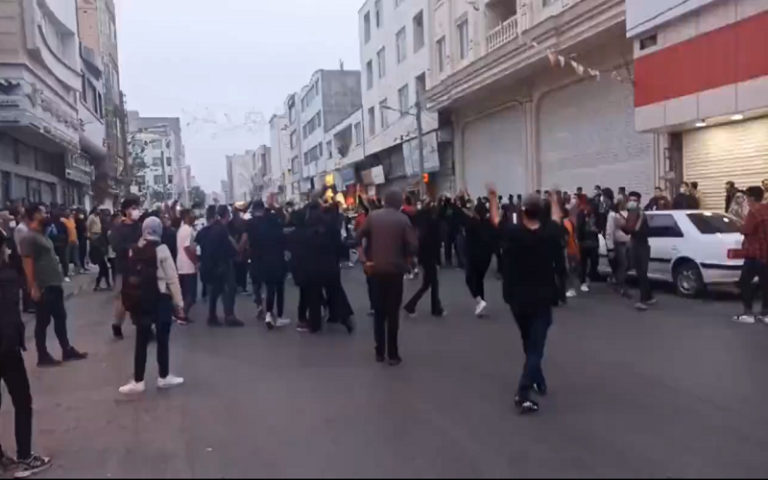
In Iran, the current battle between the ruling regime and the brave people has been continuing for months. The eyes of the international community have been enlightened by the determination and courage of the Iranian people.

The Western media have wrongfully advertised that the protests are leaderless, and stated that the new generation of Iran and their ideas are the only reason for the protests, ignoring the past protests and the previous generations, either deliberately or unintentionally.

The truth of the matter is that no change has occurred in the history of any nation without the struggle of generations intertwining, and Iran is no exception. The Iranian regime has shed blood and committed crimes against the Iranian people since it confiscated the country and the 1979 revolution from the people, the rightful owners.

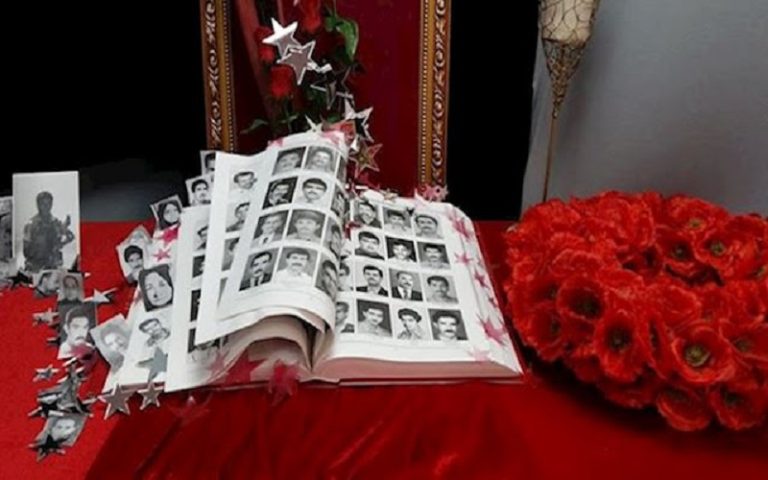
Statistics about the number of people that have been killed by this regime often fluctuates. The regime’s main opposition group, the People’s Mojahedin Organization of Iran (PMOI/MEK) has estimated that this regime has executed more than 120,000 people from the opposition over the past four decades.

The most brutal massacres were implemented between 1980 and 1988. The massacre in the summer of 1988, where the regime killed more than 30,000 political prisoners, was the pinnacle of the regime’s cruelty.

Since then, the regime has continuously repressed protests and, in the process, killed thousands more innocent civilians. In the Qazvin protests in 1994, the regime killed dozens of protesters, while in the protests of November 2019, the regime killed more than 1,500 people.

In a recent rare remark by one of the regime’s elements, Javad Mogoi, a documentary maker who is close to the regime’s supreme leader Ali Khamenei’s office, addressed undisclosed information and said that only 400,000 families of executed political prisoners are living in Tehran and that they have played a significant role in the recent uprisings. He has not provided the source of the information.

The state-run Aftab-e Yazd daily published his narrative and objective observations about the protests that he had posted on his Instagram account. During the protests, Mogoi was reportedly beaten and arrested by the regime’s Basij forces.

He stated, “I arrived at Revolution Square. The forces are much more than the pedestrians; Basij, special unit, police, and plainclothes of the Revolutionary Guards. I went to the ‘Esm Ketab’ store. Ali Rekab sat down to describe these ten days: ‘Javad! Egad, these are people. The Basijis were beating two girls last night. They swore at them and beat them.’

Mogoi added, “I said, ‘It’s not like that everywhere. We have 400,000 families of executed Mojahedin Khalq members in Tehran. In the field, some are acting completely professionally. They are organized.’”

This information not only reveals aspects of the regime’s crimes against humanity, but also the heroic rebellion of a nation, its main opposition organization the MEK along with all walks of society and movements that have resisted and sacrificed their lives for more than 40 years, in order to bring an end to the darkest era in Iran’s history.

The new generation of Iran is following the path of previous generations and has decided to seek revenge for the blood of the fallen people in their quest for freedom. This revolution is neither rootless nor leaderless. Its true leader is the blood of those who fought for freedom. No one can ignore or bury it, history will speak the truth for many years, decades, and centuries to come.

Iran Regime’s Security Forces Murder Schoolkids, Claim It Was Suicide

0

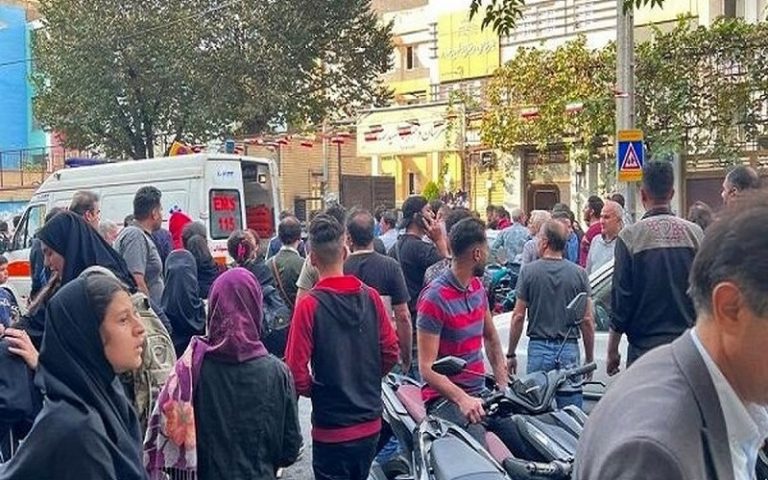
The most critical story of the protests on October 24 was the narrative of the Sadr Girls’ Conservatory in Tehran. According to claims from the Iranian regime in local news, the disputes started when the school principal insisted to check the girls’ phones and tried to conduct body searches of some of the girls when they rejected to hand over their phones.

Videos on social media showed heavily armed security forces outside the school who fired tear gas, leaving some of the students injured.

The important subject of the incident is the regime’s contradictory narratives about the events in this school. The regime’s ministry has narrated the incident in such a way that the blame for the conflict is being put on the students who brought mobile phones in with them.

Ali Tirgir, deputy of the regime’s information and public relations center of the Ministry of Education, said, “Today, due to the possession of mobile phones by some students and the insistence of the school principal for an inspection, a conflict between some students and parents with the school principal took place.”

He added, “According to the rules, mobile phones are prohibited in the school and students must follow the school’s instructions. In this incident, several students suffered a drop in blood pressure, and their condition was attended to by the presence of emergency forces.”

According to the regime’s police announcement, the capital police had a different story. They stated, “This afternoon, following the announcement of a case of conflict in the vicinity of a girls’ conservatory on Karoon Street, police officers arrived at the scene and put the matter on their agenda, during which it was found that the conflict was between a few thugs.”

They explained, “This conflict, which took place near a girls’ conservatory, raised the concerns of some parents and students. The perpetrators of the conflict were identified and arrested by the police officers.”

The questions remain as to whether there was a conflict inside the school or in the vicinity of the school, and whether was it between thugs or between students, their parents, and the principal?

Also, what actually happened that led to the conflict and the subsequent arrival of ambulances? Is it the first time that students have brought mobile phones to school? Was such brutal behavior necessary, and what is so dangerous about mobile phones in a school, except for the regime’s fear of the publication of children’s anti-regime protests?

Despite the regime’s claims that nothing serious happen, why then were some of the students sent urgently to the hospital? The regime’s educational officers seemingly claimed that this was due to several students suffering from low blood pressure.

A few days ago, the regime’s Minister of Education announced that no student had been arrested following the incident at the school and that students who have committed crimes in recent protests have been referred to counseling centers.

The regime’s MPs later visited Tehran’s Greater prison, and one of them reported that 200 students were imprisoned in this prison. The regime’s Minister of Education previously said that “We are not saying anything harsh to the schoolchildren.”

Over the past weeks, many schoolchildren have died at the hands of the regime’s security forces. According to a statement posted by the Coordinating Council of Iranian Teachers’ Trade Associations on October 14, 16-year-old Asra Panahi died after security forces raided the Shahed girls’ high school in Ardabil the day before and demanded a group of girls to sing a pro-regime song.

The pupils refused and security forces attacked them leading to several injuries. Some of them were taken to the hospital, where Panahi died due to the severity of her head injuries. As usual, the regime denied any relation between her death and its security forces.

Following the spread of the news, a man identified as her uncle appeared on TV and claimed that she died because of a congenital heart condition.

The next case was of a 17-year-old schoolgirl named Arnica Ghaem Maqami. She died following several hits to her head by the regime’s security forces. According to the hospital, her neck was broken. The regime later claimed that she had jumped from the fourth floor and committed suicide. Security agencies took her to the military hospital to prevent rebellions.

What Happened in Evin Prison on ‘Bloody Saturday’

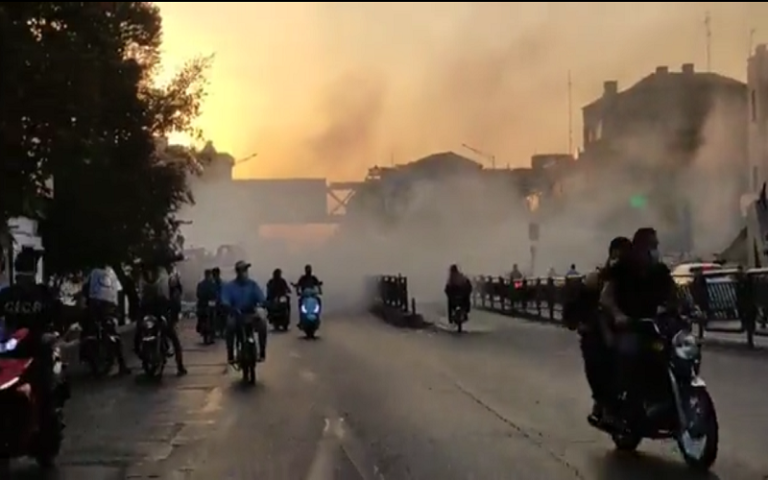
On October 15, at 8:10 pm local time, citizens in northern Tehran reported a blaze in the Evin Prison. The report was completed with further footage of grenades, teargas, and birdshot. At the same time, the slogans “Death to Khamenei” and “Death to the dictator” could be heard in the area. Following the event, hundreds of citizens headed to the prison with videos circulating on social media showing heavy traffic on the Yadegar expressway.

In response to the unrest at the prison, authorities dispatched dozens of anti-riot forces, Revolutionary Guards (IRGC) paramilitary Basij troops, and plainclothes agents.

The regime blocked the leading streets to the Evin prison, preventing prisoners’ families from accessing the facility. Outraged citizens torched almost all pro-regime banners on the expressway, while security forces shot teargas and birdshot at citizens’ cars, heavily damaging at least one car.

Despite the repressive measures, dozens of citizens succeeded in getting close to the prison and sounded their concerns over what happened in the jail. “Death to the dictator,” they chanted.

Inside the Evin’s Bloody Saturday

Established by the toppled Shah Mohammad Reza Pahlavi in 1972, Tehran’s Evin prison is notorious for holding political dissidents, prisoners of conscience, and minority activists. Following the recent anti-regime demonstrations, the regime transferred thousands of arbitrary detainees to this jail.

Officials’ Narrative of “Evin Incident”

Following the report of a fire at the prison, the judiciary’s Mizan outlet has declared that eight inmates accused of theft have died of smoke inhalation. The outlet also announced that 61 inmates are in coherent situations. Authorities are claiming that the blaze began in an entrepreneur-sewing workshop.

The IRGC’s Fars news agency claimed that several prisoners were slain in a minefield when they tried to escape. Hours later, the Intelligence Ministry (MOIS) Mehr news agency rejected Fars’s report.

The state-run broadcasting organization (IRIB) immediately aired a report from the prison. Contrary to the news saying the blaze occurred in Ward 7, the IRIB allegedly provided its propaganda show from Ward 4.

The correspondent claimed, “The fire has been extinguished, and everything is OK. As you see, prisoners are asleep, so we don’t harass them and avoid speaking with them.”

Locals’ Narrative of Evin’s Bloody Saturday

In early reports about the blaze, locals reported that alongside the chants of ‘Death to Khamenei’ and ‘Death to the dictator’, and the sound of gunfire, being heard from inside the Evin prison, several prisoners were seen on the rooftop of the building.

They stated, “We witnessed the blaze inside the prison from 8:00 pm; the sound of gunfire did not cut out. The prison’s alarm was sounded several times since morning. Several say prisoners have launched a riot inside Evin. Firefighters came with delay but did nothing.”

Citizens also reported several explosions. Experts identified that the bursts were due to shooting flashbangs; thunder flash and sound bombs are less-lethal explosive devices that temporarily disorient an enemy’s senses.

Contrary to the state media reports, video footage has shown several people intentionally igniting and spreading the fire in the prison’s yard. Officials have said the blaze was limited to a sewing workshop; but of course, they later admitted that sewing machines remained undamaged.

Former Political Prisoners’ Experience and Information

Former political prisoners have said that the burnt building is the prison’s amphitheater hall. One former political prisoner, who was arrested during the gas protests in November 2019, said, “The regime usually avoids placing prisoners in this hall except in emergency conditions such as in November 2019 or recent demonstrations.”

He stated, “I’d been held in Ward 7; the same ward was ablaze. The regime had carpeted the ward’s corridors due to the number of detainees.”

According to leaked reports, the regime had carpeted several rooms in this building, holding detainees whose interrogations had finished in this facility. The former prisoner added, “Ward 7 is Evin’s biggest ward, consisting of seven halls for holding prisoners. The regime keeps 240 to 260 inmates in the ordinary situation; however, in irregular situations such as the status quo, in addition to carpeting corridors and holding prisoners there, authorities keep up to 450 to 500 detainees in each hall.”

He further explained, “We’ve yet to know more than 20 or 30 percent of the reality. MP Ahmad Ali Reza Beigi today said, ‘Based on our information, Evin’s incident was due to what happened in Ward 209.’ We know that authorities fired teargas at Ward 209; however, the 209 is too far from the [amphitheater] hall. This hall is located beside the visiting room… When authorities were transferring us from Ward 209 to the visiting room, it took 5-6 minutes in a car.”

Iranian Dissidents’ Revelation of Evin’s Bloody Saturday

On October 18, the Iranian opposition, the National Council of Resistance of Iran (NCRI), stated, “While the regime is trying to cover up the major atrocity it committed in Evin prison and does not even allow its Majles deputies to visit the prison, the scale of the crime comes to light after 48 hours.”

Further details about the tragedy, based on reports and statements by eyewitnesses who are ready to testify before international courts and authorities, are as follows:

  1. Thirty to 40 prisoners were killed during the attack on Evin Prison, by the IRGC Special Force guarding the Supreme Leader (NOPO). Their names and details are recorded in Evin Hospital. Most of those killed were from Ward 7.
  2. The attack on the prisoners was planned in advance. Ali Akbar Hashemi Rafsanjani’s son, Mehdi, a prisoner in Evin who was on leave, was told not to return to the prison. Akbar Tabari, the deputy to then-Judiciary Chief Sadegh Amoli Larijani, and Mohammad Ali Najafi, the former Minister and Mayor of Tehran, who are both prisoners in Evin, were transferred to Evin medical center before the attack for their safety.
  3. The savage guards (NOPO) threw some prisoners down from the roof. They targeted the prisoners in the courtyard with live ammunition from the roof. One of the prisoners watching from behind a window was shot on the side.
  4. NOPO attacked Ward 8, where political prisoners are kept with live ammunition and shotguns, and fired tear gas to the point of suffocation. In the courtyard of Ward 8, blood was spilled like a slaughterhouse such that it could not be cleaned up until 24 hours later.
  5. In Ward 8, some prisoners and informants were spying against the prisoners, cooperating with the suppressive forces, and guiding them. After shooting and firing tear gas, the special unit forces made the prisoners lie down in the prison yard and beat them to the point of death. The brutal beating continued until the morning when they extensively used stun guns to beat the prisoners.
  6. The IRGC Colonel Mahmoudi, the commander of the prison protection unit, went beyond brutality, and even when the special unit told him not to hit the prisoners, he beat them on the head with a baton. His blows on the head of a political prisoner caused his eyes to bleed. Another ruthless criminal was a corrections officer by the name of Tavakoli.
  7. They transferred 51 prisoners from Ward 8; a prisoner with five bullets in his body was also taken in the same condition. Some of the prisoners were taken to Gohardasht prison, but the location of the rest is unknown.
  8. They fired tear gas inside the women’s Ward and, at the same time, locked the doors of the Ward so those female prisoners could not react to save themselves.
  9. Had the people of Tehran not rushed towards Evin prison on Saturday night, many more prisoners would have been killed. Even now, a human disaster will occur if Evin remains locked up and no one visits the prison.

According to its expanded domestic network of Resistance Units, the Iranian opposition group, the People’s Mojahedin Organization of Iran (PMOI/MEK) revealed that a rebellion inside the most controlled center of torture, execution, and suffocation in Iran, which was completely tied with the nationwide protests, is another indication of the progress and expansion of the popular uprising. Iranians all over the country are overcoming fear and terror.

Security forces resorted to a significant mobilization plan to quell the protest inside the prison, showing the importance and danger of this uprising for the regime.

On the other hand, the solidarity of the people of Tehran and the rapid reaction by rushing toward the prison and fighting with the repressive forces shows a growing unity among the people that have been building up during the uprising.

Using all means of propaganda, the regime has tried to downplay the incident. State officials claim that a fight erupted among inmates over financial charges, which shows the matter’s sensitivity.

The NCRI’s President-elect Mrs. Maryam Rajavi has since urged the United Nations, the U.N. High Commissioner, the Human Rights Council, along with other human rights defenders, to urgently send an international fact-finding mission to Evin prison and examine the traces of crimes against humanity there in the presence of a representative from the Iranian Resistance. If the clerical regime is telling the truth that they have not committed any crimes, they should accede to this fact-finding mission.


From Nationwide Uprisings to Drone Wars, Iran’s Regime Is Sinking

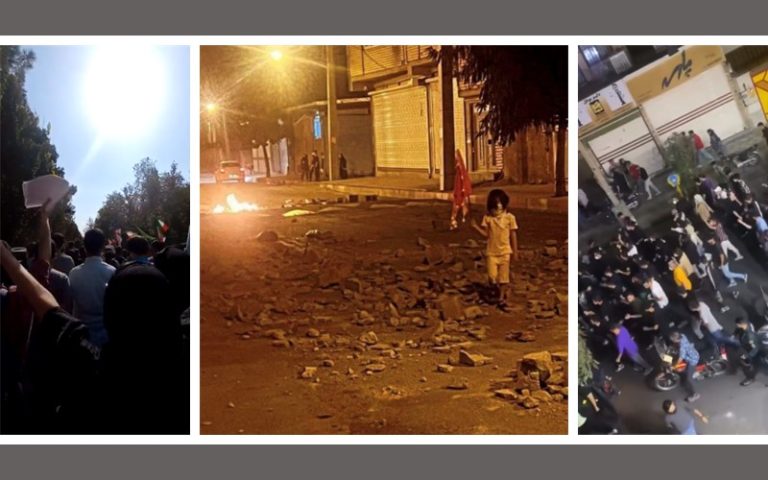
The protests in Iran continue with undiminished force. Despite hundreds of arrests and ups and downs, rallies are taking place daily across the country. According to activists and the regime’s opposition, at least 400 people including 23 children have been killed during the protests, according to activists.

Most of the demonstrators who have been arrested have not yet been entitled to lawyers. Not even their families are informed about the whereabouts of those arrested.

During the anti-government protests, demonstrators are increasingly painting graffiti on the city’s walls, which are slogans against the regime. In several districts of the capital Tehran and other cities, inscriptions such as ‘Death to the dictator’ could be read on the walls in the past few days.

In addition, the people attacked many of the regime’s headquarters with Molotov cocktails which are used for their repression. This all started when a young girl named Jina Mahsa Amini died due to police violence. Since then, thousands of people in Iran have been protesting the regime’s medieval values ​​and laws.

The protests have since spread internationally. In all major countries around the world, people are taking to the streets to draw attention to human rights violations in Iran.

But this is not the only issue about the Iranian regime that has raised global attention in the past few weeks. Caught in the middle of its internal crisis, the regime has decided to support the Russian army with kamikaze drones which are now used against Ukraine’s cities and its defenseless citizens.

There had been reports as early as mid-July that Iran was preparing a mass delivery of drones to Russia. US President Biden’s national security advisor, Jake Sullivan, publicly stated that their information shows that the Iranian regime is preparing to quickly deploy several hundred unmanned aerial vehicles.

This is not something that we should be surprised about due to the regime’s nature of support for global terrorism. Because in international relations this regime does not belong to the peace camp. Its interference over the past four decades has brought misery and war to many countries in the Middle East.

According to media reports, Iran also wants to export missiles to Russia soon. Experts see the first use of Iranian combat drones outside the Middle East as a radicalization of Iranian politics.

Tehran’s opponents in the region know the danger. The Iranian-backed Houthi rebels in Yemen have used Iranian drones to attack Saudi oil facilities and Abu Dhabi, the capital of the United Arab Emirates (UAE), in recent years. US troops in Syria were also attacked with Iranian drones.

And as usual, the regime in Tehran denies all its malign activities, it is also denying supplying such weapons to Russia. But the debris from the drones shot down in Ukraine is difficult to deny. And footage on social media confirms the suspicion that Tehran is not telling the truth and the comments of the spokesman of its Ministry of Foreign Affairs on Monday are an outright lie and the EU doesn’t believe in Iran either.

According to media reports, the Ukrainian military said that soldiers of the regime’s Revolutionary Guards were stationed on the Russian side of the front in eastern and southern Ukraine as instructors or drone pilots.

They are so-called kamikaze drones of the Iranian regime called Shahed-136. These weapon systems can carry explosive charges weighing up to 60 kilograms at a range of up to 2,500 kilometers. They work via GPS and can fly unmanned to any programmed target if it does not move.

Most of these drones are produced in Iran, but recently also in Tajikistan. On May 17, the regime opened a drone factory in this country.

The situation is politically particularly sensitive as the regime itself is currently grappling with domestic unrest. EU officials also conclude that if the Ukrainian information is correct and that Iran’s regime is supplying arms to Russia, sanctions will be unavoidable.

On Wednesday, October 19, 2022, according to Politico, EU ambassadors agreed on new sanctions against Iran over their arms sales to Russia.

As early as April, just under seven weeks after the start of the Russian attack on Ukraine, the British ‘Guardian’ reported that the Iranian regime was smuggling ammunition and weapons to Russia, including mobile anti-tank weapons, anti-tank missiles, and Brazilian rocket launchers.

Iran: Security, a Gamble in Which Khamenei Lost

Iran’s regime’s major authorities try to make gestures that the dust of the recent protests had settled, especially after its supreme leader Ali Khamenei in his latest speech gave a warning to the Iranian people, against continuing the protests.

Following Khamenei’s warning, they prematurely started to congratulate each other on defeating the people and quelling the protests.

They wanted to show that they were facing just a few emotional and excited youths, influenced by computer games, that are burning some trash cans on the street and wanted the regime’s supporters to believe that there is no need to mind about the regime’s security and soon the protests would finish.

In a ridiculous claim, Khamenei’s mouthpiece Hossein Shariatmadari, the chief editor of the Kayhan daily, said, “To see the reality, just put your smartphone aside, go outside and enjoy walking down the street in the real world with the security that the Islamic Republic has created for you in one of the most insecure areas of the world and see that there is nothing special outside.”

But the people by continuing the protests at a new level of confronting the regime’s forces have broken Khamenei’s bullying.

As a result, and in fear, many of the low-ranked officials utter that these protests are completely different from the past that took place in 2009, 2018, and 2020. They are difficult to quell, will persist, and are getting organized by groups of fearless defiant youths. Even now some of them realized that what they are facing now is a revolution, facing many losses on the regime’s side something that did not happen in the past.

They are warning the sovereignty that its security is bound to a narrow string and in close time, this string will tear up if they do consider the people’s demands as soon as possible. And the last thing that is preventing some people from participating in the protests is their fear about the costs of the protests, but such factors are not perdurable and will lose their effect very soon.

The state-run daily Bahar in their October 9 publication, wrote, “A very important point that should be noted is that the extent of dissatisfaction and anger should not be limited to the number of people who participate in the protests.”

It added, “These are a very small percentage of the total number of people who are angry. Many do not consider the protest to be effective for several reasons, so they do not participate. Or the next important factor that prevents some of the people to participate in the protests is their ‘fear of the costs of the protests.’

Bahar concluded, “These factors are now playing a role, but they are not predictable, and someday maybe they will lose their effect and much bigger protests will be created.”

In another article, the same daily criticized the government, writing in irony that, “A hard winter was supposed to come for Europe. But hard autumn has arrived for us sooner.”

It further added, “Surveys, ethnographies, and analyses showed that the accumulated anger and patience of the people was bound to a strand of hair. And we saw that with the tearing up of this strand of hair how the stability was broken, and a crisis was created. I appreciate the word of anyone who says that the situation is fine, and nothing happened.”

The Bahar daily also stated, “Society is strangely polarized. The number of opponents is high. Even if it is not visible on the streets and this is dangerous for the structure.”

Such remarks are not just limited to some outlets. As the uprising is entering its fourth week, warnings and concerns are expressed by many others.

Emad Afrough Ostad, a former MP, warned the regime, saying, “The official power thinks that if they pay attention to these protests and these words, it will be considered a kind of retreat. Which retreat? A system that does not pay attention to change, does not pay attention to social and civil power and their demands, is doomed to failure. No problem will be solved with the internet outage.”

Mohammad Sarafraz, the former head of the regime’s Radio and Television, wrote in a tweet, “They have created an enemy called cyberspace and you are blaming it for their mistakes and inefficiencies.”

The Jamaran website stated, “Young people feel humiliated. The solution to these issues is not violence and cutting off the Internet. Provide conditions for peaceful protests and demonstrations.

“The incident that happened with the death of Mrs. Mahsa Amini was a spark because of the accumulation of discomforts, difficulties, and demands that people, especially young people, and women, had. What has caused chaos in this city is the way of governance in the last one or two decades, during which the people have been neglected.”

Plight of Teenage Activists in Iran Is Worse Than Reported by Human Rights Groups

0

On Thursday, Amnesty International issued a report on Iran’s ongoing protests, which indicated that at least 23 minors have been killed in the clerical regime’s crackdown on nationwide dissent. The report noted that this comprises 16 percent of the 144 fatalities the human rights organization has confirmed so far. But Amnesty also acknowledged that a lack of reliable access to information from Iran makes it all but certain that the real death toll, among both adults and children, is significantly higher.

Since the current uprising began roughly one month ago, Iranian authorities have made concerted efforts to limit civilian access to the internet and thus impede both organizing efforts and the dissemination of eyewitness accounts, photographs, and videos of the unrest and associated crackdowns. However, these efforts have been countered by dramatic increases in the use of virtual private networks and other technical workarounds for the government-imposed restrictions. Furthermore, information continues to be collected and shared by the leading pro-democracy opposition group, the People’s Mojahedin Organization of Iran.

The PMOI’s own reports on the present situation indicate that the death toll after one month of continuous unrest is approximately 400, more than twice the figures reported by Amnesty International and other human rights groups. The PMOI’s parent coalition, the National Council of Resistance of Iran, noted that there are “dozens” of juveniles among the deceased. “Their pictures, with their innocent faces, circulate over social media, reflecting the pain the regime has inflicted on Iranians,” the coalition wrote on its website.

The NCRI also indicated that the death toll among minors had already reached double digits on September 30, a date remembered by growing numbers of Iranian citizens and activists as “Bloody Friday.” On that day, agents of the Islamic Revolutionary Guard Corps opened fire on a crowd of protesters in Zahedan, the capital of Sistan and Baluchistan Province, killing as many as 90. Authorities have publicly mischaracterized that incident as clashes between the IRGC and ethnic separatist groups, but videos and eyewitness accounts from the protests confirm that they were part of the same nationwide uprising as has now encompassed more than 170 cities and towns.

The mass shooting on Bloody Friday reflects a comparatively high death toll among the Baluch ethnic minority in other contexts. Amidst a spike in death sentences over the past year, that demographic has accounted for more than 20 percent of all executions despite being no more than five percent of the national population. At the same time, the apparently deliberate killing of juveniles in Zahedan is consistent with the Iranian regime’s status as one of the last countries on Earth to routinely carry out death sentences for persons under the age of 18, in direct defiance of international law.

The comparatively high proportion of deaths among juveniles on Bloody Friday is also indicative of the prominent youth presence in the current protests more generally. This feature has become especially apparent in the first two weeks of October, following the start of the Iranian school year. That milestone saw the expansion of preexisting uprising not only to all 45 major Iranian universities but also to girls’ high schools, where young women have recorded themselves removing their mandatory head coverings, defacing, or denouncing the images of the regime’s Supreme Leader Ali Khamenei that are on display in all classrooms, and even chanting the uprising’s slogans to drive away government officials and militants who had been dispatched to counter their activism.

However, it has been reported more recently that the authorities have taken stronger actions to silence student dissent, such as by dispatching security forces to raid schools. This would be alarming under any circumstances but is made more so by the fact that so many teenagers have already been killed by those same security forces, some of them in raids on private homes.

The NCRI highlighted the case of Nima Shafaghdoust, a 16-year-old boy who was wounded during protests in Urmia but escaped to his home, only to be attacked there by security forces and taken away to an undisclosed location where he died. His disappearance for several days was reminiscent of the cases of two 16-year-old girls whose names and faces have become galvanizing symbols of the regime’s abuses, alongside those of Mahsa Amini, the 22-year-old Kurdish woman whose death at the hands of Tehran’s “morality police” sparked the uprising around the time of her funeral on September 17.

Images of Amini, Nika Shakarami, and Sarina Esmailzadeh all appeared on screen when a state media broadcast was interrupted by activists earlier in October to appeal for even greater participation in the nationwide protests. Shakarami and Esmailzadeh each informed loved ones that they were being chased by security forces before disappearing, and turned up dead days later.

Authorities have claimed that both deaths were caused by either accidental falls or suicide, and they have pressured both girls’ families to corroborate their stories, even in cases where they have already directly attributed the deaths to targeted blows to the girls’ heads, almost certainly delivered by security forces. In the case of Shakarami, authorities even reclaimed control over her body after returning it to the family to bury it secretly in hopes of avoiding public expressions of outrage at her funeral, as had occurred with Mahsa Amini.

Tehran presumably hopes to limit international awareness of such killings, but the international community has appeared more invested in the current uprising than others. Nevertheless, groups like the NCRI have still expressed frustration with a lack of concrete support or public statements affirming the rights of Iranians to revolt against the regime responsible for such abuses. “Anything less,” the coalition wrote, “would only enable the regime to continue with its killing spree of innocent people, and more importantly, children, who are yearning to change their future.”

Iran’s People: “Do Not Call It a Protest, It Is a Revolution”

The nationwide uprising in Iran sparked by the September 16th death in custody of Mahsa Amini, a 22-year-old Kurdish woman marks a watershed in the history of the Iranian people’s struggle against the totalitarian regime ruling Iran.

The protests entered their 25th day today as people from all walks of life in 177 cities in all 31 provinces have risen such that at no time during the past four decades have the prospects for a revolution been within reach as it is today.

One must be mindful that this regime is distinctive from any other dictatorship worldwide. These include religion and political repression at home and the export of terrorism, or in the regime’s lexicon, ‘the export of its revolution’.

Misogyny is the nexus between these two characteristics, with which the regime suppresses the entire nation.

As such, to topple this theocratic and totalitarian regime, the Iranian people must devise and formulate tactics that are suitable for successfully and effectively confronting the regime.

Scattered and spontaneous protests, even large ones like the protests in 2009 and 2018, would not ultimately lead to the regime’s downfall. And unlike the Shah’s regime, the mullahs will not relinquish power voluntarily. They are determined to fight to the end to preserve their grip on power.

Against this backdrop, a new revolution requires intense planning, organization, coordination, and unity.

This is something that the Resistance Units of the People’s Mojahedin Organization of Iran (PMOI/MEK) have been working on over the past six years while risking arrest, torture, and even execution.

Their role is much more prominent and pronounced in the current uprising such that regime officials and media are expressing increasing alarm over their effectiveness in organization and continuation of the protests.

The rebellious youths have relied on the Resistance Units to improve their effectiveness and minimize their vulnerabilities in the regime’s onslaught and organized violence.

The protesters have also learned a great deal from the experiences of the four major uprisings since 2017 and the tactics employed by the Resistance Units, such as torching the regime’s symbols, posters of its leaders, and billboards, as well as targeting the repressive centers.

In an interview with the state-run daily Bahar News on October 7, Mohammad Reza Tajik, a member of the regime’s so-called reformist faction, said, “The current political situation in today’s society has passed the era of fear and entered the era of rage. The current movement is associated with a kind of happiness and zeal for life. Today’s activist is prepared to sacrifice his or her life to achieve freedom.”

Tajik also expressed his fear about the radicalization of the protests, adding, “Today’s activist thinks that he/she can only get his/her point across to the ruling class with rage. Today’s activist thinks that he/she cannot make change their fate and that there is no other path in front of him/her, and that he/she sees the solution only in acts of violence. He/she thinks that only the language of anger is the solution and that other languages are not answered and are not heard.”

Addressing the regime, he said, “Over the years we have planted the seeds of hate and now we are reaping a lot of wrath.”

Indeed, comments by a young Iranian woman in an interview with the Reuters News agency speaks to this fact: “Hey world, hear me: I want a revolution. I want to live freely and I’m ready to die for it. Instead of dying every minute under this regime’s repression, I prefer to die with their (security forces) bullets in protests for freedom.”

The walls of tyranny and religious totalitarianism are finally collapsing. A new revolution is happening on the streets of Iran and no force can stop it.

Deadly and Unconcealable Cracks in Iran Regime’s Rule

0

The planned presence of the Iranian regime’s supreme leader Ali Khamenei in the ‘joint graduation ceremony for the cadets studying in the academies of the Islamic Republic of Iran’s Armed Forces’ was considered a failure, as it did not bring him the expected ‘power’ that the regime wanted to present in the middle of the nationwide protests.

During his speeches, the signs of weakness were clearly evident on his face. One of the signs was his complaints about the ruling head’s contradictions, which he could not ignore. Khamenei knows very well that they will intensify in the future.

This could be seen in this part of his speech, “At first, some (cleric) elites made announcements and statements without investigation and probably out of compassion. Some of them blamed the law enforcement agency and some blamed the system. Now that they have seen what the matter is and what happened in the streets because of their words in parallel with the planning of the enemy, they should make up for their work and clearly declare that they are against what happened and the plan of the foreign enemy.”

While many officials remained silent, only Ahmad Janati and Hassan Khomeini responded to the regime’s supreme leader’s desperate request.

Even the Islamic Association of Students of the Sharif University of Technology confronted him on the night of October 2, when the regime’s special forces and plain clothes officers attacked, surrounded, beat, and injured many of the Sharif University students.

In their statement, they wrote, “The students who sat in for the second day in a row, and exercised their right to protest following a hollow promise by the president of the university to release all the imprisoned Sharif students who were arrested last week, suddenly faced a barrage of security officers and plainclothes officers who, in a tremendous act, besieged the university and attacked students and professors with all kinds of weapons.”

They added, “Behind this blatant violence, it seems that there was a pre-planned scenario to silence the voices of protesting students, and Sharif University was supposed to be a lesson for the rest of the country’s universities and, of course, to satisfy the greed of some extremists.”

The day after Khamenei’s desperate statements, in a statement published by the state-run Setareh-e Sobh daily, cleric Mohammad Ali Ayazi said, “Some of the clerics do not accept the guidance patrol and say that this is not a way to make the society religious. Some things that are done in the name of religion are not acceptable from the point of view of some religious thinkers and researchers.”

The current situation is so against Khamenei, that even the spokesperson of the regime’s ‘Enjoining good and forbidding wrong’ headquarters stated, “We have said several times, this kind of treatment by the guidance patrol or some concerned people, would maybe have worked in the 80s, but now we can no longer force people to submit to the hijab law with violent treatment.”

This desperation among the regime’s forces is the result of the Iranian people’s resistance over the past years, especially through the involvement of Iranian women of all ages.

In a speech by Mohammad Bagher Qalibaf in the Expediency Council, it gives a clear picture of the regime’s viewpoint. He stated, “If we want to overcome this cognitive war, we first need to correct these conflicts and these different perceptions and understandings in this part of governance. This is the platform that the enemy uses because of its inefficiency and creates these problems.”

This situation has also affected the effectiveness of repression and is widening the gap between the regime’s forces and the people of Iran.

Iran: At Least 586 Death Penalties in Last Year

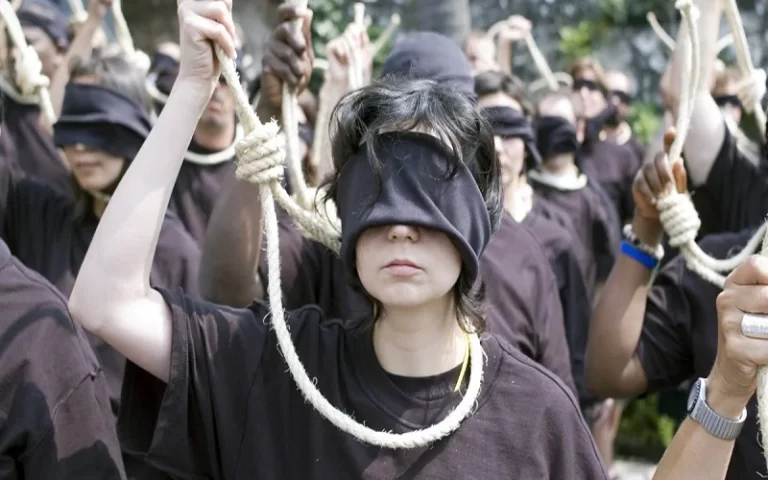
The international community annually celebrates October 10th as a world day against the death penalty. Human Rights organizations, activists, and the United Nations reiterate their calls on several governments to abolish this inhumane punishment.

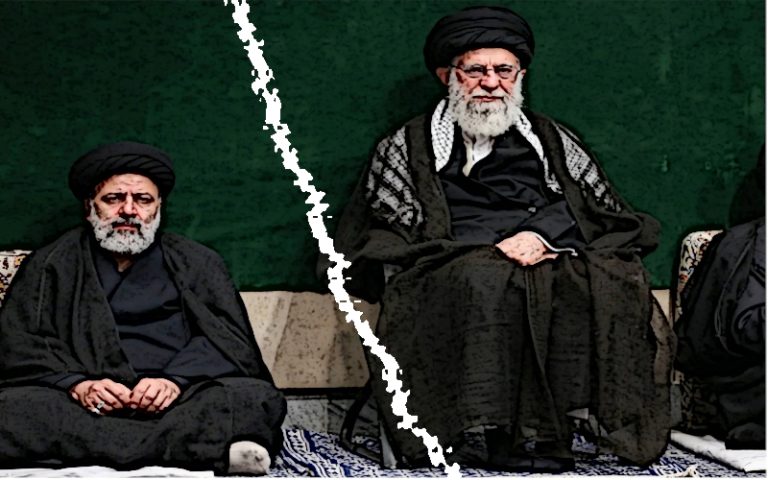
Instead, the regime in Iran has increased death sentences, reaching over 586 cases in the past 12 months. “Supreme Leader Ali Khamenei appointed Ebrahim Raisi as President and Gholam-Hossein Mohseni-Eje’i as Judiciary chief, trying to strike fear into the society through mass death penalties,” observers say.

Notably, Raisi and Eje’i were directly involved in the extrajudicial executions of political prisoners. Raisi himself led thousands of Mojahedin-e Khalq (MEK) members and supporters to the gallows in Tehran during the 1988 massacre.

Details about Death Penalties

The Scale

In a detailed report about the ayatollahs’ heinous crimes from October 10, 2021, to October 10, 2022, the statistics center of the Iran Human Rights Society declared:

The confirmed number of executions is 586 cases, including 565 men and 21 women. Authorities have hanged at least 13 political prisoners, including one in public. The regime also executed eight juvenile offenders.

“More than 20% of those executed are Baloch compatriots,” The Iran HRS declared.

The Charges

The society also provided details about the charges, including:

The regime hanged 236 inmates due to drug-related charges; 285 for murder charges; 21 for rape cases; 15 for armed robbery and clashes with security agents; and 21 for political activities. Authorities also arbitrarily hanged several inmates. For instance, they hanged Hamid Qareh-Lor on September 1, who had exposed the regime’s efforts to execute his brother Ali extrajudicially on August 5.

Where Death Penalties Carried Out?

Damning details about the location of executions revealed that authorities hanged at least 86 inmates in Sistan & Baluchestan province.

Notably, this number doesn’t show the dimension of the regime’s atrocities against the Baluch minority in Iran. Indeed, many Baluch inmates were hanged in exile and banned from last visiting their family members.

The regime also hanged 83 inmates in Alborz province, 76 in Fars, 42 in Isfahan, 28 in Razavi Khorasan, 20 in Qom, 20 in Golestan, etc. The location of several executions is unknown.

Arbitrary Killings on Iran’s Streets

Furthermore, the State Security Forces, Revolutionary Guards, Ministry of Intelligence agents, and other armed forces arbitrarily gunned down dozens of citizens in the past year.

According to the MEK, the regime has murdered more than 400 protesters and bystanders during recent nationwide demonstrations. This number is excluded from the annual death penalty.

Authorities also targeted dozens of unarmed porters in the Kurdish area and fuel carriers in Sistan & Baluchestan, leading to many victims. Moreover, interrogators have killed several inmates under torture in the regime’s notorious dungeons.

Read More: Iran’s Narcotic Forces Open Fire and Kill Civilians in South-Eastern Iran

International Condemnations Against Death Penalties in Iran

In his report to the UN Human Rights Council in July 2022, Professor Javaid Rehman, the UN Special Rapporteur on the situation of human rights in Iran, wrote, “the extent of arbitrary deprivation of life in the Islamic Republic of Iran is of serious concern. On the one hand, the national legal framework justifies arbitrary deprivation of life in some areas, such as extensive grounds for the imposition of the death penalty and the use of force by security forces in ways that are incompatible with international law.

“In other areas, violations are a result of practices and acts contrary to the national legal framework itself, such as the use of torture, the lack of timely access to medical care in detention and failure to take appropriate measures to address the general conditions in society that may give rise to direct threats to life or prevent individuals from enjoying their right to life with dignity.”

Iranian Dissidents Call on Civilized World to Hold Tehran Accountable

For decades, Iranian dissidents have called on the international community to hold the regime to account for egregious crimes. Mrs. Maryam Rajavi, the President-elect of the National Council of Resistance of Iran (NCRI), emphasized the abolition of the death penalty in her ten-point plan for a free Iran.

“On the World Day Against the Death Penalty- Criminal executions are a sign of the mullahs’ desperation in the face of an explosive society, but they will not escape inevitable overthrow,” she insisted on her pledge for an Iran without the death penalty.

Iran: Disadvantage of Internet Shutdown Is More Than Annual Oil Revenue

0

In a damning report on October 4, the semi-official Tejarat News website revealed that the disadvantage of 11 days of the internet shutdown in Iran is equivalent to the country’s entire oil revenue of 2021. At the same time, authorities have claimed that U.S. sanctions are the primary reason for the country’s dire economy. 

The website wrote, “In mid-September, the internet was cut off in Iran. Netblocks—the global internet’s observatory body—has declared that every hour of internet shutdown in Iran costs $1.5 million in financial disadvantage, 450 billion rials, to the country, meaning 10 trillion rials per day, and 110 trillion rials in the past 11 days.” 

To have a better understanding, it is worth noting that Iran’s total oil revenue in 2021 was around 100 trillion rials. Therefore, an 11-day internet cut-off far exceeded, and destroyed the country’s oil revenue in a year. 

Tejarat News added, “Furthermore, the internet blackout affected the business of many people. According to several reports, at least one million occupations have been created on Instagram alone.” 

The Online Businesses Union secretary Reza Olfat-Nasab provided surprising stats, saying that “The livelihood of ten million citizens is currently dependent on cyberspace.”  

On October 4. the Etemad daily wrote, “Now, the internet shutdown has aimed at this group’s business and livelihood, and they do not know even would resume internet access again or not, would filtering lift or not?” 

Online Businesses Under Systematic Corruption 

In September 2021, Etemad quoted the Statistic Centre of Iran as saying, “The business of 11 million Iranians depends on the social network; 83 percent of online businesses are on Instagram.” 

Indeed, online occupations are the outcome of a sick economy. Contrary to other developed nations, Iran is suffering greatly from a lack of industrial infrastructure. The government’s mismanagement and profiteering policies have eliminated any chance for agricultural, agro-industrial, and industrial growth. 

In this respect, online businesses are highly fragile in Iran, and the government’s oppressive measures, in a bid to counter public grievances, threaten the livelihood of millions of families. Remarkably, the parliament had long debates about censorship of social media in September 2021, which turned out futile, fearing public backlash. 

On December 9, 2013, the Revolutionary Guards’ first chief-in-command Javad Mansouri refused former president Hassan Rouhani’s brags about negotiating with the West and refining the financial situation, stating, “Our country’s conditions would not improve, and our problems won’t be resolved.” 

Mentioning that not even the nuclear deal with the world powers would not solve the government’s dilemmas, Mansouri said, “The core of our [economic] difficulties are internal. If Iran’s sky rained gold, but we don’t enjoy meritocracy and the rule of law… our situation won’t be changed.” 

Notably, high-ranking officials in Iran, including Supreme Leader Khamenei, President Raisi, Parliament Speaker Qalibaf, and Foreign Affairs Minister Amir-Abdollahian, among others, ceaselessly blame the U.S. and its allies for ‘unjust’ sanctions. They claim the restrictions endanger the lives of Iranian patients—while former Foreign Ministry spokesperson Abbas Mousavi has already rejected claims about sanctions on medicine and food. 

Nevertheless, authorities in Iran have deliberately ignored the reality that shutting down the internet has significantly harmed the country’s economy. Their bloody response to peaceful demonstrators, and cutting Iran off from the outside world, has once again proven that the theocratic state ruling Iran does not care about the people, their livelihoods, businesses, national interests, or the economy. 

The behavior of the regime’s mullahs should sound alarms for the U.S. and other signatories of the Joint Comprehensive Plan of Action (JCPOA) that lifting sanctions or economic incitements is not Tehran’s priority. The world’s foremost state sponsor of terrorism is lengthening nuclear negotiations to acquire at least one nuclear weapon, reaching an unbacked point. 

Furthermore, as former President Hassan Rouhani and his allies bragged about the JCPOA, the nuclear deal and its privileges did not benefit the people of Iran. Instead, the government siphoned billions of dollars into the pockets of proxy groups such as the Lebanese Hezbollah. 

The mullahs purely see the negotiation as a guarantee and political coverage for their illicit activities, which are not limited to their nuclear-bomb-making programs. These activities include warmongering, regional ambitions, terrorism, ballistic missile projects, and, more importantly, insurance for their brutal dictatorship inside the country. 

In a nutshell, the international community, particularly the U.S., should stand with the people of Iran who refuse the theocracy’s policies entirely. An Iran free of authoritarian mullahs would be a reliable ally for the civilized world, which would lead countries in the Middle East and North Africa to stability and peace, rather than being left to face endless conflicts, bloodshed, insecurity, and terrorism.