Home Blog Page 249

Iran: Growing Class Divisions and Attitudes Toward Low-Paying Jobs

Poverty affects a substantial portion of Iran’s population, and as activities like garbage collecting expand it has become a common job with low incomes especially for children who are the first victims of poverty created by the mullahs.

This is the result of an unequal distribution of wealth and huge class disparities. The recycling mafia exploits the poor intentionally.

A mafia in the hands of the administration of the municipalities and recycling plants. The state-run daily Arman wrote about this on February 4, “Today’s Iranian society is polarized into two categories: the rich and poor.” This means that the middle class is disappearing.

It added, “The implications of this class gap are clear, as the rich are getting richer and the weak are getting weaker. For example, an imbalance between the body and the soul is like an imbalance between the shape and content of society, and this imbalance eventually causes serious harm to the soul and the body and destroys both.”

On February 2, 2022, the state-run daily Jahan-e Sanat echoed the same thing, “The average per capita income of Iranians has reached $ 2,200 per year. However, that does not mean that the per capita income for all Iranians is fair and equals $ 2,200 per year. Many of the country’s income deciles have much lower per capita incomes – up to one-eleventh of this figure per year.

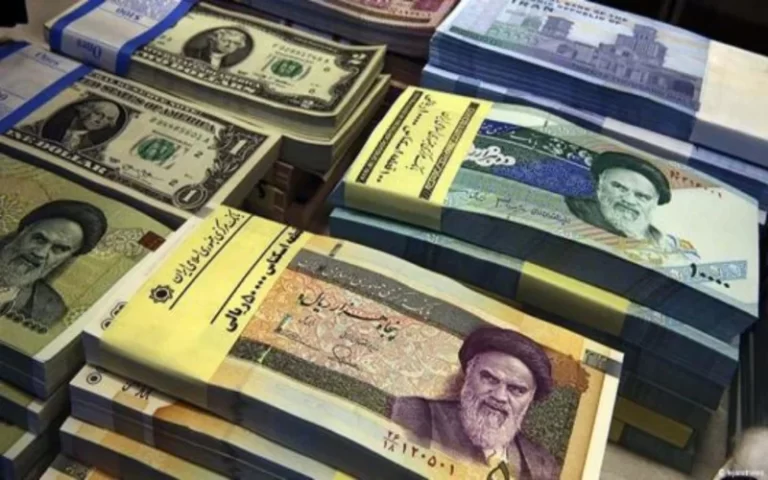
“The average income of employees, retirees with the 250,000 rials to a dollar exchange rate and 50 million rials per month is about 600 rials per year, which is less than about 2,200 dollars per year. This figure will undoubtedly be lower for the working class.”

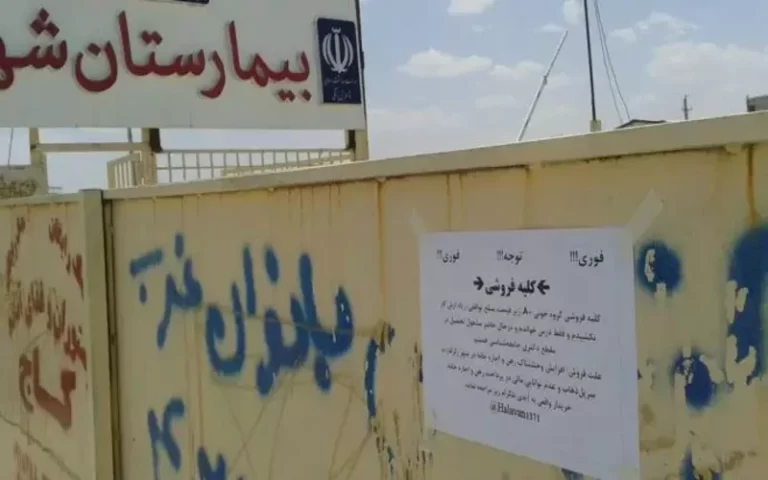
In contrast to the plight of the poor, we see the astronomical incomes of the regime’s officials. This situation has created a society in Iran that is submerged in economic crises and odd and menial jobs. This explains why the ads to sell kidneys and other organs are covering up the city walls.

According to different statements, collected from the regime officials, 24 million people are without any income, more than 16 million people only source of income is a subsidy of 450,000 rials (about $2), and less than eight million people receive e,500,000 rials in pensions from the Welfare Organization or the Relief Committee.

This means that now nearly 50 million people live below the poverty line. And forecasts about the country’s economic situation say that soon more people will fall from the middle class to the lower class. Of course, these figures are not entirely true, as the media and government experts admit that the Ministry of Welfare never correctly announces the poverty line figure out of fear of public outrage.

In discussing poverty in Iran, the state-run daily Aftab News wrote on January 6, “In the past, the absolute poverty line was about 100 million rials, which can increase up to 120 million rials due to the recent soaring prices and the lack of salary increases.

“Other official statistics show that between 20 and 30 million people in the country are below the absolute poverty line. If this situation continues and there is no change in economic policies, these figures will increase daily. However, it will be out of control in the future. Ninety percent of Iranians experience poverty in different ways throughout their lives. Even if they earn more than 120 million rials, they have experienced poverty in many ways.”

This situation is the result of the 43-year –rule of the mullahs, who promised a prosperous nation to the people under the ‘rule of the oppressed’ in the first few days after the 1979 revolution.

The regime’s Association of Combatant Clerics stated in a statement commemorating the anniversary of the 1979 revolution and published by the state-run website Ensaf News on February 1, “Today our society faces major economic, political, cultural and international crises. The middle-class is shrinking and pushed into the poor class with every passing moment.

“We are seeing the emergence of irresponsible classes, individuals, or institutions that enhance their standing, particularly through the pursuit of profits and the abuse of destructive sanctions.

“People say: ‘Forget your promises of the free water, electricity and affordable housing and focus on our most basic needs. People are suffering from unemployment, stagflation, poverty, and despair. And the shameful and massive corruption combined with the waste of natural and human capital is a great danger that threatens the country and the nation.”

The Outlook for Iran’s Economy and the Regime’s Bleak Prospects

0

Despite the hollow promises of the Iran regime’s officials from its president Ebrahim Raisi, who promised a better economic prospect and boom of 8 percent, to the minister of Ehsan Khandouzi who had claimed that inflation will decrease in the next year, regime experts say something else.

And one of the obvious facts of a collapsed economy is the regime’s decision to make up for the budget deficit out of the people’s pockets, which is based on a 60 percent increase in taxes.

The state-run daily Arman on January 27 criticized the regime’s budget plan and wrote: “The 2022-2023 budget is associated with uncollectible revenues, and current budgets that have increased, have fueled inflation. Construction budgets, which could serve as a safety valve to improve the economic situation, are also insignificant. There is no mention of the seventh plan, according to which the 2022-2023 budget was to be closed.”

And Reza Hosseini, member of the Parliamentary Committee on Industries and Mines, said in remarks published by the state-run daily Bahar News that the budget for 2022 also shows that next year people should see inflation and rising prices, and I think there will be so much pressure on people so that they will forget the debate about the stock market.”

“The outlook for next year’s economy is frightening,” he added.

Arman daily asked Farshad Momeni an economic expert, “will inflation and soaring prices decrease next year due to the government’s recent policies and decisions?” Momeni replied, “The claim that inflation will be reduced in next year’s budget is a scientifically invalid claim.”

In discussing the three main pillars of corruption that have implicated the regime’s government, he said: “Iran has been captured by a trilateral anti-development alliance. A pillar of this three-pronged alliance is the short-sighted rent-seeking government. The second pillar of unproductive groups includes rent-seekers, usurers, and brokers, and the third pillar is the promoters of vulgar market orientation.

“When important decision-making institutions take over the mafia kind approaches, they impose very heavy costs on the country’s economy. The Planning and Budget Organization says that an appendix of justice will be prepared for this budget by the order of the President. You have to make a misery attachment.”

Before that, with much fanfare, tRaisi issued a statement, published by the state-run news agency IRNA on November 25, 2021, in which he introduced the “facets of the works in the budget, based on justice” and claimed, “that the correct and fair system of allocating budgets in different parts of the country and proportion to the capacities and needs will advance the economic problems of the country in a direction that will eradicate absolute poverty.”

But the reality is that by this budget, as in the past, the 4 percent wealthy minority – regime’s elements – will become richer, and the majority will become poorer, and the country’s production will nosedive.

In an article entitled, “a costly avalanche is on the way,” the state-run daily Eghtesad Saramad wrote on January 27, 2022, “The creeping and imperceptible fever of the high prices has shivered the frail bodies of the wage-earners, especially the workers and the retirees, for some time.

“Not to include consumer prices on basic goods, VAT on all food and essential household needs, and finally, the increase in electricity bills based on the declared consumption pattern; these three components, which have gradually and unintentionally entered the field of workers’ lives in the form of government regulations, will increase the actual cost of living by the end of February.”

“Is this objective and tangible increase in the cost of living, basically calculated in the inflation basket of the Statistics Center of Iran?”

The regime’s economic experts dismiss the possibility of improving the economic situation and predict that next year poverty will increase, the country’s economic capacity will shrink, and unemployment and inflation will rise.

Corruption Permeating Iran’s Economy

Following the latest speeches of the Iranian regime’s president Ebrahim Raisi, the regime’s state media are expecting new and promising changes in Iran’s economy, hoping for improvement in the stock market, an increase in the incomes of Iranian workers, and that the resolution of many of the country’s crises.

However, they still remain skeptical as Raisi’s speeches did not provide any practical solutions for a way out of the present crises. Due to the existing problems and the taxes that have been imposed on the people, there is barely any chance of an increase in production or an economic boom.

As a result, whatever Raisi does, if he does anything at all, is likely to have very little effect on the country’s society and social affairs. One such example is the migration of inner-city dwellers to the outskirts of the cities. This, of course, will have social consequences and will likely further expand poverty, and subsequently involve the regime with security consequences that many of its media and officials are worried about or are warning about.

The impoverished middle class is already struggling to survive, having lost much of their purchasing power, leaving them looking towards migrating abroad in their droves for a better life.

The regime, on the other hand, is just adding to its mistakes as the country continues to lose its experts and capable professionals, and with it, the ability to solve the problems Iran is facing today. The government is simply clueless. On the assumption that they will collect wealth taxes, they put propositions in the budget that have nothing to do with economic principles and the welfare needs of society.

In an article discussing the confusing economic situation in Iran, the state-run Fararu daily wrote on January 27, “Someone bought a car for three or four billion rials about three years ago. The price of this car has suddenly jumped to over 10 billion rials due to the successive fluctuations of inflation, in which the people had no role. This person, who had been having trouble repairing his car, must pay a tax under the title of ‘luxury car’ to the government from 2022. In fact, we are facing a class in the country that can be classified as ‘penniless billionaires’.”

Exposing Iran’s weak economy and discussing the Iranian government’s criminal imposition of taxes on the impoverished classes, who are already suffering under the heavy burden of the uncontrollable inflation, the daily further stated, “lacking the power to deal with influential institutions with special relations, the government is shifting the tax burden to people who have already succumbed to inflationary shocks. At present, the rich of Iran and the merchants do not pay taxes but take full advantage of the inflationary conditions. As much as 2,300 trillion rials of energy subsidies are paid monthly. A significant part of this energy subsidy goes to the pockets of the affluent classes of society.”

Laying out details of Iran’s mass corruption, the Fararu daily highlighted that the increase of corruption, in turn, has had disastrous consequences for society. said it wrote, “…inequality, class divisions, public dissatisfaction, budget deficits, waste of financial resources, etc. have increased, and most importantly, productivity has disappeared.”

The daily also added, “The 20-year-old wealth tax plan has been on the table of MPs for 20 years and is decaying. Why are such important plans not approved? Creating such a plan requires transparency, and since some influential institutions in our country oppose the principle of transparency and find it problematic, this plan will not be approved. In such a situation, the people should be given the right to complain that the authorities intend to take from the pockets of the people to solve problems such as budget deficits, etc.”

The West Must Take Iran’s Domestic Situation Into Account

0

As negotiations over the future of the 2015 Iran nuclear deal resume in Vienna, the Western parties to that deal are in danger of reneging on their earlier promises that the talks could not continue indefinitely.

After the negotiations resumed in November following five months of delays by the new Iranian administration, several American and European officials set late January or early February as an unofficial deadline for their Iranian counterparts to accept a compromise that trades immediate restrictions on their nuclear program for relief from US sanctions. Instead, Tehran has only hardened its posture, demanding all sanctions relief upfront, along with impossible guarantees that no future administration will be able to walk away from it as US President Donald Trump did in 2018.

Now that we have reached the unofficial deadline, there is still little sign of progress in the nuclear talks. Virtually all negotiating parties have attempted to preserve an air of optimism, but the Americans and Europeans have also been compelled to repeat that the window is closing and that major differences persist between the two sides. For their part, the Iranians have said much the same thing, and hardline Ebrahim Raisi continues to mechanically repeat that a deal is possible only if the US makes the “political decision” to suspend sanctions without precondition.

This situation has persisted for so long that it would be plain foolish to suppose that there could be a breakthrough in the time it takes for “early February” to come to an end. This is all the more apparent because the US and its allies have shown no real commitment to exerting serious pressure on the Iranian regime, which might compel Tehran to drop its ultimatums and accept an agreement.

Now, with the unofficial deadline already expiring, there is new speculation about the possibility of direct talks between Tehran and Washington. But given the current state of indirect negotiations, there can be little doubt that the Iranian regime would spin such a meeting as evidence that the US is succumbing to Iranian pressure, instead of the other way around. This is not a narrative that Washington can afford to passively accept, least of all at a time when it is so vital for the mullahs to project an image of strength, both at home and abroad.

Domestically, that image has waned and would continue to do so if the US and its allies stood their ground in the nuclear talks and demanded concessions on penalty of a dramatic increase in economic, diplomatic, and possibly even military pressure. Such pressure, or even the mere threat of the same, would go a long way toward emboldening an Iranian Resistance movement that has been gaining momentum in its efforts to overthrow the regime for at least as long as the current disputes over the nuclear deal have been going on.

In January 2018, several months before Trump pulled the US out of the Joint Comprehensive Plan of Action, Iran was rocked by a nationwide uprising that popularized explicit calls for regime change in more than 100 cities and towns. Supreme Leader Ali Khamenei soon acknowledged that the protests had been facilitated by an organized opposition movement under the banner of the People’s Mojahedin Organization of Iran, which Iranian state media had long sought to dismiss as a cult-like group without the strength or popular support to challenge the mullahs’ hold on power.

The uprising eventually contracted in the wake of dozens of killings and thousands of arrests, but it inspired a series of interconnected protests that the NCRI’s President-elect Maryam Rajavi referred to as a “year full of uprisings.” This in turn set the stage for another, even larger nationwide uprising in November 2019, which featured now-familiar slogans like “death to the dictator” being repeated across nearly 200 localities. Since then, unrest has been ongoing among at least some of those localities, and the regime’s internal warnings about the social influence of the MEK have never ceased.

Moreover, Iranian teachers have been holding simultaneous protests in 125 cities for several days, calling attention not only to their poverty-level salaries but also to the regime’s repressive response to this and other protest movements. At least four teacher activists were arrested on Monday, while earlier in January the Secretary-General of the Iranian Teachers Trade Association was sentenced to six months in prison.

None of this has slowed down the pace of activism, which is certainly unsurprising because 1,500 peaceful protesters were killed during the November 2019 uprising, only for new protests to break out in more than a dozen provinces just two months later. In fact, within the broader activist community, gestures of defiance have only continued to grow bolder.

At the start of January 5, a statue of the notorious commander of the terrorist Qods Force Qassem Soleimani was set on fire a few hours after it was unveiled to mark the second anniversary of his elimination. And on January 27, 27 state-controlled radio and television channels were disrupted, with the images of Maryam and Massoud Rajavi, and video clips of the latter speaking broadcast.

The fact is that the clerics are keenly aware of their vulnerability in the face of an increasingly disenchanted and furious population. Under such circumstances, Western countries must refrain from throwing the regime another lifeline and instead stand with the Iranian people as they struggle for liberty.

Demise, the Clearest Horizon in Front of Iran’s Regime

By appointing Ebrahim Raisi as president, the Iranian regime’s supreme leader Ali Khamenei intended to prepare the Iranian regime for more repression and a more contradicted atmosphere in the country. Barely six months since his inauguration, conflicts, and disagreements within Khamenei’s faction are on the rise, and his desired ‘Hezbollah Government’ is trembling because of the internal ‘hurricanes’.

In the field of economy and internal issues within Iran, the situation is so critical that the government does not know how to implement the budget for the next Persian calendar year.

Currently, one of the most disputed topics, in which the regime’s parliament is divided, is how to advance the nuclear negotiations with the Western countries, including how to embrace direct negotiations with the US government which, until now, is a red line for the regime, as they have previously claimed.

During an interview with the regime state-TV Channel 2 on January 25, the regime’s Foreign Minister, Hossein Amir-Abdollahian said, “We will not ignore this if we reach a stage in the negotiation process were reaching a good agreement with a high guarantee is necessary to have a level of dialogue with the Americans.”

Ali Shamkhani, the secretary of the regime’s Security Council, took a similar position to Amir-Abdollahian on Twitter on the same day regarding direct talks with the United States, writing, “So far, communication with the American delegation in Vienna has been through informal writing exchanges, and there has been no need for more. This method of communication can only be replaced by other methods when a good agreement is available.”

In an interview with state-TV News Channel on January 25, a question was posed to Raisi by the program’s moderator who asked, “Requests for direct talks that are said to be made by the United States, what would be the clear position of the Islamic Republic of Iran if this request is made seriously?”

Raisi responded, “No talks have been held with the Americans so far, but what is at stake is that we reiterate that if the parties are ready to lift the harsh sanctions against the Iranian people, there is room for any agreement.”

Ebrahim Azizi, the regime’s Deputy Chairman of the Parliamentary Security Commission made a comment, which was published by the state-run news agency Fars on January 26, and said, “Based on the dignity of wisdom and expediency, the lifting of all sanctions, verification and obtaining guarantees, if it is necessary for them to have access to negotiate with the United States, the negotiating team has the authority to take the necessary action.”

Before this, the regime’s supreme leader Ali Khamenei, as the main determiner about the regime’s nuclear case, implicitly agreed and verified direct negotiations with the US government at a meeting with some of the regime’s elements on January 9.

He said, “Not surrendering to the arrogant and oppressive enemy is one of the principles of the revolution, and to negotiate, talk and interact with the enemy at some point does not mean surrendering to it, just as we have not surrendered yet and we will not surrender from now on.”

Contradictory positions in Khamenei’s factions are showing the intensity of the internal conflicts within the regime. The fact is that the differences indicate the weakness and inability of the regime to balance power, which inevitably sends a message of weakness to the regime’s rivals and counterparts.

Amazingly, some factions and elements are under the false impression that their opposition to the negotiations is a strong point and position for the regime, yet they are forgetting that the regime is in a situation where even if sanctions are slightly loosened, this will not solve any of the regime’s problems due to its corrupt economic structure.

In case of disagreement, this is also a sign of the weakness and intensity of internal contradictions. As Khamenei said on June 15, 2021, accepting the demands of the counterparts, means “endless degradation” for the regime.

Thus, the regime is in a position that, in any terms of agreement or disagreement, accepting the direct negotiations with the United States or continuing the non-negotiating path, is a deadlock that will eventually lead to its fall.

Unprecedented Call by 463 Human Rights Advocates Prosecuting Iran Regime’s Officials

0

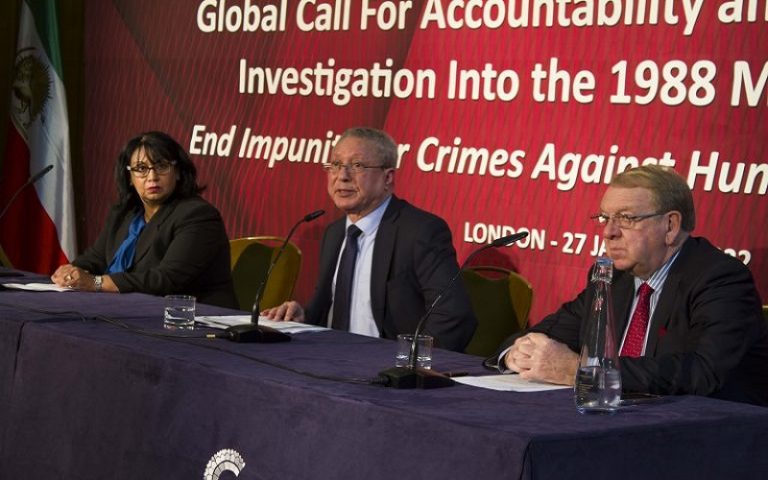
At a press conference at Church House in London on Thursday, January 27, 2022, Tahar Boumedra (center), Director of the Justice for the Victims of the 1988 Iran Massacre (JVMI), accompanied by Struan Stevenson, Coordinator of the Campaign for Iran Change (CIC), and Baroness Verma, former UK government minister and Member of the House of Lords, explained the unprecedented international effort by 463 current and former UN officials and rapporteurs, as well as some prominent European political figures, international NGOs, academic institutions and human rights and legal experts to condemn the 1988 genocide and defend human rights in Iran.

They called for the Iranian government’s human rights case to be heard and demanded an end to impunity for the Iranian regime officials.

The signatories called on the UN Human Rights Council to recognize the 1988 massacre as genocide and a crime against humanity.

The 462 called on the United Nations to immediately begin its investigation into the massacre and to revoke instantly the Iranian regime officials’ impunity so that they could be prosecuted and punished for the mass executions and the enforced disappearances of thousands of political prisoners in 1988, which makes it up a continuing crime against humanity.

“Human rights experts believe that the extrajudicial executions in 1988 in Iran amount to crimes against humanity and genocide,” the signatories said.

Human rights experts blame the delay in auditing the Iranian regime, while this encourages the regime to continue its crimes against humanity in Iran.

The statement said that the massacre of 1988 followed a fatwa issued by Khomeini stating: “As the [People’s Mojahedin (PMOI or MEK)] do not believe in Islam … and as they are waging war on God … It is decreed that those who are in prison throughout the country and remain steadfast in their support for the [PMOI] are waging war on God and are condemned to execution.”

Referring to Khomeini’s fatwa, Mr. T Boumedra said, “All of you know that this situation of the massacre of over 30,000 political prisoners started by the issuance of a fatwa of the former Supreme Leader, Ayatollah Khomeini. He issued a fatwa to eradicate all the opposition. And he was targeting in particular the members of the Mujahedeen’s organization. So that over 30000 people were massacred. And they were victims of this fatwa.”

He further emphasized, “this crime, no doubt, is a crime against humanity and a crime of genocide. It’s been described as such by the United Nations, independent experts and by very notorious lawyers, who are specialized, and who had already acted in other commissions of inquiry on genocide and hate crimes against humanity.”

Reminding the United Nations of its responsibility, he added: “Now we cannot accept that the United Nations pronounced itself on such very grave issue and then leave it to the oblivion. Not bring its acts in conformity with its declarations.

Baroness Verma rejected the impunity enjoyed by the perpetrators of the 1988 Massacre, especially Ebrahim Raisi. “No government should tolerate the impunity enjoyed by this current President, President Ebrahim Raisi, on his part in the massacre. All governments should publicly use the fora it has at the UN to push for an inquiry that would hold him and others accountable. “It needs to make amends for the decades of inaction that have only fueled the culture of impunity that now exists in Iran.,” she underscored.

Speaking about the importance of this letter, Mr. Stevenson said, “The UN Human Rights Council cannot ignore this. They cannot ignore this. This letter today is absolutely fundamental to bring an end to the suffering of the survivors of the horrible massacre of over 300 political prisoners in 1988, almost all of whom were supporters of the Mojahedin Khalq, the People’s Mojahedin of Iran. Now, today’s letter should bring the perpetrators to account.”

He warned the officials who were involved in the massacre, especially Ebrahim Raisi the regime’s president, and added, “So, serving presidents are not immune. And he had better be warned Ebrahim Raisi, if he sets foot, perhaps anywhere in the west, particularly after today’s explosive letter signed by these 463 experts, he could face imminent arrest and his impunity will end.”

Iran’s Regime and ‘The Worst and Most Terrifying Issue About Its Agreement With China’

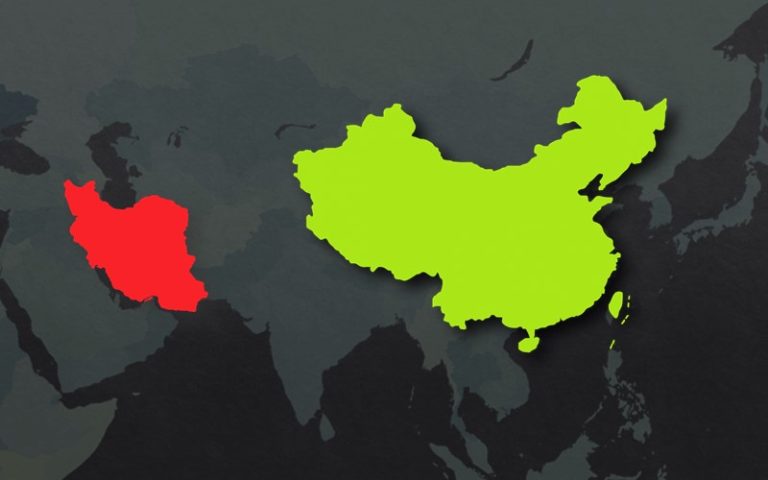
On January 13, the Iranian regime’s foreign minister Hossein Amir Abdollahian traveled to China to discuss bilateral relations and the implementation of the 25-year agreement between the two states 

The state-run news agency Fars quoted the regime’s Foreign Ministry spokesman Saeed Khatibzadeh on January 17 as saying: “We hope that the agreements that have begun to be implemented will open a horizon in the strategic relations between the two countries.”  

This disastrous agreement has been in the works for a long time. The text was prepared by former Iranian parliament speaker Ali Larijani before it was finally signed by regime president Hassan Rouhani’s government, all under the supervision of the regime’s Supreme Leader Ali Khamenei. However, not everyone is happy about the agreement, as many regime officials and state media outlets complain about the potential side effects for Iran’s future by making the country dependent on China.  

In an article published on January 17, the regime’s state-run daily Jahan-e Sanat said: “One of the worst and most terrifying things about the agreement with China is that China has decided that the details of the contract should not be made public.”  

On the same day, the state-run daily Setareh-e Sobh quoted Heshmatollah Falahatpisheh, a member of the regime’s parliament and former chairman of the security commission, in connection with the secrecy of the government.   

He said, “So far, no details of the strategic agreement with China have been released. But it must be stated carefully at what level, with what quality, to what extent and based on what commitments these collaborations are happening.”  

In the current global balance of power, the Iranian regime is much weaker than China, which is one of the great global powers and has a strong economy. The only reason for them to enter into an agreement with China, and Russia for that matter, is to gain their support in regional and international relations by giving concessions and auctioneering the country’s resources and national wealth, which ultimately belong to the Iranian people.  

At the same time, these countries have always gained lots of financial and political benefits from the regime, but have always preferred their strategic interests with Western countries, especially the United States and important countries in the region. In the past, any time the regime needed serious support from these countries, they ended up pulling the rug from under its feet.  

Abbas Abadi, one of the members of the regime’s “moderate” faction, stated that, when it comes to voting on the UN Security Council’s resolutions against the regime’s nuclear program, “They (China and Russia) have not regretted voting in favor of the resolutions. Their support for the resolutions is justified by their defense of the existing international order. These countries are pursuing their own interests within this order. And in this framework, they try to find partners” (State-run Etemad daily on January 17, 2022). 

He went on to add that, “If they think that they can count on the hypothetical support of the two countries (China and Russia) in the face of the existing world order, they are certainly mistaken.”  

The regime’s relationship with Russia and China is moving on a one-way road, in which only these countries are benefiting. As the state-run daily Jepress stated on January 2, “the Russians and Chinese have nothing” to offer to the regime, “and they want to buy oil cheap.” In exchange, they want to dump “their junk commodities” on the regime.  

According to the regime’s state-run daily Tejarat News, one of the provisions of the agreement with China is that the country, in exchange for investing in Iran and making huge profits, “will buy oil at a 30 percent discount and has two years to repay Iran’s oil money. Another point is that China can repay its oil debt with the Chinese yuan. Another advantage given to China is that two-thirds of the purchase of oil and gas will be in cash and one-third in the form of goods and services. The Chinese side can bring up to 5,000 Chinese security forces to Iran to protect its investment.”  

The sale of the country’s resources to countries such as China and Russia is the result of Khamenei’s “look to the East” mentality. In this context, even fishing privileges in the Persian Gulf are given to Chinese companies, which are aggressively exploiting the areas resources.  

Iran is one of the richest countries in the world when it comes to minerals and natural resources. The majority of Iran’s mines are still open and are world-class in terms of their abundance. With 68 types of minerals, 37 billion tons of proven reserves, and more than 57 billion tons of potential reserves worth $770 billion, according to estimates compiled in 2014, the country was among the 15 largest mineral-rich countries in the world. Now, the ruling mullahs are selling off those resources for cheap in order to preserve their decaying regime. 

Iran’s Brain Drain

0

The accumulation of the crises in Iran, especially in recent years, has encircled Tehran’s mullahs. These crises continue to mount and speed up every year, with no signs of stopping and slowing down anytime soon.

One major example is the acceleration of the brain drain in Iran, with young, educated Iranians emigrating abroad in their thousands year after year, and the regime only has itself to blame for this mass exodus.

Even with a new administration in charge, the situation has only gotten worse. This subject has been discussed at great lengths within the government circles on several occasions, but the regime has done nothing to make any fundamental changes to address this problem. This gets more ridiculous when the regime puts out calls for the return of the Iranian diaspora, all the while creating an insecure and charred ground for any individual who dares to return.

The numbers and statistics of immigration paint an alarming picture. Escaping the regime’s misogynist culture, women are now at the forefront of those feeling the country.

In an interview published by the state-run website Khabar Fori on January 24, Bahram Salavati, the Director of the Iran Immigration Observatory emphasized that “the potential population for migration are the unemployed university graduates since the proportion of women in this population is higher, it can be assumed that they are more inclined to migrate.”

In September 2021, in discussing the immigration of Iranian nurses, the state-run Hamashahri daily wrote, “Previously, 200 to 300 people received immigration certificates from the nursing system each year, but now perhaps more than 1,500 people migrate each year. Because our leaves are not countable, it is not possible to provide accurate statistics. These migrations occur for two specific reasons; One is the ideal situation of the destination countries, and the other is the problems of the countries of origin.”

On January 23, the Secretary-General of the Iranian Top Talents Association, Safdar Zare Hosseinabadi, spoke to the state-run Rokna website, stating, “Kids who receive medals thought about emigrating because of the lack of attention in the country. We had 86 Olympiad medalists, of whom 82 to 83 emigrated.”

The state-run daily Resalat talked about the regime’s ambivalence toward this issue in its January 25 publication, “The issue of elite immigration still does not seem to be taken as seriously as it should be.”

Now, after many years of migrations and the escape of the Iranian people and the country’s elites, it is appropriate to go back 42 years and recall the first steps and foundations of the formation of migration and brain drain from Iran.

Breaking the pen and banning the press to suppress freedom of expression began in August 1979. This propelled the emigration of elites from Iran under the mullahs’ rule.

At that time, the late Gholam Hossein Saedi, the renowned Iranian playwriter, wrote, “The government, or rather the current ruling power, showed its true nature with complete impudence by shutting down the neutral and progressive press. He showed how it plots to control society. The signs and symptoms of these plans are crystal clear. Now a handful of monopolists and reactionary clowns want to mock the Shah. At least they should learn from the fate of any authoritarian regime.”

Describing the attack of this ruthless theocracy on the freedom of expression and freedom of the press, in a piece on August 11, 1979, Ahmad Shamloo, the legendary Iranian poet revealed the nature of this repression and predicted its long-term effects: “The monopolistic reactionaries, hardly caught in the illusion of victory, divert the revolution from its path. While knocking on the door and the wall out of fear of democracy, it seeks to sacrifice all the hopes of the revolution. Thugs and hooligans will never wake up from their fool’s dreams. It is a fact that sticks and knives have never been able to stop the fate of history for long. The commotion you create is much more haunting than all that we can say and write.”

Iran Regime’s Clerics Fear Their Inevitable Overthrow

The danger of demise is greatly scaring the Iran regime’s top clerics, forcing them to confess about it in public, while putting the blame on years of corruption and looting that have brought the regime’s economy to the verge of collapse.

As such, they are desperate to forestall their inevitable overthrow. Ebrahim Raisi’s recent trips to China and Russia and agreements he has made with both countries, seem to be a last-ditch effort to save themselves. What the regime will be gaining from those agreements remains a mystery, however.

Regarding the nuclear talks in Vienna, the outcome remains unclear. Even a positive result will not solve the regime’s problems. The state-run daily Mardom Salari admitted as much in a recent commentary.

“Of course, to say that all the problems will be solved with the JCPOA will not be the case. The problems are so great that the JCPOA, at best, can only provide normal conditions for economic exchanges. Of course, in the current context, due to some issues, the lifting of sanctions alone may not be the solution. In a situation where Iran has not yet adopted the FATF regulations, even if the JCPOA is revived, these issues remain and need further action,” it wrote.

It added, “But the fact is that the shadow of the pressures and problems of the past years will continue to weigh on the people in the coming year. The overall revival of the JCPOA will reduce the pressures, but it is not a realistic idea that cost of living will be lowered and that the purchasing power of the people will increase as inflation rate declines.”

A senior cleric Abdollah Javadi Amoli pointed to the source of the pressures and problems faced by the Iranian people in a discussion with the head of the regime’s Central Bank.

He said, “Sometimes economic problems cause even a big government to fall. The Central Bank has a very serious task, including shielding the Central Bank reserves from legislators who circumvent the law. The embezzlement of billions is not created by ordinary people. They are done by the pen of individuals, not by force of arms. Therefore, embezzlements that have taken place should be examined to find out how they took place in the first place.”

He later expressed his fear about the army of starving people: “Wealth is the cause of a nation’s uprising. If a nation wants to stand, its pocket must be full, poor does not mean weak! Rather, he is the one whose spine is broken, the one whose spine is broken does not listen to the government.”

Hossein Nouri Hamedani, another senior cleric, pointed out the value of the national currency, comparing it with other countries. “The value of our national currency is low compared to many countries, we have to fix the problems in this area. Once you could buy a house for 300,000 rials, but now they do not give a kilo of fruit for that amount,” he said.

What Javadi Amoli and Nouri Hamedani have warned about is a handful of many examples of the country’s economic situation and the living conditions of Iranian people, who are falling below the poverty line every day due to the destructive policies of the Iranian regime. This has subsequently led the regime to become the target of protests, as the Iranian people fight back to claim their most basic rights.

In response, regime officials are struggling to contain the brewing social explosion. With no solutions to offer to remedy the problems within Iranian society, all they can do is show their fear of the prospect of being overthrown and warn others about it.

Iran’s Regime Playing With Fire

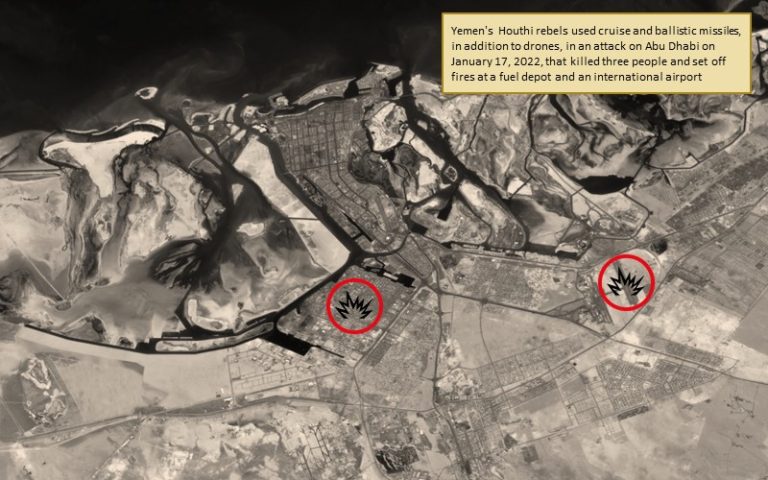
Trapped in the nuclear talks, which are teetering on the verge of collapse, the Iranian regime has launched a drone attack on its Middle Eastern neighbors, similar to the drone attack it launched on Saudi Arabia’s oil facilities in September 2019.

This time, the regime launched an attack on Abu Dhabi’s airport in the UAE, with assistance from their Yemeni proxy group, the Houthis. This is just the latest attack among many that have been destabilizing the region for many years.

The regime plunders the wealth of the Iranian people in a bid to continue spreading terrorism across the globe, in a bid to fuel the flames of wars in the Middle East. Aimed at engaging the international community and the region, these crises serve as an insurance policy for the regime. This is despite the regime’s claims about new and expanding relations with the ‘East’ which in and of itself is proof of its international isolation and weakness even if it succeeds to secure a favorable outcome during the nuclear talks in Vienna.

As for the latest attack, the state-run Vatan-e Emrooz daily wrote on January 20, “What the Emiratis did not imagine finally happened. The nightmare of instability and insecurity has finally cast a shadow over the center of Wall Street in the Arab world. Henceforth, the Yemeni war has acquired different characteristics and must be approached from new angles.”

The same day, the Donya-e Eghtesad daily highlighted, “The Yemeni crisis is the main and key element in Iran-Saudi relations in the Middle East regional equation, especially in the current situation. Any opening or impasse in it will play a very important role in reconciliation or tension between the two countries. As the crisis hotspots in relations between the two countries, especially Syria and Bahrain, have largely waned, Yemen still has the potential to keep the Iran-Saudi relationship tensions active.”

The regime’s officials, and supreme leader Ali Khamenei, believe that by carrying out such actions, they will be able to garner more concessions from Saudi Arabia and keep them away from joining the nuclear negotiations actively and adding their own demands, such as the regime’s commitment to stop its destructive behavior in the Arab World. However, given the regime’s already weak position, it is likely that these latest acts of aggression will have an opposite effect.

On January 19, the Noandish daily warned Khamenei’s mouthpiece, Kayhan daily regarding the consequences of the regime’s terrorist attack on Abu Dhabi. “The happiness of friends in Kayhan about such attacks is quite understandable because they are generally not interested in improving Iran’s relations with other countries from Saudi Arabia and the UAE to Europe and the United States. Nevertheless, escalating tension now is the last thing that the country needs.”

This warning is a stark message to the regime that it is high time it stops blackmailing other countries with terrorism, missile, and drone attacks.

The Noandish daily further stated, “At a time when Vienna’s talks to revive the JCPOA, and talks with the Saudis to resume diplomatic relations, have reached a critical juncture, the recent Houthi attack on Abu Dhabi could complicate the equation and act as a double-edged sword. While this attack may strengthen Iran’s position, it might very well disrupt the talks.”