Home Blog Page 249

Iran Regime’s Missiles, UAVs Threaten Global Peace and Stability

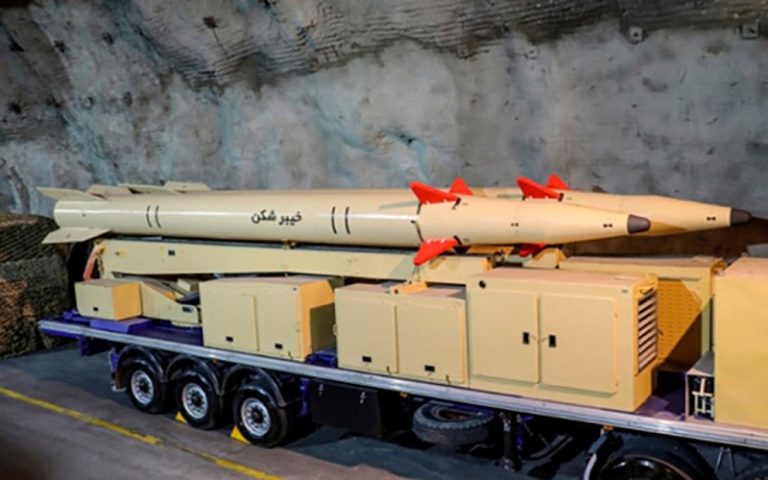
The Iranian regime’s missile program is becoming a major problem and a threat in the Middle East region. On March 13, the regime attacked a base in Iraq’s Kurdistan region with dozens of missiles, then justified it by claiming that the base was a “strategic center of conspiracy and wickedness” that belonged to Israel.

Despite the regime characterizing this act as defensive, that attack was a clear violation of the principles of international relations and the sovereignty of its neighboring country. It should be noted that such actions committed by the regime have been repeated many times over the past years and will no doubt happen again while they are still being empowered by the appeasement of Western countries and their feckless approach to the regime’s acts of aggression.

The West’s weak posture during the Vienna talks over the regime’s nuclear program explains the regime’s increasing aggression toward its neighboring countries.

Many observers viewed the missile barrage as an attempt by the regime to further divide Iraq’s political factions, which Tehran believes would empower its proxy groups who were routed during the parliamentary elections in 2021.  The swift condemnation of the attack by the Iraqi Prime Minister and all other Iraqi political groups, except for the regime’s proxies, undermined the mullahs’ plan.

A cursory review of the Iranian state media and remarks by its officials makes it palpably clear that the unprovoked and illegal missile attack was meant to boost the morale of the regime’s demoralized forces, especially in view of setbacks it has received in the region, including the death of two senior Quds Force commanders in Syria.

Irrespective of the regime’s motives in launching this attack, Tehran’s missile and a drone program pose an increasing threat to regional and global peace and stability.

Ironically, such an aggressive posture is necessary for the regime to offset the irremediable crises it is facing at home, including a collapsing economy, aggravating factional infighting, and an increasingly restive population.

Under the circumstances, offering any concessions to the regime under the pretext of trying to keep the mullahs’ nuclear program in check is misguided and counterproductive because it would amount to throwing the regime a lifeline precisely at a time when it is at its most precarious and vulnerable state in the past 43 years.

Iran’s Regime Expects the Youths ‘Taking Revenge’

Iran’s youth under the mullahs’ rule are enduring very resentful and inhuman conditions. Many of them are forced to drop out because of poverty and the miserable economic situation of their families and join the million army of cheap laborers.

These youth are now becoming one of the major concerns of the regime. The experience of the November 2019 protests magnifies the regime’s fear so that now many of its experts speak and warn about new widespread protests led by the youths.

Social crises in Iran are becoming more critical day by day. This explains why the regime tries desperately to find a way out by gaining some concessions during the nuclear talks. But despite its expectations, even the nuclear talks have turned problematic for the regime.

The regime’s officials believe that an economic boom is the only solution that will enable it to get itself out of this dire situation.

Regarding the social problems and challenges, on March 13, 2022, the Arman-e Meli daily interviewed a regime expert named Aman-o Allah Qaraei Moghaddam. In his remarks, he acknowledged four decades of regime’s destruction; “The fact is that after the revolution the people expected from those who claimed to be their servants, to support them and share their sufferings. But this didn’t happen, and aristocracy continued, and the officials did keep their promises and went about their own business. As a result, a deep and dangerous rift between the people and the governing body is created, leading to small and large social protests across the country,” he said.

This is an acknowledgment of the regime’s failure, which has already plunged Iranian society into a severe economic crisis. It points to a regime that marginalizes people’s livelihoods and instead spends the nation’s capital on the expansion of fundamentalism and the development of missile programs and nuclear projects.

“In the current situation, about 60 million people in the community need assistance to survive, 30 million live below the absolute poverty line, and approximately four million young people are unemployed,” he added.

After recounting the realities of society, this regime expert pointed to the role of the youths in the previous uprisings and expresses his fear and concern about the youth’s sense of revenge. He added: “It is a very dangerous phenomenon from a sociological point of view and shows the young people’s sense of revenge against the officials, the rich, judges, cabinet ministers, and lawyers.”

The realities of a crisis-ridden society in Iran are so undeniable that this expert is forced to admit to the miserable situation of Iranian society, from which not only the youths but all other segments of society are suffering.

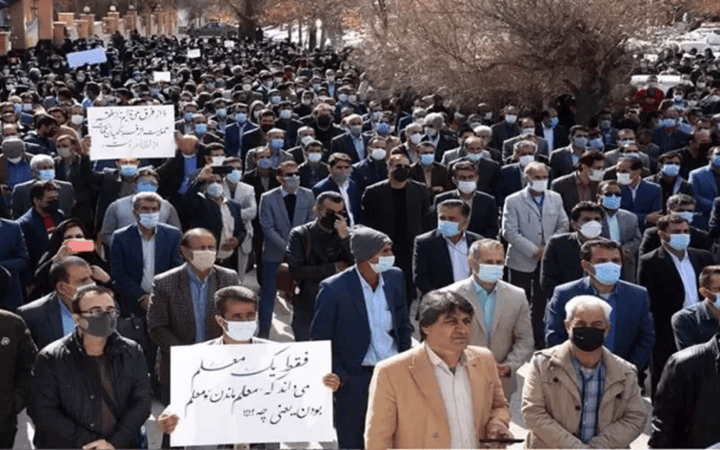
He added: “On the other hand, millions of employees in various institutions, from the judiciary to teachers, from employees in various public and private organizations and social organizations to workers with low salaries and those below the poverty line, are lamenting about their daily lives. And every day, we are witnessing small and large protests in different cities.

“However, while more than three million university-graduates are unemployed, thousands of girls and boys are unable to get married due to poverty. Thousands of people are searching trash bins on the streets to find food. Many workshops and factories are dormant, and unemployment is rampant. The corrupt officials and parliamentarians have allocated several hundred billion rials from the pockets of these deprived groups to cultural and religious authorities, who have not had a very useful function.”

He added, “Another point is that today, people have become more aware that some people use their position and embezzle. Of course, it is good that the judiciary has arrested some of them and is investigating their crimes. But where are the big ones and the people who continue their mischief?”

Is Iran’s Regime Carrying Russia’s Water?

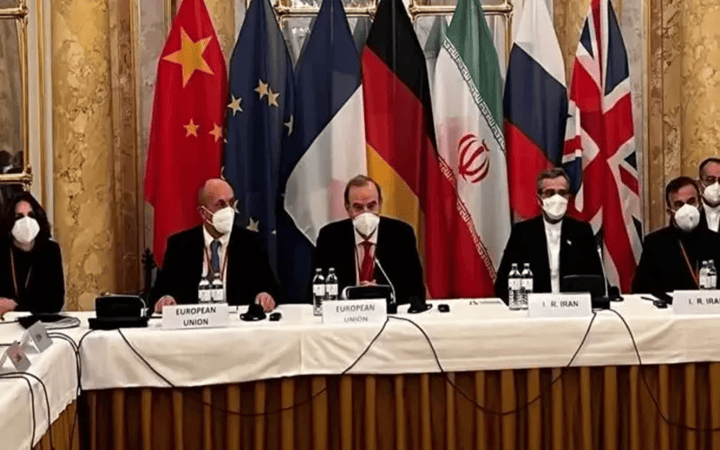
The talks in Vienna over the Iranian regime’s highly controversial and suspicious nuclear program took a turn for the worst last week. Russia, after being slapped with heavy international sanctions following its unprovoked invasion of Ukraine, has been tying the future of the talks to its own new set of demands.

Logically, Tehran should be protesting such a move by Moscow, as Russian President Vladimir Putin is literally taking the Iranian regime’s interests’ hostage to undermine the recent sanctions on his government. However, no such protests from senior Iranian regime officials have been voiced, leaving one to conclude the mullahs need Russia’s support no matter the cost and to secure that they are willing to carry Putin’s water.

This had led to concerns being voiced by Iranian state media recently. On March 12, the state-run Etemad daily published a piece focusing on this evolving and sensitive topic. “Russia raising new issues, which has no meaning other than taking hostage Iran’s interests and the JCPOA itself, has increased concerns over the negotiation’s fate,” the piece explains, using the official term of the 2015 nuclear deal, the Joint Comprehensive Plan of Action.

“The reason behind Russia demanding guarantees notwithstanding, we need to precisely and comprehensively analyze the status quo to surpass this crisis. If Russia’s request is not managed correctly, it will plunge Iran into a new round of endless tensions. Such a matter can lift the pressure off of Russia from the Ukraine issue and return it to the Middle East,” the article adds.

This turn of events has raised eyebrows and questions about the circumstances around the nuclear talks and whether nor not a final text has even been agreed to.

“The remaining differences in Vienna have not been resolved,” according to a March 12, piece published in the Iranian regime’s state-run Resalat daily. “Even if Russia had not mentioned its recent positions, most certainly we would still not be witness to a final agreement due to the fact that guarantees have not been provided regarding the JCPOA’s future, and sanctions imposed on our country by the previous U.S. government after leaving the JCPOA will not be fully lifted,” the piece continues.

The method used by the mullahs’ regime in its relations with Russia has allowed Putin to use its interests as a piece in a larger chess game involving world powers and issues far beyond Iran and the Middle East. As a result, many in the Iranian regime are wondering whether a positive turnout is now out of their hands, or even impossible.

“Russia has taken the JCPOA hostage in its conflict with the West over the invasion of Ukraine. Moscow is insisting on using Iran in the face of the West’s escalating sanctions,” according to a March 12, piece in the state-run Jahan-e Sanat daily.

“However, it appears that through such demands Russia wants to replace the U.S. as the main party to the nuclear talks… By adopting a policy of looking to the East, we have now placed our hand under Russia’s cleaver,” the piece adds.

With Iranian regime Supreme Leader Ali Khamenei looking to Russia and China in the past few years, it has become crystal clear that in contrast to claims made by Khamenei and his regime’s officials, the regime has been forced to sell Iran’s economic and political independence to Moscow and Beijing, two parties that obviously never have the Iranian people’s interests in mind nor consider Tehran their equal.

As we speak, Tehran is auctioning the Iranian people’s oil at cheap prices to China in exchange for goods, thus severely damaging Iran’s domestic production. To make matters even worse, the mullahs are in the process of hammering a disastrous 25-year agreement that is bound to provide China an even larger share of Iran’s economy with very little in exchange.

The Iranian regime is also in the middle of negotiations over a separate “strategic agreement” with Russia, which is already being mocked by the Iranian public as the Second Turkmenchay Treaty, in which Iran’s Qajar monarchy of the 19th century handed over large portions of Iranian territory to the Tzarist Russia.

With Khamenei placing his bets on the East, his regime has become taken hostage in the politics and interests of Eastern power hubs that care nothing about Iran and its future.

Iran Workers’ Unfair Wages

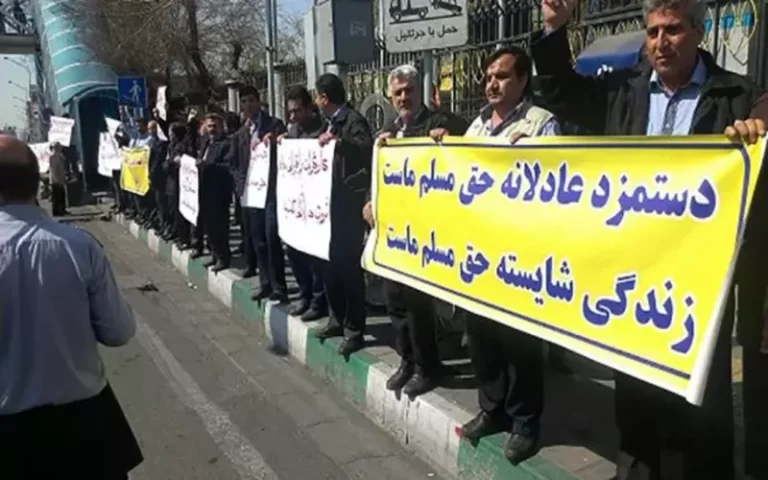
At the end of every Persian year, one of the main debates in Iran’s social and economic scene is the wage of the country’s workers. Although it was announced that the workers would receive loans, these barely cover even their most basic necessities. As a result, the workers have resumed their protests to fight for better pay.

In regard to the loans, the Iranian regime has held several meetings that have ended with no clear results. The amount they have allocated for the workers is considerably lower than the country’s inflation rate, and worse still is that the regime has shown the amount of inflation to be lower than it is in reality so that they are able to continue depleting the pockets of the workers for its malign ambitions, like terrorism and warmongering.

The workers have said that they are worried about the wages increase of 2022 because of its disproportionality with a 60 percent increase in inflation in the food sector, and a 50 to 200 percent increase in rent in working-class areas. This goes along with the lack of exchange rate control in 2021 and the regime’s contractionary policies to increase real taxes on workers and wage earners.

The cruel exploitation of these workers has been so severe that even the regime’s state-run media has been forced to admit it. On February 28, the state-run Hamdeli daily referred to the statistics of the International Labour Organization (ILO) and wrote, “Iran ranks 160th in the world with a minimum wage of $75 a month, lower than Libya, Iraq, Bangladesh, and some neighboring countries, while inflation announced by the central bank is higher than these countries and is in double digits.”

Of course, this estimate is related to the workers who receive the officially approved salary by the official employment order. However, the fact is that out of the country’s working population, nearly 14 million workers, less than three percent are officially employed.

The remaining 97% are daily workers who have temporary contracts, and employers pay them arbitrarily.  These companies, mostly affiliated with the regime’s Revolutionary Guards (IRGC) and the regime’s supreme leader’s office, often refuse to pay the workers’ pensions, health insurance premiums, accident insurance, children’s rights, and other rights related to the official labor force, and even new year’s bonuses are not paid.

The contracts are so arranged that they will expire on the first day of the last month of the year according to the Persian calendar, and then workers can only re-sign the contract again on April 4 of the following year.

The Hamdeli daily stated, “Private sector workers in Iran earn less than $50. For example, there are people who earn 9 million rials by working 12 hours a day.”

Another number that the regime often manipulates every year is the cost of basic goods for Iranian families. On February 27, the state-run website Radar-e Egthesad wrote that while the poverty line in Iran has exceeded 120 million rials, the Supreme Council of Labor has set the livelihood basket’s rate at 89,790 million rials.

The website added, “In fact, the method used to calculate workers’ wages is unrealistic and the indicators used have nothing to do with the living costs of workers and employees.”

On March 3, Ali Bigdeli, one of the regime’s experts, warned the regime of the consequences of such policies, saying, “The people’s protests against the regime will reach its peak in 2022.”

Who Is Responsible for Iran’s Starving People?

Just a few days ago, the Iranian regime’s president Ebrahim Raisi made a ridiculous claim that the absolute poverty engulfing the country will be eradicated within two weeks. With such a preposterous remark, it is no wonder that the regime’s officials and Iran’s state media have responded with sarcastic and cynical reactions.

On March 8, Ali Ghanbari, a professor at the Tarbiat Modares University, wrote in the state-run Etemad daily, “Public opinion and university professors are still stunned by such a remark. Is the president jokingly expressing these speeches?!”

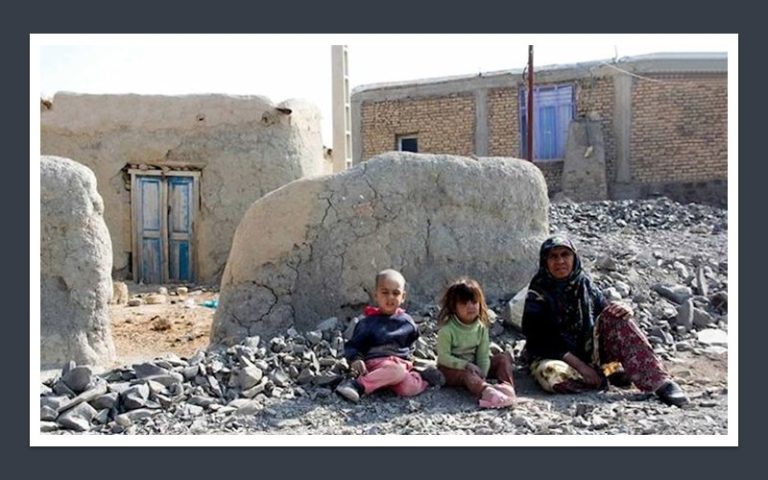
Ghanbari’s question highlights a reality that the regime fears most besides the growing resistance of the Iranian people, especially the youths: Revolt by a hungry and starving nation. This is all the more a likely possibility because the number of the poor living under the poverty line has surpassed 70 percent, completely exterminating the middle class of the country.

The Arman newspaper echoed comments by Mostafa Eghlima, a social worker expert of the regime, who warned the regime about the possibility of a revolt by starving people. He wrote, “In recent months, every day a section of the community has been protesting their living conditions. Teachers and retirees were among the groups protesting their living conditions. The same is true for other occupational groups. People are unable to tolerate this situation, and if this situation continues, you will have to wait for the explosion of the starved. Do not doubt that if this situation continues, if the explosion of those starving does not happen this year, it will happen next year.”

Raisi is not the only one who expressed his fear about the growing number of starving people and its danger to the regime. One of the most infamous, cruel, and corrupt mullahs, The Guardian Council Chairman Ahmad Janati spoke about ‘the miracle of satisfying the hungry’, in his recent speech in the regime’s Assembly of Experts. He went on to add that his sovereign state cannot satisfy the starving people after 40 years.

Raisi’s remarks faced much criticism by the regime’s media too, which attacked him as one of the main officials responsible for this situation, reminding him of his problematic conduct over the past 40 years.

On March 9, the state-run daily Hamdeli wrote, “While Janati’s recent remarks can be simply ignored,  one should, nevertheless, ask that what role is he playing in this? Which element of the system is to blame for this situation? Except that a group of officials with any name and title must be responsible for this situation.”

In another article titled ‘Who is responsible for the starved?’, the same daily wrote, “Jannati, as an influential cleric in the government and among the Iranian clergy, has had unparalleled power and influence for forty years in approving the qualifications of those present at the highest levels of law-making and expanding the cultural and political discourse of the Islamic Republic.

“What role does he ascribe to himself? And how much of the blame is he willing to take? The third point is that ultimately where and which institution of the government has had fundamental flaws that are country this rich, we cannot feed the hungry?”

The same day, the state-run daily Jahan-e Sanat, affiliated with the regime’s so-called reformist faction, wrote, “The gentlemen were voted and took the office with the promises of resolving the economic and livelihood problems, and finally nothing is changing in the miserable situation of the people.

“Finally, the problems have become so acute that it would not be a bad thing if the officials’ preoccupation were to feed the people. On the other hand, saying that the resolution of this issue requires a miracle is worth pondering about given that every day the media outlets of the principlist faction write about an improving situation, facilitating the sale of oil, gaining revenue, and in a word, not needing the JCPOA and the removal of the sanctions.”

The paper quoted Abbas Abdi, who was among the occupier of the US embassy in Tehran in 1979, who said sarcastically, “The bigger miracle was to starve the people, and this happened.”

Iran: “Another shape of protest,” promotes the uprisings

Iran regime’s experts and observers are expressing openly their fear about the growing people’s protests. And of course, the regime’s factions are blaming each other about this dire situation.

But what is the source of all these protests and what has caused such a volatile atmosphere in the country? And how will this situation end, and what are the regime’s solutions to overcome this situation?

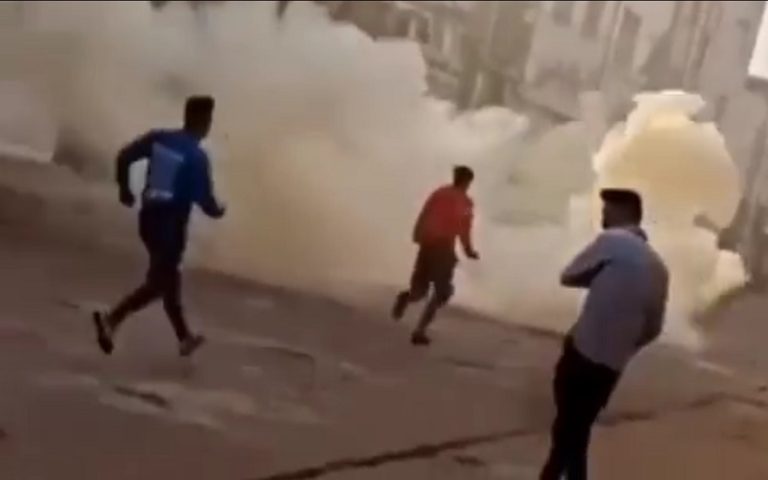
In an article entitled ‘Hollow promise is the cause of the people protests” the state-run daily Hamdeli on February 28, 2022, wrote, “Popular protests set a new record in recent months. In many cases, protesters have witnessed violent clashes instead of officials responding. This, according to experts, has not only failed to reduce the fire of protests but also fueled them.”

The state-run media are blaming the government-run mafia, without an exception controlled by the regime’s supreme leader Ali Khamenei and his office, as the next cause of the increasing protests in Iran.

The state-run daily Setareh-e Sobh, admitted to this reality on February 28, “The mafias in Iran have deceptively taken over a significant part of the country’s decision-making system. One of these lies is that they say that 90 percent of the country’s freshwater is used for agriculture, while it is a lie to justify the use of water for high water consuming industries in dry areas by mafias that are involved in dam-building and water distribution.”

The paper warned the regime’s officials about the increasingly explosive situation, “When the officials wake up from their sleep, they suddenly see that the share of marginalized people in the urban population will be 25 percent. For example, the officials of the Prisons Organization say that 75 percent of the prisoners are from the suburbs.”

But now the regime’s officials are realizing that due to their massive corruption even people close to the government are joining the protests. During the parliament’s budget bill review meeting on February 28, Jabar Kouchakinejad a regime’s MP said,

“These gatherings in front of parliament are mainly due to the non-implementation of the law by the government, which is why you see the Isargarans (Basiji and IRGC members who fought in the Iran-Iraq war) and teachers come out to demand their rights.”

A regime cleric and MP Salman Zaker expressed his fear over this alarming situation, “We must not be a means of harming others. We are now neglecting the livelihood of the people and the chicken meat during the Eid holidays. How about that? Every time we go there, we pass in front of the parliament, they (people) shout and say, ‘Sir, why did that MP run away?’” he said on February 26.

And some of the regime’s officials are admitting that the people are now targeting the regime’s leader. In an interview with the regime’s Ofogh TV on February 27, Jalal Rashidi Kouchi a regime’s MP -, said, “Why do we have to take a series of measures to harm our country and our leader?”

In an interview published in the state-run daily Shargh on February 28, Hossein Raghfar a regime’s economist warned about a change in the shape of the protests and said: “These protests may take other forms.”

He acknowledged the continuation of the protests and their growth and said: “At least in the last 30 years, that is, since 1994, we have experienced about 90 bread riots and the deprived in the country in various dimensions. Some of them are events that we witnessed in December 2017, November 2019, and a few months ago in Khuzestan and Isfahan.”

Previously about this changing shape of the protests, the regime’s Chief of police pointed to one of the regime’s main fears which are the increasing discovered weapons in the hands of the people.

Iran regime’s nuclear talk at a ‘sharp and dangerous turn’

With the nuclear talks reaching their final hours, and the Iranian regime remaining steadfast in promoting positive progress, Iran’s state media are now expressing scepticism and despair. They have stated that the negotiations, at its ‘final turn’, have reached a ‘dangerous, sharp and bumpy turn.’ A turn that has increased the possibility of the regime’s demise.

The media outlets are now speaking about the failure of the Vienna talks. In an interview with the state-run daily Jahan-e Sanat on March 3, Ali Bigdeli, one of the regime’s international affairs experts, said: “The status of the talks has changed slightly since Tuesday afternoon. The reason for this change may be partly due to our comments and positions on Russia. In other words, Russia’s invasion of Ukraine greatly affected the negotiating environment, which is why Mr. Ulyanov has left the negotiating path. On the other hand, the Westerners have said because of the positions and statements of our senior officials in support of Russia that they may leave the negotiating table by the end of the week if the talks do not reach the desired result.”

The International Atomic Energy Agency (IAEA) has also called for inspections of undisclosed sites with their own inspectors. If the agency does not report positively on the inspections, the negotiation process will be greatly affected.

The result of this critical situation has put the Iranian regime in a strange position. This coupled with the prospects of European and American sides withdrawing from the negotiation process, we will get a clearer picture of the regime’s supreme leader Ali Khamenei’s weakness.

Bigdeli has also admitted that the regime’s efforts to lift all sanctions have completely failed. He said, “The Americans have separated the four areas of the (nuclear) sanctions, human rights, missiles, and regional issues, and are now ready to lift the sanctions (related to the JCPOA), but in three other areas, they suggest that negotiations continue after the JCPOA. But Iran does not want to accept this. Given that by no means it is possible that the Americans close their eyes on none JCPOA sanctions, the situation has become increasingly difficult in many ways.”

The state-run daily, Javan, affiliated with the regime’s Revolutionary Guards, also expressed the same frustration. It wrote, “Evidence shows that the US-based mafia has not responded positively to any of Iran’s legal demands and continues to beat the drum with its arrogant and mafia-style bullying and refuses to be flexible and give Iran the slightest concessions.”

The dailywarned of the regime’s ‘sheer loss’ and ‘chain JCPOAs until the complete erosion of (the regime’s) power’, noting that that it would have to address the missile, regional, and human rights issues In the next phase of negotiations.

As such, it can be said that with the start of the current war in Ukraine, the regime mistakenly thought it could play an offensive role in the nuclear talks by supporting Russia and changing the situation in its own favor. However, now it is worried that Russia will use the regime as its card in the negotiations to strike a balance with the West.

As it stands right now, the regime is on a deadly path. Either it chooses to accept the current situation and makes ‘tough decisions’ under the threat of its western counterparts leaving the negotiations, or it will leave the talks itself and accepts the danger awaiting them.

The last scenario, as Bigdeli said, is equivalent to the regime’s confrontation with the IAEA, which would likely lead to the IAEA’s Board of Governors urging the adoption of a resolution by the UN Security Council, as well as the return of all six previous sanction resolutions.
If the regime does not comply with the demands of its western interlocutors will be crushed under the weight of increasing social crises and protests, and the hammer of international political and economic pressures. The accelerating developments will not just stop here, and the situation will change from bad to worse. It is apparent that the newly created parameters show us that time is against the regime.


Tehran Eyes Russia’s Invasion of Ukraine, Seeking Nuclear Advantage

Since dawn on Thursday, February 24, 2022, the world has focused on Russia’s war of occupation in Ukraine. In such circumstances, Tehran is trying to exploit the situation, especially when it comes to nuclear talks in Vienna.

Seventy-seven years after the end of World War II, a new era has begun, and the theocracy in Iran is trying in vain to adjust to evolving realities. This is while the helpless people of Ukraine, mainly civilians, have been essentially abandoned by the rest of the world. Western governments have limited their actions to several sanctions, refusing to provide practical and meaningful support.

The ayatollahs believe that an easy victory for Russia would strengthen their position in negotiations about revitalizing the 2015 nuclear deal known as the Joint Comprehensive Plan of Action (JCPOA). High-ranking officials of the regime have expressed their support for Russia’s attack.

In contrast, the Iranian people, and their organized Resistance in the coalition of the National Council of Resistance of Iran (NCRI) has strongly condemned the war of occupation in Ukraine. “Attack on Ukraine and the war of occupation is condemned,” the NCRI stated on February 25.

Iranian Officials Support Russia’s Invasion of Ukraine

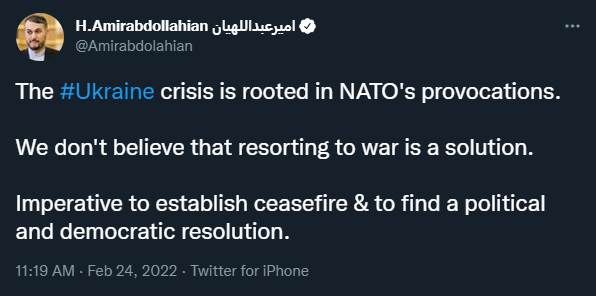
Iranian Foreign Minister Hossein Amir-Abdollahian laid blame on the North Atlantic Treaty Organization (NATO) for the attack, hoping to secure broader support by Russia during the nuclear negotiations in Vienna.

“The Ukraine crisis is rooted in NATO’s provocations,” Abdollahian tweeted on February 24. Although Abdollahian ridiculously paid lip service to “a political solution,” he is well-known as a protégé of the former chief warmonger of the regime and commander of the Quds Force—the extraterritorial arm of the Islamic Revolutionary Guard Corps (IRGC)—Qassem Soleimani.
“NATO’s expansion to the east is provocative,” said Iranian regime President Ebrahim Raisi, who is infamous for his involvement in the mass killing of thousands of political prisoners in Tehran’s prisons in the summer of 1988.

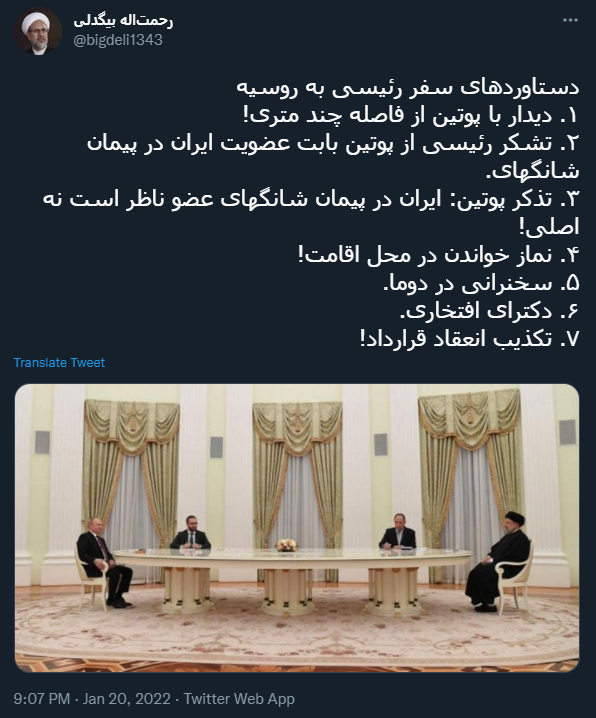
In a desperate, pathetic, and revolting political act, Raisi stands alongside the Russian President even though Vladimir Putin deeply humiliated him during his trip to Moscow last January. At the time, a seminary instructor, Rahmatollah Bigdeli, joined many other regime officials and media outlets to criticize Raisi for his embarrassing trip to Russia. Bigdeli tweeted on January 20:

“The achievements of Raisi’s trip to Russia:

  1. Visiting Putin from a few meters away!
  2. Appreciating Putin for Iran’s membership in the Shanghai Cooperation Organization
  3. Putin notes: Iran is only an observer member in Shanghai Cooperation Organization, not an actual member!
  4. Praying at the Kremlin!
  5. Lecture in the Duma
  6. Honorary Ph.D.
  7. Denial of contract!”

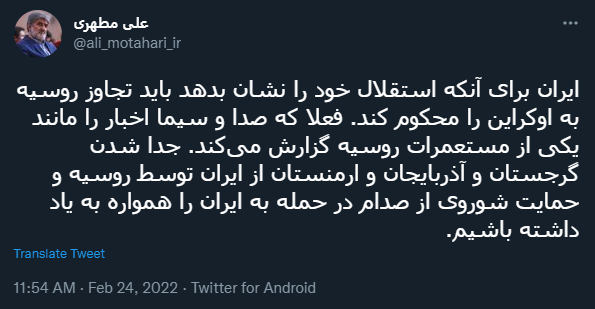
However, the Raisi government’s support for Russia’s invasion prompted criticism inside Iran, even among some of the regime’s own officials. For instance, former Parliament [Majlis] Deputy Speaker Ali Motahari described the regime as a Russian colony, calling on authorities to condemn the attack.

“Iran should condemn Russia’s invasion of Ukraine to show its independence. Currently, the [state-run broadcaster] reports as if Iran is one of Russia’s colonies,” he tweeted.
Furthermore, several officials declared their concerns about the invasion’s consequences on nuclear negotiations. “While the war in Ukraine continues with intensity, it will overshadow negotiations in Vienna. Therefore, the only loser country would be Iran,” said Heshmatollah Falahatpisheh, the former chair of the Parliament [Majlis] Security and Foreign Policy, on February 25.

“At least, learn from the Taliban,” said Etemad daily, affiliated with the ‘reformists’ faction on February 26. It mocked Raisi and his foreign minister by saying: “How can Amir-Abdollahian not know that a country cannot attack another sovereign country by artilleries and tanks even if NATO provoked it. Most importantly, doesn’t he know that such empathetic remarks for Russia can negatively impact Iran’s position in nuclear negotiations?”

“Worse, who has told Raisi to call Putin? OK, call the president that is under attack at least. If the latter call was unnecessary, you should not say that ‘I hope this invasion ends for the benefit of regional nations.’ Which war or invasion has ended in favor of nations?” the daily added.

“Putin, the hero of Ukraine quagmire,” was the headline in Arman Meli, another ‘reformist’ paper, on the same day. “It’s tragic that Iran thinks it has to support Russia’s invasion of Ukraine—directly or indirectly—due to its anti-Western policies, and justifies it as a ‘special operation,’ providing logistic for Russia.”

“In such circumstances, Iran’s national security is at serious risk, and the events of September 1949 may repeat in other forms. Russia’s military invasion of Ukraine is by no means justified under international law,” wrote Ali Khorram, the former ambassador to the UN in Vienna.

In a nutshell, the theocratic regime in Iran hoped to gain further concessions internationally following the Ukraine crisis. But its attempts failed.

The courageous resistance of the Ukrainian people and their elected leaders has shown that autocrats and aggressive states only understand the language of power and firmness.

Authoritarian regimes see the appeasement policy as a rolled-out red carpet for new atrocities and breaching of long-standing international norms. As the Ukrainian people’s resistance prompted solidarity and sympathy across the globe, the people of Iran also expect Western leaders to recognize their struggle for freedom and democracy against the world’s foremost state-sponsor of terrorism.

“Democracy #demo4democracy There is no democracy without democrats. Get involved and use the freedoms that democracy offers you to express your support and solidarity. Start ‘democracy,’ a demonstration for democracy, against war, for a peaceful and free future of our continent,” tweeted Vitali Klitschko, the mayor of Kyiv and a former professional boxer, on February 25.

https://twitter.com/Klitschko/status/1497255100338913286?s=20&t=orZ4tDTPKXXlUF-gM-sYOw

Similarly, there are many democrats and freedom-loving individuals around the globe that are standing with the Iranian people in their struggle to overthrow the tyrannical regime in Tehran.


Iran Regime’s Experts Are Concerned About the Impact of Ukraine Crisis on the Nuclear Talks

In the hours since Ukraine’s invasion by the Russians, the Iran regime’s officials and its media have expressed concern that the crisis could affect the nuclear talks to the regime’s detriment.

For example, the state-run Diplomacy Irani website, in an article titled ‘The revival of the JCPOA was sold to the Ukrainian war’, expressed the Iranian government’s concern about the Ukraine crisis and its impact on the Vienna nuclear talks.

The website, which is affiliated with the regime’s so-called reformist faction, has expressed concern while attacking the regime’s so-called principlist faction with phrases such as ‘The performance of Raisi’s government in Ukraine war is the most uncharacteristic performance of Iranian diplomacy.’

Leaving aside the economic and political aspects of this issue, and if one considers the nuclear talks in Vienna to be the second most sensitive international issue in the world after the Ukrainian crisis, one can say that it will certainly impact the Vienna talks.

In the more than 11 months that have passed from the Vienna nuclear talks in the form of eight rounds of talks, many political analysts and observers believe that the Russian representative in the talks has become the unofficial speaker of the Iranian government and is taking public positions in favor of the regime.

Russia has also shown in practice that it plays on the Iranian regime’s ground about the nuclear case and related negotiations rather than at the ground of the regime’s counterparts, which is making the situation more critical by giving the regime more time to get closer to the nuclear bomb.

Now, after Russia launched a military offensive against Ukraine, and after Russia’s further isolation in the international arena, its role in the Vienna nuclear talks will certainly be greatly diminished.

One could perhaps argue that the regime in Iran is the biggest loser of the conflict in Ukraine because one of its main supporters, i. e., Russia has not been isolated on the world stage.

The Iranian regime believes that because the United States and the Western countries are at a disadvantage in the face of the new global crisis, will have to make more concessions to the Iranian regime over its nuclear program.

But the US State Department spokesman Ned Price said that Russia’s invasion of Ukraine should not give Iran the green light to develop nuclear weapons.

In his article in Diplomacy Irani, Heshmatollah Falahatpisheh, the ex-chairman of the Parliament’s National Security Committee, wrote that Raisi’s government officials believe that the United States and Europe will eventually reach an agreement with the Iranian regime and offer more concessions

because they do not want to witness more international conflicts. In their thinking, the U.S. and Europe cannot fully focus on the Ukrainian crisis unless and until they resolve the nuclear crisis with Iran.

The reality on the ground, however, shows otherwise.  In other words, raising these expectations will, ironically, cause Europe and the United States to react negatively to the regime’s maximalist position. The regime’s media outlets and officials are increasingly concerned about the impact of the Ukrainian crisis on the nuclear talks.

On February 27, 2022, the state-run daily Jomhouri Eslami warned the regime and recalled Russia’s actions against the regime. It wrote, “The Russians voted for UN Security Council resolutions against Iran under Mr. Putin. Even now, the Russians want to oversee the JCPOA talks, as if they had always blocked Iranian gas from reaching Europe, and in Syria, they have adjusted the equation in their own favor. They have benefited the most from the tensions between the regime and the West, and they plan to turn it into a winning card for further speculation in the Iranian nuclear issue by invading Ukraine.”

Expressing the same concern, Parliament Speaker Mohamad Bagher Ghalibaf said the same day, “The question is no longer whether we should stay in the negotiations or not. We should stay in the negotiations and move it forward. In the negotiations, some of our demands have been met, but there are still unresolved issues. Negotiations have not been finalized yet, and the outcome of the negotiations must go through the stages of approval in the structures of the system.”

Following a meeting of the regime’s Supreme National Security Council, state media reported that Ali Bagheri, the head of the regime’s nuclear-negotiating team, was returning on February 27, 2022, to Vienna to resolve the remaining issues that posed significant challenges to reaching an agreement.

Iran’s Regime Intends To Increase the Price of Medicine Under Bogus Excuses

0

The Iranian regime is increasing the price of medicine again. Energy products are perhaps the most obvious examples of goods whose price the Iranian regime has increased or eliminated government subsidies for in recent years under the pretext of they are cheaper in Iran and are being smuggled to neighboring countries.

Regime officials and media are speaking about low prices in such a way that, anyone unaware that more than 70 percent of the population are living below the poverty line would believe that the people are living in prosperity and enjoying government assistance.

The regime’s comparison of medicine costs in Iran with the neighboring countries loses muster when one compares the income levels of people in Iran and the neighboring countries.

With the elimination of subsidies and preferential currency from some basic goods and medicine in recent years, a small amount of currency is now allocated to the import of basic goods and medicine.

Since the time of Hassan Rouhani’s government, the amount of goods and medicines that are subject to the preferred currency has been gradually reduced, and Iranian citizens are forced to buy them at free market prices, which are considerably higher.

When Ebrahim Raisi took power, his government took the initiative to remove the 42000 rial exchange rate to purchase basic goods and medicine. This was met with opposition within the regime’s parliament, and especially in the Joint Commission.

Some deputies opposed the elimination of the preferred currency, not out of sympathy for the people, but out of fear of the security and social consequences of removing it when basic goods and medicine are imported.

However, these objections did not prevent the spike in the prices of basic goods and some medicines. In a recent interview with state media, Bahram Daraei, head of the Food and Drug Administration, stated that there was only $2 million in the preferred currency available for medicine, adding that it is clear that the price of medicine is going up by four to five times.

He also added that if the currency is not allocated promptly to basic goods and medicine, the situation of medicine in 2022-2023 will be much worse than in 2021.

The state-run website ‘Ensaf News’ announced on January 21, 2022, that there are medicines in the market that have witnessed a price increase of 250 percent, and the price of medicines has increased significantly since the past 3 to 4 months.

In an interview with the same outlet, a pharmacist stated that the changes in the price of medicine have been very evident since a few weeks ago, and it is clear that the 42,000 rials preferred currency rate has been quietly removed from medicine.

Although many officials are warning about the adverse impact of eliminating the preferred currency rate and the increase of medicine prices, others continue to speak about medicine being cheap in Iran.

In one of the latest examples, Noushin Mohammad Hosseini, director-general of the Food and Drug Administration’s Office for Supervision and Monitoring of Consumption of Health Products, announced on February 26, 2022, that the price of medicine in Iran is very cheap. And this issue causes the reverse smuggling of medicines to neighboring countries.

Earlier, Shahbar Hassanpour Bigleri, a member of the Economic Commission of the regime’s parliament, had made a bizarre statement in December 2021 stating that now importers, pharmacies, and even the people are demanding that medicine be imported at the free-market currency rate.

These remarks come while the shortage and high price of medicine, especially some special medicines, in recent months and weeks have caused protests by Iranian citizens, and the scope of these protests has spread to social networks and cyberspace.

It remains to be seen whether, amid the dispute between Raisi’s administration and the parliament, the preferred currency from the pharmaceutical items under the pretext of low drug prices and smuggling will be removed.