Home Blog Page 260

Iran’s ‘Strategic Solitude’

0

For many years the Iranian government is witnessing global isolation, and isolation which is because of the regime’s nontransparent and dangerous nuclear project, its malign acts in the Middle East, support of terrorism, its missile project, and finally the most important its human rights violations case.

The advancement of these policies is because of the ruling theocracy’s reactionary and tension-seeking nature, under the pretext of export of its so-called Islamic revolution.

All of them are in line with the repression of the people and hiding its internal crisis from the world. The truth is that in a short time these policies have achievements for the regime, but in the long period, they are to the detriment of the regime.

Even worse they have put the regime in a confrontation with the world and the entire Middle East, in addition, it has increased its internal crises.

The state-run daily Etemad confessed to this isolation in an article entitled ‘Iran’s strategic solitude, De-stressing, and introverted’ and wrote:

“’Iran’s strategic loneliness’ has created many bottlenecks and tragedies for our country, especially in the contemporary history of Iran.

“This loneliness is inherently stressful. Tensions with Turkish neighbors, tensions with Russian neighbors, tensions with Arab neighbors, tensions with Pashtun neighbors, tensions with Uzbeks, tensions with religious and linguistic backgrounds that are inconsistent with the religion and language of Iranian society, tensions with an international order, and, most importantly, contextless tensions with coalitions and political alliances, etc.

“On the other hand, tensions, especially constant tensions with the surrounding environment and the world, are gradually destroying the roots of development and leading the country to poverty and backwardness from its neighbors and peers, conflict and violence, and finally disintegration.” (Etemad, September 22, 2021)

In such a situation, naturally, the speech of the regime’s President Ebrahim Raisi at the UN General Assembly should be in the favor of de-escalation and solving these issues, but to the contrary, he made things even worse so that even the state media mocked him.

The state-run daily Setareh-e-Sobh wrote: “There can be no meaningful connection between Raisi’s presence at the UN General Assembly and the future of the JCPOA. The criterion for the conclusion of the JCPOA is to change the Islamic Republic’s positions on the JCPOA on the one hand, and on the other hand, Western countries, especially the United States, take practical steps to revive the JCPOA, including the lifting of sanctions.” (State-run daily Setareh-e-Sobh, September 22, 2021)

The necessity to take practical steps to revive the JCPOA and essentially improve relations with Western countries is to retreat in three areas of nuclear, regional policy, and cut support of terrorism, and stepping back from the missile program.

Another daily while referring to ‘burnt opportunities’ wrote:

“The president’s words had no positive point. Repeating repeated statements and saying sentences that were more like headlines.

“First, in this text, we should express our firm views on the continuation of negotiations, the need for sanctions relief, the return of blocked money, continued cooperation with the IAEA, the issue of oil and energy, and Tehran’s relations with neighbors, and then in the second step, let’s move on to the issue of Afghanistan, the situation in Yemen and Syria, and finally talk about pandemic conditions in the world.” (Aftab-e-Yazd, September 22, 2021)

Another daily also mocked Raisi and wrote:

“He started with a series of general descriptions that began that we are an old, independent country and we have our own opinions.

“These positions were not very new and had been announced many times before. Since there was no new word or position in Raisi’s speech, some are likely to object, saying that Iran should take advantage of the opportunity to address the General Assembly in a better way.

“There are criticisms, but it is better not to deal with this issue very much at the very beginning of the government’s work and forget it.” (Jahan-e-Sanat, September 23, 2021)

If the regime does not agree on the JCPOA and other matters that major Western countries expect, in addition to nuclear negotiations with its regional interference and missile program, there will be no agreement.

Meanwhile, the United States has stated that the regime will not receive more from the negotiations and must be convinced of the small level of a privilege it has made in the past few rounds of negotiations in Vienna.

Therefore, the regime must either accept something higher than the 2015 JCPOA and accept a JCPOA+ including limitations to its regional and missile programs, or while raising tensions with these countries, its nuclear case will be sent to the UN Security Council, and it must accept the dangerous consequences.

It is not without reason that Jahan-e-Sanat newspaper advised Raisi to take care of his speech and stances on foreign affairs, especially in the field of nuclear and relations with the United States.

“The U.S. political system and its economy have tremendous influence, despite all the threats it faces, and Russia and China never currently have U.S. power. Therefore, it should be noted that we should not say that only costs for Iran and there is no benefit from it.”

The regime is stuck and must choose between bad and worse, and confronting the international community will solve nothing and will create an even more suffocating atmosphere.

Severity of the COVID-19 and Economic Crises in Iran Is Worsening

0

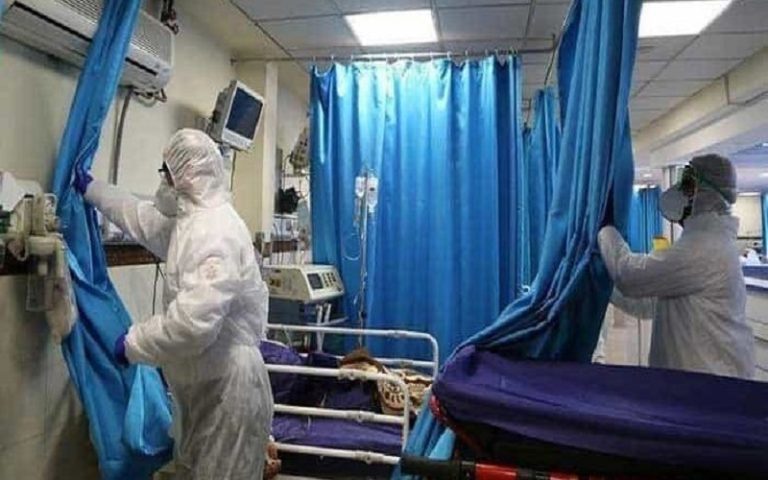
Iran’s state-run media have acknowledged just how severe the Covid-19 and economic crises in Iran currently are.

Jahan-e Sanat daily wrote on September 23 that they have noticed the vast difference in how Iran, compared with other countries, is trying to control the coronavirus pandemic.

They said, “The ominous Covid-19 entered towards the end of 2019 and continued throughout 2020 and 2021. It showed after decades our governing and management of a crisis in the country to the showcase of competition with other countries.”

The regime did not fail in managing the Covid-19 crisis. It deliberately used the virus and its mass casualties as a barrier against the popular protests which broke out in 2018 and continued throughout 2019.

Janat-e Sanat explained that the Iranian people are blaming regime authorities for delaying the vaccination program which has led to an ‘unprecedented death toll over the past two months and a collapsing healthcare system’. They also acknowledged that nobody is buying claims from the regime that sanctions are to blame for the hindrances in dealing with the pandemic, instead, they blame the regime’s corruption and ‘economic mismanagement’.

In January of this year, the regime’s supreme leader Ali Khamenei banned the import of all reputable international vaccines and ordered the production of domestic vaccines instead.

The domestic vaccine was produced by the Execution of Imam Khomeini’s Order (EIKO), a huge financial institution Khamenei controls. Now, state-run media acknowledge a part of Khamenei’s scheme to further plunder people by insisting on producing the domestic vaccines.

In an interview with the Sharq daily two weeks ago, Ali Tajernia said that the company behind the domestic vaccine, Barakat, affiliated with the regime, was receiving 200,000 Tomans per each dose of the vaccine, thus giving the regime a reason to be unwilling to buy vaccines from abroad.

State-run Sepid discussed how the pandemic is amplifying the economic problems faced by Iranian citizens. They stated that no one knows the true figures of how many people have lost their lives due to the Covid-19 crisis and questioned how many people were forced to go without treatment considering the expense of a night in the hospital or because the medication Remdesivir is priced at between 700 and 800 thousand tomans, a figure of which many people simply cannot afford given the inflation and poverty crises in Iran.

Sepid said, “No one knows what happened during the consent Covid-19 peaks in slums in marginalized areas and suburbs. Statistics put the number of slum dwellers at between 11 and 25 million and even more, with an estimated 7,600,000 living on the outskirts of cemeteries.”

Looking at the statistics of the poverty level in Iran, Sepid explained that in terms of urban residents, 15.5% are living below the absolute poverty line, while in rural areas, at least a third of residents are struggling.

The ongoing Covid-19 and economic crisis have increased the society’s restiveness, prompting state-run media in recent days to warn officials about another popular uprising.

Iran: Can an Official Survive With 4 Million Tomans?

0

The life situation of Iran’s workers indicates that the promises of government officials have failed and with the present situation, the government’s role in easing the life conditions of the workers and low-wage people is zero or negligible.

The country’s labor community, while lacking suitable jobs, is facing a staggering and daily increase in food prices, and the living conditions of this stratum who are classified as low wage earners have become even more difficult, and yet they are forced to ignore other needs of their lives, such as housing and clothing.

If until a few years ago only the relative increase in prices and the decrease in purchasing power of people were considered, especially the lower deciles of society in the country, now with the spread of COVID-19, many problems have added to the burden of workers’ problems, especially in the treatment sector.

These days, workers are experiencing many problems at once taking all the opportunities from them to have even a normal life. Problems such as lack of insurance, lack of shelter, unemployment, lack of reasonable and fixed salaries, lack of support, and reduced purchasing power.

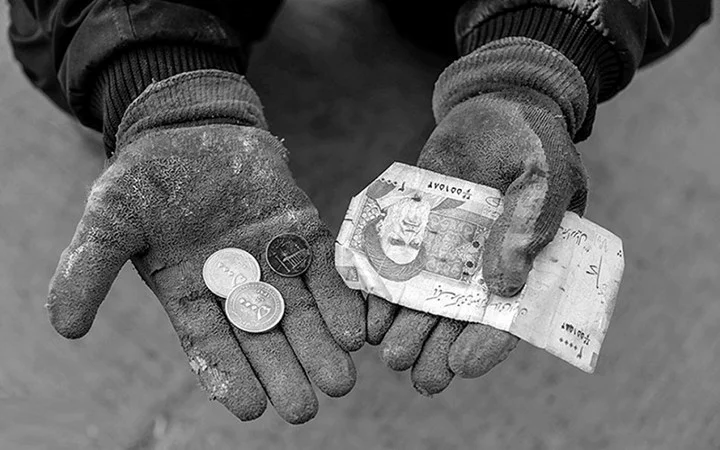
The current wage of four million covers only one-third of the current cost of a normal life, so some workers are forced to turn to false and high-risk jobs, an action that can have many social consequences.

These conditions apply to retired and employed workers who are paid every month. There are many workers whose activities are seasonal and are constantly looking for temporary work throughout the year to earn their day in any way, which has led them to turn to false jobs.

In this situation, it should be asked whether the 39 percent increase in the minimum wage this year, which brings the workers’ minimum wages, including all wage benefits, to 4 million even considering the right of children which will rise to 4.2 million tomans, is enough to cover the cost of living? Can officials with astronomical wages manage themselves by receiving 4 million and run the lives of their families for even one or two days?

A key reason for the workers’ situation is the consortium of the mafia in Iran.

Import mafia, rent-seeking mafia, wealth mafia, power-reliant recommendation mafia, the mafia of safe and wealth living regions, these are the realities that statesmen are claiming to deal with them, but this is just a mirage in the regime’s mafia led government and the experience of past governments has shown that it this is not realized.

The reality is that the conflict-of-interest mafia is so powerful that they do not allow anyone to fight those who are themselves the source of corruption.

Put aside the misconception that corruption must be found in the bodies of ministries, government agencies, and corporations. These are the channels of corruption, and the roots of corruption must be searched in institutions affiliated with the regime’s supreme leader Ali Khamenei and the Revolutionary Guards (IRGC) who have captured the entire economy and now are taking the government too if we could call it a government at all.

But the phrase ‘searched’ is wrong because there is nothing hidden. The regime’s mafia is so powerful that they act openly and unafraid.

For example, when the head of the Mostazafan Foundation unveiled the corruption of some officials last year, he was threatened in such a way that he had no other choice but to repent on television and did so to keep himself safe.

The strange part is that the Mostazafan Foundation itself is one of the main sources of the regime’s wealth and corruption. This is what has become the conflict-of-interest mafia in Iran, which is not between ordinary people and small criminals but between the regime’s officials.

And the power-reliant recommendation mafia is now choosing and putting its desired people in the government’s positions, from friends to family members. Therefore no one should expect that the government in such a corrupt regime will be able to act independently.

Now back to the workers. In such a government, with the presence of such mafia, the expensiveness, and inflation that is increasing in the country’s economy in an unbridled way, how should the workers and minimum wage earners manage their lives?

Currently, workers are struggling to survive and undoubtedly are ashamed in front of their families.

The Truth of a Human Disaster in Iran

0

Equal participation of all the people in creating the law of a country is one of the main necessities to become a progressive and democratic society. This will tie the flourishing human’s talents to a nation with a strong economic and social base and the people’s power will be used for determining collective affairs. It will empower the nation’s feeling of a unique nation.

In such a nation, progress will be equal to freedom and will give the people the opportunity to seek equality which will finally lead to a progressive nation, while eliminating negative competition.

The people will be able to think further than just concerning biological, spiritual, and social necessities, and by recognizing their abilities each of them will become an aid to their society.

While looking at the map of Iran’s development we are witnessing that none of these exist in Iran.

Iran in sub-categories such as life expectancy, access to health and medical services, access to shelter and food and drinking water, basic and advanced education, personal safety, access to information and communication technologies, and other essential technologies of daily life has a concerning condition and it is even not close to the standards of developed countries while closing to the situation of third countries.

Other indicators such as individual freedoms, the right to choose in life, human rights, the equality of social groups, and the right of freedom of expression are signs of Iran’s poor performance, which are big barriers to the country’s progression.

Iran’s performance in economic subindexes of development also shows that those that motivate economic activism such as economic stability, protection of material and intellectual property rights, protection of innovation patents, support for new businesses, and support for small investors are not in favorable conditions, and even most of them are below the global average performance.

Human power could become the strength of Iran’s progression, but this should not be expected in a country under the fundamentalist mullahs’ rule.

But as many of the government’s specialists said, instead of being on the side of the government to help the country’s progression, the people are confronting it. People who do not have the chance to be active in a political and economic environment and do not have the authority to choose their rights are becoming the ‘enemy of the rule’ as these specialists said.

The missing link in Iran’s development is for human beings to be free, and participatory citizens, while this rule has eliminated many of those who even tried or dared to follow this path in the nation’s favor.

Economic growth and individual freedoms have always strengthened each other. The advancement of economic growth requires free activists and the right to choose, and on the other hand, the need to enjoy guaranteed individual rights and freedoms is the existence of a significant level of prosperity.

Statistical evidence shows that there is a correlation between citizens’ freedom and their standard of living. Politically open countries, where the law governs everyone equally, private property rights are protected, and the market economy prevails, grow three times more than countries deprived of these freedoms.

Incompetency of Iran’s Politicians in Economy and a Suffering Country

0

Iranian politicians would be able to prevent any mistakes in the field of the economy if they would focus on the theories such as “behavioral economics” or “institutional economics”.

However, as the country’s economic situation shows, the officials seem to be illiterate in the field of economy, and the amazing thing is that they do not accept their illiteracy and make decisions that are devastating the economy more than ever. Sometimes they do not even understand simple economic issues. Many of the officials did not understand even the difference between “job opportunity” and “occupation”.

This is nothing new and can be constantly seen from Mohammad Khatami’s government to Mahmoud Ahmadinejad’s to Hassan Rouhani’s and is now inherited by the new government whose president has the record of only six classes and was busy with executions and human rights violations therefore we should not expect something else than a disabled economy.

These are not hollow charges but can be seen in their many interviews and speeches. The other part of the government does not show any interest in the field of the country’s economy except the corruption and looting.

The Friday Prayer’s Imams, who are becoming the main artillery of the production of uncertainty and instability on the horizon of the country’s political economy, sometimes do not know the difference between ‘subsidies’ and ‘computers.’ (In Persian the pronunciation of these two words is close to each other “Yaraneh (Subsidies) and Rayaneh (PC)”).

Mahmoud Ahmadinejad said that he had created two million jobs annually. He was right by auctioning the country’s wealth and resources, he created many “job opportunities” but the complete amount of the “occupation” over his eight-year tenure was not even close to six months in creating “occupation” of the previous government.

From the economic situation, it can be predicted that most of the regime’s officials are not informed about the subject of “Transaction Cost” and how it is affecting the country’s economy by heating it first to the ground and secondly it will heat the political system to the ground.

And it can be assumed that the head of the judiciary as the main institution of dealing with the transaction costs has not even heard such an expression.

Now the “Transaction Cost” in Iran is so increasing that it has taken the breath of the economy and eventually has stuck it and turned Iran into an anti-development country.

If this regime would be put a little more attention on the transparency and law-abiding and protection of people’s property rights, its benefits would be more of the country’s economy, than the wasted money one road and dam creations, iron, and petrochemical industry. But all of them are the victims of institutionalized corruption.

The situation has deteriorated indescribably. If you want to know the depth of the disaster, consider this comparison:

The total value of the country’s stock exchange has been announced at around 320 trillion Tomans over the past weekend.

Estimates of last year show that about 250 trillion Tomans of the people’s assets have been grounded in the judiciary.

This estimate, of course, is accompanied by errors, as accurate information about the cases is not published by the judiciary, therefore this estimate is collected from unofficial sources.

With each economic case entering the judiciary, a portion of Iran’s national assets will be undecided until a court verdict is issued. All the costs resulting from the uncertainty of people’s assets in the judiciary are part of the ‘Transaction Cost’, and of course, all other public institutions produce more or less ‘Transaction Cost’, which now are damaging Iran’s economy.

That is not the worst part of the story; the worst part is that because of the enormous corruption combined with these uncertain and undecided ‘Transaction Costs’ there is a high amount of capital flight, and no one can predict how things will end up.

Rezaei Resigns as Secretary of the Expediency Council, Who Is His Replacement?

0

Mohsen Rezaei has resigned his position as Secretary of the Expediency Council of Iran after more than 20 years to take on the role as president Ebrahim Raisi’s economic deputy.

At the same time, Mohammad Bagher Zolghadr has been introduced as the new Secretary of the Expediency Council by Sadegh Amoli Larijani, the Council’s chairman.

Zolghadr was born in 1954 in Fasa, Shiraz, and was chosen by supreme leader Ali Khamenei to become the new Secretary of the Expediency Council. Many of his family members also hold roles within the Iranian government. His wife, Sedigheh Begum Hejazi is the Director-General of the Office of Women and Family Affairs at the Organization of Islamic Culture and Communication, while his son-in-law, Kazem Gharibabadi is the permanent representative of the clerical regime in the UN office in Vienna and the representative of Iran in the International Energy Agency.

Before the 1979 revolution in Iran, Zolghadr was a member of the Mansourun group, at which time he and Rezaei were involved in the assassinations of an American engineer and a manager of an oil company.

According to UN Security Council Resolution 1747, Zolghadr is on the sanctions list for his involvement in the regime’s nuclear and missile programs.

During the Iran-Iraq war, Brigadier General Zolghadr became one of the top commanders. During this period, he co-founded and commanded the Ramazan Garrison, a group whose activities later formed the basis of the IRGC’s foreign branch, the Quds Force. Zolghadr helped to establish a camp in 1983 which focused on terrorist activities outside of Iran and was used to train the regime’s proxy groups from Iraq.

After the end of the Iran-Iraq war, Zolghadr was appointed as the head of the IRGC’s joint headquarters due to Mohsen Rezaei’s support.

By 1997, Zolghadr had become the deputy commander of the IRGC. When then-president Mahmoud Ahmadinejad came to power, Zolghadr was appointed as the Deputy Interior Minister for Security and Law Enforcement. This new role meant that he was now in charge of the National Security Council’s administration, which was tasked with coordinating the suppression of protests across Iran. It also meant that he would oversee the performance of all governors and deputy security and law enforcement officials up and down the country.

Although Bagher Zolghadr was expected to serve in the Interior Ministry for a long time due to the IRGC’s support for him, Mahmoud Ahmadinejad’s personal dissatisfaction with the appointment led to Zolghadr being ousted after two years.

Following his termination from the Interior Ministry position, Zolghadr was appointed to the role of advisor to the head of the judiciary, before later acting as the deputy for strategy and social protection and crime prevention. His appointment to the judiciary during Sadegh Larijani’s presidency indicated that the IRGC and Khamenei were still supporting him.

As the scale of protests in Iran increases, the Iranian regime is becoming under threat. As seen in their history, the likelihood is that they will mount repressive responses to keep these protests under control. The recent appointments to president Ebrahim Raisi’s new administration make this outcome even more likely, given their own personal histories of repression and violence.

As Mrs. Maryam Rajavi, the Iranian opposition’s president said, Raisi’s cabinet is ‘the embodiment of four decades of the religious and terrorist dictatorship of the mullahs, whose mission is to counter popular uprisings, plunder national wealth and resources, step up terrorism and warmongering, and expand the unpatriotic nuclear and missiles projects’.

Real History of Iran’s ‘Holy Defense’

0

On September 22, 1980, the Iran-Iraq war began a war that was imposed by the regime’s first supreme leader Ruhollah Khomeini on the Iranian people. Every year the regime falsely praises this event as a victory for the Iranian people while it was only a win for its existence.

The description that this regime uses for this eight-year war is the ‘Holy Defense.’ The question is what the history of such an expression is and did we have witnessed such a thing through history.

The adjective “Holy” without any doubt is reminiscing the crusade wars. This series of wars were also called the ‘Holy War’. These wars were started to liberate the Holy Land (Jerusalem).

Pope Urban II initiated the first crusade. Pope Urban II absolved the Christian fighters and created the mental space necessary to continue the war. When a Christian soldier was sworn in, he would receive a cross from the church and become its official soldier.

In Pope Urban’s speech, there was a promise of remission of sins for whoever took part in the crusade. All who die by the way, whether by land or by sea or in the battle against the pagans, shall have immediate remission of sins.

Those who had committed more sins in their lives saw this war as a means of forgiveness for their sins. In his speeches, Pope Urban II clearly stated that forgiveness of sins will only be granted to those who are killed to reclaim Jerusalem, if they return safely, there is no forgiveness.

Exact the same event happened with Khomeini’s Iran-Iraq war, which apparently was in the name of the religion and for God and the conquer of holy places, but, has no other goal than the conquest of new lands. Instead of giving a cross to the soldiers he gave the Iranian soldiers the ‘Key to the heaven’ and with the monodies of the famous Ahangaran sent them to the front and on the minefields to pave the way for his conquest, something that mostly the ‘Basiji’ children were subjected to.

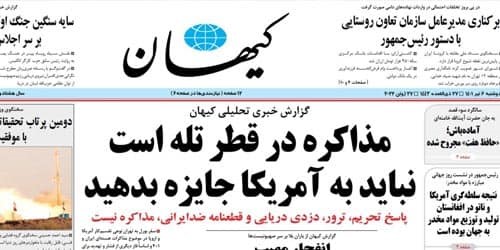
The context for one of the longest wars in the 20th century was Khomeini’s apparent interference in Iraqi affairs. Six months before the war began, Kayhan wrote in a provocative headline:

“Imam Khomeini invites Iraqi army to uprise.”

In addition to securing Khomeini’s conquest goals, the war became an excuse to confront political parties and organizations and inside the country and eliminating them.

Javad Mansouri, the first commander of the Revolutionary Guards, said:

“If there hadn’t been a war, I think the Islamic Revolution would have been defeated. [The war gave us] strength, experience. Many of us had great war outcomes. With the war we were able to suppress the counterrevolutionaries inside, to suppress the groups.”

The conquest of Khorramshahr, meaning the withdrawal of Iraq’s invading forces from Iranian territory, marked the turning point of the Iran-Iraq war. Without a doubt, this could have been a good opportunity for Khomeini to finish the war, if only he had considered the war a ‘crisis’ and not a ‘blessing.’ Nonetheless, Khomeini called the war a ‘blessing’ and a ‘gift’.

He considered peace as the ‘burial of Islam,’ while observers contend that in reality peace would have led to the burial of his regime; so, he continued to fight after the liberation of Khorramshahr.

“This battle was a great blessing for you, revealing to you the essences of you. If the war had not happened, it was unclear how we would be and what situation we would be in.” (Khomeini)

Imitating the Crusades, Khomeini called his war a war between Islam and disbelief and marked its goal of ‘conquering Quds through Karbala.’ Of course, he was not satisfied with this. His warmongers started the war first with the slogan ‘war to victory’, later they changed their slogan to ‘War to eliminate intrigue in the world.’

He made different statements for the religious aspect of this war. Let’s look at some of his positions in the message known as the ‘Charter of the Clergy’.

“Every day we have had a blessing in the war that we have used in all scenes. We exported our revolution to the world in war.

“Our war was an aid to Afghanistan, our war will follow the conquest of Palestine, our war made all the leaders of corrupt systems feel humiliated by Islam, our war followed the awakening of Pakistan and India.

“How narrow-minded are those who think that because we have not achieved the ultimate ideal on the front, then martyrdom, sacrifice, and devotion are useless! While the voice of African Islamism is from our eight-year war, the interest in Islamology of the people in America, Europe, Asia, and Africa which means the whole world is from our eight-year war.” (Khomeini’s Sahifeh (Book), C21. Pp. 283)

The losses of this devastating war only on the Iranian side were:

  • 2 million dead and disabled
  • 40,000 hostages
  • 50 cities destroyed
  • 3,000 villages destroyed
  • 4 million displaced
  • 7,000 missing persons
  • More than $1,000 billion in material damage

The sad truth is that all the wars in the Middle East are the continuation of the regime ‘export of revolution’ and the ‘holy defense’. With millions of losses and uncountable damages to the countries of this region.

Iran: Raisi’s UNGA Speech Filled With Lies and Support of Terrorism

0

The Iranian president Ebrahim Raisi gave his anticipated address to the United Nations General Assembly (UNGA) on Tuesday, despite the outcry from an international audience who objected to his appearance at the event.

Raisi opened his speech by saying that as the ‘elected of the great people of Iran’, he wants to send a message of ‘rationality, justice, and freedom’ to the world.

Rather than attend the meeting in person, Raisi elected to send a pre-recorded speech to the UNGA, most likely to avoid the backlash from outraged Iranian expats and human rights organizations, considering his past human rights abuses, most notably his involvement in the 1988 massacre where 30,000 political prisoners were brutally executed for supporting the Iranian Resistance.

In his speech, Raisi stressed the need for all parties to the nuclear negotiations to remain committed to their obligations under the terms of the Joint Comprehensive Plan of Action (JCPOA) and blamed the U.S. for not lifting nuclear sanctions.

It is no surprise that Raisi neglected to make any remarks on the international concern that the regime is heading towards amassing weapons-grade uranium. The UN’s nuclear watchdog, the International Atomic Energy Agency, reported a few weeks ago that the regime has stockpiles of highly enriched uranium and consistently refuses to answer questions regarding its nuclear program.

Raisi went on to blame the West for hampering Iran’s coronavirus response by placing sanctions on medicine. Interestingly, Raisi made no mention of regime supreme leader Ali Khamenei’s ban on the import of vaccines from the U.S. and UK.

Raisi claimed that the regime decided at the beginning of the Covid-19 pandemic to import vaccines from reliable international sources but so-called sanctions on medicines meant that the Iranian people were unable to receive them. However, the US has stressed that no sanctions have ever been placed on medicines, medical appliances, food, or humanitarian goods.

Iran is hit by one of the worst covid pandemics in the world, with nearly 450,000 people killed since February 2020, mainly because of the regime’s criminal and destructive policies. Yet Raisi went on to call his regime ‘Asia’s medical pole’.

During his speech, Raisi stated, “The security-establishing example of the Islamic Republic is founded on regional mechanisms based on diplomacy without any external meddling. Our policy is to preserve the stability and sovereignty of all countries of the region.”

However, he neglected to mention that his regime has been funding many terrorist organizations, across the Middle East, for several years. These groups include Hezbollah in Lebanon; the Hashd Al-Shabi in Iraq; the Assad regime in Syria; and the Houthis in Yemen and many others.

Instead, he boasted about the regime’s achievements, many of which were fabricated. At the same time, Iranian expats around the world held protest rallies to expose his history of human rights abuses and crimes against humanity, as well as calling for international authorities to prosecute him in tribunals abroad.

Former political prisoners and families of prisoners and dissidents executed by Raisi and other regime officials made it clear in their rallies in the past weeks around the world that Raisi as a criminal who must be sentenced does not represent the Iranian people and he does not deserve to be given a podium to address the world.

This is what former US secretary of state Mike Pompeo in his speech at the ‘Support a Free Iran’ conference held in Washington DC by Iranian dissidents on September 29, 2021, pointed to as he said:

“Any dealings with Ebrahim Raisi will be tantamount to dealing with a mass murderer. This is not only immoral but counterproductive. Iran regime President Ebrahim Raisi should be prosecuted not next year, not next month, not tomorrow, but now.”

Iran Government’s Economic Crisis Has No Solution

0

Despite the Iranian government’s rumors of fighting and eliminating corruption, increasing the people’s wages, removing the subsidies of the rich, and increasing the subsidies of the poor, solving the problem of housing by creating 1 million houses every year, making the country’s agriculture independent from imports and outside sources, and creating an economic boom by improving the country’s industry, statistics are showing something else.

According to the latest update of World Bank data in July 2021, Iran’s GDP has dropped from $445 billion in 2017 to $191 billion in 2020. Iran’s GDP ranks 26th among the world’s countries in 2017 falls to the 50th in 2020.

Astronomical losses of 67 trillion Tomans by Iran’s National Bank are the next fact of Iran’s sinking economy. A recent document published by Iran’s National Bank shows that of the bank’s approximately 16 trillion tomans of demands, more than 10.5 billion tomans are suspected.

The National Bank, in addition to the heavy accumulated losses, over the past year with the acquisition of 40.4 billion tomans of income from the grant facilities and the payment of 41.3 billion tomans of deposit interest, has registered a negative operating balance of 983.9 billion tomans.

The result is increasing corruption, followed by unbearable poverty of the people. According to the statistics, the average income of the wealthiest segment of society is 34 times higher than the average income of the poorest stratum.

The expansion of rent-seeking relations has exacerbated class divisions in society and, in addition to adding to the legendary wealth of the wealthy, has rapidly increased the population below the poverty line.

The question is why, despite the promises made by the regime’s parliament and government about helping the low-income classes of society, over time we have seen an increase in the number of poor people and the opposite for wealthy people?

The answer is clear to Iranian analysts: government corruption and the accumulation of the country’s wealth by its elements, led by the supreme leader.

A place where this corruption is obvious is in the country’s stock market. How?  Tehran Stock Exchange’s total index fell by 38,000 points to 1.488,000 at the close of trading in the last week.

In yesterday’s trading (September 19, 2021), the index also fell sharply by 37,991 points comparing to Wednesday, falling to 1.450,000 points.

During this period, a portion of the real money was withdrawn from the capital market, which experts had predicted would continue connecting it just to the uncertain future of the JCPOA’s negotiations and not considering the regime’s corruption in this event.

In yesterday’s trading for the second consecutive day, the net worth of changing legal ownership to real market turned negative and 845 billion tomans of real money were withdrawn from the stock exchange. The number has increased by more than 100% compared to last Wednesday, September 1, 2021.

And the fact that the regime’s hope for any economic change is just an illusion while looking at the result of the Vienna negotiations and gaining dollars like in the Obama era can be seen in the latest expression of South Korea’s Deputy Ambassador to Tehran.

According to the state-run news agency Entekhab, “referring to the $7 billion that has been blocked, South Korean Deputy Ambassador to Tehran Park Su-dak said: ‘So far, from these sources, we have been able to export only $16 million in membership fees of the Islamic Republic of Iran to the United Nations and nearly $50 million in humanitarian items such as medicines to Iran.’” (State-run news agency Entekhab, September 18, 2021)

Devastating Effects of the COVID-19 Pandemic on Iranian Society

0

Iran’s Covid-19 death rates are rising rapidly, the pandemic has also had overwhelming effects on the lives of the Iranian people, not just economically but psychologically. Along with their own discussion, they also highlighted statistics and observations from some of the state-run dailies.

A report recently published by the Ministry of Cooperatives, Labor and Social Welfare indicated that the health and other living expenses of families increased again in August, increasing the inflation rate.

According to the Jahan-e Sanat daily, ‘this is the first time that the cost of treatment has increased so much, along with the cost of rent and transportation’. They explained in their publication that since the start of the Covid-19 pandemic, health insurance companies are barely covering much of the treatment costs in hospitals in Iran, so people are being forced to pay up to 40% of the cost out of their own pockets.

Meanwhile, many families that are crushed under poverty have lost their breadwinners.

Statistics from the Deputy Minister of Social Welfare suggest that a child is orphaned due to the pandemic every 12 seconds in the world and in Iran alone, estimates are that 51,000 children have lost both parents to Covid-19 in the past year. However, social expert Mostafa Eghlima has said that the actual number is higher than the official figures. He said, “Probably 30,000 women went to welfare as heads of households, and the same 30,000 women have at least one or two children.”

Worryingly, the suicide rate in Iran has been rising year after year. Figures given by a member of the Board of the Scientific Society for Suicide Prevention in Iran say that the average rate is around 7.02% per 100,000 people but some provinces in the country range between 10 and 20%.

Reports from Iran indicate that the suicide rate has increased due to the Covid-19 outbreak and its resulting poverty. The suicide rate among Iranian nurses and medical professionals is rapidly rising, and more frustrated health experts express their desire to commit suicide.

Despite all the hard work that Iranian medical professionals have put in for the past year, the regime is refusing to increase their salaries and some of their wages have been delayed for months. Iranian doctors and nurses are becoming more and more frustrated as imports of vaccines are being blocked, as are imports of necessary medications and specialist equipment. All the while, the pandemic is wreaking havoc in the country.

According to Fariborz Dortaj, a member of the Central Council of the Iranian Psychological System Organization, “38% of nurses suffer from moderate to severe depression, and 37.5% have thought of suicide or were ready to commit suicide.”

The Covid-19 outbreak, coupled with the regime’s corruption and wrong economic policies, has also had a devastating effect on people’s financial situation.

Etemad daily explained that in late 2019, during the early stages of the coronavirus outbreak, the statistics ratio between the minimum wage of a worker to the average cost of a household was around 37.9 percent, while less than two years later, this has reduced to 35.3%.

This crisis could have been prevented if the regime, mainly the Supreme Leader Ali Khamenei, had used his financial empire to help Iranians and medical professionals or at least allowed the entry of vaccines.