Home Blog Page 261

Iran’s Meaningless Happiness About Its Membership in the SCO

0

Seeking for many years to become a member of the Shanghai Cooperation Organization (SCO), Iran’s government tried to overcome the international sanctions and its economic difficulties, which are the result of its international terrorism and its untrusted nuclear program.

Iran also monitored the SCO’s activities from its beginning, and initial investigations to cooperate with the organization began in the summer of 2001.

After deciding a macro level in February 2005, a membership application was submitted by Iran to the Secretariat of the Organization in Beijing and Kazakhstan as its periodic head, and a few months later, in July 2005, Iran was accepted as an observer of the SCO.

Iran also requested permanent membership in the organization in 2008 but its application was postponed due to the Iranian nuclear crisis and the start of the Security Council sanctions process against Iran, given that the SCO considers itself obliged to comply with the United Nations.

Later, in 2010 and then 2014, the SCO passed two resolutions under which a country under Chapter 7 of the UN Charter and its sanctions could not become a major member of the SCO, which meant that Iran, which was under Security Council sanctions and the Chapter VII of the UN Charter, could not become a permanent member of the organization, especially since China and Russia voted to sanction Iran as two influential members of the UN Security Council.

But after the nuclear deal was signed between Iran and the P5+1 major world powers in 2015, this obstacle was lifted, but this time Iran’s call for permanent membership, which was introduced at the same time as Pakistan and India in 2015, faced almost unexpected opposition from Tajikistan due to political considerations, and ultimately unilateral sanctions by the then US President Donald Trump administration were also effective in the delay.

Two subjects that Iran considers gaining with its membership in the SCO are a security umbrella and economic boom by having the opportunity to circumvent the sanctions by Western powers, but the reality says something else.

Although the SCO has a security image, it is not a military alliance like NATO that sees an attack on any of its members as an attack on all member states, so Iran will not benefit from the security umbrella that the organization may create, because the Shanghai Cooperation Organization does not have the necessary cohesion against international issues, and U.S. and NATO policies sometimes create a dichotomous between its members.

On the other hand, although the organization has gradually put economic, commercial, and cultural cooperation on the agenda, it is not a special economic and commercial organization like ASEAN, therefore Iran’s government cannot count on its membership in this organization and expect an economic development.

Iran’s relations with two of the main members of this organization Russia and China were never based on strategic dimensions. These two countries have always used Iran’s government as a lever in their relationship with the West, making Iran’s government a puppet in some strategic events in this region.

Therefore, despite many of the regime’s analysts consider this move as a triumph in front of the Western powers this will not be a replacement for Iran’s government in its relations with the West.

The regime cannot consider its permanent membership in this organization as a ‘no need to negotiate’ to remove the sanctions.

Because despite the claims of many Iranian officials, this organization has no interest that Iran uses this organization as a weapon against the West especially the US. Some of the members in this organization are not showing any interest to cooperate with Iran as the past years suggest.

Iran’s not joining the Financial Action Task Force (FATF) is also one of the obstacles that will seriously challenge Iran’s active participation in the treaty.

Iran has no access to the international banking system and is sanctioned and this organization has no effect on these problems.

On the other hand, Russia in the field of gas production and export is a big rival to Iran, and they will not sacrifice their benefits, and this is something natural. Even if Iran benefits from China’s finances during the sanctions, China has benefited from it too, by helping Iran.

China made its financial support from Iran’s money resources in that country and a commitment that if repays did not happen Iran must pay the premium rights.

Another subject that has been discussed about this event is Iran’s possibility of making Set-Offs, but as the many years of the rule of this regime show, they were not able to have even one successful set-off even with the many efforts and negotiations.

The only set-off that has been registered in Iran’s history is the Oil-Technology Set-Off which was from before the 1979 revolution. The reason for that is that Iran has nothing to present, because of an underdeveloped economy and technology, caused by the regime’s failed policies and the destruction of the country’s development.

Regime Corruption at the Heart of Iran’s Economic Crises

0

As Iranian citizens are suffering under the Iranian regime’s corruption and wrong economic policies, regime officials and the country’s state media are finally acknowledging that their part in these crises.

Mardom Salarie, a state-run daily, wrote on September 19 that the skyrocketing inflation rate in Iran is having a ‘devastating effect on the country’s economy’ and on the lives of Iranian families. They explained that the inflation rates have widened the divide of classes, as many families are struggling to afford basic needs with their meager incomes.

Mardom Salarie acknowledged that nearly 25 million families live in Iran. According to economists, about 40 percent of them receive less salary than approved the laws of the Ministry of Labor, and some receive even less.

According to statistics from the Central Bank, the poverty line in Iran has reached around 10 million Tomans. On the other hand, the official income of Iranian citizens barely reaches 5 million Tomans at present.

Despite the very low incomes of Iranians, Mardom Salarie explained that the inflation in Iran continues to increase, and they have heard from many economists who predict that the situation will only get worse by the end of the year.

Many experts have examined Iran’s economic crisis. The regime and its apologists try to blame sanctions for the current economic recession in Iran, but some officials and state media acknowledge the regime’s role in creating and amplifying these crises.

In a comment from Iranian MP Hassan Lofti, published in the state-run Roudade 24, he said that the laws of the regime generate corruption, and if this continues, they will lose 80% of their political legitimacy. He also blamed the cause of the economic corruption on the ‘lack of transparency’ within the regime.

Alongside the corruption that has caused the rising rate of inflation, liquidity growth has also had a part to play. Mardom Salarie expressed that, “One of the main reasons for inflation is the growing budget deficit and the government’s inability to resolve this issue.”

To compensate for the budget deficit, the regime began printing banknotes at a rapid rate which, in turn, increased Iran’s liquidity. The inflation rate rose rapidly due to the production rate being far behind the growth of liquidity and continues to rise to this day.

According to Mardom Salarie, Iran’s inflation rate has reached more than 45% this August. This is an unprecedented figure, and it is predicted to reach 60% with the current budget deficit and Tehran’s inability to grow trade.

As Mardom Salarie explained, “…the government should either control inflation or prevent the increase of prices by subsidizing the consumer or increase the salaries so that the people can cover their expenses.”

They said that while the government is still facing a budget deficit, it is unlikely that salaries will be raised so it is likely the situations of Iranian families will only worsen in the coming months.

As MP Lotfi acknowledged, the regime has long lost its political legitimacy after years of corruption coupled with oppression. As a result, people’s protests and their anger toward the regime continue to increase.

Iran: Teacher Suicide Is Increasing

0

These days, some people in Iran no longer find a way to express their pain, therefore, commit suicide in order to end it. Violent suicides and public ones are becoming the cry of protest of Iran’s suffering people, including teachers.

In June 2020, Hossein Gohar Shenas, a 68-year-old Bushehr teacher, hanged himself due to poverty, with a rope that he had prepared himself, but what drove him to take his own life was the exorbitant cost of living and the negligence of officials and his livelihood conditions.

In July of this year, Amin Kianpour, a 43-year-old math teacher in Isfahan, set himself on fire in front of the city’s judiciary over a dispute over a civil case and failure to receive his rights, so that his cry might finally be heard. In August, a teacher on the verge of retirement and with 31 years of service in Nain’s education ended his life.

Some have heard that just a few days ago, a teacher from Fars Province threatened to commit suicide due to his inability to secure a mortgage. The threat of suicide was so serious that his friends solved his problem by collecting money.

Even now, the news of the suicide of a teacher in the city of Gerash is coming from Fars Province. The 32-year-old teacher, Gholamabbas Yahyapour, hanged himself at school, citing financial problems and a loan application.

One teacher in Fars Province, who did not want to be named, said of the teachers’ livelihood problems: ‘Since I was employed in education, I have always seen teachers protesting about their salary and livelihoods more than 20 years ago. Teachers’ legal status is extremely low compared to other government employees.

‘A number of my colleagues have spoken to representatives of Shiraz in parliament about their legal problems, but the answer they heard was that your salary with other civil servants is equal, whereas it is not the case ever teachers have is in their pay stubs and are deprived of job benefits and welfare.’

Iran has a few types of teachers in education. There is a group of corporate teachers operated by contractors who rented schools and their salary is ultimately one million tomans and are mostly present in deprived areas. There are many of these contractors in Sistan and Baluchestan Province. Some of them have even lower wages about 500,000 tomans. They have no insurance and if they are covered by insurance, their wages will become less than one million. And sometimes it takes one year or more than they are paid.

The other group of teachers is entitled part-time teachers, which numbers about 120,000 to 150,000. This year’s salary was about 2 to 2.5 million Tomans. These teachers are deprived of salaries and insurance during the summer and end up paying for the insurance themselves.

The other group is young teachers who entered schools from the Educators University or were recruited through Article 28. These teachers are either contractual or their recruitment has been finalized. The group’s salary, even if they serve five years, is less than 4 million Tomans. In addition, insurance, pensions, and taxes are also deducted from their pay stubs, i.e. about one million tomans are deducted from their salaries.

Teachers working in nonprofit schools have also actually been subjected to modern slavery. Their salary is about 1.2 million tomans a month. This double cruelty occurs in nonprofit schools that earn billions of tomans from student tuition fees, but that’s how teachers are oppressed.

Life for Iran’s teachers has become very difficult. None of them can buy a house, while in other countries teachers are among the best-paid classes of society. Due to the wages, there is no difference between the rural and municipal teachers, but the costs are different.

Many teachers in recent months and years have decided to protest this situation, but every day will have painful blows because of not being paid. Therefore, many of them while fearing the regime’s cruelty are not able to protest while struggling with their daily food.

A society in which its teachers are suffering and decide to commit suicide is a collapsed society, and one can only imagine the situation of the country’s youths who are educated by these suffering teachers.

Raisi’s Corrupt Administration Announces Plans To Combat Government’s Corruption

0

Ebrahim Raisi, the new president of the Iranian regime, has announced that he and his administration will be tackling corruption in the form of the ‘twelve principles governing the national plan for preventing and combating administrative and economic corruption’.

Iran is suffering from institutionalized corruption. The country’s economy is dominated by the Revolutionary Guards (IRGC) and the Supreme Leader Ali Khamenei. Raisi’s cabinet is filled with the IRGC’s officials and Khamenei’s inner circles.

Astan-e Quds Razavi (AQR) is one of the largest endowment foundations in the Middle East, and formerly had Raisi involved in its operations as the caretaker. In a report by the Iranian Resistance regarding the AQR, the assets of the financial institution include around 50 large companies and at least 43% of the real estate in Iran’s second most- populated city, Mashhad. The institution is also exempted from paying any tax to the Iranian government.

In an interview with the state-run Alef news agency, government minister Behzad Nabavi explained that there are 4 institutions in Iran that control around 60% of the national wealth and claimed that none of them are in connection with the government or parliament. These institutions include the Executive Headquarters of Imam’s Directive (Setad Ejraie Farman Imam), Khatam-ol-Anbiay Base, Astan-e Quds, and Foundation of the Oppressed and Disabled.

In other words, Raisi oversaw one of Iran’s main corrupted institutions. Raisi later became the regime’s Judiciary Chief in 2019, another apparatus plagued with corruption. On May 11, Gholamhossein Esmaili, then Judiciary’s spokesperson, confirmed the arrest of 200 judiciary staff members.

Mohammad Mokhber, Raisi’s first vice-president, has also been involved with another financial institution, the ‘Execution of Khomeini’s Order (EIKO)’. He has headed the organization for 13 years from 2007 and controlled its billions of dollars of assets.

Mokhber was included in the EU sanctions list in 2010 for his role in the regime’s missile and nuclear activities and placed on the US sanctions list on January 15, 2016, for seizing the assets of political opponents and religious minorities.

When Supreme Leader, Ali Khamenei banned the entry of credible Covid-19 vaccines into Iran earlier this year and instead encouraged the production of domestic vaccines, it was Barkat Pharmaceutical Group owned by EIKO that was tasked with the production of them. Mokhber oversaw the production line and despite the domestic vaccines being unapproved by the World Health Organization for their deadly side effects, the vaccine went on sale to the public.

Along with Raisi and Mokhber, another regime official in Raisi’s administration, Construction minister Rostam Ghasemi has a history with the regime’s own corrupt institutions. He previously served as commander of the Khatam-ol-Anbiya Base, and later took the position of Oil minister in Mahmoud Ahmadinejad’s administration. In his role as oil minister, Ghasemi was involved with embezzlement, bribery, and financial irregularities, amongst other financial crimes.

The regime has milked Iran and its people from their wealth. They do not accept these hollow promises, as they underline in their slogans during their daily protests that ‘enough with lies, our tables are empty’.

Iran’s Media Warns of Civil Disobedience by the Middle Class

0

The situation of Iran’s middle class is becoming day after day more critical, and the people’s toleration is weakening more and more, and the regime’s officials are calling this the red line.

A situation that has driven the middle class to a position of riots and protests. So far that the state-run media are writing about something that is not usual in censored Iran’s media.

The state-run daily Mostaghel daily in an article entitled “the Conservative middle class” wrote:

“The government’s inability to address issues such as inflation and other economic problems, as well as the coronavirus issue and its peripheral problems, has left the middle class generally dissatisfied and complaining about the status quo.”

This news daily concluded: “With the double economic pressure, the purchasing power of the middle class has decreased, and this class has moved closer to the lower class, and this integration and transformation can lead to civil disobedience in the long run.”

Following the concern expressed by this daily the state-run daily Mardom Salari in an article entitled “The people with the contraction of the government does not accept any excuse” wrote:

“A large part of society lives below the poverty line. This problem is also very serious. Another issue that the government will face is systematic corruption. This systematic corruption has practically turned the government and the bureaucratic organization that should serve the society into a mechanism that systematically produces corruption, dissatisfaction, and inefficiency. In this regard, if no solution is devised, the government and first of all the members of the cabinet and the president will be swallowed up in this cycle of corruption and inefficiency.”

The people’s hatred for this corruption is increasing. So much so that even the regime’s officials are forced to admit and attack people and organizations which are under the control of the supreme leader or the IRGC.

On September 15, 2021, a cleric and lawmaker Nasrollah Pejmanfar in the parliamentary session at this day about the increasing and protected corruption in the country said:

“What is going on in this country, are we allowing that such things stay hidden. In which place in the world such things are hidden and classified? Through the Article 90 Commission, I wrote a letter to some of these institutions, an official, and said announce your income. Its chef wrote, confidential, top secret and sent it to me.

“They are rent-seeking from everything, even for a bakery, from a bakery license they are seeking rents. Today we are ashamed of a young, educated man who has a master’s degree and a doctorate and is ashamed and is asking for a worker right to be able to work at someplace.” (ICANA, September 15, 2021)

Then Mohsen Dahnavi, another MP, about this corruption and situation of the young people asked, “Unemployed youth, many of whom are also educated, so what is the cause of this unemployment?” He then pointed to the regime’s corruption and said:

“It takes two years if a young man today wants to run a cattle farm, he needs 118 documents and approvals, and one and a half years, we waste his time in the stairwells and corridors so that he becomes tired and forgets the job creation.

“Where in the world is such a situation. There is the capital, unemployed young professionals exist, and its need exists too, but some people are getting rich by giving licenses, then who gets a license in this space? Those who have connections.” (ICANA, September 15, 2021)

In reality, many officials are suffering from something called, “The illusion of understanding the truth” syndrome, as has been described by some state media reports. This is a syndrome that can become dangerous for the public and for the officials themselves, analysts say.

In a society like Iran where the people are tired of politics, the officials think that they are specialized in any field and can express themselves about anything and give expert opinions. The first outcome of such a vision is the destruction of the country’s elites.

Eventually, the society’s old wounds which have been accumulated over the years will appear again and force the people to riot and desire to overthrow the regime – something which the regime fears most.

Hold Iran Accountable for Large-Scale Crimes Before Criticizing Individual Abuses

Several United Nations special rapporteurs and various other human rights defenders have been raising alarms in recent days about the case of Heidar Ghorbani, an Iranian political prisoner who is facing the imminent threat of execution based on an unfair trial and affiliations with a Kurdish activist group.

A statement issued through the office of the UN High Commissioner on Human Rights expressed serious concern, earlier this month about Ghorbani being denied legal representation throughout the course of his detention and trial, which relied on an eventual confession that was evidently “forced as a result of torture and ill-treatment.”

Unfortunately, stories like these are a dime a dozen in Iran, and international calls to action are always struggling to keep up with the pace of politically motivated arrests, trials, and executions.

The above-mentioned statement described it as “troubling” that the Iranian judiciary continues to “issue death sentences in trials that not only breach international fair trial standards but even domestic law and due process guarantees.” It then concluded by reiterating prior calls for Tehran to halt executions across the board.

For as many similar statements as having been issued over the years, it is strange that so many human rights advocates do not recognize that such direct appeals to the conscience of the Iranian regime are a fool’s errand.

Not only has Tehran blatantly ignored countless appeals in the past; it has repeatedly taken steps that reinforce its defiance of international human rights standards and its embrace of the most brutal tactics for suppressing dissent and maintaining its hold on power.

While the UN special rapporteurs are certainly correct to say that the behavior of the Iranian judiciary is troubling, their cause would perhaps be better served by emphasizing that that behavior is also completely predictable.

After all, until earlier this year, that judiciary was headed by a lifelong regime functionary who played a prominent role in the Islamic Republic’s single worst crime against humanity.

Although this fact made him the object of protest both at home and abroad throughout his tenure, he departed the position, not in disgrace but rather in triumph, being inaugurated as president on August 5 and handing off the judiciary to his deputy, who has been implicated not only in acts of domestic repression but also the assassination of dissidents beyond the country’s borders.

This shuffling of appointments, together with exceptionally tightly controlled parliamentary elections in 2020, has resulted in a situation where each branch of the Iranian government is in the hands of ultra-hardline officials whose support for political imprisonment, capital punishment, and the selective implementation of due process are unquestioned.

That government’s violent, hardline identity has been repeatedly reinforced in the five weeks since President Ebrahim Raisi’s inauguration, especially through his appointment of cabinet officials who are under sanction by the United States, the European Union, and the United Nations, or even subject to arrest warrants for their involvement in terrorist attacks.

Maryam Rajavi, the head of a pro-democracy coalition known as the National Council of Resistance of Iran, described that cabinet as the “embodiment of four decades of mullahs’ religious dictatorship and terrorism, whose primary mission is to confront the people’s uprising, and to plunder the national wealth, step up terrorism and warmongering, and expand the unpatriotic nuclear and ballistic missiles programs.”

The “uprising” in question is a movement that has been active since the end of 2017 when a local protest in the city of Mashhad began spreading across the whole of the Islamic Republic while also taking on slogans like “death to the dictator” which evoked a popular demand for regime change.

In November 2019, another nationwide protest erupted spontaneously across nearly 200 cities and towns, prompting some of the worst repression in recent Iranian history and thus confirming both that the regime felt seriously threatened by the movement, and also that it had prioritized the repression of dissent ahead of virtually all else.

It is surely no mere coincidence that Raisi was head of the judiciary at the time of that crackdown, which say 1,500 people were killed in a matter of days, and thousands of others tortured in the regime’s jails over a period of months.

His appointment to the judiciary was widely recognized as a reward for decades of unquestioning service to the regime, the prime example of which was his role on the “death commission” that oversaw the implementation of Ayatollah Khomeini’s fatwa regarding organized opposition to the theocratic system.

That fatwa took particular aim at the People’s Mojahedin Organization of Iran, which now stands at the head of the NCRI coalition, and it declared that anyone who still believed in the organization was inherently guilty of “enmity against God” and thus a valid target for summary execution.

In response, authorities held cursory re-trials for political prisoners throughout the country, often interrogating them for only a few minutes before issuing a death sentence. Over the course of roughly three months, 30,000 people were killed in this fashion, the overwhelming majority of the members of the PMOI.

As one of the four main figures tasked with carrying out this massacre, Ebrahim Raisi arguably bears responsibility for more of those deaths than anyone else.

Eyewitnesses to the actions of the death commission often report that he was uniquely mechanical and uncompromising in the rapid issuance and implementation of capital sentences.

This no doubt helped him to secure the trust of higher authorities, leading Khomeini to extend his jurisdiction while the massacre was still going on and, much later, leading Khamenei to single him out as the person best suited to lead the judiciary and ultimately the presidency during a period of unprecedented conflict between the Iranian regime and civil society.

Statistics collected by Iranian activists indicate that the rate of executions in the Islamic Republic grew substantially during Raisi’s tenure as judiciary chief and that it has continued to grow since the August 5 presidential transition.

This almost certainly means that there have already been various figures like Heidar Ghorbani who have been put to death by the regime before they could become the object of international appeals for clemency.

There are certain to be more as time goes on, and even if UN officials issue statements about every single one of them, it will do no good unless those statements are backed up by action.

Instead of appealing directly to the Iranian regime, human rights defenders would do better by putting pressure on the UN General Assembly and leading world powers to establish a formal commission of inquiry into the 1988 massacre or to initiate prosecution against Raisi and/or other known perpetrators based on the principle of “universal jurisdiction” over cases involving genocide or crimes against humanity.

Until someone has been held accountable at the highest level of that massacre, Tehran will surely feel secure in assuming that it enjoys impunity in all matters.

The regime will have no incentive to comply with even the most basic international standards for due process or the treatment of detainees, and it will have no reason to take foreign critics seriously with regard to large-scale crackdowns like the one in November 2019, much less with regard to individual human rights violations like those suffered by Heidar Ghorbani.

Bleak Fate of Iran’s Street Vendors

0

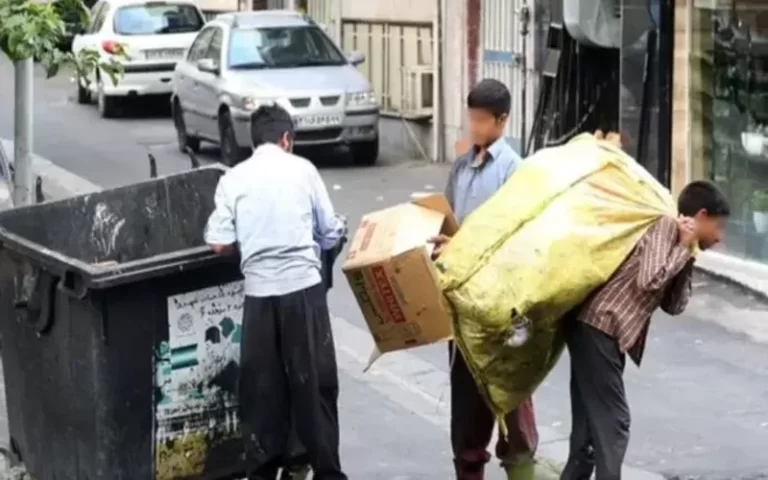
Widespread poverty and unemployment in Iran, and the catastrophic economic situation in society, have made life so difficult for millions of Iranians that they have been forced into vending on the streets to support themselves. The image of big cities has changed in the last 20 months after the coronavirus outbreak, and according to media reports, there are now 16 million people selling goods on the streets in Iran.

In big cities on the sidewalks, subways, in the buses, and crossroads which are crowded in all conditions, even with the sixth peak of the coronavirus, you can see old men and women on whose faces the bitterness of life has been carved. Even many graduate students are now among them.

A 45-year-old woman who introduced herself as the head of her family said that she has four children, two of whom are boys and one of them is a student, and their expenses are high, and she has been forced to work as a street vendor.

Due to the coronavirus situation, many people living in Tehran or major cities have lost their permanent jobs and now make a living through street vending.

Some of them working inside the subway, going from station to station and wagon to wagon for the sale of simple goods such and bracelets and clothes and any item that is used in everyday life.

A job that lowers their social credibility so some of them wear masks for fear of being recognized. Some street vendors choose the job as their second or third job, because they cannot afford to support their families, and unemployment insurance in Iran is so low that it is not worth pursuing.

Handselling, of course, for regime’s large companies importing large quantities of consumer goods, is making huge profits with these people working on the streets.

A more sinister phenomenon which is people are facing is a complex underground mafia network affiliated with Iran’s ruling factions, who blackmail and extort these people to allow them to do their job.

This network does not show any mercy to the street vendors, and on the day when these people have no income, they are accompanied by confiscation of goods and ugly insults, which is executed mostly with the alibi of blocking the public pathway.

Therefore, the suicide rate among these poor people is very high. As we have witnessed it over the past years some of them committed suicide, burning themselves in front of the regime’s offices, to protest the behavior of the regime’s municipality.

Farshad Momeni, an Iranian economist, says of the street vendors:

“These groups, who, due to poverty, give in to worthless and insignificant jobs due to the bankruptcy of the country’s economy, are ‘working in parasitic jobs.’

“There are many similar people in the Iranian society, and it has increased in these two years. In these two years of the disease invasion of Iran and the world, the equation of many people was broken.”

On September 15, 2021, the regime’s parliament speaker Mohamad Bagher Ghalibaf highlighted the true situation of the country in an interview:

“There is no sign of decision-building and management in the country, when we sit down in meetings, we make so many questions that no one knows where the solution is.

“If technology is considered in the field of governance, the imperfect administrative and executive structure that we have inherited for many years will resist technology and we find that this structure has no sense of technology and transformation.

“At the height of this situation it is said that we don’t have money in the country, we spend at least $160 billion a year just for fossil energy, while we know that 50 percent of this fossil energy is wasted and there is a lack of imbalance and injustice so that from this path the valleys of poverty and peaks of plurality arise.”

He emphasized that “unfortunately, we have imbalances everywhere in the country where we point to, the disparity in recruitment, the concentration of power, pension funds, the imbalance between discretion and responsibility, and where we have a revenue of $110 billion, but we see double-digit inflation when we have 20 billion revenues, and we still see budget deficits and inflation.”

Ghalibaf ultimately confessed to the regime’s impasse and said: “This causes additional deadlocks for the country every day.”

Calls for Iranian President Raisi To Be Shunned by the UN

0

The Iranian president, Ebrahim Raisi took his first trip abroad to Tajikistan to attend the Shanghai Cooperation Organization (SCO) summit on Thursday, despite being on a US sanction list for his human rights abuses.

Since Raisi’s installment as the illegitimate mullahs’ president, there have been ringing condemnations and growing calls by human rights organizations for his prosecution as a criminal.

Raisi was deeply involved in the massacre of 30,000 political prisoners in the summer of 1988, many of whom were members or supporters of the regime’s opposition, the People’s Mojahedin Organization of Iran (PMOI/MEK). For the past 33 years, the families of the victims have been continuing to seek justice for their loved ones.

Rather than the international community stepping in to prosecute Raisi for his involvement in one of the worst crimes against humanity in Iran, the ‘culture of impunity’ within the regime, that has protected many of the criminals and abusers of human rights who hold many senior positions in the Iranian government, has allowed Raisi to rise ranks within the regime to serve as their president, without being questioned.

Amnesty International has stated, “That Ebrahim Raisi has risen to the presidency instead of being investigated for the crimes against humanity of murder, enforced disappearance and torture, is a grim reminder that impunity reigns supreme in Iran.”

The lack of international investigations into Raisi’s role in the murder of thousands of innocent civilians has emboldened the regime. Prior to taking office as the president, Raisi played a key role in the suppression of protesters and activists as the head of the judiciary.

They stated that Raisi must be investigated and face prosecution for his crimes against humanity instead of being legitimized and accepted by global forums.

The European Union, and more specifically their foreign policy chief Josep Borrell, have only strengthened the ‘culture of impunity’ within the mullahs’ government with their appeasement policies and questionable actions. At Raisi’s presidential inauguration on August 5, Borrell authorized a senior EU official to travel to Tehran to attend the event.

This gesture, along with the concessions that the EU has continued to give to the regime in order to negotiate agreements on the Iranian nuclear deal is nothing more than an insult to the Iranian people, millions of whom are suffering greatly under the control of the mullahs’ theocracy.

As many Iran observers said, that one is reminded of Winston Churchill’s warning that appeasers keep feeding the crocodile hoping it will eat them last. Iran has taken Europe’s nuclear concessions to the bank.

The International Atomic Energy Agency (IAEA), the UN’s nuclear watchdog, has recently condemned the regime’s continuous violations in two of their latest reports, whilst many international powers have chosen to look the way.

Indeed, as cruel as murdering thousands of people was in 1988, the cruelty of allowing the murderers to freely travel the world cannot be overstated.

Iran’s Strategy: Moving on the Edge of the Abyss

0

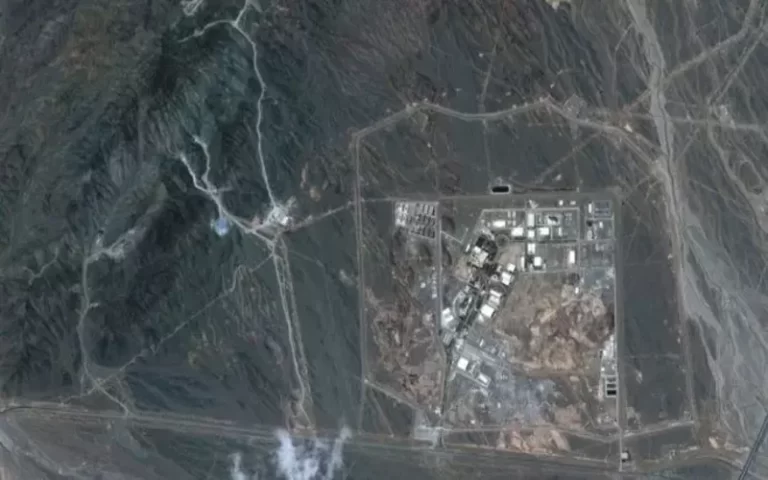
Iran’s supreme leader Ali Khamenei and his government’s officials in the ‘young Hezbollahi government’ on the eve of the session of the Board of Governors of the International Atomic Energy Agency (IAEA), in a 90th-minute decision, decided to make an opportunistic retreat.

To cover up their weakness, they inverted the nature of their retreat and called it a technical agreement to replace the memory cards of surveillance cameras.

There are a few notable issues in this retreat:

  • Despite the regime’s turmoil to tie the fate of the country’s economy with the JCPOA, what has been done, is a policy led by weakness and passivism, and worthless propaganda. On this issue a state-run wrote:
    • “Don’t simply walk away from the issue of yesterday’s Iran-agency deal. Among the concluding statement lines issued and between formal and dry words, an intimate and hand-tailed sentence can be extracted and put on the shelf: politics and management are the realm of reality, not the dumb and absurd slogans of tribunes.” (State-run daily Aftab-e-Yazd, September 13, 2021)
  • The retreat is dealt with by misery and desperation, aimed at buying time for the continuation of secret nuclear projects, as well as to prevent the IAEA and involved countries from recounting the regime’s nuclear case at the IAEA Board of Governors and to issue a new resolution against the regime. Therefore, it is done, in fear that its nuclear case could be referred to the UN Security Council.
    • “Given Iran’s initial position and its ultimate satisfaction with Grossi’s trip, it seems that Iran has retracted somewhat and has become inactive. This is because if Grossi had not come to Iran and reported negatively to the Governing Council, the situation would have been dangerous. Under those circumstances, the case would have gone to the Security Council, and before 2015, we would have gone back under Chapter VII of the Charter, and Iran would be declared an outlaw and a warmonger. Most likely Russia and China would have signed a resolution against us in those circumstances, while they had done so before.” (State-run daily Jahan-e-Sanat, September 13, 2021)
  • This retreat does not mean that the ‘bomb-seeking’ regime will return to the Vienna negotiations on its own feet, according to dissidents. Because during six rounds of negotiations under Rouhani’s administration, it became clear that there would be no return to the 2015 JCPOA, and negotiations to lift some of the sanctions would result if Khamenei accepted a JCPOA plus which is its regional and missile cases.
  • However, merely a field agreement with Rafael Grossi to replace the memory cards of surveillance cameras cannot stop the Governing Council’s decision and repeal the resolution against the regime. According to Sputnik Farsi, the regime has authorized agency inspectors to reuse surveillance cameras at Iran’s nuclear facilities, as well as from Grossi’s rhetoric, despite the regime’s claims, this negotiation is not just a ‘technical negotiation’.
    • Director-General of the IAEA: “In less than two weeks, the agency’s general conference will be held in Vienna, and this is one of the major nuclear events in the world. I was pleased to hear that Mr. Eslami is the head of the Iranian delegation and agreed to continue our negotiations in my office in Vienna, after which I will return to Iran again for high-level talks with Iranian officials.”
  • Such an agreement would only temporarily set the case back somewhat but would not resolve it. In practice, it will exacerbate the conflict between Iran and the agency and the western powers.
    • If in parallel with this process, the Vienna talks do not resume and in the case of a resumption, no progress is made and no agreement is reached, there is no hope of resolving the disputes between Iran and the agency in the future, and the impasse in Vienna will necessarily exacerbate these differences.” (State-run daily Arman, September 13, 2021)

The fate of the regime’s nuclear case has reached a point whereby government newspapers have referred to it by interpretations such as the theory of a ‘double-headed saw’ or ‘strategy of moving on the edge of the abyss.’

Iran Likely To Face Further Oppression Following Cancellation of UNESCO 2030 Guidelines.

0

The secretary of the Supreme Council of Cultural Revolution (SCCR), Saeed Reza Ameli announced on Monday, September 13, that the President of the Iranian regime, Ebrahim Raisi has officially cancelled Iran’s adherence to the UNESCO 2030 Educational Agenda.

In his ruling to repeal the 2030 Document, Raisi called on all documents, declarations, and regulations contrary to fundamental principles of the regime’s education system, the SCCR and the parliament to be canceled for good.

Ameli explained that ‘many international laws are designed within the framework of a liberal thinking structure’ and therefore they neglect to include the “existential role of God and secularism and materialism.” He stated that because of this, “you do not see education and a cultural system that relies on religious laws and theological regulations.”

The UN 2030 Agenda for Sustainable Development features a list of UNESCO’s standards that are designed to teach children the basics of the topics of the environment, human rights, and the elimination of discrimination in society.

UNESCO laid out, on their website, that the goal of the 2030 agenda is to ‘empower people with the knowledge, skills, and values to live in dignity, build their lives and contribute to their societies’.

The UN General Assembly adopted this document in September 2015. Their aim was to ensure that the quality of education around the world is greatly improved. Many member states willing signed the document and agreed to improve the education in their own countries, as well as improving protective measures for children against abuse, and promote gender equality.

In a meeting in 2017, Supreme Leader of the Iranian regime, Ali Khamenei blasted the 2030 agenda saying, “The UNESCO 2030 education agenda and the like are not agendas that the Islamic Republic of Iran should have to surrender and submit to.”

He also posted on his website, ‘Why should a so-called “International” community, which is definitely infiltrated by the superpowers, have the right to make decisions for nations around the world regarding their various cultures?’.

Prior to the meeting, 151 members of the Iranian parliament had signed a letter, addressed to then-President Hassan Rouhani demanding that the 2030 agenda should be officially withdrawn. Four years later, this ruling has now been enforced. Ameli explained that by the end of Rouhani’s presidential administration, the government was dealing with a backlog of 29 resolutions of the Supreme Council of the Cultural Revolution, which Raisi’s administration is to put into action.

While different administrations throughout the Iranian regime’s history have mocked international conventions and human rights treaties by violating them in the name of a ‘religious democracy’, canceling and refusing such a commitment in its flimsiest forms just indicates the antagonism between the current rulers and human rights.

The misogynism and oppression of Iranian women and the Iranian youth have always been a feature of the Iranian regime, and this rejection is just the latest blow in their struggles.

The Supreme Leader Ali Khamenei is evidently doing all he can to hold onto his power, especially as there is a potential merger between the Ministry of Intelligence and the Islamic Revolutionary Guard Corps (IRGC) brewing.