Home Blog Page 267

Iran: Countdown and Alarm of Youth and Hunger People’s Riots

“What the Ministry of Energy (i.e., Iran’s regime) has done to the people of my region, Genghis Khan did not do to Iran.”

No! Make no mistake! ‌ These are not the words of an Iranian dissident. The tragedy is so vast and deep that it has been expressed even by the regime’s officials and elements.

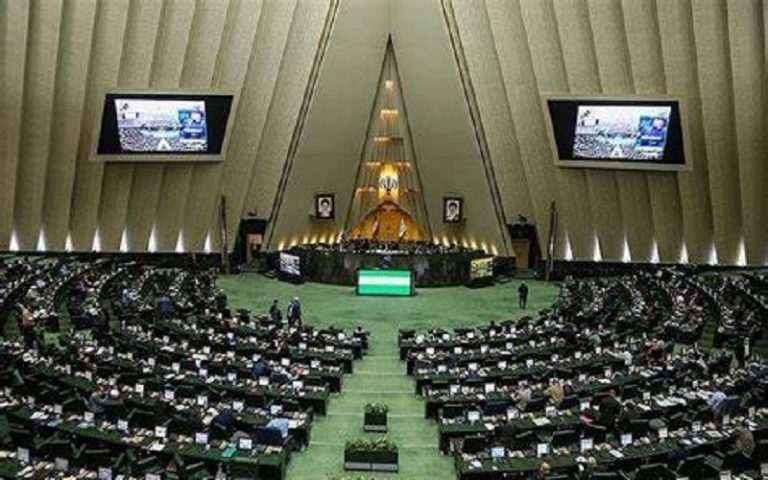
Referring to the performance of the regime’s Ministry of Energy in Chabahar, the lawmaker from this city, Moinuddin Saeedi, said: “What the Ministry of Energy has done to the people of my region, Genghis Khan did not do to Iran.”

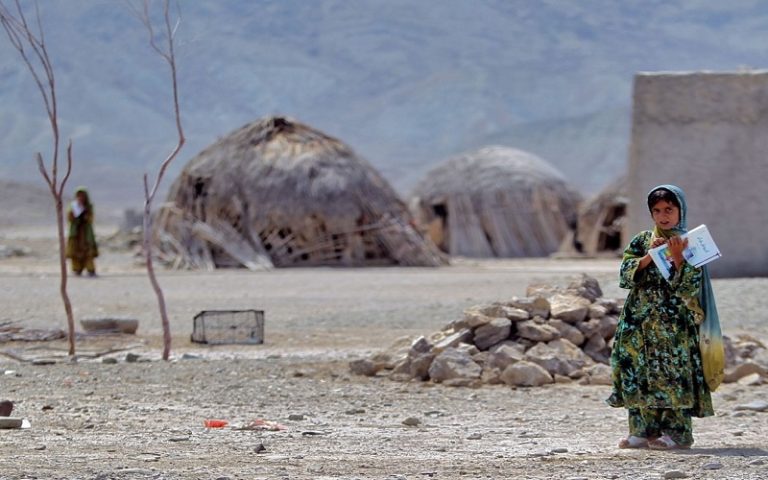
The state-run website Rouydad 24, quoting this representative, who spoke about the dire situation in Sistan and Baluchestan province, especially in the south, and wrote: “For example, the village of Kamp, which is the largest village in the country, 5 km from Chabahar Free Zone, does not have even one meter of water piping.

“Therefore, the suffering of the people cannot be denied or ignored, because they have robbed the dreams and aspirations from the children of Sistan and Baluchestan. These are not things that can be erased or not seen.”

Moinuddin continued: “The information they give about the fuel porters of Sistan and Baluchistan is incorrect. Because most of this is organized in a way that people are not involved in, but when they want to deal with it, they have nothing to do with organized smuggle and they deal with the people.”

What this lawmaker is referring to is the organized smuggling of fuel by the regime’s Revolutionary Guards (IRGC) forces which have been implemented with the pretext of the so-called “Razagh” plan and are smuggling fuel to Pakistan.

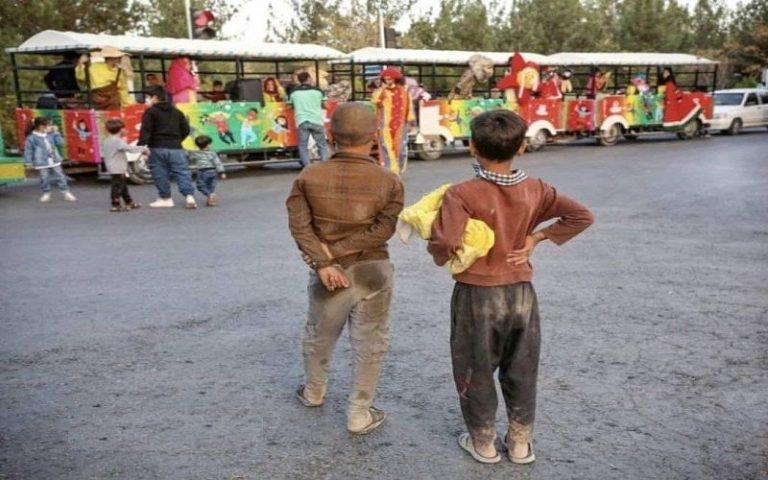
The remarks of this MP indicate the explosive situation in Sistan and Baluchistan province. People who are deprived of the minimum of life. Their children do not have a birth certificate, school, place to play, and even drink water. Baloch children do not have something that is called childhood in other countries. From the very beginning of life, they become familiar with the concept of pain and hunger and forget even fun and smiling.

Comparing the performance of the regime’s ministry with the Mongol invasion shows the intensity of the protest and anger that exists in that province and the MP’s fear that the situation would get out of control, which has forced him to acknowledge this fact in this way, even knowing that it may have consequences for him.

This situation is what state media are warning about on a daily basis. The state-run daily Mostaghel on October 18, 2021, wrote:

“We must prevent phenomena such as the riots of the unemployed and the hungry. The shrinking capacity of Iran’s economy, and consequently unemployment and inflation, and ultimately the shrinking of people’s baskets, is a warning to the country’s economic and political authorities. While the country’s manufacturing sector is at its weakest and much of the liquidity has gone towards currency and coin business, and many workers have become unemployed, a limited stratum still lives in prosperity.”

No doubt that this ‘limited strata’ which is living in prosperity are the regime’s officials and elements.

This daily recalled the November 2019 protests and warned the regime:

“Even the events of November did not cause a change in attitude in the way of governance or reform the country’s economic system. The resilience of young people and dissatisfied strata is limited, from that stage onwards, this group no longer sees any reason to remain silent and react. News of social damage, as well as reports of shrinking people’s baskets and the elimination of things like meat and poultry, are like a countdown and alarm.”
Poverty Level in Iran Is So Severe, It Has Encompassed the Middle Class

0

With the state of the economy in Iran, it is no wonder that more and more people have fallen into poverty in the past few years, with more than 80% of Iranians living under the poverty line. As a result, the middle class has all but disappeared as the poverty line level has risen.

Under the rule of the Iranian regime, people have lost their homes and had to resort to sleeping where they can, from empty graves and ditches to rooftops or abandoned refrigerators. All the while, the regime officials are doing nothing to remedy this social crisis.

According to the state-run Jahan-e Sanat on August 9, official reports indicate the living conditions of all sectors of society have deteriorated.

The daily explained how the poverty line has increased by 38% in just two years due to the rising inflation in the cost of food and housing. They said, “Considering the living conditions of households in the last decade, it is clear that the growth rate of poverty has been faster than the growth rate of wages in all years, and the wage gap and poverty line reached 145% by the end of the 2010s.”

They also predicted that considering the current trajectory, due to the rising inflation rates and low incomes, more households will be set to fall below the poverty line in the next year.

Among all sectors of society, Iranian workers endure more pressure due to the regime’s anti-labor policies.

The ILNA News Agency reported in August that there is now a gap between living expenses and the wages of workers of 6 million Tomans. Families are struggling to provide even basic food staples like protein and dairy. They compared the Iranian situation to Venezuela where the economy is completely bankrupt and said that if the regime cannot rectify the problems in Iran, “the devaluation of the national currency, inflation, unemployment, etc., will be greater than now.”

Iran has one of the largest gas reserves in the world, just behind Russia, with over 150,000 million barrels of oil reserves. They are also in the higher ranks among countries with major mineral resources, with over seven percent of the world’s mineral resources, despite only accounting for one percent of the world population, according to a study by the regime’s Islamic Parliament Research Center.

But despite all its riches, more than 80 percent of the nation lives below the poverty line, and the middle class has essentially disappeared.

Of the estimated 85 million people living in Iran, 19 million Iranians have been forced to live in slums, and 7.4 million children have been deprived of their education due to the extreme levels of poverty. A quarter of the Iranian youth are currently unemployed and 75% of economic capabilities have been lost by workers. Shockingly, up to 1,000 children under the age of 3 are abandoned on a yearly basis as their parents cannot afford to raise them.

The most worrying consequence of the widespread poverty in Iran is that more and more people are willingly selling their organs to make much-needed money, with some mothers even selling their unborn fetuses to make ends meet.

The poverty in Iran is having a detrimental effect on society with millions suffering due to the mismanagement of the regime and the lack of the officials’ using money where it is most needed. According to the regime’s own figures, Iran’s income from oil exports is around $66 billion, while non-oil exports equate to $32.3 billion.

The regime continues to expand budgets allocated for meddling in Middle East countries, boosting its nuclear and ballistic missile drives, and launching dozens of military and security forces imposing an intense atmosphere of an internal crackdown.

500,000 Unemployed Engineers, While China Builds Housing in Iran

0

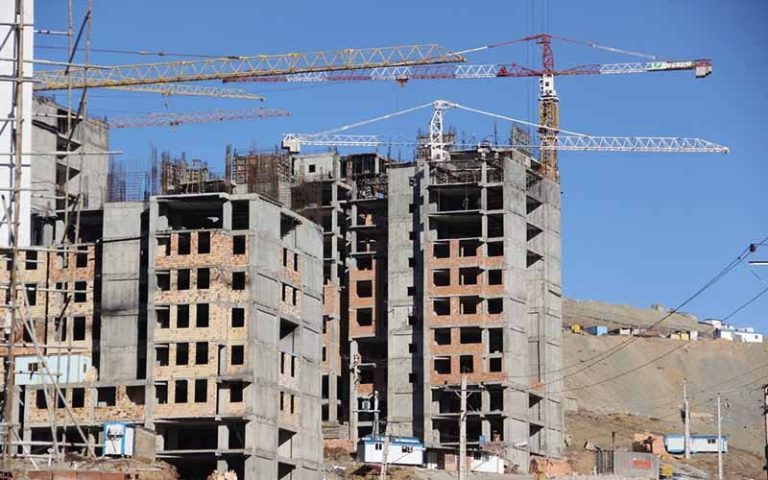
Since mid-2019 and especially since spring 2020, along with the increase in housing prices and building materials, Iran is witnessing an increase in the cost of construction so that under the influence of this situation, the construction industry has been seen a huge recession and in recent months it is making many people hopeless to having a roof over their heads.

The new government has promised to build one million housing each year which has been criticized by many officials as a hollow promise due to the country’s bad economic situation.

But one news that has shocked many people about the housing situation is the government’s negotiations which the Chinese use of the country’s constructing industry.

Something that even many of the regime’s officials are complaining about it. In an interview Eghbal Shakeri, a member of the parliament’s Civil Commission said:

“In a recent meeting with the commission members, the Minister of Roads and Urban Development announced this issue and did not provide details about it, but it is not exclusive to Chinese companies, and companies with the technology of other countries can participate in the construction of Iranian housing under the condition of technology transfer. Shakeri stressed: ‘Technology transfer is the main condition for agreeing to the presence of foreigners in Iran’s construction.’”

Amazingly, on the question of why the government is not using Iranian constructions firms and engineers with the help of the world updated technologies Iraj Rahbar the Vice President of The Association of Mass Builders of Tehran Province answered:

“Unfortunately, the Minister of Roads and Urban Development does not have enough information about domestic facilities and capabilities in the construction industry.”

The question is, why then has the regime put someone at the helm of such an industry when he is not informed about the country’s construction capabilities?

The painful part is that now according to the expressions of some of the country’s experts, Iran has more than 500 thousand engineers, while many of them are unemployed and the government is insisting to use foreign engineers in different parts of the country’s industry which is raising the skepticism about corruption.

The damage is in projects like the Tehran-North Freeway project the regime used Chinese companies, and now after 20 years this project is being left unfinished and these companies have left the country.

Other effects which are hurting the country’s economy is that technologies for this field have been imported from aboard while the country owns the same power, and this is causing an increase in unemployment and many of the producers of these technologies in the field of the urban construction are forced to export their production to other countries like Iraq having no costumer inside the country.

Another sad thing is while training engineers are putting a huge amount of expenses on any country, Iran has one of the highest numbers of brain drain.

This situation raises doubts more than ever about president Ebrahim Raisi’s decision to construct one million housing units in one year.

Protests Held in Ahvaz and Isfahan by Frustrated Retirees and Pensioners

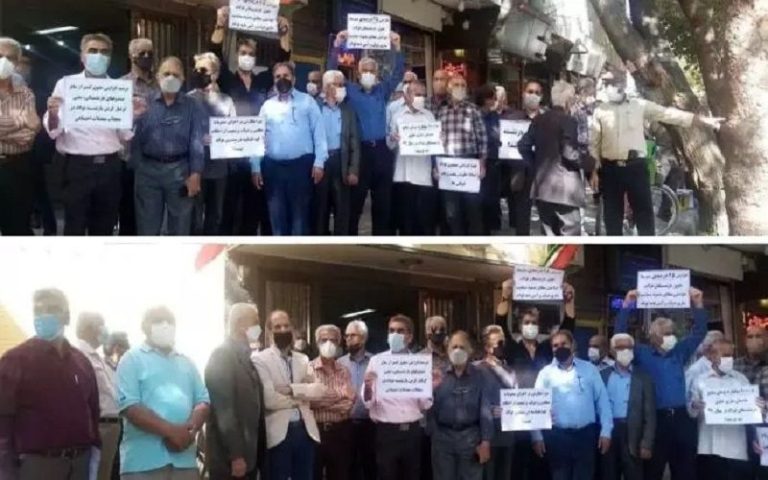
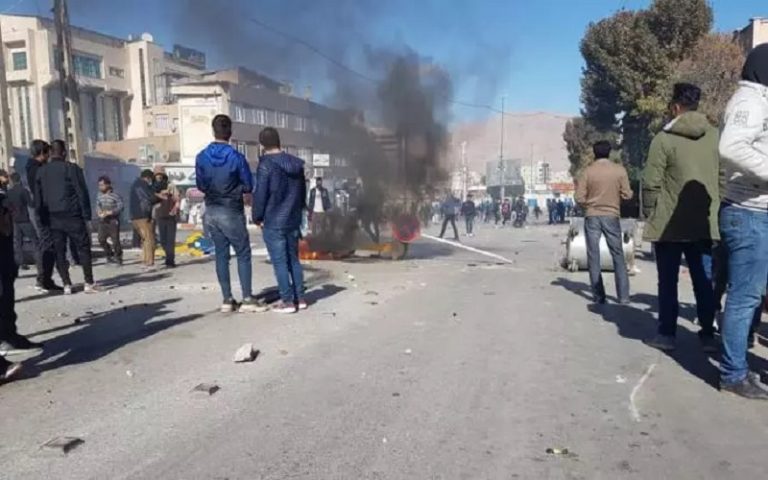
As the social and economic crises continue to ravage Iran, in the cities of Ahvaz and Isfahan groups of retirees and pensions took to the streets to hold protest rallies on Sunday. The demonstrations were regarding the poor living conditions they are facing, as well as low wages and the lack of response from the Iranian regime to their demands.

Protests have taken place in various cities across Iran in recent months, but regime officials continue to avoid addressing the demands of the pensioners. The main issue faced by the protesters is that the meager pensions that they receive barely cover even the most basic living expenses, and their payments are often delayed for several months at a time, leaving the men and women struggling to survive in a country swimming in poverty.

The decline in Iran’s economy, spurred by government corruption and destructive policies, has plunged the lives of many pensioners and retired government workers into utter poverty. The rial, Iran’s national currency, has seen a huge dip in the past few years, losing more than 80 percent of its value.

As a result, the prices of basic goods have skyrocketed while the pensions and salaries of Iranian citizens have not been altered to match the rising inflation in such a damaged economy. This has in turn caused many pensioners to fall under the poverty line. The refusal to adjust pensions to fit the inflation rates is surprisingly going against the Iranian government’s own policies.

A census taken in 2020, identified that there are 18 million pensioners living in Iran. Due to the hardships that they are facing, they are part of the 96% of the Iranian population who currently live under the poverty line. Even the regime’s own statistics have identified that more than 75% of these pensioners are struggling to provide for their most basic needs.

Pensioners receive on average 25 million rials per month while the poverty line in some parts of Iran has reached 100 million rials in the past year.

Years ago in Iran, the class divide was more apparent, and the poverty line was clearly defined. These days, the poverty line has risen sharply and now encompasses the middle class of Iranian society. As the country’s crises continue to wreak havoc on people’s lives, and the inflations rates show no sign of slowing, it begs the question as to how much further the poverty line will grow.

In recent days, another protest rally took place in front of the Majlis (parliament) in Tehran. A group of users of the Cryptoland online market gathered to demand that their stolen investments should be returned to them.

The users of Cryptoland have been holding protests for several months, but authorities are refraining from acting on their demands. Cryptoland had around 289,000 users, who have lost a collective $200 billion worth of savings in the online marketplace.

Children Fall Victim to Iran’s Middle Age Law

0

In the first half of this year, 791 babies were born in Iran to mothers who are themselves children and are under the age of 14, indicating that the violation of the rights of children, one of whom is a child marriage is continuing in Iran under the extreme reactionary rules of the mullahs, due to economic poverty or cultural poverty, children are losing their normal childhood and are in physical and mental dangers.

“Mr. Raisi! Stop the motherhood of children”, is the title of a recent article published by Iran’s state-run daily Etelaat about girl children who have become mothers at a very young age.

According to the National Organization for Civil Registration of Iran, the age of mothers who gave birth to these babies in the first half of this year was between 10 and 14 years old. In other words, it is sad to say that Iran has girls who have had children at the age of 10, which they should have been studying and proceeding with a normal life.

This is not the whole story. The report of the Civil Registration Organization adds that in the same period (i.e., from March 20, 2020, to October 7, 2021), 36,562 children were born to mothers aged 15 to 19, of which 18,922 were boys and 17,640 were girls.

Hearing shocking news from Iran has become an ordinary thing and people who are following the situation should be aware not to get used to it. But some news is so devastating that if someone does not take any position on it, it will definitely hurt our dignity.

No common sense or awakening conscience would accept such oppression of children. Naturally, the government, as the large and powerful institution of any country, must enter this crime that is influenced by any social, economic, or cultural issue on children and prevent its continuation by adopting diverse policies and methods, but Iran that is captured by the mullahs is an exception who have no respect to any kind of human rights, let alone the rights of children.

The main culprit of such a situation is the regime’s ridiculous and inhuman laws, observers say. Article 1041 of the Civil Code states that ‘the marriage of a girl under the age of 13 and a boy under 15 is subject to the recognition of the interests of the couples, the permission of their guardians, and the recognition of the court’, according to which, first, the marriage of girls from the age of 13 is immediately free, and secondly, at the age of less than 13, she is also free under the conditions that can be obtained.

The bill to amend this article and change the age of marriage for girls from 13 to 16 has been submitted by the government for nearly seven years but is still under consideration and has reached no point. Just as the child protection bill has reached nothing. Not surprising under the rules of the mullahs.

The shameful argument of the opponents to this bill is that, if in some urban areas the age of marriage for girls is over 25 and even 30 years, allowing children to marry can lower the age of marriage.

According to last year’s statistics, in Iran, more than 9,000 children aged 13 and under are married, and according to the statistics, divorce rates in these marriages are higher than divorces in all age groups, and according to a regime’s official, the country is now facing with the phenomenon of widowed children.

The violation of children’s rights besides the destruction of women’s and girls’ rights has different forms in Iran. Another example of this violation is the murder of children by the father, who has a very light punishment because his father is the guardian, and this, unfortunately, has fueled these crimes.

After the murder of 14-year-old Taleshi girl Romina Ashrafi, who was killed by her father on May 21, 2020, the head of the judiciary at the time (the regime’s current president) announced that the punishment for fathers who murdered their children would be intensified to such an extent that it would be deterred.

Although the regime can impose such punishments, this has not happened so far, informing that all the regime’s promises are worthless.

The ‘obligatory education’ for children is another child’s right that is not respected. There are numerous statistics of children dropout education, the lowest of which is about 200,000 according to the regime’s numbers. A look at the crossroads of major cities and working children shows that a considerable number of children are out of school.

Iran’s Government Unable To Compensate Investment Backwardness Even in Two Decades

What has been reported by the Iranian government’s statistical institutions speaks about the government’s failure to attract foreign countries and economic entities to invest in Iran. An opportunity that is now not imaginable anymore due to the regime’s insistence on its nuclear and terror activities.

The decrease of real investment, and the decrease of countries that desire to invest in Iran, and the increase of the macroeconomic variables such as the monetary base, liquidity, and most important the inflation are adding to this crisis.

According to the report of Iran’s Deputy of Economic Studies of the Chamber of Commerce in the 2000s, the average annual growth of investment was -4.7 percent, and the amount of a real investment was just 171 trillion tomans. This number in 2011 this the amount of investment reached 100 trillion which decreased to 98 trillion tomans in 2019.

To understand the loss for the Iranian government, it is enough to know that the total operating deficit of the 2020 budget released by the Supreme Audit Court on Tuesday was 183.3 trillion tomans, while the country’s total real investment that year accounted for only 54 percent of the operating deficit.

The continuation of this trend can be more destructive in the coming years. To compensate its shortcomings, the most important of which is the construction of power plants for electricity supply, the government needs a huge amount of investment which it doesn’t seem able to fund at least until the 5-year horizon.

Because of the regime’s nuclear crisis and the return of the regime’s oil sanctions, which have damaged the country’s uniaxial economy, the situation of the country’s investments become critical so that in addition to the decrease of the investment, the annual investment growth fall to -6.8 percent and the capital formation become negative.

Therefore, government economists call this decade the worst in Iran’s economic history, and many of them speak about an ‘unreversible crisis’ because nothing is predictable and is indeterminate and the situation has reached a state of uncertainty.

This situation has now led to the increase of the prices in the asset market and the lack of investments even by the country’s people. The people instead of investing, attended in parallel markets like currency and gold to avoid a sharp devaluation of their currency.

In addition to this crisis and parallel to it welfare fall rapidly in the society and the Gini coefficient exceeds 0.4 in 2018-2020 which is a sign of the increase of the class gap in the society.

The government respectively was forced to borrow huge amounts from the national bank to cover their budget deficit, which hurts the future generation of the country, losing their resources to invest in the development.

According to central bank reports, by March 2020, liquidity reached 3476 trillion tomans, an increase of 40.6 percent compared to March 2019 and an 84 percent increase compared to March 2018.

Liquidity was reported at the end of 2019 and 2018 at 2472 trillion tomans and 1882 trillion tomans, respectively.

To understand the magnitude of the numbers of economic variables in the 2000s, it is enough to know that the base volume of money in 2019 was about 352 trillion tomans.

According to the Tehran Chamber of Commerce’s deputy for review, assuming an annual growth of 5 percent of investments from this year in 2034, the country’s real investment will reach the figure of what it was in 2011, 170 trillion tomans.

And that is only if the regime becomes successful in the nuclear negotiations and be able to remove all the obstacles and sanctions which many of which are not related to its nuclear case, then it must witness a 10 percent increase of investment annually.

Meanwhile, other economic variables like monetary base, liquidity, and inflation will continue their path and these variables will not change positively and will challenge a real investment in the country’s economy.

Also lurking in Iran’s economy is the depreciation of capital. From the beginning of 2011 until 2017 the real investment was much higher than the depreciation of capital and the investments were able to cover the depreciation of capital. However, since 2018 this decreased suddenly and became equal to the depreciation of capital.

It should be noted that the depreciation rate with steep stability was increasing every year, but the amount of investment declined with a steep slope. So that in 2019 and 2020, real investment in the country did not compensate for depreciation costs.

As noted, the presence of a real private sector in the economic activities is important which does not exist in Iran, the only thing that does exist are the so-called private-government driven companies which the regime calls ‘Khosulati’ and are mainly in the hands of the regime’s IRGC. Important because without their presence the regime is forced to print more money which is increasing the inflation as we are witnessing now.

Simply said, this is something which is making the life of the coming generation difficult and hopeless.

Eradication of Poverty in Iran Has Become Impossible

0

In recent years, the growing inflation in the country has led to the spread of poverty in Iran, so that the head of the Higher Institute for Social Security Research has stated that at least 30 percent of the population is below the poverty line in Iran. Of course, some estimates put the number of people below the poverty line in Iran more than this figure.

The spread of poverty in Iran has resulted that a large segment of the middle class falls below the poverty line, especially in the past three years.

Although in recent years, different statistics of the number of Iranians below the poverty line have been presented, and the regime’s government is trying to hide that real numbers, but all statistics agree on the principle that in the past four years, the number of Iranians below the absolute poverty line has increased year after year and more middle-class households have joined the lower strata.

For example, the Donya-e-Eghtesad newspaper recently citing the results of a credible international study, said that since the beginning of the 2000s, the number of Iran’s poor has doubled, with four million more falling below the international poverty line, earning $5.50 a day. Also, about 8 million people have gone from the ‘middle class’ to the ‘downward middle class’.

Or this June, Roozbeh Kordoni, head of the Supreme Research Institute of Social Security, announced that while the population below Iran’s absolute poverty line had reached 15 percent from 2013 to 2017, the number of people below the country’s absolute poverty line increased to 30 percent and by the end of 2019, practically 25 percent of Iran’s population was below the absolute poverty line.

So far, no comprehensive and consistent reports on the absolute poverty line have been presented about different cities and provinces of the country, which is considered for the regime as a secret and security issue.

Despite the lack of accurate statistics on the number of people below the absolute poverty line in Iran, the number of these people has definitely increased in the past three years, since the cumulative inflation in the three years of 2018, 2019, and 2020 was 115 percent, and of course, the average inflation rate in the 2000s was 24 percent.

In Iran’s economy, the middle and low-income segments of society are much more affected by inflation than the wealthy. Due to the disruption of wealth redistribution systems i.e., banking system, tax system, and subsidy system, the damage caused by inflation is directly imposed on the middle- and low-income classes, because this disruption in the country’s wealth redistribution systems is created deliberately by the regime’s officials in the favor of its elements.

With cumulative inflation of 115% in the past three years and due to the disruption of Iran’s economic system, certainly since 2018, the number of households below the absolute poverty line has been growing significantly compared to before, as a large part of the middle classes have joined the low-income segments of society during this period.

In the constitution of this regime, governments are also obliged to provide minimum livelihoods, including housing and jobs suitable for the people of the society, something that has not happened over the past decades, and the people’s protests for a basic life has been responded to always with repression, detention, and torture.

Unless the economic structures in Iran have been reformed, there is no hope for the eradication of poverty in Iran, because the three key systems of Iran’s economy, the banking system, the tax system, and the subsidy system, are all in the service of the wealthy ruling people.

Hidden subsidies, including fuel subsidies, energy carriers, and other subsidies in the manufacturing sector, all benefit the wealthy with manufacturing enterprises. Also, a large portion of importers of goods to Iran also have preferential currency rents or rents monopolizing in different markets, and this shows that Iran’s subsidy system is entirely regulated for the benefit of the wealthy.

The country’s banking system also fully serves the rich, because when the interest rate of banking system facilities is about 18 percent and inflation is about 40 percent, so it can be said that the real interest rate in Iran is -22 percent. This means that anyone who can get facilities in Iran makes 22 percent profit per year. However, in Iran, mainly the wealthy, i.e., those who have access to large collateral and have extensive rents, can receive large collateral.

In Iran, taxes such as wealth taxes, capital gains taxes, and taxes on luxury goods are not defined. Meanwhile, a large part of Iran country’s wealthy people is basically not paying any taxes, so that this group both deals with tax evasion and receives tax exemptions using written and unwritten laws and corrupt relations.

When the three key systems of Iran’s economy, tax, banking, and subsidy systems, serve the wealthy, so in such circumstances, the eradication of poverty is more like a joke, and until these wealth redistribution systems are reformed, there is no hope of reducing poverty in Iran.

In Iran’s inflationary economy, because wealth redistribution systems do not work properly, inflation is imposed on the middle and poor deciles of the society. This has led to a day-to-day decrease in Iran’s middle class in the past few years, and if this trend continues, we will soon see the elimination of the middle class, which means that Iran’s economy will become a bipolar economy in which 10 percent of the population will be wealthy and 90 percent of the country’s population will be poor.

Iranian Regime Unprepared and Unable To Deal With Aftermath of Major Earthquakes in Iran

As the world acknowledged the International Day for Natural Disaster Reduction on October 13, while other countries have been making efforts to try and control natural disasters and reduce the numbers of casualties, the people of Iran have fallen victim to a natural disaster of their own in Khuzestan province, with the regime failing to help those affected.

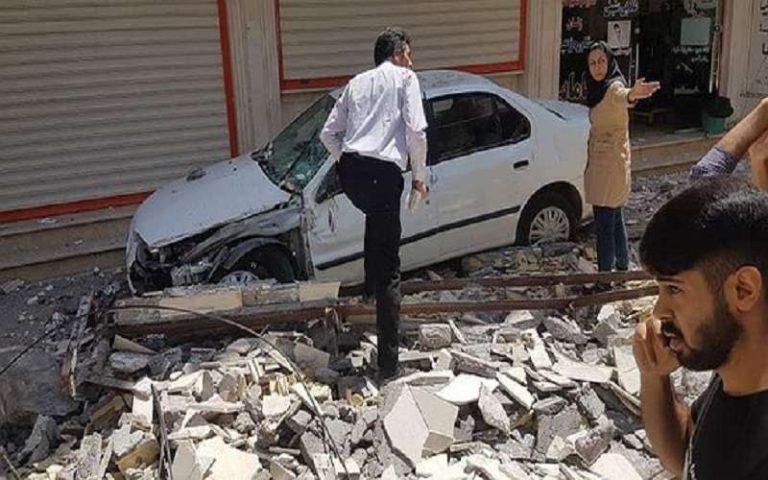
A 5.7 magnitude earthquake hit the Andika county in eastern Khuzestan on October 9. According to the Vatan-e Emrooz daily, of the 600 villages in Andika, 330 have suffered heavy damage while another 30 have been almost destroyed. Houses are destroyed, roads are blocked, and getting relief aid to the citizens of the region is proving difficult.

Iran has 6% of the world’s natural disaster casualties, while it has only 1% of the world’s population. According to the official IRNA News Agency, the economic damage caused by natural disasters in Iran averages $5 billion annually.

As Iran sits on two major tectonic plates, the Eurasian Plate and the Arabian plate, and several active faults run through the country, Iran is prone to frequent seismic activity.

In 2017, Kermanshah province was hit by a powerful 7.3 magnitude earthquake which killed over 600 people, and left 70,000 people homeless, with many having to live in tents for almost two years. Then-president Hassan Rouhani later falsely claimed that ‘almost everybody’ had managed to rebuild their homes and returned to them, which was far from the truth.

The former director of the Earthquake Research Department within the regime’s Ministry of Roads, Housing and Urban Development, Ali Beiollahi, said in 2017, “If an earthquake as powerful as the one in Kermanshah province happens in Tehran, 200,000 buildings will be totally destroyed and collapse. The collapse of this many buildings will definitely leave one million casualties, a real disaster indeed.”

A year after the Kermanshah earthquake, the IRNA News Agency reported that many citizens still lacked basic shelter after the destruction of their homes, and those that had tents had to contend with flooding from the rain and streets covered in mud. Many people resorted to using plastic sheets to keep themselves clean and dry.

Another 5.9 magnitudes rocked East Azerbaijan province in northwest Iran. Five people were killed, and at least 520 people were injured. Again, the regime delayed helping locals, and many people have not recovered from this earthquake even after two years.

The President-elect of the NCRI, Maryam Rajavi urged people to help the victims of a 5.7 magnitude earthquake that hit West Azerbaijan. Over 100 villages were damaged as a result and the regime was reportedly covering up the damages sustained.

She said, “I request help for those affected, especially in Khoy and Salmas, and urge vigilance by fellow compatriots in the province about subsequent aftershocks.”

In the case of earthquake fatalities, the cause is usually the collapse of buildings that have been extensively damaged. By adhering to modern building codes, and taking example from other countries, like Japan, which often has high-magnitude earthquakes but minimal amounts of major damage or loss of life of its citizens, Iran would be able to have better control of minimizing future impacts.

The regime could have helped people if it had an effective provincial emergency response system. And finally, countries vulnerable to major earthquakes, like Iran, must invest in research to enhance their knowledge of the hazard, the potential impacts, and seismic safety.

Iran’s Official to People: Our Properties Are Not Your Business

Corruption in Iran is institutional. One of the main aspects of this issue is the transparency over the sale and ownership of the properties of the regime’s officials which is now for a long time a debate in this regime. This issue was raised in the regime’s Expediency Council, then it was passed over to the tenth parliament and now to the eleventh.

In the tenth parliament, many of the regime’s principlists called for the transparency of the properties of the officials, but suddenly in the eleventh parliament they have changed their minds, and they are now insisting on the secrecy of the officials’ properties, and they are now taking a step further and calling this issue a security issue in the country’s interests.

Following the approval of the Expediency Council years ago, it was noted that the judiciary should consider a system to register the properties of the regime’s officials. The regime decided to implement such a system in the hope of gaining the people’s lost trust, which was the result of four decades of corruption, plunder, and repression.

Nonetheless, the properties of the regime’s supreme leader Ali Khamenei and the financial empire affiliated with his office were not included.

The system was called, “Executive Regulations of the Law on Investigation of Assets of Officials and Agents of the Islamic Republic of Iran,” and it was approved by the regime’s judiciary in 2019. Until now, this system has not had any outcome. And there is no information about how many of the officials or institutions have registered their properties in this system.

This is while this system has emphasized that officials and institutions who do not cooperate will be charged. Meanwhile, this system speaks about the properties of authorities and has listed 23 titles that include up to the rank of macro-directors in governmental and non-governmental institutions, as well as up to the rank of Brigadier General and heads of police stations and the armed forces.

It also includes a group of members of the Assembly of Experts on Leadership and members of the Expediency Council.

However, like many other worthless rulings related to the regime’s officials and ruling body, there is no real and serious observation about the execution of this law, and it has just an artificial face.

So far, not a single report or news has been published about an official who has been punished for not entering his property information into the system.

The ironic part which is allowing the regime’s officials to circumvent this law is, that this law has pointed that the registration of the officials’ properties must be done by observing security mechanisms, maintaining privacy as well as the accuracy and integrity of the data.

It seems that the officials’ refusal to include information is also because of the alibi of observing confidentiality and the security debate, which will put damage on the regime.

What makes all the commotion around this subject even more worthless is that in 2015 the members of the Expediency Council emphasized that the information of the officials’ properties should not only become public but everyone who made this information public inadvertently or deliberately will be punished and charged.

At the same time, the judiciary spokesperson responded to the question of whether the authorities’ assets were to be communicated transparently to the public or whether they were merely supposed to be in the hands of the judiciary and confidentially. He said: ‘According to the law, the list of officials’ properties is confidential.’

It is obvious that the regime’s fear of being transparent about its officials and their properties is due to its fear of the people’s reaction to their four decades of corruption and plundering the country’s wealth and accumulating it in foreign banks. Therefore, such a thing will never happen in this regime, and its announcement is just to silence the restive people.

Protests in Iran and Abroad for Raisi To Be Held Accountable for His Crimes

Ahead of the COP26 United Nations Climate Change Conference next month, the spokesperson for the Iranian regime’s Foreign Ministry announced on Monday that the regime’s president, Ebrahim Raisi will not be attending the event in Glasgow, Scotland.

The spokesperson claimed that there were never any plans for Raisi to attend in the first place, despite previous reports that he would be attending.

Once it became evident that Raisi would likely attend the COP26, the Iranian regime’s victims and a former MEP, Struan Stevenson, made a formal request for Raisi’s arrests. This formal request was made due to Raisi’s dark history of human rights violations.

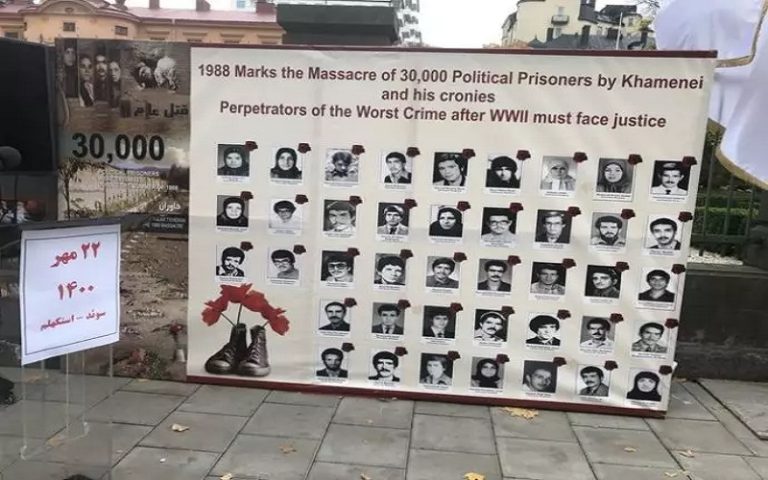
Raisi was heavily involved in the 1988 massacre in Iran, during which over 30,000 political prisoners were executed for being allied with the Iranian Resistance.

Speaking of the request for Raisi’s arrest, the Times newspaper reported that human rights campaigners, victims, and families of the victims of the regime’s crimes against humanity have called on Police Scotland to launch an investigation of Raisi under the powers of universal jurisdiction for his human rights abuses.

There have been amplifying calls for holding Raisi accountable for his role in the 1988 massacre, as well as the crimes he committed as the regime’s Judiciary Chief from 2019 to 2021, mainly during the major Iran protests.

Ongoing protests continue to take place across the world to call for the regime to be held accountable for its crimes. On October 9, the day before the 19th World Day Against the Death Penalty, a series of protest rallies were held in 21 cities across the United States, Canada, and 12 different European countries. In attendance were Iranian expats and supporters of the People’s Mojahedin Organization of Iran (PMOI/MEK), who all condemned the regime’s human rights violations and the increasing number of executions in Iran and called on the international community to hold Raisi and other regime officials accountable for their crimes against humanity.

The public hatred toward the regime of mass murderers is growing daily. While Raisi could hardly travel to a country where he would not be under scrutiny for his crimes against human rights, Iranians reject him wherever he goes.

Last Friday, Raisi made a visit to the Bushehr province in Iran in order to help find solutions to the problems faced in the region, however, despite reports from state media that he was warmly welcomed upon his arrival, instead he was met with protests and angry citizens.

Locals marched toward the airport, chanting ‘Justice is a lie’, as they projected their frustrations at the hollow promises that regime officials have been giving them.

Another trip Raisi made, this time to the province of Kohgiluyeh and Boyer Ahmad also resulted in protests upon his arrival. Locals blocked Raisi’s path as his car reached the Tang-e Sorkh region of Boyer Ahmad. According to the official IRNA News Agency, the locals were outraged and chanting angry slogans.

These protests show how Iranian people hate the regime. It also shows that Khamenei has failed in its ultimate goal of suppressing any voice of dissent by appointing Raisi as president and handpicking a cabinet of thieves and terrorists.