Home Blog Page 268

The JCPOA Has Become a ‘Stinking Corpse’ for Iran’s Rulers

Hossein Shariatmadari managing editor of Iran’s Kayhan daily, the main mouthpiece of the regime’s supreme leader Ali Khamenei, in an article about the regime’s nuclear negotiations and mainly the JCPOA frustratedly said:

“With the U.S. withdrawal from the JCPOA (Joint Comprehensive Plan of Action, known commonly as the Iran nuclear deal) and Europe’s failure to live up to its commitments, the JCPOA does not exist and has become a stinking corpse, and if we want to go back to it in such a situation, we won’t get anything.” (Kayhan, October 11, 2021)

At the same time, some of the regime’s media and elements try to cover up the regime’s weakness and pumping up vitality to the regime’s disappointed forces by speaking about storing low enriched uranium to the excess allowed by the JCPOA, and producing 20 percent uranium, to have a strong lever for bargaining in the negotiations.

Mohammad Esmi, head of the Atomic Energy Organization of Ebrahim Raisi’s government, also claimed: “We need to accelerate the advancement of nuclear energy and manifest its effects on people’s lives and show the manifestations of national authority influenced by nuclear energy.” (State TV Channel One, October 9, 2021)

These speeches are expressed while the regime’s new government is begging for the continuation of the negotiations.

“We said the other parties that our intentions were serious and that we were a man of negotiation and a man of action, and that the new Iranian government is pragmatic and from negotiations which its outcome would be a cup of coffee, our people would not benefit. If Mr. Biden is serious, release $10bn of our money.” (State-TV Channel One, October 3, 2021)

This internal crisis which is showing the regime’s poor situation is reflected very clearly by the state-run website Khabar Fori quoting a regime’s journalist:

“Since the signing of the JCPOA, several principlists have insisted that the agreement is against the interests of the Islamic Republic in every way, and in return, Rouhani’s administration executives and reformist supporters have emphasized that it serves the interests of the system in every way.

“At all, I say that the right is entire to the side of the principlists! The JCPOA is not only bad in every way, but it’s basically a hell of a poison! It is an expensive pain! Is a pure damn thing!

“So now these principlists should answer, why didn’t they rid themselves of this poison when Donald Trump signed the order to withdraw the United States from the JCPOA?

“Maybe they say that the government of Hassan Rouhani and his foreign minister did not allow, all right! But now that there is neither a sign of Rouhani’s government nor from his foreign minister, why don’t they take this agreement off their agenda once and for all explicitly?

“As bad as the JCPOA is it has only two solutions! Formally canceling it to say goodbye to negotiations and to continue the nuclear program as much as possible or to cancel it to renegotiate negotiations to reach a new agreement that is desirable in all respects.

“All right, they have full and undisputed authority.” (State-run website Khahar Fori, October 11, 2021)

Truly, what is the necessity of the Raisi government to negotiate a JCPOA that does not have any benefits and which Khamenei’s mouthpiece has said has become a stinking corpse?

The answer should be considered in the regime’s impasse on the one hand, and on the other hand, the reduction in the importance of the JCPOA compared to 2015 for the United States and other Western countries negotiating the JCPOA.

After the formation of the new U.S. administration, it was expected that the U.S. government would quickly return to the JCPOA, and even the regime’s government had a vague expectation that the U.S. government would accept the 2015 JCPOA without raising new demands, something that didn’t happen, and the new U.S. administration pursuing another JCPOA in which the regime must take from a new poison chalice in addition to nuclear weapons on its missile program and regional policy.

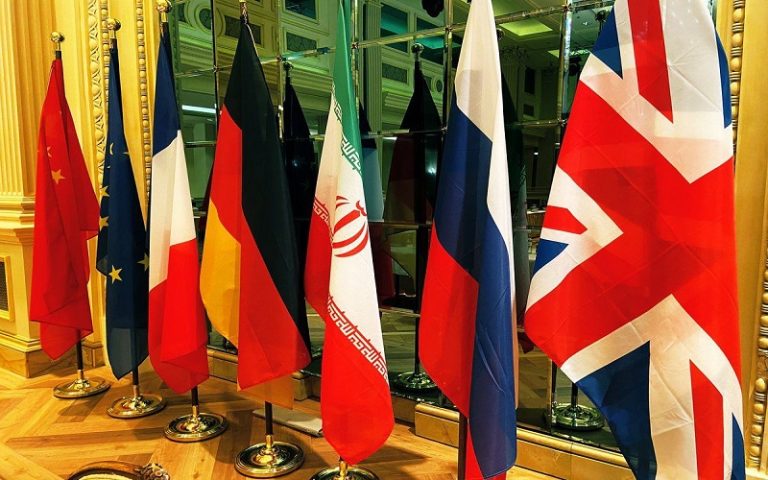
The impasse means that the mullahs’ rule, on the one hand, cannot completely ignore the JCPOA and declare its withdrawal from it, because it has dangerous consequences, and the prospect of the regime’s case going to the UN Security Council and subsequent heavy consequences, and on the other hand, accepting the conditions of the Western parties negotiating, especially the United States, to revive the 2015 JCPOA means withdrawing, that according to Khamenei would be tantamount to an ‘endless degradation’.
Raisi Will Not Be Travelling to Scotland for the UN Climate Change Conference

In an official request, a former Scottish MP, along with the families of five political prisoners executed in Iran, called on the country’s police to detain the Iranian President Ebrahim Raisi if travels to Glasgow to attend a climate change summit.

The Times of London newspaper reported Friday (October 8) that the petition was signed by former Scottish MP Struan Stevenson, as well as a number of human rights activists, victims of torture, or relatives of those executed in Iran, and handed over to Police Scotland, to arrest Ebrahim Raisi if he travels to Glasgow.

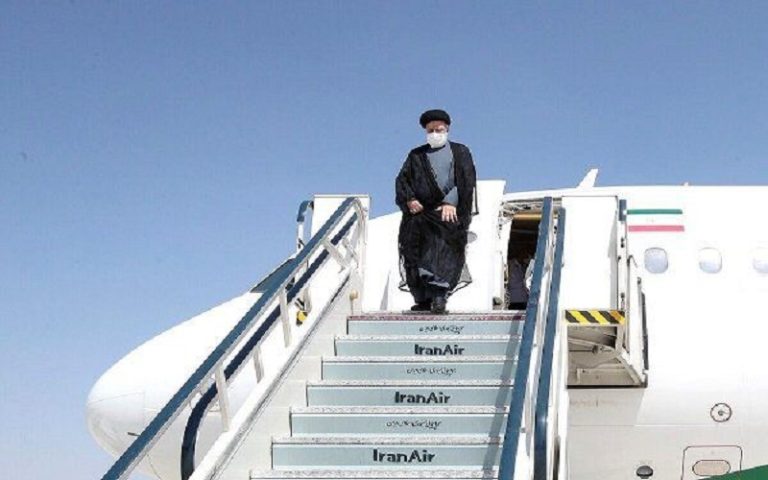
Following this event, the spokesperson for the Iranian foreign ministry announced on Monday that despite claims in previous reports, the Iranian regime president Ebrahim Raisi will not be attending the United Nations’ upcoming climate change conference in Scotland.

The 26th United Nations Climate Change Conference of the Parties (COP26) is due to be held between November 1 and November 12 in Glasgow, Scotland, but in a regime press conference, the spokesman for the Iranian foreign ministry, Saeed Khatibzadeh announced that Raisi will not be in attendance and said that there were never any plans for him to travel to Scotland.

Ironically, in June, the regime’s own media had widely publicized that Raisi had been invited to take part in the conference, giving the impression that he would be taking part.

As Iran is not a member of the Paris Climate Accord, there was never any need for Raisi to attend the conference, but it would have been an opportunity for him to build up his profile as the regime’s latest president by posing for photos and meeting with some of the world’s top leaders.

The truth that Khatibzadeh did not acknowledge in his remarks is the efforts spearheaded by the Iranian resistance to hold Raisi to account for his crimes against humanity.

Due to Raisi’s history of brutal human rights violations, exiled Iranians have held protests around the world in recent weeks. In the summer of 1988, Raisi was one of the main officials involved in the mass execution of over 30,000 political prisoners, serving as a judge on the ‘death commission’ tasked with processing prisoners through minute-long trials and sending them to the gallows if they refuse to denounce their affiliation with the MEK.

In an Iranian Resistance conference held this summer, several legal experts and academics argued that the 1988 massacre should be classed as an act of genocide, and its perpetrators should be tried accordingly in international criminal courts.

Human rights organizations and UN rapporteurs have called for an impartial investigation into the 1988 massacre, and former political prisoners and families of the victims of the 1988 massacre have testified in court about the role of Raisi and other regime officials in the brutal torture and execution of dissidents in Iran’s prisons.

Perhaps the decision for Raisi not to travel to Glasgow is in his best interests as there has been a formal complaint that was filed to Scottish authorities calling for his arrest if he ever sets foot in Scotland. The plaintiffs behind the complaint include the former Scottish MEP Struan Stevenson, and human rights activist Tahar Boumedra, as well as many witnesses of the 1988 massacre and the families of the victims.

All of this has put a heavy burden on the newly sworn president of the regime, who now finds himself entangled by his own crimes. In September, Raisi canceled his trip to New York for the annual UN General Assembly.

No official explanation was given by the regime for the cancellation of the trip, and instead, Raisi sent a pre-recorded message. Iranian state-run media speculated that the regime feared that Iranian expats might have put Raisi’s safety in jeopardy.

Raisi’s appointment has come at a heavy price for the regime, and his bloody past—which symbolizes four decades of the mullahs’ rule—follows him wherever he goes.

Iran’s Super Crises: ‘Cruel Realities’ Leave Raisi Without Options

0

These days many Iranian officials admit to the country’s many problems and emphasize that the government does not have the ability to solve them.

Problems that according to many of its experts are converted to ‘super crises,’ and while the rule is itself responsible for them, it neither can nor will solve them while profiting from many of them.

The regime’s new president Ebrahim Raisi, despite his many claims, has been taken hostage by these problems, end even his provincial trips to calm down the country’s situation and the frustration of the people will not solve any of them.

The situation is so bad, that in every trip the regime’s president is facing the frustration and angry shouts of the people and is just increasing the people’s anger.

These trips are so repulsive that even clerics like Reza Taghavi, an MP, attacked Raisi and said:

“I suggest Raisi decrease the provincial trips, the conditions of the country are not the conditions of promise, of course, we might say that promises will create hope, but if we face with problems because we were not able to fulfill these promises, people’s opinions will change.” (State-run daily Aftab, October 9, 2021)

This daily while quoting the Kayhan daily, the supreme leader’s mouthpiece, wrote that Raisi should not give promises which “are not consonant with the country’s situation.”

Hossein Ansari, a former MP, said that Raisi’s government is unable to change the country’s situation and added: “The conditions of the country are not such that young and inexperienced people can manage crises. The conditions of the country are such that even people with sufficient knowledge cannot easily solve problems.

“The policies adopted so far are the same policies that the principlists have pursued over the past forty years. Those in different positions of the country today are in favor of the same policies that have passed their exams for the past 40 years and have been responsible for the current situation in society. The result of these policies is that today the Iranian people are facing many crises and super crises.” (State-run daily Arman, October 4, 2021)

Finally, the Arman daily fired the coup de grace in an article entitled, ‘The problems are worse than that’ and added: “The facts are far more brutal than that and show that no, with this brief change that the statesmen have made so far, the problem will not be solved.

“If you look at the trend of inflation, it has continued. What has been so far, has not changed so positively. If Raisi can really take a serious step in foreign policy and in resolving the sanctions issue, it will certainly have very positive effects. Of course, again, we say it won’t be a miracle.”

About the country’s social, cultural, and political crises which are even worse than the economic crises this daily begged the government to, “create political, cultural and social openings at the desired level,” but hopeless continued, “and if they don’t create new obstacles, we should be thankful to God.”

Dissidents say the mission of Raisi’s government is not a ‘political, cultural and social opening’, but that Supreme Leader Ali Khamenei has brought him to the fore to contract further the country, with the mission of blocking Iran’s political, cultural, and social environment.

Therefore, even if, it is intended that a government will end the unsolvable internal and international super crises, it should end its contractionary and plundering policies at home and aggressive and expansionist policies outside its borders. Something that is impossible for this regime as the past 42 years suggests.

Iranian FM Visit to Lebanon Further Supports Escalation of Terrorism Under Raisi Administration

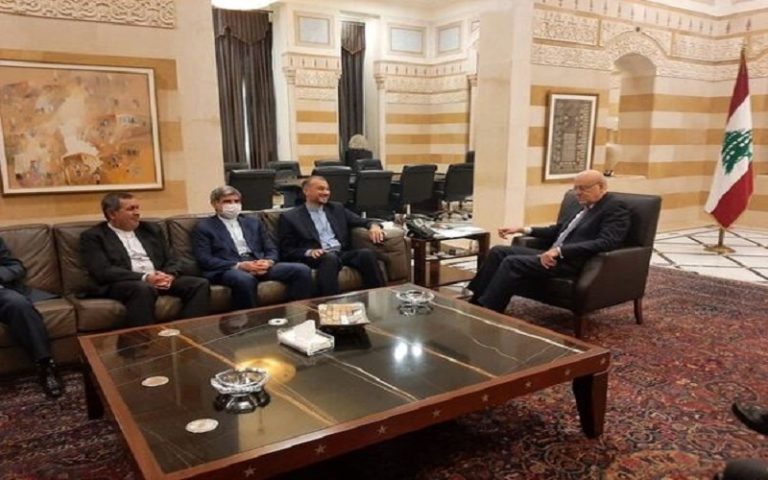
Remarks made by the Iranian regime’s Foreign Minister, Hossein Amir-Abdollahian on his trip to Lebanon last week have confirmed yet again that the regime’s terrorist activities would only increase under Ebrahim Raisi’s presidency.

During his trip, Amir-Abdollahian met with Hassan Nasrallah, the head of Hezbollah, the regime’s Lebanese terrorist proxy group. Lebanese media reported that the visit highlights how the regime has made the spread of terrorism one of their top priorities.

Amir Abdollahian has proudly represented himself as a ‘field agent’ who had close relationships with the regime’s top terrorist, Qassem Soleimani. During a meeting between members of the Majlis and nominees for the foreign, interior, and health ministries, Amir Abdollahian underlined he would ‘continue the path of Soleimani’.

Soleimani was the head of the Quds Force, the terrorist branch of the Islamic Revolutionary Guard Corps (IRGC), which routinely spread terrorism outside of Iran via the regime’s proxy groups.

Amir-Abdollahian acknowledged that the regime will continue to export fuel products to Lebanon as the country is facing fuel shortages amidst their economic and political crises, all the while the regime continues to fund Hezbollah and its activities.

Hezbollah has been in charge of coordinating the fuel shipments from Tehran, despite the regime being sanctioned on their oil sales by the United States. Even worse, Amir-Abdollahian has stated that the regime is prepared to provide further aid to Lebanon and is ready to build power plants in the country.

These remarks come at a time when Iranian people sell their organs for a living and could hardly make ends meet. Over 450,000 people have died due to the Covid-19 outbreak and the regime’s negligence. In summer, thousands of Iranians who were in intensive care units passed away due to the recurring power outages.

In reference to the regime’s plans to build power plants in Lebanon, the state-run Barkat News wrote last month that the money for this project is ‘coming out of the Iranian people’s pocket’ while they already have to suffer under Iran’s current crises.

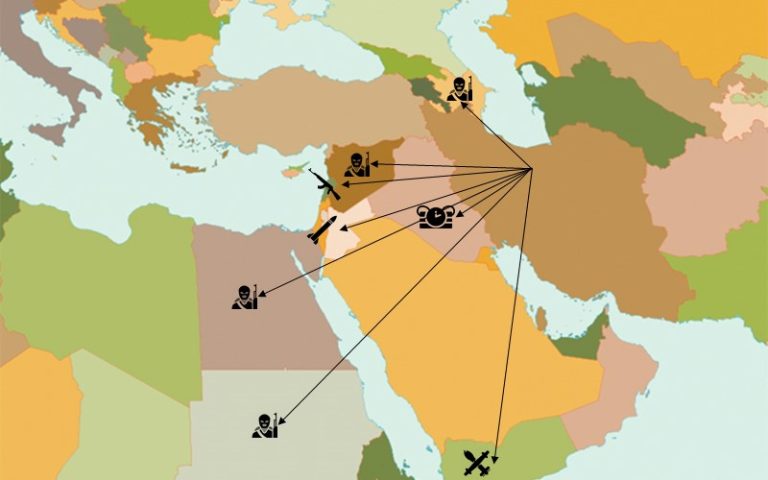
The crises in Iran are already making society restive, but the regime is adamant about funding foreign terrorist groups to ‘export domestic crises abroad’. According to the regime’s top officials, Lebanon, Iraq, and Syria are described as the regime’s ‘strategic depth’.

The regime’s ongoing shipping of fuel to Lebanon through Hezbollah aligns with the regime’s strategy to export terrorism.

With the mounting crises in Lebanon, the Lebanese people have taken to the streets in dozens of protests, blaming Hezbollah for the crises the country is facing. The current issues include a dramatic drop in the local currency, as well as severe fuel and medicine shortages.

With the regime’s involvement in Lebanon, the threat is that the United States could extend the regime’s sanctions to the country, a possibility that the Al-Akhbarieh daily stated that Lebanon could not endure.

The regime’s need to support Hezbollah is because of the proxy group’s involvement in the Syrian war and other conflicts across the Middle East on behalf of Tehran.

The regime’s former president, Hassan Rouhani, also acknowledged on April 8 that ‘the frontline and diplomacy are two arms’ of the regime. As long as the mullahs’ regime stays in power, the international community should expect Tehran to increase its malign activities.

Iran’s Middle East Policy Is Turning Against It

It may not have been initially thought that after the death of the Iranian Revolutionary Guards (IRGC) Qods Force commander Ghasem Soleimani, the regime’s export of terrorism and its adventure in the Middle East would face a severe blow. But this is an undeniable reality.

The regime’s maneuvering and establishing a defensive line behind its northern borders to confront what it calls Zionism is a clear sign of the regime’s retreat and defeat in its aggressive foreign policy.

War in Kermanshah and Hamedan

Previously, the regime’s supreme leader Ali Khamenei made a famous speech to justify his interference in other country’s affairs. He said:

“They [Qasem Soleimani’s militias and Qods Force] went to fight an enemy that if they didn’t fight, this enemy would come inside the country.

“If it had not been stopped, we would have fought and stopped them here in Kermanshah and Hamedan and other provinces.” (Khamenei.ir, September 27, 2015)

Khamenei’s remarks clearly indicate that the regime’s foreign policy and its export of terrorism are the other face of the coin of repression inside Iran.

Now if we consider the policy of repression inside Iran and the export of terrorism abroad as two communicating vessels, the decline in one is a show of decline in the other, and vice versa. And this is what the regime fears most and not the attack of any foreign country or enemy.

Worst conditions and the most serious danger

Ahmad Movasaghi, an expert of political studies, admits to the failure of the regime’s aggressive foreign policy and its terrorism:

“As for Iran’s political geography, the malfunction of our foreign policy, which is not limited to the executive branch, caused that all the Arab countries to be thrown to Israel’s side. It’s a lot of our mistakes in foreign policy that brought these countries together.

“Instead of engaging them with each other, we united them against ourselves. That is, we must follow a set of international norms and rules. The constitutional definition of supporting liberation movements is not feasible when we have contact with an official government, supporting the forces fighting against it (the opposition) because this behavior is incompatible with international law. (Mostaghel, October 6, 2021)

Listing Iran’s neighbors and the regime’s failures to attract them, this expert said:

“The danger is really serious and we’re in the worst situation.”

‘This really serious danger’ even includes the regime’s traditional playing ground, Iraq:

“Even in Iraq, which has now become OPEC’s second-largest oil producer instead of Iran. Kazemi’s government in Iraq has the most ties to the West, and detailed contracts with Total are closed to avoid Iran’s electricity and gas, while not fulfilling Iran’s demands.

“Israel is easily hitting Iranian bases in Syria in coordination with Russia, even in Iraq, which is a serious problem for us.”

He added: “Iran [i.e. the Velayat-e Faqih regime] is now in a very fragile situation, and the more internal weaknesses, the more indulgences elements are ambushing. From now on, we face more like these risks to national security. Domestic dissatisfaction in their place and the greed of aliens through their neighbors instead.

It seems that the era of ‘ablution in the Euphrates and praying on the Mediterranean coast’, ’24 hours production of weapons for the Hashd al-Shaabi, as well as giving them the keys to weapons caches and ammunition arsenals’, is facing its end.

The dream of capturing the ‘Shiite crescent’ or in other words ‘Islamic Badr,’ under alibis such as ‘unity of the Islamic World,’ ‘fighting the arrogance’ and ‘Islamic revolution conversation’, all have become nightmares. Now the winds that the regime has planted in the countries of the region have returned to him in the storm. Now the winds that the regime has sowed in the region are turning back to it as storms which it must reap.

While Iran Is in Crisis, the Regime Funds Terrorist Proxy Groups Drone Attacks

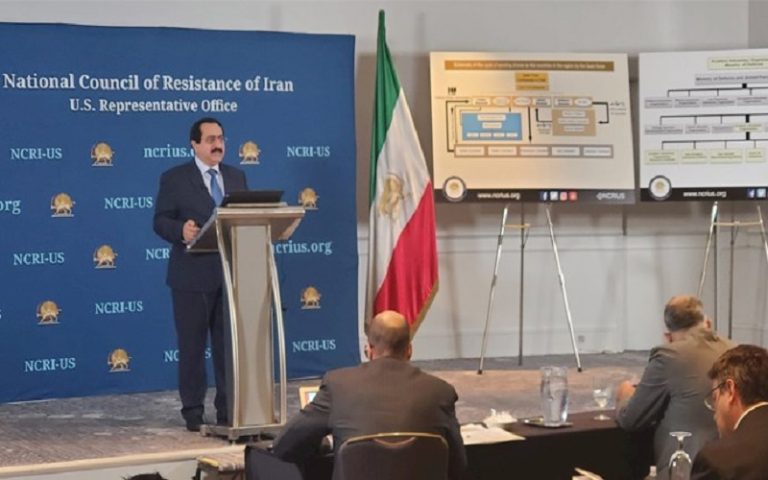
As a conference was held in Washington, United States last Wednesday to discuss the Iranian regime’s investments in drone technology, the question remains as to why the regime is funding domestic and international militants and weapons, instead of using the money to solve Iran’s current social and economic crises.

Earlier this year, between April and June, militants who were backed by the regime, launched six drone attacks in Iraq, with American officials taking the threats seriously and stating that they were developing plans for defense against these unmanned aerial vehicles (UAV). Luckily, no casualties were reported during the strikes.

During the conference in Washington, the government institutions and private businesses that are involved in the manufacturing, testing, and training of the regime’s drones were identified. Satellite images of key facilities and details of operations were provided by the People’s Mojahedin Organization of Iran (PMOI/MEK).

The National Council of Resistance of Iran (NCRI) said, “While work at some of the featured facilities reportedly dates back at least to 1995, one major complex at Semnan was reportedly established as recently as 2019, while several others underwent significant changes in personnel, organization, or mission around the same time.”

The investments of the drone technology have meant that the Iranian regime has had to redirect their assets for the investments, instead of using the money domestically, especially as Iran is suffering from many crises, including the Covid-19 pandemic.

The MEK has frequently reported on how badly Iran has been affected by the pandemic. Official figures from regime authorities for the current death toll from the coronavirus are being reported as just over 120,000, however, the MEK and the NCRI have both said the actual figure is around 451,400, as highlighted by leaked hospital records and surveys from health professionals.

The NCRI said, “According to the regime’s critics, its undercount of infection and mortality rates reflects the persistent influence of early, official disinformation, plus an urgent impulse to cover up the severity of Tehran’s mismanagement of the situation.”

One of the major factors of the mismanagement was the decision by Ali Khamenei, the regime’s supreme leader, to ban American and European vaccines from being imported, instead of being in favor of producing domestic vaccines or importing them from elsewhere. These vaccines, however, have been less readily available and are much less effective than the leading, reputable vaccines.

In a statement from the NCRI at the conference, they said, “The regime is spending billions of dollars on its missiles and UAV programs while 80 percent of the Iranian people live under the poverty line and the budgets for health care, education, and other national requirements are abysmally lower than military expenditures.”

They placed some of the blame on Western powers and stated that with the sanctions eased under the 2015 nuclear deal, little to no benefit was provided to Iranian citizens, and the regime managed to get away with their corrupt activities.

The latest drone operations in Iraq have shown just how much the regime is in alliance with other countries, to smuggle equipment and share technical knowledge, as well as to train proxy terrorist groups on how to work the drones. While the regime is selective about who they train to use the UAVs, within the existing networks of terrorist proxy groups, smaller, specialized groups are forming, causing further fear of the technology getting into further wrong hands.

The NCRI said, “None of the sanctions against the regime should be lifted until it has stopped all its rogue behavior and intransigence in the region.”

Iran: Loss of Human Resources, Damage Which Cannot Be Undone Anytime Soon

In the current situation, according to global statistics, Iran ranks at the top of the list of the 10 countries with the highest inflation growth and is ranked fourth on the list after countries such as Venezuela, Sudan, and Zimbabwe.

According to many government experts, if the trend of economic conditions and inflation continues like this, it will lead to triple-digit inflation and the beginning of a ‘Venezuelan economy’ after a short period, and simply put, Iran’s economy will be thrown into the valley of collapse.

On this, Masoud Daneshamand, a member of Iran’s chamber of commerce, said:

“If Iran’s economy continues this trend, the country’s economy will become a Venezuelan economy. Venezuela’s economy is a collapsed one. If we are not able to solve our problems in these fields, we will pass the same path as Venezuela and the devaluation of the national currency, inflation, unemployment, etc. will increase.”

He predicted: “Inflation will rise like now if it is now 40 percent, it will reach 55 percent at the end of the year. The number of 55 or 60 percent for inflation is too much.” (State-run daily, Setareh-e-Sobh, 5 October 2021)

The result of such a catastrophic economy would be an increase in immigration among the country’s youths, especially students and educators. A government expert about the shocking numbers of Iran’s immigration said:

“Iran’s resident population is about 70 million. Because according to official IMF statistics, 500,000 people migrate from our country every year. Iran’s statistics center in 2019 put the figure at 700,000.” (State-run daily Jamaran, August 7, 2021)

According to today’s statistics, more than 250,000 Iranian engineers and physicians and more than 170,000 Iranians with higher education live in the United States and more than 15 percent of Iran’s human capital has traveled to the United States and 25 percent to Europe. Currently, the total number of physicians in the country, including general practitioners, specialists, and dentists is 108,000.

Many of the country’s elite have also emigrated due to domestic restrictions and the regime’s repression of individual freedoms. They now live abroad, killing any hope and motivation in them to help their country’s progression. Without a doubt, if these elites were inside the country, they could help solve the country’s problems. But that is the latest concern of the regime, which is converting the country to burned ground.

“Statistics show that along with the migration of scientific experts of physicians and engineers, we are witnessing a growing migration of teenage figures from among the Olympiads and those accepted in different academic disciplines in the privileged ranks of the entrance exams, which at the discretion of families to continue their education and map the horizon of a bright future,” said the state-run daily Jahan-e-Sanat on October 4, 2021, about the migration of the country’s specialists especially the elite youths.

The economic crises of the last few years and unfavorable social and welfare conditions have significantly increased the immigration statistics of Iranian students, and this growth continues, which means the loss of human and financial capital for a country that is not well developed.

Social and economic crises did not only lead to the immigration of the country’s elite and students but have also ignited domestic migration, and many poor people from small villages and counties are pushed to the metropole margins. Something that has increased social crises, especially among the youths.

“Misguided economic policies (read marauding politics) have demonstrated their effects by flooding migration from rural and deprived areas to metropolises. The consequences of this discussion are the phenomenon of marginalization for metropolises such as Mashhad, which consequently increases the cost of city services and doubles management difficulties.

“The city already has one of the largest marginal textures in the country. The Head of Iran’s Chamber of Chamber said: ‘If today some social problems such as addiction, begging, etc. have distorted the image of our cities, one of the factors affecting it should be sought in the economics.’”

Strange but Routine Actions by Iran’s Ruling Establishment

Hearing of strange and outlandish actions by the Iranian government has become ordinary. Like the news of officials filling the ballot boxes with votes using the ID cards of dead people. But that is not all. Even those who are not yet born have benefits for the regime.

The state-run daily Arman on September 28, 2021, in an article entitled, ‘Economic policies enrooted the production’ quoting an economic expert Bahman Arman, about one of the strange behaviors, wrote:

“According to figures provided by the International Monetary Fund, 500,000 people migrate from Iran each year. According to recent statistics from the Statistical Center of Iran, this number has increased to 700,000.

“While the rate of migration from Iran is high among the countries of the world. For this reason, Iran’s population should not exceed 70 million people. That’s why declaring that the country’s population about 84 million is a statistical mischievousness that is being exploited.”

In Iran, 74 million people receive subsidies, the newspaper added.

Before this article, Abbas Ali Kadkhodai, former Spokesman for the Guardian Council, said, “Iran’s population is now estimated to be 83 million.”

The increase in the number of migrants from Iran is an issue that many other regime officials have acknowledged in addition to the IMF.

“The population of Iranian immigrants has more than doubled in the past three years,” says Abbas Abdi. (State-run daily Etemad, 28 September 2021)

Now the question, why is the difference between 13 to 14 million official and informal statistics to be a ‘statistical mischievousness’?

Examining the subsidies given to these 14 million which for each person is 45,000 tomans, which is 630 billion tomans monthly. That is 7.5 trillion tomans each year. That’s the amount of subsidy that is paid to people who don’t exist.

In a regime which is led by mafia gangs, this is not a strange thing, all its institutions are involved in lootings like and Mostazafan Foundation or the Foundation of Martyrs and Veterans Affairs who are receiving huge amounts of money in the of the people but transfer all this wealth to the banks of other countries.

The IRIB news agency in an article titled ‘Business card in the name of one, but in the favor of another’ wrote:

“Some companies that are active in the field of corporate registration advertise that you can only own a business card by providing copies of identification documents (national id cards and birth certificates), current account numbers, certificates of non-background crimes, and copies of a degree. They even guarantee that you can get rich effortlessly after taking a training course and handing out cards to the people introduced by them.”

The outlet then deals with the people who were trapped, quoting a person called Hessam: “They told me we’d get you a job where you could have a salary of 3 million and insurance. What you do is export and exports are not taxed according to the law.

“They did not say that the foreign exchange obligation is heavier than taxes. A few months passed, but neither the work nor the big money was given. They gave me only 6 million in installments. They had taken my card with a power of attorney and called from time to time and said, ‘come sign this paper and go.’ That’s it”

The state-run outlet added that in his name, now a 32-million-euro foreign exchange has been registered, commitment from exports and his case is being pursued. Because those people haven’t imported a single currency, and now it’s unclear where they are.

However, it is clear where they are. They are in the government institutions and these media fear exposing these people. They have enough power; else they would be not able to commit such a huge crime. This is not just a hollow analysis but an explicit admission by government experts.

“The interests of power groups have always had an impact on difficult economic conditions. These groups benefit personally from this situation and, like a high wall, surround decision-makers and prevent other attitudes from passing through the wall. All these decision-makers are benefiting from one place.” (State-run daily Iran, October 6, 2021)

Iran’s Economy and the Government’s Unavoidable Wrong Decisions

Iran’s economy is currently facing various obstacles, all of which are of great importance and have challenged Iran’s economy. In this regard, high and chronic inflation, which itself is rooted in serious budgetary problems, government fiscal policies, and regime corruption, is one of these nodes.

In addition, the problems and shortcomings in the country’s banking and monetary system, the crisis in pension funds, the water and environment crisis, the organization of production, which instead of moving towards competitiveness, day-to-day is nearing a monopolized economy and property rights, which have shifted toward rent-seeking, are among the challenges and obstacles of the Iranian economy.

On the other hand, in the field of foreign relations and foreign trade, the country also faces many problems so that the balance of trade is not in the interest of exports. About the country’s capital, there is no transfer of capital into the country, and the country is witnessing an increase in capital outflows, which is executed mostly by the officials and the regime’s officials.

This is a long list of the economic problems which is mostly hurting the people and each of which is important, and if the regime will be not able to solve these problems, the situation will remain the same, and even becoming worse.

Although oil revenues have always been a solution to these problems in the short term, even if sanctions are lifted entirely, Iran’s position in the global energy market is not the same as before.

At the level of macro and strategic decisions, the regime is also showing many weaknesses which are worsening the situation and moving from one crisis to the next which are all made by its decisions to ensure its existence. They have not given the regime its desired result. On the contrary, the regime has become busy with this self-made mistake which is increasing its enmity with neighboring countries and increasing its economic siege.

Generally, the authorities’ view of the economy is not correct, and they think that the economy can be driven by planned government intervention. An example of this is the regime’s struggle over the past years to become a member of the Shanghai Cooperation Organization (SCO), thinking that playing in the field of an East and West bloc will solve their problems which is not consonant with the reality of the world economy in this century.

Meanwhile, the interests of powerful mafia groups controlled by the regime’s supreme leader and the Revolutionary Guards (IRGC) have always had an impact on the emergence of difficult economic conditions. These groups benefit from this situation and have become a tall barrier in front of the country’s economy, making all the economic decisions effectless. Therefore, all the decision-makers are going through the same meaningless path.

And the supreme leader’s office has blocked all economic discussions, and many important and influential decisions are person-centered, and when these decisions are made, the country’s managers are forced to implement them without any question, like the full price hike in 2019, or the regime’s 200-million-euro aid for the IRGC Qods Force, which was a blow to the country’s suffering economy, and ultimately, it will lead to an economic collapse.

A study of the regime’s economic attitude by different governments also shows that only faces change, but insights and attitudes to the economy have not changed.

Global Inaction Worsens Iran’s Human Rights Abuses

In a viral video seen on social media last week of the Iranian regime’s State Security Forces (SSF) and the morality police involved in an incident of ‘mal-veiling’, it is yet the latest example of human rights abuses faced by Iranians under the presidency of Ebrahim Raisi.

Since the beginning of 2021, figures have stated that there have been at least 263 executions in Iran, with 38 taking place within the last month alone. Many other deaths have been attributed to torture while imprisoned. Amir Hossein Hatami was tortured to death on September 23 in the Greater Tehran prison, as was Shain Naseri who was killed on September 21. Naseri’s family later revealed that his body showed visible evidence of the torture he endured.

The Iranian regime continues its human rights violations to intimidate the public and silence any voice of dissent. As the Iranian Resistance has repeatedly reiterated, this regime cannot stay in power.

Raisi is well known for his previous human rights violations, especially his involvement in the 1988 massacre. He was one of the main perpetrators involved in the executions of 30,000 political prisoners. Following the massacre, he continued to commit other human rights violations in his role as a top judiciary official. As he was appointed to head of the Judiciary by Khamenei in 2019, it coincided with the major uprising in November of that year, an event that saw 1,500 peaceful protesters gunned down by security forces. During the uprising, Raisi also oversaw the torture and detention of almost 12,000 protesters who had been arrested for taking part in the demonstrations.

Following the uprising, Amnesty International documented some of the cases of torture suffered by detainees and in a report issued in 2020, they stated that an inquiry led by the UN should be put forward to ensure that regime officials are held accountable.

Yet, the world community failed in doing so, allowing the regime to continue its crimes. The international community’s silence vis-à-vis the ongoing human rights violations in Iran fuelled the systematic impunity in Iran, allowing Khamenei to appoint a mass murderer like Raisi as president in June 2019.

Agnès Callamard, the Secretary-General of Amnesty International spoke out following Raisi’s appointment to the presidential role and said that the fact that he has reached such a position instead of being held accountable for his crimes against humanity is ‘a grim reminder that impunity reigns supreme in Iran’.

The impunity that surrounds the regime has continued and worsened since the 1988 massacre, and all because the international community failed to act accordingly and prosecute those who were involved.

The world community has a moral and legal duty to act and hold the Iranian regime accountable for its crimes.

The regime does not limit their crimes just to within their borders, as highlighted by the failed bomb plot of the Iranian Resistance conference in France in 2018. Unless an immediate halt is brought to their human rights violations, the West will remain at threat of future activities.

The international community should refer the dossier of the clerical regime’s crimes in Iran to the UN Security Council and prosecute its leaders for four decades of crimes against humanity and genocide.