Home Blog Page 27

UN Special Rapporteur: Iran’s Protest Crackdown Among the Most Brutal in Modern History

Mai Sato, the United Nations Special Rapporteur on the human rights situation in Iran, warned during an emergency session of the UN Human Rights Council about the wide scale of violence, arrests, and internet shutdowns, and called for urgent action by the international community to support protesters and hold Iranian regime officials accountable.

Mai Sato said on Friday, January 22, at the emergency session of the UN Human Rights Council in Geneva that the nationwide protests began on December 28 following severe economic problems and turned into a broad-based movement across Iran, in which men and women from various ethnic and religious groups demanded “political change.”

A Case File of a Crime: How Did the Rasht Bazaar Massacre Happen?

Emphasizing the right to peaceful protest, Sato said the difference between a democratic and an authoritarian government is that people are able to demand change peacefully, and that authorities respond to these demands instead of resorting to repression.

She added that the situation worsened significantly from January 8, when Iranian regime authorities implemented an almost complete shutdown of telecommunications.

According to Sato, this measure has prevented the international observation and documentation of human rights violations while simultaneously disrupting the coordination of peaceful protests. She said the communications blackout has caused deep suffering for families inside and outside Iran who are unable to ensure the safety of their loved ones.

Uncertainty over casualty figures and pressure on families

The UN Special Rapporteur said that due to the internet shutdown, the number of those killed remains disputed, allowing the authorities to control the flow of information. She added that officials have reported more than 3,000 deaths, including security forces, but some civil society estimates put the death toll at tens of thousands, figures that she said cannot be independently verified.

Sato emphasized that this stark discrepancy shows how the internet shutdown has concealed the true scale of what has occurred.

She said she has received reports indicating that some families have been pressured to falsely identify their deceased relatives as members of the Basij militia or were forced to pay money to receive the bodies, actions that she said combine grief with extortion.

Use of lethal force and mass arrests

Referring to the Iranian regime’s official narrative, Sato said labeling protesters as terrorists, rioters, or mercenaries is the same pattern used during the 2022 protests, aimed at justifying violent repression. She added that the regime’s leader and the head of the government have called for harsh behavior, and the head of the judiciary has emphasized swift prosecutions without leniency.

She said the use of lethal force is only permitted as a last resort to protect life, but that she has received numerous videos showing the use of lethal force against unarmed protesters, an action that she said is inconsistent with the legal principles of necessity and proportionality.

The UN Special Rapporteur also reported the arrest of tens of thousands of people, including school students, without access to a lawyer or contact with their families, and said she has received reports indicating that some detainees have been pressured to make “forced televised confessions.”

UN Human Rights Council Condemns Killing of Thousands of People in Iran

During a special session, the United Nations Human Rights Council adopted a resolution presented by more than 20 countries, describing the human rights situation in the Iranian regime as “deeply concerning” and strongly condemning the violent suppression of recent nationwide protests.

The resolution, adopted on Friday, January 23, with 25 votes in favor and seven votes against, extended the mandate of the UN fact-finding mission for two years and the mandate of the Special Rapporteur for one additional year.

Focusing specifically on the nationwide protests, the resolution reports the killing of thousands of peaceful protesters, including women and children, the injury of large numbers of citizens, and the arbitrary arrest and imprisonment of thousands during these protests.

More than 50% of the council’s members supported the resolution. As a result, this represents one of the highest levels of support a resolution on the human rights situation in Iran has ever received in the history of the UN Human Rights Council. The only time support for such a resolution was higher dates back to 2013.

A Case File of Crime in Isfahan During Iran’s Nationwide Protests

Mai Sato, the United Nations Special Rapporteur on the human rights situation in Iran, announced on January 22 that the number of people killed in the nationwide protests may exceed 20 thousand.

Unprecedented repression and allegations of extrajudicial killings

Expressing deep concern over the unprecedented scale of repression, the Human Rights Council stated that Iranian regime security forces used lethal and excessive force against protesters.

The resolution explicitly refers to reports of extrajudicial killings of protesters and describes these actions as clear violations of international human rights law.

Widespread arrests, enforced disappearances, detention in complete incommunicado conditions, and the use of torture and inhuman treatment were also cited as serious human rights violations, which the Human Rights Council called for to be halted immediately.

Amnesty International and Human Rights Watch previously stated that Iranian regime security agents, in their efforts to suppress the recent protests, directly targeted protesters’ heads and upper bodies using rifles and shotguns loaded with metal pellets.

Internet shutdown and obstruction of human rights documentation

The resolution condemned the nationwide and prolonged internet shutdown imposed in Iran since January 9 as a measure that violates international human rights law.

The council called for the immediate, full, and unrestricted restoration of internet access across Iran, emphasizing that the government’s action was intended to prevent the documentation of human rights violations and restrict citizens’ access to information.

NetBlocks, a global internet monitoring organization, warned on January 23 that the Iranian regime is attempting to create “fake traffic” to give the impression that internet access in Iran is returning to normal.

Concern over a widespread wave of executions

The UN Human Rights Council also expressed concern over the alarming increase in executions in Iran in 2025 and warned that the death penalty has been applied to individuals whose alleged crimes do not fall under the category of “the most serious crimes.”

The resolution described the risk of using the death penalty against recently detained protesters as “very serious.”

Emphasis on fundamental rights and the right to peaceful protest

The resolution emphasized the inalienable rights of citizens, including the right to life, liberty, personal security, freedom of expression, freedom of assembly and association, and freedom of thought and religion, even in the online sphere.

The resolution stated that all individuals must be able to express their demands through peaceful protests.

Call for accountability and an end to impunity

The Human Rights Council stressed the need to hold perpetrators of serious human rights violations accountable and to end systematic impunity in Iran.

The body reminded that the Iranian regime is obligated to conduct prompt, independent, transparent, and impartial investigations into all reports of human rights violations.

Extension of the mandates of the fact-finding mission and the Special Rapporteur

One of the most important parts of the resolution is the extension of the mandate of the independent international fact-finding mission on Iran for another two years.

The mission is tasked with conducting urgent investigations into recent and ongoing human rights violations related to the nationwide protests and submitting its reports to the Human Rights Council and the UN General Assembly, including for possible use in future judicial proceedings.

The mandate of the Special Rapporteur on the human rights situation in Iran was also extended for one additional year to continue monitoring human rights conditions and assessing the implementation of previous recommendations.

A Case File of Crime in Isfahan During Iran’s Nationwide Protests

Three eyewitnesses have revealed an unprecedented and bloody crackdown in several cities of Isfahan Province, a repression that, according to them, has made these cities resemble war-torn areas.

These residents of Isfahan Province described what happened as a “large-scale massacre of Lur protesters” and said that the cities of Yazdanshahr, Fooladshahr, Shahinshahr, and Baharestan have effectively turned into ruins resembling Iranian cities devastated after war.

According to these witnesses, the repression was not limited to Isfahan Province, and cities such as Lordegan, Farsan, Junqan, Haftshajan, and Bazoft in Chaharmahal and Bakhtiari Province, as well as Izeh in Khuzestan Province, were also scenes of the massacre of protesters. These areas were among the first places to join the new wave of protests.

One eyewitness from Yazdanshahr says the marks of gunfire are clearly visible on the city’s walls and buildings: “The walls are riddled with holes, windows are shattered, banks and government buildings have been burned. Yazdanshahr now looks like Khorramshahr after its liberation.”

Iran: Three Days of Life Among Piled-Up Corpses in Kahrizak

He adds that the intensity of the crackdown on Friday, January 9, was so extreme that “on Saturday morning, there was a corpse behind almost every car.” According to him, a relative who works in municipal sanitation said that municipal workers were overwhelmed and unable to collect the bodies.

Spraying Gunfire at Innocent People

This witness reported that protesters were sprayed with automatic gunfire and said that agents showed no mercy even to onlookers on rooftops, passersby, or shopkeepers. He also spoke of several members of some families being killed.

Yazdanshahr had seen a large presence of protesters since December 22, 2025. After widespread arrests that included at least 23 youths and teenagers under 24 years old, families warned that they would take to the streets if their children were not released. However, following the bloody crackdown, news from the city was effectively cut off.

The second eyewitness from Baharestan says that the number of those killed in the city was between 300 and 350 people, most of them from the local Bakhtiari minority. He described the level of violence by security forces as “unimaginable” and added that the city’s gas stations were burned and put out of service after the clashes, forcing residents to leave the city to obtain fuel.

Regarding Shahinshahr, he says the protesters were “completely unarmed,” while armed forces attacked people with military-grade weapons. According to this witness, agents even fired execution-style shots at the wounded, and at least 600 people were killed in the city.

This resident recounts that he went to a warehouse in “Bagh-e Rezvan” in Isfahan to identify the bodies of relatives and witnessed scenes that, in his words, made “Kahrizak look like nothing in comparison.” He says the bodies were piled on top of one another, and families had to move corpses one by one to identify them. Many victims were unrecognizable due to the severity of blows and gunshots to the face, and a large number of those killed were reportedly teenagers between 10 and 16 years old.

Martial Law in Fooladshahr

The third eyewitness, who lives in Fooladshahr, speaks of an atmosphere of extreme fear and terror: “After three or four in the afternoon, no one dares to go outside, even to buy medicine.” According to him, plainclothes forces armed with heavy weapons seal off different parts of the city before nightfall and have created conditions in which no one dares even to protest water and power outages or high prices.

He also reported skyrocketing prices and said that complete chaos prevails in the market while people have no purchasing power. This eyewitness also spoke of the widespread confiscation of satellite dishes and the complete shutdown of the internet and telephone services, saying the aim is to fully isolate the population and prevent access to information.

Not all figures and information in this report can be confirmed, as sufficient sources for independent verification are unavailable due to the internet shutdown. However, there is no doubt that the crimes committed across these cities are far greater than what is currently imagined.

Iran: Three Days of Life Among Piled-Up Corpses in Kahrizak

According to a report published by the Iran Human Rights Center, a family searched for their child for three consecutive days during the nationwide protests; a young man who had left home to participate in the demonstrations and never returned. In a state of complete uncertainty, the family first searched various hospitals, then went to Behesht-e Zahra, Tehran’s main cemetery, and eventually their search led them to Kahrizak, a site where horrifying images of large numbers of slain protesters’ bodies had simultaneously circulated widely on social media and in some media outlets.

In Kahrizak, the family was forced to search for any sign of their child among lifeless bodies; an environment where hope and terror were painfully intertwined. Finally, contrary to all expectations and fears, they found their son alive. According to this account, he had been severely wounded by a gunshot and, for three full days without water or food, had remained motionless inside a plastic body bag intended for the dead, out of fear that agents would fire a final, execution-style shot.

A Case File of a Crime: How Did the Rasht Bazaar Massacre Happen?

According to the same report, the family ultimately managed to remove him from that condition and transfer him to a hospital for treatment.

This account, despite its profound bitterness, presents a rare image of survival in the heart of death and at the same time exposes the shocking conditions governing the crackdown on protests in Iran; from the treatment of the wounded to the heavy pressures imposed on families to locate their loved ones and gain access to medical care. These are families who, during the days of protests, were left wandering between hospitals, morgues, and security centers.

It should be noted that due to the shutdown and severe restrictions on the internet in Iran, independent verification of this account is currently not possible.

A Case File of a Crime: How Did the Rasht Bazaar Massacre Happen?

Following nationwide protests against Iran’s regime, which began on December 28, 2025, the Iranian regime’s security forces carried out a horrific crime. Numerous reports indicate that the Islamic Revolutionary Guard Corps (IRGC), its Quds Force, and fighters from Hashd al-Shaabi, an Iran-backed Iraqi militia, were the main perpetrators of this crime. Field reports, testimonies from doctors, and human rights organizations point to the deliberate killing of thousands of protesters and young people through the lethal use of force, the establishment of summary field courts, mass arrests, assaults on medical centers, and a nationwide internet shutdown.

How Did the Rasht Bazaar Massacre Happen?

Images released from the city of Rasht depict one of the most horrifying scenes of the nationwide crackdown in January 2026; scenes in which piles of abandoned shoes scattered on the ground have become a silent symbol of an organized massacre.

An Iranian Holocaust in Rasht

During the protests, the Iranian regime’s security forces set fire to Rasht’s crowded and historic bazaar, which was filled with protesting civilians. Flames and thick smoke trapped people inside the bazaar and blocked the exits. Under these conditions, those who tried to escape to save their lives were directly shot at. Many victims either died from suffocation and burns or were killed by gunfire while attempting to flee.

Videos released from the scene show the charred remains of the bazaar: blackened walls, partially burned shops, and ground covered in ash. These images are clear evidence of a deliberate attack on unarmed civilians and a blatant example of a crime against humanity.

Reactions to this tragedy have spread beyond Iran’s borders. Suren Edgar, vice president of the Australian-Iranian Community Alliance, wrote on X:

“These shoes in Rasht are not art. They belonged to people trapped after regime forces set the historic bazaar on fire and shot those trying to escape.”

Eyewitness Accounts of the Crime Against Humanity in Rasht

Eyewitness accounts reveal even more shocking dimensions of the massacre. One witness who was in Rasht on Thursday and Friday, January 8 and 9, 2026, said that during the bazaar fire, repressive forces shot at people who came out of shops with their “hands raised” to escape smoke and suffocation and who were “surrendering.” This witness, who has recently left the country, estimated based on his observations that over those two nights, “two to three thousand people” were killed across different parts of Rasht, with many others wounded, disappeared, or arrested. He described the scenes as follows:

“The bazaar turned into a Holocaust. It reminded one of gas chambers. People either died in the smoke and fire or were forced to come out and face gunfire.”

Another eyewitness said:”On Thursday, January 8, my friend and I headed toward the municipality building to join the protest gatherings. We were surprised by the sheer number of people moving toward the bazaar. We reached a street that led to the bazaar and started chanting slogans. At first, they tried to disperse the crowd with tear gas. Young protesters threw the canisters back at the agents using gloves. But suddenly, special forces began direct and continuous fire with shotguns and Kalashnikov rifles.”

He continued:”We got trapped in a dead-end alley that opened onto Takhti Street, and the fire advanced to the mouth of the alley. From inside, we shouted to the agents that there were women and children here and that they should call the fire department, but they did not care at all.”

The witness added:”My friend, a few others, and I held a carpet over our heads and came out of the alley. Several agents on Takhti Street pointed in a direction and told us to go. One of them was shouting, ‘What happened, did you think the regime had fallen?’ We had not gone even 50 meters away when they shot us from behind. Seven pellets hit my body.”

Another witness said:”Some protesters had made shields out of pieces of metal to go help the wounded. They were moving at the front of the crowd. At the same time, the repressive forces set the bazaar on fire.”

He continued:”A large crowd had taken shelter inside the bazaar, but as the fire intensified they were forced to come out. In a matter of seconds, the sound of gunfire erupted in the most horrifying way. Many people were shot before my eyes and massacred right in front of me.”

The witness said:”After the shooting started, I saw a girl who had been hit by pellets in the forehead and a boy whose leg was bleeding heavily. We helped them and took them to a house’s parking area. There were about two other severely bleeding wounded people sheltering there.”

He added:”The constant sound of gunfire came from outside. The agents fired so much tear gas into the parking area that it became impossible to breathe. When we were forced to come out, we faced a critical situation. The street was full of wounded people and bodies, and it was impossible to tell who was alive and who was dead.”

The deliberate burning of a protest gathering site, direct shooting at unarmed civilians, and obstruction of medical aid all demonstrate widespread and systematic human rights violations and constitute a clear crime against humanity.

The images of abandoned shoes, the burned remains of the bazaar, and the eyewitness testimonies are documents that record this catastrophe for history.

Amnesty International Warns About Imminent Execution of Iranian Protester

Amid the ongoing bloody crackdown on the nationwide uprising, human rights organizations once again warned about the systematic use of executions against protesters in Iran. Amnesty International’s Middle East and North Africa regional office issued a statement warning of the imminent risk of execution of a young protester and called for immediate action by the international community.

Execution of protesters and Amnesty International’s position

On January 20, 2026, Amnesty International’s Middle East and North Africa regional office announced its position. The organization called on United Nations member states to immediately put pressure on the Iranian regime’s authorities. The stated goal of this pressure is the immediate halt of all executions. In the statement, the execution of protesters was condemned as a tool of political repression. The organization stressed that Iran’s regime uses the death penalty to instill public fear.

Amnesty International stated that there are plans to execute Amirhossein Ghaderzadeh. He is a nineteen-year-old young man from the city of Rasht, the capital of Gilan province in northern Iran. He was arrested on January 9 for participating in protests. The statement specifies that the authorities must immediately stop this process. The use of executions against protesters was described as a clear violation of human rights.

Details of the arrest and violence against the family

According to information from Amnesty International, agents raided the young man’s home on January 9. During the raid, Amirhossein Ghaderzadeh and his two sisters were arrested. One of his sisters is only fourteen years old. This action was carried out in clear violation of the absolute prohibition of torture. According to Amnesty International, security agents used sexual violence. They forcibly stripped members of the family naked in front of others. The stated purpose of this action was to search for metal pellets. The authorities sought to “prove” their participation in protests. After observing wounds caused by metal pellets, Amirhossein was arrested. These injuries were sustained during the January 8 protests. Such conduct is assessed as part of a policy of repression and execution of protesters.

Iranian Regime Official Confirms Killings at Basij and SSF Sites

Court proceedings, charges, and death sentence for Amirhossein Ghaderzadeh

According to an informed source, the court session was held on January 17. During this session, the authorities raised the charge of “treason against the country.” According to the source, a sentence of “execution by hanging” was announced. Judicial authorities have informed the family of the impending execution. The execution date has been announced as February 1, 2026. Since his arrest, the fate and place of detention of this prisoner have not been disclosed. Amnesty International describes this situation as enforced disappearance. The organization emphasized that executions of protesters are often carried out following unfair trials. No access to an independent lawyer has been reported in this case.

Urgent appeals to the international community

Amnesty International called on United Nations member states to take immediate action. This action should include direct diplomatic pressure. The stated goal is the immediate suspension of all death sentences in Iran. The organization also called for the immediate protection of this prisoner. Access to adequate medical care was among the demands raised. Preventing further torture and ill-treatment was also emphasized.

The statement said that the deadly crackdown on protesters is continuing. The scale of this repression has remained hidden due to internet shutdowns. Amnesty International called for the immediate restoration of internet access in Iran. The organization emphasized that executions of protesters are carried out without public notification.

What is seen in this case is a clear example of the ruling death-centered policy. The execution of protesters is not an exception but part of this system’s mechanism of survival. Violence, torture, and enforced disappearance are constant tools of this repression. In a structure where human life has no value, justice loses its meaning. This cycle will only be stopped through the people’s resistance and the end of this repressive system.

Mourners Chant ‘Death To Khamenei’ At Funeral of Iranian Uprising Martyr

According to received reports, on January 19, the funeral ceremony of Alireza Khaledi, one of those killed in the recent protests, was held in the city of Lordegan in Chaharmahal and Bakhtiari province in western Iran. Alireza Khaledi lost his life as a result of gunfire by Iranian regime security forces. The ceremony was attended by a large crowd and turned into a scene of public anger and protest.

Participants in the funeral ceremony chanted “Death to Khamenei,” referring to Ali Khamenei, the supreme leader of Iran’s regime, to voice their protest against the ruling authorities and those responsible for killing protesters. These chants turned the ceremony into a platform against state repression and violence.

Nationwide internet shutdown surpasses 330 hours

As protests continued, NetBlocks, an international organization that monitors internet traffic and digital disruptions worldwide, announced on Thursday, January 22, that the nationwide internet shutdown in Iran had exceeded 330 hours. According to the organization, this measure was carried out with the aim of “concealing repression and killings.”

‘Bullet Money’ for Releasing Bodies; Repression of Protests in Iran Continues

In its report, NetBlocks emphasized that despite claims by Iranian regime officials about the gradual restoration of internet access, public connectivity remains severely restricted, with only a limited group of users and selected gateways able to connect. The organization also warned, based on traffic analysis of certain platforms, that the authorities may be experimentally moving toward implementing a “whitelist internet,” an approach that further restricts citizens’ free access to the global internet.

‘Bullet Money’ for Releasing Bodies; Repression of Protests in Iran Continues

As the repression of protests continues, reports indicate that large sums of money are being demanded from the families of victims in order to release the bodies of their loved ones—an action observers describe as psychological torture, a clear violation of human rights, and a continuation of crimes against humanity.

While the suppression of protests has reached a bloody stage with direct gunfire at civilians, new accounts show that the Iranian regime continues to harass families even after killing protesters. According to field reports, security and judicial agents have conditioned the release of victims’ bodies on the payment of sums demanded as “bullet money,” an action that observers assess as psychological torture of families, a gross violation of human rights, and part of crimes against humanity in the repression of protests.

Argentina Officially Designates Islamic Revolutionary Guard Corps as a Terrorist Organization

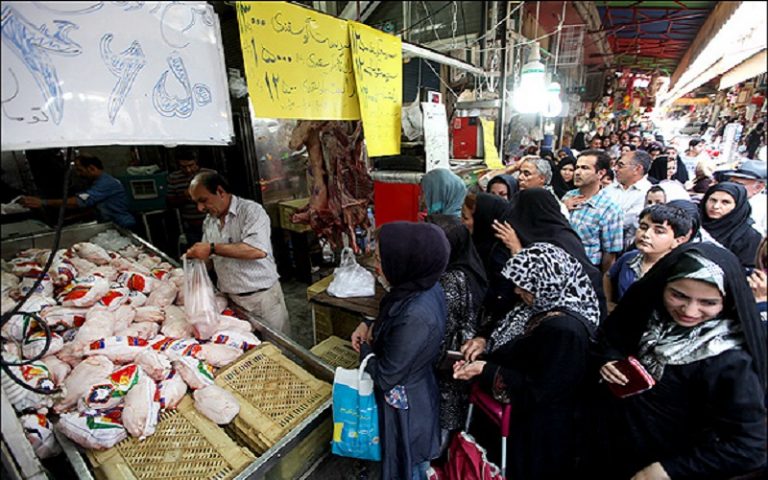
On January eight alone, 70 bodies of those killed in the protests were transferred to a hospital in Rasht, a city in northern Iran, and another 40 bodies to a hospital in eastern Tehran. Witnesses say security agents demanded 7 billion rials, approximately 5,000 dollars, from families under the pretext of “bullet money” to release the bodies.

According to these reports, the morgue of Poursina Hospital in Rasht lacked sufficient capacity, and agents demanded this heavy sum from families in exchange for releasing the victims’ bodies.

According to informed sources, judicial and security officials tell families that they must pay for every bullet used to kill their loved ones.

The demanded amounts vary by case, ranging from 700 million rials to 2.5 billion rials per bullet. At the current exchange rate, these figures are estimated at approximately 480 to 1,720 dollars.

At a time when the average monthly income of a worker is less than 100 dollars, paying such sums is practically impossible for many families.

The suffering of families who cannot afford to pay

Reports show that families unable to pay these exorbitant sums face additional pressure. In some cases, the bodies of those killed are not returned to their families, and the location where they are being held is not disclosed.

One family searched for three full days for any trace of their loved one until they were finally told that the body was in Kahrizak, a detention and burial area notorious for abuses. Because the family could not pay the “bullet money” to retrieve the body, they were forced to accept that their brother was a member of the Basij, a paramilitary force under the Islamic Revolutionary Guard Corps.

In Mahabad, a city in western Iran, it has also been reported that the bodies of two protest victims have not yet been returned to their families because they cannot afford to pay. It is said that 2.5 billion rials per bullet were demanded, and families were pressured to register their children with the state-run Martyrs Foundation.

Witness accounts of the release of Golaleh Mahmoudi Azar’s body

According to an eyewitness at the memorial ceremony for Gelaleh Mahmoudi Azar at her family home, her body was released to the family in exchange for the payment of 7 billion rials, or 5,000 dollars.

According to the witness, security forces and the IRGC buried Golaleh’s body in the same black bag and allowed the family only three minutes to see her face.

The family was not allowed to wash the body, shroud and bury it, publish funeral notices, or hold mourning ceremonies. IRGC forces and special police units were stationed with vehicles and weapons in front of the family home, and several people have reportedly been arrested during the ceremony.

One of Golaleh Mahmoudi Azar’s relatives said at the memorial ceremony that 2.5 billion rials were demanded for each bullet.

Repression of protests through economic means

The demand for “bullet money” from families is a continuation of the same policy of suppressing protests through various means. At this stage, after killing protesters, economic and psychological pressure is imposed on families to force them into silence.

This action constitutes a form of psychological torture that places families in inhuman conditions—conditions in which they must either pay to receive the body of their loved one or be deprived of the right to mourn.

Iranian Regime Official Confirms Killings at Basij and SSF Sites

Ebrahim Azizi, the head of the National Security Commission of the Iranian regime’s parliament, confirmed the shooting of people and their killing in front of Basij bases and law enforcement centers during Iran’s nationwide protests.

On Monday, January 19, Azizi said at a press conference, referring to the killing of protesters in Iran: “Some of these individuals were innocent and had no role. Some others were confronted and dealt with in front of military and law enforcement headquarters and Basij bases when they wanted to attack these locations.”

He acknowledged that thousands of people were killed during the nationwide protests, while adding that announcing the exact number of those killed by the Iranian regime’s security institutions “requires review and analysis.”

Iran’s Regime Seeking to Turn Wikipedia Into Part of Its Propaganda Apparatus

Azizi described the “figures reported by foreign media” regarding the number of those killed as “completely false” and added: “The numbers are much lower than what foreign media report.”

The Sunday Times newspaper reported on January 17 that during the nationwide protests of the Iranian people in January 2026, at least 16,500 to 18,000 protesters were killed and between 330,000 and 360,000 others were injured.

“Restoring the internet depends on security conditions”

Azizi went on to address the Iranian regime’s move to impose a nationwide internet shutdown and said that if “security conditions become suitable,” the Supreme National Security Council and the National Security Council will decide on the internet situation within “the next few days.”

Repeating the positions of other Iranian regime officials, the head of the parliament’s National Security Commission called protesting citizens “rioters” and added that the internet shutdown by the Islamic Republic was carried out with the aim of “managing riots.”

The Iranian Regime cut off the internet across Iran shortly after the start of the protests on the evening of January 8.

Since then, the Iranian people’s connection with the outside world has been severely limited, but even the few accounts, images, and videos that have been released point to the horrific scale of the systematic killing of citizens.

NetBlocks, an independent internet monitoring organization, said on January 19, referring to the passage of 12 days since the internet shutdown in Iran, that the level of nationwide internet connectivity remains minimal.

“Trump is unstable and delusional”

The head of the parliament’s National Security Commission went on to describe Donald Trump, the president of the United States, as “unstable” and “delusional,” saying that his remarks about the Iranian people’s protests were “derived from narcissism.”

Azizi attributed the widespread killing of protesters to the United States and Israel and added that these two countries were seeking “manufactured deaths” in the protests to achieve their “sinister goals.”

He threatened that the regime would “take revenge for the blood of the martyrs from the enemies.”

On January 17, Trump described Ali Khamenei, Tehran’s dictator, as “a sick man” and said it is time to seek new leadership in Iran.

Iran’s Regime Seeking to Turn Wikipedia Into Part of Its Propaganda Apparatus

A website that monitors Wikipedia content wrote that at the same time that thousands of Iranian citizens have been killed by security forces in recent days, another battle is underway in the digital sphere, with the Iranian regime trying to turn Wikipedia into part of its propaganda machinery.

The website “NPOV,” a platform focused on monitoring neutrality on Wikipedia, noted that at the same time as protesters are being killed in Iran, “pro-regime editors are working to control how these events, and Iranian history more broadly, are recorded on Wikipedia.” It wrote: “The dual strategy is deliberate. Kinetic violence silences dissent at home. Digital propaganda shapes the narrative abroad.”

According to the report, this dual strategy constitutes what Ali Khamenei, the supreme leader of Iran’s regime, calls “vindication jihad”; a soft war in the information sphere designed to rewrite reality itself.

Iranian Authorities Sentence Soldier to Death for Refusing to Fire at Protesters

According to the website, an investigation into Wikipedia editing patterns indicates a coordinated, multi-year campaign to erase the Iranian regime’s human rights record.

According to this report, based on last year’s investigation by The Times newspaper, entries have been systematically edited to downplay the crimes of the Iranian regime. Key details about the mass executions of 1988 were removed, including that the victims included women and children who were killed extrajudicially and that current senior officials were involved in the so-called death commissions. In the summer of 1988, the Iranian regime executed 30,000 political prisoners, mainly members and supporters of the People’s Mojahedin Organization of Iran (PMOI), over the course of a few weeks.

According to the report, information related to the life sentence of Hamid Nouri, an Iranian regime judicial official, handed down about four years ago in Sweden on charges of “war crimes” and “murder,” has disappeared. In addition, references to the expulsion of two Iranian regime diplomats from Albania about six years ago, due to their involvement in a bombing plot against the People’s Mojahedin Organization of Iran, have been removed.

According to NPOV, this issue matters beyond Wikipedia; when artificial intelligence systems are asked about Iranian leaders or events, they often rely on these manipulated articles. This propaganda does not remain confined but flows into a broader information stream that millions of people depend on daily.

The website, referring to “Memory Manipulation” through “abrasive deletion” on Wikipedia, wrote that small edits are made over time that gradually eliminate entire sections.

The report points, among other things, to the removal of entire paragraphs from the page on nationwide protests in Iran by “pro-regime editors,” including a prolific editor with the username “Mhhossein.”

The report refers to two active pro-regime editors on Wikipedia:
“Two editors exemplify the scope of pro-Iran editing: Mhhossein and Iskandar323.”

Mhhossein functions as a historical gatekeeper. He has edited the Ali Khamenei page 217 times—more than any other user—removing information about Iran’s nuclear program and protests.
“Mhhossein functions as a historical gatekeeper. He has edited the Ali Khamenei page 217 times—more than any other user—removing information about Iran’s nuclear program and protests.”

NPOV added: He is the top contributor on Assassinations of Iranian Nuclear Scientists, 1981 Iranian PM’s office bombing, and Ali Khamenei’s fatwa against nuclear weapons.

Accordingly, Mhhossein has approved state media sources regarding nationwide protests in Iran and removed information from opposition media outlets.

Iskandar323 operates as a battleground editor focused on active conflicts alongside his edits on past events, editing on the 1988 mass executions as recently as 18 January.
Regarding the activities of Iskandar323, including the 1988 mass executions of political prisoners, the website wrote: “Iskandar323 operates as a battleground editor focused on active conflicts alongside his edits on past events, editing on the 1988 mass executions as recently as 18 January.”

The Iranian regime’s pressure campaign on Wikipedia

“NPOV” wrote about the nationwide protests of January 2026 that since the start of the protests, “Since protests erupted in December 2025, Wikipedia’s 2025–2026 Iranian Protests page has drawn from over 400 sources.”

Regarding the Iranian regime’s “authoritarian information warfare” surrounding the nationwide protests, “NPOV” wrote:
“There’s violence in the streets to silence dissent in real time. Then come the internet blackouts, preventing real-time documentation and cutting off the flow of evidence to the outside world. And once the immediate crisis fades from international attention—once bodies are quietly buried and the news cycle moves on—the propaganda operation moves in to systematically rewrite what happened.”

The website emphasized that the Iranian regime not only kills protesters but also erases the evidence that shows they ever existed.

According to the report, Wikipedia’s open-editing model, an encyclopedia trusted by millions of people, has been turned into part of the regime’s propaganda apparatus.