Home Blog Page 284

Raisi’s Crimes As Judiciary Chief and Before

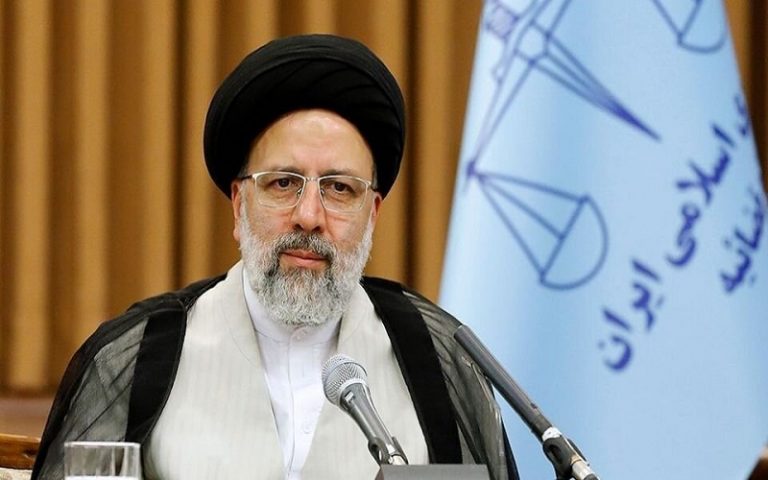
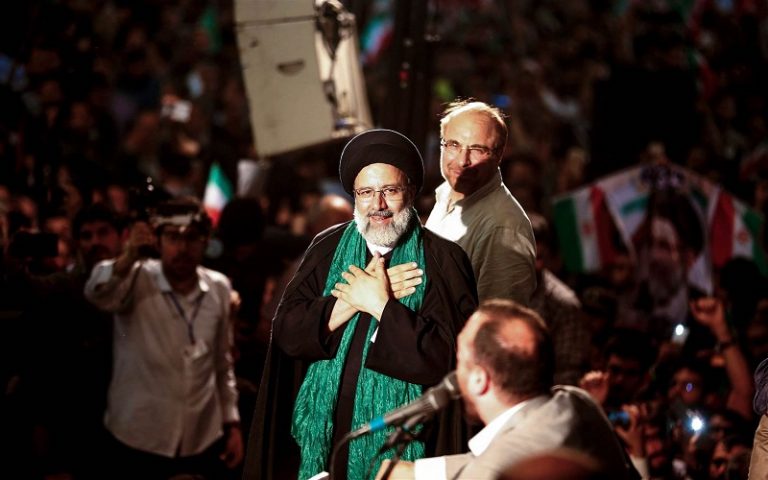
Ebrahim Raisi was the victor of the Iranian presidential election last Friday, rather predictably given that he was the favorite of Supreme Leader Ali Khamenei. Given his new role, we’ve decided to look back at his history with the mullahs.

Judiciary chief: 2019-2021

In just two years, Raisi has become infamous for his crackdown on protesters, particularly those who took part in the November 2019 uprising. Some 1,500 protesters were shot dead in a few days, while many thousands more still languish in prisons under torture. For this, Raisi was sanctioned by the US Treasury.

There is much evidence that women suffered much harsher punishments under Raisi, with at least 30 women being executed and 24 being sentenced to hundreds of lashes each. One of the women being lashed was 80-year-old Salbi Marandi, who had merely been inquiring about the status of her imprisoned child, who was left paralyzed.

In addition, physical and psychological torture of political prisoners increased under Raisi, with Lamia Hamadi burned with electric prods and Massoumeh Senobari beaten savagely resulting in many broken bones. They are denied medical treatment and subjected to long periods of interrogation, in order to extract confessions.

Furthermore, the judiciary has been keeping political prisoners behind bars following their sentences by filing new cases against them, as was the case with Golrokh Iraee Ebrahimi, initially arrested for writing a fictional story about the evils of stoning that was never published, and Atena Daemi who was sentenced to a further two years in prison.

While Raisi has been targeting protesters, he’s also been abusing the families of martyrs who gather to remember their loved ones. This includes the families of at least four martyrs of the November 2019 uprising – Shabnam Dayani, Azadeh Zarbi, Ali Tamimi, and Farzad Ansarifar – killed by security forces. Human Rights Watch reported that plainclothes officials attended public and private memorial services for martyrs and didn’t allow relatives to see their relatives’ bodies.

1988 massacre of 30,000 political prisoners

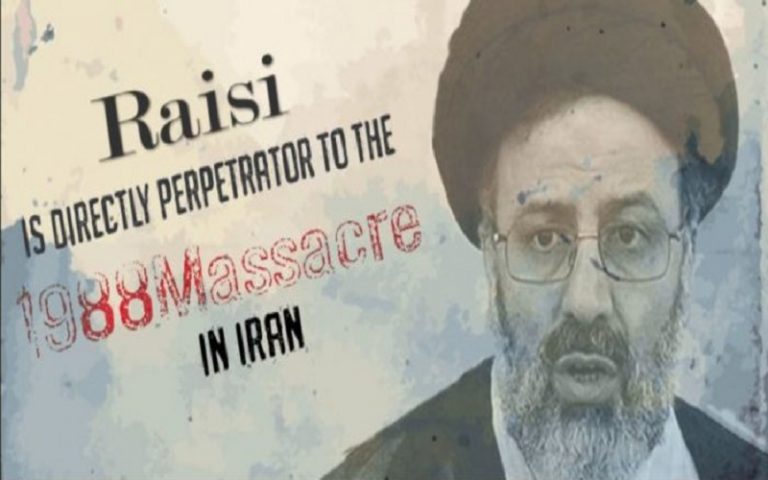
As a member of the Tehran “death commission”, Raisi personally sent thousands to their deaths for political crimes after one-minute show trials. Like many of those who sat on the commission with him, he has expressed pride in his role.

Other roles within the regime that Raisi held between the massacre and 2019, included:

  • Tehran’s Revolutionary Prosecutor
  • Head of the National Inspectorate
  • First Deputy of the Judiciary
  • Special Prosecutor for the Clergy, Chairman of the State Television Supervisory Council
  • Attorney General
  • Custodian of Astan Quds Razavi
  • Head of the Judiciary

Invalid Votes Show the Truth of Iran’s Political Atmosphere

Despite all the claims of the Iranian government about a great win and people’s participation in the 2021 presidential election, the state-run media could not hide the blow on the government and the people’s ignorance and boycott of this election. A blow which its effects will become visible in the next month, widening the gap between this government and the people, who have lost their trust in this regime.

Even the regime’s main social base which the officials called the ‘Mostazafin’ (the oppressed) is not supporting this regime anymore as the outcome of this election showed and the state-run media admitted.

State-run daily Etemad Online in a short article entitled, ‘Why do officials ignore the non-participation of 30 million Iranians? / The officials of the Islamic Republic must declare a state of emergency among themselves’ on June 20, 2021, wrote:

“Four years ago, in such days, more than 41.300 million people participated in the presidential elections. In that election, 56 million eligible voters cast their ballots. Yesterday, however, the number of voters dropped to less than 29 million; a huge drop of 12 million people; At a time that the number of eligible people has increased by 4 million.

“In other words, in the 2017 presidential election, 15 million eligible people did not participate, but in the 1400 election, this number has doubled to about 30 million.

“Thus, for the first time in the history of the Islamic Republic, the participation rate fell to half of the eligible and a meaningful number of 48.8% was recorded. Also keep in mind that the presidential election was held at the same time as the council elections, which is inherently participatory due to its local nature.

“The point is that a significant proportion of voters in the presidential election voted white or invalid. No one could have imagined that one day in the Islamic Republic, the invalid ballots with 14% would take second place in the elections.

“In such circumstances, the officials of the Islamic Republic must declare a state of emergency among themselves and investigate immediately and without prejudice why more than half of the people did not participate in the elections.

“It would be a great strategic mistake to ignore the tens of millions of Iranians who did not vote or give a white or protesting vote and to ignore the fact that many previous voters did not go to the polls this time. Listening to the voices of the silent (people) and the protesters is not a moral duty that is necessary for the rule and the survival of the rule.

“Doubling the number of voters who boycotted the ballot box and the reaching of invalid ballots from 3% of the previous election to 13% is a loud voice that must either be heard and respected or wait for the disastrous consequences.” (State-run website Etemad Online, June 20, 2021)

And with similar content, two other state-run outlets while shocked about the result of the election showed their fear and wrote:

“More than 3.7 million people did not write the names of any candidates on their ballots in the 13th presidential election. They went to the polls and actually ran in the election but did not find the candidate they wanted.

“The ‘undecided’ people, or those who wanted to run but did not have a preferred candidate, had a very significant number of over 50% of the turnout since the announcement of the Guardian Council.” (State-run daily Nameh, June 20, 2021)

“None of the statistics extracted from the electoral contests were as shocking as the figures of the invalid ballots. The number 3,726,870 indicated that a significant portion of the population did not consider any of the candidates eligible for the presidency of Iran. An issue that has not been seen in any of the last 12 rounds of elections.

“But one of the remarkable points of the results was that the second person in this election was not one of the candidates, but more than three million invalid votes and Nasser Hemmati also fell behind Mohsen Rezaei and became the third person. Some say that if this number of invalid votes is deducted from the total turnout, the turnout will be significantly lower than what was announced. At the same time, this number of invalid votes has a clear message to the political atmosphere of the country.

“In a way, it shows that the more than three million people who decided to run in the elections for any reason did not accept any of the candidates in this scene. This number of invalid ballots was unprecedented in the Iranian elections.” (State-run daily Hamdeli, June 20, 2021)

Officials Acknowledge to 50% Poverty Rate in Iran

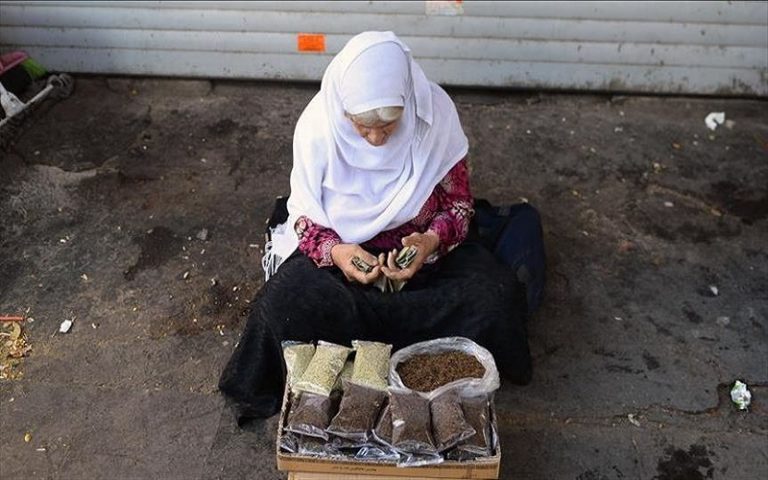
The Iranian officials admitted that up to half the population lives in poverty, which is horrifying in itself, let alone when you consider that the mullahs deliberately underestimate any of the statistics that make them look bad.

Despite their attempts to keep the figures under wraps, the data does eventually filter out through state-run media and the comments of government officials.

For instance, parliament speaker Mohammad Bagher Ghalibaf said in 2017 that 96% of the country is poor, while Minister of Cooperatives, Labour and Social Welfare Mohammad Shariatmadari said earlier this year that most of the population require subsidies that the population below the poverty line has doubled since 2017. This doubling comment was echoed by the head of the Tehran Chamber of Commerce, who said that rising inflation had widened the class gap and increased the percentage of the population under the poverty line.

Meanwhile, the state-run Hamdeli daily wrote on June 12: “Most Iranian households are currently living in absolute poverty… According to the United Nations, in 2020, incomes below $2.19 per person per day will push people below the absolute poverty line. This means that today, every person in Iran who has less than 500,000 rials (about $2) to live is considered below the absolute poverty line.”

The definition of absolute poverty is that someone is unable to provide basic needs, like food, shelter, and medical care for themselves and their families.

The head of the Supreme Chamber of Trade Unions said in May that a 39% increase in wages this year, would only cover 10-15% of living expenses. The problem is that this only relates to employed people and says nothing of the issues faced by the vast unemployed population who have no way to earn a living.

This shows us that the ruling system in Iran has stolen from the people and distributed the money amongst insiders and affiliates. This will not improve while the mullahs are in power and the people must overthrow the mullahs if they want change.

The Iranian opposition wrote: “Poverty has caused many people, especially the educated and skilled, to leave the country and many are thinking of going abroad. Those who lack such an opportunity must make ends meet with empty tables. This is due to institutional corruption and a rent-seeking economy in Iran under the mullahs’ regime, in which state entities, with the regime’s support, have been able to reap enormous wealth by plundering the country’s natural resources and people’s assets.”

World Reacts to Raisi Presidency

In the Iranian elections last week, frontrunner Ebrahim Raisi emerged as the victor, and the world has been reacting to the news of his presidency.

He was congratulated by Hezbollah leader Hassan Nasrollah, Syrian dictator Bashar Al-Assad, and former Iraqi prime minister Nouri Al-Maliki, but much of the rest of the world has reacted in horror at his appointment.

The Secretary-General of Amnesty International Agnès Callamard said in a statement: “That Ebrahim Raisi has risen to the presidency instead of being investigated for the crimes against humanity of murder, enforced disappearance and torture, is a grim reminder that impunity reigns supreme in Iran.”

She pointed out Raisi’s role in the 1988 massacre of 30,000 political prisoners and his crackdown on human rights as Judiciary Chief as reasons for concern as urged the International Criminal Court to investigate him for “his involvement in past and ongoing crimes under international law”.

While German human rights commissioner Bärbel Kofler tweeted: “It is concerning that the elected president has until now not clarified his own past or distanced himself clearly from human rights abuses. Human rights are non-negotiable, and Iran has committed itself internationally to adhering to them. The voice of the people in Iran who are calling for freedom and human rights must be heard!”

At the same time, several media outlets were also reporting on the 1988 execution of political prisoners, citing much information that was uncovered by the People’s Mojahedin Organization of Iran (PMOI/MEK), specifically the burial locations of the victims. Raisi was one of the “death commission” members who subjected MEK supporters already serving prison sentences to death following a show trial.

Seven United Nations’ Special Rapporteurs published an open letter in 2020, where they called for an investigation into the massacre. They initially wrote to Tehran asking them to investigate, but received no response.

The US has already blacklisted Raisi and other officials involved in the massacre, while the EU imposed sanctions on him for human rights violations.

The Iranian opposition wrote: “World powers are now faced with a dilemma. They are negotiating with a regime whose new president is on their blacklists and is notoriously renowned across the world for his human rights abuses. Anyone sitting at the negotiation table with them will be directly representing him. There is no longer a façade of “moderate” figures to hide behind and justify concessions to the regime. They will have to decide whether they will live up to their own values or continue to deny the regime’s murderous nature for the sake of their political and economic interests.”

Iran Media Reports on Economic Crisis

Iranian state-run media ran several pieces on Saturday, just one day after the heavily boycotted presidential election, about the economic crises that keep getting worse.

The Setar-e Sobh wrote that most Iranians suffer from “poor economic conditions”, with 25 million or 30% living below the poverty line. The news outlet explained that the people’s living conditions have gotten worse over time.

Of course, the economic crisis was caused by the officials’ corruption and plundering over the past 40 years. The trouble is that new President Ebrahim Raisi has no intention to resolve the issues because he is part of the problem.

The Resalat daily wrote: “Improper sale of debt securities, compensation of budget deficit from pledged assets, hasty transfer of the country’s infrastructure industries to known and unknown persons, and above all, reduction of public participation and [officials’] plundering of national wealth have destroyed the public’s trust. It has also caused the greatest damage to the system, and its effects last for years.”

This again shows that the ruling system is at the heart of the country’s financial problems and that officials from within the system would not fix it.

Meanwhile, the Aftab-e Yazd daily wrote about how the mullahs’ institutionalized corruption wrecked the economy, stating that the political economy model endorsed by the mullahs gives some politicians “many advantages” and “tremendous power”, with them “abusing their responsibilities”.

The article read: “These officials, to maintain their power and political advantage, need to blame the people’s poor situation and underdevelopment on internal and external enemies. They blame their inefficiency and totalitarianism, and monopoly in all areas, especially in the field of bread, housing, and employment, on enemies.”

The Iranian economy is dominated by the Revolutionary Guards (IRGC) and officials profiting from plundering the people, even though the mullahs and their apologists attempt to blame international sanctions.

Aftab-e Yazd wrote: “No one dares to make the cycle of market and capital prosperity easy. Because the financial and economic mafias do not allow anyone to use the science of economics for using the amazing and powerful potential in Iran… The seizure and control of resources always requires inflammation and tension in domestic and foreign policy, and undoubtedly reflects the unfavorable economic situation and instability and calm in international relations, and social, cultural, and political policies are born from this strategy.”

The Iranian Resistance explained that the mullahs’ malign policies, including terrorism and nuclear weapons, are destroying the economy.

Ebrahim Raisi, Iran’s President With Less Than 10 Percent Support

June 18, 2021, marked a turning point in Iran’s history. This event as the regime’s state media introduced it was the formation of the ‘dichotomy between voting and not voting.’

This dichotomy was a clear sign that the Iranian society with all its strata did not accept and tolerate this totalitarian regime anymore.

Fearing this result the regime’s supreme leader Ali Khamenei asked the people before that day to participate and not huff with the ballot box.

“Huffing with the ballot box does not solve the problem. People’s complaints are valid, but their conclusions are not correct, everyone must participate in the elections.”

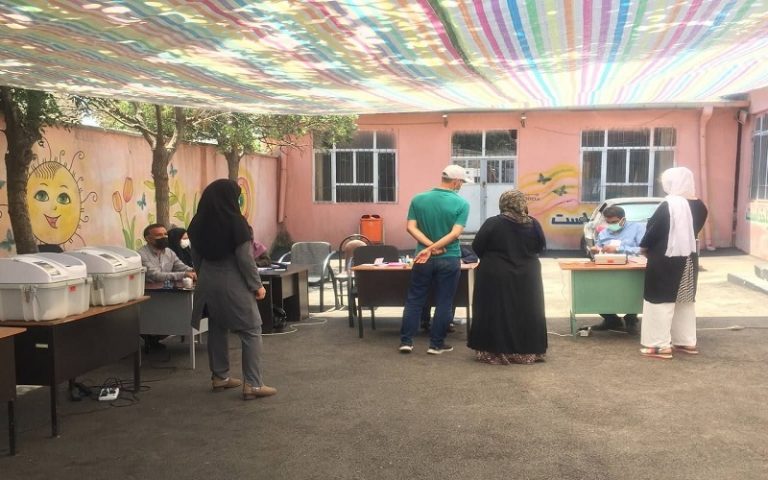
The democratic opposition claims the authorities have exaggerated the turnout at the polls by a factor of five, while the Iranian Resistance’s reporters published videos from deserted ballot stations.

And this paradox becomes real when the ‘elected’ President Ebrahim Raisi asked the people, “Everyone is disappointed and has difficulty participating in the elections for any reason. I adhere to everything I said in the campaign.”

At the end of the day, Fars News Agency unexpectedly announced the participation of 22 million (about 37%) by 7 pm.

However, the boycott of the elections by the Iranian people reached a level where even the engineering of quadrupling the votes cast in the ballot box could not announce the percentage of participants above 50%. This means that even with these engineered figures, more than 50% of the Iranian people did not participate in the elections.

The actual figure is less than 10%. And Raisi is a 10% president. The number of invalid votes that is higher than the announced votes of the other candidates in this sham election speaks for itself.

It is not uncommon to declare victory in an engineered election and a totalitarian government without the supervision of international organizations. By displacing 11 million Syrians and killing more than half a million Syrians, Bashar al-Assad held elections on the bloody ground and declared himself the sole winner with 95.1% of the votes.

Now Raisi is the most unsupported and fragile president in the regime’s history:

“There was a lot of talk during the election and bad things were done by some centers, especially the Guardian Council. But it was over. The number of invalid votes shows the seriousness of the people in conveying their message; But let us not complain. Do not search for the culprit. Let us not make fruitless complaints. Most political parties came to increase participation. But it did not happen. Most people did not want it.” (State-run news agency SNN, June 19, 2021)

The truth is that with Raisi as the president Khamenei has removed that insulation layer between the people and himself. From now on him and his president must face the unrestrained fury and protests of the people which will lead to their overthrow undoubtedly.

The time for hiding behind alibis like the incompetence of the “Government of prudence and hope” (Rouhani) and “Western liberals” and playing the role of the government’s opposition and carrying about the people’s lives is over.

The time of the regime’s happiness will be over soon and real contradictions and conflicts with the people will show themselves.

Mohammad-Ali Abtahi a government cleric: “Instead of traditional protests, we know that the job of Raisi is very difficult. Also, inside because of the lack of good company. And abroad due to undesirable cooperation.” (State-run news agency SNN, June 19, 2021)

As one of the regime’s elements Mehdi Jamshidi, a faculty member of the Department of Culture and Research, Institute of Culture and Social Studies, Institute of Islamic Culture, and Ideology, confessed:

“We got votes from a society that was ‘immersed in itself’ and had lost its ‘political trust’. A society whose heart was full of ‘living pains’ and whose ‘cry’ was broken in the throat. Today, even a ‘small mistake’ is a ‘big mistake’; A ‘slip’ poisons the political confidence of the people and intensifies divisions and discontents.

“More than ever, we need ‘miniature precision’ and ‘narrow-minded sensibilities’, and we should not allow ourselves to ‘make mistakes’. This opportunity is ‘historic’ and not easily obtained; We paid exorbitant costs to reach this destination.

“Repeating the experience of Ahmadinejad’s downfall is the most dangerous and deadly thing that can happen. The caravan is crossing the ‘neck’ and needs a lot of care and attention. We must instill in ourselves that we have not the ‘right to make mistakes.’

“The era of ‘trial and error’ is over, and we must get out of these ‘vicious circles’ and not repeat any bitter experience ‘again’ and ‘many times’.” (Bultan News, June 19, 2021)

In the new coordinates of Khamenei and his president, there is no possibility of making mistakes. The first mistake can be the last; because the Iranian society proved on 18 June that it seeks its change of destiny not through the ballot boxes of this government, but outside it.

Raisi has become the head of a government that is based on the crater of a beating volcano by the people’s discontent and fury.

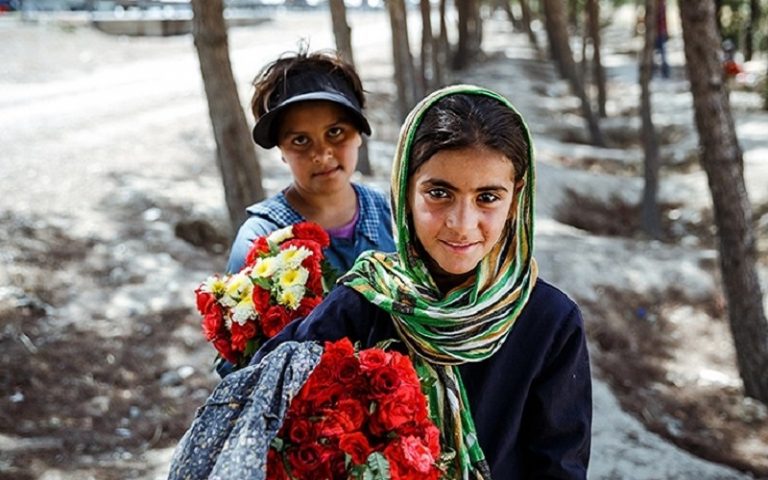
Iran: Multi-Million-Rial Cakes and Child Laborers

There is no rational link between multi-million-rial cakes and child laborers, who endure unimaginable sufferings and humiliation to makes ends meet. However, officials in Iran sarcastically honored the international day for the end of child labor by holding an exhibition of multi-million-rial cakes.

Iranian officials spend national currency on publicity shows while millions of these children must search garbage bins for finding something to eat or sell. According to a survey adopted by Shahraranews website on June 12, 2020, “There are between three to seven million child laborers in Iran.”

This is while the international community celebrated World Day Against Child Labor on June 12. However, the number of this phenomenon is increasing in Iran every day. Today, garbage-collector, homeless, addicted children have become an undeniable part of the streets and alleys in almost all provinces and cities.

Furthermore, suicide is a prevalent story among these teenage boys and girls. No day goes by without heartbreaking news about one or a couple of children committing suicide, particularly among low-income families. Recently, 13-year-old Reza Fiuji, who attended a TV program five years ago, committed suicide.

However, Reza was not the sole child laborer who decided to end his short life. Other child laborers are experiencing a gradual death due to the exploiting policies of state-backed institutions like municipalities. They have been deprived of essential rights and spend their nights in places like forced labor camps.

Indeed, officials line their pockets with the sincere work of these low-price workers, who honestly do their best to earn meager money and feed their family members. In such circumstances and regarding rampant poverty and growing inflation, many child laborers see suicide as the only solution to end their sufferings.

Multi-Million-Rial Cake, An Insult to Child Laborers’ Griefs

Recently, in a message addressed to journalists, Supreme Leader Ali Khamenei advised them to provide “good, useful, and hopeful reports.” He explicitly ordered state-backed news agencies and the entire propaganda apparatus to conceal society’s real pains and portray a fake image from Iran.

Following the Supreme Leader’s order, the semiofficial ISNA news agency published a report about the exhibition of multi-million-rial cakes in Tehran on June 10. At the exhibition, organizers showed a 150 million rials [$625] cake called “Child Laborers.” In other words, the cake was around five times a simple worker’s minimum salary, based on the 2021 labor law adopted by the Parliament (Majlis).

Simultaneously, government agents mercilessly attack, beat, and arrest these little breadwinners. Indeed, the corrupt suling system is celebrating the day against child laborers inside luxury halls while oppressed children must endure harassment and humiliation on the streets.

The government pretends such publicity stunts as a sign of progress while these shows are only an expression of the institutionalized gap inside the Iranian society. They are further fueling public anger over the entire ruling system that squander national assets on supporting extremist proxies in the Middle East, constructing modern hospitals for other nations, advancing ballistic missiles’ ranges, and making nuclear weapons.

Iran Government Lavishes Money on Itself As the Nation Grips With Poverty

“I say that the Islamic Consultative Assembly (Iran’s parliament) is slowly reaching the Martyrs’ Square. My brother, we do not have any schools in this country, and forty years after the revolution, many of our children are still studying in sheds.

At that time, the parliament increased its construction budget day by day. The representative should defend the rights of the nation, not make his office bigger and bigger. You should now go to the building of all the governorates. For the second time after the revolution in some of the provinces as I know, (they are reconstructing the buildings). In the central province, in the Hormozgan province, for several times they have (reconstructed) the governorates, the governorates are becoming palaces, so we are expanding the palaces of Mu’awiya I (the founder and first caliph of the Umayyad Caliphate serving from 661 until his death), while our people’s needs are something else.” (Mehdi Pazouki, Economist, State-TV Channel Ofogh, June 5, 2021)

This short text is exposing the corruption of Iranian government officials which has reached unimaginable stages so that many of the officials are expressing their fear about the consequences of such behavior and the people’s fury. Just a few parameters are enough to show this situation.

Liquidity overflooded the country’s economy

“The volume of liquidity in the country has increased from 160 trillion tomans to 350 trillion tomans during the last three years. This means that more than 50% of the total liquidity in the country’s history has been created during the last three years, which is considered an unprecedented record in the world.” (Mehr news agency, June 7, 2021)

Iran on the verge of ‘super inflation’

“The analyses of some experts show that the situation can be even more difficult. These forecasts emphasize that the Iranian economy is now ready for three-digit inflation; a rate that was experienced only during the years of occupation of the country in World War II.” (Ministry of Industry, Mine and Trade website, June 9, 2021)

A report on the bankruptcy of the economy

“Average economic growth of the country during the years 1997 to 2004, from 2005 to 2012 and 2013 to 2019 has been constantly deteriorating and has decreased from 3.5% to 2.17% and 0.63%. The growth of investment is worse than economic growth, and in most years, it has been negative, which will destroy the country’s productive capacity for many years and will seriously damage the country’s employment.

“Inflation in Iran has had the worst performance, while the problem of inflation is now solved in most countries of the world. The change in the exchange rate has also shown the deterioration of the national currency. The exchange rate has increased almost 5.7 times from 2017 to 2020 and has grown by about 466 percent.

“People’s purchasing power has also been steadily declining. For example, in 2019 and after 17 years, it has reached less than the purchasing power index of the people in 2002. Money growth has increased uncontrollably since 2018 and has experienced growth rates of about 50%, and unfortunately, its growth in 2020 has reached 7.61%.

“The labor force participation rate in Iran in the last 10 years has been in the range of 9.36 to 5.44 percent, which is very low and indicates that a large part of the population is not economically active and cannot play a role in increasing the country’s economic production.” (Report by the Macroeconomic Committee of Iran’s Expediency Council)

Political misery worse than economic misery

The people’s problem is indigence, not the political factions. Now, the most important thing in the economic arena is to eliminate unemployment and curb inflation. The reformists have lost their popular base because the reformists were mainly elites, and the elites supported this faction, but now even the elites do not support this faction.” (Eghtesad-e-Pouya, June 7, 2021)

Iran’s Presidential Election and the Regime’s Diminishing Security

Iran’s 2021 presidential election has become a nightmare for the government, a nightmare created by the non-participation of the Iranian people. Despite all its claims of the ‘great’ participation of the people, the people have boycotted this election which was visible days and weeks before the election day in their posts and messages on the internet and the social media, especially by the mothers of the killed people of the November 2019 protests.

The regime, fearing the consequences of its sham election which primarily will become a security issue for the regime and endanger its existence did everything to force the people to participate.

But this time everything is different, for the people, both factions of the regime, the so-called reformists and the principlists are dead because years have taught them more than books.

And now the regime is forced to lie on the bed which it has made for itself. A bed without security and support of the people, which is calling for the end of this regime.

Putting the videos of the voting stations published by the regime’s main news agency IRIB News, along with those published by the regime’s main opposition group the MEK will show us a clear image of the situation and the people’s election boycott.

But this can be seen and read from the many speeches of the regime’s officials and the elements who begging for the people’s participation, and if this not happened, the regime’s security will be in a very bad situation. Below are some of the many samples showing the regime’s fear.

Mohammad Javad Zahrii, Director General of Islamic Propaganda of Qazvin Province said to the people, “Despite these grievances, we must know that each of our votes provides security and political authority for Islamic Iran in the region.” (Mehr News Agency, June 18, 2021)

Khabar Online on June 18, 2021, fearing the situation wrote: “The March 2020 election, which saw a turnout of less than 50 percent, raised concerns that this election might repeat that bitter experience too. That is why in recent days, the elders and officials of the system have repeatedly invited people to participate in the elections and to go to the polls. A presence that can change the election scene in favor of what the people want and be an important signal across borders.”

Then this media in a table collected the speeches of some of the regime’s officials which is showing the regime’s bad situation:

Javad Arin Manesh, principlist: “In the whole country, I predict about 40 to 42% (participation). In metropolitan areas, we will have the lowest participation rate in Tehran, and after that in the centers of large provinces such as Shiraz, Isfahan, Mashhad, and Tabriz, the participation rate is expected to be about 30%.

“You can even see that Mr. Khatami invites the people to participate. It does not call for the support of a particular candidate and wants to send a message to the public that the reform process has no representative in the electoral arena, but they should not be angry with the ballot box. However, the outcome of the election is almost pre-determined and Mr. Raisi’s presidency is almost certain.”

Mohamad Ali Abtahi, reformist: “I do not have access to polls, and I think there have been changes in them since yesterday and today, at the same time I think that the ​​participation is below 50%.”

Morteza Alviri, reformist: “Low participation indicates that the republic has been weakened and the people do not support to rule. I am not a polling center, but no doubt less than 50% will participate.”

Ali Tajernia, reformist: “So far, according to opinion polls, the turnout is below 40% or slightly above 40%.”

Mansour Haghighatpour, principlist: “Officials from all political currents, regardless of party or group interests, must invite the people to participate. The diversity of candidates is indeed reduced, but it is still not the case that people will not be able to choose their preferred candidate from the few candidates that remain or will remain. So, God willing, the people will come and cast their votes in the ballot box.”

Mohamad Taghi Rahbar: “The presence of the people should be colorful so that the enemies do not take advantage of this issue and do not increase their coercion.”

Lotfollah Furuzandeh, principlist: “My request to the people of Iran is that with all tastes, styles, and thoughts, given that we are all Iranians and we are interested in Iran and we want our country to be in security and peace and the ground for growth to be provided for it, all people from different currents the left, the right, the independent, etc. having a wide participation in the upcoming elections.”

Ali Motahari, independent: “The high turnout in this election has two positive effects; First, it will send an important message to the Western world and our neighbors. In other words, it has a message for the world, and it will certainly be effective in lifting sanctions and reviving the JCPOA more quickly.”

Mahmoud Vaezi, the head of the Office of the regime’s President: “I hope that the dear people will feel more responsible than before in these very sensitive internal and external conditions and have a wider presence at the ballot box and know that the country belongs to them and for the development of the country and the peace and tranquility of the country and the future of their children, they must decide. We started democracy forty years ago and we are moving forward step by step. There may be violations, but we should never be angry with the ballot box, and we should not be disappointed.”

Fars news agency quoting Abdol Jawad Tohidi Moghadam the Governor of Neka: “Maximum presence in the elections will thwart the conspiracies of the enemies, and we must try with maximum presence to witness the manifestation of another day of God.”

Shabestan news agency quoted one of the regime’s clerics Peyman Dalvand Pour and wrote: “The widespread presence of the people in the elections thwarts the conspiracies of the enemies.”

Shabestan news agency quoted Seyed Ali Mousavi a cleric and wrote: “Today, due to the presence of each individual in the elections, the Islamic system will be strengthened, and the enemies will be weakened.”

Pool News quoted Ahamd Jannati Secretary of the regime’s Guardian Council and wrote: “As long as these people are on the scene, the enemy can do nothing.”

This cleric begged the people and said: “I have three requests, the first participation, the second participation, the third participation.”

Hassan Rouhani the regime’s president: “This election is very important, and I ask the people not to pay attention to the problems and issues that existed in the pre-registration stages of the candidates and to vote for their desired candidate by going to the polls.” (State-run website Tabir-va-omid, June 18, 2021)

Presidential candidate Mohsen Rezaee: “The presence of the people in the elections will strengthen Iran’s authority and security, and the people with their presence will vote to build the future of the country.” (State-run website Eghtesad Online, June 18, 2021)

Ali Malek Shahkouhi commander of the Nineveh IRGC Corps in Golestan province said: “The people will disappoint the enemies with maximum presence and participation at the ballot box.” (Tasnim News, June 18, 2021)

Abbas Akhoundi former Minister of Roads and Urban Development: “I am concerned about Iran, and Iran is in a very dangerous situation, and a series of malicious people are seeking to divide the Iranian nation and even some kind of separatist actions. The presence of the people at the ballot box is very effective in this regard, and in fact, we must consider Iran and put aside our egos.” (Jamaran News, June 18, 2021)

Seyed Esmail Mousavi the Friday prayer leader of Ramhormoz: “Elections guarantee national security and the power of the country.” (ISNA, June 18, 2021)

Ali Motahari former MP: “I hope that the participation will be high, and the people will participate, which will have good effects for the country. It has both foreign and domestic effects and will be a message to the world and is effective in lifting sanctions and reviving the JCPOA.” (State-run website Nameh, June 18, 2021)

Ahmad Alamolhoda: “Those who do not go to the polls, if they do not have a religious or customary excuse, they also vote, but they vote for the enemy; Vote for the hypocrites. Are you ready to vote for (the Mojahedin)? If you did not vote in this election and did not have an excuse, then you voted for the enemy.” (State-TV Astan-e-Quds, June 18, 2021)

Yousef Tabatabai Nejad: “Every not given vote will help the enemy, we are now in two phases. We say we should vote; The enemy says we should not vote. So, I want to say one thing, not intentionally; They deliberately do not want to oppose or vote for the enemy. But in the end, the result of their work is that if they do not vote for this side, it means that they vote for the other side. That is the nature of their work.” (State-TV Esfehan Channel, June 18, 2021)


Iran’s Presidential Election Changes Nothing in Economy

This article is part of our series that explores liquidity in Iran and its harrowing impact on various elements like the country’s financial systems, citizens’ livelihood, industry, and agriculture.

On June 18, the Islamic Republic is supposed to hold the thirteenth Presidential election in post-1979-revolution Iran. In the past part, we discussed candidates’ ‘economic plans and promises,’ noting that they could not care less about financial resolutions.

As one of the major dilemmas in Iran’s economy, we scrutinized liquidity and its horrible impacts on citizens’ livelihood. Indeed, candidates do not have any initiative to rescue the country’s finance. This is another reason, which places nationwide apathy on the horizon.

These days, there are circulated many videos published by ordinary people, particularly the families of the November 2019 protests’ victims and low-income classes, openly calling their fellow citizens to boycott the election. Rather than an election, they name the event ‘selection’ whose winner had been specified priorly.

“The current rulers merely think how to line their pockets with people’s savings and national reserves,” a citizen frankly said. “All of them have been accused of numerous corruption and embezzlement cases.”

“Our vote would change nothing, and this ‘selection’ is only a publicity cynical stunt to justify the ayatollahs’ illegitimate rule,” a citizen said in an audiotape posted on social media.

Furthermore, high-ranking officials plainly underscore this reality that the government only pursues to justify its rule through the election while it lethally silences any economic demand and protest, observers say.

On the other hand, while the candidates avoid providing financial plans, Sayed Nasir Hosseini, the Supreme Leader’s representative and Friday Prayer Imam of Yasouj in Kohgiluyeh and Boyer Ahmad province, believes that participation in the election is a solution for economic dilemmas. “Refusing to participate in the election will increase economic problems,” Tasnim news agency quoted Hosseini as saying on June 10.

“Dirty money is circulating in the candidates’ headquarters. The same money is the source of the huge volume of banners and posters and the million-dollar trip with the rental of a private plane,” tweeted Abdolnasser Hemmati, the former governor of the Central Bank of Iran (CBI) and a 2021 Presidential election candidate, on June 11.

However, the former CBI governor also ignored to provide a comprehensive plan for Iran’s bankrupted economy. He only used information to attack his rivals and take personal advantages. Indeed, he is a key part of the corrupt system that has brought massive financial crises like inflation, liquidity, and high prices to the people.

“If I took office, I would introduce Mr. Rezaei to [Judiciary Chief Ebrahim] Raisi as a disrupter for the country’s economic aspect,” said Hemmati during a televised debate addressing Mohsen Rezaei, the former chief of the Islamic Revolutionary Guard Corps (IRGC) and a Presidential election candidate.

“Mr. Mohsen Rezaei and Mr. Saeed Jalili; you do not know even primary economic issues in the country,” Hemmati added blaming Rezaei and Jalili, the former Supreme National Security Council secretary, for their ignorance.

In response, Rezaei threatened Hemmati with treason allegations. “You, Mr. Hemmati, have accompanied U.S. sanctions. If I took office, I would ban you from departing the country and bring you and several other officials in this administration to trial,” Rezaei said during the same televised debate.

Meanwhile, Rezaei pointed to a deep rift in society. “Today, there is neither relation between the government and economy nor between the people with economy,” he added.

However, while economic dilemmas are the people’s main concern, authorities follow other grips through the coming election. Ahmad Alamolhoda, the Supreme Leader’s representative, and Friday Prayer Imam of Mashhad in Razavi Khorasan province, unveiled authorities’ actual purpose from holding the election. These days, while he does his best for his son-in-law Raisi’s Presidency, he admitted to the Islamic Republic’s need of the election for justifying its terrible ruling.

“They attempt to prevent us from participating in the election. Western states and the arrogant movement try to pretend ‘[apathy] as an anti-establishment referendum if the people did not participate.’ They would like to say that the people are no longer loyal to the state… In fact, they propaganda that the [Islamic Republic] had reached the end of the rope and finished,” Alamolhoda said.

Sayed Ahmad Khatami, a member of the Assembly of Experts Presidium, highlighted the Iranian government’s turmoiled condition reckoning that the participation in the election is the sole path for extending the ayatollahs’ ruling system.

“Considering current circumstances, participating in the election is a religious duty for the people. Additionally, it is a rational duty for the people,” Khatami said on June 15.

Furthermore, Sayed Abolhassan Navvab, the dean of University of Religions and Denominations, described participating in polls as a security object. He implicitly admitted that the people’s vote is worthless.

“In such status quo, we need the highest amount of people’s participation for strengthening our ‘national’ security. It does not matter who would be the winner. If dozens of millions of people participated in the election, it means that they are still loyal to the state,” said Navvab on June 15.

Therefore, as government-backed economists and analysts say that the country has plunged into economic dilemmas and is on the verge of collapse, high-ranking officials prioritize ensuring the theocracy’s survival rather than improving people’s living conditions.

On the other hand, Raisi’s untransparent background as the former Astan Quds Razavi chief, the biggest endowment conglomerate in the Middle East, and Hemmati’s disastrous record as the former CBI governor put a more dire situation for Iranian families on the horizon.

Indeed, the people of Iran are the lone part that gains nothing through such elections, and their food baskets are getting emptier due to systematic corruption, rampant inflation, liquidity, poverty, and the devaluation of the national currency rial.

“Only new thieves replace with former thieves,” a citizen plainly said his opinion about the election. “They are all cut from the same cloth. They had held crucial occupations in the past 42 years, and nothing will change,” a woman said, blaming the entire ruling system for financial crises.