Home Blog Page 286

Iran: Every Crime Starts With a Lie

Iran’s supreme leader Ali Khamenei on March 21, 2021 on Iran’s economy: “Right now, according to world-renowned economists who are experts at the World Bank, they say that Iran’s economy is ranked 18th among the world’s top economies.”

This huge and strange claim raised some questions that cannot be answered. Who are these ‘world-renowned economists’? Do they have any names? In which World Bank are they based? When and where did they give this regime such an economic rank?

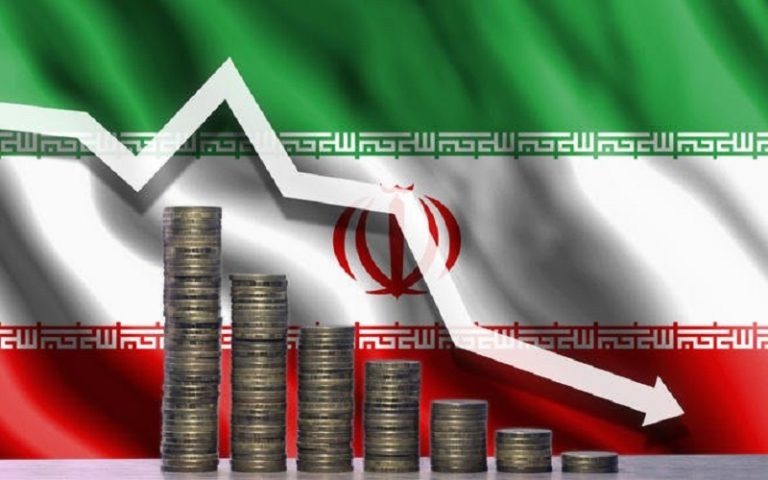
Speaking about ‘right now’ do they mean Iran’s economy is not suffering from inflation, stagnation, huge budget deficit, liquidity etc. An economy which is even not able to sell its oil, except by circumventing the sanctions by wasting Iran’s wealth. Are the criteria for a superior economy a decade of negative investment, 50 percent inflation, double-digit unemployment, and sub-zero economic growth?

A look at Iran’s economic indicators as narrated by world-renowned centers

Now, let’s take a look at the real situation of Iran’s economy reported by the state-run website Alef on December 30, 2019:

“On the eve of the beginning of 2020, the clear economic indicators of Iran have been studied according to the narrations of the world-renowned centers, numbers that the reader may grin at after reading each of them! But really why? We have examined the situation of 10 important economic indicators in the country. In this report, all statistics are documented in reputable international centers.”

  1. Rank 126: World Bank absolute poverty line (daily income less than $ 1.9) (Media explanation: “Of course, this statistic may be questioned given the living conditions of the Iranian people (!) And a more accurate assessment requires multidimensional poverty indicators for which statistics are not available.”
  2. Rank 65: Human Development Index. Human longevity with health.
  3. Rank 31: Global Hunger Index: Belarus, Bosnia-Herzegovina, Bulgaria, Chile, Costa Rica, Croatia, Cuba, Estonia, Kuwait and Latvia rank first to tenth.
  4. Rank 73: Purchasing power: If the citizens of different countries in the order of the richest stands in an auction queue of a commodity, Iranians will be the 73rd nation in terms of purchasing power.
  5. Rank 50: Products made in Iran: The statistics of 2017, which are related to 49 countries plus the European Union, have ranked the 50th position of the goods made in Iran.
  6. Rank 127: Ease of doing business: The World Bank’s 2020 report ranked Iran 127th out of 190 countries in terms of ease of doing business.
  7. Rank 50: Per capita food consumption
  8. Rank 36: Unemployment rate: Unemployment rate of 10.5 percent
  9. Rank 50: Gini coefficient (income inequality): Iran with a Gini coefficient index of 0.4093, i.e. the 50th country with the highest income inequality
  10. Rank 5: Inflation rate: Iran’s inflation rate is 40 percent, while in most countries of the world the inflation rate is in single digits and even in some countries such as Qatar, Saudi Arabia and the United Arab Emirates, the inflation rate is negative. Iran ranks fifth in the world after Venezuela, Zimbabwe, Argentina and Sudan.
  11. Rank 70: Quality of Life Index: Iran’s neighbor Saudi Arabia is ranked 32nd and Turkey is ranked 44th.”

These ranks and positions gained by this regime belong to last year. So certainly, the figures in the future will show a much deeper catastrophe.

Iran’s economy in 2019

At the beginning of July 2019, the World Bank publishes a new list of world economies based on their income levels. According to the World Bank, which has raised Khomeini’s attention: “In 2019, Iran ranked 103rd in terms of per capita gross national income with $5420, and 93rd in terms of purchasing power parity with $14,560.” (State-run daily Borna, November 15, 2020)

From where did Khamenei find the 18th place?

After a brief review of the history of the critical situation of the economy in Iran, let us try to verify Khamenei’s claim about the economy for this year.

The concept of gross domestic product (GDP) is used to measure the size and dimensions of the economies of different countries in international economic institutions such as the World Bank and the International Monetary Fund, which are also used as a basis for comparison and ranking in their annual and periodic reports.

Apparently, the basis of the regime’s claims about its ranking is a report that PricewaterhouseCoopers International (PwC) extracted from the International Monetary Fund’s preliminary report for 2016 in 2017, in which it points to the 18th position of Iran’s GDP in terms of purchasing power parity. But the statistics and charts on the updated IMF website do not confirm this ranking.

Also, according to the International Monetary Fund, in 2019, the Iranian regime was ranked 23rd. In the same year, the World Bank announced the Iranian regime as 26th on its list.

With a free exchange rate, the Iranian regime drops to 64th

All these stats games by the regime are while these calculations are estimated at the exchange rate of 4200 Tomans per US dollar, but if the real exchange rate of the open market is calculated, the rankings of the regime’s economy will decrease even more.

A comparison of the figures in the International Monetary Fund ranking with a comparison of GDP figures published in the reports of the Central Bank of Iran and the Statistics Center of Iran shows that the basis for calculating the exchange rate of the rial against the US dollar is the official rate of 4200 tomans.

For example, the Central Bank of Iran has calculated the current value of Iran’s GDP since 2019 at the rate of 4200 Tomans per dollar. But if we calculate the number announced by the Central Bank at the rate of 25,000 tomans per dollar, Iran’s position in the International Monetary Fund rankings in terms of GDP value would fall sharply to about 95.5 billion dollars and it would take 64th place next to Kenya.

Remembering Iran’s Nurses

On this year’s World Health Day, which has the theme of “building a fairer, healthier world for everyone”, the World Health Organization called for immediate action to eliminate health inequities that have become more striking throughout the pandemic.

This is of particular concern in Iran where at least 244,800 people have now died because of the government’s failure to implement proper restrictions or import the vaccine in a timely manner. Worst still, with the country now in its fourth wave, the number of deaths will rise considerably with the deputy health minister Iraj Harirchi saying hospitalizations and deaths in Tehran have already increased 50-70%.

Health Minister Saeed Namaki said: “Today we are facing one of the most horrific COVID-19 waves. We cannot predict what hospitalizations will be and it is not clear what awaits us. There are not enough resources and they (the Government) did not give us the fund for various reasons.”

Most hospitals are reporting a rise in Covid cases, from them doubling in Tehran to them rising by 250% in Mazandaran. To make matters worse, the vaccine program is moving at a glacial pace because Iran has been slow to import it and the Russian vaccine supply is too little to vaccinate even the most at risk.

In all of this, it’s vital to remember the key work being done by Iranian nurses, a significant number of whom have died due to coronavirus because they didn’t have proper PPE and because of the sheer influx of patients. Many have sacrificed everything to the fight, sleeping in the hospital and not seeing their children.

Some 60,000 nurses developed coronavirus and around 100 had died, as of December 2020. But this is likely to be the bare minimum.

All of this, plus the dire conditions for nurses prior to the pandemic, is leading to increased burnout and a major shortage of nurses. The head of the Nurses Organization explained that there needs to be 2.5 times the current number of nurses to meet international standards, but the officials use temporary contracts and poverty pay, discouraging trained applicants. Many were actually even laid off with no justification during the pandemic. Nursing students go abroad because there simply aren’t the jobs in Iran.

Nurses have protested the unfair working conditions, including non-permanent work, low pay, delayed wages, and layoffs at various intervals, but never received an answer; instead being beaten and imprisoned.

Iran’s Coronavirus Pandemic Is Out of Control

Iran’s coronavirus deaths have now surpassed 245,000, with over 56,000 dying in Tehran alone, so Iranian officials are beginning to acknowledge the reality of the situation.

Health Minister Saeed Namaki said that government has “lost control” of the coronavirus outbreak. No country has remained unscathed by the pandemic, but officials mismanaged the situation to such a degree that the Iranian opposition has termed it “outright criminal”.

Not only did the country’s top officials, including Supreme Leader Ali Khamenei and President Hassan Rouhani, spend months denying how severe the situation was, even saying that the virus was not yet in Iran last February to encourage turn out at anniversary parades and the parliamentary elections, but they also bungled the response by refusing to institute proper restrictions in a workable way (i.e., paying non-essential workers to stay home) or order World Health Organisation-approved vaccines early. Then, they have the nerve to blame the fourth wave of the coronavirus on Iranians “not abiding by the health protocols” in a clear attempt to shirk responsibility, when the mullahs were the only ones with the power to quarantine cities or deliver sanitary equipment en-masse.

Maryam Rajavi, the President-elect of the National Council of Resistance of Iran, said: “With astonishing cruelty, Khamenei banned the import of the British and American vaccines into the country, while refusing to provide the bare minimums for workers from hundreds of billions of dollars pillaged wealth of the Iranian people amassed in institutions he controls. In doing so, he has forced them to go to the COVID-19 killing field to make ends meet.”

But why would officials not implement measures to slow the spread and protect people? Well, at the start of the pandemic, Khamenei described it as an “opportunity” and a “blessing”. He intended to demoralise a country ready for regime change with mass deaths, as well as discourage mass gatherings because of the health risks, all to prevent being overthrown.

This was successful short-term, but now the country is angry about losing loved ones, livelihoods, and life as they knew it, so it’s created a whole new pressure cooker situation and anti-government protests have already started in earnest; particularly in Kazerun, Khorramshahr, Borazjan, and Sistan and Baluchistan. These have been followed by nationwide strikes of teachers, students, truck drivers, pensioners, factory workers, power plant workers, and nurses

The Iranian Resistance wrote: “The continuing protests point to the realization by the overwhelming majority of Iranians that as long as this regime is in power, it will neither protect the people from the consequences of floods, earthquakes, and diseases nor from the growing poverty, inflation, and unemployment.”

Will Iran’s Infamous 25-Year Contract With China Become Operational?

With the signing of a 25-year agreement between Iran and China, the Iranian government raised the protest of the people, including Iranians who live outside the country. Many people despite the dangers and suppression took to the streets to protest this unfair agreement that ‘sells off’ the country.

There have been numerous protests against this contract of which even the regime’s officials are skeptical and fear its long-time consequences for the country. Most Iranians see this contract as a treason to the country.

A government expert called Mohsen Jalilvand in an interview with the state-run Arman daily said: “Iran sells oil to China at 30 percent discount to evade sanctions. It should be noted that Iran is in a weak position and gives concessions to China at a discount. The policies that we have adopted have shorten our opportunities today. It should be noted that China and Russia cannot be trusted 100 percent, and they play with their card at the JCPOA (2015 Iran Nuclear Deal) table against the West because these two countries have also voted against Iran in the past.” (Arman Daily, March 31, 2021)

Hassan Rouhani’s government is claiming that China did not accept that the contents of this agreement becoming public. Ali Rabiee, the government’s spokesperson, said: “The Ministry of Foreign Affairs has published the report sheet of this document containing all the outlines and contents of the agreement and it is easily available to everyone. The publication of the full text is subject to the agreement of the parties. I am saying here that we have no intention to publish it, but maybe the other side of us had a different opinion and for some reason they did not want to do so.” (State-run daily Iran Press, March 30, 2021)

The report, cited by Rabiee, is a short text, nearly one-third of which has absolutely nothing to do with the parties’ commitments to the document and is merely about meetings between the parties to agree on and sign the document.

Iranian officials and state media have also referred to the fact that China considers its interests and its relations with important countries to have priority over its relations with the regime and, due to considerations in its relations with other countries, prevents the full publication of the document.

The Arman daily in an article entitled “Everything depends on the lifting of the sanctions” wrote:

“If tensions between Tehran and Washington ease in the future and we see the lifting of some of the sanctions, China could pave the way for the implementation of the provisions of the document, but if the situation continues as it is today, Beijing will not try to take advantage of the document.

“Because it basically cannot act in the shadow of sanctions, as if because of this policy of US maximum pressure now more than $20 billion of Iranian capital is blocked in Chinese banks and Beijing does not made the slightest attempt to release, at least a small part of it, because it cannot release it without the green light of the United States. Everything depends on the lifting of sanctions. Because if the situation continues as before, it is obvious that China will not be able to make any effort to implement the provisions of this document.” (Arman daily, March 31, 2021)

In another article written by a former government diplomat named Ali Khoram, Arman daily warned that the government should count on this agreement: “The Iranian side should not think only of the temporary use of this strategic plan for political, security and enmity purposes with the United States, which China does not give such an opportunity, and this will be opportunity lost. Criticisms against this program or China’s misdeeds are plausible.”

In a third article, the same daily, quoting another retired diplomat named Fereydoun Majlesi, explicitly wrote about China’s considerations towards the United States and the Persian Gulf countries: “It is important to note that China’s trade volume with the United States, Europe, and the Persian Gulf countries are far exceeding that of Iran.”

The overshadowing of China’s relationship with the regime over its relationship with the United States is so obvious that Hamid Aboutalebi, a former Rouhani adviser, said:

“The world is not just the West or the East, but one of the most important parts of the world is the West. So, China and Russia ended the Cold War and interacted with the West to such an extent that now China without the United States, the United States without China means the destruction of the world economy. So much so that now the United States is seeking active resistance with China, and China is seeking engagement with the United States!”

“Let us try to know the Chinese well. They seek real interests, not active resistance, or strategic confrontation with others, especially the West. It is enough to compare the real and controversial understandings of China these days in the region.” (Etemad Online, March 30, 2021)

Iran analysts believe that China would not jeopardize its economic interests with the United States and other important countries because of its relationship with the regime, and Iranian officials are aware of this, but the regime is forced to accept this ‘disgraceful’ document. The reason for this is the economic stalemate and the growing crises that the regime is facing.

The Dire Situation of Iranian Women’s Sports

As Tuesday was the International Day of Sport for Development and Peace, what better time to examine the situation of women in sport under in Iran. It turns out that Iranian women are hugely underrepresented in sports, but let’s look at some of the reasons why this might be the case.

The national women’s football team was removed from the FIFA rankings in December because it had been inactive for two years and Iranian federation officials didn’t do anything in response. This isn’t surprising because, as the team’s head coach Azam Gholami points out, the federation doesn’t care about women’s sports and offers them no facilities, which affects their ability to practice and play.

Meanwhile, referee Asoo Javaheri was banned from refereeing matches for two months this year because of her research into gender, sports, discrimination, and inequality.

The national futsal team, which has won the Asian Cup two times running, was supposed to go to their camp in March but the federation banned them over coronavirus concerns. The men’s camp met several times. On a related note, in the three years since the women’s team last won, they have not received the prize fund of 22-million Tomans.

The head coach of the women’s national alpine skiing team, Samira Zargari, was not allowed to go with the team to the World Cup in Italy because her husband refused permission for her to leave the country. This has also happened to athletes Niloufar Ardalan and Zahra Nemati in the past and will happen in the future because of the government’s misogynous laws.

Women are banned from participating in the Zurkhaneh bodybuilding sport after a group of men and officials issued a statement opposing it in July 2020, saying that this sport was “disgusting” for women.

Meanwhile, there is no law against women cycling, but they are still de facto banned by the misogynous attitudes of mullahs, which closed some bicycle rental stations last year for renting bikes to women. Meanwhile, certain cities have issued actual bans.

Many women want to surf, but the government only allows girls to learn the sport until hitting puberty, after which point they are no longer allowed to practice. Worse still, this means there are no female coaches to train girls, so many cannot even begin to learn.

Regarding the sport of chess, the federation is heavily influenced by the Sports and Youth Ministry to enforce the compulsory hijab on women, with refusal to adhere to this law punishable by 75 lashes, imprisonment, and even the confiscation of your passport.

Shohreh Bayat, a senior member of the FIDE Referees Committee, referee of the World Championships, and secretary of the Iranian Chess Federation, is one of several female Iranian chess players who refused to return to Iran after competitions abroad.

Iran Speaker Praises Dire China Deal

Iranian Parliament Speaker Mohammad Bagher Ghalibaf used the first session of the new Persian calendar year to praise the Iran-China deal, which sells off Iran’s natural resources in exchange for helping the ruling system stay in power, and falsely claim that it undermines the United States.

He said: “We stress that we welcome the Comprehensive Iran-China Cooperation Program. The signing of this agreement would be a strategic step if it means believing that the world is not limited to the West and that the next century is the century of Asia. The signing of this document is also an important warning to the United States to realize that international relations are rapidly changing to the detriment of the United States.”

During that same session, many other MPs raised concerns about possible repercussions, with Ali Alizadeh saying that the “lack of transparency” surrounding the deal will not endear it to the public, citing articles of the Constitution that prioritise keeping the public informed.

This agreement, which comes as the Iranian economy is failing after 42 years of corruption and mismanagement, will see China invest $400 billion in various sectors, including telecommunications, healthcare, banking, transport, and IT.

The Iranian opposition wrote: “Basically, the regime has forfeited the country’s economic infrastructure to a foreign power. The little detail that has leaked about the deal reveal it to be so disastrous that even the regime’s own officials are comparing it to the Turkmenchay Treaty, in which the Qajar monarchy ceded large swathes of Iran’s northern reaches to the Russian empire.”

The treaty, according to analysts, has no benefit for Iranians because it liquidates the country’s resources, as well as allowing China to establish a security and military foothold there, and perhaps getting a bit of cash for the mullahs. This allows mullahs to easier keep their grip on power, which will only lead to increased poverty and unemployment. In turn, this makes it more likely that a new uprising will come.

MP Ahmad Alireza Beigi said: “If the mistakes of the past are not compensated and no solution is found to change the current situation, great damage will await us… The feeling of oppression in the plundered investors in the stock market, anger and rage from the unfortunate consequences of the incident of rising gasoline prices, unbridled inflation, and long queues to buy oil and chicken cannot be ignored. The effects of these catastrophes will be evident in the upcoming elections.

The JCPOA and Iran’s Paradoxes

While the Iranian people’s hatred of the Iran-China deal is continuing, the regime’s foreign minister Mohammad Javad Zarif tweeted: “At virtual JCPOA JC meeting, Iran & EU/E3+2 agreed to resume in-person talks in Vienna next Tues. Aim: Rapidly finalize sanction-lifting & nuclear measures for choreographed removal of all sanctions, followed by Iran ceasing remedial measures. No Iran-US meeting. Unnecessary.” (@JZarif)

“Rapidly finalize sanction-lifting” is a deceptive phrase to cover up the mullahs’ retreat from their previous positions about their nuclear activities.

Iran’s supreme leader Ali Khamenei had said in 2020 about the JCPOA (2015 Iran nuclear deal), “We do not insist on this at all, and we are in no rush for the US to return to it. Our issue is not at all if the US will return to that agreement or not. Our reasonable, logical demand is the lifting of sanctions. Sanctions should be lifted. This is a right that has been seized from the Iranian nation.” (Khamenei.ir, February 28, 2021)

Therefore, the regime lacks ‘authority’ according to its own words, while being influenced by the other side, until it has acquired this authority, is a loser in any supposed negotiation. Khamenei admitted to this a year before the November 2019 protests. We are now in 2021. A year in which the regime signed a 25-year contract with China, effectively selling off the country to prevent its downfall.

As usual there are contradictions in the comments of the regime’s officials. Zarif is hasty that the US returns to the JCPOA as soon as possible and Khamenei said he is not in a hurry. The truth is that the regime is hasty and what Khamenei is telling is just a deceive and is trying not to lose its authority over its forces.

What happened to the issue of non-negotiation and the red line that Khamenei had marked? Was it not suggested by Khamenei that only if all the sanctions would be removed and the regime fact-checks the international community’s compliance, then maybe or maybe not Khamenei would allow a return to the JCPOA? What caused him to step back from his previous policy?

“The side which has the right to set conditions for the continuation of the JCPOA is Iran. The reason is that from the beginning, Iran honored all its commitments. The Islamic Republic honored all its JCPOA commitments, but they violated theirs. Therefore, we have the right to set terms for the continuation of the JCPOA.

“Recently, we set a condition, and no one will go back on it: the condition is that if they want Iran to return to its JCPOA commitments – some of which have been canceled – the US has to lift all sanctions. And not just in words and on paper, rather they have to lift them in practice. After that, we will verify and see if they have really been lifted. Then, we will return to our JCPOA commitments. This is the definite policy of the Islamic Republic and it has been approved by all the officials of the country. Therefore, we will not retreat from this policy.” (Khamenei.ir, February 7, 2021)

What happened to the phrase by Khamenei of ‘no rush’?

Reza Nasiri, an international lawyer affiliated to the regime decrypted this ‘rush’ and said:

“Biden faces significant political obstacles in the United States. As time passes and the return of the parties to the JCPOA is delayed, these obstacles will become stronger and more entrenched.” (Entekhab, April 3, 2021)

This expert explains this obstacle as follows:

“One consequence of Biden’s excessive delay is the possibility that Congress – in collaboration with a number of hardline Democrats – will make the content of some of Trump’s sanctions decrees ‘lawful’ and – with conditions unrealistic for Iran. It would effectively deprive Biden of the power to lift sanctions.”

This could overshadow the whole issue of lifting sanctions or limit negotiations with the regime to congressional law.

The most important obstacle is the end of the regime’s three-month agreement with the International Atomic Energy Agency on the Additional Protocol. This is the most important thing for this regime.

“If the agreement expires – with no prospect of opening up – the likelihood of a broad consensus against Iran and a key mechanism for resuming sanctions on Iran in the Security Council increases.”

What is called an opportunity and victory, and the foreign minister of the regime is trying to pretend as a way out of the impasse and moving of the JCPOA train, is a new and humiliating retreat. The Etemad daily, on April 3, 2021, quoted the Japanese Kyodo news agency as saying:

“Iran proposes new constructive ideas at Frankfurt summit in hopes of immediate rescue of nuclear deal before the small window of opportunity closes.”

The ‘small window of opportunity’ refers to the same ‘rush’ that Khamenei said he did not have, but it turns out that even minutes and hours are decisive for him in terms of lifting sanctions and the deadlock.

The Iranian Economic Crisis Is Caused by Mullahs

Iran’s apologists, as well as many unfamiliar with institutionalized corruption among the mullahs, often blame international sanctions for Iran’s economic crisis, but now even state-run media and Iranian officials are acknowledging publically that the real blame lies with the mullahs.

On Friday, both the Young Journalist Club and the Mashreq News ran stories about the rising cost of poultry, now over 40,000 Tomans despite government promises to fix the issue. Even the attempt to reduce costs by distributing animal feed to farmers only caused a small drop with a cost that still far exceeds the approved price.

Quoting official reports and trade union leaders, Mashreq News wrote: “The inflation rate for the twelve months ending March 2020 for the country’s households reached 36.4%/. The point-to-point inflation of food items in February reached more than 60%… The government is behind 95% of the skyrocketing prices, but they blame the guilds and small business owners for avoiding being accountable.”

One of the reasons for the high prices of poultry is the shortage of chickens, which can be linked to the Revolutionary Guards’ unnecessary culling of over 16 million chickens last March. Meanwhile, the IRGC continue to dominate most industries.

Mojtaba Zoulnouri, Chairman of the Security Commission at the parliament, said: “The officials’ double standards [in treating people] and their lack of motivation about the [mullahs’] ideals have caused misery in the country.”

Another reason for the economic collapse is rising liquidity and the false exchange rate, which Central Bank chief Abdol-Nasser Hemmati admitted was the only way the mullahs could balance the budget for the past two years. Economist Hossain Raghfar said that this was dangerous for Iran because it would affect the economy for decades.

He said: “It should be noted that this increase in the exchange rate is a source of income for the government and has fragile consequences for people. In other words, it creates a dangerous imbalance for families and their livelihoods. The consequences [of this action] will affect the country’s economy for years.”

This mismanagement and corruption have turned the country into a powder keg waiting for the right spark to make it explode.

Mashreq News wrote: “The Iranian society is grappling with crises. The intertwining of social crises has made living conditions difficult for people. In such a society, people are not able to resolve their issues through different social institutions, and [this trend] ultimately causes many social crises in society.”

March: 193 Protests in Iran

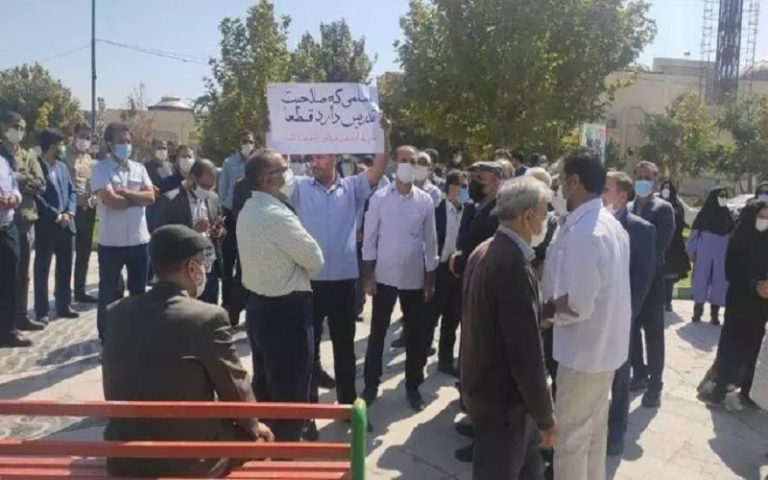
There were at least 193 protests in 70 cities across Iran in March despite the ongoing COVID-19 pandemic, the regime’s crackdown on dissent, and the Nowruz holiday, according to the Iranian Resistance. Let’s look at some of the different groups holding the protests.

Despite their increased risk of infection of COVID-19 or other winter diseases, retirees held 61 protests in 29 cities, as part of three organised rallies to demand higher pensions that lift them out of poverty.

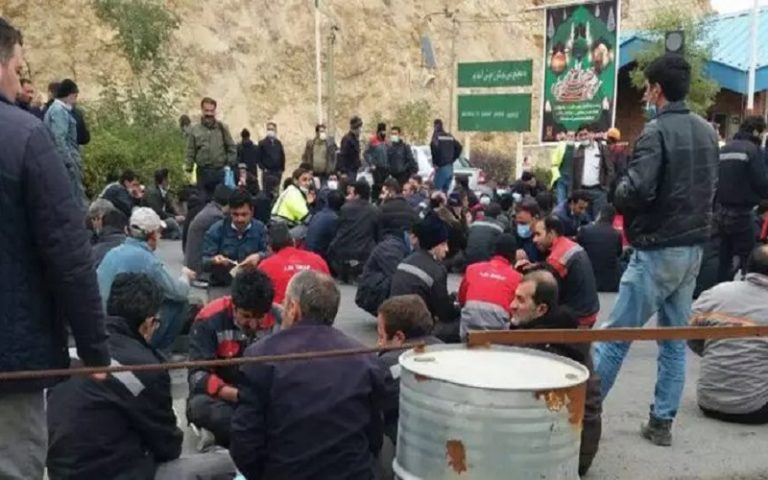
While workers held 54 protests in 24 cities over various issues, including long-delayed salaries, non-payment of insurance, non-renewal of contracts, layoffs, factory shutdowns, wage cuts, and unsafe working conditions. The protesters included:

  • municipality workers
  • wastewater workers
  • construction workers
  • railroad workers
  • oil and steelworkers
  • sugarcane workers

Farmers held eight protests in five cities over the water shortage, the authorities refusal to buy their products, low prices for their goods, and other financial issues. While livestock farmers held two protests in as many cities over the high cost of animal food, especially when compared with the low price of milk and meat, as well as a lack of support from the state and other issues.

Teachers held three protests over employment laws that negatively affected their financial situation, while students held two protests; one over the murder of fuel porters and one over the merging of universities.

There were 56 more protests in March by defrauded creditors and goods buyers, poultry farmers, and Iranians angry over the murder of fuel porters by Iranian security forces, the refusal to charge a security agent with the rape of two young girls, and a new deal signed between Iran and China that sells off Iranian resources in order to keep the mullahs in power.

On March 30 and 31, Iranians in Tehran, Karaj, and Isfahan protested the 25-year agreement with slogans like “Iran is not for sale” and “Iranians support us!”

Many prisoners also went on hunger strike to protest a denial of their rights, including

  • political prisoner Esmaeel Abdi who was banned from receiving family visits or using the telephone in Evin Prison
  • political prisoner Hamzeh Darvish who protested security flaws, psychological torture, and refusal to separate prisoners based on their crimes in the Central Rasht prison
  • political prisoner Khaled Pirzad who was denied medical treatment and parole in the Greater Tehran Penitentiary

Of course, there have been number of other protests in Iran in recent days, including the natiowide protests by retirees on Sunday.

Iranian Officials Are Concerned About the Presidential Election

As Iran approaches the upcoming Presidential election scheduled for June 2021, officials are concerned by a backlash by society. In this regard, they are doing their best to drag the people to the polls on the one hand and prevent potential protests on the other hand.

Furthermore, the clerical system is facing its most critical conditions since its establishment in February 1979. Socioeconomic crises have surrounded the rulers, and confusion has engulfed the entire ruling system. They feel public distrust and fury, which may erupt every moment, as was sparked with the rigged Presidential election in 2009 and was followed in December 2017, August 2018, November 2019, and January 2020.

The ayatollahs violently responded to people’s grievances in recent years, creating a profound gap between the state and society. They also made this social rift even deeper by their economic failures and mismanagement, while today, more than 80 percent of Iran’s population live below the poverty line, according to state-run media outlets.

Meanwhile, the Islamic Republic’s horrible policies amidst the coronavirus pandemic have fueled public anger more than ever. Officials tried to downplay the real aspect of the health crisis with a fabricated death toll and false information. However, their controversial remarks and flagrant lies, as well as the opposition’s revelations about the actual death toll, exposed systematic secrecy in Iran.

For instance, the March 29 official death count announced by the Health Ministry stood at 62,478, while many health professionals say the genuine number is far higher. “Over 239,600 people have died of the novel coronavirus in 526 cities checkered across all of Iran’s 31 provinces, according to reports tallied by the Iranian opposition People’s Mojahedin Organization of Iran (PMOI/MEK) as of Monday afternoon local time, March 29,” declared the opposition.

In such circumstances, state-run media estimate only 15 to 20 percent of the population would participate in the Presidential election in the best-case scenario. Remarkably, media were ordered to publish these estimations only after passing precise checks, which looks like a labyrinth controlled by intelligence and security apparatuses.

Notably, the government experienced an unprecedented apathy to the Parliamentary elections in February 2020, which revealed that the system is no longer accepted among citizens. At the time, observers said that the apathy was the people’s backlash regarding the government’s cruel crackdowns on protesters in November 2019, which left more than 1,500 victims and at least 12,000 arrested.

“If public participation in the 2021 election is like the recent Parliamentary elections, we will face a crisis of legitimacy. The [Islamic Republic’s] legitimacy would be questioned if the Presidential election turns out to be like the recent Parliamentary elections,” Etemad Online quoted Mohammad Reza Sadr, a “reformist” member of the Expediency Council, as saying on March 27.

Moreover, the government, particularly the Supreme Leader Ali Khamenei, suffers from a fundamental contradiction. “Khamenei seeks to hold a vibrant election, but at the same time, seeks to install his own subservient candidate,” said Maryam Rajavi, the President-elect of the National Council of Resistance of Iran (NCRI), on March 20.

As the official with the final say in Iran, Khamenei sees isolation as the unique lifeline for saving the Islamic Republic. In this respect, he prefers to appoint a more obedient President like one of the commanders of the Islamic Revolutionary Guard Corps (IRGC). In other words, he has decided to put aside the game of “reformists versus hardliners,” showing there is no forecast for behavior change from inside.

On the other hand, “reformists” express their concerns over the ruling system’s bleak fate, issuing warnings about potential protests and uprisings. “If government unification [purging ‘reformists’] occurs, there is a dangerous issue for the country, and it will even have security risks. Because it prepares several conspiracies against the Islamic Republic, and in other words, it puts the Islamic Republic at risk,” said Sadr.

In this respect, the Supreme Leader would rapidly like to appoint an IRGC commander as the next President and further international isolation. In response, “reformists” grabble to win some shares in power and headlined “No to a military President” as their main slogan for the election campaign, wrote Arman daily on March 27.

In reality, the government has been stuck in a hazardous impasse. Khamenei cannot pass over his purpose for unifying the state and removing domestic rivals. Also, ignoring the “reformists versus hardliners” trick would be a spark in Iran’s powder keg.

Therefore, Iranian officials’ main concern—regardless of their political factions—is another round of nationwide protests. Iran observers say officials will do whatever it takes to defuse or delay protests at all costs, and the Presidential election is a stunt to disappoint citizens from further demonstrations and anti-establishment activities.