Home Blog Page 290

Dividing Iran in an Unfair Manner

The division of Iran’s fertile land began from the first day of the 1979 revolution when the clerics captured it from the people. In the land of the oppressed, they usurped the Shah’s properties and left for the people just empty baskets and desks.

The clerical authorities have ruthlessly and insatiably plundered oil, gas, mines, and fisheries in the past and seized the mountains, soil, forests and even the skies of Iran. Phenomena such as mountain and forest seizing are part of the result of the mullahs’ rule that have driven the country 500 years backwards.

Iran observers note there not a single day goes by when the mullahs and their Revolutionary Guards (IRGC) do not make a new arrangement to steal a new part of the wealth of the nation.

We have not forgotten that Ali Akbar Velayati, Supreme Leader Ali Khamenei’s’s advisor who has 37 jobs and positions in this regime, called on the Iranian people to follow the example of the Yemeni lame-belted people and not to expect so much.

“Learn from the Yemenis how they resist threats and sanctions. Instead of clothes, they are lame-belted, have a gun in their hands and a few pieces of dry bread, and just on foot, but the Saudis are powerless confronting them.” (State-run daily Entekhab, September 29, 2018)

While Velayati advises people to wear a Yemeni lame and eat dry bread, social media posted photos of his sons attending the Greg Wall Street party at Istanbul’s Shangri-La Hotel as a successful tower builder from Saif Bana company. At the same time, it was revealed that Velayati owns a 1000-meter house next to Saadabad Palace.

The existence of such officials is not surprising in a government where the head is corrupted, as an Iranian saying says: ‘the fish fester from its head’.

When a reporter once asked the regime’s foreign minister Mohammad Javad Zarif:

“People ask that all these countries in the world have good relations with other countries and there is no pressure on them. Why is there pressure on Iran?”

He brazenly responded: “We, the people of Iran, wanted to live differently.”

It is with this view that on state television, people are told not to eat fruit in expensive conditions or to eat just rice without meat or ‘Eshkeneh’ (a very primitive meal with potatoes and onions) and be satisfied.

But the truth is that each of these statements is just increasing the people’s fury against their turbaned rulers. The state-run media only reflects a small part of this resentment, but it is also catastrophic.

“Today, people do not want to speak and decided instead them, and then to say that the people themselves wanted to live this way. Today, our people see some officials and agents are doing strange things in the name of circumventing sanctions. Witnessing rent and right-seeking. That is why people are critical. Critic of why the resistance should always be related to the lower and specific deciles of the society and only the workers and the deprived and border areas people must be satisfied and waiting for the reward of the hereafter.

“Why must the fuel porters risking their lives and accepting the bullets (IRGC soldiers) and the cargo porters must accept the risk of the borders just for a piece of bread. Why do these strata have no tribune, and their voices are not heard, and then the tribunes are for officials and experts to talk about lame-belting around the waist and the people’s choice, and to eat less meat and fruit and be satisfied?” (State-run daily Arman, March 18, 2021)

This newspaper asked: “Why do people no longer accept these dictated and shabby ideologies?”

This is a question the answer to which is known well by the Iranian leadership.

Iran Wants To Execute Another Juvenile Offender

According to human rights defenders in Iran, juvenile offender Aydin Delaei Milan is at imminent risk of execution in Iran. The authorities detained him two years ago in Tehran. He is currently 20 years old.

In an act of self-defense, Aydin Delaei Milan killed an abuser on September 10, 2018. However, the State Security Forces (SSF) detained him and transferred him to Urmia, the capital of the northwestern province of West Azarbaijan.

Supreme Court Upholds the Death Penalty

Although Milan was under the age of 18 at the time of the incident, the judge sentenced him to execution in flagrant defiance of the Convention on the Rights of the Child. The Supreme Court upheld the death penalty and sent the case to the Office for the Implementation of Sentences.

Following his arrest, authorities took Milan to the youth detention center after preliminary interrogations. He was later transferred to the notorious Rajaeishahr Prison (Gohardasht) in Karaj, Alborz province’s capital in west of Tehran.

In October 2020, this juvenile offender was transferred to the Urmia Central Prison. He has been on death row since then. In Iran, juvenile offenders routinely receive heavy sentences, including the capital punishment in violation of Iran’s commitments under international law. The Islamic Republic is among the few states that execute juvenile and teenage offenders across the globe.

This is while the Islamic Republic of Iran is a party to the Convention on the Rights of the Child. Iran adhered to the Convention in September 1991 and ratified it on July 13, 1994.

“No child shall be subjected to torture or other cruel, inhuman, or degrading treatment or punishment. Neither capital punishment nor life imprisonment without the possibility of release shall be imposed for offenses committed by persons below eighteen years of age,” the convention notes in Article 37 (a).

Iranian Authorities Hanged Five Juvenile Offenders in 2020, Killed Several More Under Torture

However, Iran’s judiciary mercilessly issues and implements death penalties against ‘persons below eighteen years of age.’ In 2020, Iranian authorities hanged at least five juvenile offenders, including Shayan Saeedpour, Majid Ismaeelzadeh, Arsalan Yasini, Moayyed Savari (Shia’ pour), and Mohammad Hassan Rezaei.

All these executed persons had been detained and sentenced to death sentences for crimes allegedly committed under the age of 18. Indeed, some were kept in prison for a long time. For instance, Mohammad Hassan Rezaei was behind bars for 12 years, and authorities executed him in Lakan Prison in Rasht, the capital of the northern province of Gilan, on December 31, 2020.

Furthermore, Iranian interrogators killed several inmates, who had been arrested below 18 years of age, under torture. In April 2020, authorities tortured juvenile offender Danial Zeynolabedini to death in solitary confinement in Mahabad Prison. Two days earlier, he had called his family from the prison, saying, “Come and save me.”

Also, in November 2020, interrogators tortured 19-year-old Mohammad Davaji to death at Amirabad Prison in Gorgan, the capital of the northern province of Golestan. Torturers killed Mohammad in front of other inmates, saying, “This is a lesson for you.”

It is time for international organizations to hold the Iranian government accountable for its gross and systematic violations of human rights, particularly children’s rights, dissidents say. The United Nations, UN Human Rights Council, UNESCO, and other rights organizations must pressure the ayatollahs to respect the people’s fundamental rights of life and stop executions. Notably, Iran is the record-holder of executions per capita.

Ukraine’s Sharp Reaction to Iran’s ‘Fake Report’ on the Downed Passenger Plane

0

On Wednesday, Ukraine strongly reacted to a ‘fake report’ in Iran about Ukrainian passenger aircraft PS752 which was shot down by the Revolutionary Guards (IRGC) air defense forces last year. Ukraine emphasized that it will not allow the Iranian government to flinch from its crime and responsibility of the downed Ukrainian aircraft.

The Foreign Minister of Ukraine on Wednesday, March 17, criticized the report of Iran’s Civil Aviation Organization (CAO.IR) about the Ukrainian airliner. Ukraine considered it a neglected effort of Iranian government officials to hide real reasons for the crash of the Ukrainian aircraft.

Ukraine’s Foreign Minister Dmytro Kuleba wrote on his Facebook page:

“What we saw in the published report today is nothing more than a cynical attempt to hide the true reasons for the downing of our plane. We will not allow Iran to hide the truth, we will not allow it to avoid responsibility for this crime.”

He added: “Today Iran publicly released the final report of the technical investigation of the downing of the UIA flight PS752 in the sky above Tehran. Previously, Ukraine sent Iran more than 90 pages of remarks and proposals to the draft final report and insisted on Iran including them into the final document, but what we saw published today – just a cynical attempt to hide the true causes of the downing of our passenger aircraft.

“We are forced to conclude that the investigation has been biased, presented proves are selective, and conclusions are deceptive. The document does not cover all the circumstances, it does not reveal neither causes of the tragedy nor the chain of events which led to it. This is not a report, this is a collection of manipulations, aimed not at establishing the truth, but to acquitting the Islamic Republic of Iran.

“Iran could not find the strength to take responsibility for ensuring that such tragedies do not repeat in the future. If Iran does not want to voluntarily demonstrate its willingness to establish the truth of the tragedy, we, together with our partners, will find ways to establish it. We will not let Iran to hide the truth or avoid responsibility for this crime. Justice will prevail, no matter how much effort and time it will take. This is not only a matter of principle, but also a moral obligation to the victims of this terrible tragedy.”

Iran’s Civil Aviation Organization introduced the incident in a 285-page report and announced the culprit of this crime to be the IRGC’s ‘air defense system’. According to the report, due to an error in geographical adjustment, it detected the passenger aircraft as a hostile target and fired two missiles towards it.

The passenger plane, which was supposed to operate flight PS752 on the Tehran-Kyiv route, was shot down near the Imam Khomeini International Airport in Tehran immediately after takeoff early in the morning on January 8, 2020.

On March 17, the International Coordination and Response Group for the victims of Flight PS752 issued the following joint statement which was published on the UK Government’s website:

“We, Ministers representing Afghanistan, Canada, Sweden, Ukraine, and the United Kingdom, have taken note of the release of the Islamic Republic of Iran’s final safety investigation report into the downing of Ukraine International Airlines Flight 752 (PS752).

“The Coordination Group countries will now carefully review this report and its findings. We stand in solidarity with the families and loved ones of the victims, who continue to grieve their profound loss.

“As we have done since the beginning, the Coordination Group will continue to seek accountability and transparency from the Islamic Republic of Iran for this tragedy and justice for the victims.”

Iran Backfires on Itself With Recent Nuclear Extortion

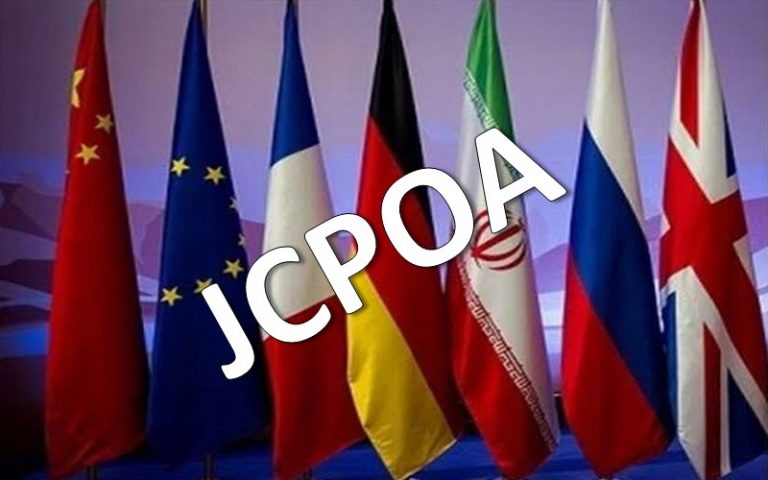
Speaking at the European Policy Centre think tank, Iranian Foreign Minister Mohammad Javad Zarif said, “Time is running out for the U.S. to revive the nuclear deal.” This is while Iran is the party deliberately appealing for sanctions relief and generous privileges afforded to his government under the Iran 2015 nuclear deal, formally known as the Joint Comprehensive Plan of Action (JCPOA), due to its horrible economic conditions.

“The Europeans are used to compromise. Iran and the United States are not. The Americans are used to imposing, and we are used to resisting. So now is the time to decide will we both compromise and go back to the JCPOA, or will we go back to our own paths?” Zarif said.

The Foreign Minister did not mention what Iran’s own path is. However, Tehran’s recent decisions over enriching uranium to 20 percent concentration, stockpiling uranium more than 14 times over the limit set in the 2015 deal, and restricting the UN nuclear watchdog are strong indicators of the ayatollahs’ destination.

Furthermore, the Iranian government began producing uranium metal—material that can be used to form the core of a nuclear weapon—since February 10.

In an interview with state TV Channel Two on February 8, Iran’s Minister of Intelligence and Security (MOIS) Mahmoud Alavi issued a warning about Tehran’s probable intention to produce nuclear weapons. “In his Fatwa, the Supreme Leader [Ali Khamenei] announced that the production of nuclear weapons is Haram [forbidden]… However, if [foreigners] pushed Iran to that path, then [the production of nuclear weapons] is not Iran’s fault,” he said.

All these facts display Iran has been placed in an awkward position due to international sanctions and isolation. The ayatollahs hoped that the new U.S. administration would hastily rejoin the JCPOA, lift the sanctions, and afford uncountable privileges once again. In this context, they even resorted to nuclear extortion to drive U.S. President Joe Biden to their desired path.

However, contrary to their preliminary assessments, times have changed, and U.S. officials have clearly announced that they would never feed crocodiles for nothing. Instead, they planned to sign a longer and more comprehensive deal, which excessively restricts Tehran’s malign behaviors in the Middle East and stops the government’s provocative ballistic missile programs.

Therefore, the U.S. is not enthusiastic to ink a deal with President Hassan Rouhani’s administration, which will remain in power for no longer than six months. This means that the Iranian government should endure current pressure at least until the 2021 Presidential election in June.

On the other hand, Khamenei has frequently announced his objection to making a new deal with the U.S. According to recent developments and state-run media reports and analyses, loyalists to Khamenei and JCPOA critics, who constantly called on the government to leave the deal, will establish the next administration in Iran. This is another serious dilemma preventing the U.S. from stepping in a foggy path.

Furthermore, in an interview with Axios released on March 10, the State Department’s Iran envoy Rob Malley declared that “U.S. President Joe Biden’s administration will not rush to renew the abandoned 2015 nuclear deal with Iran before the latter’s June elections which are widely expected to see a rise of a more hardline president in Tehran.”

“We don’t intend to base the pace of our discussions on the Iranian elections – the pace will be determined by how far we can get, consistent with defending U.S. national security interests,” Malley added.

In this respect, Tehran’s recent steps of extortion likely gained inverted consequences for the government. In other words, the international community realized the ayatollahs’ severe need for making a deal due to their back-breaking financial pressure.

In such circumstances, major powers look for restricting the world’s number one state-sponsor of terrorism and preventing it from obtaining nuclear weapons rather than offering concessions, which put global peace and security in jeopardy. Tehran’s recent nuclear ambitions have led the country to more restrictions and raised the risk of the ayatollahs’ achieving atomic weapons more than ever before.

Iran’s New Wave of Protests

Iran has seen a fresh wave of protests over the past few days and the state-run media are warning that this could lead to an uprising that would unseat the regime.

Electricity workers gathered outside the parliament on Tuesday to protest officials who failed to meet their demands for full payment of wages, fixing hiring procedures, addressing official and contract workers’ distribution issues, and stopping contractor companies from stealing their money. One protester carried a banner that advised that contract workers are paid just one-third of official workers’ salaries.

Meanwhile, municipality workers in Behbehan protested outside the City Council over their unpaid wages.

At the same time, livestock farmers in Gonabad protested outside the Agriculture Ministry over the authorities’ failure to support them, as high feed costs for animals and low milk prices, meant that they were forced to sell dairy cattle as livestock.

On Monday, railway workers in Karaj and Varamin continued to strike over unpaid wages and new year bonuses. They also went on strike last week. The Karaj workers are worried that the contracter won’t pay their wages once the project in complete so they are demanding that the authorities settle their contracts and ensure their job security.

Meanwhile, Iran Maye factory workers protested outside the Tabriz factory over the sudden closure.

As this was going on, the state-run Mostaghel daily wrote: “Iran is engulfed in a cloud of crises. There’s a probability that you won’t be able to control urban riots… The society has been polarized and 70 million people are discontent.”

It compared the current protests and the November 2019 uprising, with the previous ones in 1999 and 2009, saying that it’s not just the middle-class taking to the streets, but the 80% of the country who are impoverished. This, the paper said, scares the ruling system.

In addition, the people have roundly rejected the mullahs’ false distinction between the moderate and hardliners, which means that they are likely to boycott the June Presidential election, as they did the parliamentary one last year. This will chip away at the regime’s claims of legitimacy.

It also doesn’t help the regime that the Deputy Trade and Mine Minister mocked people’s inability to afford food, which Mostaghel criticised on Tuesday in a piece about citizens’ declining living conditions, where they said that “there will be nothing left on the people’s tables to eat and survive”.

They wrote: “Why should one of the main challenges of the people be to stand in long queues to buy poultry, oil, and other food items? Does having strong military allies such as Russia and China and Hamas and Syria guarantee the survival and independence of our country and society? The people are clearly seeing that after eight years, the government that is in power has done nothing to solve the people’s most basic food needs.”

Iran’s 2020 Human Rights Violations

Iranians suffered intense violation of their rights over the past year, according to the United Nations Special Rapporteur on Human Rights in Iran Javaid Rehman in his report to the 46th session of the UN Human Rights Council.

Rehman, who was forced to base his report on news and reliable sources because he was not allowed into Iran, expressed concern and urged the HRC to look closely at the abuses in Iran.

One issue of particular concern to him was the high number of executions in Iran during 2020, with 233 reported by Iran’s officials and the fear that many more may have occurred in secret. He also raised the issue of political prisoners, like Navid Afkari, receiving unfair trials that led to their executions.

Rehman further spoke about a violation of the right to information and freedom of expression, as the government maintained its ban on most social networks and disrupted or disconnected the internet amid protests in several areas to stop news from spreading. In addition, with 80% of the county in poverty, many cannot afford internet access.

In addition, bloggers and journalists were arrested, imprisoned, and even executed over the course of the last year on vague charges. Those in prison, like Soheil Arabi, are subjected to severe torture.

Another major issue of concern is the violation of workers’ rights, where peaceful protests over dire living conditions and poverty pay, are met with intense and brutal suppression by the security forces, as happened in the truck drivers’ strikes. On a related note, the security forces keep killing border porters, who are just trying to do their job, carrying heavy loads across the mountains on foot.

Meanwhile, religious minorities are being subjected to discrimination that prevents members of the Bahai faith from studying at university or being employed in the government. Many Bahais are arrested on vague charges.

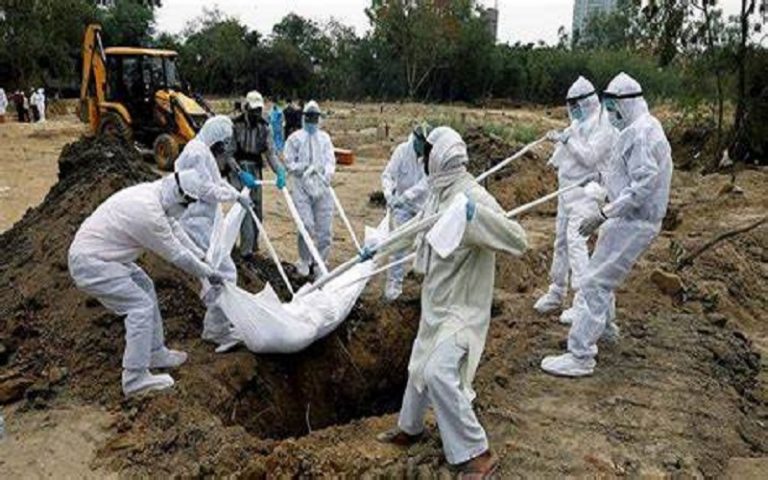
But the biggest, all encompassing abuse of human rights in Iran is the authorities’ response to the coronavirus pandemic; initially concealing it and then using it as a weapon to discourage protests, which may be why Supreme Leader Ali Khamenei has refused to purchase safe and approved vaccines for the people, instead promising that a domestic vaccine can be rolled out next year.

Given all this, the world should continue to watch Iran closely and refuse to give concessions to mullahs that could ensure their continued hold on power.

Workers’ Empty Food Baskets in Leadup to Nowruz

Nowadays, Iranian citizens are getting ready to celebrate Nowruz, the new year in the Persian calendar. However, given its mismanagement and failures, the government has imposed additional economic pressure on Iranian society. On the other hand, Iranians suffer from other dilemmas like the health crisis and air pollution.

For instance, health professionals frequently express their concerns about a new wave of the coronavirus outbreak and the circulation of mutated strains of the virus. However, state-backed employers deprived low-income classes, particularly workers, of their meager salaries. These impoverished citizens have to participate in contaminated workplaces with the Covid-19 amidst the health crisis.

They struggle hard for meager salaries, which do not cover their essential needs regarding the 100-million-rial [$400] poverty line. Instead, state-backed employers refrain from paying workers low wages. Such behaviors have severely prompted workers’ outrage.

In this context, no day goes by without workers’ protests across the country. On February 18, workers of Shahryar municipality, a suburb of Tehran, held a rally in front of the City Council, protesting officials’ failure to pay their salaries for two months.

“Today, we have gathered here to demand an increase in our salaries. [Officials] did not pay our salaries for two months,” said a worker. “My monthly salary is 24.5 million rials [$98], and my experience bonus is 1.5 million rials [$6], which is 26 million rials [$104] totally. Does the Mayor cover his family’s costs with $104?” he added.

“Our wages are too low. Official forces, who work under the municipality’s supervision, monthly receive more than 80 million rials [$320]. However, the Mayor has made a deal with contract companies to pay 25 million rials [$100] to workers per month. Official workers receive between 70 to 80 million rials [$280-320] each month, but they give 25 million rials to us,” said another protester.

Workers’ conditions are identical across the country. They are unable to make ends meet. In such circumstances, workers see no way to obtain their fundamental rights except flooding onto the streets and voicing their protests publicly. In this respect, workers’ protests have dramatically increased in recent months.

“For a working family of 3.3, the product basket’s cost is 100 million rials [$400] while low-income workers monthly receive 30 million rials [$120] in the best scenario. This is while that the workers’ purchasing power has sharply dwindled, and their food baskets became empty due to rampant inflation,” wrote Kar & Kargar [Labor & Laborer] on February 9.

However, the question is, why does the government not resolve the people’s dilemmas? The government’s refusal to resolve current obstacles highlights the truth. “No one of society’s classes has an actual representative inside the governing structure. In Iran, workers and other impoverished strata do not even have a real syndicate or union. They do not have media, and their voices are not heard anywhere,” Mostaghel daily wrote on February 19.

“Indifference toward demands and hardship of underprivileged and slum-dwellers has created deep crises. [Gas protests] in November 2019 was a specific instance,” the daily added.

Iran’s Fire Festival Continues in Spite of Authorities’ Threats

People across Iran celebrated the ancient fire festival (Charshanbe Suri), which is held every year on the last Wednesday of the Iranian calendar year, despite the authorities’ efforts to prevent that exact thing from happening.

The festival simply involves Iranians leaping over fires, but the government fears that any mass gathering of Iranians will result in an anti-government protests so they go to extreme lengths to discourage the people from celebrating. For instance, the mullahs put a lot of security forces in the streets across Iran, including Karaj and Sanandaj where they patrolled to stop congregations.

The people resisted though, lighting firecrackers and fires despite the presence of security forces in Javadieh,  Kermanshah, Urmia, Rasht, Eslamshahr, Baneh, and Tehran. While in Varamin, young people even threw firecrackers at the wall of a security force base in retaliation to the crackdown with one young person shouting that “Varamin’s flag is always up”.

Yazd State Security Forces’ deputy commander Manuchehr Nasiri threatened the people saying that participants would be arrested and held for 15 days and that security forces are on high alert.

The People’s Mojahedin Organization of Iran (MEK / PMOI) urged the people to use the festival to display their hatred of the mullahs and the people wasted no time in doing so. They burnt effigies and placards of Supreme Leader Ali Khamenei, as well as handing out MEK literature across Tehran, Rudsar, Khorramabad, Aligudarz, Ahvaz, Lahijan, Mashhad, Shiraz, Tabriz, Shahriar, Saravan, Isfahan, Karaj, Shahrekord, Kashan, Kermanshah, Hamedan, and Qazvin. They also chanted:

  • “Down with Khamenei, hail to Rajavi, down with the dictator, hail to freedom”
  • “The supreme leader’s end is near”
  • “We will take back Iran”
  • “We will turn Iran into a burning cry for freedom”

The MEK statement read: “By leaving Iranians to the mercy of the Coronavirus that has taken massive lives (due to the regime’s policies), the Supreme Leader thinks he can use the staggering death toll as a barrier to prevent the inevitable people’s uprising … Burning pictures, banners and effigies of Khomeini, Khamenei and Rouhani will bring joy, happiness, and hope to the people of Iran … We welcome the new year in this way during the Fire Festival.”

Hossein Rahimi, the Tehran State Security Forces commander described the situation as “not good in comparison to last year” because so many had taken place in spite of heavy police presence. In Kerman, it was also reported that Fire Festival ceremonies had become more intense.

Iran’s Elections Are Coming, There Is Perspective of Protests

Iran is set to hold its presidential elections in June, which has only increased factional fighting as the politicians try to shift blame for the various crises facing Iran, but the media are predicting a national boycott and protests.

This is not unprecedented. Last February, following the November 2019 uprising and the January 2020 protests over the downing of a passenger jet, the people overwhelmingly refused to vote in the parliamentary elections because they saw that it would not change anything, and they wanted regime change. In fact, there hasn’t been a large election turnout since the 1980s, when opposition candidates ran.

The state-run Arman daily wrote Monday: “[This is] one of the few elections in which everything is vague except the date of holding, which is June 18. The people’s economic and livelihood dissatisfaction, on the one hand, and the view of the government and the Guardian Council on the forthcoming elections, on the other hand, have overshadowed the 13th presidential election.”

Now, of course, voting in Iran is far different than voting in an actual democracy. For one thing, there is little difference between the two factions as the “reformists” are mainly used to trick the West into giving concessions to Iran. All candidates must swear loyalty to the Supreme Leader and be vetted by the Guardian Council. In order to even stand, one must be Muslim, of Iranian origin, and hold a record of religious and political affiliation to the system. That’s why the Iranian people have been chanting “reformists, hardliner, the game is over”.

The authorities do not want a repeat of last year’s boycott, but that is what will happen because the government’s policies have turned the country into a powder keg ready for change and the people know that this will never come from the ballot box.

Arman wrote: “The country’s general conditions are not very suitable for various reasons such as weak management, lack of realization of development plans and 20-year vision, lack of clear strategy in practice after four decades of the victory of the 1979 revolution. Poverty, corruption, discrimination, inefficiencies, unemployment, and recent skyrocketing costs that are re-creating the wartime era, along with the people’s livelihoods, have led to declining satisfaction and a loss of social capital.”

A cleric Fazel Meibodie warned Saturday that people’s anger could only be suppressed so long and that eventually “hungry people” will rise up and mullahs will be unable to control the situation.

Iran’s Economy in Bad Shape Under Mullahs

The Iranian economy is suffering greatly right now, which means that the people of Iran are much worse off, struggling to put food on the table, but still the government is continuing its malign economic policies and attempting to deceive the public with fake statistics.

Central Bank chief Abdolnasser Hemati recently announced that Iran was “out of economic recession” thanks to a 3.9% growth over the third and fourth quarters of 2020, but Iran’s Statistic Centre said that economic growth was less than 1%.

To make matters more confusing, the International Monetary Fund wrote in its latest report that Iran’s economy had decreased by 6.5% in 2018 and 5.4% in 2019 and was expected to drop by 5% in 2020. While the World Bank mainly agrees with these findings.

Someone is wrong here and it doesn’t seem like it’s the IMF or World Bank.

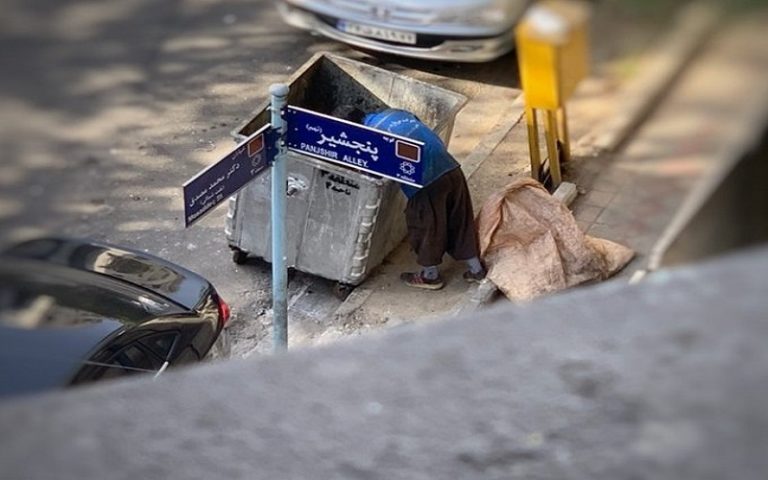
Still, figures only tell a small part of the story. The real dark tale is that the Iranian people have to keep cutting items from their shopping list for being too expensive and parents are selling their organs to keep a roof over their kids’ heads.

So why is poverty increasing? Well, one of the main problems is that the government continues to increase the printing of banknotes to fund the budget, but this just leads to increased inflation.

Parliament Speaker Mohammad Bagher Ghalibaf admitted this on Saturday saying that the budget structure was in need of reform, but sadly this was more likely an instance of factional infighting rather than a reasoned attempt at debate. Especially because, the Iranian Resistance said, minor reforms will not fix a problem caused by institutional corruption.

Besides, the parliament just passed a budget that relies on oil sales that are unlikely to materialise due to international sanctions on Iran, so it will also result in the printing of more money and the increase in inflation.

Even the state-run media outlets are talking about this and the rise in inflation, with Eghtesad-e Saramd daily saying that last year saw a “record in banknote printing” and Arman daily calling inflation “one of the biggest and most fundamental problems that has plagued Iran’s economy for the past 40 years”.

The Resistance wrote: “Since Iran has had negative economic growth in the last few years, the regime tries to fund its illicit activities through unsupported banknote printing, distribution of debt securities, high taxes, and the sale of cheap oil… Iran’s economy is devastated and that sanctions are not the main problem. This is why Iranian people, who are grappling with poverty, chanted during their major uprising and daily protests, ‘Our enemy is right here; they lie when they say it is the US’.”