Home Blog Page 301

Unbridled Prices Break Iranians’ Back

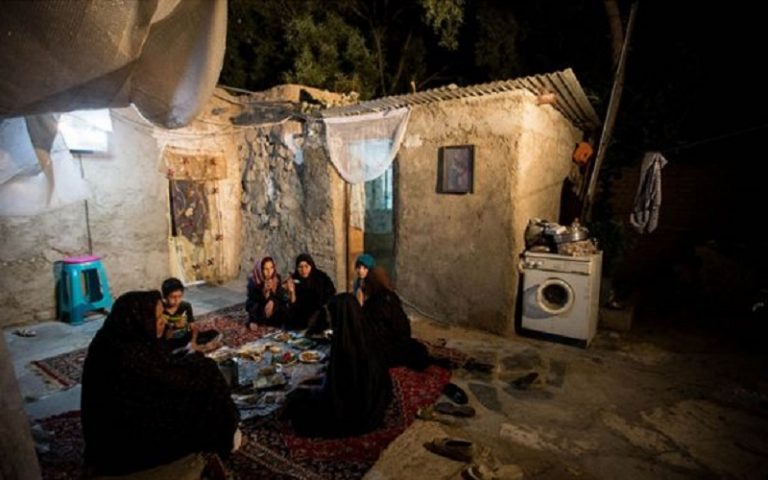
These days, the Iranian people’s main concern is how to feed their families, and this puzzle is getting more complicated in the days that led up to Nowruz, the new year in the Persian calendar. In such circumstances, the government rubs insult on people’s wounds with its mismanagement and economic failures rather than easing financial pressure.

“This is Iran’s situation. An uprising by the army of the hungry in Iran started from Sistan and Baluchestan. I wish the criminal [Supreme Leader Ali] Khamenei, the Islamic Revolutionary Guard Corps (IRGC), the State Security Force (SSF), and all of their folk go to the hell soon,” said a citizen as he filmed a woman who was searching a garbage bin for food.

Pointing to the woman, he said, “All of the people of Iran are living in the same condition. Many people are looking in garbage bins for some usable stuff. God damn these officials. They will destroy us one by one if we do not unite. We must overthrow the Islamic Republic. We are all Baluchi protesters. All of Iran’s provinces are Sistan and Baluchestan. Death to Khamenei.”

This is a small part of Iran’s society. There are thousands of children who had forgotten their childhood in the tarmac of metros and streets. They have no memory except hardship and poverty.

Their families’ dire economic conditions have turned them into little breadwinners. Furthermore, the population of labor children is growing in Iran each month. On the other hand, they are exposed to exploitation by a government-backed mafia, and in many cases, they do not even receive their meager salaries. In this regard, many children are convinced that kissing their short lives goodbye is better than enduring more dilemmas.

Meanwhile, many Iranians, particularly working and low-income families, wrestle with poor nutrition. Already, the semiofficial ISNA news agency revealed that almost all working families face financial difficulties. “More than 90 percent of workers do not have job security and live below the poverty line,” ISNA quoted the deputy chief of Labor Association in West Azarbaijan province as saying on February 7.

According to official statistics, the poverty line has reached 100 to 130 million rials [$400-520] per month for a family of four. The government monthly pays 450,000 rials [$1.80] as subsidies to around 60 million citizens. In other words, each family of four receives $7.20, which covers a little more than a half of its expenses for just one day.

In such circumstances, Iranian citizens have to fight the coronavirus crisis and endure additional costs of health and hygienic measures. However, Covid-19 damages are not limited to losing health and lives.

Financial disadvantages are the flip side of this health disaster, which has created dire conditions for millions of Iranian families. At least 600,000 workers have lost their careers and have been added to the great army of unemployed people.

All these facts prove the establishment’s imprudence in managing the country’s catastrophes. Ongoing protests in various cities show the public distrust in the theocracy and their desire for a better future.
New Details About Iranian-Swedish Academic Raise Fresh Concerns About Detainees

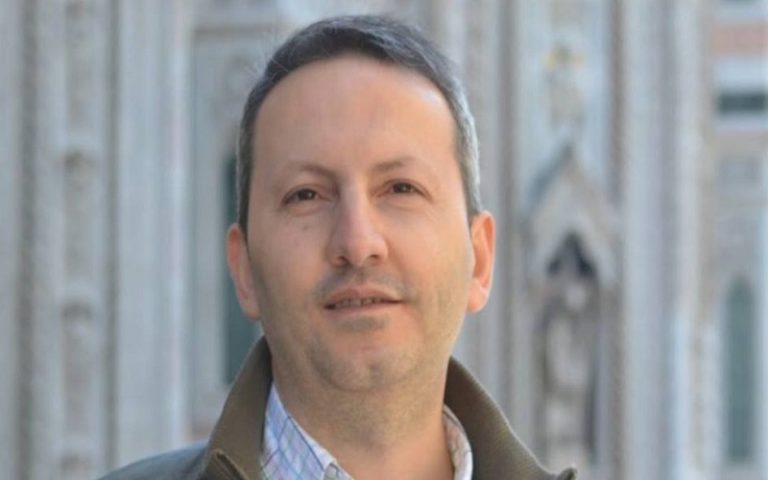
A group of United Nations human rights experts issued a fresh appeal to the Islamic Republic of Iran on Thursday, in response to the latest information about the condition of political prisoner and Iranian-Swedish dual national Ahmadreza Djalali. The medical researcher from Stockholm’s Karolinska Institute has been detained in the Islamic Republic since 2016 when he visited his native country for an academic conference. In 2017 he was sentenced to death on spurious charges of espionage, and last November he was moved into solitary confinement in preparation for his execution, though authorities later transferred him again and said the implementation of his sentence had been delayed indefinitely.

This inconsistency and ill-treatment lends additional credence to the widespread assumption that Djalali is being held hostage as a potential bargaining chip in dealings with Western adversaries. His November transfer coincided very closely with the start of four Iranian operatives’ trial in Belgium, another country to which Djalali has ties through past employment. Iranian authorities had previously shown substantial commitment to preventing the prosecution or imprisonment of the principal defendant, an Iranian diplomat named Assadollah Assadi, and they may have believed it would be possible to secure his release by threatening Djalali.

That effort seemingly backfired, with Djalali’s release from solitary confinement coming after Belgian authorities teased the possibility of severing relations with their Iranian counterparts as punishment for the killing of a high-profile Western national. Although this counter-pressure may have caused the Iranian judiciary to back down from the immediate threat, it did not prevent them from keeping Djalali in harsh conditions and subjecting him to a more protracted threat, with a greater claim to plausible deniability in the event of his death.

Since having his execution delayed, Djalali has still been kept largely isolated, without access to phone calls or visits from family members, attorneys, or other supporters. As is common with political prisoners and others whom authorities with to subject to additional pressure, Djalali has also been denied access to medical care, even as preexisting health conditions worsened. The statement from UN experts noted that this situation has led to dramatic and life threatening weight loss for the 49-year old.

The statement also revealed that Djalali’s condition has been exacerbated not only through neglect but also through deliberate, sustained pressure from prison authorities. Among other things, he has been subjected to bright lights and noise at all hours, with the goal of depriving him of sleep. “We are shocked and distressed by the cruel mistreatment of Mr. Djalali,” said the UN experts in a statement that also highlighted the long history of similar mistreatment and its apparent role in securing the prisoner’s conviction.

No clear explanation was given for Djalali’s arrest, but after some time in detention he was accused of having collaborated with the government of Israel by gathering information that aided in the assassination of Iranian nuclear scientists. Those allegations have never been publicly substantiated, and persons familiar with the case indicate that his prosecution relied almost exclusively on a forced confession that was extracted via torture.

Such accounts are commonplace in instances of political imprisonment in Iran, and some have become grounds for large-scale international campaigns on the detainee’s behalf. However, these rarely lead to a favorable outcome, as was made clear last September with the execution of 27-year-old wrestling champion Navid Afkari. After participating in protests in 2018, Afkari was arrested alongside his brothers, all of whom were put under pressure to confess or implicate one another in the killing of a security guard near the site of the protests. Surveillance video later revealed that it was likely impossible for Afkari to have committed the crime, and this fact was repeated in countless statements from Western authorities and non-government organizations like Amnesty International.

Nonetheless, the judiciary went forward with the execution as planned, in a gesture that many interpreted as a warning to other participants in protests inspired by a nationwide anti-government uprising at the beginning of 2018. Critical reactions to the case included references to a number of prior instances of authorities targeting professional athletes and other high-profile individuals, as part of an effort to intimidate the general population.

Cases like Djalali’s serve a similar purpose with respect to favorable interaction with institutions, citizens, or representatives of Tehran’s Western adversaries. By his own account, Iranian authorities pressured the professional academic to prove his higher loyalty to the Islamic Republic by agreeing to act as a spy upon returning to his home in Sweden. Only when he refused did those authorities begin to put forth the argument that Djalali was actually loyal to “hostile states” and must therefore be willing to commit espionage against the regime but not on its behalf.

Such paper-thin justifications for national security charges are commonplace in the Islamic Republic, if only because they provide the regime with bargaining chips that have proven to pay off in various ways. Even as Djalali was being threatened with execution, Iranian authorities were finalizing the release of an Australian-British academic, Kylie-Moore Gilbert, in return for the release of three Iranians convicted of attempting a terrorist attack in Thailand. Earlier this month, Moore-Gilbert spoke publicly about her case and revealed that Tehran had tried to recruit her as a spy as well.

The Iranian judiciary’s extremely lax standards of prosecution make it remarkably easy for authorities to replace such bargaining chips and prospective intelligence assets whenever a prisoner swap is completed. Just this week, it was reported that a French tourist by the name of Benjamin Briere had been charged with “espionage” and “propaganda against the state” roughly 10 months after he was arrested for photographing the region he was visiting. The charge of propaganda stems solely from a social media post in which he asked why the hijab is mandatory for women in Iran but not in surrounding countries.

Briere’s arrest came about two months after the release of Roland Marchal, another Frenchman who was arrested on the basis of his relationship with an Iranian-French dual national and fellow academic, Fariba Adelkhah. Marchal, too, was the object of a prisoner swap, but Adelkhah remains in Iran, less than two years into a five year sentence. She is one of at least 13 persons with ties to Western nations who are currently detained in the Islamic Republic, but given the often secretive nature of proceedings in Iranian courts, the real number could be much higher.

Mohammad Reza Hadadi, a Forgotten Juvenile Offender in Iran’s Notorious Prisons

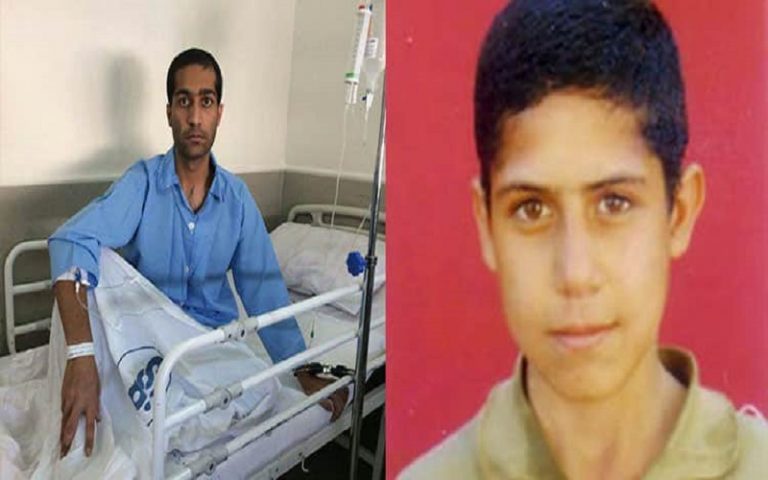
Mohammad Reza Hadadi is now a young man who has been serving time in an Iranian prison for more than 18 years. He was 15 when he was arrested. Now he is 33.

Ever since he was a teenager, Hadadi has spent every night fearing execution. He has forgotten the taste of life and has no vision about it anymore. Worse, he does not even remember making a living. Because of the inhuman laws of the Iranian judiciary, he has been placed among the dangerous prisoners ward.

The authorities have claimed that he killed another person in his childhood. But at the start of his case 18 years ago, he wrote that he was innocent. Now after 18 years he is saying the same thing in his letter again.

“They had fooled me to accept the crime of murder.” The regime’s judiciary has summoned him for execution many times during these long and hard years but every time they have delayed it.

Now he says that he cannot tolerate this situation anymore. He cannot tolerate being imprisoned anymore. He cannot live anymore with the nightmare of being executed. He is asking that his case be reviewed again. Below is his letter:

“Calling the Lord of Hope

Hello,

The head of the judiciary, for once, after 18 years of imprisonment from my adolescence and young ages in Adelabad Prison, please give me an answer.

I am Mohammad Reza Haddadi, son of Nasrollah, born on March 17, 1988 and I was under my mother’s supervision. Then on August 19, 2003 at the age of 15, I was planning to go to Shiraz, I become a passenger of someone who had two other passengers in his car before me. He took another two passengers in between the way.

Then the driver dropped one of them in a place named Mozafar Abad. In between the way, one of the passengers asked the driver to stop the car to go to a toilet, then the driver stopped at Tangeh Abolhayat. The person who asked for toilet then attacked the driver from the back and killed him with the help of the two other persons who were family members of my father. In the middle of the night, I was very scared, and when I was just 15, I witnessed such a crime.

“Then one of the passengers, Mehdi Sassani son of Mohamad Ali, 22, resident of Khesht and Kenartakhteh, threatened me with murder. But Mohammad Taghi Hadadi son of Gholamreza, 19, and Karim Hadadi son of Keramat, 18, who were the family members of my father’s family prevented Mehdi Sasani from killing me.”

Then at the time of being arrested, I was tortured physically and mentally at the police station. At the court of the Kazeroun county, I was fooled by Mohamad Taghi Hadadi and Mehdi Sasani and a policeman, captain Sadrollah Hekamdpoor, and I accepted the crime of Mohamad Taghi Hadadi who had killed the driver with a car propeller belt.

In the prison of Kazeroun county I found out that they have deceived me with false temptations and have assigned their own crime to me.

In this event I am completely innocent. Now after 18 years I am imprisoned in Shiraz’s Adel Abad prison, because of a crime I did not commit. I am asking you as the head of the Judiciary to enter in my case and help me out.

Dear head of the Judiciary, I’m not a killer. Please listen to me and stop the execution of an innocent person. Now I have been for more than 18 years behind the bars of the prison and denied my entire adolescent lifetime, and I hope to prove that I am innocent.

I have no other support than the God almighty. Please help me. I swear by God that I am innocent and cannot tolerate the prison anymore.

Mohamad Reza Hadadi, born on March 17, 1988

This case is just one of the examples of the injustices in Iran and especially by its judiciary which is tied with extreme human rights violations. Every year, many innocent people are executed because the regime needs this lever to suppress the people and spread fear. On many occasions, the regime has been warned and condemned by the international community for executing minors or juvenile offenders.

Iranian Officials Are Concerned Over Mideast Developments

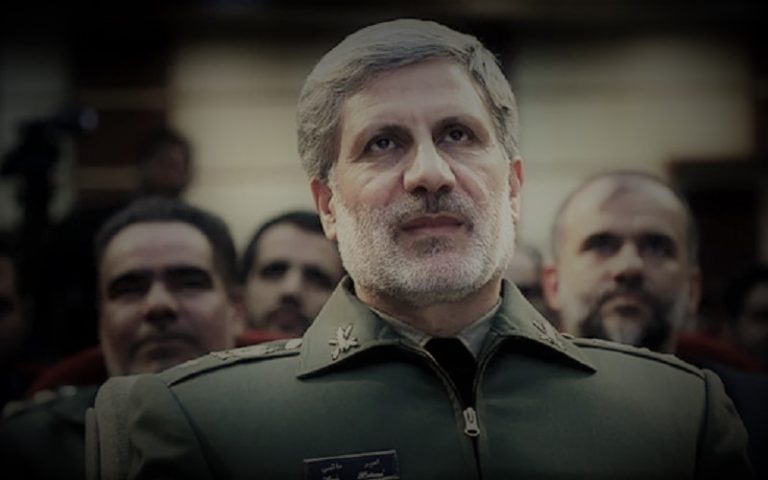
In an online conference on March 18, Iran’s Defense Minister Amir Hatami admitted to the growing opposition to the Islamic Republic regime in the Middle East. He implicitly expressed his concerns over anti-regime developments in the region and across the globe.

“Regional developments like the change of the Iraqi government, the ‘assassination’ of Qassem Soleimani (former chief of the Islamic Revolutionary Guard Corps – IRGC Quds Force) and IRGC Brigade Mohsen Fakhrizadeh (the father of Iran’s nuclear bomb-making projects), as well as recent protests in Lebanon and Iraq, and recent incidents in Syria, are taking place to overcome the Islamic Republic of Iran,” claimed Hatami, attributing these events to ‘foreign interferences.’

Furthermore, he leaked the regime’s concerns over the establishment of the Arab coalition for defending the legal administration of Yemen, Karabakh conflicts between Armenia and Azerbaijan, and the Afghanistan’s objection to the Iranian government’s meddling in their interior affairs.

“The enemy’s conspiracies will continue in strategic aspects. Particularly, in the case of Iran’s regional hegemony and missile capacities, [foreigners] will powerfully continue their path to obtain all their goals,” Hatami added.

Notably, during the past year, several Iranian officials blamed the people of Iraq and Lebanon for ongoing protests against Iran-backed militias’ influence.

On the other hand, Iraqi protesters continued their upheaval in different provinces, especially in Al-Muthanna, Diwaniya, Nasiriyah, Najaf, and Babel. They insisted on the imperative of fundamental changes and called for prosecuting the perpetrators of a bloody crackdown on protesters. They also demanded the dismissal of Provincial Governors and Iran-aligned officials in these provinces. “This is a revolution against murderers and [sectarian] parties,” Rafidain TV aired protesters’ slogans on March 19.

Furthermore, thousands of Syrians marched in Idlib—a base of the Syrian opposition—on March 15, in tandem with the tenth anniversary of the start of protests in 2011. Protesters repeated the 2011 slogans, including, “Freedom, freedom, Syria wants freedom,” “Get out Bashar,” and “The people want regime change.”

Numerous demonstrators had photos of victims and forcibly-disappeared people. During the past decade, the Syrian government and its allies have killed hundreds of thousands of civilians. They have also displaced more than 12 million people inside the country and abroad, according to the United Nations.

“We have come to renew our commitment for the overthrow of Bashar al-Assad like 2011,” a protester told AFP, adding, “We will continue even if it takes 50 years.”

Meanwhile, the UK government simultaneously blacklisted six Syrian officials, including Foreign Minister Feisal Meqdad, for involvement in violence against citizens. Also, U.S. Senator Marco Rubio blamed Bashar al-Assad and his allies for horrific crimes against the Syrian people.


Iran’s Wheel of the Economy Is Rotating, but in Which Direction?

Iran’s president Hassan Rouhani on March 2, 2021 claimed that, “When we said that the centrifuges would spin and the wheel of the economy would spin too, we kept our promise and we made nuclear energy uncostly.”

Despite his ridiculous claim, according to Iran’s state media, 80 percent of the people are below the poverty line and are forced to live on very low incomes.

Four years ago, during Iran’s so-called presidential election in 2017, the regime’s current parliament speaker Mohammad Bagher Ghalibaf acknowledged the existence of a 96 percent disadvantaged majority against a prosperous four percent minority.

The state-run daily Farhikhtegan, citing a Central Bank report, on March 14, 2021 wrote: “Economic growth in 2014 was about 2.5 percent, while this component for 2019 was -7 percent. According to the statistics, in the eleventh and twelfth governments, the country’s economy has experienced negative growth four times, bringing the total economic growth to about zero in the last eight years.”

It is suspected that the statistics of the relevant government institutions, including the Central Bank, have been downsized and their reports do not reflect all the realities of the economic crisis, but the same statistics and reports also indicate the catastrophe that the theocracy has caused to the economy and people’s livelihood.

The state-run daily Mostaghel on March 15 wrote: “Given the government’s tight control over the Central Bank and the Statistics Center of Iran and the slow and expedient publication of the statistics in the society, which is unreliable to many economists, according to these statistics, the average economic growth of zero percent is quite evident, point to point inflation is more than 50 percent, successive changes in the prices of currency and gold, etc. The growth of more than a few hundred percent and the catastrophic housing and countless other cases do not promise to turn the economic wheel.”

An Mostaghel daily article writer further wrote to Rouhani: “Economic indicators cover most different areas of society, including lifestyle, employment, and livelihood, which contradicts with the order of his Excellency’s command to turn the wheel of the economy.”

Meanwhile, the stagnant economy of the government relies on the government taking over the pockets of the people through taxes, borrowing from the Central Bank, printing banknotes, and robbing the National Development Fund, which has caused inflation and price rise. This has thrown the people into the vortex of poverty and misery.

Arman daily on this subject on March 15 wrote: “In a situation where we are facing a high deficit, there is a double pressure on the resources of banks and the Central Bank, the result of which is the withdrawal of Rials from the National Development Fund. Since the reserves in the fund are very limited, we know that any withdrawal from the National Development Fund will lead to money printing. Next year, part of inflation is due to the budget bill that is being approved today.”

Yes, the cycle of the economy is spinning, but with high inflation and practically in this cycle, the deprived and impoverished people are those who are being crushed under this spin.

A report by the regime’s Statistics Center said: “According to the report of the Statistics Center on Inflation of Foodstuffs in February, there is a 100 percent change in 17 foodstuffs compared to February of last year. Although the March inflation report will be published in April, but the comparison of the announced prices of Eid (Persian New Year) fruit in March 2021 and its comparison with March 2020 shows an increase of 11 to 68 percent in prices.”

Regarding the claim of Rouhani, Nezame al-din Mousavi, a member of parliament and former director of Fars, said: “He has made a big mistake about the verb to spin, or he has seen the direction of the rotation of the wheel wrong, or what he has seen was not a wheel at all.” (ICANA, March 6)

Finally, the state-run daily Farhikhtegan made a clear conclusion about Iran’s economic situation and wrote: “Investment falls into a rate of -6, eight years with zero economic growth, record inflation in the last 60 years, 700 percent rise in the dollar rate, 10-year record of class division, pulverization of the system’s social capital with the collapse of the stock market, people’s empty tables, 50 percent construction decline and 650 percent price growth.”

Dividing Iran in an Unfair Manner

The division of Iran’s fertile land began from the first day of the 1979 revolution when the clerics captured it from the people. In the land of the oppressed, they usurped the Shah’s properties and left for the people just empty baskets and desks.

The clerical authorities have ruthlessly and insatiably plundered oil, gas, mines, and fisheries in the past and seized the mountains, soil, forests and even the skies of Iran. Phenomena such as mountain and forest seizing are part of the result of the mullahs’ rule that have driven the country 500 years backwards.

Iran observers note there not a single day goes by when the mullahs and their Revolutionary Guards (IRGC) do not make a new arrangement to steal a new part of the wealth of the nation.

We have not forgotten that Ali Akbar Velayati, Supreme Leader Ali Khamenei’s’s advisor who has 37 jobs and positions in this regime, called on the Iranian people to follow the example of the Yemeni lame-belted people and not to expect so much.

“Learn from the Yemenis how they resist threats and sanctions. Instead of clothes, they are lame-belted, have a gun in their hands and a few pieces of dry bread, and just on foot, but the Saudis are powerless confronting them.” (State-run daily Entekhab, September 29, 2018)

While Velayati advises people to wear a Yemeni lame and eat dry bread, social media posted photos of his sons attending the Greg Wall Street party at Istanbul’s Shangri-La Hotel as a successful tower builder from Saif Bana company. At the same time, it was revealed that Velayati owns a 1000-meter house next to Saadabad Palace.

The existence of such officials is not surprising in a government where the head is corrupted, as an Iranian saying says: ‘the fish fester from its head’.

When a reporter once asked the regime’s foreign minister Mohammad Javad Zarif:

“People ask that all these countries in the world have good relations with other countries and there is no pressure on them. Why is there pressure on Iran?”

He brazenly responded: “We, the people of Iran, wanted to live differently.”

It is with this view that on state television, people are told not to eat fruit in expensive conditions or to eat just rice without meat or ‘Eshkeneh’ (a very primitive meal with potatoes and onions) and be satisfied.

But the truth is that each of these statements is just increasing the people’s fury against their turbaned rulers. The state-run media only reflects a small part of this resentment, but it is also catastrophic.

“Today, people do not want to speak and decided instead them, and then to say that the people themselves wanted to live this way. Today, our people see some officials and agents are doing strange things in the name of circumventing sanctions. Witnessing rent and right-seeking. That is why people are critical. Critic of why the resistance should always be related to the lower and specific deciles of the society and only the workers and the deprived and border areas people must be satisfied and waiting for the reward of the hereafter.

“Why must the fuel porters risking their lives and accepting the bullets (IRGC soldiers) and the cargo porters must accept the risk of the borders just for a piece of bread. Why do these strata have no tribune, and their voices are not heard, and then the tribunes are for officials and experts to talk about lame-belting around the waist and the people’s choice, and to eat less meat and fruit and be satisfied?” (State-run daily Arman, March 18, 2021)

This newspaper asked: “Why do people no longer accept these dictated and shabby ideologies?”

This is a question the answer to which is known well by the Iranian leadership.

Iran Wants To Execute Another Juvenile Offender

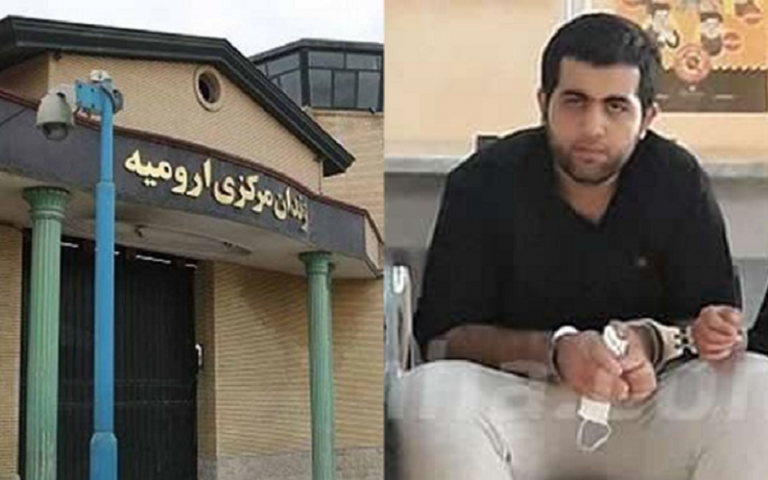
According to human rights defenders in Iran, juvenile offender Aydin Delaei Milan is at imminent risk of execution in Iran. The authorities detained him two years ago in Tehran. He is currently 20 years old.

In an act of self-defense, Aydin Delaei Milan killed an abuser on September 10, 2018. However, the State Security Forces (SSF) detained him and transferred him to Urmia, the capital of the northwestern province of West Azarbaijan.

Supreme Court Upholds the Death Penalty

Although Milan was under the age of 18 at the time of the incident, the judge sentenced him to execution in flagrant defiance of the Convention on the Rights of the Child. The Supreme Court upheld the death penalty and sent the case to the Office for the Implementation of Sentences.

Following his arrest, authorities took Milan to the youth detention center after preliminary interrogations. He was later transferred to the notorious Rajaeishahr Prison (Gohardasht) in Karaj, Alborz province’s capital in west of Tehran.

In October 2020, this juvenile offender was transferred to the Urmia Central Prison. He has been on death row since then. In Iran, juvenile offenders routinely receive heavy sentences, including the capital punishment in violation of Iran’s commitments under international law. The Islamic Republic is among the few states that execute juvenile and teenage offenders across the globe.

This is while the Islamic Republic of Iran is a party to the Convention on the Rights of the Child. Iran adhered to the Convention in September 1991 and ratified it on July 13, 1994.

“No child shall be subjected to torture or other cruel, inhuman, or degrading treatment or punishment. Neither capital punishment nor life imprisonment without the possibility of release shall be imposed for offenses committed by persons below eighteen years of age,” the convention notes in Article 37 (a).

Iranian Authorities Hanged Five Juvenile Offenders in 2020, Killed Several More Under Torture

However, Iran’s judiciary mercilessly issues and implements death penalties against ‘persons below eighteen years of age.’ In 2020, Iranian authorities hanged at least five juvenile offenders, including Shayan Saeedpour, Majid Ismaeelzadeh, Arsalan Yasini, Moayyed Savari (Shia’ pour), and Mohammad Hassan Rezaei.

All these executed persons had been detained and sentenced to death sentences for crimes allegedly committed under the age of 18. Indeed, some were kept in prison for a long time. For instance, Mohammad Hassan Rezaei was behind bars for 12 years, and authorities executed him in Lakan Prison in Rasht, the capital of the northern province of Gilan, on December 31, 2020.

Furthermore, Iranian interrogators killed several inmates, who had been arrested below 18 years of age, under torture. In April 2020, authorities tortured juvenile offender Danial Zeynolabedini to death in solitary confinement in Mahabad Prison. Two days earlier, he had called his family from the prison, saying, “Come and save me.”

Also, in November 2020, interrogators tortured 19-year-old Mohammad Davaji to death at Amirabad Prison in Gorgan, the capital of the northern province of Golestan. Torturers killed Mohammad in front of other inmates, saying, “This is a lesson for you.”

It is time for international organizations to hold the Iranian government accountable for its gross and systematic violations of human rights, particularly children’s rights, dissidents say. The United Nations, UN Human Rights Council, UNESCO, and other rights organizations must pressure the ayatollahs to respect the people’s fundamental rights of life and stop executions. Notably, Iran is the record-holder of executions per capita.

Ukraine’s Sharp Reaction to Iran’s ‘Fake Report’ on the Downed Passenger Plane

0

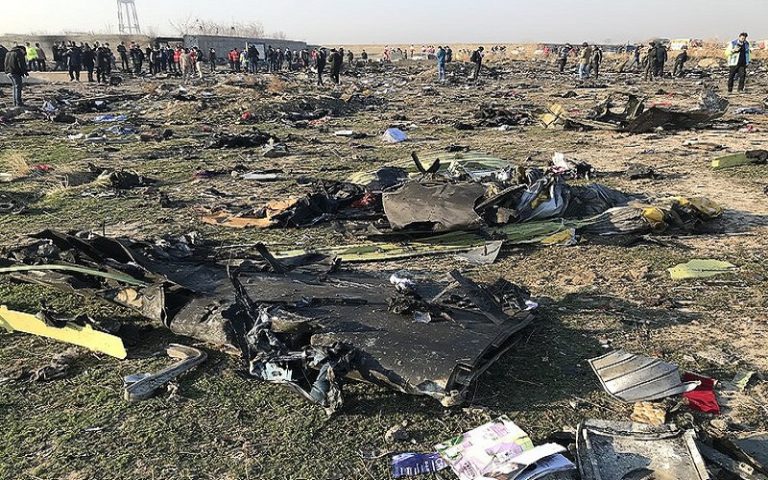
On Wednesday, Ukraine strongly reacted to a ‘fake report’ in Iran about Ukrainian passenger aircraft PS752 which was shot down by the Revolutionary Guards (IRGC) air defense forces last year. Ukraine emphasized that it will not allow the Iranian government to flinch from its crime and responsibility of the downed Ukrainian aircraft.

The Foreign Minister of Ukraine on Wednesday, March 17, criticized the report of Iran’s Civil Aviation Organization (CAO.IR) about the Ukrainian airliner. Ukraine considered it a neglected effort of Iranian government officials to hide real reasons for the crash of the Ukrainian aircraft.

Ukraine’s Foreign Minister Dmytro Kuleba wrote on his Facebook page:

“What we saw in the published report today is nothing more than a cynical attempt to hide the true reasons for the downing of our plane. We will not allow Iran to hide the truth, we will not allow it to avoid responsibility for this crime.”

He added: “Today Iran publicly released the final report of the technical investigation of the downing of the UIA flight PS752 in the sky above Tehran. Previously, Ukraine sent Iran more than 90 pages of remarks and proposals to the draft final report and insisted on Iran including them into the final document, but what we saw published today – just a cynical attempt to hide the true causes of the downing of our passenger aircraft.

“We are forced to conclude that the investigation has been biased, presented proves are selective, and conclusions are deceptive. The document does not cover all the circumstances, it does not reveal neither causes of the tragedy nor the chain of events which led to it. This is not a report, this is a collection of manipulations, aimed not at establishing the truth, but to acquitting the Islamic Republic of Iran.

“Iran could not find the strength to take responsibility for ensuring that such tragedies do not repeat in the future. If Iran does not want to voluntarily demonstrate its willingness to establish the truth of the tragedy, we, together with our partners, will find ways to establish it. We will not let Iran to hide the truth or avoid responsibility for this crime. Justice will prevail, no matter how much effort and time it will take. This is not only a matter of principle, but also a moral obligation to the victims of this terrible tragedy.”

Iran’s Civil Aviation Organization introduced the incident in a 285-page report and announced the culprit of this crime to be the IRGC’s ‘air defense system’. According to the report, due to an error in geographical adjustment, it detected the passenger aircraft as a hostile target and fired two missiles towards it.

The passenger plane, which was supposed to operate flight PS752 on the Tehran-Kyiv route, was shot down near the Imam Khomeini International Airport in Tehran immediately after takeoff early in the morning on January 8, 2020.

On March 17, the International Coordination and Response Group for the victims of Flight PS752 issued the following joint statement which was published on the UK Government’s website:

“We, Ministers representing Afghanistan, Canada, Sweden, Ukraine, and the United Kingdom, have taken note of the release of the Islamic Republic of Iran’s final safety investigation report into the downing of Ukraine International Airlines Flight 752 (PS752).

“The Coordination Group countries will now carefully review this report and its findings. We stand in solidarity with the families and loved ones of the victims, who continue to grieve their profound loss.

“As we have done since the beginning, the Coordination Group will continue to seek accountability and transparency from the Islamic Republic of Iran for this tragedy and justice for the victims.”

Iran Backfires on Itself With Recent Nuclear Extortion

Speaking at the European Policy Centre think tank, Iranian Foreign Minister Mohammad Javad Zarif said, “Time is running out for the U.S. to revive the nuclear deal.” This is while Iran is the party deliberately appealing for sanctions relief and generous privileges afforded to his government under the Iran 2015 nuclear deal, formally known as the Joint Comprehensive Plan of Action (JCPOA), due to its horrible economic conditions.

“The Europeans are used to compromise. Iran and the United States are not. The Americans are used to imposing, and we are used to resisting. So now is the time to decide will we both compromise and go back to the JCPOA, or will we go back to our own paths?” Zarif said.

The Foreign Minister did not mention what Iran’s own path is. However, Tehran’s recent decisions over enriching uranium to 20 percent concentration, stockpiling uranium more than 14 times over the limit set in the 2015 deal, and restricting the UN nuclear watchdog are strong indicators of the ayatollahs’ destination.

Furthermore, the Iranian government began producing uranium metal—material that can be used to form the core of a nuclear weapon—since February 10.

In an interview with state TV Channel Two on February 8, Iran’s Minister of Intelligence and Security (MOIS) Mahmoud Alavi issued a warning about Tehran’s probable intention to produce nuclear weapons. “In his Fatwa, the Supreme Leader [Ali Khamenei] announced that the production of nuclear weapons is Haram [forbidden]… However, if [foreigners] pushed Iran to that path, then [the production of nuclear weapons] is not Iran’s fault,” he said.

All these facts display Iran has been placed in an awkward position due to international sanctions and isolation. The ayatollahs hoped that the new U.S. administration would hastily rejoin the JCPOA, lift the sanctions, and afford uncountable privileges once again. In this context, they even resorted to nuclear extortion to drive U.S. President Joe Biden to their desired path.

However, contrary to their preliminary assessments, times have changed, and U.S. officials have clearly announced that they would never feed crocodiles for nothing. Instead, they planned to sign a longer and more comprehensive deal, which excessively restricts Tehran’s malign behaviors in the Middle East and stops the government’s provocative ballistic missile programs.

Therefore, the U.S. is not enthusiastic to ink a deal with President Hassan Rouhani’s administration, which will remain in power for no longer than six months. This means that the Iranian government should endure current pressure at least until the 2021 Presidential election in June.

On the other hand, Khamenei has frequently announced his objection to making a new deal with the U.S. According to recent developments and state-run media reports and analyses, loyalists to Khamenei and JCPOA critics, who constantly called on the government to leave the deal, will establish the next administration in Iran. This is another serious dilemma preventing the U.S. from stepping in a foggy path.

Furthermore, in an interview with Axios released on March 10, the State Department’s Iran envoy Rob Malley declared that “U.S. President Joe Biden’s administration will not rush to renew the abandoned 2015 nuclear deal with Iran before the latter’s June elections which are widely expected to see a rise of a more hardline president in Tehran.”

“We don’t intend to base the pace of our discussions on the Iranian elections – the pace will be determined by how far we can get, consistent with defending U.S. national security interests,” Malley added.

In this respect, Tehran’s recent steps of extortion likely gained inverted consequences for the government. In other words, the international community realized the ayatollahs’ severe need for making a deal due to their back-breaking financial pressure.

In such circumstances, major powers look for restricting the world’s number one state-sponsor of terrorism and preventing it from obtaining nuclear weapons rather than offering concessions, which put global peace and security in jeopardy. Tehran’s recent nuclear ambitions have led the country to more restrictions and raised the risk of the ayatollahs’ achieving atomic weapons more than ever before.

Iran’s New Wave of Protests

Iran has seen a fresh wave of protests over the past few days and the state-run media are warning that this could lead to an uprising that would unseat the regime.

Electricity workers gathered outside the parliament on Tuesday to protest officials who failed to meet their demands for full payment of wages, fixing hiring procedures, addressing official and contract workers’ distribution issues, and stopping contractor companies from stealing their money. One protester carried a banner that advised that contract workers are paid just one-third of official workers’ salaries.

Meanwhile, municipality workers in Behbehan protested outside the City Council over their unpaid wages.

At the same time, livestock farmers in Gonabad protested outside the Agriculture Ministry over the authorities’ failure to support them, as high feed costs for animals and low milk prices, meant that they were forced to sell dairy cattle as livestock.

On Monday, railway workers in Karaj and Varamin continued to strike over unpaid wages and new year bonuses. They also went on strike last week. The Karaj workers are worried that the contracter won’t pay their wages once the project in complete so they are demanding that the authorities settle their contracts and ensure their job security.

Meanwhile, Iran Maye factory workers protested outside the Tabriz factory over the sudden closure.

As this was going on, the state-run Mostaghel daily wrote: “Iran is engulfed in a cloud of crises. There’s a probability that you won’t be able to control urban riots… The society has been polarized and 70 million people are discontent.”

It compared the current protests and the November 2019 uprising, with the previous ones in 1999 and 2009, saying that it’s not just the middle-class taking to the streets, but the 80% of the country who are impoverished. This, the paper said, scares the ruling system.

In addition, the people have roundly rejected the mullahs’ false distinction between the moderate and hardliners, which means that they are likely to boycott the June Presidential election, as they did the parliamentary one last year. This will chip away at the regime’s claims of legitimacy.

It also doesn’t help the regime that the Deputy Trade and Mine Minister mocked people’s inability to afford food, which Mostaghel criticised on Tuesday in a piece about citizens’ declining living conditions, where they said that “there will be nothing left on the people’s tables to eat and survive”.

They wrote: “Why should one of the main challenges of the people be to stand in long queues to buy poultry, oil, and other food items? Does having strong military allies such as Russia and China and Hamas and Syria guarantee the survival and independence of our country and society? The people are clearly seeing that after eight years, the government that is in power has done nothing to solve the people’s most basic food needs.”