Home Blog Page 32

Ninth Day of Nationwide Protests in Iran

On the ninth day of nationwide protests in Iran, protest gatherings and strikes by bazaar merchants continued, and the Iranian regime once again tried to suppress the protests through violence. More public figures, organizations, and athletes inside and outside Iran voiced support for the protests.

According to reports published on social media, shops in several Iranian cities, including parts of Tehran (the capital), parts of Karaj (near Tehran), Marvdasht, Kazerun, and the port city of Bandar Ganaveh, were closed on Monday, January 5, as shop owners went on strike.

In Iran’s capital, repressive forces and the Iranian regime’s special units were on alert in several areas, including in front of Tehran University, one of the country’s main public universities.

At the same time, merchants in the “Cheragh Bargh” section of the Tehran Bazaar and traders in Tehran’s iron market joined the nationwide strike by closing their shops. Subsequently, bazaar merchants confronted the Iranian regime’s security forces.

Protest gathering in Yasuj

Protesters in Yasuj, the capital of Kohgiluyeh and Boyer-Ahmad province, held a street protest. Published videos showed repressive agents attacking the families of detainees from Yasuj in front of the city’s governorate building.

Arrest of hundreds of teenagers, threats by the judiciary, and internet shutdowns

As the protests continued across different parts of the country, dozens of citizens ranging from teenagers to adults were arrested in various cities. These arrests mainly took place during street protests and public gatherings and, in many cases, were accompanied by violence. Security forces carried out widespread arrests through nighttime raids, beating protesters, entering private homes, and confiscating personal belongings.

Many of those detained, including school students, university students, teachers, women, and ordinary citizens, have been transferred to unknown locations without the presentation of a clear judicial warrant or any official notification. Field reports indicate that most families remain unaware of the condition of their detained children and relatives, and no possibility of contact or visitation has been provided. Security institutions have so far released no official information regarding the charges against detainees, and the lack of information about their physical condition, place of detention, and access to legal counsel has intensified concerns. These circumstances have prompted human rights organizations to warn about the expansion of systematic violations of citizens’ basic rights.

Gholamhossein Mohseni Ejei, the head of the Iranian regime’s judiciary, said on Monday: “There can be no leniency toward rioters. If there were concessions in the past, this time we will make no concessions, because the Israeli regime and the foolish and irrational president of America have officially supported the riots.”

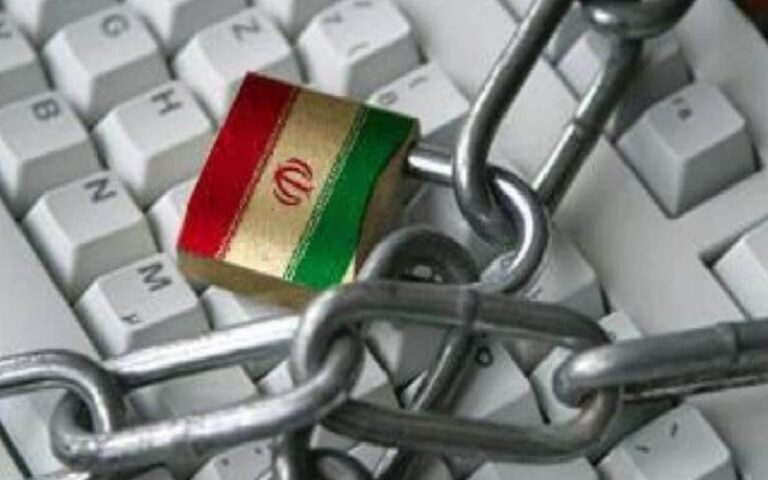
Sattar Hashemi, the Iranian regime’s minister of communications and information technology, said regarding internet restrictions and shutdowns that this policy is not “absolute and permanent” and depends on specific conditions and decisions made with security, livelihood considerations, and the “protection of citizens’ lives” in mind.

In recent days, alongside the spread of nationwide protests, internet access has been restricted or cut in some parts of Iran.

According to the National Council of Resistance of Iran (NCRI), so far 18 citizens have been killed by the Iranian regime’s security forces.

Based on videos and field reports, the county of Sonqor and Kolyai in Kermanshah province was among the first areas to witness a large presence of protesters. On Sonqor’s main street and in Moallem Square, large crowds gathered chanting “Neither Gaza nor Lebanon, I sacrifice my life for Iran” and “Death to the dictator.”

In Yasuj, families of those detained in the nationwide uprising held a protest gathering demanding the immediate release of their loved ones. The rally was held with chants of “Freedom, freedom, freedom” and reflected widespread anger over mass arrests and the brutal repression by the clerical regime.

Iran’s Regime Pressurizes Families of Martyrs of Recent Protests

In the latest crime of the Iranian regime during the nationwide uprising of January 2026, Amir Mohammad Kouhkan, a young futsal coach and referee, a former goalkeeper for teams in Fars province and a youth-level coach, was killed on the evening of Saturday, January 3, in the city of Neyriz in Fars province after being directly shot by the Iranian regime’s security forces.

But the regime’s brutality did not end with killing him. Its agents abducted his bloodied body from the scene and took it to an unknown location. Despite all efforts, his family and friends were unable to determine where the body was being held.

According to reports, on Sunday, January 4, intelligence agents summoned and interrogated Amir Mohammad’s parents. They were angry that news of Amir Mohammad’s killing had become public and asked: “Why did foreign media publish the news? Why have people mentioned FIFA?”

The End of The Mullahs’ Regime in Iran Is Near

The Iranian regime threatened the family to “confess” in front of the cameras of the state-run broadcasting network of Fars province that Amir Mohammad was not a protester but had left home to “help the poor” and was killed by “protesters.” When his parents refused to submit to this false narrative, they forced the family’s uncle to repeat this fabricated claim on camera.

Sources close to the family said that the people of Neyriz are furious. It is a small city, and everyone knows who killed Amir Mohammad. But the regime is trying to deceive the public through lies. Security institutions were even angered that the International Federation of Football (FIFA) had been informed and told the family to remain silent about the news so that the body would be handed over.

The family’s main concern is that the regime may secretly bury Amir Mohammad at night in an unknown location so that no ceremony can be held. He was a hardworking young man who rose from goalkeeping to coaching and refereeing; the entire city loved him, and now everyone is mourning him.

This crime is part of the Iranian regime’s recurring pattern: killing, abducting bodies, pressuring families for forced confessions, and spreading media disinformation.

Prices of Essential Goods to Rise by Up to 30% in Iran

Fatemeh Mohajerani, the spokesperson for the government of the Iranian regime, announced that prices of essential goods will increase by between 20% and 30% in the coming weeks.

In a televised interview on Monday, January 5, she said that price increases for some goods such as cooking oil, chicken, and eggs will be “significant.”

Despite the regime’s Majlis (parliament) announcing the approval of the general framework of the 2026 budget with a preferential exchange rate of 285,000 rials, Mohajerani reported the government’s decision to unify exchange rates.

Rising Food Prices Threaten Health of Iran’s Population

She added: “So that the unification of the exchange rate does not put pressure on the people, each Iranian household will receive, per person, 10 million rials per month, which will be deposited as credit into the household head’s account from January to March, and households will be able to begin their purchases in the next one or two days.”

According to Mohajerani, this credit can only be used to purchase 11 items, including milk, cheese, yogurt, meat, eggs, liquid cooking oil, pasta, sugar cubes, sugar, and legumes, at more than 268,000 stores nationwide.

Mohajerani’s remarks about rising prices of essential goods come as a wave of price hikes for these items began weeks ago and has intensified in recent days.

Didban Iran, a domestic news outlet, reported on January 1 that domestically produced cooking oil has been scarce for weeks, and some chain stores offer limited quantities every two days, which usually sell out before noon.

According to the report, citizens who visit stores in the afternoon can only purchase corn oil, which is also available in limited quantities and at very high prices.

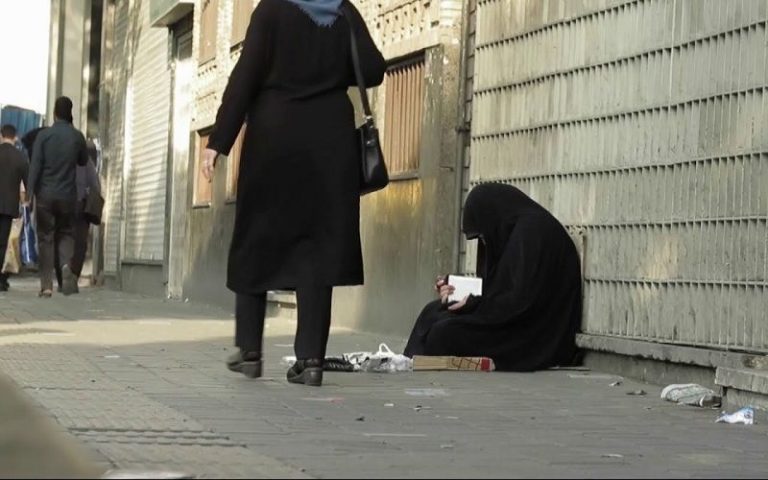
The government’s solution to confront these price hikes is the distribution of food vouchers and a subsidy of 10 million rials, which according to Mohajerani will be valid for one or two months. At present, the price of the U.S. dollar in Iran’s market is around 1,450,000 rials, making 10 million rials equivalent to about 7 dollars.

The government spokesperson acknowledged that removing the preferential exchange rate will increase inflation in the short term, but said, “Predictions indicate that over a period of several months, inflation will be controlled in a fundamental manner.”

Massoud Pezeshkian, the president of the Iranian regime, announced on January 1 the official removal of the 285,000-rial preferential exchange rate and said that anyone who received this currency for importing essential goods would “consume it for themselves.”

However, Mohammad Bagher Ghalibaf, the speaker of the regime’s Majlis, announced on January 5 that the preferential exchange rate will not be removed from next year’s budget.

According to the approved budget framework, 8.8 billion dollars in preferential currency has been allocated to prevent increases in the prices of essential goods.

Experts, citing point-to-point inflation of 52% in November and forecasts that the free-market dollar rate could rise to 1,600,000 rials by the end of the year (March 22, 2026), have warned that Iran will face even higher inflation.

The End of The Mullahs’ Regime in Iran Is Near

On the eighth day of nationwide protests in Iran, and despite the heavy security presence on the streets of Tehran and other cities that have witnessed demonstrations over the past week, the strike by bazaar merchants is continuing.

In a video published on Sunday, January 4, from in front of Tehran’s Alaeddin Shopping Center, security agents are seen clashing with shopkeepers and firing tear gas at them. A heavy security atmosphere also prevails in Tehran’s Grand Bazaar, where agents of the Iranian regime and other repressive forces have been deployed in the cloth sellers’ section and several other parts of the bazaar, attempting through threats and intimidation to force merchants to reopen their shops.

Messages from Qezel Hesar and Evin Prisons Signal Defiance Against Dictatorship and Solidarity With Nationwide Protests

In the largest wave of anti-government protests in Iran in the past three years—sparked by worsening economic conditions and rising living costs, during which several people have been killed and hundreds arrested by the Iranian regime—U.S. President Donald Trump stated that if protesters in Iran are fired upon, the United States would intervene to save them.

The Iranian regime’s reaction was highly frantic. Ali Larijani, the secretary of the regime’s Supreme National Security Council, stressed that Donald Trump must know that any U.S. intervention in this “internal matter” would lead to instability across the entire region and undermine Washington’s interests. At the same time, Ali Shamkhani, an adviser to the regime’s supreme leader, warned that Iran’s national security is a “red line” and that any interfering hand targeting it under false pretexts would be cut off with a regret-inducing response before achieving its goal.

In such an atmosphere, the question arises as to where current developments are heading and what scenarios lie ahead for Iran.

This is not the first time that the people of Iran have expressed their dissatisfaction with the ruling regime. Severe economic pressures on the one hand, and the Iranian regime’s costly conflicts and interventions in regional cases such as Lebanon, Yemen, and Gaza on the other, have led to sanctions and international isolation, imposing heavy consequences on the daily lives of Iranians.

The Iranian regime’s nuclear bomb project has consumed hundreds of billions of dollars from national resources over the past years.

Although the current protests have taken on a new form, they remain aligned with previous demonstrations that called for freedom, broader political participation, improved economic conditions, and an end to the rule of the mullahs. To confront protest movements, the Iranian regime resorts to its usual approach: repression, executions, and violent and deadly behavior toward protesters.

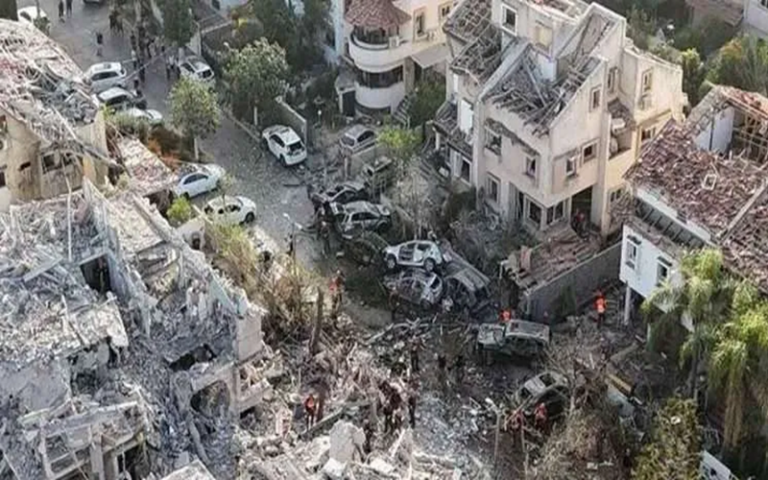
This is the first wave of protests following the recent war between the regime and Israel—a war that resulted in extensive damage, targeted assassinations, and a wave of public outrage. Today’s protests have emerged amid increasing international pressure on the regime due to its terrorist intervention in the region.

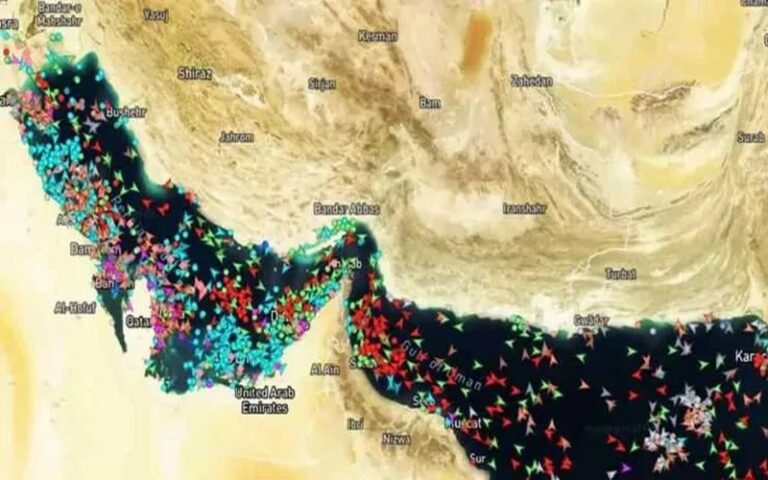
Today, the Iranian regime is in an extremely critical and fragile position; it is economically and diplomatically besieged, and its relations not only with regional countries but also with a wide range of international actors are marked by tension. Attacks on vessels, their seizure, and what the West calls “destabilizing maritime actions” have intensified this isolation.

In this context, the U.S. warning signals entry into a new phase that no longer allows the regime to intervene freely wherever it wishes or to continue suppressing domestic protests without cost while considering itself the region’s unchallenged power.

The global community’s stance on Tehran’s missile program, nuclear file, and network of proxy forces in the region cannot be separated from the recent wave of protests. While previous protest movements were also suppressed through harsh measures, the Iranian regime officials’ recent reaction to the current demonstrations shows that Tehran is attempting to shift the balance back in its favor by relying on counter-pressure tools. Experience has shown that the Iranian regime will never abandon the repression of its people, interference in regional countries’ affairs, and the export of terrorism.

The regime has entered a phase of serious instability and inability to restore balance. This situation is unfolding within the framework of a convergence of regional and international interests that are gradually expanding, forcing the Iranian regime to take them into account, as the fate of such systems is clear to all.

The regime of Bashar al-Assad, contrary to public perception, collapsed in a short period, even though until weeks before its fall many believed the Damascus regime was invincible. No dictatorial regime—whether religious or military—can ultimately withstand the will of its own people.

History has shown that people will not return to any form of dictatorship, whether monarchical or religious.

The regime is on a downward path toward collapse, and Iran is gradually preparing itself for a new chapter. Change may not happen overnight, but current developments show that the people of Iran are not alone.

As a result, it can be said that the Iranian regime has entered a period akin to agony—one that will inevitably lead to structural transformations, dismantle the ideological foundations and overall structure of the ruling system, and push Iran toward democracy.

Iran’s Water Resources Remain Fragile Despite Recent Rainfall

The state-run ISNA news agency reported on Sunday, January four, quoting the director general of Iran’s Water Information and Data Office, that the country’s water resources remain in a fragile condition due to the continuation of multi-year droughts.

According to Firouz Ghasemzadeh, the recent rainfall has had only temporary effects and is not capable of compensating for the accumulated deficit caused by several consecutive years of drought in Iran.

According to this report, precipitation in the current water year has increased by 11% compared to the long-term average and by 76% compared to last year.

Iran’s Water Crisis is Getting Worse

Nevertheless, the provinces of Tehran and Alborz have experienced the largest decline in rainfall, with a decrease of more than 70% compared to the long-term average.

The director general of the Water Information and Data Office stated that the provinces of Hormozgan, Kerman, South Khorasan, Razavi Khorasan, and Fars—unlike Tehran and Alborz—have experienced increases of more than 50% compared to the long-term average.

Nevertheless, according to Firouz Ghasemzadeh, the reservoirs of dams in the provinces of Tehran, Isfahan, Razavi Khorasan, Qom, Zanjan, and Markazi are in unfavorable conditions, and the supply of drinking water in cities dependent on these sources faces limitations; therefore, water consumption management remains a serious necessity in the country.

UN Special Rapporteur Urges Iran’s Regime to Respect the Civil Rights of Protesters

Mai Sato, the United Nations Special Rapporteur on the human rights situation in Iran, referring to the escalation of nationwide protests, called on officials of the Iranian regime to respect the rights to freedom of expression, association, and peaceful assembly, and to refrain from using violence against protesters.

In a message posted on the social media platform X, Mai Sato said that over the past six days of nationwide protests in Iran, reports indicate an intensification of confrontations between protesters and security forces, a pattern that she said is spreading nationwide. Sato stated that she has received “concerning” reports indicating that at least eight protesters have been killed during these protests.

Referring to the obligations of governments under international law, she called on Iranian officials to respect rights related to freedom of expression, freedom of association, and the right to peaceful assembly, and to refrain from using “excessive force” against peaceful protesters.

At the same time, senior United Nations officials also called for restraint and respect for the fundamental rights of citizens.

Earlier, the United Nations High Commissioner for Human Rights said that the office is closely and with concern monitoring the ongoing protests in Iran and reports related to violence. This international body emphasized that it is continuously observing developments on the ground and the situation of protesters.

In this context, Volker Türk, the United Nations High Commissioner for Human Rights, called on those in authority to respect rights related to freedom of expression, freedom of association, and the right to peaceful assembly. He said that all individuals must be able to protest peacefully and freely express their demands and grievances.

The office of the spokesperson for the United Nations Secretary-General also stated that the organization supports the right to peaceful protest everywhere and emphasized the need to protect protesters and prevent an escalation of violence.

These reactions come as reports from various cities across Iran indicate the continuation of protests and a heavy presence of security forces, while human rights organizations warn of rising casualties and arrests.

On the sixth day of nationwide protests in Iran, gatherings and marches continued in a number of cities, and during the funerals of three slain protesters, chants were voiced against the Iranian regime. At the same time, Donald Trump said that if Iran’s rulers kill peaceful protesters, the United States will come to their aid.

Messages from Qezel Hesar and Evin Prisons Signal Defiance Against Dictatorship and Solidarity With Nationwide Protests

As nationwide protests and strikes by merchants and professional guilds continue to spread across Iran, two political prisoners—Asadollah Hadi from Qezel Hesar Prison and Shahin Zoghi Tabar from Evin Prison—have issued separate messages expressing solidarity with the uprising and sharply condemning Iran’s ruling system. Their statements reflect a broader convergence between street protests and resistance voices from inside Iran’s prisons.

Asadollah Hadi: “A Clear Line Against Both Shah and Mullahs”

In a message dated December 29, 2025, from Ward 4 of Qezel Hesar Prison, political prisoner Asadollah Hadi addressed Iran’s merchants, workers, and protesting social groups, explicitly aligning himself with the ongoing strikes and demonstrations.

He praised the protesters for rejecting all forms of dictatorship, stating: “You have loudly proclaimed your clear line against both Mullahs and Shah, and you are moving forward to shape a new blueprint for a democratic Iran.”

Hadi emphasized the depth of social collapse caused by decades of authoritarian rule, writing of merchants “whose backs have been broken” and whose livelihoods have been destroyed over 47 years of repression. He extended his support to workers, farmers, retirees, teachers, doctors, students, and youth, describing them as generations whose futures have been “pre-sold” by the ruling system.

Commending the courage of those confronting repression, he wrote: “Blessed is your dignity and resolve for standing today against the oppression of this anti-people regime… with slogans of ‘Death to the oppressor, whether Shah or Supreme Leader.’”

Referencing Massoud Rajavi, Hadi framed the protests as approaching a decisive moment: “We political prisoners know well that, as Brother Massoud said, only one step remains to uprising—a step that must be realized through every sacrifice.”

He concluded by affirming unwavering solidarity until, in his words, “the dawn of freedom for our beloved homeland, Iran.”

Shahin Zoghi Tabar: “Resistance Is Our Only Capital”

In a separate message from Evin Prison, political prisoner Shahin Zoghi Tabar addressed what he called the “brave and honorable people of Iran,” describing the news of the uprising as a source of inner liberation even behind prison walls:

“When I heard about your uprising from inside Evin Prison, I felt freer than ever before, because I consider resistance against dictatorship the highest form of freedom.”

Zoghi Tabar offered a stark characterization of the ruling system: “The regime ruling Iran is neither a republic nor Islamic, but a system of religious fascism that understands only the language of force, weapons, and fire.”

Addressing protesting youth and what he referred to as “rebellious centers,” he underscored the strategic impact of street protests: “Your presence on the streets shifts the balance of power against the clerical dictatorship.”

Invoking past uprisings, he argued that sustained resistance has tangible consequences, pointing to the post-2019 period as a turning point for the regime’s regional posture.

He asserted that the divide between the people and the ruling system is irreparable:

“From Fatemeh Amini to Mahsa Amini, there is an ocean of blood between us and the dictatorship.”

Zoghi Tabar concluded with an unequivocal declaration of alignment with the protests:

“I, Shahin Zoghi Tabar, political prisoner of Evin Prison, ask you to use every moment and every second. Seize the regime’s centers of repression… We political prisoners stand with you until our last breath.”

His message closed with the slogan: “Death to Khamenei, hail to freedom.”

Dozens of Protesters Arrested During Iran’s Nationwide Protests

Six days after the start of nationwide protests in Iran, security forces of the Iranian regime have arrested dozens of protesters in various cities. So far, no precise figure for the number of detainees has been released.

Meanwhile, Mansour Saleki, the political, social, and security deputy of the governor of Malard, a city in Tehran province, announced on Thursday, January 1, the arrest of 30 people, describing them as disruptors of public order.

Kazem Nazari, the public and revolutionary prosecutor of Kuhdasht in Lorestan province, also said that at least 20 protesters have been arrested in this city.

Protests in Iran Entered Their Sixth Day, and Iran’s Regime Has So Far Killed Several People

Following public protests in the city of Farsan in Chaharmahal and Bakhtiari province, at least 20 protesters were also arrested, most of whom were under 18 years old.

Yousef Ahmadi-Pour, deputy commander of the Law Enforcement Forces in Lorestan province, also reported the arrest of one person in the city of Khorramabad.

The HRANA human rights website also reported on Thursday that six women who had been arrested during widespread citizen protests in Tehran were transferred on the evening of Wednesday, December 31, to the women’s ward of Evin Prison after one day of detention in security facilities.

The state-run Tasnim News Agency, affiliated with the Islamic Revolutionary Guard Corps, also quoted “an informed source” in the Ministry of Intelligence as saying that seven citizens had been arrested in Kermanshah, adding: “These individuals were elements affiliated with the opposition and intended to turn the protests violent.”

The security and judicial apparatuses of the Iranian regime routinely attribute detained protesters to opposition groups and accuse them of violent acts. Nevertheless, in protests in past years, numerous reports have been published about the deliberate carrying out of such violent acts by security forces themselves.

Meanwhile, the head of the judiciary of Fasa city announced, following clashes between law enforcement and security forces and protesters in front of the city’s governor’s office, that four protesting citizens were arrested during the confrontation. Some channels close to security institutions have claimed that one of the arrested protesters was a 27-year-old woman.

On the other hand, a video circulated on social media in which the person filming reported the arrest of a citizen by plainclothes security forces in Tehran’s Grand Bazaar and called on other citizens to intervene to prevent the arrest.

Meanwhile, according to HRANA, following the publication of a call for a protest gathering in the city of Behbahan, four people were arrested by security forces on Wednesday, December 31, 2025.

According to student channels, security agents also arrested several female students on Wednesday night in front of Beheshti University in Tehran.

At the same time, the Khajeh Nasir newsletter channel wrote on Thursday that alongside the nationwide protests in Iran and protests at universities, “a new wave of anonymous and private-number calls from intelligence and security institutions” has begun.

Quoting numerous student reports, the newsletter added that these calls are mainly directed at individuals who previously had a history of summons, security cases, or contact by security institutions.

Contact with some other students has also been reported who, “for specific but publicly unstateable reasons,” have been placed on the pressure lists of these institutions.

Referring to the fact that “the intelligence institutions of Iran’s corrupt system” have long targeted families instead of directly contacting students and pursue summons and threats through psychological pressure, the Khajeh Nasir newsletter added: “Calls are made directly to the student’s mother; a deliberate attempt to wound emotions, instill fear in the family, and break the student’s resistance through emotional means.”

Regarding the arrest of protesting students and their subsequent rapid release, the newsletter wrote: “The aim is not judicial response but merely to create fear, intimidation, and to push back the student movement. These calls are understandable precisely within this framework.”

During the 2022 protests, Iran’s regime arrested close to 30,000 people and killed more than 750 people in Iran’s streets.

Protests in Iran Entered Their Sixth Day, and Iran’s Regime Has So Far Killed Several People

0

On the sixth day of nationwide protests in Iran, gatherings and marches continued in a number of cities, and during the funerals of three slain protesters, chants were raised against the Iranian regime. At the same time, U.S. President Donald Trump said that if Iran’s regime kills peaceful protesters, the United States will come to their aid.

Protesting citizens in the city of Zahedan, the capital of Sistan and Baluchestan province in southeastern Iran, on Friday, January 2, on the sixth day of nationwide protests, chanted slogans including “Death to the dictator,” “Death to Khamenei,” “Khamenei, have shame, let go of the country,” “We swear by the blood of our comrades, we will stand to the end,” and “Iranian, shout out, cry out for your rights.”

Bazaar Protests Expand in Iran as Economic Demands Turn Become Political

Those killed in the protests

The PMOI released the names and particulars of eight protesters killed by the regime’s security forces in recent protests, including a 15-year-old. The death toll is larger and the opposition is investigating into the details.

Various sources confirmed by noon on January 2 the identities of five protesters killed in the cities of Kuhdasht, Fuladshahr, Marvdasht, Azna, and Lordegan.

Amirhossein Khodayari-Fard, Daryoush Ansari Bakhtiarvand, Khodadad Shirvani-Monfared, Shayan Asadollahi, and Ahmad Jalil are the five slain protesters whose identities have been confirmed.

The funerals of Shirvani, Ansari, and Khodayari-Fard were held on January 2 in the cities of Marvdasht, Kuhdasht, and Fuladshahr, despite the heavy presence of security forces.

Participants in these ceremonies chanted slogans including “This flower has been torn apart and has become a gift to the homeland,” “Death to Khamenei,” and “Basij, IRGC, you are ISIS to us.”

Videos published on social media also show that protesting citizens held a protest march after the end of Shirvani’s funeral ceremony.

At the same time, images published showed that participants in Khodayari-Fard’s funeral drove away regime forces present at the ceremony, including members of the Islamic Revolutionary Guard Corps and the Basij militia.

Reaction to the protests

U.S. President Donald Trump, referring to the ongoing protests in Iran, wrote on the Truth Social platform that “if Iran shots [sic] and violently kills peaceful protesters,” the US would intervene, adding, “We are locked and loaded.”

In this message, Trump emphasized that, according to him, violently killing protesters is the usual practice of Iran’s regime and that Washington will respond under such circumstances.

Trump also announced that the United States is on “full alert” and ready to take action.

Ali Larijani, secretary of Iran’s Supreme National Security Council, wrote on X: “The American people should know that Trump started the adventurism and should watch over their soldiers.”

Larijani added: “With the positions taken by Israeli officials and Trump, the behind-the-scenes of the matter became clear. We distinguish between the positions of protesting shopkeepers and destructive elements, and Trump should know that U.S. interference in this internal issue is equal to destabilizing the entire region and destroying U.S. interests.”

Esmaeil Baghaei, spokesperson for the foreign ministry of the Iranian regime, also wrote on his X account that Iranians, through dialogue and interaction with one another to resolve problems, “will not allow any form of foreign interference.”

Ali Shamkhani, a member of Iran’s regime Defense Council, also wrote on X: “Any interfering hand that approaches Iran’s security under pretexts will be cut off with a regret-inducing response before it reaches its goal.”

Mohammad Bagher Ghalibaf, speaker of the regime’s parliament, also wrote: “The disrespectful president of America should know that all American centers and forces throughout the entire region will be legitimate targets for us in response to any potential adventurism.”

Thirty-Eight Percent of Iran’s Oil Revenue Did Not Return to the Country From March to November

Gholamreza Tajgardoun, head of the Budget Consolidation Commission of the Iranian regime’s parliament (Majlis), announced that over eight months in the current year (from March to November), about eight billion dollars, equivalent to 38% of Iran’s oil sales revenue, did not return to the country.

Tajgardoun said on Wednesday, December 31, referring to the significant gap between oil sales and collected revenues, that Iran’s regime sold about 21 billion dollars’ worth of oil over eight months, but only 13 billion dollars of that amount was actually received.

He also addressed the decline in the regime’s oil revenues under current conditions and added: “The government’s share of oil revenues in the 2026 budget bill has decreased from 12 billion dollars to eight billion dollars, which is considered one of the serious challenges facing the budget.”

US Sanctions 17 Entities, Individuals Linked To Iranian Regime Oil Network

In recent weeks, the rising exchange rates of foreign currencies have worsened economic conditions in Iran, and amid this situation, some officials of the Iranian regime have cited the failure to return export revenues as one of the causes of this crisis.

The intensification of livelihood hardships, the Iranian regime’s inability to contain the economic crisis, and officials’ insistence on continuing nuclear and missile programs have led to widespread anger and dissatisfaction among the Iranian people.

At the same time, citizens have held protest gatherings in various parts of the country, chanting slogans against the Iranian regime and calling for the overthrow of the government.

On December 27, Hossein Ali Haji Deligani, deputy head of the Article 90 Commission of the Iranian regime’s parliament, reported that a number of “trustee” companies involved in selling Iran’s oil had not returned the foreign currency earned from sales to the country, and that their debt has reached 6.7 billion dollars.

Trustee companies are entities trusted by the Iranian regime that act as intermediaries to find buyers for Iran’s sanctioned oil shipments. These companies, which are often registered in third countries, are responsible for selling the oil, receiving payments, and transferring foreign currency resources.

The issue of unreturned foreign currency is not limited solely to Iran’s oil sales.

Hossein Samasami, a member of the Majlis Economic Commission, said on December 13, citing non-oil export statistics, that over the past seven years, more than 116 billion dollars in export revenue has not returned to the country.

Reasons for the rejection of the budget bill

The head of the Budget Consolidation Commission went on to cite some of the reasons for the rejection of the 2026 budget bill as “the mismatch between government employees’ wage increases and the inflation rate,” “concerns over the rise of the poverty line,” and “a lack of transparency in revenues from oil sales.”

Tajgardoun said: “The commission’s conclusion and the view of the majority of representatives is that salary increases will certainly be higher than 20%. The pay raise will be implemented in an inverse stepped manner so that lower-income earners receive a higher percentage increase.”

He reported that lawmakers opposed a two percent increase in the value-added tax and added that the plan was rejected due to its “inflationary effects and additional pressure on the production and consumption chain,” and that even a one percent increase did not receive lawmakers’ approval.

Tajgardoun emphasized the need to reorganize tax exemptions and continued: “Some legal entities and large companies enjoy very high exemptions, parts of which can be adjusted, and the resulting resources can be used to support people’s livelihoods.”