Home Blog Page 49

Iran Protests Enter Twelfth Day as Deadly Crackdown, Internet Blackout, and Nationwide Strikes Intensify

January 8, 2026

Iran’s nationwide protest movement entered its twelfth day on Thursday amid an escalating crackdown by security forces, widespread strikes across major cities, and a near-total internet blackout, as authorities struggled to contain the most sustained unrest in years.

The demonstrations, which began on December 28, 2025, following the sharp collapse of the national currency and soaring inflation, have since evolved into a broader political uprising calling for the overthrow of the ruling establishment. On Thursday, clashes intensified in multiple regions, particularly in western Iran, where reports described deadly confrontations and significant civilian casualties.

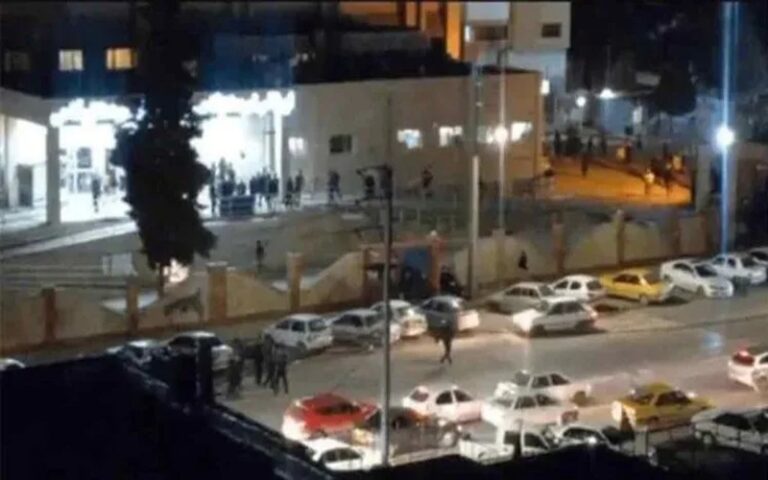
In the western city of Lordegan, security forces opened fire on protesters during overnight and early-morning clashes, killing at least eight people, according to local reports. Demonstrators reportedly blocked major roads in an attempt to prevent reinforcements from reaching the city, while clashes continued throughout the day. Authorities have not released official casualty figures.

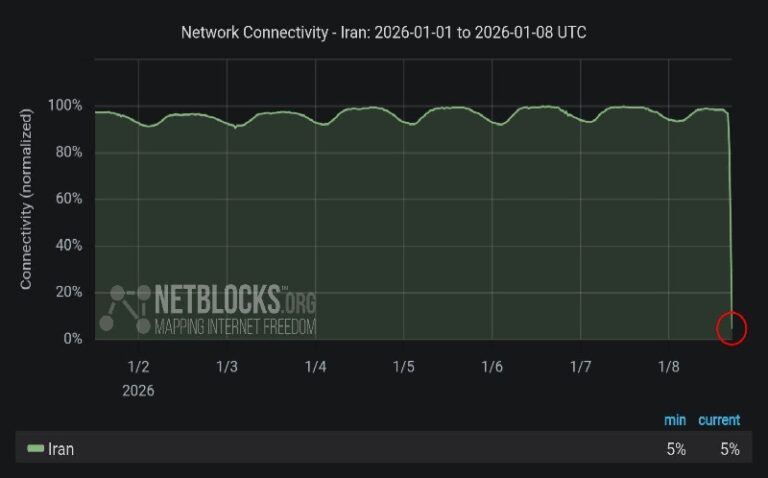
As unrest spread, internet monitoring organization NetBlocks confirmed a nationwide internet blackout, with particularly severe disruptions reported in Kermanshah province. The shutdown appeared aimed at limiting communication and restricting the flow of information as protests expanded and casualties mounted.

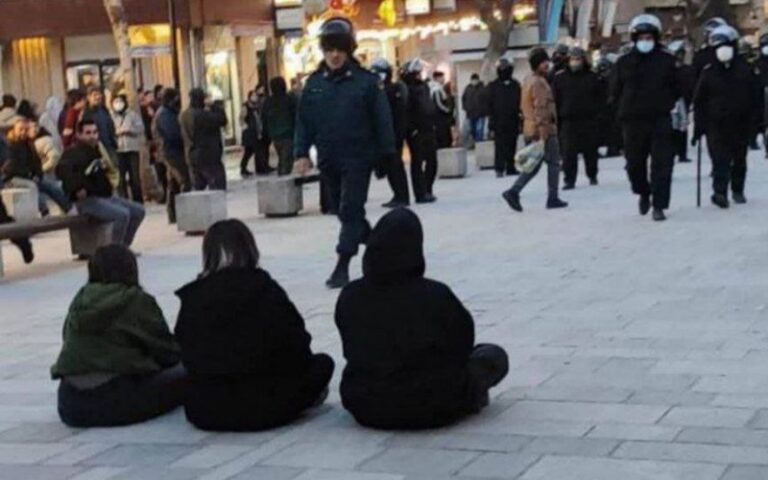
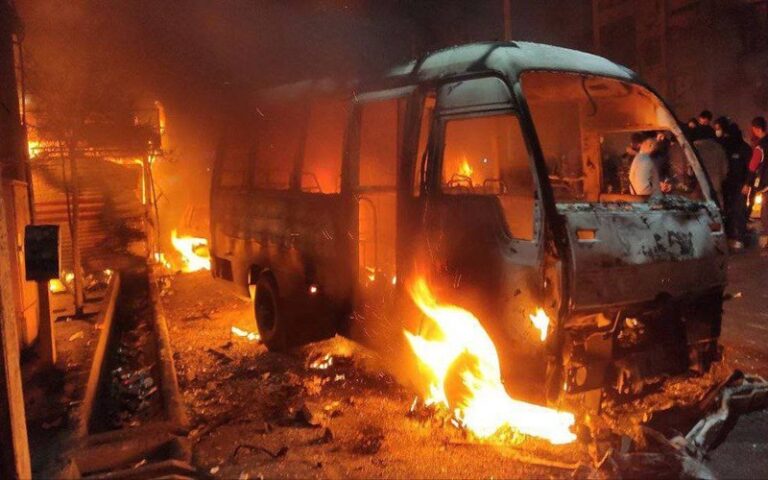
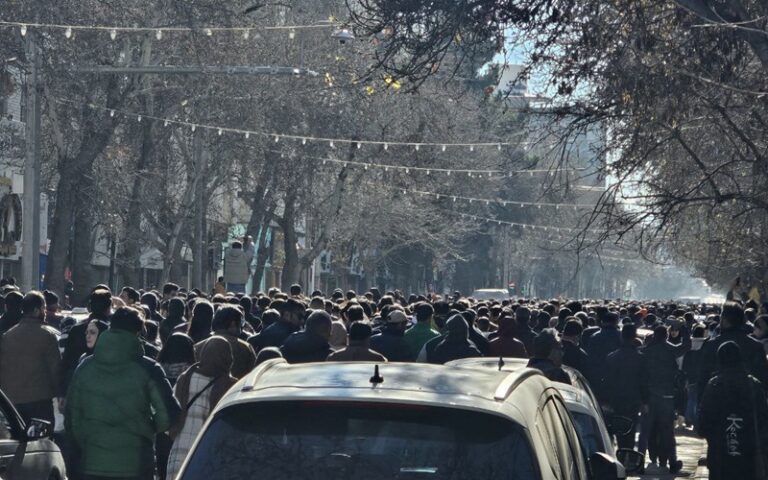
Despite the blackout, demonstrations continued across the country. In Tehran, crowds gathered in several districts, chanting anti-government slogans and clashing with security forces. Protesters reportedly set fire to Basij bases and vehicles linked to the Islamic Revolutionary Guard Corps (IRGC) in multiple neighborhoods, including Mehrabad, Sattarkhan Bridge, and Naziabad.

Kermanshah remained one of the main flashpoints, with reports of live ammunition being used against protesters in districts such as Dareh Deraz. Demonstrations persisted despite injuries, as crowds marched through the city chanting slogans calling for the removal of the country’s leadership. Local reports also indicated the presence of Arabic-speaking forces alongside Iranian security units.

In other parts of the country, protests escalated into attacks on government buildings. Demonstrators set fire to the headquarters of the state broadcaster in Isfahan, as well as the governorate building in Gorgan. Similar incidents were reported in cities including Bijar, Qorveh, Lumar, and Rasht.

Meanwhile, large-scale strikes continued to paralyze economic activity. Markets and shops remained closed across Kurdistan province, including in Sanandaj, Mahabad, Marivan, and Baneh. Strikes were also reported in Tabriz, Bandar Abbas, Ilam, Neyshabur, Sabzevar, and several other cities, signaling growing participation from merchants and shopkeepers nationwide.

Protests were reported across all major regions of Iran, from Mashhad in the northeast to Shiraz and Ahvaz in the south, and from Ardabil and Urmia in the northwest to Karaj near Tehran. Demonstrators continued to chant slogans rejecting both the current system and alternative forms of authoritarian rule.

Opposition figures abroad condemned the use of lethal force and praised the persistence of protesters, while Iranian authorities have yet to issue a comprehensive public response addressing the scope of the unrest, the internet shutdown, or the reported deaths.

As night fell on January 8, demonstrations continued in dozens of cities despite heavy security deployments, signaling that the crisis remains unresolved and that Iran faces a prolonged period of instability.
Iran’s Regime Imposes Widespread Internet Outages And Disruptions Amid Nationwide Uprising

As the widespread uprising of people in Iran continues and intensifies, reports indicate that the internet in many cities has faced severe slowdowns, disruptions, and in some cases complete outages.

NetBlocks, an organization that monitors internet access worldwide, wrote in a message on the social media platform X on Thursday, January 8: “Live network data show #Tehran and other parts of Iran are now entering a digital blackout, as connectivity falls on multiple providers; the new incident follows regional shutdowns, and is likely to severely limit coverage of events on the ground as protests spread.”

NetBlocks added that this occurred simultaneously with the spread of protests across the country on their twelfth day, at a time when the number of victims is rising and signs of disruption are also being observed in several other regions.

At the same time, some media outlets in Iran reported on Thursday that fixed-line and mobile internet services in various cities have been experiencing severe slowdowns, instability, and repeated disconnections.

The Citna news website wrote: “Disruption or deactivation of IPv6 in the country’s internet network leads to increased latency, unstable connections, and problems in services such as internet calls, online games, and some cloud services.”

Reports circulating on social media also confirm widespread outages and disruptions to the internet in Iran.

On January 5, Sattar Hashemi, the Iranian regime’s minister of communications and information technology, confirmed internet restrictions and outages due to nationwide protests in Iran.

Hashemi added: “People have demands and protests, but at the same time there is serious concern about businesses being harmed in the event of internet disruption or outages, and this concern is completely understandable.”

Earlier, the Persian-language account of the U.S. Department of State on X, referring to widespread internet shutdowns and severe communication disruptions—especially in cities where national uprising protests are underway—wrote that even VPNs and other censorship-circumvention tools have been blocked, cutting off many Iranians’ connection to the outside world.

During the 12-day war, telecommunications and internet services in Iran were widely cut off, a measure implemented by the Iranian regime’s security authorities under the pretext of “protecting national security.”

The Iranian regime had previously disrupted and shut down the internet multiple times during protests.

During the 2019 protests, known as the Bloody November, Iran’s government cut off the internet for one week and began the killing of protesters in a media blackout.

In 2023, on the fourth anniversary of that massacre, the internet in Iran was again disrupted and, in some areas, completely shut down.

Nationwide Protests in Iran Enter Eleventh Day as Strikes and Clashes Intensify

Iran’s nationwide protests entered their eleventh consecutive day on Wednesday, January 7, 2026 expanding in scale and intensity as strikes spread across key economic sectors and confrontations between demonstrators and security forces escalated in dozens of cities.

What began on December 28 as protests over worsening economic conditions has evolved into a broad political movement calling for the overthrow of the ruling establishment. On Wednesday, markets, universities, industrial centers, and even prisons became focal points of unrest, signaling a widening challenge to state authority.

Major bazaars in Tehran, Tabriz, Shiraz, Rasht, Qazvin, and several other cities remained closed, deepening economic disruption. A significant development came as workers at the South Pars gas refineries—central to Iran’s energy industry—joined the nationwide strike, raising concerns over potential long-term impacts on government revenues.

At Least 31 Killed, over 2,000 Arrested in Iran Protests

Street demonstrations intensified throughout the day and into the night. In cities including Abadan, Borujerd, Bojnurd, and Qazvin, large crowds reportedly forced security forces to retreat from public areas. In Lordegan and parts of Kermanshah province, security forces opened fire with live ammunition, leaving several protesters critically injured, according to reports. Despite the use of lethal force, demonstrations continued.

Western cities such as Gilan-e Gharb and Mehran saw organized marches toward government buildings, with demonstrators chanting slogans in solidarity with victims of recent crackdowns. In Shiraz, protesters erected barricades to counter water cannons and tear gas deployed by security forces, turning several neighborhoods into scenes of prolonged standoffs.

Universities across the country also emerged as centers of resistance. Students in Tehran, Zahedan, Urmia, Qom, Zanjan, and Kermanshah held rallies and night-time protests, denouncing mass arrests and chanting slogans linking student activism to the broader uprising. One slogan widely reported was, “Evin has become a university, Tehran has become a prison,” referencing the detention of student activists.

Public defiance appeared to grow as ordinary citizens intervened in attempted arrests in cities such as Kerman and Kermanshah, helping injured protesters and blocking security forces. Observers noted these incidents as signs of a diminishing atmosphere of fear.

In a rare display of prison-based protest, political prisoners in Tehran’s Evin Prison and Ghezel Hesar Prison reportedly joined the uprising by chanting slogans, singing the national anthem, and issuing statements supporting demonstrators outside the prison walls.

Opposition figures abroad responded to the events by condemning the use of force against protesters and praising the persistence of demonstrators. Meanwhile, authorities have not issued comprehensive official casualty figures or statements addressing the breadth of the unrest.

As night fell on January 7, protests were reported in cities stretching from Rasht in the north to Zahedan in the southeast, underscoring the nationwide scope of the movement. With strikes expanding and confrontations continuing, Iran faces one of its most sustained and geographically widespread waves of unrest in recent years.

At Least 31 Killed, over 2,000 Arrested in Iran Protests

As protests and strikes in Iran entered their eleventh day, reports indicate a rising death toll, widespread arrests of citizens, and the expansion of security forces’ crackdowns to hospitals, reflecting new dimensions of repression by the Iranian regime.

According to the National Council of Resistance of Iran (NCRI), the largest opposition coalition, the tenth day of nationwide protests took place after at least 285 locations in 92 cities across 27 provinces had witnessed protest gatherings, labor strikes, or street actions over the past 10 days. At the same time, 22 universities have also been scenes of student protests.

Among the newly identified martyrs are two teenagers aged 14 and 15, and two 17-year-olds, who were brutally targeted by the regime’s forces.

Dozens of injuries among protesters have also been recorded, mostly caused by the firing of pellet and plastic bullets.

On the tenth day, Tuesday, January 6, protest gatherings were reported in cities including Tehran, Mashhad, Shiraz, Qazvin, Bandar Abbas, Ilam, Zanjan, Borujerd, Marvdasht, Malekshahi, Babol, and Shahrekord. One of the most significant developments of the day was a widespread strike by Tehran’s bazaar merchants. Parts of the Grand Bazaar of Tehran, including the gold and currency market, textile sellers, shoemakers, and home appliance shops, were fully or partially closed. This strike, which took place without any official call, was held in protest against sharp currency fluctuations, rising gold prices, market stagnation, and declining purchasing power.

Iranian Regime’s Security Forces Attack Another Hospital

Following the strike, the presence of security and law enforcement forces increased at the entrances to the bazaar and surrounding intersections, and in some areas the formation of gatherings was prevented. Nevertheless, the widespread closure of shops caused noticeable disruption to the bazaar’s daily activity and was assessed by observers as a sign of the linkage between economic grievances and street protests.

The NCRI’s report also indicates the continuation of violent actions by security forces in various cities. The use of tear gas, firing pellet weapons, and direct assaults on protesters were among the repression methods recorded over the past 24 hours.

One of the alarming developments in recent days has been the extension of repression into medical facilities. According to the report, security forces entered Khomeini Hospital in Ilam on the evening of January 3 and attempted to arrest several people injured during protests in Malekshahi County. Witnesses said tear gas was fired inside the hospital during the operation, creating an emergency situation and causing breathing problems for some patients.

Reports have also emerged of security forces entering Sina Hospital in Tehran on January 6. According to these reports, a number of people injured in the protests were arrested inside or around the hospital, an incident that witnesses say created an atmosphere of fear and disrupted patient treatment. As of the time of this report, no clear official explanation has been provided.

Over the 10 days of protests, at least 2,076 citizens have been arrested; on the tenth day alone, the arrest or confirmation of arrest of 878 people was reported. Among them, about 200 women were transferred to Kachouii Prison in Karaj and 500 men to the Central Prison of Karaj.

The Iranian regime has released at least 15 videos of detainees’ “forced confessions” through state-run media outlets or platforms close to security institutions.

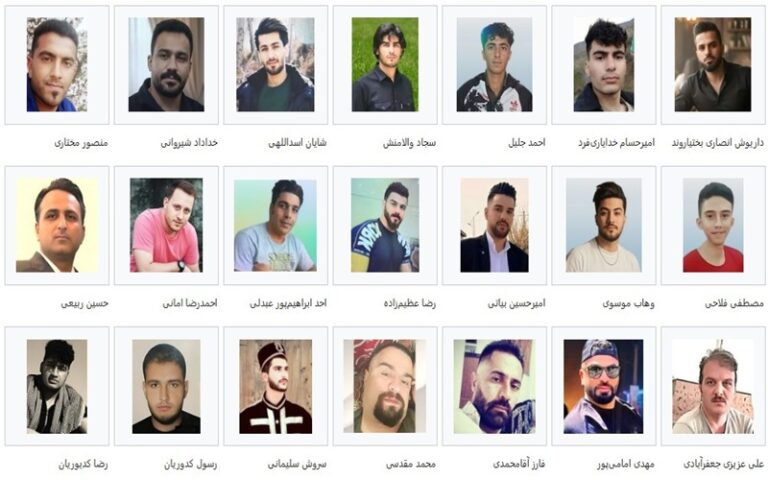
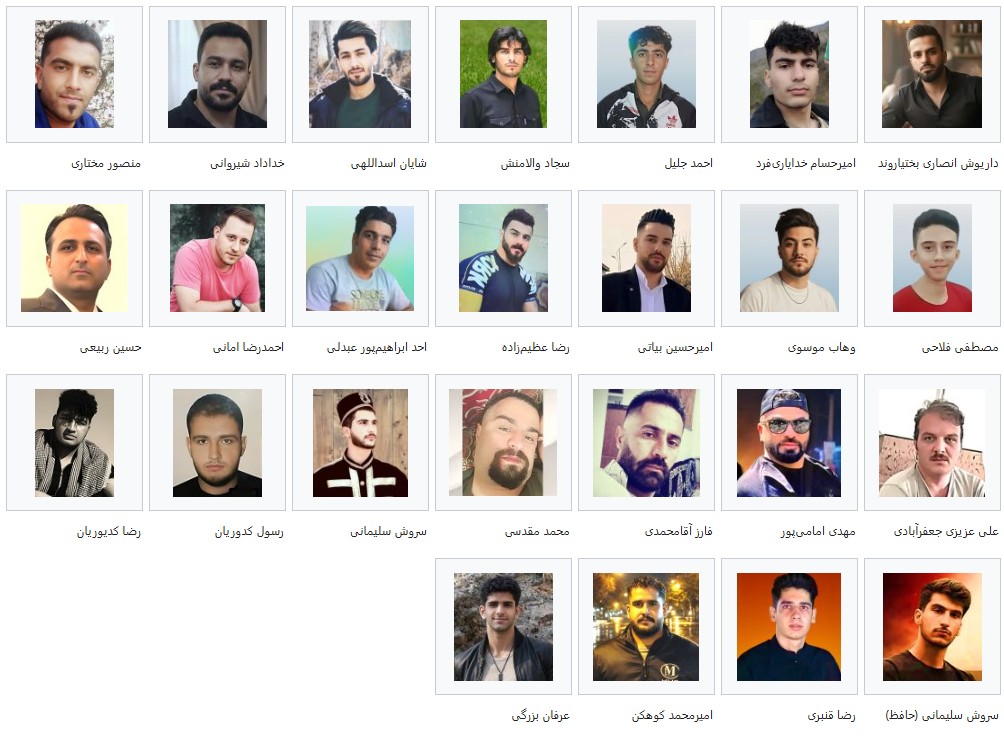
The list of the 31 martyrs of the uprising published to date by the PMOI/MEK is as follows:

  1. Dariush Ansari Bakhtiarvand, 37 – Fuladshahr (Isfahan) – December 31, 2025
  2. Amirhesam Khodayari Fard, 26 – Kuhdasht (Lorestan) – December 31, 2025
  3. Esmail Ghorayshvandi – Izeh (Khuzestan) – December 31, 2025
  4. Sajjad Valamanesh Zilayi, 28 – Lordegan (Chaharmahal and Bakhtiari) – January 1, 2026
  5. Ahmad Jalil, 21 – Lordegan (Chaharmahal and Bakhtiari) – January 1, 2026
  6. Shayan Asadollahi, 30 – Azna (Lorestan) – January 1, 2026
  7. Mostafa Fallahi, 15 – Azna (Lorestan) – January 1, 2026
  8. Wahab Ghaedi (Mousavi), 30 – Azna (Lorestan) – January 1, 2026
  9. Khodadad Shirvani, 37 – Marvdasht (Fars) – January 1, 2026
  10. Ahmadreza Amani, 28 – Azna (Lorestan) – January 1, 2026
  11. Mansour Mokhtari – Marvdasht (Fars) – January 1, 2026
  12. Ahad Ebrahimpour Abdoli, 35 – Nurabad (Lorestan) – January 1, 2026
  13. Taha Safari, 15 – Azna (Lorestan) – January 1, 2026
  14. Reza Niknam – Kavar (Fars) – January 1, 2026
  15. Ali Azizi Jafarabadi, 42 – Harsin (Kermanshah) – January 2, 2026
  16. Amirhossein Bayati, 35 – Hamedan – January 2, 2026
  17. Hossein Rabiei – Qom – January 2, 2026
  18. Erfan Bozorgi – Marvdasht (Fars) – January 2, 2026
  19. Mohammad Qasem Rousta, 14 – Marvdasht (Fars) – January 2, 2026
  20. Mohammad Nouri, 17 – Qom – January 2, 2026
  21. Mohammad Moghaddasi (Bazouneh) – Malekshahi (Ilam) – January 3, 2026
  22. Farez (Fars) Aghamohammadi – Malekshahi (Ilam) – January 3, 2026
  23. Mehdi Emamipour – Malekshahi (Ilam) – January 3, 2026
  24. Reza Azimzadeh – Malekshahi (Ilam) – January 3, 2026
  25. Ali Karimi Bavelki – Malekshahi (Ilam) – January 3, 2026
  26. Latif Karimi – Malekshahi (Ilam) – January 3, 2026
  27. Amirmohammad Kouhkan, 26 – Neyriz (Fars) – January 3, 2026
  28. Soroush (Hafez) Soleimani – Hafshejan (Chaharmahal and Bakhtiari) – January 3, 2026
  29. Reza Qanbari – Kermanshah – January 3, 2026
  30. Rasoul Kadivarian, 17 – Kermanshah – January 3, 2026
  31. Reza Kadivarian, 20 – Kermanshah – January 3, 2026.

Dollar Exchange Rate Surges to 1.48 Million Rials Amid Protests Across Iran

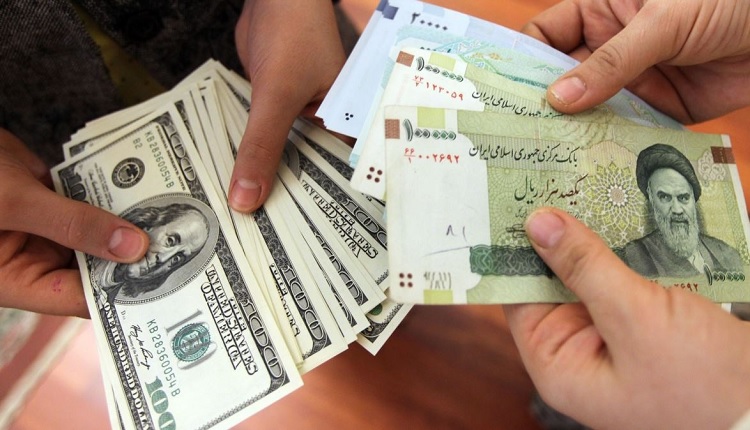
Reviews indicate an explosive surge in the dollar price to over 1.48 million rials amid the protests.

Iranian currency and gold rate websites reported on Wednesday morning, January 7, that amid the expansion of nationwide uprising and protests across Iran, the dollar price had risen to over 1.48 million rials.

This explosive surge in the dollar and the devaluation of the rial comes as the dollar price had fallen to 1.35 million rials last week following the introduction of Abdolnaser Hemmati as the new head of the Central Bank of Iran, a key financial institution under the Iranian regime.

With market protests intensifying and spreading to various cities across the country, it now appears that currency control has slipped out of the government’s hands.

According to the latest reports at the time of writing, on Wednesday the euro rose to over 1.73 million rials and the British pound climbed to more than 2 million rials.

At a rate of 1.48 million rials per dollar, a worker’s total monthly income barely reaches 102 usd.

The Iranian regime has so far tried to control the situation by promising to provide food vouchers in an effort to quell the protests, but it has not succeeded. In recent days, the government announced that under this plan, one million tomans (about 10 million rials, approximately 7 dollars) has been allocated per person, and that the government has “provisionally deposited the credit for four months for the people.”

According to state-run media, the plan is intended to provide 11 basic goods, and “people can use this credit to purchase dairy products including milk, cheese, and yogurt; red meat; eggs; cooking oil; pasta; rice; sugar cubes; sugar; and legumes at more than 200,000 stores.”

However, experts say such measures put additional pressure on markets and, in addition to deepening economic stagnation, will lead to higher prices for essential goods.

Currently, according to some media outlets inside Iran, cooking oil has become unavailable in most stores, and some shops are selling it at three times the previous price.

In this context, the Telegram channel Eterazebazar reported that a five-kilogram container of cooking oil has risen from about 5.6 million rials to nearly 20 million rials.

The government’s actions to extinguish the flames of protests come as on the eleventh day of nationwide protests, protest gatherings and strikes continued unabated.

According to incoming reports and videos shared on social media, shops in several cities across the country, especially in parts of Tehran, were closed and on strike on Wednesday.

The ongoing protests initially began with Tehran bazaar merchants protesting sharp currency fluctuations and the economic crisis but quickly expanded to other cities and turned into anti-regime protests with slogans calling for the overthrow of the Iranian regime.

Last night, control of the two cities of Abdanan and Malekshahi in Ilam Province slipped out of the hands of security forces.

Iranian Regime’s Security Forces Attack Another Hospital

Following attacks by Iranian regime agents on Khomeini Hospital in Ilam, government repression forces also attacked Sina Hospital in Tehran. Reports have also emerged of tear gas being fired in enclosed spaces such as inside the 15 Khordad metro station in Tehran and inside the Iranian Passage in the Shoush Bazaar area.

A video posted on social media shows that on January 6, government agents closed the entrance gate of Sina Hospital in the Hassan Abad area of Tehran, while the sound of gunfire was heard simultaneously.

Citizen reports indicate that tear gas was fired into the hospital.

Protesters were also seen running through the alleys around the hospital, chanting “Death to the dictator” and “Shameless, shameless.”

On the evening of Sunday, January 4, Iranian regime agents entered the courtyard of Khomeini Hospital in Ilam by firing live ammunition and tear gas. Repression forces then broke down the hospital doors, stormed the rooms, and attacked those present with batons and military equipment.

Videos showed nurses and citizens clashing with repression forces in front of the hospital.

Reports indicate that wounded individuals and those killed during the protests in Malekshahi, Ilam, were present in this hospital.

Widespread reactions followed the attack on the Ilam hospital.

On January 6, Amnesty International condemned the attack, stating that targeting a hospital—as a place where injured protesters were present to receive medical care or seek shelter—constitutes a violation of international law.

The U.S. Department of State also hours earlier described the Iranian regime’s brutal attack on a hospital in Malekshahi, Ilam, as a “crime,” adding that storming hospital wards, beating medical staff, and attacking the wounded with tear gas and live ammunition constitutes a clear crime against humanity.

Since the start of nationwide protests, Iran’s regime has attacked peaceful protest gatherings by citizens, arrested hundreds of people, injured dozens, and killed a number of them.

Reports indicate that protesters have been fired upon with live ammunition in cities such as Malekshahi in Ilam province.

Protests on January 2 and January 3 in this county were met with violent repression by government agents.

Iran Pedia, an online database documenting repression cases, has so far been able to publish the identities and names of 31 people killed in the recent protests.

Despite these widespread crackdowns, citizens of Malekshahi once again took to the streets on January 6 and clashed with repression forces.

Iran’s Regime Throttles Internet Access Amid Rising Protests

As protests have increased across Iran, citizens’ access to the internet has faced widespread restrictions. Although, compared with the twelve-day war, the internet has not been officially shut down nationwide, in practice users’ access has either been completely disrupted or has faced serious difficulties. This situation has led international internet monitoring organizations to refrain from registering a complete internet shutdown in Iran.

Since Saturday evening, January 3, reports indicate a sharp decline or effective disruption of the internet in various parts of the country, particularly in cities and areas where protests have been more widespread. The few users who managed to send messages from these areas say that even sending a simple text message has sometimes required hours of effort.

X’s New Feature Reveals Iranian Regime Officials Enjoy Privileged Internet Access

Investigations show that the main characteristic of these restrictions is their targeted and localized implementation. For example, in Tehran, areas where higher levels of protests have been reported have faced more severe internet restrictions. This pattern has resulted in mobile internet access being disrupted in one city, or even in parts of a single district, while in other areas the internet remains available.

The main question is why the internet in Iran is not completely shut down. During the November 2019 protests, a nationwide internet shutdown faced negative reactions from economic actors and businesses dependent on online activity, placing significant pressure on the government. At that time, the Ministry of Communications and the Telecommunication Infrastructure Company undertook a redesign of how internet access is managed.

Within this framework, users’ internet access was defined in layered form. With the development and modernization of filtering tools, domestic and international traffic was separated at the operator level, making it possible to impose restrictions at provincial and even local levels.

This experience appears to have now enabled the Iranian regime, during periods of protest, to preserve a level of internet usage deemed low risk, while simultaneously disrupting access to the open internet, messaging platforms, and filtering circumvention tools. Under such conditions, global internet monitoring organizations, when assessing Iran’s status, record active connections, speed test performance, and statistical data, but users in practice are unable to use many services, including messaging applications.

This type of disruption, which focuses on severely reducing the quality and effectiveness of the internet rather than imposing a full shutdown, is applied selectively and in a targeted manner. For example, in cities where protests emerge, the internet in those same areas is disrupted; or in Tehran, when protesters’ presence in the streets increases, the mobile internet of operators such as Hamrah-e Aval (the state-run Mobile Communication Company of Iran) and Irancell (one of Iran’s largest mobile operators) is restricted, while fixed home broadband internet remains active at the same time.

It appears that the Iranian regime has sought, as much as possible, to avoid paying the political cost resulting from a complete internet shutdown, similar to what occurred during the twelve-day war. Based on this approach, disruptions are applied in a targeted and technical manner.

Meanwhile, certain specific protocols, including QUIC, which is used by many applications, browsers, and filtering circumvention tools, have been explicitly targeted. Put simply, the internet is nominally available, but in practice its functionality cannot be relied upon.

This trend shows that the internet, as one of the primary channels of communication for citizens, is subjected to security restrictions during periods of social unrest. In the 1980s, international telephone calls and cable lines were cut by the Iranian regime; in 2009, mobile phones and SMS services were targeted; and since 2016, the internet has become the main tool for controlling communications in times of crisis.

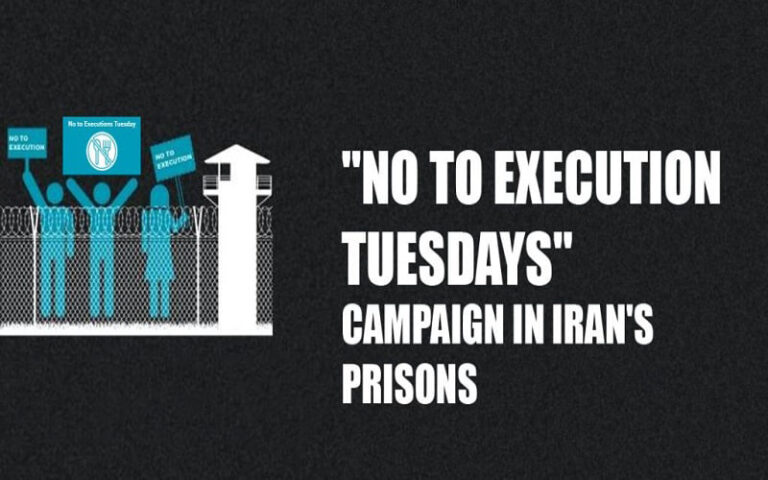
Iran’s ‘No To Executions Tuesdays’ Campaign Marks 102nd Week in 55 Prisons

The one hundred and second week of the “No to Executions Tuesdays” campaign continues under conditions in which prisoners’ hunger strikes in fifty-five prisons have become intertwined with street protests. This collective resistance has turned into a clear symbol of courage, human dignity, and insistence on the right to life. One hundred and two weeks of resistance under harsh and exhausting conditions show that even in the most restricted spaces, hope can be kept alive and the demand for justice cannot be silenced.

Iranian Political Prisoner Ehsan Rostami Faces Risk of Execution

This conscious action has gone beyond prison walls and now calls on society for active solidarity and responsibility. “No to executions” today is no longer merely a slogan; rather, it is a human demand that has gained the capacity to become a national and global call.

The full text of the statement for the one hundred and second week of the “No to Executions Tuesdays” campaign is presented below:

The continuation of the “No to Executions Tuesday” campaign in its one hundred and second week in fifty-five different prisons

In the one hundred and second week of the “No to Executions Tuesdays” campaign, at the beginning of the year 2026, the execution-oriented Iranian regime, over the past year [2025], has hanged more than 2,200 of our fellow citizens on gallows alone, nineteen of whom were political and ideological prisoners. This week as well, political prisoner Seyed Mohammad Mousavi from Shadegan, held in Sheiban Prison in Ahvaz, has been sentenced to death and added to the list of dozens of other political prisoners, each of whose lives is in danger.

The religious fascist regime ruling Iran has also executed 167 people, including one woman, from December 22, 2025, up to now.

This week, we are on hunger strike while the people of Iran, protesting catastrophic economic and political conditions, have taken to protests, gatherings, and strikes for the tenth consecutive day, with their main demand being the overthrow of this despotic regime. A regime that for forty-seven years has subjected the people to oppression and tyranny and assaulted their lives and livelihoods. We, the members of this campaign, while saluting and honoring the memory of those who lost their lives in this nationwide uprising, declare our solidarity with the courageous and freedom-seeking people and stand by them to the end. Neither direct gunfire at young people, nor the arrest of students, nor torture and forced confessions from protesters can silence the voice of justice-seeking. Undoubtedly, the outcome of these struggles, after years of dictatorial oppression, will be the realization of freedom, equality, and democracy for all Iranians.

Political prisoners participating in the “No to Executions Tuesdays” campaign are on hunger strike on Tuesday, January 6, 2026, in the one hundred and second week, across fifty-five prisons in Iran.

Ninth Day of Nationwide Protests in Iran

On the ninth day of nationwide protests in Iran, protest gatherings and strikes by bazaar merchants continued, and the Iranian regime once again tried to suppress the protests through violence. More public figures, organizations, and athletes inside and outside Iran voiced support for the protests.

According to reports published on social media, shops in several Iranian cities, including parts of Tehran (the capital), parts of Karaj (near Tehran), Marvdasht, Kazerun, and the port city of Bandar Ganaveh, were closed on Monday, January 5, as shop owners went on strike.

In Iran’s capital, repressive forces and the Iranian regime’s special units were on alert in several areas, including in front of Tehran University, one of the country’s main public universities.

At the same time, merchants in the “Cheragh Bargh” section of the Tehran Bazaar and traders in Tehran’s iron market joined the nationwide strike by closing their shops. Subsequently, bazaar merchants confronted the Iranian regime’s security forces.

Protest gathering in Yasuj

Protesters in Yasuj, the capital of Kohgiluyeh and Boyer-Ahmad province, held a street protest. Published videos showed repressive agents attacking the families of detainees from Yasuj in front of the city’s governorate building.

Arrest of hundreds of teenagers, threats by the judiciary, and internet shutdowns

As the protests continued across different parts of the country, dozens of citizens ranging from teenagers to adults were arrested in various cities. These arrests mainly took place during street protests and public gatherings and, in many cases, were accompanied by violence. Security forces carried out widespread arrests through nighttime raids, beating protesters, entering private homes, and confiscating personal belongings.

Many of those detained, including school students, university students, teachers, women, and ordinary citizens, have been transferred to unknown locations without the presentation of a clear judicial warrant or any official notification. Field reports indicate that most families remain unaware of the condition of their detained children and relatives, and no possibility of contact or visitation has been provided. Security institutions have so far released no official information regarding the charges against detainees, and the lack of information about their physical condition, place of detention, and access to legal counsel has intensified concerns. These circumstances have prompted human rights organizations to warn about the expansion of systematic violations of citizens’ basic rights.

Gholamhossein Mohseni Ejei, the head of the Iranian regime’s judiciary, said on Monday: “There can be no leniency toward rioters. If there were concessions in the past, this time we will make no concessions, because the Israeli regime and the foolish and irrational president of America have officially supported the riots.”

Sattar Hashemi, the Iranian regime’s minister of communications and information technology, said regarding internet restrictions and shutdowns that this policy is not “absolute and permanent” and depends on specific conditions and decisions made with security, livelihood considerations, and the “protection of citizens’ lives” in mind.

In recent days, alongside the spread of nationwide protests, internet access has been restricted or cut in some parts of Iran.

According to the National Council of Resistance of Iran (NCRI), so far 18 citizens have been killed by the Iranian regime’s security forces.

Based on videos and field reports, the county of Sonqor and Kolyai in Kermanshah province was among the first areas to witness a large presence of protesters. On Sonqor’s main street and in Moallem Square, large crowds gathered chanting “Neither Gaza nor Lebanon, I sacrifice my life for Iran” and “Death to the dictator.”

In Yasuj, families of those detained in the nationwide uprising held a protest gathering demanding the immediate release of their loved ones. The rally was held with chants of “Freedom, freedom, freedom” and reflected widespread anger over mass arrests and the brutal repression by the clerical regime.

Iran’s Regime Pressurizes Families of Martyrs of Recent Protests

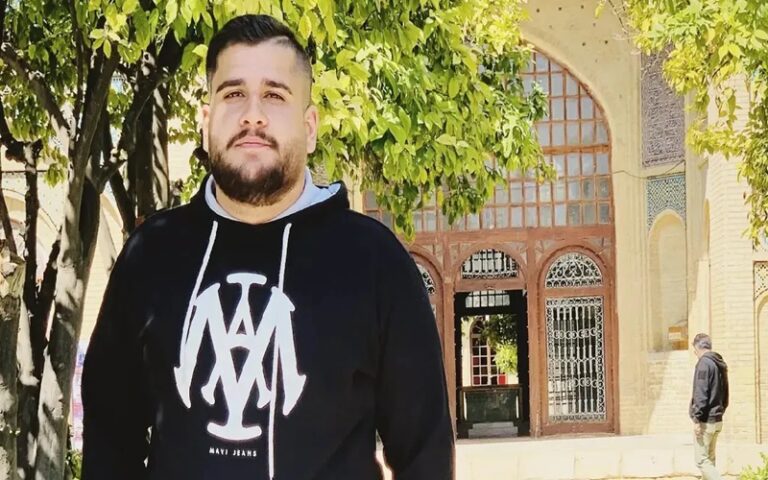
In the latest crime of the Iranian regime during the nationwide uprising of January 2026, Amir Mohammad Kouhkan, a young futsal coach and referee, a former goalkeeper for teams in Fars province and a youth-level coach, was killed on the evening of Saturday, January 3, in the city of Neyriz in Fars province after being directly shot by the Iranian regime’s security forces.

But the regime’s brutality did not end with killing him. Its agents abducted his bloodied body from the scene and took it to an unknown location. Despite all efforts, his family and friends were unable to determine where the body was being held.

According to reports, on Sunday, January 4, intelligence agents summoned and interrogated Amir Mohammad’s parents. They were angry that news of Amir Mohammad’s killing had become public and asked: “Why did foreign media publish the news? Why have people mentioned FIFA?”

The End of The Mullahs’ Regime in Iran Is Near

The Iranian regime threatened the family to “confess” in front of the cameras of the state-run broadcasting network of Fars province that Amir Mohammad was not a protester but had left home to “help the poor” and was killed by “protesters.” When his parents refused to submit to this false narrative, they forced the family’s uncle to repeat this fabricated claim on camera.

Sources close to the family said that the people of Neyriz are furious. It is a small city, and everyone knows who killed Amir Mohammad. But the regime is trying to deceive the public through lies. Security institutions were even angered that the International Federation of Football (FIFA) had been informed and told the family to remain silent about the news so that the body would be handed over.

The family’s main concern is that the regime may secretly bury Amir Mohammad at night in an unknown location so that no ceremony can be held. He was a hardworking young man who rose from goalkeeping to coaching and refereeing; the entire city loved him, and now everyone is mourning him.

This crime is part of the Iranian regime’s recurring pattern: killing, abducting bodies, pressuring families for forced confessions, and spreading media disinformation.