

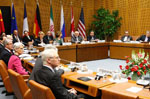
 The Hill: International negotiators are likely to resume talks on Iran’s nuclear program when world powers meet next month for the annual U.N. General Assembly. “A meeting between Iran and the [powers] is very likely to take place around the UNGA, but the level of the meeting has yet to be determined,” said Abbas Araghchi, an Iranian deputy foreign minister, to IRNA, his country’s state news agency.
Iran nuclear talks could resume during UN General Assembly
Iran says it gave missile technology to Hamas
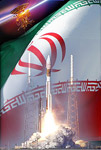
AP: Hamas is able to fire missiles into Israel because Tehran provided weapons technology to the militant group to defend itself against Israeli attacks, a senior Iranian official said Monday. Officials from Iran’s powerful Revolutionary Guards have said in the past that Fajr-5 missiles are part of Hamas’ Gaza Strip arsenal, whose technology has been supplied by Iran and produced locally without needing direct shipment.
The doubt at the heart of Iraq’s Sunni ‘revolution’
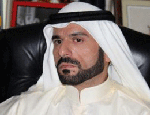
Reuters: Sheikh Ali Hatem Suleiman, one of the leaders of the Sunni revolt against the Shi’ite-led government of Iraq, sat cross-legged on a couch last month, lit another Marlboro Red, and discussed the struggle with visitors from his home city of Ramadi, where the uprising began late last year. The battle against Prime Minister Noori al-Maliki in Baghdad has spread north and east and threatens to fracture Iraq altogether.
Iran: New wave of attacks against journalists as repression escalates

Live News: The wave of repression which intensified after the disputed presidential election in 2009 has reached new highs over the past few months. The authorities appear to have widened the circle of repression in a bid to crumple any aspirations for change created by the promises of increased freedoms that followed the election of President Hassan Rouhani in 2013.
German business looks to renew Iran contacts

Wall Street Journal: German businesses are cooling on Russian investments amid anger over Russia’s role in the Ukrainian conflict while simultaneously warming on another big country hit by Western sanctions: Iran. Companies across Germany have quietly rekindled once-strong commercial ties with Iran, industry officials said.
Iran’s water crisis
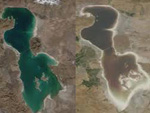
Reuters: As a child, Mohammad Rahmanpour spent his summers swimming in Lake Orumieh in northwestern Iran – then the largest in the Middle East. In less than two decades, the saltwater lake has almost disappeared, leaving behind a hole in the ground. “My friends and I would go on the top of trees in our neighbourhood. We could see the lake clearly from that point,” said the 32 year-old farmer who grows wheat and beets.
Iran denies agreement on Arak, Fordow nuclear sites
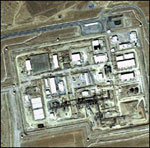
TwoCircles.net: Tehran and the six world powers have not made any agreement on Iran’s heavy water nuclear power plant of Arak and the underground bunker of Fordow, a senior Iranian negotiator said. “In principle, no agreement has been made on any topics pertaining to the nuclear issues of Iran yet. And the difference over Arak heavy water reactor and Fordow uranium enrichment are still in place,” said negotiator Abbas Araqchi.
Just a hint of Iran sanctions risk stalls bank transactions
Wall Street Journal: As negotiations over Tehran’s nuclear program continue, the U.S. is encouraging some companies to go to Iran to give its leaders an incentive to stay at the bargaining table. But it could be a tough sell. Billions of dollars in fines have conditioned banks to see any Iran deal as toxic, sanctions experts say. Even the appearance of a connection to Iran could delay bank transactions for months or years.
Lawmakers voice skepticism on Iran nuclear deal
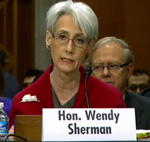
New York Times: The Obama administration officials engaged in nuclear negotiations with Iran ran into a wall of skepticism at two congressional hearings on Tuesday, with members of both parties insisting on a vote on any final agreement with the Tehran government and administration officials strongly hinting that they have little intention of complying.
A rudderless administration in a dangerous world
The Hill: What does the world look like without American leadership in some form, when necessary, or a risk possibly worth taking? The headlines tell the daily story. Our foreign policy must be pragmatic, not of immediate convenience or wishful projection, as the Obama administration has employed for the past five years. President Obama’s precipitous withdrawal in policy approach and militarily has consequences.
