Home Blog Page 88

Grossi Warns of Consequences of Attacks on Iran’s Nuclear Facilities

The Director General of the International Atomic Energy Agency (IAEA) warned at a UN Security Council session that recent Israeli attacks on Iran’s nuclear facilities have heightened the risk of a radiological disaster, with potential consequences extending beyond Iran’s borders.

Rafael Grossi, Director General of the IAEA, stated in a prepared statement for the second session of the UN Security Council that Israel’s recent attacks on Iran’s regime’s nuclear sites have severely compromised nuclear safety and security in the country.

Iran’s Nuclear Power Dream: From Fantasy to Reality

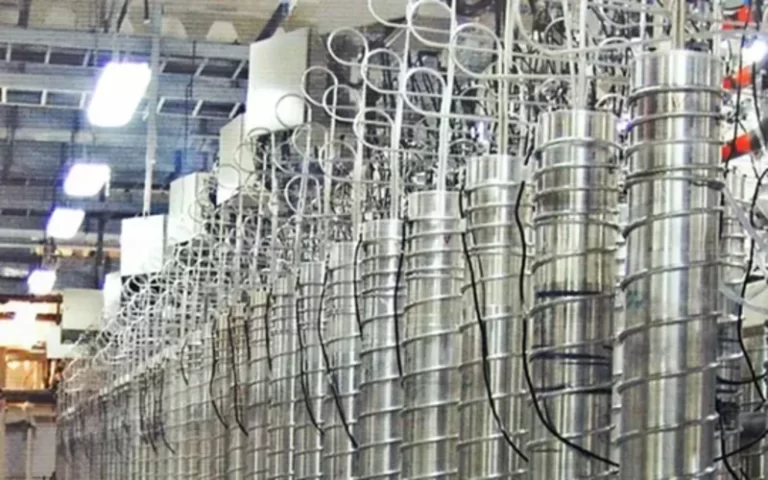
According to the agency’s report, on June 13, the main fuel enrichment facility at the Natanz site was targeted. Its electrical infrastructure and backup generators were destroyed. The main centrifuge hall was heavily damaged by bunker-busting bombs. Another part of the site, the pilot fuel enrichment facility, was completely destroyed at the surface level, and its underground sections suffered serious damage.

At the Isfahan site, four buildings were damaged, including the central chemical laboratory, the uranium conversion facility, the Tehran reactor fuel production plant, and a uranium metal processing facility that was under construction.

Grossi emphasized that although no increased radiation levels have been reported outside these facilities, chemical and radiological contamination has been detected within some of the sites, including Natanz, posing a risk to personnel.

Serious Threats in Bushehr and Tehran

According to Grossi, the most dangerous scenario involves the Bushehr nuclear power plant, which contains thousands of kilograms of nuclear material and remains operational. A direct attack on the facility or a disruption to its power supply could cause a reactor core meltdown and the release of large quantities of radioactive material.

In Tehran, buildings used for the development and testing of advanced centrifuges were also targeted. At the Karaj workshop, two buildings associated with centrifuge component production were destroyed.

Grossi warned that any attack on active nuclear facilities like Bushehr or the Tehran research reactor could have broad consequences for public health and the environment, potentially necessitating protective measures such as evacuation or the administration of stable iodine.

Grossi stressed that the agency must urgently resume inspections of Iran’s facilities, especially given that over 400 kilograms of Iran’s uranium stockpile is enriched to 60%.

He further warned that any efforts by Iran to safeguard its nuclear materials and equipment must comply with its safeguard’s commitments, and IAEA inspectors must be allowed to verify their integrity and condition.

Grossi also reminded Iran of its responsibility to ensure the safety of inspectors and called on the regime to maintain communication channels with the agency’s inspection teams.

He concluded by stating that the agency stands ready to dispatch its nuclear safety and security experts to Iran and play its vital role in preventing a crisis. He emphasized that a diplomatic solution is still possible and must not be missed.

Day 9: June 21, 2025 – Iran–Israel Strikes Intensify Amid Faltering Nuclear Talks

0

Day 9: Saturday, June 21, 2025
• Israeli Military: Announced the killing of the regime IRGC Aerospace Force’s second drone unit commander in an airstrike, who directed hundreds of drone launches from Ahvaz toward Israel. Since Mohammad Bagher Taherpour’s death in last week’s Israeli attack, this commander played a pivotal role in drone operations.
• Times of Israel: Reported explosions in central Israel after sirens, unclear if caused by missile interceptions or impacts.
• CNN: Reported a fire in a Holon building near Tel Aviv’s business district, caused by shrapnel from downed Iranian missiles, following Iran’s state TV claim of an 18th missile wave.
• Israeli Military: Intercepted a “suspicious aerial target” near Ghajar by Lebanon after a drone sighting, origin unspecified.
• Morteza Heydari, Qom Provincial Crisis Management: Reported two killed, four injured in an Israeli attack on a Qom residential building, up from one teenager killed and two injured.

War, internet blackout, anxiety; connection with Iran has been severed

• Tasnim News Agency and Eghtesad News: Iranian Foreign Minister Abbas Araghchi traveled to Istanbul for an Organization of Islamic Cooperation meeting to discuss Israel’s attacks, proposed by the regime, after meeting UK, French, and German ministers in Geneva.
• Israeli Military and Eyal Zamir: Chief of the General Staff of the Israel Defense Forces Zamir said preparations for Iran attacks began years ago, intensified secretly in recent months, enabled by “operational and strategic conditions.” Delaying risked disadvantage.
• Gideon Saar, Bild Interview, Time: Israeli Foreign Minister said attacks on nuclear/military sites and killing of Iranian commanders/scientists delayed Iran’s nuclear bomb by 2–3 years, per assessments. Regime change not a goal “so far.”
• Tulsi Gabbard: US Director of National Intelligence said Iran could produce a nuclear weapon in weeks, accusing media of distorting her March Senate testimony denying Iran’s weapon development. Trump twice contradicted her. Iran insists its program is peaceful.
• CBS News: Cited US/European diplomats on secret talks about Iran’s next leader, questioning nuclear facility security and attack consequences for allies, as Trump gave Iran two weeks to respond to US nuclear proposals.
• David Petraeus: Former CENTCOM commander said US ships in the region aim to prevent Iran from closing the Strait of Hormuz.
• Akbar Salehi, Isfahan Deputy Governor: Confirmed Israeli attack on Isfahan nuclear site, denying hazardous material leakage. Israel also targeted Lenjan, Mobarakeh, Shahreza, and Isfahan city areas, with no casualties.

Casualty and Damage Summary (as of June 21, 2025)
• Israel: 30 killed (28 prior + 2 in Qom attack, Iranian media), 906+ injured (886 prior + 20 in Bat Yam/Judean Foothills, BBC), (New York Times, Sky News citing AFP, AP, Israeli emergency services, Channel 12, Yedioth Ahronoth, Al Arabiya, Al Jazeera, BBC, Iranian media); 99 buildings damaged (98 prior + 1 in Holon, CNN), 22 at risk of collapse, 20 vehicles burned in Tel Aviv, Soroka Hospital in Beersheba heavily damaged, Tel Aviv residential skyscraper, buildings in Ramat Gan, Holon, Beersheba (near Microsoft building, apartment complex, one destroyed), Haifa (port, mosque, school), Bat Yam (10-story block), Tamra, Rishon LeZion, and Petah Tikva affected; Beersheba north train station closed; ~4,000 civilians displaced (Sky News).
• Iran: 590 killed (588 prior + 2 IRGC commanders, Israeli military), 4,130 injured (4,126 prior + 4 in Qom, Iranian media); additional 26 killed in Borujerd/Khorramabad, 6 IRGC and 2 Basijis in Khmin, 2 at Tabriz’s Second Fighter Base, 30 senior military commanders, several IRGC in Bostanabad (Basij Student News Agency, Fars Telegram, IRGC Telegram, Israeli Military, IRGC).

Notable Damage
• Israel: Central power grid, Nevatim Airbase, Haifa ammonia plant, power station, Soroka Hospital, Haifa port, and mosque damaged.
• Iran: Tehran’s Foreign Ministry, Justice Ministry, IRIB building (reignited fire), Khabar Network studio, oil/gas facilities, residential areas, Bagheri Chitgar, Iran Mall, western, northeastern, eastern, District 3, Lavasan, Nobonyad, Yousefabad, Gisha (apartment hit), and Qom (residential building) Tehran locations, Kermanshah missile facility, Esfahan’s fighter base, Alavijeh Industrial Town, Imam Hussein University, Hakimiyeh in Tehranpars, Natanz enrichment halls (one destroyed, one damaged), Mehrabad Airport, Payam Airport area, Tehran Refinery, Parchin facilities, Khajir missile complex, IRGC-affiliated university, internal security agency headquarters, police information center, special police unit headquarters, Tehran hospital, Khondab heavy water facility (distillation unit damaged, IAEA), nuclear research complex, Sepand Organization, Bostanabad IRGC base, Rasht’s Sepidrud Industrial Town (explosion and fire), Shiraz IRGC barracks/ammunition depot, Fardis (Alborz) military base, Karaj Basij domain, and sites in Tabriz, Shiraz, Parand, Mehrshahr, Karaj, Lavasan, Isfahan (nuclear site, Lenjan, Mobarakeh, Shahreza), Kashan, Mallard, Kahrizak, Ahvaz, Zanjan, Qom, and Ahvaz’s Kianabad/Kianpars targeted; Isfahan nuclear-related facilities, Kashan checkpoint, and Arak heavy water facility (near Khondab) damaged; internet blackout for 72 hours (NetBlocks).

War, internet blackout, anxiety; connection with Iran has been severed

0

The widespread internet blackout in Iran has eliminated the ability to communicate with people inside the country. In such a situation, accurate information about the condition of citizens amid wartime circumstances is not being published, and the regime’s narratives are not considered reliable by the public.
Since Thursday, June 19, internet access in Iran has been effectively cut off entirely, eliminating the possibility of independent reporting on the current situation by journalists and citizen-reporters.

Day 7: Escalation on June 19, 2025 – Israel-Iran Conflict Intensifies

Since Thursday, the internet has been almost completely cut off across Iran. This is not merely a technical disruption but a deliberate and organized act by Iran’s regime.
While Iran’s regime has not even sounded air raid sirens for its citizens, it has resorted to a total internet shutdown—the only remaining tool for communication, spreading awareness, and even saving lives.
On the other hand, Iranians living abroad now face serious obstacles in communicating with their families inside the country, and the ongoing wartime conditions have intensified the psychological distress caused by this disconnection.
Internet restrictions in Iran became more severe starting Tuesday, June 17.
While FATA Police (a cybercrime and morality enforcement unit) claimed that the disruption was due to “cyberattacks,” many social media users believe that Iran’s regime has deliberately restricted citizens’ access to the open internet to prevent the dissemination and spread of accurate information about recent developments.

Internet Censorship in Iran Has Turned Into a Billion-Dollar Business For State Actors

Iran’s regime has previously used internet blackouts as a tool for suppression.
During the November 2019 protests, which resulted in the killing of more than 1,500 people, access to the global internet in Iran was completely shut down for several days.
Likewise, during the nationwide uprising of 2022, many parts of the country experienced internet shutdowns or severe restrictions at various times.

Day 7: Escalation on June 19, 2025 – Israel-Iran Conflict Intensifies

0

Day 7: Thursday, June 19, 2025
Regime’s Mehr News Agency, 3:30 AM: Iranian defense forces began operations in central Tehran, with reports of explosions in Isfahan, Kashan, Mallard, and Karaj.
Israeli Military, Wednesday Evening: 60 Israeli Air Force jets bombed over 20 military targets in Tehran, including weapons production, centrifuge manufacturing, and nuclear R&D centers aimed at accelerating uranium enrichment beyond civilian needs.
Bloomberg, Thursday Morning: Senior U.S. officials are preparing for a potential attack on Iran in the coming days, possibly Saturday or Sunday, though plans may change. The Wall Street Journal reported Trump approved but postponed an attack, pending Iran’s possible halt to its nuclear program.
Iranian Reports, 6:00 AM: Israeli Air Force attacked the area near Khondab’s “Martyrs of Khondab” heavy water facility with two projectiles; defenses repelled others. No casualties or radiation risks were reported due to prior evacuation. ISNA reported an explosion near Khondab.

Widespread Disruptions and Shortages Across Iran Amid Ongoing Israeli Strikes

Israeli Military, 4:30 AM Tehran Time: Issued an evacuation warning for a two-kilometer radius around the Arak heavy water facility, planning to strike military infrastructure, accompanied by a satellite image marking the target.
Iranian TV: Reported two Israeli missiles hit the Arak heavy water facility, with no casualties or contamination due to prior safety measures and evacuation.
Regime’s Tasnim and Fars News Agencies, Early Thursday Morning: Iran launched a new wave of missile attacks on Israel, targeting the Israeli army’s command and intelligence headquarters and Gav-Yam tech park, not Soroka Hospital. Explosions reported in Jerusalem, Tel Aviv, and Modi’in.
Israeli Reports, Early Thursday Morning: An Iranian missile struck Soroka Hospital in Beersheba, causing extensive damage and injuring several people, with 30 total injuries (3 critical) across Holon and Ramat Gan. Buildings in Tel Aviv, Ramat Gan, and Holon were also damaged.
Al Jazeera, Early Thursday Morning: Loud explosions heard in Tel Aviv and Jerusalem; Israeli media reported at least four missiles hit locations in Israel.
Israel’s Channel 12: Reported 20 missiles in the Thursday attack, noting fewer missiles and no casualties in Iran’s attacks on Tuesday and Wednesday, allowing Israel to reopen shopping centers and offices.
Israeli Military: Air raid sirens sounded in Jerusalem due to Iranian missiles, with Israel’s defense system intercepting most. Israel claims it reduced Iran’s missile launch capacity by 40% by targeting systems in Ilam, Kurdistan, East/West Azerbaijan, and Kermanshah.
Regime’s Tasnim News Agency: Iran claimed it fired advanced ballistic missiles capable of faster travel to Israel, a capability held by few countries.
Israeli Military Spokesman Avichay Adraei: Israel killed Yassin Abdel Moneim Izzeddine, a Hezbollah artillery commander, who was rebuilding artillery in Lebanon. Hezbollah has not confirmed.
Ayatollah Sistani: Condemned Israel’s attacks on Iran, warning that targeting Iran’s leadership would violate moral and international standards, risking regional chaos. He urged global and Islamic governments to stop the war and seek a peaceful, law-based solution to Iran’s nuclear issue.
Axios, Citing U.S. Officials: Trump requested data on attacking Iran’s Fordow nuclear facility with bunker-busting bombs, seeking assurance it’s necessary, effective, and won’t prolong U.S. involvement. Pentagon officials are confident, but Trump remains undecided. Israeli officials believe they could damage Fordow independently, possibly with ground forces.
ABC News, Citing Informed Source: Trump is increasingly open to multiple strikes on Iran’s Fordow nuclear facility, with preparations underway.
Sparrowhawk Hacking Group: Stole over $90 million from Iran’s largest cryptocurrency company, transferring the funds to an irretrievable location to send a message.

Casualty and Damage Summary (as of June 19, 2025, 08:11 AM CEST)
Israel: 24 killed, 630+ injured (600+ prior + 30 from missile attacks, including 3 critical in Holon and Ramat Gan) (New York Times, Sky News citing AFP, Israeli reports); 80 buildings damaged in Bat Yam, 22 at risk of collapse, 20 vehicles burned in a Tel Aviv parking lot, Soroka Hospital in Beersheba heavily damaged, buildings in Tel Aviv, Ramat Gan, and Holon affected (Chand Sanieh citing Channel 12, Israeli reports).
Iran: 639 killed, 1,329 injured; additional 26 killed in Borujerd/Khorramabad, 6 IRGC and 2 Basijis in Khmin, 2 at Tabriz’s Second Fighter Base (Basij Student News Agency, Fars Telegram, IRGC Telegram).

Notable Damage: Israel’s central power grid, Nevatim Airbase, Haifa ammonia plant, power station, and Soroka Hospital damaged; Tehran’s Foreign Ministry, Justice Ministry, IRIB building (reignited fire), Khabar Network studio, oil/gas facilities, residential areas, Bagheri Chitgar, Iran Mall, western, northeastern, eastern, and District 3 Tehran locations, Kermanshah missile facility, Esfahan’s fighter base, Alavijeh Industrial Town, Imam Hussein University, Hakimiyeh in Tehranpars, Natanz enrichment halls (one destroyed, one damaged), Mehrabad Airport, Payam Airport area, Tehran Refinery, Parchin facilities, Khajir missile complex, IRGC-affiliated university, internal security agency headquarters, and Arak heavy water facility hit; sites in Tabriz, Shiraz, Parand, Mehrshahr, Karaj, Lavasan, Isfahan, Kashan, Mallard, and Ahvaz’s Kianabad/Kianpars targeted; Isfahan nuclear-related facilities and Kashan checkpoint damaged.

Widespread Disruptions and Shortages Across Iran Amid Ongoing Israeli Strikes

0

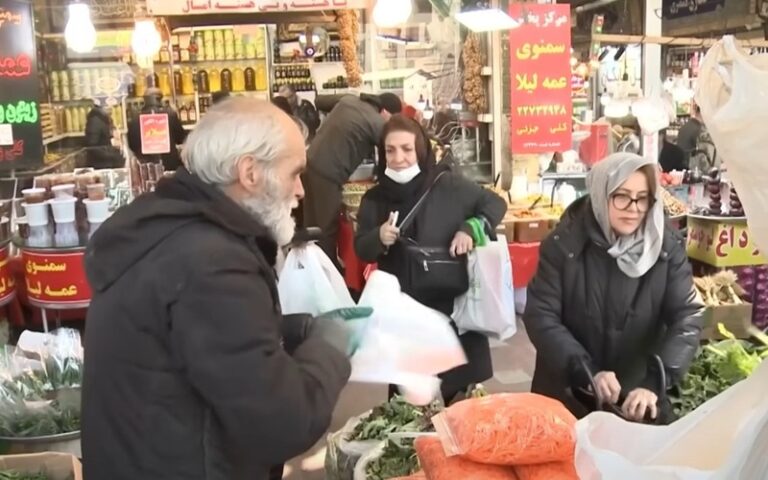
In the wake of Israeli attacks, disruptions reported in banks, internet, water supply, and shortages of gasoline and bread

On the seventh day of Israeli strikes targeting the Iranian regime’s positions, several citizens reported widespread problems across the country, including disruptions in the banking system, total or severe internet outages, water cuts, and shortages of gasoline and bread in some cities.

Additionally, yesterday the state-run television was hacked, broadcasting footage of past uprisings by the Iranian people. In these videos, people were urged to rise up for their freedom and overthrow Iran’s regime.

Day 6: Escalating Strikes and Missile Barrages Push Israel-Iran Conflict to New Heights

On Tuesday, June 17, a large number of citizens reported that Sepah Bank had become entirely inaccessible, with all online access to accounts disabled.

At the same time, the hacker group “Predatory Sparrow” released a statement taking responsibility for the cyberattack, stating: “In a cyber operation, we have destroyed all data of Sepah Bank.”

This group had previously carried out a cyberattack on fuel stations in various cities in December 2023, which resulted in a complete halt to fuel distribution operations for vehicles.

Fars News Agency, affiliated with the Islamic Revolutionary Guard Corps (IRGC), confirmed the cyberattack on Sepah Bank’s infrastructure and stated that since this bank supports fuel stations, disruptions may occur at gas stations in the coming hours.

Citizen reports indicate that banking issues in Iran are not limited to Sepah Bank.

According to citizen reports, online gold trading has also been deactivated for the past two days, and people’s funds have been blocked, making it impossible to either buy or sell gold.

Reports from various cities across Iran indicate that internet access is either completely cut off or severely disrupted and slow for much of the day.

Home and mobile internet in Tehran has significantly weakened and is being disconnected repeatedly.

Movement Restrictions and Fuel Shortages

On the seventh day since the start of the war, due to the regime’s inefficiency and incompetence, the problems and restrictions facing citizens are increasing.

According to a notice issued by the security office of Sharif University of Technology in Tehran, student entry into the university is prohibited until further notice, even for those with prior authorization. Amirkabir University’s student newsletter also reported on June 17 that an emergency evacuation and state of alert had been declared at the university.

Fuel distribution in several cities in Iran has faced disruptions since the first day of Israeli attacks, and reports indicate fuel station lines stretching several kilometers.

Disruptions to Daily Life

In addition to these issues, some citizens have reported problems including power and water outages, shortages of bread, food items, and gasoline, as well as movement restrictions.

Videos shared on social media show that on Tuesday, June 17, water was being distributed by tanker trucks in Niavaran, a neighborhood in northern Tehran.

Reports indicate that some areas of Mashhad are facing severe shortages of cooking oil and sugar, and canned food is being rationed, limited to two per person.

The crisis of food shortages, internet outages, and long lines at fuel stations is the result of four decades of corruption, cronyism, and chronic repression within the economic structure of Iran’s regime.

The regime’s ineffective response highlights the severe fragility of its economic infrastructure and its inability to manage crises.

People in many provinces—especially Tehran, Gilan, and Mazandaran—are struggling to obtain bread and facing long queues and flour shortages.

Despite these reports, the Tehran Chamber of Guilds denied any shortages and announced that a central headquarters has been established for distributing and supplying essential goods in the market.

Iran’s Chamber of Guilds added: “Regarding the supply of necessary oil and rice in the market, we are coordinating and following up with the Ministry of Agriculture.”

Maryam Rajavi Addresses European Parliament: Calls for Regime Change Led by the Iranian People

Strasbourg, June 18, 2025 — In a speech before members of the European Parliament, Maryam Rajavi, President-elect of the National Council of Resistance of Iran (NCRI), reaffirmed her call for a democratic transition in Iran, emphasizing that true peace and stability in the region depend on “regime change by the people of Iran and the organized Resistance.”

Returning to Strasbourg seven months after her previous address, Mrs. Rajavi warned that the Iranian regime now faces a growing “crisis of overthrow.” She cautioned that ongoing Western appeasement policies have only deepened instability, pointing to the war that began on June 13 as a critical inflection point. “We see that appeasement has indeed led to the imposition of war,” she stated.

Reiterating her long-advocated “third option,” Mrs. Rajavi urged European lawmakers to reject both military intervention and continued negotiations. “Neither appeasement nor war,” she said, “but regime change at the hands of the Iranian people and their organized, legitimate, and just Resistance.”

She condemned the West’s ongoing engagement with the Iranian regime, describing it as irredeemably violent and incapable of reform. “A viper never gives birth to a dove,” she said, underscoring the regime’s relentless pursuit of nuclear weapons.

Mrs. Rajavi reminded the Parliament of the NCRI’s role in exposing Iran’s clandestine nuclear activities in 2002 — a revelation that, she noted, was acknowledged by U.S. officials at the time. “Otherwise,” she said, “the regime would have built its nuclear bombs in secrecy.”

Despite these revelations, the NCRI was blacklisted for years, she recalled, while Tehran’s malign behavior continued. “What we have always wanted is to resist — just as you Europeans once did — against religious fascism,” she told the lawmakers. “We only ask that this Resistance be recognized.”

Turning to human rights abuses inside Iran, Mrs. Rajavi cited over 1,350 executions since August 2024, noting that Iran holds the world’s highest execution rate per capita. “Western governments and media have largely ignored this grim reality,” she remarked.

She highlighted ongoing unrest, pointing to more than 3,000 operations by PMOI-led Resistance Units in the past year. “Nowhere in the world are protests and resistance for change as widespread and persistent as in Iran,” she said.

Mrs. Rajavi also renewed calls for the European Union to designate Iran’s Revolutionary Guard Corps (IRGC) as a terrorist organization, describing it as a core instrument of internal repression. She acknowledged that the European Parliament has passed multiple resolutions condemning Iran’s rights violations but said these actions have yet to be matched by coherent EU policy.

Concluding her remarks, she called for official recognition of the Iranian people’s right to overthrow the current regime. Quoting NCRI founder Massoud Rajavi, she declared: “We will not return to the past, nor will we remain stuck in the present — the future will undoubtedly be realized. Yes, a democratic and free Iran.”

Mrs. Rajavi reaffirmed the NCRI’s vision of a democratic republic based on gender equality, ethnic inclusion, abolition of the death penalty, and a non-nuclear policy. She emphasized that a transitional government would transfer power to a freely elected constituent assembly within six months of the regime’s collapse.

“The people of Iran want the overthrow of this regime,” she concluded. “That is exactly why I am here today.”

Iranian Political Prisoner Ali Younesi Transferred from Evin Prison to an Unknown Location

Aida Younesi, sister of Ali Younesi—a top student at Sharif University and a political prisoner—announced on her X account today, Wednesday, June 18, that agents of the Ministry of Intelligence forcibly abducted her brother from Ward 4 of Evin Prison and transferred him to an unknown location.

She expressed deep concern, writing: “My mother is having seizures from worry. We don’t know where they have taken Ali.”

Aida described this act as “shamelessness” and a sign of the regime’s “rage and resentment” toward political prisoners.

Ali Younesi, a gold medalist in the International Astronomy Olympiad and a computer engineering student at Sharif University, was arrested in March 2020 along with Amir Hossein Moradi on charges of “links with the People’s Mojahedin Organization of Iran (PMOI/MEK)” and “spreading corruption on Earth.” In 2022, he was sentenced to 16 years in prison.

The two students have repeatedly been subjected to physical and psychological torture, including beatings and threats of execution, in an attempt to force them into making false confessions.

Day 6: Escalating Strikes and Missile Barrages Push Israel-Iran Conflict to New Heights

Israel-Iran Tensions Surge on Day 6 Amid Heavy Airstrikes and Missile Attacks

Regime’s Former Economy Minister Ehsan Khandouzi: “Starting Wednesday, for 100 days, no oil tankers or LNG shipments should pass through the Strait of Hormuz without Iran’s approval. Any delay in implementing this means enduring more war within Iran’s borders. Trump’s battle must be ended with a combination of economy and security.”

State-run Nour News Website: An explosion rocked Tehran’s outskirts, with flames and smoke rising.

State-run Tasnim News Agency, Early Wednesday Morning: Iran conducted its 11th wave of missile attacks against Israel, with explosions reported in Jerusalem, Tel Aviv, and Modi’in.

Sky News, Wednesday Morning: The Israeli military announced it targeted Iran’s nuclear and missile facilities overnight.

A look into the background of Ali Shademani, commander of the IRGC Central Headquarters

Sky News, Early Wednesday Morning: The Israeli military conducted a series of attacks across Tehran, with massive explosions shaking eastern Tehran.

Sky News, Citing Iranian Sources: The death toll in Iran from Israeli attacks has risen to 585, with 1,326 injured.

Reuters: The Israeli military reported targeting a centrifuge production center and several weapons manufacturing sites in Iran overnight.

Al Arabiya, Citing Israeli Military: Israel targeted facilities at Parchin.

Al Arabiya: The daily cost of Israel’s air defenses against missiles fired at the country is $285 million.

Al Arabiya, Citing Israeli Military Statement: Israeli attacks after midnight Tuesday targeted multiple Tehran locations, including Mehrabad Airport, Tehran Refinery, Parchin facilities, and sites in Tabriz and Shiraz.

Al Arabiya: The Khajir missile production complex in southeast Tehran and a special forces center were directly hit by Israeli airstrikes.

Al Arabiya: If Iran’s missile attacks continue at the current volume, Israel could sustain defense for 10 to 12 days.

U.S. State Department Spokesman: “As the conflict between Israel and Iran continues, President Trump has clearly stated that the Iranian regime must not acquire nuclear weapons.”

Al Arabiya: An Iranian missile fell in the “Hasharon” region in central Israel.

Al Arabiya, Citing Israel’s Emergency Services: No injuries were reported from the recent Iranian missile attack.

Al Arabiya, Citing Israeli Media: Israeli Air Force jets are conducting strikes on targets deep within Iran.

Regime’s Chand Sanieh Telegram Channel: Air defense activity reported in Dezful, Andimeshk, Parand, Robat Karim, and Rudehen in Tehran.

Regime’s Chand Sanieh Telegram Channel: Intense clashes between air defenses and Israeli drones continue in western Tehran.

Regime’s Chand Sanieh Telegram Channel: Sounds of air defense engagements and five explosions were heard in the capital.

Regime’s Chand Sanieh Telegram Channel: An explosion occurred near eastern Tehran.

Regime’s Chand Sanieh Telegram Channel: The IRGC issued a warning for settlers in Tel Aviv’s Neve Tzedek area to evacuate.

Regime’s Chand Sanieh Telegram Channel, Citing Israel’s Channel 12: An Iranian missile attack caused approximately 20 vehicles to burn in a parking lot in central Tel Aviv.

Sky News: Severe explosions reported in Parand, Mehrshahr, and Karaj, as well as Kianabad and Kianpars in Ahvaz, early Wednesday due to Israeli attacks.

Reuters: The IRGC claimed its Fattah missiles bypassed Israel’s air defenses, giving Iran “complete dominance” over Israeli airspace.

CNN: A White House official said Trump and Netanyahu spoke by phone before the Situation Room meeting.

CNN: A military official said Iran fired approximately 10 ballistic missiles toward Israel, most of which were intercepted.

CNN, citing a Houthi Official: The Houthi group stated it will intervene to support Iran against Israel.

CNN, citing a Houthi Official: The Houthi group stated it will intervene to support Iran against Israel.

Israel’s Channel 12: Israel bombed an IRGC-affiliated university.

Israel’s Channel 12: A missile manufacturing plant near Tehran was attacked.

Israel’s Channel 12: In less than one hour on the sixth day of the war, approximately 25 missiles were fired from Iran toward Israel in two barrages. No casualties were reported, but several shrapnel pieces were identified in central and northern Israel.

Israeli Military: Issued an evacuation warning for Tehran’s District 18, including the Fath Industrial Square near Mehrabad Airport.

Israeli Military: Announced airstrikes on a centrifuge production site and multiple weapons manufacturing facilities in Iran, including missile component plants, involving over 50 aircraft. A severe explosion was reported in eastern Tehran.

Israeli Military: Reported new airstrikes on Tehran, with multiple explosions across the capital and near Karaj.

Israeli Military: Air raid sirens sounded in northern Israel due to airspace breaches, with a map of affected areas shared on social media.

Israel announced earlier missile attack warnings but later allowed citizens to leave shelters.

EL AL Israel Airlines: Will start flights on June 18 from Rome, Milan, Paris, Athens, and Larnaca to repatriate Israeli citizens. Flights from Israel remain suspended until June 23. Approximately 150,000 Israelis are abroad, with 50,000 seeking to return.

Washington Post: The U.S. stance on joining the war has shifted, with Trump now seriously considering an attack on Iran.

State-run Nour News Website, Citing Khamenei: “The terrorist Zionist entity must be dealt with severely.”

Reuters: As the Israel-Iran war escalates, the U.S. is deploying fighter jets to the Middle East.

Reuters, Citing Three U.S. Officials: The U.S. military is deploying additional fighter jets to the Middle East and expanding the presence of other warplanes to bolster U.S. forces in the region.

Reuters, Citing One U.S. Official: The deployments include F-16, F-22, and F-35 fighter jets.

Regime’s IRGC General Mousavi, Head of Armed Forces General Staff: “Operations conducted so far have been a warning for deterrence; punitive operations will be carried out soon.”

IAEA Chief: Stated that centrifuges at Iran’s underground Natanz site were likely heavily damaged or destroyed by Israeli airstrikes.

Regime’s IRGC: Announced the use of first-generation hypersonic “Fattah” missiles and warned Tel Aviv residents to evacuate ahead of a large-scale attack.

Iranian Regime Reports: Israeli airstrikes targeted Imam Hussein University, a key IRGC command training center near eastern Tehran, with bright explosions near Khajir National Park and Sorkheh Hesar hills.

Iranian Regime Reports: A powerful explosion occurred in Hakimiyeh, Tehranpars, with witnesses claiming Imam Hussein University was hit.

Iranian Regime Reports: Simultaneous with Iranian missile attacks on Israel, explosions were heard in western Tehran and near Karaj.

Videos showed Iranian regime missiles flying over Israeli cities, with Israeli air defenses responding.

U.S. Embassy in Israel: Will temporarily close from June 18 to 20 due to security concerns, with staff and families advised to shelter in place. Israel’s main airport and ports are closed, with no plans to evacuate U.S. citizens.

UAE: Will not fine Iranians overstaying visas due to the Israel-Iran war. UAE flights to and from Iran are suspended until June 30.

US President Donald Trump, scheduled to meet Chief of Army Staff of Pakistan Asim Munir at the White House. Munir, considered Pakistan’s most powerful figure, held talks with Iranian military leaders before the conflict.

US President Donald Trump Held an emergency White House meeting on whether the U.S. should join Israeli attacks on Iran’s nuclear program, with no consensus among advisors. Later spoke with Netanyahu by phone; details undisclosed.

U.S. Military: Deployed refueling aircraft and F-35 jets to Europe. Bombers and F-35s took off from RAF Lakenheath, eastern England, amid speculation of U.S. involvement in the conflict.

Legal Experts: Noted the U.S. president cannot declare war without Congressional approval but can order military action if national security is threatened. Some U.S. lawmakers are proposing bills to limit Trump’s authority to attack Iran without Congress.

A look into the background of Ali Shademani, commander of the IRGC Central Headquarters

Major General Ali Shademani, a senior commander of the Islamic Revolutionary Guard Corps (IRGC), has a long history of suppressing the Iranian people and committing human rights violations.

Ali Shademani joined the IRGC in 1979. He was an active member during the Iran-Iraq war and served as the commander of the Ansar al-Hossein Division 32 from 1986 to 1988.

Shademani first met Hossein Hamedani—an IRGC commander who was killed in Syria in 2015 as part of the Iranian regime’s intervention in the country—shortly after the 1979 revolution in the city of Hamedan. This relationship eventually led to terrorist operations outside Iran’s borders, including in Syria and Iraq.

After the revolution, Ali Shademani accompanied Hamedani to the city of Paveh to suppress the people of Kurdistan. Shademani then spent six months in Sanandaj and Saqqez engaged in violent crackdowns and killings of Kurds in the region.

Continued repression and Ali Shademani’s role in the Khatam al-Anbiya Headquarters and the Quds Force

In late 1983, Ali Shademani went to Tehran for a command training course. Afterward, he became the commander of the IRGC’s Saheb al-Zaman Division. Some time later, he was assigned to the IRGC’s external operations base known as “Ramazan Headquarters.”

He was appointed head of operations at this base. The Ramazan Headquarters was the IRGC’s sole extraterritorial base and was responsible for terrorist operations outside Iran’s borders, particularly targeting Iranian dissidents. After the death of regime founder Ruhollah Khomeini, this base became the foundation for forming the IRGC’s terrorist Quds Force.

IRGC Intelligence Chief Mohammad Kazemi Killed in Israeli Strike

In 2016, amid structural changes within the IRGC’s Khatam al-Anbiya Central Headquarters and the General Staff of the Armed Forces, Ali Shademani was appointed as the coordinating deputy of the IRGC’s Khatam al-Anbiya Central Headquarters.

Ali Shademani’s views on proxy groups and regional expenditures

In September 2019, Ali Shademani stated regarding the regime’s proxy groups: “Today, apart from our army and IRGC, we have five other armies with us in the axis of resistance, in terms of belief and spirit.” He openly defended the use of Iranian public wealth to support regional dictators and the regime’s allied militias.

Shademani said: “Some people sat down and claimed that we spent all the country’s money in Syria! Look at how much foreign currency revenue the country had in the past ten years and what portion of it was spent on the resistance front, which primarily served sacred goals and the nation’s interests?”

In response to a question about the threat of war against the clerical regime, Shademani had stated: “Some people have spread a truly ridiculous rumor that some of these countries… have asked our enemy to take action against us. The same thing Israel does by asking America to attack us. They know that if a war starts in this region, nothing of them will remain. Some think that if a certain country has a few aircraft, it holds power—those planes will be destroyed on the runway before they even take off. So this is more like a joke.”

He also spoke about the IRGC’s posturing and the Khatam al-Anbiya Headquarters, saying: “One of our essential needs is not to be surprised. As much as we focus on our own capabilities, we also devote attention to monitoring the enemy. If we don’t monitor their behavior, we may get hit.”

From June 13 to June 17, he served as commander of the IRGC’s Khatam al-Anbiya Central Headquarters. It was reported that he was killed in an Israeli strike, but this news has not yet been confirmed by the regime.


IRGC Intelligence Chief Mohammad Kazemi Killed in Israeli Strike

A look at the background of IRGC Intelligence Organization Chief Mohammad Kazemi, who was killed in an Israeli strike

On Thursday, June 23, 2022, Brigadier General Mohammad Kazemi was appointed as the head of the Islamic Revolutionary Guard Corps (IRGC) Intelligence Organization by IRGC commander Hossein Salami. Now, two days after Salami’s death, the IRGC has confirmed that Mohammad Kazemi, along with his deputies, was killed in an Israeli strike. Kazemi had replaced Hossein Taeb in 2022.

Who is Brigadier General Mohammad Kazemi?

State-run media have made little mention of Mohammad Kazemi’s background, as he was never meant to be a public figure. In reality, he had served since 2009 as the head of the IRGC’s Protection and Intelligence Organization—a body focused on internal affairs of the IRGC, rather than external operations. For this reason, Kazemi was not a well-known figure even within regime media, which also lacked consensus over publishing his photos.

A Look into the Background of Mohammad Bagheri, The IRGC Commander Who Was Killed in the Recent Attacks

Mohammad Kazemi, also known as “Sardar Kazem,” was a senior security figure within Iran’s regime and a former head of the IRGC Protection and Intelligence Organization. He was known for playing key roles in the regime’s intelligence and security structure, especially in surveillance operations, suppression of dissent, and extraterritorial missions.

In a leaked audio recording from IRGC command meetings, his name was repeatedly mentioned by then-IRGC commander Mohammad Ali Jafari and his deputy Sadegh Zolghadrnia using the code name “Kazem”—a detail highlighting his influential position in high-level security decision-making.

Sanctions

In response to the regime’s violent crackdown following the death of Mahsa Amini and the 2022 uprising, the U.S. Department of the Treasury and Department of State sanctioned Mohammad Kazemi on Wednesday, October 26, 2022, along with 13 other regime officials and three affiliated institutions. These sanctions froze all assets under U.S. jurisdiction and prohibited all financial dealings between them and U.S. citizens or companies.

The New Zealand government also sanctioned Kazemi on December 12, 2022, for his role in suppressing protests. The sanctions ban him from entering or temporarily residing in New Zealand.

Kazemi’s Role in IRGC Intelligence and U.S. Sanctions Over Hostage-Taking

In another move, on Thursday, April 27, 2023, the United States sanctioned Mohammad Kazemi along with several other senior IRGC members for their involvement in the unlawful detention of U.S. citizens abroad. This action was aimed at countering the Iranian regime’s hostage-taking policy used to gain political leverage.

The heads of the IRGC’s Protection and Intelligence Organization rarely appear in public, and it is extremely difficult to find photos or detailed media coverage of them.

What is the IRGC Protection and Intelligence Organization?

There are three distinct and independent organizations within the IRGC:

  1. IRGC Intelligence Organization

2. IRGC Protection Organization

3. IRGC Protection and Intelligence Organization

All three IRGC bodies operate directly or indirectly under the supervision of regime supreme leader Ali Khamenei and the IRGC commander.

IRGC Intelligence Organization

This organization was established after the 2009 election and reports directly to Ali Khamenei, the supreme leader of Iran’s regime.

IRGC Protection Organization

This organization is led by IRGC Brigadier General Ali Asghar Gorjizadeh and is responsible for protection and security—not intelligence. Sometimes referred to as the “Protection Corps,” it is in charge of safeguarding key individuals and sensitive locations, as well as ensuring security for civilian flights.

IRGC Protection and Intelligence Organization

The Protection and Intelligence arm of the IRGC was established in 1983 and rapidly expanded.

This intelligence-focused body operates independently from the IRGC General Command and answers directly to Khamenei.

It functions as the IRGC’s internal security unit and is tasked with countering espionage within the force, preventing infiltration by dissident elements, blocking the leakage of classified information, and conducting political and security oversight over IRGC commanders and personnel.

The head of this organization is selected from among individuals trusted by Khamenei and is appointed or dismissed by order of the IRGC commander-in-chief.