Home Blog Page 96

Contradictory Reports on U.S. Opposition or Approval of Uranium Enrichment on Iranian Soil

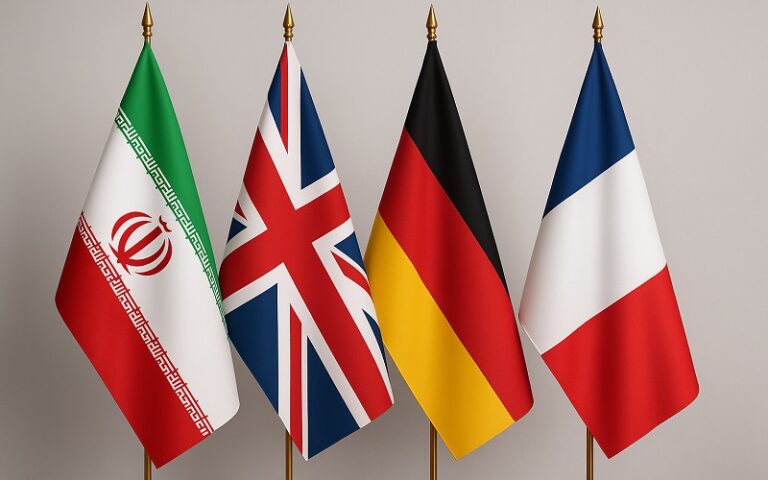
Donald Trump, the President of the United States, once again emphasized that in any potential agreement with the Iranian regime, he would not permit any form of uranium enrichment on Iranian soil. Prior to Trump’s statement, some U.S. media outlets had reported a shift in the U.S. position and claimed that Washington had agreed to allow limited enrichment inside Iran.

On the afternoon of Monday, June 2, Trump posted on Truth Social, criticizing Joe Biden’s policies and reiterated that in any potential deal with the Iranian regime, the U.S. would not permit any uranium enrichment by the regime.

This came just hours after the Axios website reported that the Trump administration had made a confidential proposal to the Iranian regime allowing limited uranium enrichment within Iran.

Axios: Secret U.S. Proposal to Iran Includes Permission for Limited Uranium Enrichment

Sources familiar with the matter told Axios that the proposal opens a new path toward reaching an agreement, though it carries the risk of backlash from U.S. allies.

CNN report on Tehran’s rejection of the U.S. proposal and possible collapse of the negotiations

On the other hand, a senior official from the Iranian regime told CNN on Monday, June 2, that the new U.S. proposal regarding the nuclear agreement was “incoherent and disjointed.”

CNN did not name the senior official but reported, quoting him, that the Iranian regime is rejecting the new U.S. offer.

The senior Iranian regime official also told CNN that the biggest obstacle to progress in the negotiations has been the United States’ constantly shifting positions.

CNN further reported, quoting sources familiar with the negotiations, that momentum toward a new agreement is collapsing.

The CNN report stated that the U.S. had altered its stance on uranium enrichment in the new proposal. According to the proposal, the U.S. might invest in Iran’s civilian nuclear energy program and join an international consortium tasked with overseeing low-level uranium enrichment on Iranian soil. This potential consortium would include Middle Eastern countries as well as the International Atomic Energy Agency (IAEA).

Reuters also reported on Monday, June 2, quoting a senior Iranian regime diplomat, that the regime is on the verge of rejecting a new U.S. proposal aimed at resolving the decades-long nuclear dispute.

This diplomat also added: “Iran is drafting a negative response to the U.S. proposal, which could be interpreted as a rejection of the U.S. offer.”

The new U.S. nuclear proposal was delivered to officials of the Iranian regime on Saturday, May 31, by the foreign minister of Oman, who has been mediating between Tehran and Washington, during a brief visit to Tehran.


Uncontrolled inflation continues in Iran; sugar prices rise by 40%

Bahman Danaei, secretary of the Sugar and Sugar Factories Association in Iran, announced a 40% increase in sugar prices in the country.

One-kilogram packaged sugar has also reached consumers with a 31% price hike.

He cited reasons such as “rising production costs, increased wages, and transportation expenses” for the surge in sugar prices.

In recent years, staple food items consumed by households have topped the list of goods most affected by inflation.

Iranian Families Forced To Consume Cheap Food To Stave Off Hunger

According to a report by the Research Center of the Iran Chamber of Commerce in November 2024, by March 2022, around 32 million people in the country were living below the food poverty line. The organization added that this trend is rapidly expanding due to the severe inflation of recent years.

The secretary of the Sugar and Sugar Factories Association also stated: “The aim of price adjustments is to ensure sustainable production and support the sugar supply chain in the country so that factories can continue operating and food security in this sector is maintained.”

In recent years, officials of Iran’s regime have frequently used the phrase “price adjustments” as a justification for the ongoing increase in commodity prices.

Following the intensifying economic crisis and the regime’s failure to control inflation, recent reports indicate a rise in bread prices across various provinces, with price-setting responsibilities handed over to provincial governors.

In mid-May, the price of raw milk in Iran rose by about 28%, and media outlets predicted that this would lead to a roughly 42% surge in dairy product prices and a significant spike in overall costs.

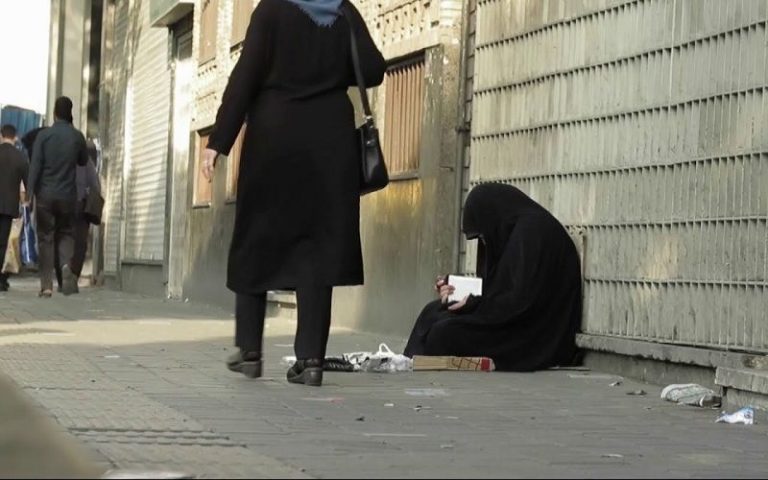
These price hikes continue in Iran at a time when inflation over the past years has steadily increased the number of people living in poverty.

The Minimum Wage for Iranian Workers in 2025 Announced

The state-run daily, Donya-e-Eqtesad reported in September 2024 that the poverty line for a three-person household in Tehran is around 200 million rials (approximately $240) this year. Field reports suggest that this figure can reach as high as 400 million rials (about $480) in the city. Meanwhile, the minimum wage of a worker with two children barely reaches 150 million rials (around $180).

Economic experts have warned that roughly one-third of Iran’s population is unable to meet their basic needs.


Iranian Families Forced To Consume Cheap Food To Stave Off Hunger

As reports continue to highlight chaos in Iran’s food market and the ongoing rise in food prices, Arash Anisian, Director General of Economics and Treatment at the Iranian regime’s Medical Council, stated that many families are forced to consume cheap, high-calorie foods with little to no nutritional value just to stave off hunger.

On Monday, June 2, in a radio interview, Anisian said: “More than 40% of Tehran residents are obese, and a significant portion of this figure is due to an unhealthy lifestyle and unbalanced diet.”

This official from the Medical Council referred to the sharp decline in the consumption of protein, meat, and chicken as a “bitter reality,” adding: “Rising prices and declining purchasing power have forced many families to eliminate or severely limit protein from their meals, and this threatens public health.”

168% Increase in Food Prices During the First Eight Months of Iran’s New Administration

Amid the rising prices of key food items in Iran’s markets, several trade officials have criticized the disorder in supply and the growing number of violations in the food market.

Bahman Danaei, secretary of the Sugar and Sugar Factories Association, announced on Monday, June 2, that sugar prices in Iran have risen by 40%.

He cited factors such as “rising production costs, increased wages, and transportation expenses” as reasons behind the hike in sugar prices.

While Iran’s economy is experiencing a minimum inflation rate of 40%, it is expected that food items would also see price hikes; however, the core economic problems lie in financial imbalance, budget deficits, and government inefficiency.

Meanwhile, media in Iran reported disruptions in the electronic ration coupon system over the past two days, stating that citizens were unable to use their available credits in some chain stores.

In addition to the issue of citizens being unable to access their ration credits, media outlets have also reported on the practice of forced or bundled sales of goods. In this regard, Hamidreza Rastegar, head of the Tehran Chamber of Guilds, stated that such sales are illegal and added that no store or business is allowed to force customers to buy multiple items together.

Reza Kangari, head of the Union of Food Wholesalers, also addressed the gap between official and market prices for cooking oil, stating that the price difference exceeds 80% to 90%. He further added that Indian rice is being sold to consumers at prices 20% higher than the approved rate.

The state-run newspaper Ham-Mihan, in a field report on June 1 titled “They want food but have no money,” wrote about restaurants, cafes, and fast food outlets in Tehran and the rising trend of unpaid tabs and customers skipping bills.

Ham-Mihan quoted the owner of a traditional eatery in central Tehran who said his daily sales had dropped from 200 servings in the winter to 140 servings—a 30% decline.

One part of the report reads: “A young woman and her daughter stood behind the refrigerator at a small eatery on Khayyam Street in Tehran and asked the vendor about the price of a sandwich. One million and two hundred thousand rials (approximately $1.4). The woman reconsidered and walked away without buying.”

The publication of such reports highlights how, with continuously rising inflation and prices, even the most basic meals have become difficult to afford for many citizens in Iran.

Over recent months, numerous reports have been published regarding the worsening economic crisis and the Iranian regime’s inability to curb inflation, which has led to widespread public dissatisfaction.

This comes while Iran is considered one of the richest countries in the world in terms of natural resources, but the regime’s rulers spend all the revenues from oil and other national assets on terrorist interventions and the nuclear bomb project.


Axios: Secret U.S. Proposal to Iran Includes Permission for Limited Uranium Enrichment

Axios reported in an exclusive piece that the United States has, in a confidential proposal to Iran’s regime, allowed limited uranium enrichment on Iranian soil—an action that contradicts the public positions of Trump administration officials, including Steve Witkoff, the White House special envoy, and Marco Rubio, the U.S. Secretary of State.

The proposal, which was reportedly delivered to Tehran on Saturday by Witkoff, would allow Iran to continue low-level uranium enrichment for a duration to be determined in upcoming negotiations.

Sources familiar with the matter told Axios that the proposal opens a new path toward reaching an agreement but creates the risk of giving the regime a path to obtaining nuclear weapons.

Grossi: Iran Seeking to ‘Sevenfold’ Its Production of 60% Enriched Uranium

According to these sources, under the proposal, Iran would be allowed to enrich uranium up to a 3% threshold, but it must temporarily shut down its underground facilities and halt the development of advanced centrifuges.

Strict monitoring by the International Atomic Energy Agency (IAEA) is also expected to be implemented, along with the immediate enforcement of the Additional Protocol. Gradual lifting of sanctions will depend on verification of Iran’s compliance by both Washington and the IAEA.

Press Secretary Karoline Leavitt told Axios “President Trump has made it clear that Iran can never obtain a nuclear bomb. Special Envoy Witkoff has sent a detailed and acceptable proposal to the Iranian regime, and it’s in their best interest to accept it. Out of respect for the ongoing deal, the Administration will not comment on details of the proposal to the media”.

In response, Esmail Baghaei, spokesperson for Iran’s regime foreign ministry, stated that Iran has not yet received sufficient guarantees regarding the timing and manner of sanction relief and is still reviewing the U.S. proposal.

He also rejected the White House’s assessment that the proposal is “acceptable” to Iran.

Increase in Execution Days at Ghezel Hesar Prison in Iran

The addition of Mondays to the execution schedule at Ghezel Hesar prison is yet another sign of the regime’s instrumental use of executions to instill fear, cover up regional crises, and suppress the impoverished and protesting population.

As public opinion and human rights organizations continue to warn about the intensifying wave of executions in Iran, Ghezel Hesar prison in Karaj has once again come under scrutiny.

According to reports received, in addition to Wednesdays—previously the customary execution day—Mondays have now been officially added to the prison’s execution calendar.

This change signals both an acceleration in the regime’s machinery of repression to physically eliminate convicts, and a deliberate strategy by the ruling dictatorship to use executions as a tool of intimidation and social control.

Iran: Execution of Pedram Madani in Ghezel Hesar Prison

In recent days, a number of prisoners have been moved from general wards to solitary confinement cells known as “suites.”

One of these prisoners, Vahid Amiri Ghahi, born in 1988 and sentenced to death in a drug-related case, was transferred on Saturday to solitary confinement in Unit 1 of Ghezel Hesar prison for the imminent implementation of his sentence. He has been held in this prison since 2019.

Execution: Not Justice, but a Policy of Death

The surge in executions is occurring amid a peak in poverty, unemployment, inflation, and widespread social discontent in the country.

Most of those sentenced to death are direct victims of the regime’s plundering economic policies and systemic dysfunction.

Many of them, like Vahid Amiri, were driven by poverty and social inequality into paths that ultimately led to heavy and fatal sentences.

Meanwhile, the true architects of poverty and economic ruin remain safely in power, continuing to plunder the country’s resources with impunity.

An Alternative Tool for Regional Failures

As international pressure mounts and the Iranian regime suffers increasing regional setbacks—especially in Iraq, Syria, and Lebanon—the wave of executions has clearly taken on a political function.

Through mass executions, the Iranian regime seeks to contain its legitimacy crisis and widespread domestic discontent by creating an atmosphere of fear, aiming to prevent any potential uprisings.

This policy is reminiscent of past periods when the regime, gripped by fear of social explosion, resorted to preemptive massacres.

The Urgent Need to Expand the “No to Executions Tuesdays” Campaign

In response to the catastrophic rise in executions, the “No to Executions Tuesdays” campaign is expanding rapidly.

Prisoners, families, civil society activists, and international organizations have turned this campaign into a tool of resistance against the regime’s death policy.

This campaign is not only a symbol of protest but a voice for the lives condemned to death in the silence of prison cells.

The “No to Executions Tuesdays” campaign has been ongoing for more than 70 weeks, with political prisoners going on hunger strike every Tuesday in protest against death sentences.

The rise in executions at Ghezel Hesar prison underscores the urgent need to strengthen this campaign more than ever.

Every Tuesday, the cry of “No” to the dictatorship’s killing machine is the echo of human conscience that refuses to witness state-sanctioned killings disguised as “law enforcement.”

In reality, what is carried out in prisons under the name of justice not only lacks legal legitimacy under international law but also constitutes part of the physical elimination of the poor and the dissenters under the guise of domestic legislation.

This blatant violation of fundamental human rights is a compelling reason to demand an immediate halt to executions and international scrutiny of Iran’s judicial system and prison conditions.


Saeed Masouri: 170 Executions In The Past Month In Iranian Prisons, Minute-Long Trials, And Death Sentences

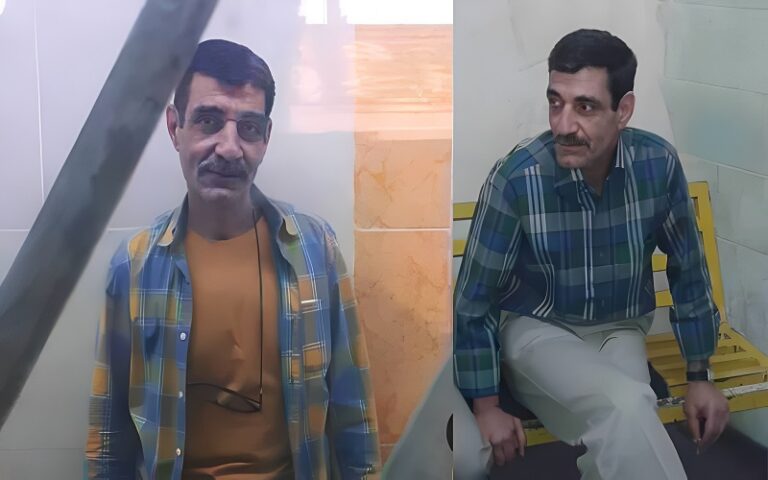
Saeed Masouri, An Iranian political prisoner who has been incarcerated for over twenty-five years, has written a letter from Ghezel Hesar prison in Karaj exposing the process of issuing and executing death sentences in Iran, particularly in the case of political detainees. In this letter, he reveals the Iranian regime’s tactics for executing political prisoners and describes these actions as criminal.

Excerpts from the letter follow:

To all awakened consciences, especially human rights reporters, Ms. Mai Sato, and the Office of the High Commissioner for Human Rights: The crime of execution includes other criminal preliminaries as well.

With twenty-five years of imprisonment, I am witnessing a wave of executions that is unprecedented in the past two or three decades. In the past month alone, over 170 individuals have been executed. It is often said that every criminal act is preceded by criminal preparations that remain hidden beneath the surface.

As a cellmate of countless prisoners who, over the past twenty-five years, have been sentenced to death and taken to the gallows, I have witnessed several recurring patterns in the cases of death row prisoners, especially those accused of political offenses (i.e., “acting against national security”).

In such cases, from beginning to end, the entire file is built by interrogators from the Ministry of Intelligence and the IRGC Intelligence Organization. Steps such as transfer to the prosecutor’s office, interrogation, and submission to court are purely formal and superficial.

Then the prisoner is taken to the prosecutor with that fabricated file and brought to court, giving the false appearance that all the legal procedures of a fair trial have been followed, with no involvement from the Ministry or the IRGC.

It is widely known that the so-called “work report sheet” (a case summary) prepared by the Ministry and IRGC is the sole basis for issuing both the indictment and the judge’s ruling. These so-called “judges” do not even read the case files.

There is no logical argument or credible evidence in the file, no opportunity for defense (as the trials last no more than ten minutes), and no access to the file for the attorney—contrary to Article 48 of their own Code of Criminal Procedure.

The verdicts are pre-written and merely announced

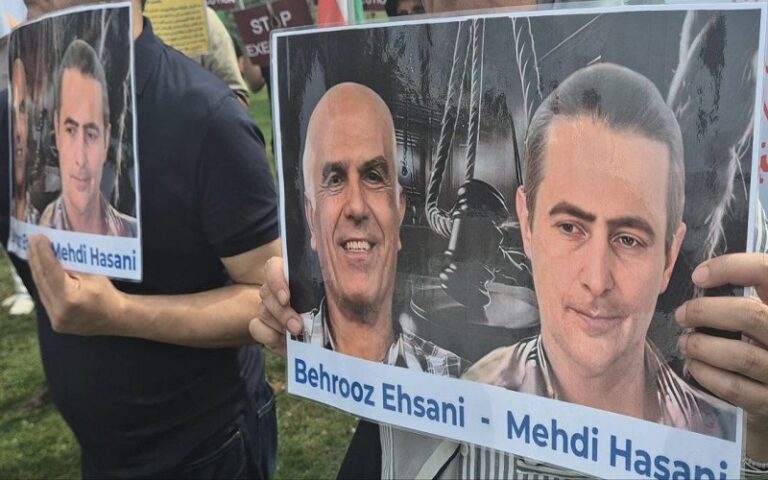
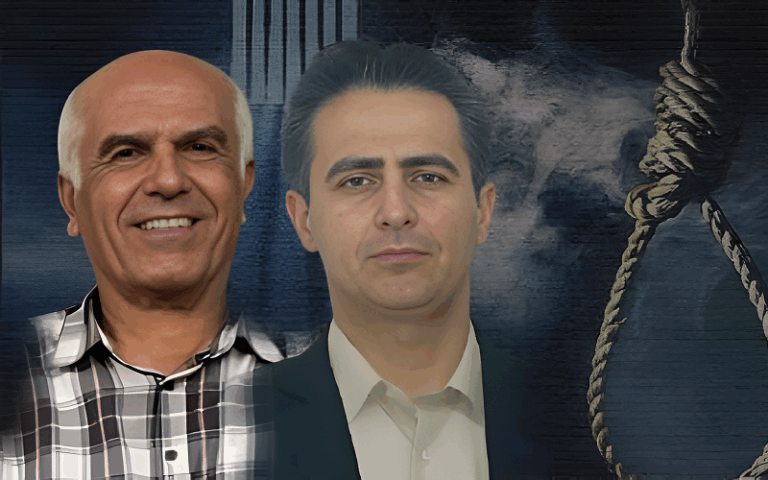
The head of Branch 33 of the Moghaddas Prosecutor’s Office, Ghanatkar, explicitly stated in the presence of political prisoners that the files of our two cellmates, Mehdi Hasani and Behrooz Ehsani, were confidential and secret.

“This case is confidential”—such a seemingly simple phrase clearly violates the defendant’s right to defend themselves against baseless accusations and fabricated charges.

Why are even those prisoners scheduled to be executed not allowed to know the reasons behind their executions, and why are their lawyers denied access to the files?

The only way to hide the lack of legitimate evidence is to declare the files secret and confidential…

…in hopes of coercing the accused into making forced confessions—sometimes televised or aired as so-called documentaries—while offering promises of avoiding execution or receiving a reduced sentence.The accused is thus placed in a dilemma: either they accept and make false confessions or face execution!!

But the regime does not stop there. It summons and threatens the family, saying that if their loved ones do not express remorse, make some kind of confession, or seek pardon, the execution is inevitable and beyond their control.

And if they are executed, the regime tells the families it is their own fault and that of the prisoner!!!

This method of forced confessions and portraying defendants as regretful and remorseful constitutes the criminal and inhumane preparations that precede the actual crime of execution and by enforcing it in each case, they pave the way for repeating the same process in future cases.

My message to you and to the UN High Commissioner for Human Rights is this: Has this blatant violation of human rights and the mass executions not yet warranted being raised at the UN Security Council?

Saeed Masouri

June 2025

Ghezel Hesar Prison


Global Lawmakers Rally Behind Maryam Rajavi and Democratic Change in Iran at Free Iran 2025 Conference

0

The Second Free Iran 2025 Conference, convened near Paris, brought together lawmakers, former heads of state, human rights advocates, and youth leaders from around the world in a united stance for democratic regime change in Iran. Led by Maryam Rajavi, President-elect of the National Council of Resistance of Iran (NCRI), the event emphasized rejection of both monarchy and theocracy, and support for a secular, democratic alternative.

In her opening remarks, Maryam Rajavi declared, “The regime is now facing a tsunami of internal crisis, political turmoil, widespread public discontent, and deepening economic and social challenges.” She emphasized the need for regime change to counter the nuclear threat and championed the NCRI’s Ten-Point Plan as “a realistic and democratic alternative.” Rajavi added, “The freedom of Iran is the guarantee of peace in the region and security for the world.”

Numerous lawmakers backed her vision. Lars Rise, former Norwegian MP, highlighted widespread legislative support: “570 British lawmakers, including a majority of the House of Commons and the Irish Senate, have now endorsed this vision for a free Iran.” He acknowledged the courage it takes to oppose appeasement.

Carsten Müller, German MP, warned: “The current regime is a tremendous risk for democracy and freedom across the world.” He called for the IRGC to be listed as a terrorist group: “We need to take action now.” Serdar Yüksel, also from Germany, added, “The regime in Iran has never been as weak as it is today.”

Italian MP Naike Gruppioni praised the Ten-Point Plan as “a bright vision for democracy, an Iran without death sentences, where women live freely, where elections are free and fair,” urging recognition of the NCRI. Fellow MP Emanuele Pozzolo stressed: “It is not a reformable regime… We must say clearly that we can’t have a dialogue with this kind of regime.” Gianna Gancia, from Piemonte, emphasized “firm and resolute action” and endorsed snapback sanctions.

Former Icelandic PM Geir Haarde honored political prisoners, asserting, “The Iranian people have shown immense courage rejecting both monarchical and religious dictatorships.” He backed Rajavi’s plan: “This plan offers a roadmap to a democratic future in Iran and lasting peace in the region.”

Norwegian MPs Ola Elvestuen and Rasmus Hansson expressed solidarity, with Hansson saying, “You’re fighting our fight, and we’re fighting yours.” Journalist Nina Hansson spotlighted labor protests: “Their protest is not an isolated labor dispute but a cry for freedom, justice and dignity.”

Baroness Sandip Verma, UK House of Lords, advocated for a special tribunal: “What is really missing is a special tribunal to investigate and prosecute those responsible for crimes against humanity and genocide.” Lord Steve McCabe echoed support for Resistance Units, warning that neglecting them would be “a huge strategic mistake.”

Former Dutch Senator Kees de Lange declared the regime in “irreversible decay—economic, military, and above all, moral.” Derk Jan Eppink cited a disturbing rise in executions in 2025. Berlin State MP Stefanie Bung endorsed sanctions and emphasized, “All human beings deserve freedom.” Christian Calderone condemned appeasement, stating, “Freedom is the enemy of dictators.”

Icelandic MP Dilja Mist Einarsdottir highlighted youth and women as drivers of change: “Change in Iran is not a question of if, but when.” Former German MP Leo Dautzenberg stressed the importance of PMOI Resistance Units: “The path of resistance has been paid in blood.” Nadine Ruf honored the role of women in the uprising and said, “Let’s be the shoulders on which other women can stand.”

Thomas Lutze criticized media silence: “The strike of truck drivers has not been reported in Germany.” Former Romanian MP Ben Oni Ardelean likened Iran’s regime to Ceausescu’s: “He didn’t recognize his people—Khamenei is making the same mistake.” Former UK MP Sir Alan Meale called the ongoing uprisings “a real revolution.”

Former UK MP Sir David Crosby said, “Iran will be free because the people will.” Struan Stevenson, former Scottish MEP, asserted the regime is “at its weakest point since 1979” and called the NCRI “a government in waiting.” Nahal Safa, 22, honored her uncle’s execution during the 1988 massacre and said, “These executions are not a show of strength—they are the regime’s loudest cry of fear.”

Youth speakers Hiva Mohammadi, Azar Karimi, and Ehsan Gharaee reflected on family histories of exile and loss, echoing belief in the Ten-Point Plan. Karimi called Rajavi “an inspiration to all Iranians.” Gharaee recalled how the regime executed his father and tried to silence his mother and family: “No funeral, no grave—only silence.” Hosein Yaghubi denounced both monarchy and theocracy, supporting the NCRI as the “modern embodiment” of democracy.

Former Portuguese MEP Paulo Casaca called the regime “compulsive liars” and praised Ashraf 3 residents as “heroes.” Irish officials John Paul Phelan and Jim Higgins urged stronger national support and grassroots mobilization. Former Italian Senators Roberto Rampi and Antonio Razzi supported renewed UN sanctions. Mario Galea questioned Tehran’s credibility: “If we cannot trust them with the sacred word of Allah, how can we trust them with nuclear power?”

The conference ended with a clear message: the Iranian people’s call for freedom is louder than ever, and the NCRI—through the Ten-Point Plan—stands as a credible, inclusive, and democratic alternative.


Iran’s Regime Dismisses IAEA Report About its Nuclear Program as “Biased and Baseless.”

In a joint statement, the foreign ministry and the Atomic Energy Organization of the Iranian regime described the recent report by Rafael Grossi, Director General of the International Atomic Energy Agency (IAEA), on Iran’s nuclear program as a repetition of “biased and baseless accusations” from the past.

The statement, published on the evening of Saturday, May 31, states that Grossi’s new report does not reflect the “true level” of Tehran’s cooperation with the IAEA and that “fake Israeli documents” were used in its preparation.

Iran’s Regime Ties Nuclear Pause to U.S. Concessions

The foreign ministry and the Atomic Energy Organization of the Iranian regime added that Grossi’s report was drafted “for political purposes by putting pressure on the agency” and goes “beyond the director general’s assigned responsibilities and is in conflict with the professional principles governing international institutions, such as the principle of impartiality.”

On Saturday afternoon, the IAEA stated in a confidential report that Iran previously carried

out secret nuclear activities at three sites that have long been under investigation.

According to the report, the three sites—Lavizan-Shian, Varamin, and Marivan—as well as potentially other related locations, were part of a structured and undeclared nuclear program that Iran implemented up until the early 2000s, using undeclared nuclear material in some of these activities.

Grossi also once again called on the Iranian regime to “immediately and fully and effectively” cooperate with the agency.

Tehran threatened retaliatory action

In their statement, the Iranian regime’s foreign ministry and Atomic Energy Organization described the director general’s report as “imbalanced” and “lacking comprehensive assessment.”

Saudi King Warns Iran’ Regime Over Trump’s Nuclear Proposal Amid Rising Tensions

The two institutions wrote that parts of the report address “irrelevant, non-safeguards-related, and minor” issues that are raised with the aim of exerting “political” pressure.

They threatened that if certain countries attempt to “misuse” the agency’s report, the Iranian regime will consider “appropriate countermeasures.”

Previously, on March 15, 2025, Grossi had warned, citing growing global concerns about the expansion of the Iranian regime’s nuclear program, that Tehran was very close to crossing the “nuclear threshold.”

The new agency report states that from 2009 to 2018, the Iranian regime stored undeclared nuclear materials or equipment heavily contaminated as a result of its undeclared nuclear program at Turquzabad, and later removed these items from that location.

The IAEA’s new assessment, presented as a “comprehensive” report, was prepared at the request of the Board of Governors in November 2024. The report indicates that the Iranian regime still has not provided credible and technically satisfactory answers regarding the undeclared sites.

According to the report, Iran’s enriched uranium stockpile has increased by more than 953 kilograms since the previous report, reaching 9,247.6 kilograms.

Additionally, the stockpile of uranium enriched up to 60% in the form of uranium hexafluoride has increased by 133.8 kilograms, reaching 408.6 kilograms.

The IAEA’s new findings could have significant technical and diplomatic implications for the Iranian regime’s international engagement concerning its nuclear activities.


Special Report on Tenth Day of Nationwide Truck Drivers’ Strike in Iran

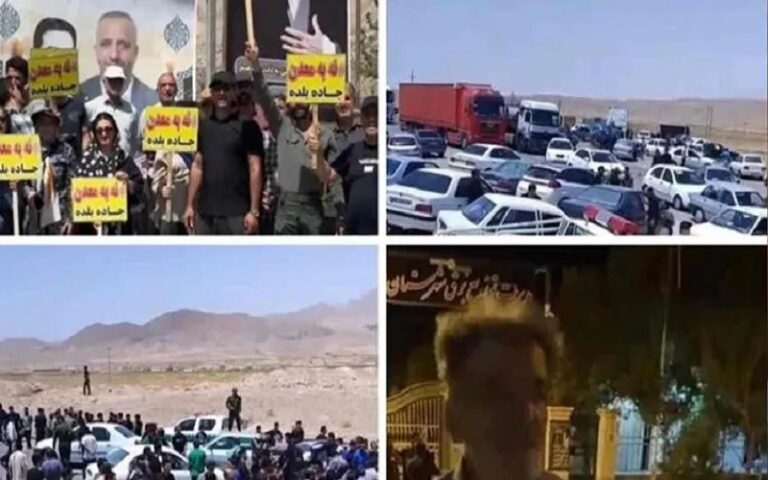
The nationwide strike by truck drivers and heavy vehicle operators in Iran reached its tenth day on Saturday, May 31, and has now spread to 152 cities across all 31 provinces. What began as a limited protest has now turned into one of the largest and most coordinated labor strikes in recent years.

Reasons for the strike and demands

Heavy vehicle drivers have halted operations in protest against the rising price of diesel fuel, high insurance premiums, lack of road safety, economic hardship, and the regime’s chronic disregard for labor demands. The Union of Iranian Truckers and Drivers Organizations issued a statement declaring that “the strike will continue until all demands are fully met” and that they “will not trust verbal promises without guarantees.”

Regime’s response: threats, bribes, and arrests

Officials from Iran’s regime have attempted to end the strike by promising to address the demands. Mehran Ghorbani, deputy minister of roads and urban development, promised that the demands would be addressed within a month. However, drivers deemed these remarks untrustworthy and continued the strike.

Iran’s Truckers’ Strike: A Growing Movement That Could Shake the Regime

At the same time, the regime has launched a broad security crackdown to suppress the strike. The public relations department of the Road Maintenance Organization in Yazd province posted a banner warning that drivers who do not load goods will be deprived of their legal benefits.

In provinces such as Khuzestan, Gilan, Hamedan, Fars, and Kurdistan, security forces have arrested several drivers. The Intelligence Organization of the IRGC in Khuzestan stated it had arrested several drivers on charges of “sending videos of gatherings to hostile media outlets.”

Wave of solidarity: from bus operators to artists

Support for the truck drivers’ strike is growing. Minibus drivers in Isfahan have joined the strike. Various social groups—including teachers, retirees, nurses, education workers, oil workers, students, and bazaar merchants—have issued statements expressing their support.

Thirty-two artists, filmmakers, and cultural figures wrote in a statement:
“The truck drivers’ strike is a warning against all the oppression, inequality, theft, and widespread poverty that have made people’s lives difficult and unbearable.”

Silence of official media and spread of parallel protests

While state-run media remain silent, the tenth day of the truckers’ strike coincided with other protest gatherings. Workers in Ilam, Tehran, Arak, and Lordegan, bakers in Mashhad and Isfahan, and retirees from Bank Saderat in Tehran held demonstrations. In Shiraz, sanitation workers protested, and in Khuzestan, industrial project workers and wheat farmers also demonstrated.

The truck drivers’ strike is not just a labor dispute—it has become a symbol of widespread discontent with the regime’s economic and administrative policies. As the strike continues and arrests mount, the gap between the ruling system and society grows deeper by the day. While the regime resorts to unguaranteed promises and security crackdowns, civil society and various social groups are forging a united front of nationwide protests.


Saudi King Warns Iran’ Regime Over Trump’s Nuclear Proposal Amid Rising Tensions

In a rare diplomatic maneuver, Saudi Arabia’s King Salman bin Abdulaziz Al Saud sent a stark warning to Iran regime’s Supreme Leader Ayatollah Ali Khamenei last month, urging the regime to take U.S. President Donald Trump’s nuclear proposal seriously or risk the outbreak of war, particularly with Israel.

According to four sources familiar with the matter—two Iranian regime officials and two Gulf government insiders—the message was delivered by the king’s son and Saudi Defense Minister, Prince Khalid bin Salman, during a secret visit to Tehran on April 17. The confidential letter, personally addressed to Khamenei, expressed Saudi Arabia’s deep concerns over escalating regional instability and the potential for military conflict.

A Confidential Visit Amid Escalating Threats

Prince Khalid’s trip, while reported in the media at the time, did not reveal the sensitive nature of his mission. It marked the first visit to Iran by a senior member of the Saudi royal family in over two decades. The confidential meeting took place at the Iranian regime presidential palace and included high-ranking Iranian regime officials: President Masoud Pezeshkian, Chief of Staff of the Armed Forces Mohammad Bagheri, and Foreign Minister Abbas Araghchi.

During the meeting, Prince Khalid—who served as Saudi Arabia’s ambassador to Washington during Trump’s first term—warned Iranian regime officials that Trump was impatient with drawn-out negotiations. According to two Arab sources, the Saudi envoy emphasized that the United States was seeking a swift resolution to the nuclear dispute and that the diplomatic window was rapidly closing.

The visit came shortly after Trump unexpectedly announced that direct talks with Tehran were underway, aimed at curbing Iran regime’s nuclear ambitions in exchange for sanctions relief. Trump made the statement alongside Israeli Prime Minister Benjamin Netanyahu in Washington, who was lobbying for a possible military strike on Iran’s nuclear sites.

A Stark Choice: Diplomacy or War

Sources indicated that King Salman’s message urged the Iranian regime leadership to choose diplomacy over confrontation, suggesting that reaching an agreement with Washington would be preferable to facing a potential Israeli military strike. “The region, already destabilized by conflicts in Gaza and Lebanon, cannot afford another war,” one source quoted Prince Khalid as saying.

Reuters noted that neither Iranian nor Saudi officials responded to requests for comment on the meeting or the message.

A Fragile Detente

Tehran and Riyadh have historically been at odds, locked in a rivalry fueled by sectarian divisions, proxy conflicts, and the 2015 attacks on Saudi diplomatic missions in Iran. However, with Chinese mediation, diplomatic relations resumed in March 2022 after a years-long freeze.

Despite the thaw, Iran regime’s regional influence has weakened over the past two years. Israeli operations have significantly damaged Tehran’s allies in Gaza and Lebanon, while the fall of Bashar al-Assad in Syria has further diminished Tehran’s regional posture. At the same time, Western sanctions have taken a severe toll on Iran’s oil-dependent economy.

This new geopolitical context has allowed Saudi Arabia to increase its diplomatic leverage. Mohanad Haj Ali, Deputy Director for Research at the Malcolm H. Kerr Carnegie Middle East Center, told Reuters that Saudi Arabia is keen to avoid a regional conflict that could derail its ambitious economic development plans.

Mixed Signals from Tehran

The impact of the Saudi warning on Iran regime’s leadership remains unclear. According to the sources, regime President Pezeshkian responded that the regime was open to a nuclear agreement that could relieve economic pressure by lifting sanctions. However, Iranian regime officials expressed skepticism over the Trump administration’s “unpredictable” approach—at times tolerating limited enrichment, while at other moments demanding a complete dismantling of Iran regime’s nuclear capabilities.

Trump has made it clear that if diplomacy fails, military options are on the table. One Iranian source reported that Pezeshkian reaffirmed Tehran’s willingness to negotiate but made it clear that Iran ‘s regime would not abandon its enrichment program solely to appease the U.S.

Ongoing nuclear talks between Tehran and Washington have so far gone through five rounds, but key issues—especially uranium enrichment—remain unresolved. Reuters reported earlier this week that Iran’s regime might consider temporarily halting enrichment if its frozen assets are released and its right to peaceful nuclear energy is acknowledged. However, this was later denied by Iran’s Foreign Ministry via the semi-official Fars news agency.

Riyadh’s Assurances and Warnings

In addition to the nuclear issue, Prince Khalid reportedly called on Iranian regime officials to review their broader regional policies. He emphasized that changes in Iran regime’s approach—especially its support for regional militias—would be welcomed by Riyadh and could help ease regional tensions.

At the same time, the Saudi defense minister warned Tehran not to provoke the United States through direct actions or via its regional proxies. He underscored that Trump’s potential response would likely be far harsher than those of his predecessors, Barack Obama and Joe Biden.

However, Prince Khalid also provided a key reassurance: Saudi Arabia would not allow its territory or airspace to be used for any U.S. or Israeli military operations against Iran.

Conclusion

The secret meeting and the confidential message from King Salman represent a significant moment in Gulf diplomacy. As tensions in the region simmer and the possibility of a major conflict looms, Saudi Arabia has positioned itself as both a cautious mediator and a strategic player, urging Iran to seize what may be a narrowing opportunity for a peaceful resolution.