Home Blog

Bread Prices and the New Wave of Price Increases and Rationing in Iran

In recent days, the issue of bread prices has become one of the most important livelihood concerns in Iran. Reports from various provinces indicate that alongside official price increases, restrictions have also been imposed on sales. This situation has emerged while bread remains the primary staple food for a large portion of Iranian households. State-run media outlets such as Tabnak, Donya-e-Eqtesad, and several other media organizations have published reports on rising bread prices.

Reviews of public messages and reports from domestic media indicate that bread prices have increased by 50% to 80% in some areas. At the same time, some bakeries have introduced daily purchase limits. These changes have been reported in cities such as Tehran, Mashhad, Isfahan, and several other provinces.

Widespread Student Protests Across the Country; Opposition to Educational Policies

Bread Price Increases Across the Provinces

In various provinces, including Zanjan, Yazd, Razavi Khorasan, North Khorasan, and Markazi, local officials have announced official increases in bread prices. Some reports put these increases at approximately 60% to 80%. These changes have caused significant fluctuations in bread pricing structures across the country.

At the same time, bread prices in the open market have not moved in line with the officially approved rates. In some areas, bakers have applied different prices for various types of bread. Reports indicate that the lack of unified oversight has resulted in significant differences in pricing.

Rationing and Purchase Restrictions

Alongside rising bread prices, purchase rationing has also been observed at some bakeries. According to field reports, certain bakeries receiving government-subsidized flour have announced that each customer is allowed to purchase only a limited number of loaves.

In some cases, purchases of more than three loaves of bread per bank card have reportedly been restricted. As a result, some citizens have resorted to using multiple bank cards to buy larger quantities. This situation has been observed particularly in densely populated urban areas.

Meanwhile, some bakers have stated that rising production costs, reduced flour allocations, and increasing energy prices have placed substantial pressure on their operations. In their view, changes in bread prices without reforms to the support system have made continuing their businesses increasingly difficult.

Public Reaction and Living Conditions

The increase in bread prices has generated widespread reactions among the public. Some citizens report declining purchasing power and growing pressure on household food budgets. In public comments, bread has been described as the last stable item on the family table, which has now also become subject to price increases.

Economic reports have also identified rising agricultural input costs as one of the factors contributing to higher bread prices. Increased costs of wheat production, transportation, and energy have been cited among the drivers of this trend.

Recent developments indicate that bread prices in Iran have entered a period of volatility and rising costs accompanied by supply restrictions. This situation has placed pressure on both consumers and bakers. Under current conditions, the gap between official and open-market prices, combined with purchasing restrictions, has created a complex picture of the bread market.

Overall, the continuation of this trend could have a direct impact on household consumption patterns and further affect the role of bread as a staple item in the family food basket. Rising prices are not limited to bread; many other goods that were once part of people’s basic living expenses have also been affected by inflation, placing significant strain on household budgets. This has had a deeply negative impact on people’s ability to afford essential goods and could contribute to broader public unrest and protests.

Privatization: The Transfer of Wealth to Power Circles in Iran’s Regime

Privatization has been one of the most significant economic policies of Iran’s regime over the past three decades. Regime officials have repeatedly presented this policy as a way to reduce the size of the government, increase efficiency, and strengthen the private sector. However, statistics published by official institutions show that a large portion of these transfers has been made not to an independent private sector but to entities affiliated with the ruling establishment, often through debt settlements. An examination of official data and recent examples of asset transfers presents a different picture of the privatization process in Iran.

Privatization and the Real Share of the Private Sector

The privatization policy entered a new phase on a large scale in 2005 following the implementation of the policies associated with Article 44 of the Constitution. Under these policies, approximately 80% of state-owned companies were supposed to be transferred to the private sector.

40 million Iranians Below Poverty Line

However, official statistics published in recent years indicate that the share of the private sector in these transfers has been very limited. On June 7, the state-run Jahan-e Sanat newspaper, citing data from the Privatization Organization, reported that of the total 78.36 quadrillion rials in transfers carried out between 2011 and 2024, approximately 44.98 quadrillion rials were conducted through debt settlements. This figure represents about 57% of all transfers.

Abdolnasser Hemmati, the former Minister of Economic Affairs and Finance, stated in November 2024 that only 11% of transfers had been made to the private sector. According to him, 29% of transfers went to public institutions, while 56% were carried out through debt settlements.

These statistics indicate that the majority of the privatization process has not resulted in the transfer of ownership to independent investors but rather in the redistribution of assets among various entities linked to the ruling structure, including the Islamic Revolutionary Guard Corps (IRGC).

Debt Settlements: The Main Mechanism of Privatization

One of the principal methods used in privatization over recent years has been the transfer of state-owned companies and assets through debt settlements. Under this mechanism, the government transfers shares of state-owned companies to creditors instead of paying its debts in cash. A recent example of this process became public in February 2025, when the state-run Mehr News Agency reported the transfer of portions of the shares of Mobarakeh Steel Company of Isfahan and the National Iranian Copper Industries Company to Astan Quds Razavi, a Mashhad-based religious endowments that acts as one of the regime’s economic power centers.

According to published information, these transfers took place after efforts to sell the shares on the market failed. The shares were subsequently transferred to Astan Quds Razavi at prices below their nominal value. Reports indicate that Mobarakeh Steel shares were transferred at approximately 48% of their value, while shares of the National Iranian Copper Industries Company were transferred at around 50% of their value. Most of the payment for these transactions was carried out through offsetting claims and debts, with only a limited amount paid in cash.

The Impact of Privatization on Labor and the Economy

Critics of privatization in Iran argue that this policy has often been accompanied by a decline in job security for workers. In a number of transferred enterprises, employment structures have been altered, with temporary and subcontracted positions replacing permanent employment.

At the same time, various reports point to increasing economic pressures on households, declining purchasing power, and a widening gap between incomes and inflation. Economic experts have repeatedly warned about the effects of budget deficits, monetary expansion, and inflation on people’s livelihoods.

Alongside these issues, the transfer of profitable state-owned assets to public and quasi-governmental institutions remains one of the central controversies surrounding privatization in Iran. Official statistics show that a significant portion of these transfers has gone to organizations that continue to maintain ties to the ruling establishment.

On February 11, 2025, the state-run Mehr News Agency reported the transfer of shares in Mobarakeh Steel Company of Isfahan and the National Iranian Copper Industries Company to Astan Quds Razavi.

An examination of official statistics on privatization shows that the majority of transfers over the past three decades have been carried out through debt settlements or transfers of assets to public institutions. While the stated objective of this policy was to expand the role of the private sector in the economy, the available data indicates that the share of the independent private sector in these transfers has been limited. As a result, privatization remains one of the most controversial economic issues in Iran, and there is widespread disagreement regarding its actual outcomes.

European Union Sanctions Against Iran’s Regime and the Strait of Hormuz Crisis

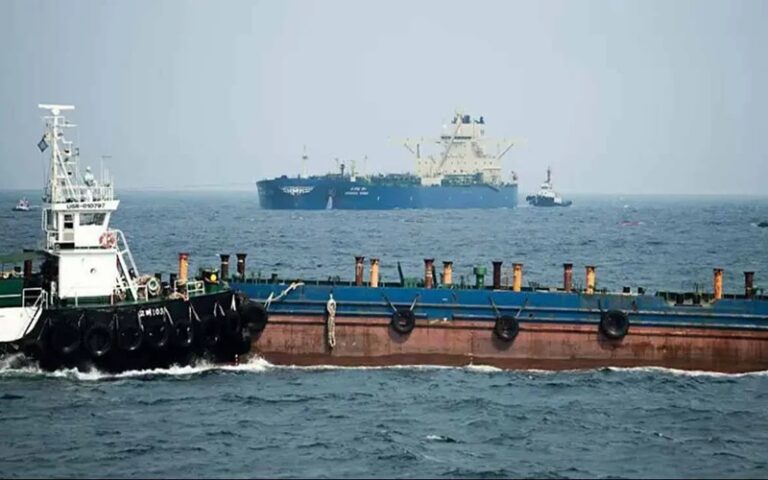
In the latest development in the tense relations between Tehran and Brussels, the issue of European Union sanctions has once again come to the forefront. This time, the European Union’s decision to impose restrictions on two Iranian individuals and one military unit, citing threats to freedom of maritime navigation in the Strait of Hormuz, has triggered a new wave of political and security tensions in the region.

According to a Reuters report on June 8, the European Union announced that these measures were taken under its new mechanism designed to protect freedom of navigation. This is the first time that the mechanism has been activated directly against Iran. Under this framework, the Hormozgan Provincial Command of the Islamic Revolutionary Guard Corps (IRGC) Navy has also been placed on the sanctions list. The names of Mohammad Akbarzadeh and Hamid Hosseini are likewise included among those sanctioned. This decision has once again made European Union sanctions a central issue in diplomatic developments.

US Sanctions Chinese Refinery, Tehran-linked Shipping Companies

European Union Sanctions and Intensified Political Pressure

As this process continues, European officials have stated that the actions of Iran’s regime in the Strait of Hormuz constitute a direct threat to global energy security. Kaja Kallas, the European Union’s High Representative for Foreign Affairs and Security Policy, stressed in strong remarks that Iran’s conduct in the region is unacceptable. She also said that the European Union may expand its sanctions if the current situation continues.

In response, Tehran has described the decision as political and lacking legal legitimacy. Kazem Gharibabadi, Deputy Foreign Minister of Iran’s regime, stated that Iran does not take such measures seriously and will continue its course in protecting its strategic interests. This reaction reflects the widening divide between Iran and Europe, a divide that for years has been marked by a cycle of tensions, sanctions, and reciprocal responses.

The Strait of Hormuz and Its Role in the Crisis

The Strait of Hormuz, considered one of the world’s most important energy transit routes, has once again become a focal point of dispute. According to reports, about one-fifth of the world’s oil passes through this waterway. In this regard, the European Union has stated that the purpose of the sanctions is to prevent disruptions to this vital route.

According to the account presented in the European statement, Iran carried out actions in this waterway following regional military tensions. This issue has been cited as the basis for the European Union’s new decision. In this context, the role of the Islamic Revolutionary Guard Corps (IRGC) in developments related to the Strait of Hormuz has once again come under scrutiny and has been identified as one of the main reasons behind the sanctions.

Reactions and Political Consequences

According to European analysts, this measure could have broader consequences for relations between Iran and the West. Some European Union officials have emphasized that this is the first step within a new framework of targeted pressure. Nevertheless, the continuation of European Union sanctions could lead to increased regional tensions.

Inside Iran, critics of the power structure view this situation as the result of confrontational policies and the concentration of power within military institutions. In their view, continuing along this path has not only intensified external crises but has also increased economic and political pressure on society. In such an environment, European Union sanctions are seen as part of a complex cycle of political confrontation with no clear end in sight.

Overall, the renewed activation of European Union sanctions against Iran’s regime can be seen as a sign that relations between Tehran and Brussels have entered a new phase of tension. This development has emerged against a backdrop of mistrust, geopolitical competition, and regional crises.

From a political perspective, the continuation of this situation suggests that the ruling structure in Iran continues to emphasize confrontational regional policies. As a result, a cycle of pressure and response has replaced any prospect of sustained dialogue. Consequently, European Union sanctions appear not as a temporary event but as part of a long-term trend in the tense relationship between Iran and the West.

Political Prisoner Parisa Kamali Commemorates Martyrs of January Uprising In Defiant Message

Parisa Kamali, a political prisoner held in Yazd Prison, who has been sentenced to eight and a half years in prison on charges of insulting former regime supreme leader Ali Khamenei, conducting activities against the Iranian regime, and membership in the People’s Mojahedin Organization of Iran (PMOI/MEK), addressed the people of Iran in a message.

Salute to the martyrs of the path of freedom and their families. Here, cardboard rulers govern. This is a place where one is stunned by the sight of boundless crimes. They answer cries for justice with bullets and the gallows.

The terrorist clerics commit crimes. There is not a day that passes without executions and the taking of lives.

Political Prisoner Yahgoub Derakhshan Sentenced to Death for a Second Time

My fellow countrymen are victims of polluted hands that issue death sentences with their pens. For years, the rule of the mullahs, through the systematic brutality of the Islamic Revolutionary Guard Corps (IRGC), has carried out crimes beyond imagination. Curse upon you, whose survival depends only on blood. May the hands that sign orders to take lives be severed.

No to executions! Because they are a tool for creating fear and repression. No to executions! Because they are essential to the survival of the rule of the mullahs and are destructive to humanity. You carry out executions in the hope of ending us.

We are Vahid Amerian, Mohammad Taghavi, Babak Alipour, Pouya Ghobadi, Abolhassan Montazer, Shahrokh Daneshvar Kar, Mohammad Amin Biglari, Amirhossein Hatami, Ali Fahim, Shahin Vahedparast, Sasan Azadvar, Abbas Akbari, and all those whom you sought to silence through execution. We are grains of wheat. One by one, we become thousands of sheaves.

I stand with the families of Manouchehr Fallah, Peyman Farahavar, Zahra Tabari, Karim Khojasteh, Alireza Mardasi, Farshad Etemadi Far, Reza Abdali, Massoud Jamei, and Mohammad Javad Vafaei Sani, and I call for the annulment of the death sentences imposed on my sisters and brothers. Those who consider themselves separate should know that one day the bloodstained hands of the criminal clerics will weave the noose for them and their loved ones and place it around their necks. I hope for the day when executions no longer exist in my homeland Iran or anywhere else in the world.

Who is Parisa Kamali?

Parisa Kamali Ardakani was arrested in Isfahan on April 29, 2024, and was initially transferred to Dolatabad Prison. She has faced various security-related charges in three separate cases in Isfahan and Ardakan.

In 2025, Parisa Kamali Ardakani was transferred from Dolatabad Prison in Isfahan to Yazd Prison, and her sentence was reduced to three and a half years after accepting the court’s ruling.

She was born in 1986, is from Abadan, is married, and is a geography student.

The Gallows: The Real Story of Iran Behind the Oslo Ceremony

0

In an article published on June 8, the Norwegian newspaper Fædrelandsvennen sought to draw public attention to a different issue—one that, in its view, represents the reality of Iran today more than any other event: the “gallows.”

At the beginning of the article, the author refers to years of work and contact with Iranian refugees and activists. These are individuals who, after leaving Iran, now live in Norway but still carry memories of interrogations, imprisonment, and security pressures. According to the author, many of them continue to live with the psychological effects of years of repression, and their experiences show that Iran’s regime has not only targeted human lives but has also sought to destroy hope and the future.

In the article, the author refers to a ceremony in Oslo where Noor Pahlavi, granddaughter of the ousted shah, was welcomed by attendees. The event received media coverage and included discussion of the legacy and continuity of the Pahlavi family. However, the author argues that while these images were being highlighted, another reality was unfolding in Iran—a reality that, according to the author, was overshadowed by media attention.

The Pahlavi Restoration: A Legacy of Torture and Revisionism

The Gallows and the Execution of Prisoners

The author notes that several prisoners were executed in Iran within just a few days. He refers to political prisoners who have faced the death penalty because of their demands for political and civil rights. In the author’s view, the gallows in Iranian cities is an image that should accompany any political narrative about the country’s future.

The article emphasizes that public attention should not be focused solely on well-known political figures or historical symbols, but should also be directed toward the situation of prisoners, civil activists, and individuals facing the threat of execution.

Criticism of the Monarchy Narrative as an Alternative

Another section of the article criticizes the view that presents the Pahlavi family as the natural future alternative for Iran. The author argues that Iran’s regime has, over the years, attempted to create the impression that the only available alternative to the current system is the restoration of the monarchy.

He argues that the prominence given to members of the Pahlavi family in Western media and political circles, while the gallows of the clerical regime remain active in Iran, can reinforce this perception. The author also notes that for part of Iranian society, the Pahlavi era is associated with memories of political repression and the activities of SAVAK, the former intelligence and security organization under the monarchy, and therefore cannot simply be equated with democracy.

Within this framework, the author raises questions about the political legitimacy of Reza Pahlavi. He asks what democratic mechanism has led to his being presented as a representative of the Iranian people and what election has conferred such a position upon him.

The Less-Heard Voices of the Opposition

In the final section, the author emphasizes the situation of thousands of political and civil activists who have opposed Iran’s regime over the past decades. These are individuals who have experienced imprisonment, torture, or even death by the gallows, yet whose names and stories have received little attention in international media.

He believes that Western countries, including Norway, have no responsibility to determine Iran’s future leaders. In his view, that choice must be made by the Iranian people. Nevertheless, media organizations and political institutions can decide which voices to amplify and which narratives to give greater opportunities to be heard.

At the conclusion of the article, the author stresses that the young people currently facing the risk of execution in Iran’s prisons are not seeking special recognition or celebration. They simply ask not to be forgotten and for their voices not to be lost amid political and media narratives.

By placing the “gallows” at the center of its narrative, the article seeks to redirect the attention of Western audiences from symbolic ceremonies and well-known political figures toward the human rights situation and executions in Iran. The author argues that the reality of Iran today is best understood through the fate of political prisoners, victims of repression, and families who continue to pay a heavy price for freedom and democracy.

Lebanese President Expresses Clear Opposition to Iran’s Regime

Recent remarks by Lebanese President Joseph Aoun regarding the role of Iran’s regime in developments in Lebanon have received widespread coverage in regional and international media. At a time when Lebanon continues to struggle with the consequences of war, economic crisis, and political tensions, he accused Tehran of using Lebanon as a tool to advance its objectives in negotiations with the United States.

According to a Reuters report published on June 6, Joseph Aoun stated that using Lebanon as a bargaining chip in foreign negotiations is unacceptable. He emphasized that the Lebanese people are paying the price for wars and conflicts that have no connection to the country’s national interests.

Direct Criticism of Iran’s Regime’s Role in Lebanon

In his remarks, Lebanese President Joseph Aoun said that Lebanese citizens are paying the cost of war for Iran’s interests. He added that the Lebanese people are exhausted by the conflict between Israel and Hezbollah and that the continuation of this situation has placed a heavy burden on the country’s society and economy.

These remarks come as Lebanon has witnessed escalating tensions along its southern border in recent months. Clashes between Israel and Hezbollah have caused extensive damage to infrastructure and residential areas and have forced thousands of people to leave their homes. At the same time, the economic crisis continues to cast a shadow over the daily lives of Lebanese citizens.

Reuters described these comments as Joseph Aoun’s strongest criticism of Iran’s regime and Hezbollah since the beginning of his presidency. The significance of this position lies in the fact that a substantial part of Lebanon’s political structure has been influenced by Hezbollah’s presence and influence over the past decades.

Lebanon Between Crisis and Regional Rivalries

In recent years, Lebanon has faced a combination of overlapping crises. Economic collapse, the depreciation of the national currency, rising poverty, and large-scale emigration on one hand, alongside security tensions on the other, have created extremely difficult conditions for the country.

In this environment, debate over the role of foreign actors in Lebanon has once again become one of the central issues in political disputes. Critics of Iran’s regime argue that Tehran’s policies and its support for Hezbollah have turned Lebanon into an arena for regional competition. In contrast, Hezbollah’s supporters view the group as part of the country’s defensive structure.

Joseph Aoun’s remarks can be regarded as one of the most explicit official positions taken by the Lebanese government against the influence of Iran’s regime and Hezbollah’s role in the country’s affairs. These comments were made at a time when Lebanon continues to bear the heavy costs of political, economic, and security crises. The Lebanese president’s recent position has once again brought attention to the extent of Tehran’s influence over Lebanon’s internal decisions and the consequences of that influence for the Lebanese people.

Rationing and Sharp Increases in Bread Prices Across Iran

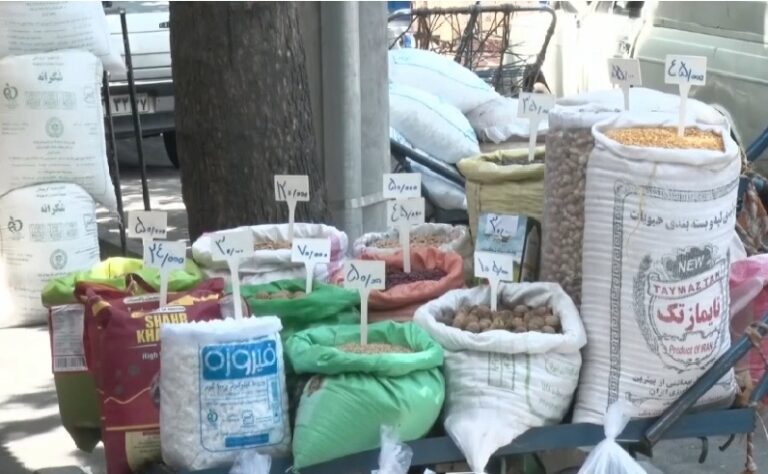
The livelihood crisis and intensifying economic pressures in Iran have now affected one of the most basic daily necessities for people: bread. Reports and messages received on Tuesday, June 9, from Tehran, Karaj, Isfahan, Khorasan Razavi, Mazandaran, and several other provinces indicate that, in addition to official and unofficial increases in bread prices in many cities, some bakeries receiving government-subsidized flour have begun rationing bread sales and are selling only a limited number of loaves to each customer.

These reports come as public disputes have intensified in recent days among the government, state-run media outlets, and officials of Iran’s regime over responsibility for the economic crisis.

Food Basket Share Reaches 71% of Iranian Workers’ Minimum Wage

In some areas of Tehran, bakeries receiving government-subsidized flour have informed customers that it is not possible to sell more than three barbari loaves or two sangak loaves (a traditional Iranian bread) to each person. At the same time, some residents have reported restrictions on purchasing bread using bank cards.

According to a directive communicated to some bakeries, purchasing more than three loaves of bread with a single bank card is not permitted, and customers must use another bank card if they wish to buy more. This has caused confusion and protests among many people.

Inflation, rising prices, and economic pressures have spiraled out of control. Sangak bread, which cost 70,000 rials just three months ago, is now sold for more than 200,000 rials, and each bakery charges its own price.

The reduction in government flour allocations and rising production costs have placed many bakeries in a difficult situation. Labor costs, shop rents, electricity bills, and raw material expenses have multiplied. Flour allocations have also been reduced, and some bakeries genuinely struggle to pay their workers’ wages.

In recent days, bread price increases have also been officially announced in various provinces across Iran. In Zanjan, the deputy governor reported an average increase of about 60% in bread prices, while in Yazd, new rates were communicated to bakeries starting on June 8. In North Khorasan Province, bread prices increased by an average of up to 80%.

In Mashhad, trade officials also reported an approximately 50% increase in bread prices. Government officials in Markazi Province likewise confirmed that the prices of some bread varieties have risen by more than 80% for consumers.

Meanwhile, field reports indicate that official price controls are effectively not being enforced in Tehran, and many bakeries producing sangak, barbari, and taftoon bread are selling their products at prices far above government-set rates.

Rising production costs in the agricultural sector have also fueled the latest wave of price increases. According to a report by the state-run Donya-e-Eqtesad newspaper, the cost of supplying certain chemical fertilizers has increased by as much as 600% this year, driving up the prices of wheat and other essential products and placing additional pressure on household budgets.

As the livelihood crisis intensifies, divisions within the ruling establishment have become more visible. While Masoud Pezeshkian, the president of Iran’s regime, has attributed part of the economic problems to external pressures and the consequences of war and has urged the public to be aware of the costs of resistance, media outlets aligned with rival factions and some officials from the previous administration identify the government’s economic policies as the primary cause of inflation.

In recent days, these disputes have even escalated into clashes between Pezeshkian’s associates, managers of state media outlets, and officials of IRIB, Iran’s state broadcaster, on social media and in state-run media.

These developments come as many people in Iran say the issue is no longer merely the rising price of a single commodity or restrictions on purchasing a specific product. Rather, it is about the continuous decline in purchasing power and the shrinking capacity of household budgets. What is now visible in bakery lines is only a sign of a broader crisis in Iran—a crisis that began with inflation, the devaluation of the national currency, resource shortages, and the consequences of war, and has now reached even bread, the most basic staple consumed by millions of Iranians.

Internet Shutdowns Have Devastated the Livelihoods of Millions of Iranians

Following widespread and repeated internet shutdowns in Iran ordered by regime officials, reports by trade and professional organizations show that the economic consequences of these decisions have pushed the livelihoods of millions of Iranians to the brink of collapse. Those affected range from Instagram sellers and content creators to knowledge-based companies, home-based businesses, local enterprises, students, researchers, physicians, and anyone whose work, customers, or audiences depend on stable and unrestricted internet access for even the most basic academic, professional, or commercial activities.

As runaway inflation continues and the value of the Iranian rial declines further amid a wartime atmosphere, on Tuesday, June 9, the U.S. dollar reached a new record high of 1.8 million rials in Iran’s market.

Under such circumstances, internet shutdowns mean the loss of the last remaining source of income for millions of people, the closure of businesses, and complete exclusion from the labor market. Messages received from various cities across Iran confirm this reality.

Iran’s Regime Grudgingly Backs Down from its Longest Internet Shutdown

Admissions by Regime Officials

The crisis is not limited to small businesses. Alireza Esteghamati, dean of the School of Medicine at Tehran University of Medical Sciences, stated that internet restrictions had disrupted the university’s scientific and educational activities. Professors were forced to take turns using the available internet services. He emphasized that many academic tasks, including preparing classes and lectures—work usually carried out at home during evening hours—had been hindered by internet disruptions.

The Iranian regime has also criminalized the use of Starlink satellite internet. Reports from the judiciary indicate that hundreds of people have been arrested solely for purchasing Starlink equipment. As a result, many citizens seeking unrestricted internet access are forced either to buy expensive and insecure VPN services or to risk arrest and prosecution.

Even some officials of the Iranian regime have been compelled to acknowledge the scale of the crisis. Among them is Abdolkarim Hosseinzadeh, vice president for rural development and deprived areas under Iranian regime president Masoud Pezeshkian, who said that internet shutdowns have created serious difficulties for many home-based businesses, local producers, and women entrepreneurs in securing even basic livelihoods.

He stressed that the internet is no longer merely a tool for entertainment but a source of livelihood for many households. He added that providing special “pro” internet access to entrepreneurs alone cannot solve the problem because customers also need access to unrestricted internet.

$80 Million in Daily Losses

Online business operators have repeatedly stated that an internet business cannot survive merely because the seller remains connected. If customers cannot access a page, place orders, make payments, or send messages, sales effectively come to a halt.

Etemad, a Tehran-based newspaper, reported on May 4 that the direct losses caused by internet restrictions were estimated at $30 million to $40 million per day. Including indirect consequences, the figure could reach as high as $80 million daily.

According to Etemad, the livelihoods of more than 10 million people have been affected directly or indirectly by these conditions.

Reza Alfatnasab, head of the Union of Virtual Businesses, told Khabar Online that sales at some large businesses had fallen by 40% to 50%, while small and medium-sized enterprises had experienced declines of 50% to 70%. He noted that around 2,000 companies in Iran have the capacity to survive only one to two months under current conditions, while micro-businesses can endure even less.

The Iranian news website Eghtesad News has also confirmed that internet outages have significantly reduced employment opportunities and intensified competition among workers. According to the report, jobs tied to the digital economy—including startups, content creators, and online service providers—have suffered the most from internet shutdowns, with some companies laying off more than 50% of their workforce. Women have been particularly affected, as female employment has declined by 233,000 jobs and their labor force participation rate has fallen to 12.2%.

Alongside this crisis, the VPN market has become a lucrative black-market economy for some individuals linked to senior regime officials. The state-run news website Rouydad24 reported that as restrictions intensified, VPN services became an essential household expense, with the market’s turnover reaching tens of trillions of rials.

Experts say that some VPN services that continue to function easily despite restrictions would not be able to operate without access to special infrastructure and substantial bandwidth. This has reinforced unofficial reports that groups connected to the internet-filtering apparatus are profiting from the VPN market.

Ettela’at newspaper, whose editor-in-chief is appointed by the Iranian regime’s supreme leader Ali Khamenei, warned in an editorial that several-hundred-percent increases in the prices of essential goods, stagnation in the labor market, disruptions in parts of the production chain, and internet shutdowns—which had served as the foundation for many online businesses—have created a severe crisis that cannot be ignored through platitudes or vague statements.

Internet shutdowns are a tool used by the Iranian regime, and whenever society moves toward unrest and protest, the regime attempts to suppress the population by cutting access. An example cited is January 8 and 9, when, according to the text, the Iranian regime shut down internet and media access and killed thousands of people in order to conceal the scale of the killings.

Iran’s ‘No to Executions Tuesdays’ Campaign Enters 124th Week

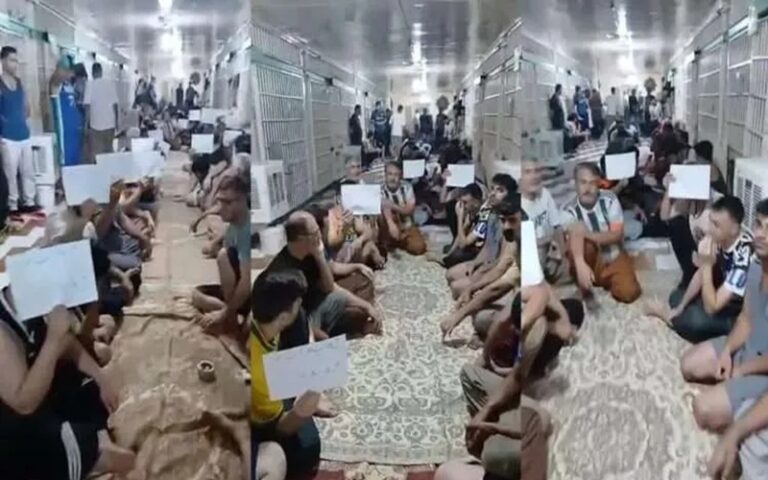
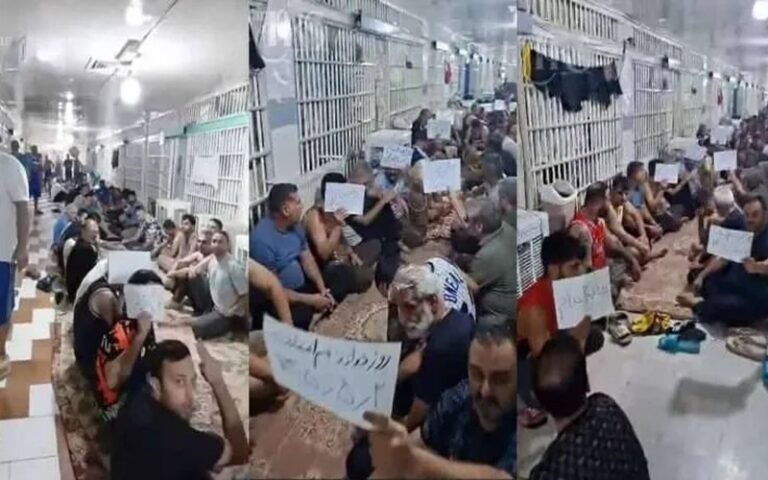
On Tuesday, June 9, the “No to Executions Tuesdays” campaign entered its 124th week and once again emphasized its demand for an end to all executions. On this occasion, the prisoners issued a statement stressing that they call on all segments of society and their fellow compatriots to raise their voices in seeking justice against the issuance and implementation of unjust death sentences and to express their opposition in the strongest possible terms.

Full Text of the “No to Executions Tuesdays” Campaign Statement

Continuation of the “No to Executions Tuesdays” Campaign in Its 124th Week Across 56 Prisons

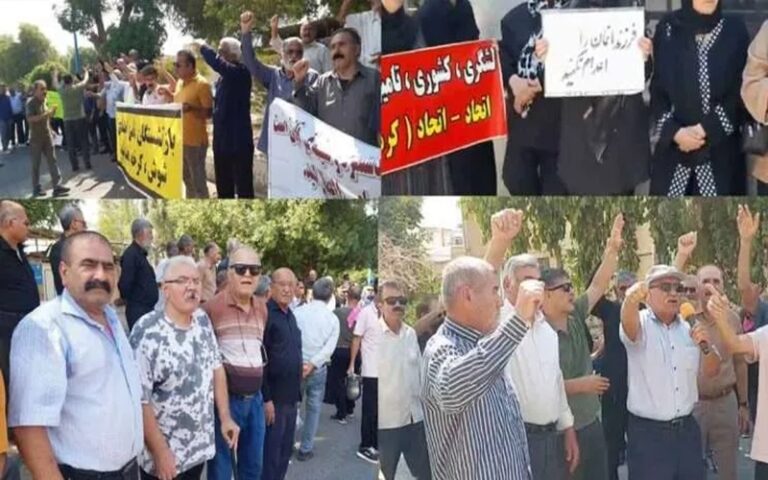
During the past week, aware and informed students took to the streets in various cities to defend their rights and demonstrate that they have grown weary of government policies in the field of education, which stand in clear contradiction to educational justice. The “No to Executions Tuesdays” campaign supports these brave and aware students. Without a doubt, Iran’s future will be bright with such passionate individuals.

Since May 22, the regime has hanged at least 49 people and, as part of its continuing campaign of intimidation and repression, has once again upheld the death sentence of political prisoner Yaghoub Derakhshan in Lakan Prison in Rasht. It has also issued death sentences against political prisoners Yasin Shahbakhsh, Hassan Mosallavi, and Ali Kamali.

In addition, four other political prisoners—Farshad Etemadifar, Alireza Mardasi, Masoud Jamei, and Reza Abdali—are facing the imminent implementation of their death sentences in Sheiban Prison in Ahvaz, and their lives are in danger.

The members of the “No to Executions Tuesdays” campaign, who have stood against these inhumane executions for the 124th consecutive week, and whose members have faced execution or various forms of pressure from prison authorities and security agencies, are once again raising their voices more strongly than ever in defense of the fundamental right to life. This right is the source of all human rights, and safeguarding it is a sign of the maturity, equality, freedom, and humanity of any society. Therefore, they call on all segments of society and their fellow compatriots to raise their voices for justice against the issuance and implementation of unjust death sentences and to express their opposition in the strongest possible manner.

Freedom and justice are the right of every human being, and true justice is achieved not through death and the deprivation of the right to life, but through respect for human rights. Therefore, to obtain these rights from oppressive and authoritarian rulers, one must struggle and resist.

Political prisoners participating in the “No to Executions Tuesdays” campaign are on a hunger strike on Tuesday, June 10, during the 124th week of the campaign across 56 prisons throughout the country.

Food Basket Share Reaches 71% of Iranian Workers’ Minimum Wage

Studies show that the cost of providing essential food items for a family of four in May 2026 exceeded 210 million rials (approximately $117), accounting for 71.5% of the minimum wage. The figure was 53.9% in May 2025, indicating increasing pressure on the living standards of low-income households.

The state-run Donya-e-Eqtesad newspaper reported on Sunday, June 7, that if inflation continues to rise and the minimum wage remains unchanged in 2026, the entire monthly income of minimum-wage earners could be consumed by food expenses in the coming months.

Experts Warn About Declining Dairy Consumption and the Risk of Expanding Malnutrition in Iran

According to the report, if the government food voucher program is eliminated, the share of food expenses in the minimum wage of a four-person household would rise to 82.7%.

Donya-e-Eqtesad, citing data from the Statistical Center of Iran, reported that inflation for food and beverages in May was approximately 130% compared to the same period a year earlier.

However, calculations based on the basket of 11 essential goods used in the food voucher program show that inflation for these items reached 144.8%.

By comparison, the minimum wage of the head of a four-person household increased by only about 60% compared to last year.

Including the value of food vouchers, the increase in total household income exceeds 84%, a figure that still falls far short of the 144.8% rise in the prices of essential goods.

Surge in Essential Goods Prices; Cooking Oil Leads the Increase

According to Donya-e-Eqtesad, after covering food expenses, less than 30% of the minimum wage remains for all other goods and services.

Solid cooking oil recorded the highest price increase among essential goods at 431%, followed by liquid cooking oil at 354%, eggs at 343%, and chicken at 287%.

According to estimates by Iran’s Ministry of Cooperatives, Labour and Social Welfare, the monthly cost of purchasing the basket of 11 essential goods for a family of four reached 212.12 million rials (approximately $118) in May this year.

On the other hand, the total monthly income of the head of a four-person household, based on the decision of the Supreme Labor Council, stands at 256.47 million rials (approximately $143). As a result, even when food vouchers are included, more than two-thirds of household income is spent on food.

According to the Statistical Center of Iran, inflation for six commonly consumed food items among urban households exceeded 200% in May.

In its report, Donya-e-Eqtesad identified the rising exchange rate, war, damage to infrastructure, maritime blockades, disruptions to foreign trade and shipping, increased costs of imported livestock and agricultural inputs, higher foreign demand for certain domestically produced goods, and protectionist restrictions as factors behind the surge in food prices.

Explaining the role of protectionist policies, the newspaper wrote that, for example, imports of certain oilseeds have been banned to support domestic farmers, making it impossible to stabilize cooking oil prices through imports. Likewise, rice imports are prohibited during the domestic harvest season in order to protect local producers.

According to the report, economists consider the primary causes of inflation to be growth in the money supply, budget deficits, and the government’s monetary and fiscal policies. They believe that sustainable inflation control will not be possible until these factors are addressed.

The continuous rise in prices has made it increasingly difficult for many households to meet their basic needs. The consequences are evident in reduced food consumption, postponed medical treatment, and the elimination of expenses such as education from daily life.