Home Blog Page 108

New NCRI Intelligence Reveals Iran’s Nuclear Weapons Program Is Advancing Rapidly

Washington, D.C. – In a major revelation, the National Council of Resistance of Iran (NCRI) unveiled new intelligence exposing a dangerous escalation in Tehran’s nuclear weapons efforts. Presented at a conference by the NCRI’s U.S. Office, the findings—sourced from the People’s Mojahedin Organization of Iran (PMOI/MEK) network inside Iran—confirm that the Iranian regime’s nuclear weapons program has never ceased and is now aggressively advancing.

According to Alireza Jafarzadeh, Deputy Director of the NCRI’s U.S. Office, Tehran is developing advanced “boosted” nuclear weapons capable of being mounted on ballistic missiles with ranges exceeding 3,000 kilometers. Even more alarming, he revealed, is the regime’s simultaneous pursuit of technology to build a hydrogen bomb.

At the heart of this development is tritium, a rare radioactive isotope used in both boosting atomic bombs and enabling hydrogen bomb creation. “The extraction and utilization of tritium give the regime a parallel path to building a hydrogen bomb,” Jafarzadeh said. Soona Samsami, NCRI U.S. Office Director, emphasized that the Organization for Defensive Innovation and Research (SPND), controlled by the IRGC, has been secretly recruiting nuclear fusion and tritium experts from Iran’s Atomic Energy Organization since 2013.

SPND has imposed a strict secrecy policy, instructing affiliated universities and scientists not to publish or share any research related to fusion or tritium, further pointing to the military and illicit nature of the program.

Underground Sites and Front Companies

Central to these revelations is the SPND-controlled Eyvanaki site—codenamed “Rangin Kaman.” Located on 2,500 acres, the highly secured facility was overseen by Mohsen Fakhrizadeh, the assassinated architect of Iran’s nuclear program. The site includes extensive underground structures and is shielded by IRGC-operated radar and missile defense systems. Locally, it masquerades as a paint factory.

To mask its operations and procure critical materials, the regime operates a network of front companies. Chief among them is Petsar, a firm outwardly linked to the petrochemical industry but founded by IRGC Brigadier General Nasser Maleki, a figure under UN sanctions for nuclear proliferation activities. Petsar’s subsidiary, Diba Energy Sina Company, established in 2011, runs the Eyvanaki facility under the cover of producing chemical solvents.

A Program That Never Halted

Despite international scrutiny, the Iranian regime has steadily advanced its nuclear weapons ambitions. “The program was never stopped,” Jafarzadeh asserted. “At certain points, it even accelerated.” He explained that the original Amad Plan was replaced with a more advanced initiative, clearly aimed at producing nuclear arms.

The most recent intelligence uncovers Tehran’s strategy of developing boosted warheads and moving rapidly toward more destructive thermonuclear devices. According to Samsami, “SPND’s work demonstrates a qualitative leap in the regime’s nuclear weapons drive, not just quantitative progress.”

Domestic Repression Tied to Nuclear Ambitions

The NCRI stressed that Tehran’s nuclear drive is tied to internal repression and regime survival. “The program has no peaceful purpose,” Samsami stated, noting that the regime has spent over $2 trillion on its nuclear ambitions while neglecting vital sectors like oil and gas. “This is about staying in power,” she said, referencing the regime’s increasing executions—over 1,200 under its new president Masoud Pezeshkian—and persecution of political prisoners.

“The bomb is a shield against both the people and the international community,” Samsami said. “It’s the mullahs’ ultimate guarantee of staying in power.”

Call for International Action

The NCRI emphasized that only firm international action can stop the regime. “All of the regime’s nuclear sites must be shut down,” Jafarzadeh said. “The IAEA should monitor their closure—not just inspect.” Samsami reiterated, “No enrichment capability must be allowed. Snapback sanctions must be triggered immediately before time runs out.”

The NCRI underscored that the most effective and sustainable solution is empowering the Iranian people and their organized resistance. “There’s no need for foreign military intervention,” Samsami said. “What’s needed is recognition of the Iranian people’s right to resist the IRGC.”

The NCRI’s track record of nuclear disclosures, including the 2002 Natanz revelations that led to IAEA inspections, demonstrates their credibility. “Every significant nuclear revelation has come from the Resistance,” Samsami emphasized. “And once again, we’re warning the world.”

She concluded that a democratic, secular Iran is the only real safeguard against nuclear proliferation and regional instability. “The world must support the Iranian people and their resistance movement to ensure peace, security, and a non-nuclear future.”

Iran: Death Sentence Issued for Political Prisoner Peyman Farahavar

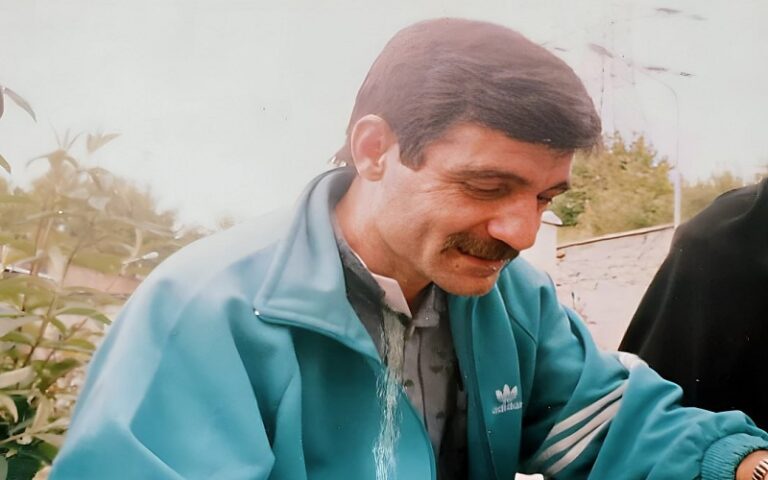
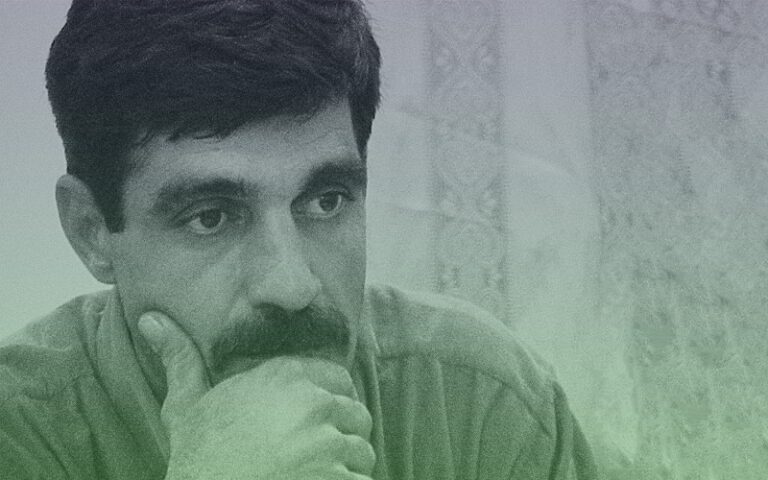
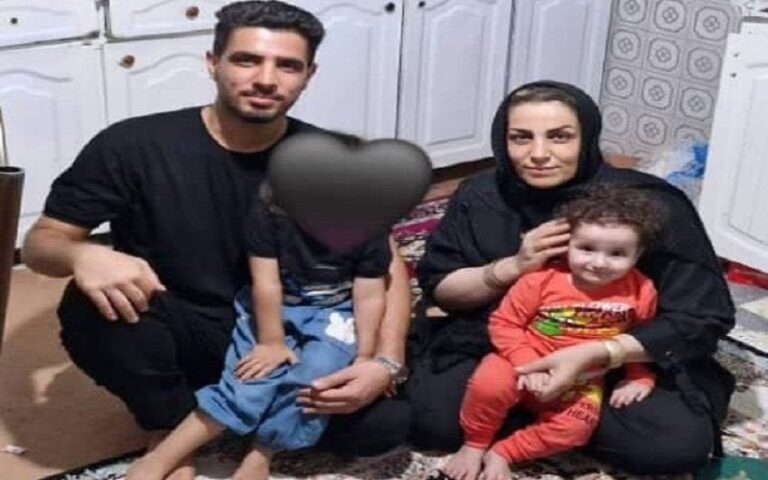
Iran’s regime has sentenced political prisoner Peyman Farahavar to death. This sentence was issued due to his poems, writings, and positions in support of farmers, his protest against environmental destruction, widespread construction of luxury villas, and harmful economic policies in Gilan Province.

Iran Human Rights Society reported on Tuesday, May 6, that political prisoner Peyman Farahavar, a poet from Gilan, was sentenced to death for the charges of “rebellion” (baghi) and “enmity against God” (moharebeh), and to three months of imprisonment for “propaganda against the regime.” This verdict was issued on May 1 in a court session presided over by Judge Ahmad Darvish-Goftar, without the presence of a defense attorney.

Political prisoner Peyman Farahavar, who has a ten-year-old child, was arrested by security forces in August 2024 and, after a period of interrogation by the intelligence department, was transferred to Lakan Prison. He had previously been arrested and sentenced for his activism.

This political prisoner suffers from severe health problems, including complications from gallbladder surgery, lymphatic sensitivity, and intense pain in the surgical area. Despite his critical condition, prison authorities have so far refused to transfer him to medical centers.

Farahavar also suffered internal bleeding during interrogations and remains deprived of proper medical treatment.

He was subjected to severe psychological and physical torture during his detention. Arrested by the IRGC Intelligence on August 17, 2024, he endured a week of intense torture, to the point of losing consciousness and remaining unconscious for 24 hours.

This case is yet another alarming example of death sentences issued against civil and political activists in Iran, without observing the principles of a fair trial and with gross violations of the defendants’ rights.

Manouchehr Fallah Sentenced to Death on the Pretext of Causing Damage to the Rasht Courthouse Building

Judge Ahmad Darvish-Goftar is the head of the Revolutionary Court in Rasht and previously headed the first branch of this court. He has presided over several cases, including those of Manouchehr Fallah and Sharifeh Mohammadi, both of whom were sentenced to death for “rebellion.” Darvish-Goftar also sentenced political prisoner Hamzeh Darvish to 14 years in prison.

According to reports, after Sharifeh Mohammadi’s death sentence was overturned by the Supreme Court, her case was referred to the second branch of the Revolutionary Court in Rasht, where the presiding judge is the son of Ahmad Darvish-Goftar.


Power Outages Expose Iran’s Infrastructure Collapse and Trigger Nationwide Protests

In recent days, widespread and repeated power outages, along with disruptions in water supply across various areas of Tehran Province, have been met with scattered yet notable public protests.

According to a report by the regime-affiliated website Baharnews, within one year—from September 2023 to September 2024—electricity demand in the country increased by around 7,000 megawatts. Meanwhile, production capacity only rose by 2,235 megawatts—a figure that clearly reflects a deep gap between supply and demand in this vital sector.

The same report notes that addressing the 20,000-megawatt electricity shortfall will require massive investments, including:
$10 billion to offset the production shortfall,
$20 billion for the development of power plants and electricity supply infrastructure,
$35 billion for modernization of the transmission and distribution network,
and a total of $100 billion to eliminate the overall energy imbalance in the country.

These figures clearly show that Iran’s energy crisis stems not from a lack of resources but from chronic mismanagement, widespread corruption, and systematic neglect of vital infrastructure development.

In response to the current critical situation, nationwide protest calls have been issued.

On Tuesday, May 6, bakers in Tehran and other cities announced that they would halt their activities for three days (May 6, 7, and 8), and would gather at 11:00 a.m. in front of county governor’s offices and provincial governorates.

Additionally, on Thursday, May 8, farmers across the country are planning to hold demonstrations. The exact timing of these protests has not yet been announced.

The disastrous electricity and water outage policies have placed immense pressure on families and lower-income groups. These measures, introduced in mid-spring, serve as a clear warning of even more severe conditions during the hotter months, particularly in August. 

Power outages in Iran, especially in spring 2025, are not merely a technical issue or due to energy shortages; they are a concrete sign of managerial collapse, structural corruption, and governmental incompetence. The regime prioritizes its survival through repression, terrorism, and plunder rather than ensuring the welfare of the people.

The electricity crisis is being managed as if no responsible authority or prior planning exists. Outages occur without prior notice, and their official schedules contradict what is actually happening on the ground.

The blackouts are a direct result of widespread corruption at the highest levels of the regime. Billions of dollars in national revenue have been diverted from energy infrastructure investments to fund the IRGC (Islamic Revolutionary Guard Corps), missile programs, support for regional militias, and domestic repression.

Meanwhile, regime officials refuse to answer to the public. This complete disconnect between the ruling system and the people signals the collapse of the regime’s social legitimacy.

From students at the National University to shopkeepers in the city of Shahriar, all have participated in these protests. Power outages, like other crises (inflation, water scarcity, pollution, unemployment), have become a shared experience across all social classes. This convergence forms a concrete foundation for the emergence of a nationwide uprising.


Iranian Regime Found Liable for Torture of American Hostage in Lebanon

A U.S. federal court has found the Iranian regime liable for its role in the detention and torture of Amer Fakhoury, a Lebanese American citizen who was arrested in Lebanon in 2019. The ruling comes after nearly four years of legal pursuit by the Fakhoury family.

The Fakhoury family stated that the Iranian regime was involved in their father’s arrest through its proxy group, Hezbollah in Lebanon. This is the first time a U.S. court has officially recognized such a connection.

Amer Fakhoury, who once served in the army in southern Lebanon, was arrested during a trip to the country in September 2019 and faced serious charges. He returned to the U.S. in March 2020 after being acquitted by Lebanon’s Supreme Court but died in September of that year due to cancer and complications stemming from his detention.

The Fakhoury family expressed appreciation for the court’s decision, stating that the ruling could pave the way for legal action on behalf of other citizens who have faced pressure or detention in Lebanon.

They also called for sanctions against Lebanese officials whom they claim have collaborated with Hezbollah and the Iranian regime.

Hezbollah supporters have repeatedly engaged in violence and suppression of citizens in Lebanon over the past years.

Three years ago, Dima Sadek, a Lebanese Shiite journalist critical of Hezbollah, received threats of sexual assault and murder after condemning the attack on Salman Rushdie.

At the time, an unnamed Hezbollah official told Reuters that the group had no knowledge of the attack on Salman Rushdie by a man of Lebanese descent (Hadi Matar) and therefore could not comment.

Meanwhile, Hezbollah supporters on social media referred to the attack as a “sacred stabbing” and described the assailant as “brave” and a “hero.”


Evin Political Prisoners Continue Protesting the Transfer of Political Prisoner Mir Yousef Younesi

A group of political prisoners in Ward 4 of Evin Prison staged a protest during their outdoor time.

The political prisoners in Ward 4 protested the sudden and forced transfer of 70-year-old political prisoner Mir Yousef Younesi to the ward for inmates convicted of non-political offenses, during which he was not even allowed to take his medication with him.

On Tuesday, May 6, 70-year-old political prisoner Mir Yousef Younesi was forcibly and without prior notice transferred from the political prisoners’ ward in Evin Prison to the ward housing inmates convicted of non-political crimes. This move provoked a strong reaction from his fellow inmates in Ward 4, who staged a sit-in in front of the guard office and the office of the head of the ward. The prisoners demanded Younesi’s immediate return to his original ward and protested the behavior of the ward chief.

The transfer of Younesi occurred as he was returning from a visitation area to his ward with his son, Ali Younesi, a political prisoner and an elite student at Sharif University of Technology. Prison guards, following orders from Hedayat Farzadi, the head of Evin Prison, violently separated the father and son and sent them to different locations. Security agents stated that an order had been issued prohibiting the two from being held in the same ward.

Mir Yousef Younesi has been imprisoned in Evin since January 2023. Despite his advanced age, he suffers from ailments such as diabetes and hearing loss but has been denied medical treatment. In total, he has spent more than 14 years in prison since the era of the former dictator Shah of Iran due to his support for the People’s Mojahedin Organization of Iran (PMOI/MEK).

His son, Ali Younesi, has been detained since May 2020 and was sentenced to 16 years in prison. Under existing laws, Ali and another imprisoned elite student, Hossein Moradi, should have been eligible for sentence reduction after serving five years, but their release has been blocked so far.


Manouchehr Fallah Sentenced to Death on the Pretext of Causing Damage to the Rasht Courthouse Building

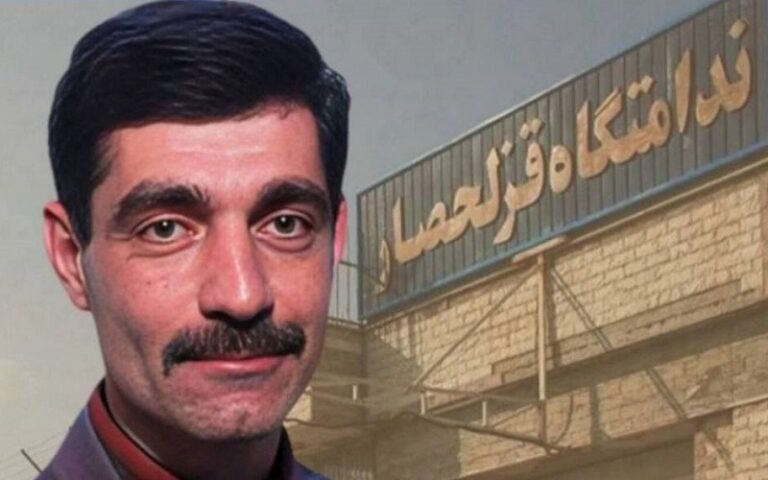
The death sentence issued for political prisoner Manouchehr Fallah, currently held in Lakan Prison in Rasht, reveals that the Revolutionary Court judge based the charge of moharebeh (waging war against God) on the very minor financial damage done to the door and facade of the Rasht courthouse.

According to the Rasht Revolutionary Court ruling, Fallah was accused of detonating a sound bomb on June 17, 2023, which caused 25 million rials (approximately $29) in damage to the door and facade of the Rasht courthouse and allegedly created “fear and panic.”

However, according to a report by the Iranian regime’s Ministry of Intelligence, the explosion occurred at 12:30 a.m., when no one was present in or around the courthouse building on Janbazan Street.

The continuation of the “No to Executions Tuesdays” campaign enters its sixty-seventh week across 41 prisons in Iran

Lawyers state that the ruling is full of flaws and that the case file lacks the kind of evidence that would allow a judge to charge Fallah with moharebeh or issue an indictment and death sentence on that basis.

The judge who issued the ruling classified Fallah as a mohareb based on Articles 687, 283, 282, and 279 of the Islamic Penal Code. He argued that the courthouse is a “security building.”

However, according to the first note of the Islamic Penal Code, an act constitutes moharebeh only if it is committed with the intent to “disrupt public order and security and confront the Islamic government.”

Despite these conditions, the judge interpreted the use of a sound bomb—which caused only minor damage and injured no one, as no one was present—as constituting moharebeh.

A portion of the verdict refers to Article 183 of the Islamic Penal Code, which states that anyone who takes up arms to create fear and insecurity in society is considered a mohareb. The ruling adds: “It must be stated that the above crimes are not moharebeh themselves but are considered equivalent to moharebeh.”

Even within the Iranian regime’s judiciary, such an approach is unprecedented.

Previously, the regime’s judiciary accused dissenting or protesting citizens of moharebeh—usually based on unproven allegations of clashes with security forces or attempted killings—and issued death sentences accordingly.

According to available information, Fallah’s case has been referred to the Supreme Court following an appeal of the Revolutionary Court’s ruling and is currently awaiting review.

Fallah was arrested by agents of the Iranian regime’s Ministry of Intelligence at Rasht airport in June 2023 and transferred to Lakan Prison in the city after the end of his interrogations.

The political prisoner was initially charged in Branch 16 of the Rasht Prosecutor’s Office, and after much legal back-and-forth and the issuance of an indictment, his case was referred to the Rasht Revolutionary Court.

In this case, he faced charges including “propaganda against the regime,” “insulting Ali Khamenei, the leader of Iran’s regime,” “membership in the People’s Mojahedin Organization of Iran (PMOI/MEK),” “destruction of public property,” and “manufacturing and using a homemade sound bomb.”

Additionally, from the beginning of his legal proceedings until the issuance of the death sentence, this political prisoner was denied access to legal counsel.

Issuance of Death Sentence and Assertion of Innocence

In November 2023, Fallah was tried by Branch 3 of the Rasht Revolutionary Court for one of his cases and sentenced to one year, three months, and one day in prison for “insulting Khamenei” and to seven months and 16 days for “propaganda against the regime.”

Earlier, in August 2023, Fallah had gone on hunger strike to protest the fabricated charges by the Iranian regime’s security apparatus and the deliberate obstruction of his case by the investigating prosecutor.

On February 12, 2025, in a letter to his daughter Asal on her 16th birthday, this political prisoner wrote: “On the eve of your birthday, Judge Mohammad Ali Darvish Goftar informed me of my death sentence, perhaps in hopes of forcing me to surrender.”

He added: “But he does not realize that the path I have chosen is not one I found in books, but one I learned through life and through the suffering of the people. Poverty and injustice have been my teachers, and now that this awareness has taken root in me, I consider silence in the face of it an unforgivable sin.”

In the same letter, Fallah reaffirmed his innocence, writing: “Dear Asal, they have imprisoned me for a crime I did not commit. I have neither violated anyone’s rights, nor looted any wealth, nor taken bread from anyone’s table. I have not stolen an oil rig, nor sat in a judge’s seat to issue unjust rulings. My only crime has been to speak out against poverty, inequality, and injustice; to refuse to remain silent in the face of all this oppression. Yet I have harmed no one and have used no violence in this path.”

Fallah was a tattoo artist and lived in Kish Island before his arrest. He is one of dozens of prisoners across Iran currently facing death sentences on political or security-related charges.

In recent months, the rise in executions and the issuance and confirmation of death sentences for political prisoners in Iran have sparked a wave of protests both inside and outside the country.

On May 2, 2025, 309 prominent legal experts, Nobel Peace Prize laureates, human rights activists, and civil and human rights organizations around the world signed a statement urging the United Nations to immediately intervene to stop the wave of executions of political prisoners in Iran.

The statement condemned the increasing wave of political executions in Iran and described it as part of the Iranian regime’s systematic campaign to suppress dissent.


Bandar Abbas Explosion Exposes Regime’s Deadly Cover-Up

The massive explosion in Bandar Abbas—which, according to Iranian regime outlets, “reached temperatures of up to 1,400 degrees Celsius,” and which The Washington Post estimated to have had the power of “50 tons of TNT”—not only claimed the lives of hundreds of Iranians, but once again exposed the anti-people nature of the mullahs’ regime.

This explosion showed that in order to continue his ominous policy of “warmongering”—which is necessary for the regime’s survival—regime supreme leader Ali Khamenei both spends the nation’s wealth on missiles and nuclear activities and turns various parts of Iran into death traps by stockpiling explosive materials and rocket fuel.

“Silenced Tragedy: The Bandar Abbas Explosion and the Iranian Regime’s Denial and Suppression”

Now, after the explosion, the Iranian regime—terrified of public outrage over the increasing exposure of this reality—shamelessly referred to the disaster as “an incident that can happen anywhere,” and attempted to downplay its scale by saying “be patient.”

Following the statements of Khamenei, the regime’s prosecutor in Hormozgan province reduced the already-downplayed death toll from 70 to 46 and stated that 11 people were missing. However, even at that time, the regime-affiliated Entekhab news website reported that in just one instance, “30 to 40 people whose family members went missing after the explosion at Rajaei Port gathered at the entrance of the port.”

The official death toll of 46 comes while witnesses told Simaye Azadi (the opposition-run satellite channel) the following:

  • “Easily over 300 to 400 corpses burned on the docks and there’s no trace of them.”
  • “Among them were 15 or 16 people I personally knew, and there’s no trace of them.”
  • “Many Baluch people who entered through the back gate without documents and worked there were all burned.”
  • “I can easily say the number of dead is 400, 500, 600—it may be higher, but absolutely not lower.”

Regarding the wounded, eyewitnesses describe the intensity of the blast as so severe that “many had their eyes blown out of their sockets.”

What further intensified public outrage in Iran toward the IRGC and Khamenei after this tragedy was their role in smuggling rocket fuel, which, according to international news agencies like Associated Press, had been stockpiled at the port under the supervision of the IRGC and sanctioned companies.


Tehran Stock Index Plunges and Dollar Rate Rises Following “Postponement of Nuclear Talks” with Iran’s Regime

The postponement of the fourth round of nuclear talks between the Iranian regime and the United States, along with the impact of this news, led to a plunge in the Tehran Stock Exchange index and a rise in the dollar-to-rial exchange rate. Some analysts suggest the talks may have “failed” rather than merely been “postponed.”

The delay of the fourth round of nuclear negotiations between the regime and the United States and the resulting market reaction at the start of the trading week caused a sharp decline in the Tehran Stock Exchange index and an increase in the dollar rate.

Iran’s Rial Continues to Plummet in New Persian Year

According to domestic Iranian media, the price of one US dollar in Tehran’s unofficial currency market on Saturday, May 3, rose to around 870,000 rials — a roughly 5% increase compared to the previous week. In addition, the Tehran Stock Exchange index dropped by 61,116 points on Saturday, ending in the red once again.

In this context, the state-run ISNA news agency reported that on the first business day of the week in Iran, only 82 stocks closed in the green while 269 stocks ended in the red, and the overall market value dropped by approximately 2%.

According to experts, while the currency and gold markets had shown a declining trend over the past 18 trading days due to the nuclear negotiations, the Tehran Stock Exchange had only experienced four days of losses during that period, with its overall value increasing on the other days.

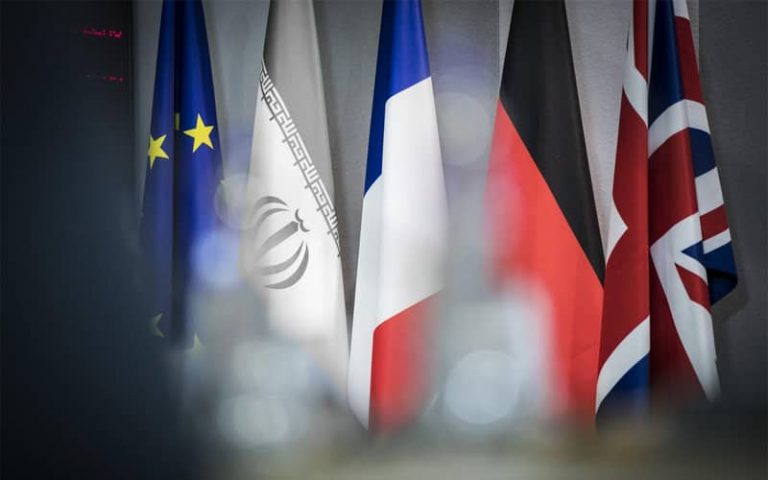
The Iranian regime and the United States had held three rounds of nuclear negotiations, but the fourth round — scheduled for Saturday, May 3 — was postponed due to “logistical and technical reasons,” according to Oman, the host of the talks.

Additionally, Jean-Noël Barrot, the French foreign minister, stated on May 1 that the planned talks between representatives of the regime and the three European countries — Germany, the United Kingdom, and France — would also not take place.

Amid speculation over the reasons for the “postponement” of the nuclear negotiations between the Iranian regime and the United States, some analysts are suggesting that what has occurred may be a “failure” of the talks rather than just a “delay.”

Amid the stock market plunge and rising dollar rate following the postponement of nuclear negotiations, the state-run Donya-ye Eqtesad newspaper reported that on Saturday, May 3, the Tehran Stock Exchange experienced “one of its toughest trading days of the year.”

According to the state-run Donya-ye Eqtesad, the main index of the Tehran Stock Exchange dropped sharply by 1.95% on Saturday, “retreating to the 3,116,000 level.”

Donya-ye Eqtesad also reported that during Saturday’s stock market session, the “unprecedented outflow of retail investor funds from the market” left many economic actors disturbed and worried. According to the report, around 40 trillion rials (approximately $46 million) of individual investors’ money left the market on Saturday. This amount “not only broke a two-year record but also reflects the high level of distrust among individual investors.”

In its report, Donya-ye Eqtesad attributed this situation to “investors’ concerns over the outlook of the negotiations” on one hand, and to the “weak demand side and general distrust toward the market trend” on the other.

At the same time, some economic experts are forecasting “a new wave of capital outflow and index decline.”

Market Concerns Amid Uncertainty in Nuclear Talks

The ambiguity surrounding the course of nuclear negotiations between Tehran and Washington has deepened, as it appears that the U.S. has tied the issue of Iran’s ballistic missiles to the talks.

Meanwhile, the Iranian regime has consistently declared its missile program a “red line” and has refused to negotiate on the matter.

According to experts, the sequence of recent developments — including U.S. President Donald Trump’s announcement of secondary sanctions on Iran’s oil and petrochemical sectors, the U.S. Secretary of State’s remarks calling for a halt to Iran’s uranium enrichment, the American Defense Secretary’s stern warning to Iran over its support for the Houthis, the postponement of the fourth round of nuclear talks between Iran and the U.S., and the cancellation of the planned negotiations between Iran’s regime and Germany, the United Kingdom, and France — all reinforce the suspicion that the nuclear talks between Iran and the United States may be headed toward failure.


168% Increase in Food Prices During the First Eight Months of Iran’s New Administration

As the economic situation continues to deteriorate and public dissatisfaction over declining purchasing power grows, data from state-run centers shows that food prices have increased by as much as 168% during the first eight months of the administration of Masoud Pezeshkian, president of the Iranian regime.

Reports indicate that the price of potatoes rose by 168%, pinto beans by 124%, and pasteurized butter by 80%.

The state-run Shargh newspaper reported that the legume market has reached a “crisis point” due to the elimination of preferential currency rates, temporary policies, and lack of planning, stating that in recent weeks, the market has experienced one of its sharpest price shocks.

Price Of Food In Iran Almost Tripled In Three Years

Shargh emphasized that the price hikes have not been driven by consumer demand or global price trends and added that the crisis stems from the sudden removal of preferential currency, failure to forecast demand, and lack of effective policymaking within the government.

Unprecedented Spike in Legume Prices

Shargh, citing field reports from markets, stated: “The prices of items like chickpeas, red beans, split peas, and lentils have surged by over 100% within just two months, even though actual consumer demand for these products has not changed significantly.”

According to the report, the price of a 900-gram pack of chickpeas, which was about 940,000 rials (approximately $1.13) in March, rose by 141% to 2.28 million rials (about $2.74). The price of split peas also jumped by 119%, from 1.05 million rials to 2.3 million rials.

Removal of Preferential Currency Disrupts Balance in Legume Market

On May 4, the state-run Tejarat News described the unprecedented rise in legume prices as one of the major challenges in the food market, reporting that in recent months, the prices of chickpeas, split peas, lentils, and beans have more than doubled.

Mohammadreza Torabi Mousavi, deputy head of the Agriculture Commission of Iranian regime’s Chamber of Commerce, told Tejarat News that the spike in legume prices is due to the removal of preferential currency from legume imports, adding that under such conditions, prices of most goods previously imported under preferential currency have increased dramatically.

In response to a question about the continued rise in legume prices despite a drop in exchange rates, Torabi added: “In Iran, when the exchange rate rises, prices of various goods, from cars to legumes and others, go up. But when the rate decreases, prices do not change.”

He added: “The importer’s justification is that the goods were brought in at a high exchange rate, and there is no guarantee that the currency rate will remain stable.”

Meanwhile, the state-run Bahar News reported on May 4 that, following a sharp rise in laptop prices in Iran’s market, many individuals and businesses have turned to renting these devices instead of purchasing them.

According to the report, laptop rental prices vary by model, starting from around 800,000 rials (approximately $1) per day and going up to 6 million rials.


The continuation of the “No to Executions Tuesdays” campaign enters its sixty-seventh week across 41 prisons in Iran

While Iran’s regime continues its policy of repression through executions, the “No to Executions Tuesdays” campaign has launched a hunger strike for the sixty-seventh consecutive week in 41 prisons across Iran.

According to the campaign’s statement, “The regime of execution and repression hanged 29 prisoners over the past week. On April 30, 15 prisoners, and on May 4, nine prisoners were executed. As a result, since March 21 (the beginning of the Iranian new year), 154 individuals have been hanged.”

“No to Executions Tuesdays” Campaign in Iran, a Protest Against Death Sentences

The statement also refers to the killing of a protester by security forces, saying: “In a brutal act, the tyrannical rulers shot and killed a citizen named Azim Farrokhvand with live ammunition. He had joined a group of people in Dezful protesting the execution of two prisoners.”

The hunger-striking prisoners added: “According to the ‘No to Executions Tuesdays’ campaign, he is the first martyr of the movement since its inception. We honor his memory and emphasize that as long as this regime remains in power, it will never cease executions at any cost.”

The statement further warns against the regime’s use of executions as its primary tool of repression, stating: “The ‘No to Executions Tuesdays’ campaign warns that in the current situation, where Iran’s regime is trapped in both domestic and international deadlocks, it uses executions as its main method of suppression to prevent protest movements and uprisings by an oppressed population.”

Call By 300 Global Figures to Stop the Execution of Behrouz Ehsani and Mehdi Hassani

In this context, political prisoners are calling for immediate international action, stating: “Therefore, it is essential that international human rights organizations compel their governments to condition relations with Iran’s regime on the abolition of the death penalty, because the weapon of execution in the hands of this tyranny is more dangerous than any other weapon.”

The campaign’s statement concludes with a public call to action: “We continue to ask all segments of society to stand united and speak out against executions in every possible way.”

On Tuesday, May 6, the “No to Executions Tuesdays” campaign will mark its sixty-seventh week of hunger strikes across 41 prisons.