Home Blog Page 132

More Than 1,800 Poor Quality Prefabricated Classrooms in Iran

0

Majid Abdollahi, Deputy Director of the Organization for Renovation, Development, and Equipping Schools in Iran, reported the existence of approximately 1,820 prefabricated classrooms and announced that these schools need to be organized and made safe.

On Monday, December 30, Abdollahi told the Young Journalists Club that prefabricated classrooms with more than ten students have been prioritized in the prefabricated school project.

He also revealed that approximately 1,100 stone-structured schools have been identified nationwide and said that planning to assess local needs and project site selection is the responsibility of the Renovation Organization and provincial education departments.

Earlier, on November 27, Hamidreza Khanmohammadi, head of the Organization for Renovation, Development, and Equipping Schools, warned that seven provinces—Tehran, Qom, Sistan and Baluchestan, Khuzestan, Khorasan Razavi, Alborz, and West Azerbaijan—are facing a severe shortage of schools.

On October 14, Alireza Kazemi, Minister of Education, stated: “The existence of prefabricated schools does not signify a crisis; environmental conditions and sometimes the number of students lead to the establishment of prefabricated schools.”

According to official statistics, approximately 70,000 classrooms in the country need structural reinforcement, and 30,000 others require demolition and reconstruction.

The necessary funding for improving educational spaces and building new schools in Iran is generally provided through the participation of philanthropic school builders.

In May, Safarali Yazerloo, Deputy Director of the Organization for Renovation, Development, and Equipping Schools, announced that 57% of schools in the country are built with the help of individuals and legal entities.

Thus, the Iranian regime’s share in financing school construction is only 43%.


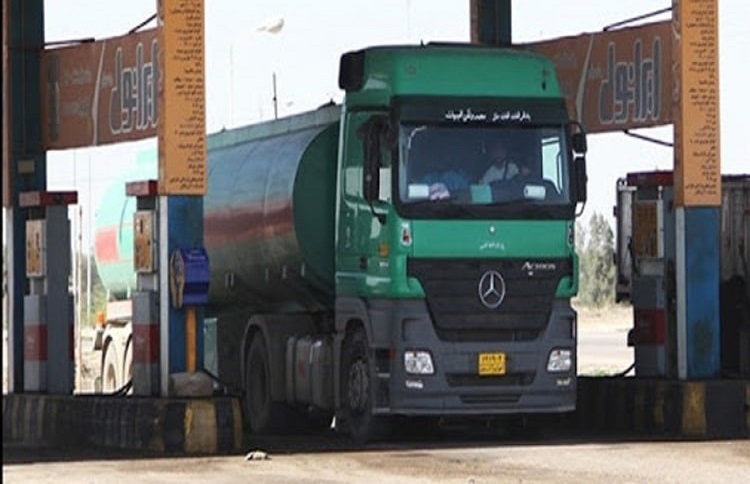
Bloomberg: Shamkhani’s Son’s Influence in the International Banking System

Bloomberg reports that Hossein Shamkhani, the son of Ali Shamkhani, a senior figure close to Supreme Leader Ali Khamenei, has used Dominica’s citizenship-by-investment programs and a lobbying firm in Washington, D.C., to circumvent sanctions and gain substantial economic benefits, including purchasing property outside Iran.

According to the report published on Monday, December 30, Hossein Shamkhani gained access to the international banking system through his Dominica citizenship and maintained his access via channels established in the UAE and Washington.

The small Caribbean nation of Dominica has issued passports to foreigners in exchange for significant payments. This initiative has injected billions of dollars into Dominica’s economy and provided easy second citizenships to individuals whose primary nationality might be problematic.

Among those participating in this six-figure-cost program were a group of Iranians, including Hossein Shamkhani, who, according to Bloomberg, leads strategic businesses in oil and arms trade for Tehran and Moscow.

Shamkhani also manages an investment fund operating in global financial hubs.

Hossein Shamkhani, whose father is a senior advisor to Khamenei, has made significant efforts to keep his business interests confidential.

The Bloomberg report illustrates how he managed to integrate his companies into the Western financial system.

The core entities in Hossein Shamkhani’s network have been responsible for delivering Iranian weapons to Russia. His network operates from cities such as London, Geneva, Dubai, and Singapore, establishing ties with some of the biggest names in the financial world.

Alongside Shamkhani, other Iranians who obtained Dominica passports include a ship captain named Alireza Derakhshan, known as “Captain D,” affiliated with the Milavos Group; Mahdyar Zare Mojtahedi, senior manager of the Ocean Leonid investment fund; and Hossein Ghorbani-Zadeh, a senior associate at the Golden Nest Group. They assisted Shamkhani in forging global banking connections.

The Dominica program served as a platform for Shamkhani and his associates to transform the “Admiral Group” into a multi-billion-dollar business empire encompassing dozens of companies.

The Admiral Group refers to a business enterprise founded by Hossein Shamkhani and his brother Hassan. According to the report, the name was chosen in honor of their father’s military rank.

Alireza Derakhshan obtained Dominica citizenship in 2009. His name also appears in a business registry in Turkey as a Dominica citizen. In the UK, company records show Zare Mojtahedi and Ghorbani-Zadeh registered as Dominica citizens as well. In all these cases, there is no mention of Iran in the documents.

Bloomberg notes that in private discussions with their American counterparts, some Emirati officials, including Yousef Al Otaiba, the influential UAE ambassador to Washington, have expressed opposition to sanctions targeting Shamkhani.

The report also states that some officials in Joe Biden’s administration have privately acknowledged that keeping oil prices low and avoiding a trade war with China have taken precedence over targeting prominent figures in Iran’s oil market, such as Shamkhani.

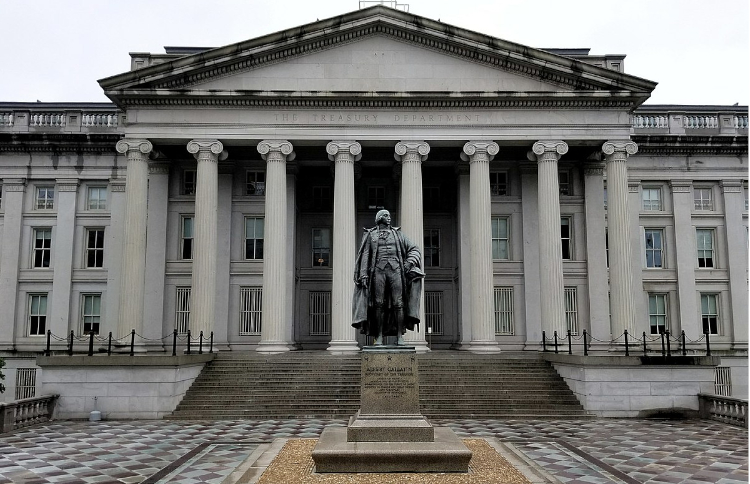
The report also highlights a Washington-based lobbying firm, Qorvis, as a key player in Hossein Shamkhani’s campaign to protect his business interests.

Bloomberg states that Qorvis has played a significant role in Shamkhani’s efforts by providing strategic advice and facilitating negotiations with American officials. The revelation of this firm’s involvement has sparked significant reactions among U.S. observers of Iranian affairs.


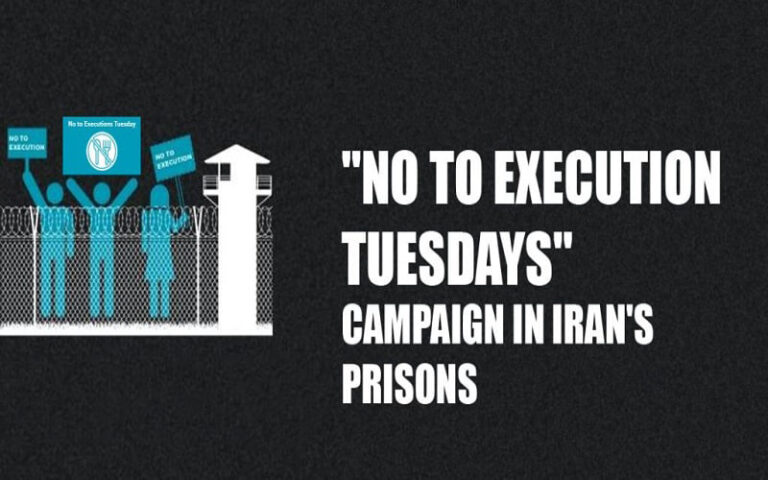
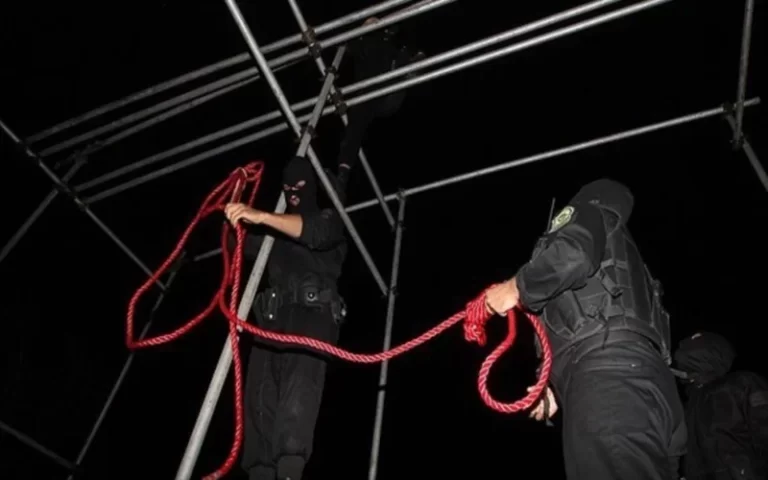
The 49th week of the “No to Executions Tuesdays” campaign across 28 prisons

The “No to Executions Tuesdays” campaign issued a statement during its 49th week of hunger strikes in 28 prisons across Iran. The statement declared that despite increasing protests from the public and activists against executions, the regime has not retreated from its actions but has intensified its repression. The judiciary recently authorized the amputation of (hands and feet) of individuals accused of theft and “moharebeh” (enmity against God) in an attempt to normalize its brutal practices. Many of these theft suspects are victims of systemic corruption, class discrimination, and massive embezzlements by rulers and their associates.

The misogynistic regime has also sentenced several women in Qarchak Prison to stoning on charges of illicit relationships. Even in the most optimistic scenario, these sentences may be converted to execution. The statement emphasized that remaining silent in the face of such atrocities equates to complicity in injustice, and it called for resistance against this barbarity.

Over the past week, from December 21 to 30, at least 41 people were executed, including 23 individuals in just three days across various prisons. Many death row inmates have been transferred to solitary confinement in preparation for their executions. Among them is political prisoner Mojahed Mojtaba Korkor, who has been imprisoned for over two years. His death sentence, previously overturned, has been reinstated, placing his life in grave danger.

Furthermore, the regime has intensified pressure on independent lawyers who take on cases involving political prisoners and death row inmates, threatening them with arrest. These actions, which have escalated in recent years, have resulted in the imprisonment of several lawyers solely for defending their clients. The statement stressed the importance of supporting these honorable and free-spirited lawyers.

In conclusion, the statement condemned these repressive actions and called on all Iranians and human rights activists to join the campaign. It urged people to act with unity and solidarity to halt death sentences and transform Iran into a land free of violence and executions.

At Least 883 Executions in Iran in 2024

The human rights website HRANA reported in its latest annual report that at least 883 people were executed in prisons across Iran in 2024, reflecting an 18.3% increase compared to the previous year.
The report, published on December 26, states that during this period, 207 individuals were sentenced to death by the Iranian regime’s judiciary, and the death sentences of 54 individuals were upheld by the Supreme Court.
According to the report, the issuance of death sentences increased by 33.5%, and among those whose genders were specified, 772 were men and 26 were women.

Additionally, five individuals who were under 18 at the time of their alleged crimes, legally referred to as juvenile offenders, were among those executed this year.
Of the executions during this period, four were carried out publicly.

In recent weeks, the rise in executions and the issuance of death sentences for political prisoners in Iran have sparked numerous protests both inside and outside the country.
One of these protests is the hunger strike campaign “No to Executions Tuesdays,” which began in February to halt executions. On Tuesday, December 24, it marked its 48th week across 28 prisons in the country.

According to HRANA’s report, 51.87% of those executed in 2024 in Iran were charged with drug-related offenses, while 40.54% faced murder charges.
Additionally:

  • 2.49% were charged with sexual offenses
  • 1.81% faced unspecified charges
  • 0.7% were charged with “corruption on earth”
  • 0.7% were charged with “waging war against God (non-political)”
  • 0.57% faced charges of armed robbery
  • 0.57% were charged with security offenses including “espionage, terrorism, and bombings”
  • 0.57% faced political and security charges of “waging war against God and rebellion”

Among the prisons carrying out executions, Ghezel Hesar Prison in Karaj and Adelabad Prison in Shiraz recorded the highest numbers during this period.

HRANA emphasized that 94% of those executed were put to death secretly, without official or domestic media announcements.

In a previous report marking World Day Against the Death Penalty, HRANA noted that at least 811 individuals were executed in Iran between October 10, 2023, and October 8, 2024.

The Iran Human Rights Organization also reported that the number of prisoners executed for drug-related offenses has seen a consistent and sharp annual increase over the past four years.
In 2023, compared to 2022—when 256 individuals were executed on drug charges—there was an 84% increase, with 471 executions recorded.

MP Warns of Famine in Iran

Salman Zaker, a member of the Industries Commission of the Iranian regime’s Majlis, warned about the possibility of famine in Iran and said that if the current “imbalances” persist, there is a likelihood of famine.
Speaking to the state-run Rokna news agency, Salman Zaker stated, “The continuation of imbalances at this level creates the possibility of famine,” adding, “If the situation continues in this way, we should also expect famine.”
He did not provide details about the Majlis and the government’s plans to address the “potential famine” and the massive crises engulfing Iran’s economy.

Amid heightened turmoil in financial markets and the continuous rise in the value of the dollar, a group of Tehran Bazaar traders went on strike, urging other shopkeepers to join them through slogans.
Social media images published on Sunday, December 29, show hundreds of Tehran Bazaar traders pulling down their shop shutters and chanting slogans such as “Close it! Close it!” while marching through the Grand Bazaar.

Striking protesters in the Grand Bazaar and Sepahsalar Market chanted slogans such as “Honorable bazaar traders, support, support,” urging other traders to join the strikes.
The repeated closures, restrictions on working hours, and enforced shop closures after 8 p.m. under the pretext of controlling the power crisis in recent days, combined with the dollar price exceeding 800,000 rials, have intensified discontent among the traders and shopkeepers.

In recent days, Ebrahim Azizi, head of the National Security and Foreign Policy Commission of the Iran regime’s Majlis, stated that amid the continued economic struggles of workers and retirees and the spread of protests to various cities, if “correct decisions regarding the problems of the working class” are not made, “serious consequences and concerns will arise.”

The rise in gasoline prices and, consequently, the increase in the prices of goods, medicine, transportation, and rent, along with the approval of the Hijab and Chastity Bill and the numerous other problems currently afflicting the people, have further pressured the Iranian regime. This has significantly increased the likelihood of widespread protests by the Iranian people against their rulers.

Although regime officials profit from the rising dollar prices, the Iranian people grow poorer by the day as the rial continues its freefall against the dollar, now beyond the regime’s ability to control.

While Iranian regime officials fail to address crises such as air pollution, power shortages, and foreign exchange rate control—often attributing these problems to what they call enemy psychological operations—the public holds the theocratic dictatorship responsible for the “bankruptcy tsunami.”

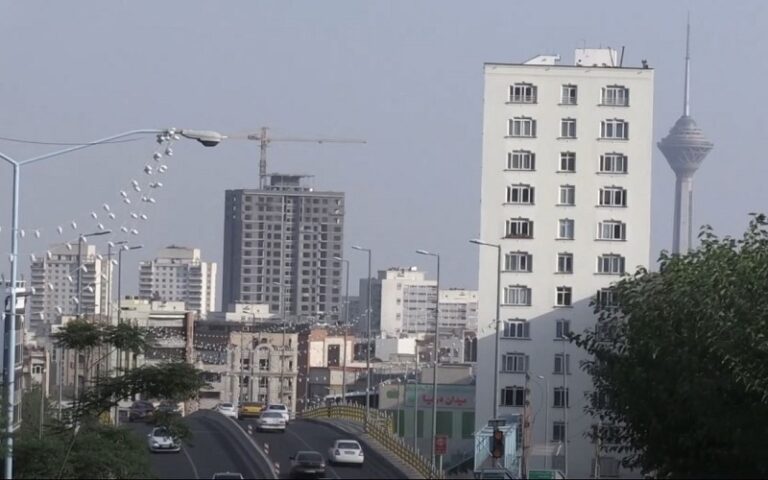
in recent days, the Ministry of Science announced that universities are not allowed to hold in-person classes until the end of the year, citing “weather conditions.” Meanwhile, the lack of gas and air pollution caused by the burning of mazut (heavy fuel oil) in power plants has resulted in both energy and environmental crises, making Tehran one of the most polluted cities in the world.

Notably, while Iran possesses the world’s second-largest natural gas reserves, the inefficiency of its regime leaders has left the country unable to meet domestic gas demand.

A Tsunami in Iran’s Currency and Gold Markets: Warnings of Economic Collapse

On Sunday, December 29, the US dollar and gold coin prices continued their upward trend, reaching new record highs. At the same time, experts warned that the continuation of this trend and the unchecked rise in prices could lead to the collapse of Iran’s economy.

In the open market, the US dollar surpassed 820,000 rials. Similarly, the euro and the British pound broke new records, crossing 850,000 rials and 1,030,000 rials, respectively.

Gold coins also experienced a 1.5- to 2-percent surge.

The alarming rise in the value of the dollar and gold coins could lead to hyperinflation and the collapse of the country’s economy. The current state of the currency market will soon impact other essential consumer markets, and if this situation persists, inflation will rise again, further shrinking people’s purchasing power.

Jafar Qaderi, deputy chairman of the Economic Commission in Iran’s parliament, stated on December 26: “We should not expect the dollar’s price to decrease. It is quite natural to see an increase in the prices of essential goods and necessities.”

The rise in the value of the dollar and gold coins reflects deep-rooted structural issues in Iran’s economy. This vicious cycle of rising prices stems more from fundamental economic problems under the Iranian regime than from political developments. These include budget deficits, excessive money printing, declining oil revenues, corruption, inefficiency, and the misallocation of resources to the regime’s proxy terrorist groups.

A review of the currency and gold markets shows that the US dollar has increased by 63 percent over the past year and by over 35 percent since the beginning of Massoud Pezeshkian’s administration. Gold coins have risen in price by more than 107 percent in the last year.


Tehran Bazaar Merchants Strike Over Inflation and Soaring Currency Rates

Merchants in Tehran’s bazaar went on strike on Sunday to protest inflation and the rise in currency exchange rates.

A group of Tehran’s bazaar merchants protested inflation and rising currency exchange rates by striking and closing their shops in the 15 Khordad area. They called on other merchants to join the strike.

Reports and videos indicate that on Sunday, December 29, shoemakers in the “Seyed Vali” lane of the 15 Khordad district began the strike, followed by fabric merchants and clothing retailers.

The striking merchants chanted slogans during their gathering to encourage others to join, including “Don’t be afraid, close down” and “Dignified merchants, support, support.”

According to reports, the strike occurred in Abbas Abad market, home to fabric merchants, and also in Bagh Sepahsalar, where shoemakers are based.

The strike by Tehran’s bazaar merchants coincided with successive record-breaking currency exchange rates, sparking a new wave of inflation.

The value of the US dollar has been continuously rising in recent weeks, reaching over 810,000 rials per dollar on Sunday.

The depreciation of the rial has made raw materials more expensive, forcing many merchants to shut down their workshops.

Hamidreza Rastgar, the head of Tehran’s Chamber of Guilds, explained the reason for the shoemakers’ protest: “Shoemakers are objecting to the continuous rise in exchange rates. Since the beginning of the year, the rates have seen a significant jump, directly affecting the costs of this sector’s products.”

According to Rastgar, shoemakers are “concerned that products made with raw materials priced at 810,000 rials per dollar will be unaffordable for consumers.”

Reports indicate that security forces were present at the gathering of striking merchants in Tehran.


The Shooting of Arezoo Badri: A Tragic Case of Violence and Repression in Iran

Arezoo Badri, a young woman who was shot by police five months ago in the city of Noor, Mazandaran Province, is now paralyzed from the waist down due to severe spinal injuries. The incident has sparked widespread reactions both within Iran and internationally. Informed sources report that security forces have put significant pressure on Arezoo Badri and her family to extract a formal waiver of complaints.

The Police Shooting of Arezoo Badri and Its Reasons

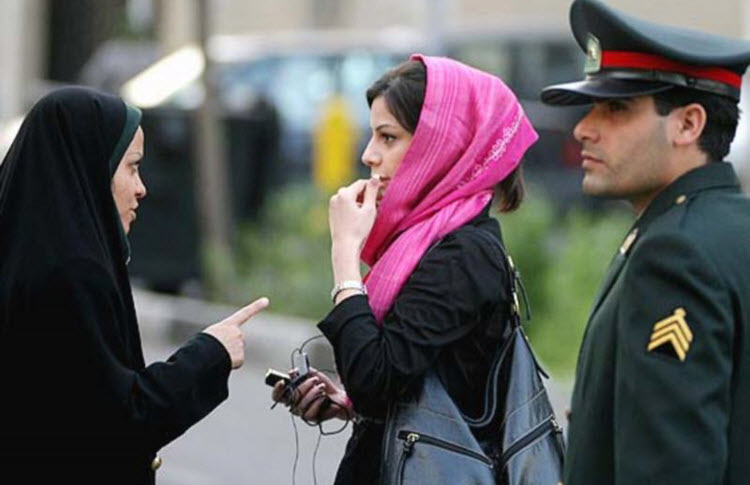
The incident occurred on July 22 when Arezoo’s car was stopped for allegedly not adhering to mandatory hijab rules. The police claim they fired at the vehicle due to “suspicion about the car” and “failure to comply with a stop order.” However, various reports suggest the shooting was linked to the hijab issue, and authorities are reportedly applying pressure to justify their actions.

Security Pressures to Extract Waivers from Badri’s Family

According to published information, security forces have used various methods to pressure Arezoo Badri and her family. Some sources have reported offers of money and threats of arresting family members to force them to consent to drop the case.

International Reactions

The shooting of Arezoo Badri has drawn extensive reactions from human rights organizations and international officials. The United States government described the incident as an example of “gender-based violence” against Iranian women. The U.S. State Department spokesperson emphasized that the Iranian regime has learned no lessons from the suppression of women and girls since the killing of Mahsa (Jina) Amini.

Arezoo Badri’s Medical Condition

According to doctors, Arezoo Badri’s condition is extremely critical, and recovery appears impossible. This incident highlights the severity of violence and repression against women in Iran and has raised widespread international concerns.

The crime of shooting Arezoo Badri and the subsequent pressures to extract waivers from her family is just one of many stark examples of violence and human rights abuses under Iran’s theocratic regime. This incident not only highlights issues related to mandatory hijab but also underscores the troubling aspect of state-imposed narratives and attempts to justify government-perpetrated crimes against victims.


Power Outages Halt 50% of Iran’s Industrial Parks, Sparking Economic Concerns

0

Ali-Asghar Ahaniha, a representative of employers in Iran’s Supreme Labor Council, stated that “50 percent capacity” of industrial parks in Iran has ceased operations due to recurring power outages.

These comments come following persistent power outages in some industrial units caused by energy shortages in Iran and increased electricity and gas consumption during the cold weather.

On Saturday, December 28, Ahaniha told the state-run Tasnim News Agency that the power cuts contradict the “Business Environment Improvement Act,” stating, “We faced electricity problems in the summer, and now in winter, we have issues with both electricity and gas.”

Ahaniha added that whenever the government cuts power to private and cooperative companies due to temporary shortages, it is obligated to determine and announce how to “compensate for the damages incurred” by these companies.

The industrial power outages are occurring despite Article 25 of the Continuous Business Environment Improvement Act, which states: “According to this law, during shortages of electricity, gas, or telecommunications services, industrial and agricultural production units should not be prioritized for cuts in electricity, gas, or telecommunications.”

Simultaneously with the winter restrictions on energy resources such as electricity and gas for industries, managers from various sectors report reduced production and the consequences of power outages at production units, including steel and cement.

Iran’s steel production, which usually saw growth, experienced a 5.1 percent decline between March and October.

Last week, the Majlis (parliament) Research Center reported that the economic growth of Iran’s industrial sector has sharply declined since 2023, and this trend intensified in the second and third quarters of 2024, heading toward “zero.”

On December 21, the head of the Syndicate of Pharmaceutical, Chemical, and Packaging Material Producers stated that power is cut in the country’s industrial parks every other day for “17 hours each time,” with pharmaceutical companies do not exempt from these outages.

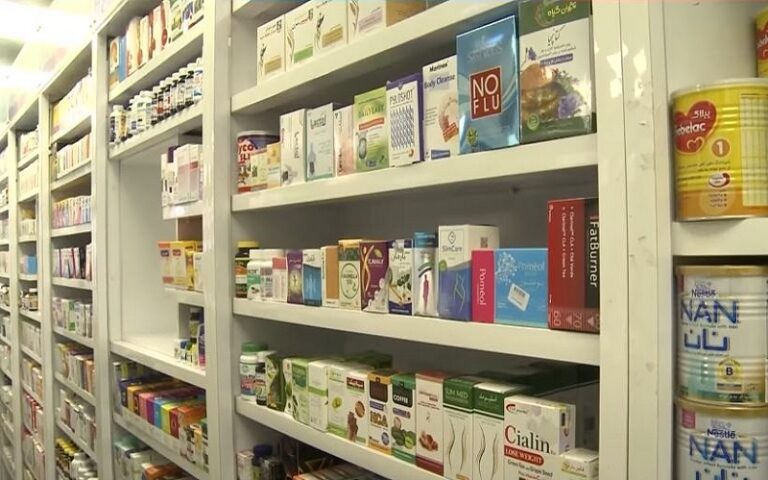
Faramarz Ekhtiarai assessed the challenges of securing electricity and gas for pharmaceutical industries as leading to an “increase in the final cost of medicine” and stated, “If government officials do not address the industry’s issues, they will have to say goodbye to it, and this situation will push companies to close one after another.”

Mahmoud Najafi-Arab, head of the Tehran Chamber of Commerce, also reported on July 13 about power cuts in pharmaceutical factories due to electricity shortages.

Production indices in publicly traded companies have also declined in recent months, reportedly due to recurring power and gas outages. The industrial production index for publicly traded companies decreased by 3 percent in November 2024 compared to the same period last year, with three-month growth leading up to November also reaching negative 2.7 percent.

Meanwhile, warnings have been issued about the potential dismissal of workers from production units due to recurring power outages.


Italian Journalist Cecilia Sala Arrested in Tehran: Mystery Surrounds Detention

The Italian Ministry of Foreign Affairs announced the arrest of an Italian female journalist named Cecilia Sala in Tehran.

In a statement released on Friday, December 27, the Italian Foreign Ministry stated that the journalist was arrested by police on December 19.

The statement also mentioned that she has been held in solitary confinement for nine days. The reasons for Sala’s arrest remain unclear, and no specific charges have been brought against her.

The Italian Foreign Ministry added that all possible contact with the journalist has been established, and this morning, Paola Amadi, Italy’s ambassador to Tehran, was able to visit her in prison.

According to information released by “Cora Media,” a podcast production company in Italy with which Cecilia Sala collaborates, the journalist flew from Rome to Tehran on Thursday, December 12, with a standard journalistic visa valid for one week and extendable.

According to the report, she was scheduled to return to Rome from Tehran on December 20. However, on the morning of December 19, her phone was turned off after exchanging messages, and she no longer responded to any messages.

Later that day, the young journalist called her mother and simply informed her of her arrest.

As reported by “Cora Media,” Sala has spoken with her parents twice during this time. In one of the two calls, she said, “I’m fine, but hurry up,” indicating an appeal for efforts to secure her release.

Iranian officials and authorities have not yet responded to this report, and the reasons for the journalist’s arrest remain unknown.

The Italian Ministry of Foreign Affairs has announced that it is working to determine the reason for the journalist’s arrest and to secure her release.

The arrest of foreign or dual-national journalists in Iran has always been a contentious issue, sparking widespread international reactions.

Many of these individuals have faced charges such as “espionage,” “illegal activities,” or “collaboration with opposition groups,” and in some cases, Iran’s regime has used them as hostages in its diplomacy.

Amid the crises surrounding it, the Iranian regime exploits every opportunity for extortion from the international community, and unfortunately, appeasement policies have emboldened the regime to engage in such actions.