Home Blog Page 165

Iranian Political Prisoners Face Escalating Wave of Executions Amid Nationwide Protests

Since Tuesday of last week, August 6, the Iranian regime has executed more than 45 people, with 29 of them in a single day and 26 executed collectively at Ghezel Hesar Prison, setting a new record for state-sanctioned killings and executions in recent years.

In recent weeks, a large number of political prisoners have been sentenced to death under vague judicial processes on charges fabricated by the regime, such as “baghi” (rebellion against the Islamic government) and “efsad fil-arz” (spreading corruption on earth).

Meanwhile, six Sunni political prisoners face imminent execution by the Revolutionary Court in Mashhad.

The rise in executions followed the inauguration of the new president of the Iranian regime, who has claimed that “Iran is the safest country in the Middle East.”

Political prisoners across Iran are engaging in a hunger strike as part of a campaign called “No to Executions Tuesdays,” protesting the execution sentences of fellow inmates.

Activists in this campaign, many of whom are well-known prisoners participating in the hunger strike, have pointed out that following the death of Ebrahim Raisi, a member of the “Death Committee” responsible for the 1988 massacre (where the majority of the 30,000 executed political prisoners were members of the People’s Mojahedin Organization of Iran, the largest opposition group to the regime), and in the lead-up to the regime’s staged “presidential elections,” the Iranian regime’s repressive apparatus temporarily reduced the number of executions. However, we, the prisoners of the “No to Executions Tuesdays” campaign, warned at that time that this reduction was temporary and that a widespread wave of executions was likely to follow.

Last week, female prisoners in Evin Prison protested the execution of Reza Rasaei and were met with beatings by security forces.

Poverty In Iran Causing an Increase in Child Marriage

The state-run donya-e-Eqtesad newspaper reported that economic challenges such as high inflation and income inequality are key factors contributing to child marriage in Iran and claimed that the shrinking middle class has also exacerbated this issue.

On Tuesday, August 13, Donya-e-Eqtesad published the results of a study on “child marriage,” stating, “In Iran, factors such as low per capita income, high inflation, and income inequality are among the main causes of early child marriages.”

Donya-e-Eqtesad claimed that contrary to popular belief, the “prevailing religious view in the country” has not had a “significant” impact on early child marriages. Instead, factors such as economic sanctions and the shrinking middle class in Iran have played a larger role in child marriage.

The newspaper wrote that “studies” show that in Iran, early marriage is more often related to girls getting married before reaching puberty.

The report notes that there are many obstacles to stopping early child marriages in Iran. For example, the government opposes enacting strict laws on marriage due to concerns about a decline in birth rates.

According to the latest official statistics released in Iran by the government’s Statistical Center, at least 27,448 marriages involving girls under 15 years old occurred across various parts of Iran from winter 2021 to the end of autumn 2022.

Academic research shows that early marriage is a significant factor in domestic violence, school dropout rates among girls, and is considered a form of child sexual abuse in the context of marital relationships.

According to previous reports, some instances of child marriage have occurred due to poverty and the availability of marriage loans. Additionally, a 2021 report from Iran’s Ministry of Welfare stated that one in three Iranians lives below the poverty line and cannot meet their basic needs, leading some families to prefer reducing the number of dependents by forcing children, who lack understanding of sexual matters, into sexual relationships without their consent or awareness.

The promotion of “childbearing” by order of Ali Khamenei, the Supreme Leader of Iran’s regime, and the provision of banking facilities for marriage and childbearing in recent years have led some families in parts of Iran to marry off their under-18 children due to poverty to benefit from these incentives.

For years, the United Nations and its oversight mechanisms have called on the Iranian regime to change its laws to prevent child marriage and criminalize domestic violence. However, in practice, the regime has not only failed to take structural action in response to these requests but has also manipulated statistical categories to distort official data related to marriage and motherhood ages.

It is worth noting that official reports only include marriages that have been “officially registered,” while two years ago, the state-run ISNA news agency quoted experts stating that most child marriages are unregistered, and no accurate statistics are available on them.

Water Crisis Peaks in Isfahan with Seven-Hour Water Cuts

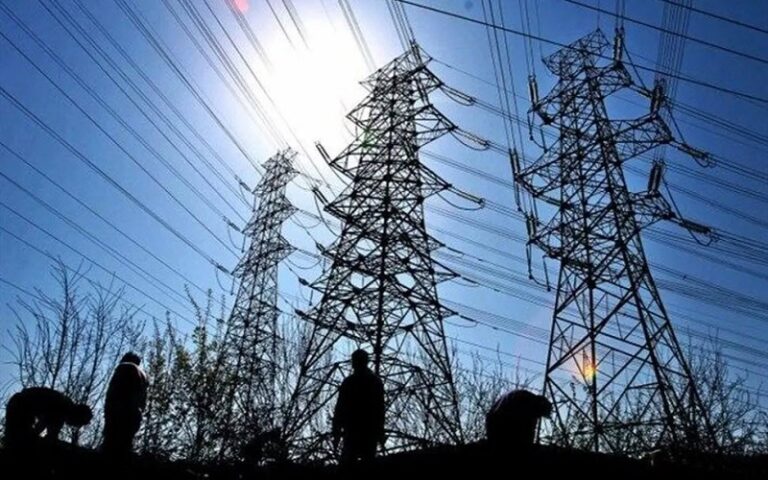
The energy imbalance in Iran has entered a new phase with the escalating crisis in the supply of drinking water in Isfahan, as the state-run Shargh newspaper reported that some neighborhoods in Isfahan are without water for up to seven hours. Meanwhile, media outlets report the continued and worsening imbalance in the water and electricity sectors across the country.

On Tuesday, August 13, Shargh wrote that the water crisis in Isfahan has reached residential areas, with some neighborhoods experiencing water cuts for up to seven hours.

The newspaper also emphasized that the water cuts in Isfahan have disrupted daily life, and water tankers have been unable to meet the residents’ needs. Shargh described the situation as “unbearable” for the people and warned of the consequences of water shortages.

In another report, the newspaper addressed the issue of electricity, highlighting that the electricity imbalance has led to frequent power outages in Tehran neighborhoods.

In some parts of the capital, the supply of city electricity has faced challenges, leaving streets in darkness and traffic lights non-functional.

The continuous and widespread power outages have not only affected citizens’ well-being but have also caused severe traffic congestion in Tehran.

Nournews website, close to Iran’s Supreme National Security Council, also addressed the issue, writing, “Record-breaking electricity and water consumption due to unprecedented heat continues, and the water situation is similarly critical. While in drought conditions, water consumption is defined as 133 liters, the current average consumption in Tehran is 233 liters.”

Nournews wrote, “Electricity and water consumption during the country’s hot and feverish days have surpassed the red level, and the situation is not in good condition.”

This media outlet identified the signs of this crisis and the crossing of the red level as the serial, long-term, and widespread power outages in Tehran. It emphasized that with the continuation of “tropical heat,” electricity and water industry officials are now warning that if energy consumption increases in the coming days, the blackouts and water cuts will continue.

According to media reports, as the weather heats up, water consumption has also increased, setting new records for drinking water use.

In this context, on Monday, August 12, a water and sewage manager mentioned that Tehran residents have broken records in water consumption, stating that this year, average water use in Tehran reached nearly 4 million cubic meters, compared to 3.7 million cubic meters in previous years.

Donya-e-Eqtesad newspaper also discussed the consequences of the energy imbalance, stating, “If frequent power outages continue, industrial production may decline in the coming months, and we may be forced to import extensively to meet domestic demand, even though the country is facing a currency shortage.”

Donya-e-Eqtesad wrote that with the increase in blackouts, the risk of economic shutdowns will bring the country into even more severe problems.

The newspaper emphasized that this trend is likely to repeat in Iran’s future, stating, “This is not a prediction but a technical reality based on a type of specialized optimization.”

In a report on August 10, Shargh addressed the challenges in the production sector and the impact of power outages on the country’s production process, noting that an examination of the performance of 120 publicly traded companies shows that nearly 60% of these companies faced a decline in production in the first four months of this year (from March 21 to July 21) compared to the same period last year, with some companies experiencing a production drop of up to 70%.

However, some experts do not attribute the energy sector’s crisis to any specific government, believing that this situation is the result of the Iranian regime’s governance over the past four decades. A look at energy-related incidents shows that under various governments, people have witnessed power outages, gasoline shortages, and water and gas cuts, with weather conditions determining their severity.

Published reports indicate that while the Iranian regime has spent a significant portion of the country’s resources over the past 20 years on developing its nuclear program and “completing the Bushehr power plant” under the pretext of “electricity production,” the people have repeatedly faced widespread power outages during the summer and rising temperatures in Iran.

Experts believe that the lack of planning and behavior outside of economic frameworks in developmental matters is the main cause of the energy imbalance and argue that under this style of governance, there is little hope for improving the situation.

10 Women Murdered in Iran Over 10 Days

The Hengaw Human Rights Organization, in a new report highlighting the rising trend of “femicide” in Iran, announced that in the past 10 days, at least 10 women have been killed in various cities across the country.

According to this report, during the first 10 days of August 2024, at least 10 women were killed in the cities of Sib and Saravan (two cases), Shiraz (two cases), Kouhrang, Shahriar, Tehran, Fasa, Rudan, and Zanjan.

Data from a specialized platform on gender-based killings in Iran also shows that in the first half of 2024, the rate of femicide in Iran increased by 60% compared to the same period in the previous year.

Femicide in Iran targets girls and women from all social strata, with these crimes, often committed by male family members, occurring in both urban and rural areas across all levels of socio-economic status.

The highest number of gender-based killings has been recorded in Tehran, a city diverse in terms of ethnicity, society, and economy. Analysis of the age distribution of victims shows that “40% of the victims are young, between 15 and 35 years old, and a wide range of age groups are affected by gender-based killings.”

The majority of femicide perpetrators are male family members, particularly husbands, and many of these killings are due to family disputes.

The Iranian regime uses the term “honor killing” to cover up cases of femicide and filicide, aiming to prevent the spread of news related to these murders. The regime’s laws, culture, and ideology facilitate and, in many cases, encourage violence against women and girls. The regime’s misogynistic laws institutionalize discrimination against women.

Iran’s New Cabinet: Pezeshkian’s Government Under Khamenei’s Control

The list of proposed ministers presented by Massoud Pezeshkian, the new president of the Iranian regime, to the parliament was predictably formed after extensive consultations with the regime’s supreme leader, Ali Khamenei, and securing his approval. Pezeshkian has essentially established a joint-stock company managed by Khamenei with significant participation from hardliners and moderates.

For those who have no hope for reform within the regime, nothing has changed. However, regime insiders who participated in the elections with the hope of the so-called reform faction gaining power have once again realized the futility of elections in the Iranian regime.

A brief look at Pezeshkian’s proposed list of ministers provides a more accurate assessment.

Pezeshkian has notably reappointed Esmail Khatib, the intelligence minister under Raisi’s government, as the proposed minister for the same ministry. Khatib is a hardline cleric with a history of collaboration with the Revolutionary Guards, the Intelligence Ministry, and the Judiciary. He notably served as the intelligence minister under Ebrahim Raisi in 2022, overseeing significant repression of protesters, particularly women and youth.

Pezeshkian’s proposed interior minister, Eskandar Momeni, has a long history in the police force and will be the second-highest security official in the new government. Coordinating with Khamenei, Pezeshkian has nominated someone who described the protesters against the 2009 election results as “misguided mercenaries tied to foreign powers” and played a significant role in suppressing those protests.

Momeni had previously stated, “The enemies of the regime are waiting for something to happen through internal elements to exploit it fully. We saw this during the 2009 sedition. Therefore, it is necessary to be extremely vigilant in this area to prevent this wave from spreading in society.”

Pezeshkian has deemed only one-woman worthy of being in his cabinet: Farzaneh Sadegh as the Minister of Roads and Urban Development. In other words, Pezeshkian did not consider any other woman, even symbolically or superficially, suitable for leading any of his ministries.

Pezeshkian’s proposed minister for Culture and Islamic Guidance is also one of Khamenei’s trusted figures: Abbas Salehi, who held a similar position in Hassan Rouhani’s second administration.

Alireza Kazemi, who is the deputy secretary-general of the Drug Control Headquarters and served as the acting minister of Education for a few months in Raisi’s government, has been proposed for the Ministry of Education.

Hossein Simayi Sarraf, Pezeshkian’s nominee for the Ministry of Science, has 20 years of religious studies (seminary education) and a background in law, and he is set to lead the Ministry of Science.

Abbas Aliabadi, the Minister of Industry, Mine, and Trade in Raisi’s government, has been nominated for the Ministry of Energy. He is one of the commanders of the Revolutionary Guards and served as the CEO of the MAPNA Group during Mahmoud Ahmadinejad’s administration, overseeing the majority of Iran’s power plant projects.

Abbas Salehi Amiri, with a security background, has been nominated as the Minister of Cultural Heritage, Tourism, and Handicrafts.

The selection of Abbas Araghchi as the proposed foreign minister, given his close relationship with Mohammad Javad Zarif and Khamenei’s trust in him was expected. Similarly, the nomination of Abdolnaser Hemmati, the Central Bank president during Rouhani’s second term, as the Minister of Economy was predictable.

Pezeshkian has not nominated any ministers from religious minorities. The representation of youth in his cabinet is almost non-existent, with the youngest minister being 48 years old and the average age of the ministers around 60. Moreover, half of his proposed ministers align with various factions of hardliners, and as mentioned, only one woman is included in Pezeshkian’s proposed cabinet.

Iran’s fundamental problems and the economic, social, and political crises are deeply intertwined with the structure of power in the Islamic Republic. The authoritarian, inefficient, corrupt, and plundering regime continues its undemocratic rule by suppressing the majority. In this context, Pezeshkian’s government, with a lineup of ministers that essentially represents a joint-stock company managed by Khamenei, will only deepen the despair over any improvement in conditions.

In this situation, it seems that only those who see the solution outside the circle of dictatorial rulers and seek democracy through popular movements and protests have so far had a realistic outlook.

220 Pages of Documents Link the Islamic Center Hamburg to Khamenei’s Office

Documents obtained by Der Spiegel reveal how the Hamburg Islamic Center followed directives from Khamenei’s office, including supporting Hezbollah and promoting the October 7th attack on Israel.

The German Ministry of the Interior provided Der Spiegel with a 220-page document detailing the activities of the Islamic Center Hamburg (known as the “Blue Mosque“), showing its close ties with the Iranian government and its support for the terrorist group Hezbollah.

The center was closed on July 24th. The German Ministry of the Interior announced that the Islamic Center Hamburg and its subsidiaries in Frankfurt, Munich, and Berlin were banned for following “extremist Islamist objectives.”

According to documents obtained by Der Spiegel, Mohammad Hadi Mofatteh, the head of the Islamic Center Hamburg, who was expelled from Germany in November 2022 during the peak of nationwide protests in Iran, had direct contact with the office of Ali Khamenei, the Supreme Leader of Iran.

Investigators discovered WhatsApp chats between Mofatteh and Mehdi Mostafavi, the Deputy of Communications and International Affairs in the Supreme Leader’s office, revealing that the two exchanged over 650 messages from late 2021 to the end of 2023.

In these chats, Mostafavi provided detailed instructions to Mofatteh, including guidelines on “Khamenei’s messages for German-speaking pilgrims” in 2023 or the center’s main activities in 2024. Mostafavi also sent Mofatteh content for anti-Israel propaganda.

Connections with Hezbollah and Financial Aid to Yemen

The documents also show that alongside the name of the head of the Islamic Center Hamburg is the personal seal of the “Supreme Leader of the Revolution” approving financial support for Yemen’s Houthis, indicating that the center was a direct arm of Iran’s foreign missions.

Investigators also found evidence of direct and close ties between the Islamic Center Hamburg and Hezbollah in Lebanon. This includes a report from a Hezbollah cleric responsible for its “foreign relations,” detailing his travels in Germany. In 2016, he expressed gratitude for the financial and advisory support provided by the Iranian regime to Hezbollah.

Two years later, he wrote about “participating in regular meetings at the Imam Ali Center,” which is the name of the Blue Mosque in Hamburg. Investigators also found the phone numbers of several other Hezbollah representatives on the mobile phones of Mofatteh and other officials at the center.

Confidential documents show that Hezbollah representatives and the Islamic Center Hamburg were apparently involved in a project to build a mosque in the city of Hanover, Germany.

According to the German Ministry of the Interior, the foreign relations officer of Hezbollah played a significant role in planning this mosque project, and operational issues had to be reported to Hassan Nasrallah, the leader of Hezbollah.

Currently, the German prosecutor’s office in Karlsruhe is investigating several officials of the Niedersachsen Mosque Association on suspicion of membership in the terrorist organization Hezbollah. Questions on this matter posed to a lawyer for the Islamic Center Hamburg have gone unanswered.

Mofatteh had previously claimed that these centers are “purely religious institutions.” He had stated, “The Islam we promote here is the Islam of rationality, peace, friendship, and peaceful coexistence among people.”

Serious Injury of a Young Iranian Woman Due to Police Shooting  

Arezu Badri, a female car passenger who was injured after being shot by the police in Noor County, has not fully recovered after nearly three weeks.

After about 10 days, doctors were able to remove the bullet from Arezu Badri‘s back, but her lungs and spinal cord have sustained “serious damage”: photo from social media.

The police chief of Noor County in Mazandaran Province announced on July 23 that the woman’s car, a Pride 111, was stopped at 11 PM on July 22 using “the law of weapon use.”

However, in its usual practice in such situations, the police force blamed the incident on the injured citizen, stating that she had “fled” from the police.

Following the release of this news, which triggered widespread reactions on social media, various sources identified the woman as Arezu Badri, a mother of two, and it was reported that she had been “paralyzed” as a result of the police shooting.

It is reported that Arezu Badri is currently hospitalized in the ICU at Vali-Asr Hospital in Tehran “under heavy security.”

This 31-year-old woman “lost the ability to walk after being shot in the back while driving.”

According to this report, after about ten days, doctors managed to remove the bullet from Arezu Badri’s back, but her lungs and spinal cord suffered “serious damage.”

Since the 2022 protests, which were sparked by the death of Mahsa Amini, a 22-year-old girl, while in the custody of the Morality Police and lasted for months, protests and criticism of the police’s violent treatment of Iranian women have increased.

Numerous citizen reports indicate that incidents of injury due to violent encounters and even the death of citizens from beatings or shootings by the police have continued to occur over the past two years.

News related to Arezu Badri mentioned that she and the other female passenger in the car were not wearing the compulsory hijab enforced by the regime.

Similarly, Armita Geravand, a teenage student in Tehran was rendered unconscious due to blows from security forces after boarding a Tehran metro train without a hijab on September 30, 2023. She died after being in a coma for about a month.

During the time this teenager was in the hospital, information about her was under the complete control of government security forces, and reports indicated that her family was under severe pressure.

Nurses Protest in Several Cities Across Iran

Reports from Iran indicate that nurses in Shiraz are continuing their strike for the sixth day, while nurses at public hospitals in several other cities have also gone on strike and held protests.

According to social media reports, on Saturday, August 10, nurses in Shiraz were on strike for the sixth consecutive day, leaving the hospitals in Shiraz devoid of nurses (except in the emergency department).

Meanwhile, a statement attributed to the striking nurses in Shiraz has been released, outlining their demands.

The statement highlights that these demands concern all nurses in Iran, including a call for the correction and revision of nursing pay, alignment of salaries with those of nurses in other sectors considering the similarity of work, proper implementation of the nursing tariff law, restoration of abolished benefits, and adjustment of the housing allowance in nursing contracts.

Other demands in the statement include the abolition of mandatory overtime, proper implementation of the productivity enhancement law, correct application of the law on arduous jobs allowing nurses to retire with 20 years of service, and the settlement of all outstanding financial dues to nurses.

On Saturday, healthcare workers gathered with their children in front of the Fasa University of Medical Sciences.

In Abadeh, a city in Fars Province, nurses at Khomeini Hospital also held a protest gathering.

In Zanjan, nurses and healthcare workers gathered at the University of Medical Sciences to protest against the “unfair payment of tariffs, benefits, and overtime.”

During their protest, they chanted slogans such as “Incompetent official – Resign, Resign.”

In a related development, nurses at Imam Sajjad Hospital in Tabriz went on strike to protest the non-payment of nursing tariffs.

In Lamerd, in the southern part of Fars Province, nurses were also on strike, with hospital departments operating with minimal nursing staff.

In previous years, nurses in various cities have also protested against their working conditions.

On July 3, ILNA news agency reported: “After witnessing that their wages had fallen to less than half of the poverty line due to the incomplete and unfair implementation of tariffs, nurses exercised their legal right and organized union gatherings in front of medical universities in various provinces.”

According to ILNA, “However, this minimal and legal demand for rights has, in some cases, led to pressure on nurses and their summons to disciplinary committees.”

The news agency added: “Contract nurses in the private sector face non-renewal of contracts and dismissal if they participate in protests, while official nurses under the Ministry of Health are sometimes summoned to disciplinary committees and punished.”

Regarding this, Mohammad Sharifi Moghadam, the Secretary-General of the Nurses’ House, stated in this report that about 60 nurses in Kerman have been summoned, and nurses in various parts of the country have been summoned and threatened.

The Board of Directors of the Nursing Organization in Mashhad stated in a declaration: “Despite the severe shortage of nursing staff, we are witnessing the imposition of additional pressures and widespread discrimination in medical universities and hospitals, with the imposition of self-made tariffs, wages far below the poverty line, and mandatory overtime at 200,000 rials per hour.”

The Board of Directors of the Nursing Organization in Mashhad called on the Ministry of Health officials to immediately take actions such as “addressing the root causes of the nursing shortage,” “correcting the implementation of the tariff system,” “recording nursing services in the name of the nurses themselves,” “eliminating mandatory overtime,” “correcting the payment for overtime,” and ensuring “job, physical, and mental security for nurses.”

Ahmad Nejatian, the head of the National Nursing Organization, announced in remarks published in Iranian media that requests for nurse migration have doubled and emphasized that this issue is “a warning bell for the country’s health system.”

He said: “The requests for migration submitted to the National Nursing Organization have approximately doubled over a two-year period, from 2021 to 2023.”

The Super Energy Crisis: The Biggest Security Challenge for the Iranian Regime

The escalation of the super energy crisis, particularly in the electricity and natural gas sectors, has led to an increase in power and gas outages in industrial units in recent years.  

Frequent power outages have caused damage to important industries such as steel, petrochemicals, and other sectors in Iran. According to Mehrdad Lahooti, a member of the Parliamentary Budget and Planning Commission, these outages have led to annual losses of $5 billion for Iranian industries. Consequently, the damages caused by frequent power outages have become a major concern for industrial unit owners.  

These power outages are occurring despite the statement made by the Deputy Finance Minister of Energy last November, highlighting that the country’s electricity production at the beginning of the 1987 revolution was only 7,000 megawatts. He also announced the Ministry of Energy’s efforts to achieve a “blackout-free summer next year.” The emptiness of this promise was proven before the start of summer.  

In July of last year, following an unprecedented increase in temperatures and electricity consumption in Iran, activities in the country’s industrial sectors were urgently halted. The electricity shortage led to the announcement of closures in 15 provinces on July 11. Despite the temporary closures in some provinces and the continued power outages in industrial units, the Ministry of Energy failed to manage the electricity deficit crisis.  

Current Status of Electricity Production in Iran  

Iranian officials and even official reports from the Ministry of Energy claim a production capacity of over 92,000 megawatts, but in reality, Iran’s electricity production in recent weeks has been around 72,000 megawatts, with the country’s power grid currently facing a deficit of over 15,000 megawatts.  

The Ministry of Energy’s archives indicate that 35% of Iran’s power plant capacity was established before 2001, and many older plants have effectively been decommissioned, yet they are still included in the “electricity production capacity” statistics. It should be noted that about 12,000 megawatts of Iran’s electricity production capacity comes from hydroelectric plants, which have seen a reduction of up to 8,000 megawatts in some instances due to decreased rainfall in recent years.  

Unmet Goals  

Over the past decade, the Ministry of Energy had aimed to convert its gas and steam power plants into combined cycle power plants, increasing plant efficiency from about 30-33% to 45%. However, this goal was not achieved, and most of the power plants established in recent years remain low-efficiency steam or gas plants.    

Official statistics from the Ministry of Energy and the Parliamentary Research Center show that 13% of Iran’s electricity production is lost in transmission and distribution networks; this significant figure is equivalent to 40% of the country’s total household electricity consumption. The low efficiency of thermal power plants also exacerbates the electricity deficit crisis in Iran.  

In 2023, the Ministry of Energy planned to commission over 6,000 megawatts of new power plants, but less than a third of this goal was achieved. The last time Iran managed to commission 5,000 megawatts of new power plants was in 2010, and since then, the targets for increasing electricity production have never been met. The result of this trend has been a reduction in net electricity exports from a positive eight terawatt-hours in 2014 to one terawatt-hour in 2022.  

According to the advisor of the Comprehensive Steel Plan of Iran, the country needs about $84 billion in investment for balancing the electricity required by industries and about $80 billion for gas.  

Is Electricity Consumption in Iran High?  

Iranian regime officials claim that high electricity consumption by the public is one of the factors causing the imbalance in the electricity sector. It should be noted that in the household consumption sector, Iran, Turkey, and Germany have similar population sizes. According to the annual report of the International Energy Agency, household electricity consumption in Iran is 40% less than in Germany and 36% more than in Turkey.  

Considering global statistics, it can be concluded that household electricity consumption in Iran is consistent with the global average, and Iranians are not among the highest electricity consumers in the world. Additionally, studies show that electricity consumption in Iran is similar to the global average and even lower than in about 80 other countries.  

The Future of the Electricity Deficit Crisis  

According to the Vice Chairman of the Board of Directors of the Electricity Producers’ Companies, under the current conditions, Iran’s electricity grid is facing a deficit of about 15,000 megawatts during peak consumption. If this trend continues, in 10 years, Iran will face a 37,000-megawatt production deficit, meaning one-third of the country’s electricity needs will not be met.   

Hassan Ali Taghizadeh, head of the Power Producers Syndicate, also emphasized that solving the electricity imbalance requires an annual investment of $4 billion in the power industry and the construction of 7,000 megawatts of new power plants (a combination of gas, combined cycle, wind, and solar plants).  

Meanwhile, the total oil revenue of the Iranian regime last year is estimated to be around $30 billion. Even if the entire 15,000-19,000 megawatt deficit, as predicted by the government’s Seventh Development Plan, is not to be resolved, resources are still needed to overcome the current crisis.  

Despite the promises of Iranian regime officials, there is currently no short-term solution to the electricity deficit crisis. The continued gas cuts to industrial units will mean a reduction in economic growth and associated problems. Without securing the necessary financial resources and advanced technology, the electricity and gas deficit crisis will not be fundamentally resolved.  

Last year, according to a report by the Etemad newspaper, power outages led to a 5% reduction in the production and sales index across all industrial sectors. This year, it is predicted that with rising temperatures and increased power outages, the production and sales index of all industrial activities will decline further. The energy imbalance and the deficit in natural gas and electricity have gradually led Iran to lose its regional market for natural gas and electricity.  

The Iranian regime is facing its biggest security challenge in the past four decades. In the near future, we should expect further declines in economic growth, factory bankruptcies, increased unemployment, and uprisings due to gas and electricity cuts during different seasons of the year.

Deputy Officer of Evin Prison Beat Female Prisoners Protesting Execution of Reza Rasaei

Reports from Evin Prison indicate that following an attack by the prison guards on female political prisoners protesting the execution of Reza Rassai, at least 17 prisoners were injured or fainted. According to this information, Hadi Mohammadi, the deputy officer of Evin Prison, was the main perpetrator and commander of the assault on these prisoners. 

Varisheh Moradi, Samaneh Asghari, Reyhaneh Ansari-Nejad, Sarina Jahani, Mahboubeh Rezaei, Narges Mohammadi, and Pariyoush Moslemi are some of the prisoners who were injured on Tuesday, August 6th, in the attack by prison protection guards.

According to received information, Nasrin Khezri Javad, Rana Korkor, Narges Mohammadi, Sornaz Ahmadi, and Houra Nikbakht are also among the prisoners who lost consciousness due to the psychological pressure from the guards’ attack.

Prisoners’ Protest Against the Execution of Reza Rasaei

Reza Rasaei was arrested during the 2022 protests in the city of Sahneh, Kermanshah, and was executed on the morning of Tuesday, August 6th, in Dieselabad Prison in Kermanshah on charges of killing a member of the IRGC Intelligence.

Following the protest by female prisoners in Evin Prison against Rasaei’s execution and the ensuing attack by the prison guards, several prisoners were injured and transferred to the infirmary.

Prison officials cut off the prisoners’ phone calls, leaving their families unaware of their situation.

After the news of Rasaei’s execution reached Evin Prison, female political prisoners gathered in the women’s ward courtyard and chanted slogans against the death penalty.

They then proceeded towards the women’s ward guard room, and after encountering a locked door, they continued to chant slogans against the death sentences and the execution of Rasaei.

Prison Guard Attack on Protesting Women

After the prisoners’ protest began, Rana Korkor, the sister of Mojahed Korkor, a protester sentenced to death, fainted upon hearing the confirmation of Rasaei’s execution.

When prison officials refused to open the door to transfer Korkor to the infirmary, the female prisoners pounded on the door with their fists and feet to get Korkor to an ambulance waiting in the prison yard.

After the door was opened and the female prisoners entered the area outside the ward, the prison guards, who were trying to close the door, push them back, and prevent Korkor’s transfer to the infirmary, clashed with the prisoners and severely beat them.

Hadi Mohammadi, the deputy officer of Evin Prison, was the main perpetrator of the assault on the women protesting Rasaei’s execution.

Mohammadi attacked the female prisoners with kicks and punches and ordered the beating of all the protesting prisoners.

According to a source close to the prisoners’ families, Mohammadi treated the female prisoners brutally, kicking them in the stomach, thighs, hands, chest, and head.

Mohammadi insulted the protesting prisoners with obscene language, spat on them, and shouted at the women who stood firm in their beliefs and risked their lives for justice and freedom, saying, “You were paid to shout here, and you must say who you are working for.”

In previous years, Mohammadi, as the deputy officer of the prison, also had a history of violent behavior and violating the rights of political prisoners.

Currently, at least 15 female prisoners in Evin’s women’s ward, despite injuries in various parts of their bodies, are still deprived of proper medical care and access to hospital.  

In recent weeks, this ward has repeatedly witnessed protest actions, including sit-ins and hunger strikes by prisoners protesting the issuance and execution of death sentences.