Home Blog Page 167

Iran: Rent Increases Up to 50% in Some Tehran Areas

Davood Beigi-Nejad, Vice President of the Tehran Real Estate Consultants Association, says that rent in some areas of Tehran has increased by more than 50%.

Beigi-Nejad told the regime’s ILNA news agency that while the “point-to-point inflation rate is 47%” and “annual inflation is 37%,” landlords are unwilling to limit rent increases to 25%, as mandated by the government.

Previously, despite the Iranian regime setting a 25% ceiling on rent increases nationwide, Iranian media reported a 43% rise in rents and the failure of the government’s directive policy in the rental market.

On July 27, the state-run Donya-e-Eqtesad newspaper addressed this issue, writing: “Last month’s housing rent inflation was 1.7 times what the officials had set.”

Reports indicate that housing rent inflation from late June to mid-July has surpassed the annual inflation rate of 39%. Several experts attribute this record-breaking rent inflation to the recent surge in housing prices and persistent high inflation levels.

The newspaper Donya-e-Eqtesad criticized government policies in this market, writing that since 2020, “unprecedented government intervention in the rental housing market’s transaction mechanisms” has acted as an inflationary stimulus in this market.

The newspaper referred to the rent ceiling, which, according to the Vice President of the Real Estate Consultants Association, landlords circumvent in various ways.

On July 24, Samaneh Moharami stated that in some housing contracts, antiques and Bitcoin are exchanged instead of the national currency because landlords do not want to get involved in court due to the rent ceiling.

Meanwhile, the newspaper Ham-Mihan wrote in its Saturday, July 27 issue that a look at rental and sale listings shows “cases of rent in dollars have also been heard in districts 1 and 2 of Tehran.”

The newspaper wrote that taking coins and dollars is not very common, but sometimes this happens between the owner and the tenant, and they write the contract by hand themselves.

Ham-Mihan emphasized that the prevalence of renting with foreign currencies or valuable metals is to circumvent the rent ceiling law and avoid taxes.

These events in the housing market come as last summer, the Parliament Research Center reported an increase in the number of income deciles being pushed out of the housing market, stating that deciles one to three absolutely, and deciles three to five and even part of the sixth decile, “relatively” cannot afford to secure housing for themselves.

Iranian Regime Authorities Deny Medical Transfer for Zeinab Jalalian in Her 17th Year of Imprisonment

Human rights sources report the continued “lack of medical care” for Zeinab Jalalian and state that the authorities of Yazd prison are opposing the repeated requests of this political prisoner for transfer to medical centers outside the prison.

According to these reports, a source close to Zeinab Jalalian‘s family confirmed that this political prisoner “has been suffering from multiple physical problems for a long time,” but judicial authorities do not accept her “requests” for hospital transfer.

This political prisoner “is kept with general crime prisoners without observing the principle of separation of crimes” and “suffers from pterygium (eye condition), kidney, and gastrointestinal diseases.” She also “suffers from severe side pain.”

Zeinab Jalalian, a native of Maku, was arrested in 2007 and in 2009 was sentenced to one year of imprisonment for “illegal exit from the country” and to death for “enmity against God due to membership in opposition groups.” Her death sentence was confirmed by the appeals court and the Supreme Court, but later commuted to life imprisonment.

Ms. Jalalian has stated that during her detention she was subjected to torture methods such as flogging on the soles of her feet, punching in the stomach, banging her head against the wall, and threats of rape.

International human rights authorities, including United Nations reporters, have repeatedly called on the Iranian regime’s authorities to end this situation.

Iran’s Regime Intensifies Pressure on Dissident Families

In continuation of the pressure on the families seeking justice, the Islamic Revolutionary Court of Isfahan sentenced Maryam Mehrabi to six years in prison and additional punishments.

According to hra-news, the six-year prison sentence and additional punishments for Maryam Mehrabi were recently issued by Branch One of the Isfahan Revolutionary Court, presided over by Mohammadreza Tavakoli, and were communicated to this political prisoner on Sunday, August 4.

Ms. Mehrabi was sentenced to one year in prison for “propaganda against the regime” and five years for “seducing or inciting people to war and killing with the intent of disturbing national security.” The Revolutionary Court also issued additional punishments of “two years of service prohibition and a two-year travel ban.”

Maryam Mehrabi’s conviction comes despite her only protesting her brother’s death sentence.

Branch Five of the Isfahan Islamic Revolutionary Court sentenced Mahmoud Mehrabi, a political prisoner arrested during nationwide protests, to death in May 2024 on charges of “corruption on earth.”

According to Mr. Mehrabi’s lawyer, the death sentence for this political prisoner has “10 fundamental flaws,” and an appeal has been filed with the Supreme Court of the Islamic Republic.

Another part of Maryam Mehrabi’s case involving charges of “spreading falsehoods” is ongoing in Isfahan Criminal Court Two, and no verdict has been issued yet.

Meanwhile, Mahmoud Mehrabi’s sister has been “deprived of the right to access a lawyer,” and according to hra-news, “recently went on a hunger strike to protest her continued solitary confinement.”

Maryam Mehrabi was arrested on June 18 while her young children were with her. Previously, in March 2022, she was arrested by intelligence agents at the Mobarakeh County prosecutor’s office while pursuing her brother Mahmoud Mehrabi’s case and was transferred to Dolatabad Prison in Isfahan. However, she was released three days later on bail.

In September 2023, Ms. Mehrabi was sentenced to 74 lashes and three months in prison by Mobarakeh County Criminal Court Two, but this sentence was converted to a fine.

The pressure of the Iranian regime’s judicial authorities on the families of political protesters continues, including the arrest of Ali Adinezadeh, the father of the killed protester Abolfazl Adinezadeh, and the deprivation of medical care for Mashallah Karami, the father of executed protester Mohammad Mehdi Karami.

Farmers Continue Protests in Iran

0

On Friday, August 2, farmers from eastern Isfahan once again gathered to protest the closure of the Zayandeh-Rud River. They continued their protest by parking tractors and setting up tents, emphasizing that they have not yet received any response from the authorities.

Videos and reports show that on Friday, Isfahan farmers continued their protest, demanding the reopening of the Zayandeh-Rud River.

The farmers’ gathering in Isfahan started on July 27 in Khorasgan Square of the city.

On July 30, they also protested the lack of agricultural water rights by setting up tents and parking their tractors in Khorasgan Square, demanding their needs be addressed.

Protests by Isfahan farmers over the dry Zayandeh-Rud River and unmet water rights for the province have made headlines repeatedly in recent years.

The protesting farmers believe that Isfahan’s water rights are being allocated to other cities.

In March 2024, they also held a protest near the Abshar Dam due to the closure of the Zayandeh-Rud River affecting their lands.

Earlier, on July 14, Reza Haji-Karim, a member of the Water Industry Confederation, stated, “In the water sector, the largest consumer is the poorest, unable to invest. Despite 90% of the country’s water being used in agriculture, farmers face livelihood issues and significant difficulties in securing water for current cultivation.”

Isfahan is one of the most critical provinces in Iran concerning water shortage problems.

The people of this province have repeatedly gathered and protested against the Iranian regime’s mismanagement in solving this problem.

In some cases, these protests have met with violent and deadly responses from the Iranian regime’s security forces.

In 2012, news of the first-time breaking of water transfer pipes from Isfahan to Yazd indicated the depth of a crisis that has intensified in the following years.

The latest reports from the Parliamentary Research Center, published in July 2024, showed that Iran’s average rainfall is only one-third of the global average, and the water evaporation rate is three times the global average.

According to this report, the water crisis in Iran, which has become one of the country’s main challenges in recent years, continued into the winter of 2024.

Mehdi Taghiani, a representative of Isfahan in parliament, stated on March 27 that land subsidence in Isfahan has reached a very dangerous level. He told Khabar Online, “If a solution for the dryness of the Zayandeh-Rud River and the resulting subsidence is not found, we all have to leave Isfahan. He added, “Under these conditions, this civilization will not survive.”

Germany Deports Director of Iranian Regime Center in Berlin 

Nasir Niknejad, the Imam of the Islamic Center in Berlin, has been deported from Germany. 

Niknejad and his wife were arrested at Berlin Airport and deported to Iran three weeks ago after returning from a one-month leave, just before the closure of Islamic centers affiliated with the Iranian regime across Germany.

On the morning of Wednesday, July 24, the German government issued a statement banning the activities of the Hamburg Islamic Center and several other associated Islamic centers.

These centers were accused of “promoting the ideology of the Iranian regime, supporting Hezbollah in Lebanon, and acting against the German constitution.”

The fate of other imams appointed by Ali Khamenei, the leader of the Iranian regime, in Germany and whether they have also been deported is still unknown.

Following the German police’s action to close the Islamic centers associated with Tehran, Hans-Udo Muzel, the German ambassador to Iran, was summoned to the Iranian Ministry of Foreign Affairs by the Director-General for Western Europe.

The German police raided 53 locations affiliated with the Hamburg Islamic Center across Germany for inspection and investigation.

In November 2023, following the widespread police raid on the offices affiliated with the Hamburg Islamic Center, its membership in the Central Council of Muslims in Germany was revoked.

After the closure of the center, the mayor of Hamburg said, “Today is a good day for the urban community of Hamburg.”

The Hamburg Islamic Center first attracted media attention around the 1950s and 1960s. It has been embroiled in controversy ever since its board was formed with the presence of Mohammad Javad Zarif’s grandfather.

Iran: At Least 27 Prisoners Executed in 6 Days

According to human rights sources, from Saturday, July 20 to Thursday, July 25, at least 27 prisoners were executed in the prisons of Urmia, Bandar Abbas, Birjand, Torbat-e Jam, Khorramabad, Shiraz, Qaen, Qazvin, Qom, Karaj, Kermanshah, and Mashhad. The Iranian regime has executed at least one person every five hours over the past six days.

Among those executed, four were female prisoners, and three were citizens of Afghanistan.

On Thursday, July 25, a prisoner named Ghader Jamshidi was executed in Torbat-e Jam prison.

On this day, two other prisoners named Hamed Naderi and Ali Moharramkhani, who had been sentenced to death in a case, were executed in Chubindar prison in Qazvin.

On Thursday in Urmia prison, Hassan Yousefi-Azar was executed for murder, and Kamran Sheikheh, a Kurdish political prisoner, was also executed.

Previously, six of Sheikheh’s co-defendants had been executed.

On Wednesday, July 24, a prisoner in Vakilabad prison in Mashhad and a prisoner named Golab Shah Nurzeh, who was from Afghanistan, were executed.

On this day, another Afghan prisoner named Motiallah Barakzi was executed in Qaen Central Prison.

Before these instances, on Tuesday, July 23, the death sentences of seven prisoners, including three women who had previously been sentenced to death in separate cases, were carried out in Birjand prison.

On Monday, July 22, a prisoner named Hassan Fallahi was executed in Qom prison.

On Sunday, July 21, two prisoners named Danial Kazemi-Nejad and Khalil Jamali were executed in Dizelabad prison in Kermanshah.

On this day, four other prisoners were executed in Qezel Hesar prison in Karaj.

On Saturday, July 20, the sentences of four prisoners, including one woman, were carried out in Adelabad prison in Shiraz.

The executed woman was named Mahmoudinia. She was arrested for the murder of her fiancé and sentenced to qisas (retaliatory punishment). She was not willing to marry him and had been forced into the engagement by her family.

On the same day, the death sentence of a prisoner named Saeed Sepahvand was carried out in Parsilon prison in Khorramabad.

These executions indicate that the Iranian regime has executed at least 27 prisoners over the past six days, averaging one execution every five hours.

According to human rights organizations, more than 290 people have been hanged in various prisons in Iran since the beginning of this year.

Reports indicate an intensification of execution sentences in the days following the presidential elections.

Iranian regime officials reduce the implementation of sentences to encourage people to participate in elections, and immediately after the elections, the number of executions sharply increases.

Amnesty International, in its latest annual report on the death penalty worldwide, highlighted the significant increase in executions in Iran, reporting that nearly 75% of all recorded executions last year occurred in Iran.

According to this report, following the Mahsa Jina Amini movement, the Iranian regime has increased the use of the death penalty to instill fear among the populace and intensify its control over power.

The Black Market for Medicine in Iran

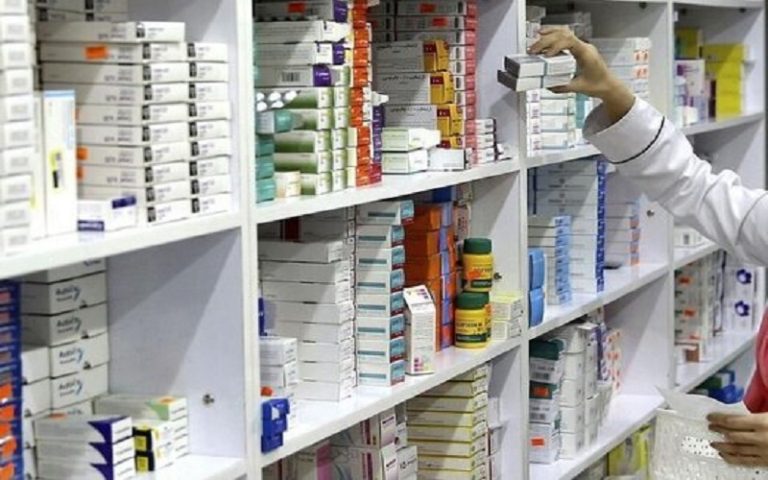
The Iranian pharmaceutical market is in crisis and experiencing shortages. These shortages sometimes extend to simple cold tablets and saline solutions, but certain medications are always in crisis, such as specialty drugs, insulin, or chemotherapy drugs.

This is while the head of Iran’s Food and Drug Administration claims that 99 percent of the country’s medicine is domestically produced, but the state of drug shortages shows that the volume of production has not been able to meet the country’s pharmaceutical and healthcare needs.

Given the market shortages and the level of demand, smuggled imported drugs are being bought and sold in the black market and online.

Insulin medication is not available in pharmacies and can only be found at the Red Crescent pharmacy; similarly, Formetin is available in the black market. Medications for cancer patients are also only available in the black market.

From Self-Sufficiency in Production to a Medicine Crisis

While government officials claim that pharmaceutical factories are operating at full capacity, the condition of pharmacies does not confirm this.

Seyed Heidar Mohammadi, Deputy Minister of Health and head of the Food and Drug Administration, claimed that a large portion of drugs are available domestically. He stated, “Many anticancer drugs are produced domestically and with high quality. One percent of the country’s required drugs are supplied through imports, and this one percent accounts for 13 percent of the total monetary value of our drugs.”

Accordingly, Iran only has a one percent need for drug imports, but the difficulties people face in procuring and supplying medicine do not confirm this 99 percent domestic production claim.

The Etemad newspaper reported drug shortages in various cities and public hospitals. Saline solution is rationed in a public hospital in Isfahan due to shortages. Shortages of narcotic drugs, declining drug quality, and the lack of surgical blades and gloves are other points mentioned in this report.

In July 2024, Mohammad Abdozadeh, chairman of the board of the Syndicate of Human Pharmaceutical Industries, spoke about the problems in the production sector: “The Central Bank has made the conditions for receiving facilities more difficult, and now we neither have the ability to receive receivables nor facilities. In this situation, registering orders and obtaining foreign currency for importing raw materials becomes very difficult.”

According to him, nearly $600 million of the allocated foreign currency for the pharmaceutical sector was canceled last year due to a lack of liquidity. Pharmaceutical companies are facing a liquidity crisis, and insurance companies are also not fulfilling their commitments.

In such a situation, even if the capability for production exists in the country, it seems that due to a shortage or lack of liquidity, this cannot be realized, and patients are the victims.

Aside from these problems, on July 22, Abdozadeh, in a letter to the First Vice President, announced that due to the lack of tariff code determination for 700 items on the country’s pharmaceutical list, pharmaceutical companies are unable to clear raw materials that are in customs.

Producing 99 percent of the country’s medicine may be possible with imported raw materials, but now these are locked in customs, and manufacturers warn that a drug crisis in the country is imminent. Currently, only specific pharmacies have medicines like insulin, and as one member of parliament mentioned, its distribution in small towns is very limited.

A Wave of Drug Crisis is on the Way

Vahid Mahalati, vice chairman of the board of directors of the Drug and Supplement Distribution Companies Association, has predicted that a drug crisis will occur in the last quarter of 2024 and the first quarter of 2025. He said, “Four billion dollars was supposed to be allocated to medicine and equipment. If we accept the government’s statistics that $700 million was allocated in three months, and this trend continues for other quarters (i.e., multiplied by four), we will not reach the figure of four billion dollars.”

If online sellers delay finalizing an order for an hour, they erase all chat and negotiations and will not respond again, leaving no trace.

The heartbeat of the market is in the hands of brokers, and they are aware of market shortages; therefore, they supply the shortages at high prices.

In this simple manner, the brokers’ market thrives day by day, especially as the drug situation continues to worsen and dark days for patients lie ahead.

According to Mojtaba Burbur, vice president of the Drug Importers Union, more than 60 percent of the country’s pharmaceutical market is in the hands of semi-governmental or public pharmaceutical companies. These state-owned companies profit from this black market at the expense of Iranian citizens’ lives.

New US Sanctions Against Iran-Linked Facilitators of Weapons Procurement for Houthis

The United States has sanctioned two individuals and four companies for facilitating the procurement of weapons for the Houthi rebels in Yemen.

In a statement, the US Department of the Treasury announced that the Wednesday sanctions targeted logistics personnel, transport facilitators, and suppliers based in Yemen and China who were procuring dual-use equipment for use in the Houthis’ advanced weapon systems.

Those sanctioned include Al-Shahari United Corporation Ltd, a company based in Sanaa, the capital of Yemen, which is said to rely on a branch office in Guangzhou, China, to facilitate shipments to Yemen.

The US Treasury Department also sanctioned a Yemeni trader named Maher Yahya Muhammad Mutahar al-Kinai, who, according to the department, cooperated with other Houthi agents to “facilitate the transport of dual-use equipment and components.”

Following the start of the Gaza war, the Houthis launched attacks on ships in the Red Sea, forcing many shipping companies to alter their routes and provoking retaliatory strikes from the United States and its allies.

The US Treasury Department’s statement said that the sanctioned individuals “directly” supported the Yemeni rebels’ efforts to procure “military materials from abroad,” which were then sent to Houthi-controlled areas in Yemen, enabling their ongoing attacks.

According to Agence France-Presse, Brian Nelson, the Under Secretary of the Treasury for Terrorism and Financial Intelligence, said that the Houthis have been seeking to exploit key areas like the People’s Republic of China and Hong Kong for sourcing and transporting components necessary for their lethal weapon systems.

He added that the Treasury Department will continue to target these “facilitators” who enable Houthi activities.

Iran-Backed Hashd al-Shaabi Forces Targeted, Senior Hezbollah Official Killed

Amid escalating tensions between Hezbollah and Israel, a U.S. official told Reuters about an American attack on Iraqi militia positions.  

Reuters reports it is still unclear which militia forces in Iraq were targeted, but the U.S. official emphasized that the attack was carried out to defend U.S. forces.  

At the same time, Hashd al-Shaabi, the most significant militia group backed by the Iranian regime in Iraq, announced early Wednesday, July 31, that two patrols of their forces were targeted in an airstrike in Babil province, central Iraq.  

According to Iran’s state news agency IRNA, Hashd al-Shaabi stated: “Available information indicates that two patrols of the 47th Brigade in northern Babil province were targeted by missiles fired from a drone, resulting in casualties and injuries among the forces.”  

Reuters, citing Iraqi police and hospital sources, reported that four people were killed and three injured in these explosions.  

A U.S. official, who wished to remain anonymous, stressed that this attack was carried out due to threats against coalition forces stationed in Iraq.  

Iraqi and U.S. officials reported on July 25 the launch of several rockets toward the Ain al-Asad airbase in Iraq, where U.S.-led coalition forces are stationed, but these attacks caused no damage or casualties.  

Meanwhile, on Tuesday, the Israeli army announced that it had killed Fouad Shokr, a commander of Hezbollah, in an airstrike in Beirut.  

Hezbollah is financially and militarily supported by the Iranian regime.  

14,000 Hemophilia Patients in Iran Facing Medication Shortages

Elnaz Yari, the director of the Hemophilia Center of Tehran Province, noted that 14,000 hemophilia patients are registered in the country. She emphasized the provision of medication as the primary need of these patients and stated that this center has experienced one of the most challenging periods in recent years in terms of supplying hemophilia medications.

In an interview with the regime’s ISNA news agency, the director of the Hemophilia Center of Tehran Province mentioned that out of the 14,000 hemophilia patients in the country, 4,000 are in Tehran. She added that there are probably patients in the country, especially in deprived areas like Sistan and Baluchestan Province (where consanguineous marriages are common), who have not been identified yet.

Yari stated that providing medication is a challenge for all patients and emphasized that hemophilia is a special condition, making the provision of medication the most significant challenge for these patients.

She noted that in 2023, the shortage and unavailability of Factor VIII caused problems for patients, and currently, there is a shortage of “Factor XIII,” “fibrinogen,” and “Humate.”

Ahmad Ghavidel, an advisor to the board of directors of the Iran Hemophilia Society, said on July 24 that in the past three years, hemophilia patients have experienced the worst years in terms of medication shortages.

He said, “In fact, the situation was even worse than during the war.”

Amin Afshar, the chairman of the board of the Iran Hemophilia Society, also reported on the same day that three hemophilia patients, including two young adults and a child, have died since the beginning of this year due to medication shortages.

According to Afshar, the medication shortages that existed in rural areas have now reached Tehran.

Nazanin Farzadi-Far, the CEO of the Iran Hemophilia Society, stated in December 2023 that in 2022, the domestic production of medication significantly decreased, and she mentioned, “We had a very difficult autumn and winter in terms of medication.”

The director of the Hemophilia Center of Tehran Province emphasized that the shortage of these medications has caused problems for pregnant women. She said, “Fibrinogen patients are considered the mildest cases of hemophilia, such that they need to use fibrinogen medication in situations like nosebleeds, gum surgery, or tooth extractions. Unfortunately, fibrinogen medication is not available, and this causes irreparable harm.”

Amir-Hesam Alirezaei, the head of the Transplantation and Disease Treatment Management Center at the Ministry of Health, said in an interview with ISNA in March 2024 that approximately 14,000 patients are registered in the national hemophilia system. He added, “Among these, there are 5,500 cases of Factor VIII deficiency hemophilia, 1,892 cases of von Willebrand disease, and 1,200 cases of Factor IX deficiency hemophilia and other bleeding disorders.”