Home Blog Page 18

Day 29 of Iran War: Houthis Enter Conflict, Attacks Escalate Across Middle East

0

On Saturday, March 28, amid the continuation of the war and heightened tensions in the Middle East, and alongside the widening scope of conflicts, a series of military and political developments across different parts of the world—from Yemen and the Persian Gulf to Europe and Ukraine—indicate the entry of new actors and an escalation of the crisis.

Missile launched from Yemen toward Israel; possible Houthi entry into the conflict

Reuters news agency reported that early Saturday, the Israeli military announced it had detected the launch of a missile from Yemeni territory toward Israel. If confirmed, this would be the first such attack from Yemen against Israel since the start of the Iran-related war.

An Analytical Look at One Year of Persistence by the People of Iran

This incident occurred only hours after Yemen’s Houthi group, an ally of the Iranian regime, warned in a statement that they would take military action if attacks continued or intensify. The statement اشاره mentioned the possibility of targeting the United States and Israel but did not provide details about the nature of the operations.

While groups aligned with the Iranian regime in Lebanon and Iraq had previously entered the conflicts, the Houthis had so far refrained from direct military action. This launch may be seen as a sign of the group’s practical entry into regional confrontations.

France and the United States aligned on securing the Strait of Hormuz

Jean-Noël Barrot, France’s foreign minister, announced that Paris and Washington are aligned on restoring freedom of navigation in the Strait of Hormuz.

Quoting U.S. Secretary of State Marco Rubio, he said that the United States’ primary objective is the destruction of the Iranian regime’s ballistic missile capabilities. Barrot emphasized that France is also pursuing shared goals with the U.S. to ensure maritime security and reopen vital energy routes in the region.

The Strait of Hormuz, one of the world’s most important energy transit routes, has faced serious threats in recent weeks due to military tensions.

U.S. use of drone boats in the Middle East

The Pentagon announced that the United States has for the first time confirmed the use of unmanned fast boats in an active conflict. According to military officials, these vessels have been deployed as part of operations against the Iranian regime in the Middle East.

Tim Hawkins, spokesperson for U.S. Central Command, stated that American forces will continue using unmanned systems, including surface drones, in the region.

This move reflects the growing use of advanced technologies in modern warfare and the U.S. effort to reduce risks to its personnel in combat zones.

Airstrike on Firouzabad cement factory; casualties and damage

Inside Iran, Jalil Hassani, acting deputy for political and security affairs of Fars Province Governor’s Office, reported an airstrike on the mine of the Firouzabad cement factory. According to him, the attack left at least two dead and two injured.

Hassani emphasized that the targeted site was a non-military industrial facility, and that part of the equipment and machinery was damaged in the attack. Several workers present at the site were also injured.

So far, no information has been released about the perpetrator of the attack or the exact extent of the damage.

Ukraine–Saudi defense agreement; expansion of military cooperation

Ukrainian President Volodymyr Zelenskyy announced the signing of a defense cooperation agreement between his country and Saudi Arabia. The deal could pave the way for expanded military, technological, and investment cooperation between the two countries.

According to Zelenskyy, the agreement was finalized before his meeting with Saudi Crown Prince Mohammed bin Salman. He stated that Ukraine is ready to share its technical expertise and systems with Saudi Arabia.

Zelenskyy also emphasized that Saudi Arabia has capabilities that are valuable to Ukraine, and that this cooperation could bring mutual benefits to both countries.

Overall, these developments indicate that the ongoing crisis is rapidly expanding into new levels of conflict and international cooperation.

29 U.S. Figures Back NCRI Interim Government

0

In a joint statement, 29 American political figures supported the formation of an interim government in Iran and announced their backing for Maryam Rajavi’s Ten-Point Plan, describing it as a suitable framework for a transition to a democratic system. Maryam Rajavi is the leader of the National Council of Resistance of Iran, an opposition coalition.

The statement, referring to Iran’s historical developments, says that the Iranian people in 1979 ended a period of repression that had begun during the rule of Mohammad Reza Pahlavi and his SAVAK security apparatus. However, Iranians’ efforts to achieve freedom and democracy failed again with the establishment of a religious government.

Announcement of a Provisional Government by the National Council of Resistance of Iran

The signatories emphasized that over past decades, the people of Iran have been deprived of their fundamental rights and have not been able to enjoy freedoms such as expression, religion, and personal security. According to them, the ruling security and military structures have controlled the social space through various means, including repression and arrests.

Another part of the statement refers to the four fundamental freedoms proposed by Franklin D. Roosevelt during World War II: freedom of speech, freedom of religion, freedom from want, and freedom from fear. The authors stressed that these principles must also be guaranteed as universal rights for the people of Iran.

The group also referred to protests in recent years in Iran, stating that there is a widespread demand to end the current rule, and emphasized that the Iranian people now more than ever seek to determine their own destiny. They stressed the need to draft a new constitution based on popular sovereignty, legal equality, and the separation of religion from the state.

In this context, Maryam Rajavi’s Ten-Point Plan has been introduced as a roadmap for Iran’s future. The plan includes principles such as establishing a democratic republic, guaranteeing human rights, equality between women and men, separation of powers, abolishing laws based on Sharia, and creating a country free of weapons of mass destruction.

The statement also refers to political support in the United States for this approach and mentions a proposal in the U.S. House of Representatives aimed at supporting the Iranian people’s demand to establish a democratic republic.

It further mentions the announcement of the formation of an interim government by the National Council of Resistance of Iran on February 28, stating that its goal is to transfer sovereignty to the people and create conditions for holding free elections.

The signatories also referred to the role of the People’s Mojahedin Organization of Iran (PMOI/MEK), describing it as a movement that has stood against various governments in Iran over past decades and has paid a heavy price. According to them, despite significant losses, the organization has remained committed to the goal of establishing a system based on the people’s vote.

In conclusion, these political figures, referring to historical events including the 1953 coup against Prime Minister Mohammad Mossadegh and the developments of 1979, emphasized that the Iranian people have repeatedly been deprived of achieving democracy. They believe that under current conditions, a new opportunity for change has emerged and Western countries should support the democratic movement of the Iranian people.

The statement concludes by emphasizing firm support for the cause of a free and democratic Iran.

Day 28 of Iran War Emergency Evacuation of Russian Personnel from the Bushehr Nuclear Power Plant

0

On Friday, March 27, the war between the Iranian regime and the United States and Israel entered its 28th day.

Following the escalation of military tensions in the Middle East, a series of security, political, and military developments took place on Friday, March 27, indicating an expansion of the scope of the conflict and rising international concerns. The most important of these events are outlined below:

Drone attack on Kuwait’s Shuwaikh Port

Kuwait’s Ports Authority announced that Shuwaikh Port was targeted in a drone attack by the Iranian regime. According to the authority, the attack caused damage to port infrastructure, although no further details have been released regarding the extent of the damage or possible casualties. This incident reflects the expansion of tensions into the Persian Gulf and critical regional infrastructure.

An Analytical Look at One Year of Persistence by the People of Iran

Urgent warning by the Israeli military to residents of Arak

The Israel Defense Forces (IDF) issued an urgent message on social media, calling on residents of northwestern Arak and the Kheirabad industrial area to immediately evacuate. The warning emphasized that remaining in these areas could be dangerous, reinforcing the likelihood of imminent attacks.

Saudi Arabia urges its citizens to leave Lebanon

Saudi Arabia’s embassy in Beirut, citing wartime conditions in Lebanon, urged its citizens to leave the country immediately. It also warned those planning to travel to Lebanon that the security situation remains unsuitable for travel. This move reflects growing concern among regional countries about the spread of the conflict.

Continuation of U.S. attacks on military infrastructure

The United States Central Command (CENTCOM), the U.S. military command responsible for operations in the Middle East, released new footage of strikes on the Iranian regime’s military infrastructure. The command stated that U.S. forces continue to degrade Iran’s military capabilities for projecting power beyond its borders.

Houthis’ position on Saudi oil exports

According to a report by Lloyd’s List, a maritime intelligence publication, Yemen’s Houthi group stated that under current conditions they see no reason to disrupt Saudi Arabia’s oil exports through the Red Sea. This comes amid earlier speculation about potential new attacks on shipping routes in the Bab el-Mandeb Strait. Saudi Arabia currently exports more than five million barrels of oil per day from the port of Yanbu.

Expansion of Israeli attacks on military infrastructure in Tehran

The Israeli military announced that in overnight strikes on Tehran, it targeted dozens of weapons production sites. According to the IDF, facilities including ballistic missile production sites, air defense systems, training bases, and weapons depots were hit. It also reported targeting sites linked to the Islamic Revolutionary Guard Corps (IRGC) and missile launch infrastructure.

Miraculous survival of civilians in Kafr Qasim

Following missile attacks by the Iranian regime on Israel, a video from the city of Kafr Qasim showed two civilians entering a shelter moments before a missile strike and surviving. At least six people were injured in these attacks, and some areas were hit with cluster munitions.

UK criticism of the closure of the Strait of Hormuz

Yvette Cooper, the United Kingdom’s Home Secretary, accused the Iranian regime of holding the global economy hostage by blocking the Strait of Hormuz. Speaking on the sidelines of the G7 foreign ministers’ meeting in France, she called for a swift resolution to the crisis and a return of stability to the region.

Attack on missile production site in Yazd

The Israeli military announced that it targeted the main production site for missiles and naval mines in the city of Yazd. According to Israeli officials, the facility played a key role in the development and storage of advanced naval weaponry.

IAEA warning about the Bushehr nuclear power plant

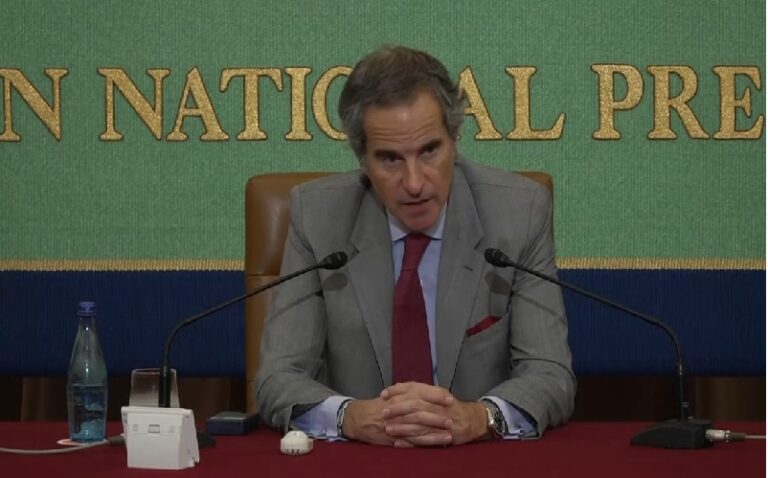
Rafael Grossi, Director General of the International Atomic Energy Agency (IAEA), warned about the consequences of an attack on the Bushehr nuclear power plant. He stressed that damage to this operational facility could lead to a large-scale radioactive leak and pose a serious threat to Iran and neighboring countries. However, initial reports indicate that the recent attacks did not cause damage to the facility.

An Analytical Look at One Year of Persistence by the People of Iran

0

The Persian year 1404 (which began on March 21, 2025) came to an end for the people of Iran after many ups and downs, giving way to the year 1405 (starting March 21), a year that from the outset carries the sense of transformation and inevitable victory. The past year began with a widespread and continuous wave of more than 4,200 protests and labor strikes by workers, retirees, teachers, and those affected by economic plunder, and in January it turned into a nationwide uprising. During this year, Iran’s streets—from the capital Tehran to the smallest towns—became arenas of direct confrontation with the entirety of Iran’s regime.

At the heart of these confrontations, two driving forces shook the foundations of the mullahs’ regime: first, the “leading role of Iran’s courageous women,” who with remarkable bravery led the front lines of the uprising and challenged the repression apparatus; and second, the organized and fervent presence of “rebellious youth.” By taking initiative, they directed public anger toward the seizure of government centers and governor’s offices. The significant growth of anti-repression activities by these youths showed that the era of passivity has ended. In response to this wave, Iranian regime supreme leader Ali Khamenei attempted to suppress the uprising by cutting communication networks and unleashing bloodshed, but the chants of “This year is a year of blood, Seyed Ali will be overthrown” demonstrated that this repressive strategy has been completely defeated. The continuation of 172 consecutive weeks of protests in Zahedan (a major city in Sistan and Baluchestan province) is also a clear symbol of this resistance and awakening.

The climax of this episode was described as occurring in the early hours of February 23, when a major operation referred to as “Flaming Hammer,” involving an attack by 250 supporters of the People’s Mojahedin Organization of Iran (PMOI/MEK) on the residence of Ali Khamenei in central Tehran, was presented as historic. This confrontation was portrayed as rejecting the notion of cost-free change and appeasement strategies, asserting that the only path to liberation is organized and forceful uprising.

The National Council of Resistance of Iran (NCRI) and its proposed provisional government are presented as bearers of peace and freedom for Iran’s future. In this context, the stated fundamental and non-negotiable positions of the Resistance are as follows:

  1. Firm rejection of any foreign military intervention; the overthrow of this government will be achieved solely by the Iranian people and “rebellious youth.”

2. The necessity of dismantling the Islamic Revolutionary Guard Corps (IRGC), described as the main instrument of repression, destruction, and terror.

3. A plan for a provisional government during a six-month transition period, aimed at peaceful transfer of power, restoring stability, and holding fully free elections.

4. Rejection of both dictatorships (monarchy and clerical rule) and insistence on absolute popular sovereignty.

Over the past year, resistance campaigns inside the country were connected with extensive support from supporters of the National Council of Resistance of Iran worldwide. The holding of 1,585 gatherings, demonstrations, and exhibitions across five continents conveyed both the plight and the strength of the Iranian people to the international community. The demands raised in these campaigns, including closing the embassies of the regime, freeing political prisoners, and halting executions have now become formal demands in international forums.

The bloodshed in the streets is portrayed as guaranteeing the inevitable victory of the people. It is asserted that the time has come for the international community to recognize the will of the Iranian people and acknowledge a democratic provisional government for Iran.

Day 27 of Iran war: Reuters Reports Killing of Alireza Tangsiri, Commander of the IRGC Navy

0

Reuters, citing local Israeli media and its own sources, reported that Alireza Tangsiri, commander of the Islamic Revolutionary Guard Corps (IRGC) Navy, was killed in an attack in Bandar Abbas.

According to the report, powerful explosions occurred at naval facilities and military guesthouses in Bandar Abbas, and Israeli media have claimed that Tangsiri was killed in the attack.

No official response has yet been issued by Iran’s regime or the Israeli military regarding the incident.

Trump emphasized that officials of Iran’s regime are seeking an agreement.

Donald Trump, the President of the United States, says Iran’s leaders are denying ongoing negotiations with Washington to save face and out of fear of being killed either by the United States or by their own associates.

Trump, speaking on Wednesday, March 25, at a fundraising event for Republican House election campaigns, once again emphasized that negotiations are ongoing and claimed that Iranians are strongly seeking a deal.

Trump’s remarks come as on the 27th day of the war, attacks by the United States and Israel across Iran appear to have intensified.

German president takes a strong stance against the war involving Iran

Frank-Walter Steinmeier, the President of Germany, in rare remarks described the ongoing war against Iran as a catastrophic mistake.

Steinmeier’s remarks come as Europe is trying to balance security considerations with its legal commitments. This position reflects growing concern among European countries about the expansion of the war in the Middle East.

Trump’s opponents suffer another defeat in the U.S. Senate

In the United States, Democrats’ efforts to limit Donald Trump’s military powers once again failed.

The War Powers Resolution, introduced under the leadership of Senator Chris Murphy, was rejected with 53 votes against and 47 in favor. This marks the third defeat for Trump’s opponents in the past month.

At the same time, Trump announced that negotiations toward a comprehensive agreement with Iran’s regime are ongoing.

The Israeli military reported a new wave of Iranian missile attacks

According to the report, sirens sounded in central areas, Jerusalem, and the West Bank, and defense systems are intercepting the missiles.

This attack occurred about 14 hours after the previous one, and there are signs of a relative decrease in the intensity and number of attacks. No reports of possible damage have been released yet.

UAE attempts to intercept missiles and drones

The Ministry of Defense of the United Arab Emirates announced that it is intercepting missiles and drones launched by Iran.

In recent weeks, several Persian Gulf countries have been targeted by these attacks. Although many have been intercepted, some cases of damage have also been reported.

China spoke of signs of hope for peace

Wang Yi, China’s foreign minister, reported signs indicating the possibility of returning to negotiations.

In calls with his Egyptian and Turkish counterparts, he stated that Tehran and Washington have sent signals about returning to the negotiating table.

This comes while Abbas Araghchi, the foreign minister of Iran’s regime, has rejected any negotiations under current conditions, calling it tantamount to accepting defeat.

UAE warns about closing the Strait of Hormuz

Sultan Al Jaber, CEO of the Abu Dhabi National Oil Company, described closing the Strait of Hormuz as “an example of economic terrorism.”

He emphasized that any disruption to this vital route would have global consequences, with consumers around the world bearing the cost.

Al Jaber also stressed, in a meeting with JD Vance, the importance of maintaining the free flow of energy through the strait.

G7 foreign ministers’ meeting in Paris

The two-day meeting of G7 foreign ministers has begun in the suburbs of Paris.

The agenda includes the war involving Iran, as well as the crises in Ukraine and Gaza.

Marco Rubio is also expected to join the meeting.

The meeting is taking place as the White House has warned that if Iran does not accept an agreement, more severe measures will be taken.

Germany is not willing to enter the war

Boris Pistorius, Germany’s defense minister, announced that his country does not intend to enter the war but supports peace efforts.

In a meeting with Richard Marles, Australia’s deputy prime minister, he emphasized that the war is disastrous for the global economy and that a diplomatic solution must be found.

Pistorius added that if a ceasefire is established, Germany is ready to participate in ensuring peace, especially in securing maritime navigation in the Strait of Hormuz.

While the United States maintains the upper hand in its domestic political arena, Europe and China emphasize the need for de-escalation and a return to negotiations, a situation that leaves the future of war and peace in the region uncertain.

United Nations Human Rights Council Holds Emergency Meeting on Iran

Following the escalation of regional tensions, the United Nations Human Rights Council announced that it will hold an emergency meeting to examine the consequences of Iran’s attacks on Persian Gulf countries. The session is scheduled to take place on Wednesday, March 25, in Geneva, Switzerland, and will focus on the humanitarian and legal dimensions of these attacks.

In an official statement, the Human Rights Council emphasized that the meeting is being held in response to a request by a group of countries. These countries have submitted a draft resolution regarding Iran’s acts of aggression. In this draft, Iran’s attacks are described as military aggression against several countries in the region.

Political Prisoners on Hunger Strike in 56 Prisons: The ‘No to Execution Tuesdays’ Campaign Calls to Save Detainees

Review of the legal dimensions of Iran’s attacks in Geneva

According to the published statement, the draft resolution refers to missile and drone attacks against the United Arab Emirates, Bahrain, Jordan, Kuwait, Oman, Qatar, and Saudi Arabia. The document states that these attacks targeted civilian infrastructure and residential areas. It also refers to the killing of civilians.

Member states of the Gulf Cooperation Council had previously submitted a formal request to hold this meeting. The request was presented in Geneva and was aimed at examining the humanitarian and security consequences of Iran’s attacks. These countries emphasized that the attacks have had a direct impact on regional security.

In a diplomatic note sent by these countries, the attacks were described as a serious threat to international peace and security. The note refers to the use of ballistic missiles and drones in these attacks. It also emphasizes the impact of these actions on human rights.

Countries’ reactions to Iran’s missile and drone attacks and the draft resolution

Following these developments, the countries that submitted the draft stated that Iran’s aggressive approach is unjustifiable. In the document, they emphasized that these attacks were carried out despite regional countries having declared that their territories would not be used for attacks against Iran.

The draft resolution also calls for the immediate cessation of Iran’s attacks on civilian infrastructure. It further points to the need to halt the Iranian regime’s attacks on commercial vessels in the Strait of Hormuz, a critical global shipping route, highlighting this as a major concern in maritime security.

Another part of the draft raises the issue of compensation. The proposing countries have called for reparations for the human and environmental damages caused by Iran’s attacks. This demand is raised within the framework of international law and points to the wide-ranging consequences of these attacks.

The holding of an emergency session of the Human Rights Council indicates increasing international pressure following the Iranian regime’s attacks. What is evident in this process is the deepening political and legal isolation of a government that, for years, has driven the region toward crisis through destabilizing policies. The continuation of this trend once again shows that the power structure in Iran not only fails to respond to domestic demands but also contributes to instability at the regional level.

Day 26 of Iran war White House Warning to Iran and Rising Tensions Amid Ongoing Negotiations

0

On the 26th day of the war, the White House warned that if Iran does not accept an end to the conflict, it will face a stronger response from the United States. A White House spokesperson emphasized that if “miscalculation” continues, more intense attacks will be carried out. U.S. officials have claimed that a significant portion of Iran’s military capabilities, including its air force, navy, and air defense systems, has been weakened. In response, Iran has continued missile and drone attacks and, by restricting passage through the Strait of Hormuz, has exerted counter-pressure on the energy market. Nevertheless, negotiations are still ongoing and have been described as “constructive.”

Day 25 of Iran War: Senior Tehran-Back Militia Commander Killed in Iraq

Iran’s regime has not accepted the 15-point U.S. proposal and has announced conditions for ending the war, including a halt to attacks, guarantees against the recurrence of war, payment of reparations, implementation of the agreement across all regional fronts, and recognition of its sovereignty over the Strait of Hormuz. At the same time, review of this proposal is still ongoing.

The war has had a widespread impact on the energy market, and disruptions in the Strait of Hormuz have caused a fuel crisis in countries such as India, with long lines forming at gas stations and some areas facing fuel shortages.

At the regional level, warnings have been issued that if U.S. attacks expand, a new front could open in the Bab al-Mandeb strait and attacks on commercial ships in the Red Sea could resume. At the same time, reports have emerged about the deployment of additional U.S. forces, including units from the 82nd Airborne Division, although no decision has been announced regarding the deployment of ground troops.

At the global level, warnings have been raised about the economic consequences of the war. Rising energy prices and disruptions in supply chains have reduced industrial production in some countries, and there are even concerns about shortages of chemical fertilizers and threats to food security in the coming months.

On the diplomatic front, efforts are underway to end the war, and some countries view a cessation of hostilities as a way to control the energy crisis. Meanwhile, the United Nations Human Rights Council has condemned Iran’s attacks on Persian Gulf countries and called for compensation for damages. In Europe, discussions have also been raised about forming a coalition to reopen the Strait of Hormuz.

On the battlefield, attacks continue, and it has been reported that Israel has targeted a submarine development center in Isfahan, a major city in central Iran. These strikes have been described as part of a broader operation against Iran’s military infrastructure. The simultaneity of U.S. threats, ongoing attacks, and diplomatic movements indicates that the war has reached a sensitive stage where both escalation and negotiation remain possible paths.

Reports also indicate that the United States has presented a 15-point plan to end the war, which includes the complete halt of Iran’s nuclear program, ending support for regional groups, and guaranteeing freedom of navigation in the Strait of Hormuz. The plan also includes a temporary ceasefire of about one month and even proposes the shutdown of key facilities such as Natanz, Fordow, and the Isfahan nuclear center. However, Iran has rejected direct negotiations, although indirect consultations continue.

Iran has announced that only ships deemed “non-hostile” and coordinated with it will be allowed to pass through the Strait of Hormuz, and vessels linked to countries involved in the attacks are excluded from this rule.

In another development, it has been reported that Mohammed bin Salman, the Crown Prince of Saudi Arabia, supports the continuation of the war and sees it as an opportunity to reshape the regional order. This reflects differing approaches regarding whether to end or continue the conflict.

Inside Iran, security measures have significantly increased, with thousands of checkpoints, widespread patrols, and the deployment of tens of thousands of police forces across the country.

In the region, attacks have also continued, including a drone strike on Kuwait Airport that caused a fire in a fuel tank and disrupted flights. At the same time, reports have emerged of strikes on targets in Tehran, the capital of Iran, and other cities such as Shiraz, Karaj, and Qazvin. The United States has also claimed that it has struck thousands of military targets in Iran and reduced the country’s combat capabilities.

Day 25 of Iran War: Senior Tehran-Back Militia Commander Killed in Iraq

0

On Tuesday, March 24, the war between the Iranian regime and the United States and Israel entered its 25th day. Regional developments, alongside the ongoing clashes between Iran and the United States and Israel, have taken on new dimensions, and in recent days a series of military, cyber, and political events have intensified tensions.

In the latest development, Reuters news agency reported that Amazon announced a disruption at one of its cloud service centers in Bahrain, caused by a drone attack. An Amazon spokesperson confirmed the attack but did not provide details on the extent of the damage, stating that services are being transferred to alternative centers to mitigate the impact. This is considered the second attack on Bahrain’s digital infrastructure since the start of the conflict.

Time to Correct the West’s Historic Mistake on Iran

At the same time, reports emerged of several heavy explosions in Bahrain. Agence France-Presse (AFP) reported that authorities in the country have asked citizens to seek shelter for safety. Bahrain, due to hosting the U.S. Navy’s Fifth Fleet, has in recent weeks become one of the sensitive points in this conflict.

The German government called for an immediate halt to attacks by Iran. A spokesperson for the German government, referring to discussions between German officials and U.S. President Donald Trump, emphasized that Berlin, together with its partners, is seeking an unconditional end to escalatory actions. He also warned about threats to freedom of navigation in the Strait of Hormuz, describing them as a violation of international law. At the same time, Germany announced that it will not participate in military operations to reopen this route while the conflict continues but will be ready to play a role afterward.

Meanwhile, The Wall Street Journal reported that European countries, contrary to their official positions, are playing a broad support role in military operations against Iran. According to the report, military bases across various European countries, including Germany, the United Kingdom, and Italy, have become key centers for refueling, equipping, and directing operations. Among them, Ramstein Air Base in Germany has been identified as one of the main hubs for coordinating attacks.

In western Iraq, a base belonging to Hashd al-Shaabi, a paramilitary group affiliated with the Iranian regime, was targeted in an airstrike, resulting in at least six people, including a senior commander, and 15 injured. This group, described as one of Iran’s tools of regional influence, has in recent months been involved in attacks against U.S. bases.

In this context, the U.S. Department of State announced the creation of a new body called the Office of Emerging Threats, tasked with countering complex threats, particularly in cyber and advanced technology domains. U.S. officials have emphasized that Iran, along with countries such as China, Russia, and North Korea, is a primary focus of this new structure.

These developments come as analysts say that the increase in cyberattacks, military operations, and diplomatic movements indicates that the conflict has entered a more complex phase—one that has significantly impacted not only the military sphere but also critical infrastructure, cyberspace, and the geopolitical balance of the region.

Political Prisoners on Hunger Strike in 56 Prisons: The ‘No to Execution Tuesdays’ Campaign Calls to Save Detainees

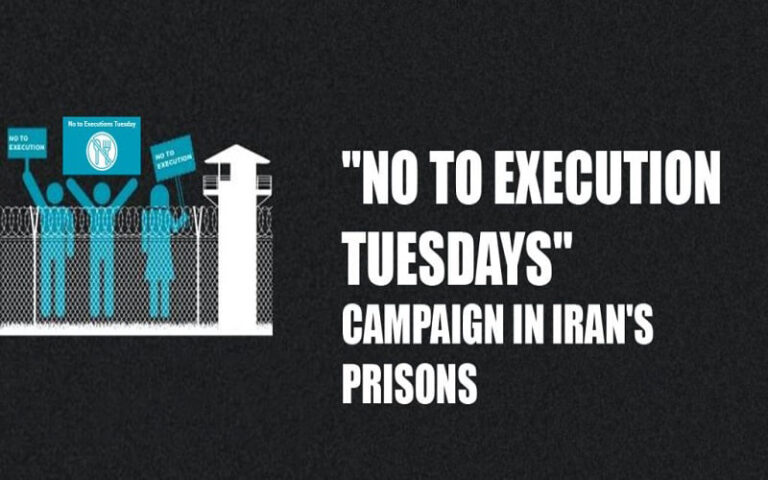
The “No to Execution Tuesdays” campaign has entered its 113th week with unwavering resolve, as political prisoners continue their widespread hunger strike across 56 prisons nationwide. In their latest statement, the striking prisoners extended their warmest congratulations to the Iranian people on the occasions of Nowruz and Eid al-Fitr. They paid special tribute to the families of the martyrs from the recent January uprising and to all those who were sent to the gallows over the past year by the oppressive regime of the mullahs. The campaign members expressed their profound hope that the new year will culminate in the liberation of the country and the establishment of an Iran entirely free of torture chambers and arbitrary executions.

Iran’s ‘No to Executions Tuesdays’ Campaign Enters 110th Week

The prisoners highlighted the dark human rights record of the Iranian regime, which ruthlessly executed over 2,650 citizens across the country in just the past twelve months. They specifically pointed to the heinous crime committed on the eve of Nowruz, when authorities unjustly executed three brave youths of the uprising—Mehdi Ghasemi, Saeed Davoudi, and Saleh Mohammadi—in the city of Qom. The campaign emphasized that these criminal practices are solely designed to instill fear in the hearts of the public in a desperate attempt to extinguish the blazing fire of internal resistance.

The striking detainees issued an urgent humanitarian appeal to the United Nations and the international community, demanding real pressure on the Iranian regime to halt its killing machine and protect the fundamental rights of prisoners. The statement warned of the unknown fate facing newly arrested protesters who were thrown into dungeons during the recent months. These individuals are enduring the most brutal forms of torture hidden from the world’s eyes, exacerbated by a complete internet blackout, placing their lives in imminent danger of execution. The campaign reiterated its core demand for the immediate and unconditional release of all political prisoners.

The prisoners also drew attention to their worsening plight and the multiplying threats to their lives amid the atmosphere of war and regional tensions, compounded by the deliberate denial of medical care and severe food shortages used as an additional tool of suppression. The statement referenced the recent tragedy at Chabahar prison, where guards responded with live ammunition to prisoners protesting against starvation and lack of supplies, resulting in dozens of casualties. The strikers clarified that the regime’s deliberate communication blackout was the direct reason behind the delay in publishing the campaign’s statements over the past two weeks, exposing a desperate attempt to isolate them from the outside world.

This ongoing campaign embodies the highest form of internal resistance and legendary steadfastness, as prisoners boldly defy their executioners with empty stomachs across a vast and extensive list of facilities. The participants bravely continuing this strike are held in Evin Prison (women’s and men’s wards), Ghezel Hesar Prison (Units 2, 3, and 4), Karaj Central Prison, Fardis Karaj Prison, Greater Tehran Prison, Qarchak Prison, Khorin Varamin Prison, Choubindar Qazvin Prison, Ahar Prison, Arak Prison, Langaroud Qom Prison, Khorramabad Prison, Borujerd Prison, Yasuj Prison, Asadabad Isfahan Prison, Dastgerd Isfahan Prison, Sheiban Ahvaz Prison, Sepidar Ahvaz Prison (women’s and men’s wards), Nezam Shiraz Prison, Adelabad Shiraz Prison (women’s and men’s wards), Firouzabad Fars Prison, Dehdasht Prison, Zahedan Prison (women’s and men’s wards), Borazjan Prison, Ramhormoz Prison, Behbahan Prison, Bam Prison, Yazd Prison (women’s and men’s wards), Kahnouj Prison, Tabas Prison, Birjand Central Prison, Mashhad Prison, Gorgan Prison, Sabzevar Prison, Gonbad-e Kavus Prison, Qaemshahr Prison, Rasht Prison (men’s and women’s wards), Rudsar Prison, Haviq Talesh Prison, Azbaram Lahijan Prison, Dieselabad Kermanshah Prison, Ardabil Prison, Tabriz Prison, Urmia Prison, Salmas Prison, Khoy Prison, Naqadeh Prison, Miandoab Prison, Mahabad Prison, Bukan Prison, Saqqez Prison, Baneh Prison, Marivan Prison, Sanandaj Prison, Kamyaran Prison, and Ilam Prison. This courageous stand from behind bars proves to the entire world that the will of the resistance is stronger than any chains, and that the Iranian people will continue their independent, internal struggle until the absolute downfall of the dictatorship.

Day 24 Of Iran War: Donald Trump Announces Negotiations with Tehran

0

On Monday, March 23, 2026, the war entered its twenty-fourth day, and concerns about its future increased. Attacks on Iran’s energy infrastructure and reciprocal threats against regional infrastructure have become a widespread concern.

Donald Trump stated that the talks have been “constructive” and that Tehran seeks an agreement, adding that a deal could be reached within a few days. He also announced a conditional five-day delay in attacks on Iran’s energy infrastructure and emphasized that negotiations are ongoing.

This decision led to a drop in oil and gas prices; U.S. oil fell to about 89 dollars and Brent crude approached 100 dollars. Analysts attribute this decline to reduced tensions.

Trump also claimed that “regime change in Iran has effectively already happened” and, referring to the killing of some officials, spoke of changes in the power structure and the possibility of a model similar to Venezuela. He once again emphasized “peace through strength.”

In contrast, the Israeli military announced the start of a new wave of attacks on Tehran and related infrastructure and stated that it had targeted a force affiliated with the IRGC Quds Force in Beirut.

A report by The Washington Post indicates the uncertain status and isolation of Mojtaba Khamenei, described as the new leader of Iran’s regime and the son of former supreme leader Ali Khamenei, and reports that he has been injured.

Overall, alongside the intensification of military clashes, signs of diplomatic activity are also visible. However, Iran’s regime and the Islamic Revolutionary Guard Corps (IRGC) have denied negotiations, and the situation remains complex and unclear. Turkey, Egypt, and Pakistan are mediating between Tehran and Washington and have exchanged messages between the two sides. Sources report progress in this process.

Reiterating “peace through strength,” Trump warned that if the Strait of Hormuz is not reopened within 48 hours, Iran’s power plants will be targeted. In response, the armed forces of Iran’s regime threatened retaliation.

The U.S. Department of State warned its citizens worldwide about flight disruptions and threats to American interests and is facilitating the evacuation of nationals from high-risk areas.

Kataib Hezbollah, an Iran-backed militia group in Iraq, extended the suspension of attacks on the U.S. Embassy in Baghdad for five days but warned it would respond if targeted.

Reports indicate widespread airstrikes on Tehran (districts one, four, 11, 13, and 21) as well as the cities of Tabriz, Khorramabad, Yazd, and Karaj, along with heavy explosions and the activation of air defense systems.

Iran’s missile and drone attacks against Israel and regional countries continue, while Gulf states report intercepting threats. In Jordan, the passage of a missile has been reported, and the release of images showing missile launches in Mashhad has sparked reactions.

NATO Secretary General Mark Rutte stated that Iran’s destabilizing capability has decreased and that 22 countries have coordinated to secure the Strait of Hormuz.

Anwar Gargash, diplomatic advisor to the president of the United Arab Emirates, said Iran’s attacks carry geopolitical consequences and added that these actions have strengthened security cooperation between Gulf countries and the United States.

Trump and UK Prime Minister Keir Starmer emphasized the immediate reopening of the Strait of Hormuz and described it as vital for energy market stability.

Gulf countries warned the United States that attacks on Iran’s infrastructure could trigger retaliatory responses and threaten regional facilities.

French President Emmanuel Macron condemned Iran’s attacks, expressed support for Saudi Arabia, and emphasized the security of shipping in the Strait of Hormuz.

U.S. officials stated that all options, including strikes on nuclear facilities, remain on the table and that operations against Iranian fortifications in the Strait of Hormuz are ongoing.

Reports of explosions in Tehran, Isfahan, and Khorramabad have been published, but independent verification is difficult due to media restrictions.

Lebanon’s prime minister stated that the Islamic Revolutionary Guard Corps (IRGC) is directing Hezbollah’s operations and that Lebanon has been drawn into an unwanted war.