Home Blog Page 206

Wetlands of Iran’s Fars Province Gradually Dying

Ata Pourshirzad, the Director General of Environmental Protection in Fars Province, announced on November 9 that climate change and excessive extraction of groundwater have led to the gradual demise of the wetlands in this province.

According to the semiofficial ILNA news agency, Ata Pourshirzad, spoke about the role and effects of climate change on wetland ecosystems in Shiraz, stating that Fars Province has 14 wetlands, five of which are registered under the Ramsar Convention. The Arzhan and Parishan wetlands, located in the protected area and recognized as biosphere reserves, have completely dried up. The Ramsar Convention is the oldest modern environmental treaty for the conservation of wetlands worldwide, signed by member countries in Ramsar on February 2, 1971.

Referring to the fact that two wetlands, Tashk and Bakhtegan, are also located in the area of the national park, he added that this year we witnessed the drying of these wetlands due to excessive water extraction and a decrease in rainfall and atmospheric precipitation.

The regime’s official stated that the province of Fars is facing severe crisis conditions, water scarcity, and the drying of wetlands, noting that on average, 7.1 billion cubic meters of water from the sources in this province are decreasing annually.

Pourshirzad attributed the increase in dust and salt formation to the drying of the wetlands and said that this phenomenon is particularly evident in the vicinity of Bakhtegan, Tashk, and Maharloo wetlands, while dust storms prevail in other areas surrounding the dried-up wetlands of this province.

Ata Pourshirzad emphasized the need to stop water-intensive agricultural cultivation and stated: “These cultivations must be stopped. For example, Fars should not be a place for growing corn, but corn is still being cultivated in this province.”

Meanwhile, Fars Province is not the only province in Iran facing a crisis.

Hassan Vahid, the Deputy of Water Resources Development at the Natural Resources Organization of Iran, announced that the Hamoun Lake is currently “completely dry,” and told the state-run news agency “ISNA” that the lack of water in this area has turned it into a “critical center of dust storms.”

Most of the news about the wetlands in northern provinces of Iran highlights how they are drying up due to factors such as excessive groundwater extraction for agriculture, dam construction on rivers, and changes in precipitation patterns.

At least six wetlands in Iran, which were listed under the Ramsar Convention, are now on the “Montreux List of Wetlands in Danger” and are considered to be on the brink of extinction.

Nasser Taleb Bidokhti, a member of the scientific faculty at Shiraz University, stated in April that Iran’s wetlands are on the verge of “complete extinction,” including five wetland sites (Anzali, Hamoun Puzak, Hamoun Saberi, Hamoun Hirmand, Neyriz and Komijan) that are at the forefront of the Ramsar Convention’s list.

In provinces like Fars, however, there are specific conditions. The wetlands in Fars Province have significant ecological value, serving as a refuge for migratory birds and supporting various other wildlife species.

In many areas, the drilling of wells within the wetland and river boundaries, as well as numerous dam constructions, have restricted the water supply to the wetlands. For example, the situation of the Hoor-al-Azim wetland is noteworthy, as it faces multiple challenges due to oil companies’ activities. According to a report by the Shargh website on May 24, the battle between the wetland and oil exploration in Hoor-al-Azim continues.

According to the report, four oil fields with over 300 oil wells have encroached upon Hoor-al-Azim, and now another new field has opened up in this last remaining stretch between the two rivers, called the Sohrab Oil Field, which, according to Shargh, aims the heart of Hoor-al-Azim.

It is said that the presence of oil companies in the unmodified area of Hoor-al-Azim will deliver another devastating blow to this completely exhausted wetland.

Previously, the Deputy of Marine Environment Protection at the Department of Environment had mentioned the government’s role in the drying up of this wetland in the year 2021 and stated, “Hoor-al-Azim wetland has dried up for the benefit of a Chinese oil company under the permit of the Supreme National Security Council.”

Fars Province has the highest average land subsidence globally, and many farmers have been forced to abandon their lands. According to statistics from 2020, 50 percent of the villages in this province are now uninhabited.

The destruction of nature and its resources in provinces where people directly rely on water and soil can lead to human crises such as poverty and migration.

The drying up of Hoor-al-Azim is one of the hundreds of examples of the slaughtering of nature by the regime. This regime that has spent all the wealth of the country for its own survival, does not care about the improvement of the environmental situation. For this reason, we are witnessing the destruction of many wetlands, rivers, etc. Zayandeh Rud, Gavkhoni, Maharlo, Karun, and… are just examples of this great crime by the current regime.

Iran’s Regime Main Suspect of Assassination Attempt Against European Politician

0

On November 9, Dr. Alejo Vidal-Quadras, a prominent Spanish politician and the President of the International Committee in Search of Justice and Vice President of the European Parliament (1999-2014), was the target of a terrorist attack in Madrid.

An informed source in the Spanish police told the Associated Press that Dr. Vidal-Quadras himself has considered Iran’s involvement in this attack as one of the possible hypotheses and has shared it with the police.

The news agency also quoted another informed official stating that the police’s counterterrorism unit has joined the investigation, which could indicate the expansion of the scope of the investigation and the possibility of involvement by foreign elements, including those affiliated with Iran, in this assault.

Alejo Vidal-Quadras was injured and taken to the hospital after being shot in the face at around 1:30 p.m. on Thursday near his residence in the center of Madrid, the capital of Spain.

So far, no arrests have been made in connection with this attack, and the police are busy examining the observations of witnesses and CCTV footage.

Based on the information gathered so far, the police say that the assailant, wearing a black motorcycle helmet, fired a bullet towards Mr. Alejo Vidal-Quadras and then fled the scene on a motorcycle driven by an accomplice.

During his time as a member of the European Parliament, Mr. Vidal-Quadras had close relations with the main opposition to the Iranian regime, People’s Mojahedin Organization of Iran (PMOI/MEK). It was due to this connection that the Iranian regime Ministry of Foreign Affairs announced in January 2023 that he, along with several other foreign politicians, had been sanctioned.

In response to this attempted assault, Maryam Rajavi, the President-elect of the National Council of Resistance of Iran (NCRI), wrote in a message on the social network X on Thursday:

Dr. Vidal-Quadras has consistently supported the Iranian people’s resistance to freedom and human rights over the past quarter-century. He played a key and unforgettable role in delisting the MEK from the European Union’s terror list, and in ensuring the protection of the MEK in Camp Ashraf (Iraq) and their safe and collective relocation out of Iraq.

It is widely known that the mullahs’ regime has a deep animosity towards Dr. Alejo Vidal-Quadras, evident by his inclusion on their list of terrorists.

Iran: Regime Insiders Admit That Innocent People Were Executed During Protests

Nearly a year after the execution of Mohammad Hosseini and Mohammad Mehdi Karami in relation to the case of the killing of a member of the Revolutionary Guards Corps Basij force, the brother of the deceased Basij member says that the two individuals who were executed had no connection to the “murder of my brother” and their “crime was enmity against God (Moharebeh).”

Horrific Details of Torture and Execution of Detained Protesters in Iran’s Prisons

A few days after the controversial claims made by the father of Rouhollah Ajamian, a Basij member who was killed in the 2022 protests, who called for the “execution” of all the accused in the case, now his brother is also demanding the execution of Dr. Hamid Gharahassanloo and his wife, two other people who were arrested in the case. Ajamian was killed while Basij members were dispatched to quell protests in Karaj.

Dr. Hamid Gharahassanloo and his wife, sentenced to 15 years in prison
Dr. Hamid Gharahassanloo and his wife, sentenced to 15 years in prison

Hossein Ajamian said in an interview with the regime’s Etemad newspaper, “The issue is that the person who caused the death of my brother has not been executed.”

Ajamian claimed, “In fact, this man (Dr. Gharahassanloo) is the one who killed my brother. But because he is wealthy and a doctor, he has many connections, and… no one has confronted him.”


The brother of Rouhollah Ajamian said in part of this interview, “In this case, they executed two homeless individuals, but they did not execute the main person, who was a doctor.”

He reiterated his father’s recent statements and said, “Some individuals and influential parties have exploited their positions and changed the course of the case. We only want this person and his wife to be executed in accordance with the law.”

On November 7, Saleh Eskandari, the advisor to Ali Akbar Velayati (the advisor on international affairs to Ali Khamenei, the Supreme Leader of the Iranian regime), in response to the criticisms made about his intervention in stopping and changing the death sentence of Dr. Hamid Gharahassanloo, wrote, “The repeated messages from international medical circles calling for intensified sanctions in the medical field and the repeated contacts of medical associations with Velayati” led him to “request further investigation” in a letter to a high-ranking regime official.

Saleh Eskandari emphasized that this action influenced 102 heads of medical organizations throughout the country and a petition signed by more than 6,000 doctors, all advocating for the innocence of Gharahassanloo.

Velayati’s advisor considered the statements made by Rouhollah Ajamian’s father to be based on “misinformation” provided to him by “malicious individuals” and described some of the reactions as a “kind of political settling of accounts with Mr. Velayati.”

On November 1, Mirza Vali Ajamian, the father of Rouhollah Ajamian, criticized Ali Akbar Velayati, the advisor to Ali Khamenei, and blamed him for the individuals in connection with the killing of his son not being executed.

Without presenting evidence, he claimed that “80 individuals were accused in the case, of whom only eight are in custody, and if Velayati turns his head, these eight individuals will also be set free.”

As reported by Iranian media, the father of the Basij member who was killed demanded more executions and, in response to the host’s attempt to “manage the program,” said that on several occasions during his presence at the state broadcaster IRIB, he was told not to say anything about Velayati and that they were afraid of him.

According to the published images of the program, the father of the deceased Basij member stood up from his chair, shouting, “Velayati is the murderer of my child,” and stormed out of the studio.

In March, the Revolutionary Court in Alborz Province issued a new verdict sentencing Hamid Gharahassanloo, the physician arrested in the case of the killed Basij member Rouhollah Ajamian, to 15 years in prison.

Hamid Gharahassanloo and his wife Farzaneh were arrested after the 40th-day commemoration ceremony of the Hadis Najafi in the city of Karaj, western Tehran.

Hadis Najafi, 22, shot by the state security forces in Karaj

Gharahassanloo, a 53-year-old physician, was one of the five individuals initially sentenced to death for the “killing of a Basij member,” but this sentence was later reduced in subsequent stages.

Like many other people arrested during the protests, these people were subjected to brutal torture and forced to make incriminating confessions. Karami and Hosseini, the two-youth executed in relation to this dossier, were tortured even more brutally than others, according to witnesses.

Last year’s protests in Iran began with the death of 22-year-old Mahsa Amini. The regime’s morality police arrested her on September 13 for allegedly improperly wearing a hijab, the mandatory head covering imposed upon Iran’s women. Two hours after her arrest, she was taken to a hospital where, three days later, she succumbed to skull injuries that had been sustained during her detention.

The escalation of the widespread protests in 2022, led the regime to order a crackdown on the demonstrations with excessive violence and lethal forces, including live ammunition, which led to the arrests of over 30,000 people and the deaths of over 750.

Iran: Kurdish Man at Risk of Execution

On November 6, Amnesty International issued a statement warning that Reza (Gholamreza) Rasai, 34, one of the detainees of last year’s nationwide protests in Iran, is at risk of execution.

Amnesty International says that Reza (Gholamreza) Rasai has been arrested in relation to the September-December 2022 nationwide protests in Iran and has been subjected to “torture.”

According to the report, following a grossly unfair trial, on 7 October 2023, Branch Two of Criminal Court 1 of Kermanshah province convicted him of “murder” and sentenced him to death, admitting his torture-tainted forced “confessions” as “evidence”.

“In the verdict, the court summarily dismissed Reza Rasaei’s retraction of his forced ‘confession’, which he had said during trial was obtained under torture and other ill-treatment during interrogations, without conducting investigations”, Amnesty International reported.

Reza (Gholamreza) Rasaei, aged 34, hails from Iran’s oppressed Kurdish and Yaresan ethnic and religious minorities.

The nationwide protests last year began in response to the death of Mahsa (Zhina) Amini, a 22-year-old woman from Saqqez who died in the custody of the Morality Police.

The death of Mahsa Amini sparked a wave of nationwide protests against the Iranian regime, which were unprecedented in terms of geographical spread and duration.

According to the statements of the National Council of Resistance of Iran (NCRI), during the nationwide uprising of the Iranian people, at least 750 individuals were killed by regime security forces.

Amnesty International warned, “To date, the authorities have arbitrarily executed seven men in connection with protests after grossly unfair trials marred by torture allegations. On 19 May 2023, Iranian authorities executed Majid Kazemi, Saleh Mirhashemi and Saeed Yaghoubi, who were put on trial in December 2022 and January 2023, and sentenced to death on the vaguely worded and overly broad charge of ‘enmity against God’ (moharebeh).”

Iran Is Failing Largely at Preserving and Supporting Its Human Capital

The results of a recent study indicate that according to the Global Talent Competitiveness Index in 2023, Iran has a notable number of individuals with innovative and scientific skills but ranks among the worst countries in terms of preserving and supporting human capital.

This study, conducted by INSEAD, one of the world’s largest business schools, and simultaneously published in the United States and France, shows that Iran ranks 116th out of 134 countries in the overall ranking of this index, alongside countries such as Zimbabwe, Nicaragua, and Bangladesh.

However, Iran has shown significant performance in categories such as “innovation output,” “scientific publications,” “researchers,” “university rankings,” and “urbanization.” In these categories, Iran ranks 37th or higher than countries like India, Russia, the United Arab Emirates, Turkey, and Egypt.

In the category of “scientific publications,” which measures the number of scientific and technical journal articles per 10,000 population, Iran ranks 40th, higher than Russia, Turkey, the United Arab Emirates, and China.

In the category of “researchers,” which measures the number of full-time researchers per million population, Iran ranks 43rd, surpassing China, Egypt, and India.

In the “university rankings” category, Iran ranks 46th, higher than Turkey, Greece, Egypt, and Hungary.

These results indicate that Iran is globally leading in terms of scientific and technological production. Iran possesses a skilled and educated workforce that can play a significant role in technology development and innovation.

However, the weak performance of the Iranian regime in areas such as “corruption,” “individual rights,” “political stability,” “rule of law,” “government effectiveness,” “economic empowerment of women,” and “leadership opportunities for women” has led Iran to rank very low in the overall ranking of this index.

In the “corruption” category, Iran ranks 120th, only ahead of Bangladesh, Nigeria, and Zimbabwe.

In the “individual rights” category, Iran ranks 123rd, alongside countries like Belarus and Saudi Arabia.

In the “political stability” category, Iran ranks 129th, alongside countries like Congo, Burkina Faso, Pakistan, and Nigeria.

In the “rule of law” category, Iran ranks 119th, alongside Mali, Angola, Lebanon, and Belarus.

In the “government effectiveness” category, Iran ranks 120th, alongside Belarus, Zambia, Nigeria, and Zimbabwe.

In the “economic empowerment of women” category, Iran ranks 133rd, lower than Kuwait, which ranks 132nd.

In the “leadership opportunities for women” category, Iran ranks last at 134th and has the worst performance in this category.

This study shows that despite Iran’s considerable innovative potential, due to the weak performance of the government in key areas, it faces serious challenges in attracting and retaining human capital.

Houses in Iran Shrink as Poverty Grows

The increase in housing prices in Iran has led to an increase in housing poverty, and reports indicate that people’s tastes and inclination have forcibly changed towards houses that are 40 square meters or less.

On November 7, the state-run Donyaye Eghtesad newspaper reported that statistics indicate a record number of residence registrations in houses up to 40 square meters in the capital city during the current year.

According to the report, the share of small houses with an area of up to 40 square meters in Tehran’s real estate transactions has increased from 3.3 percent in 2018 to over 5.2 percent in 2023.

This trend can be attributed to the inflation in the housing market, as reported by the Statistical Center of Iran. The average price per square meter of an apartment has increased from 62 million rials (approximately $1,088) in the spring of 2018 to over 808 million rials (approximately $1,569) in September 2023. While the difference in dollar value is around 50%, the rial difference is more than tenfold as the national currency has depreciated severely due to the regime’s policies in the same period.

Housing inflation has caused statistical centers to refrain from publishing new data for over eight months. However, this approach failed to hide the economic realities of the country. In this regard, the Majlis (parliament) Research Center referred to the increase in eviction rates from the housing market in a report published on August 9, stating that households in the first to third deciles are absolutely unable to procure housing, and households in the third to fifth deciles and even a portion of the sixth decile are relatively unable to meet their housing needs.

The 18-fold increase in housing prices in Tehran over a period of seven years has resulted in the share of apartments with a building age of over 20 years in total residential transactions triple compared to 2016 when the market conditions were normal.

The increasing phenomenon of informal settlements and living in slums is another manifestation of housing poverty. Another destructive effect of the recent housing inflation wave is that housing costs account for 70 percent of the expenditure basket of Tehran households, which means that two-thirds of the income of tenant households is spent solely on housing rent.

The United Nations Human Settlements Programme (UN-HABITAT) has announced a minimum per capita residential space of 17 square meters. Considering that the average household size in Tehran is currently about three people, the minimum suitable residential area for households in Tehran is currently equivalent to 51 square meters. Therefore, housing units up to 40 square meters do not meet the minimum residential standard for Tehran residents.

According to official statistics, currently, 18 percent of housing transactions are carried out in the group of units up to 50 square meters, indicating that out of every five households purchasing a house, one buys a house that is smaller than the expected minimum standard.

The Majlis (parliament) Research Center also reported on June 8 about the critical housing situation in Tehran and the “950 percent increase” in its prices over the past five years.

The Tehran City Council also announced in a report on September 4 the housing situation in the capital, stating that 70 percent of Tehran households suffer from “housing poverty” and “poor housing conditions.”

The Tehran City Council report also emphasized that the share of housing costs in the household expenditure basket has increased from 33 percent in the 2000s to over 50 percent, indicating that more than 70 percent of Tehran households are affected by “housing poverty.”

The regime’s president, Ebrahim Raisi, during his presidential election campaign and after the formation of his cabinet, repeatedly promised to “build one million houses annually.” However, after more than two years, the realization of this promise is still questionable.

Iran’s Regime Closes Court Case of Teenager Killed By Security Forces

Abolfazl Adinehzadeh, a 16-year-old teenager and senior high school student majoring in electronics, was killed by security forces during Iran’s nationwide protests on October 8, 2022.

On the morning of October 8, 2022, his father dropped him off at school, and he was supposed to be at school until 2 p.m. However, around 11 a.m., he was shot with approximately 70 rubber bullets from a distance of less than one meter to his right side at the entrance of Ferdowsi University in Mashhad, northeast Iran. Despite doctors removing 27 bullets from his abdomen during surgery, he did not survive.

Marzieh Adinehzadeh, his sister, stated that if Farabi Hospital, which is near Ferdowsi University, had accepted Abolfazl, he would be alive now, but they did not admit the injured.

According to Abolfazl’s sister, a medical student girl, along with her family, helped Abolfazl and took him to Imam Reza Hospital around 12:30. He was conscious during the journey and kept saying, “Mom, I love you…forgive me.”

After a night of being uninformed and worried, the family was contacted by the security department of the education ministry on October 9 and were asked to bring the bail and take him. However, after Abolfazl’s parents went to the school, they were taken to the Intelligence Office, where they were shown Abolfazl’s body and falsely informed that he had been killed by three rubber bullets.

Khosrow Alikordi, the lawyer representing the Adinehzadeh family announced that the case of the parents’ complaint regarding the death of Abolfazl Adinehzadeh during the suppression of protests in 2022 in Mashhad has been “closed.”

Khosrow Alikordi shared the final verdict on social media on November 6, 2023. According to the issued verdict, the Branch 1 of the Military Prosecutor’s Office of Khorasan Razavi Province declared the case of the parents’ complaint about the death of Abolfazl Adinehzadeh as “closed.” The military prosecutor’s office argued that there was “no solid and convincing evidence of the use of rubber bullet shooting by military and law enforcement forces.”

Despite the fact that around 70 rubber bullets hit the right side of the teenager from a distance of less than one meter at the entrance of Ferdowsi University in Mashhad on October 8, 2022, the court found the evidence insufficient. The court’s verdict, bearing the signature of “Gholamhossein Alvandi, the investigator of Branch 1 of the Military Court,” stated that the accusation was not supported by sufficient and convincing evidence, leading to the decision of “non-prosecution.”

Additionally, the verdict mentioned that the plaintiffs would be directed to seek compensation from the state treasury through the judiciary.

According to the statements of the National Council of Resistance of Iran (NCRI), during the nationwide uprising of the Iranian people, at least 750 individuals were killed by regime security forces.


Iran’s Education System Suffering From Dilapidated Schools and Teacher Shortages

0

Twenty percent of schools in Iran are dilapidated, and there is a distinction between “hazardous” and “dilapidated” schools, according to Majid Abdollahi, the Technical and Supervisory Deputy of the Organization for the Renovation of Schools.

Abdollahi emphasized that students are not allowed to study in “hazardous” schools, stating, “In Isfahan, we had 14 schools affected by subsidence, and this year we did not allow students to study in these schools.”

Abdollahi stated that approximately 20,000 schools out of around 105,000 schools and 104,000 classrooms out of 540,000 classrooms are dilapidated.

Thousands of Iranian Children Will Miss the New School Year

According to Abdollahi, 6 percent of these classrooms, equivalent to 33,000 classrooms, need to be demolished and rebuilt.

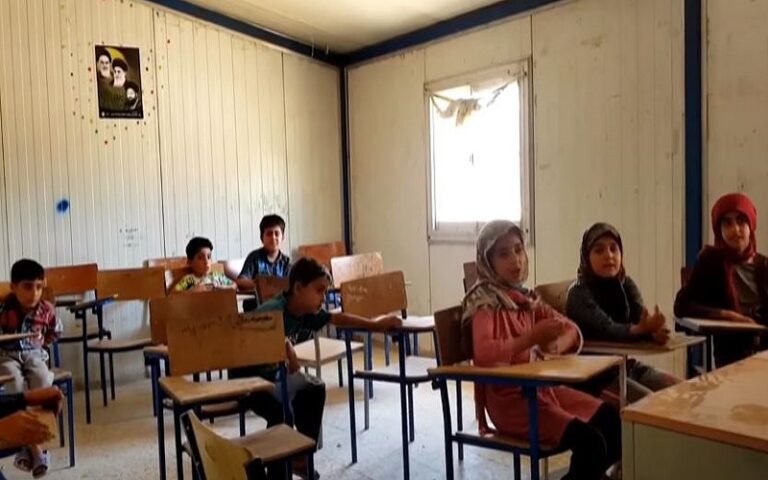
This number of dilapidated schools in the country comes at a time when on August 13, the head of the Organization for the Renovation, Development, and Equipping of Schools announced the existence of 1,073 temporary schools (consisting of prefabricated structures) in the country based on initial identification.

The situation of schools referred to as “dilapidated” is particularly severe in small and remote cities. In this regard, the semiofficial ILNA news agency reported on September  23   that students in the “Loudab” region in the Kohgiluyeh and Boyer-Ahmad province started the new academic year in schools lacking “desks and chairs, water pipelines, heating systems, and safety.”

According to ILNA’s report, quoting Kourosh Biniaz, the governor of Loudab, 35 schools in this region lack sanitary facilities and water pipelines, and in 45 schools, there are “no heating and safety equipment” at all. He stated that there are also 10 “temporary” schools in this province, and out of a total of 145 schools, only two schools are equipped with computer equipment and printers.

In response to the shortage of teachers in the country and the situation of more than 400,000 students being left without teachers, the Minister of Education announced the finalization of the decision on “discovering teaching talents” in the Supreme Council of the Cultural Revolution and stated, “Students who have the temperament and qualities of a teacher will be recruited into the education system and become teachers.”

Teacher shortage in the education system has become one of the challenges due to the elimination of “student teachers” and the retirement of a significant number of teachers. Reports indicate that in some schools, parents of students have been asked to come to school and act as teachers to prevent empty classrooms.

However, on November 1, despite widespread criticism from teachers, teacher unions, and some members of the regime’s Majlis (parliament), Reza Moradi Sahrayee, the spokesperson for the Ministry of Education, claimed that there are no “teacherless classes” in Iran.

Sahrayee’s statement contradicted the report by a member of the Parliament’s Education Commission on October 31, who revealed that 68,000 teachers had left the education system in Iran at the beginning of the academic year, leaving 100,000 classrooms without teachers. Mohammad Vahidi, in an interview with the state-run website “rouydad24,” acknowledged the serious challenge of teacher shortages and mentioned that 23,000 teachers had been hired for educational services but were prohibited from entering classrooms this year.

Mohammad Taghi Falahi, the Secretary of the Tehran Teachers Guild, also mentioned the severe budget deficit in education as one of the main factors contributing to the shortage of teachers for 23,000 classrooms, equivalent to approximately 460,000 students.

Iran’s Students Face High Costs of Stationery at the Beginning of Academic Year

The teacher shortage in schools has reached a point where the Shargh Daily website addressed the problem in a report, stating that some school principals have asked parents to attend classes and help students in reviewing the previous year’s lessons.

On September 23, some reports emerged indicating that amid the teacher shortage crisis, the Ministry of Education had prevented the continuation of the “student teacher” program.

Another recent controversy in the Ministry of Education was the compulsory call to prayer and the “requirement for students to send audio recordings of their prayers at home.” In response to the criticism surrounding this issue, Reza Moradi Sahrayee stated, “When we were criticized, we realized that what we were doing was right.”

In recent years, teachers in Iran have staged widespread protests, with hundreds of cases documented. The teachers’ demands in these protests include salary increases and equalization of salaries, as well as official employment. Many of their colleagues have been imprisoned as a result of these protests.

The Iranian regime allocates a negligible budget to education and retires experienced teachers, while significantly increasing the military budget. A look at Iran’s expensive interventions in the region reveals where the education budget for Iranian children is being spent.

Iran: Retirees Protest Low Pensions, Poor Living Conditions

Retirees of the Social Security Organization and the steel industry held protest rallies on November 5 in several cities across Iran. At the same time, nurses and employees of the “Imam” hospital in Urmia continued their protests for the second consecutive day.

According to labor and retirees’ organizations, the retirees of the Social Security Organization held rallies in Kermanshah, Ahvaz, and Shush.

Some of their slogans included “We don’t tolerate oppression in our lives,”

“Death to this slavery,”

and “We haven’t seen justice, we won’t vote anymore.”

Based on the published images, retirees from the steel industry gathered in front of the retirement fund offices in Isfahan, Ghaemshahr, Shahrud, and Ahvaz.

In their Isfahan gathering, they spread an empty tablecloth and chanted slogans such as

“We haven’t seen justice, we’ve heard enough lies,”

“Promises are not enough, our table is empty,”

and “Incompetent manager, shame on you.”

Simultaneously, according to the Free Union of Iranian Workers, nurses, medical staff, and medical students at the “Imam” hospital in Urmia also gathered on Sunday for the second consecutive day, protesting the delayed paychecks, other financial demands, the method of salary calculation, and the neglect of their livelihood issues.

The worsening living conditions of retirees, workers, and other wage earners have led to the expansion of protests in Iranian cities in recent years.

On November 2, the state-run ILNA news agency reported that there is a possibility of a 20 percent increase in retirees’ pensions next year. However, retirees are protesting against this proposal as they consider it unfair, stating that a 20 percent increase does not even reach half of the poverty line.

According to ILNA, wage earners are concerned about the government’s proposal for a 20 percent increase in salaries next year, and this concern is not limited to employees and retirees under government agencies.

The news agency stated that a 20 percent increase in salaries can significantly reduce workers’ bargaining power for the 2024 wages.

Sowlat Mortazavi, the Minister of Labor, stated that wages are determined only once a year and thus rejected the possibility of wage adjustments and increases.

In the meantime, retirees from various sectors have gathered multiple times in front of the retirement fund offices in different Iranian cities, demanding that their pensions reach the poverty line and questioning why their pensions should be half the poverty line after 30 years.

Based on statistics announced by some members of the parliament in recent months, the cost of living in Tehran has been estimated to be over 300 million rials (approximately $582), and in other major cities in Iran, it ranges from 200 million to 250 million rials (approximately $388 to 485).

With a 20% increase, the monthly pension of a retiree will not even reach 110 million rials (approximately $213) next year, while the overall inflation rate has been much higher than 100 percent in the past two years.

ILNA quoted one retiree who said, “Statistics don’t matter. What I see in my life is that everything has become two or three times more expensive. Even the rent this year, landlords have increased it by more than 50 or 60 percent. What’s the fate of people like me? I have been living in the eastern part of Tehran for several years, however now I have to live in Islamshahr, southern Tehran. Even here, I can’t afford to rent a house. Where should I go in my old age? Should I pitch a tent in the park?”

Retired government employees gather every week in front of the Governorate building and other related government buildings to protest the non-implementation of the “adjustment” law, severe economic difficulties, and infringement of their rights.

Protests and strikes related to economic livelihoods by various trades and professions in Iran have been ongoing for several years, including retirees from the Social Security Organization, steel industry, telecommunications, educators, and government pensioners, who organize regular weekly protests in various cities.

US Congress Passes Bill to Increase Oil Sanctions Against Iran’s Regime

The United States House of Representatives has approved a bill to intensify oil sanctions against the Iranian regime. On November 3, the House of Representatives passed a bill with the support of members from both the Democratic and Republican parties to strengthen oil sanctions against Iran. The “Stop Harboring Iranian Petroleum (SHIP) Act,” received 342 votes in favor and 69 votes against.

Representative Mike Lawler, a Republican, and Representative Jared Moskowitz, a Democrat, stated in a statement that this bill is a crucial step in preventing Iran from continuing its financial support for terrorism throughout the Middle East.

They also welcomed the widespread support of members from both the Democratic and Republican parties in the House of Representatives for this bill. Mike Lawler and Jared Moskowitz emphasized the importance of holding the regime accountable for its support of terrorist organizations.

These two members of the US Congress stated that this bill sends a clear and strong message to parties and actors such as China, Russia, and others to not assist Iran in financing terrorism, or else they will face the consequences of such actions.

For this bill to become law, it must first be approved by the US Senate and then signed by President Joe Biden.

The approval of this bill comes at a time when, according to regime authorities, despite extensive US sanctions, Iran’s oil sales have increased in recent years. Javad Oji, the Minister of Oil of the Iranian regime, stated on March 24 that Iran has exported “at least 190 million barrels more oil than in 2020 and 83 million barrels more than in 2021,” and he said, “A new record in Iran’s oil exports will be set this year.”

He also announced on September 30 an “increase in oil exports” and said, “With the efforts of my colleagues at the Ministry of Oil, the production and export figuresof crude oil, condensates, and oil products are increasing every day.”

Kpler, a commodity intelligence company that also tracks oil tankers, reported on August 15 that Iran is exporting approximately 1.5 million barrels of crude oil daily to China this month, which will be the highest level of exports to this country in a decade.


According to the official IRNA news agency, on September 4, Iran exported “1.7 million barrels of crude oil and 152,000 barrels of condensates” daily in August. The total exports of oil and gas condensates from Iran in that month averaged 1.85 million barrels per day. This represents the highest level of Iranian oil exports in the past five years since the United States withdrew from the Joint Comprehensive Plan of Action (JCPOA).

Kpler stated that Iran is currently exporting approximately 1.5 million barrels of oil per day to China, marking the highest level of oil exports from Iran to China since 2013.

Bloomberg news agency also reported on these statistics, stating that with the increase in oil prices in global markets, the demand for discounted oil purchases from Iran, especially by independent refineries in Shandong Province, China, has risen.

Previously, Davoud Manzour, the head of regime’s Planning and Budget Organization had stated in the Majlis (Parliament) that “according to the 2023 budget bill, the government is obligated to export 1.4 million barrels of oil per day,” and that they have been able to exceed this target with the efforts of the Ministry of Oil.

However, Manzour did not disclose the exact volume of Iran’s oil exports or the names of importing countries.

In a related development, the latest statistics from the Organization of the Petroleum Exporting Countries (OPEC), released on August 10, showed an increase in Iran’s oil production by 68,000 barrels per day, reaching 2.828 million barrels per day.

Reuters had previously reported that Iran offers a discount of around $12 per barrel for its exported oil. Other reports have suggested even higher figures for Iranian oil discounts.

It is worth noting that on July 14, eight Republican senators wrote a letter to the US Secretaries of State and Treasury, calling for the full implementation of oil sanctions against the Iranian regime and the imposition of sanctions on Chinese companies buying Iranian oil.