Home Blog Page 281

Why the West Should Not Capitulate to Iran’s Nuclear Threats

Just months after the United States withdrew from the Iranian nuclear deal, formally known as the 2015 Joint Comprehensive Plan of Action (JCPOA), Iranian officials bragged that they could resume (and exceed) the prior nuclear advancements and then proceeded to do just that throughout 2019, with uranium enrichment now up to 63% which has the sole purpose of being used in nuclear weapons.

This is a blatant attempt to blackmail Western signatories into providing sanctions relief, even resorting to threatening that if sanctions aren’t lifted they will continue their nuclear advancements, with Intelligence Minister Mahmoud Alavi shrugging off any responsibility by Iran in February.

For those who were not paying attention to various Tehran’s critics who have warned of the mullahs’ nuclear ambitions for over 20 years, this should be the blaring siren that Iran will always pursue nukes if given the opportunity. The JCPOA gave Iran money to secretly continue their program with the International Atomic Energy Agency not given appropriate access to inspect sites, which allowed Tehran to violate the deal, as the head of the Atomic Energy Organization of Iran admitted to last year and European intelligence agencies have confirmed. Yet still, European policymakers defend the deal and try to convince the US to re-join it.

The Iranian Resistance wrote: “What those policymakers must understand is that that status quo includes all of the threats and accounts of deception. By simply returning to the JCPOA as written, its signatories would be signalling to the Iranian regime that it will face no consequences for its prior non-compliance. This, in turn, will give the regime tacit permission to resume the same malign behaviour that seems to be aimed at setting the stage for a nuclear breakout once the agreement expires.”

These policymakers may be sure that they can intervene to stop Tehran’s malign behaviour, but once Iran has access to their frozen assets and foreign markets, they will no doubt be able to slip through the cracks with enrichment, procurement, and development of nuclear weapons.

The Iranian Resistance wrote: “The 2015 agreement was not sufficient to stop Iran from trying to shorten its nuclear breakout period. Today, those same policymakers should be all the more convinced that unless their approach to this issue changes, Iran’s malign efforts will only continue to accelerate.”

The Iranian Resistance, which first revealed the mullahs’ nuclear program in 2002, would seek to ban nuclear weapons in the country.

Iran Hits Inflation Record of More Than 50%

The inflation rate in Iran today has been unprecedented for over the past 75 years. The record of inflation has exceeded 50 percent.

Ehsan Khandouzi, an MP, on his Twitter account said: “Recently, the 75-year-old record of inflation was broken in Iran; If this is not happening then, the Central Bank should publish the February report.”

He added: “Iran only has seen inflation over 50 percent in the years of occupation (World War I).”

Earlier, the Statistics Center of Iran, referring to inflation of about 39 percent in April 2021, had announced point inflation for the poorest decile of the country at 50.3 percent.

The Statistics Center of Iran, stating that the inflation of non-food items for the poor in April 2021 was 37.2 percent, spoke of the extraordinary increase in inflation of food items for the most vulnerable sections of society and announced:

“Food point inflation was 63.4 percent for the lowest decile and 61.3 percent for the highest income decile.”

These statistics show that inflationary pressures, especially on foodstuffs, which are the most essential commodities, are applied to the poorest and most deprived sections of society.

The statistics and figures in Iran presented by the government should be always handled with sceptic. Because the ‘engineering’ of the figures has become an industry, and for the government there is no more shame to spread lies in favor of the government. An industry, which includes all dimensions of the country’s affairs, including political, economic, social, and cultural elements, to blind the public mind and prevent the people to get the truth.

But sometimes because of the officials’ disputes on special occasions, news is revealed that represents the depth of the catastrophe.

Such facts in the regime are uncountable. On May 17, Mohammad Javad Zarif, the foreign minister, in his trip to Italy claimed that the Italians have a $30 billion investment in Iran. According to the state-run media, this is just an exaggeration.

The state-run website Tahririeh Studies Institute on May 18 on this subject wrote: “Defending the economic effects of the JCPOA agreement, Foreign Minister Mohammad Javad Zarif made a bizarre claim that is not in line with normal economic logic.

“Zarif said: ‘Italy has a large presence in Iran, and Italian companies were very interested in cooperating with Iran, so that in this field they had set a contract of about $30 billion and $5 billion in credit.’

“Why Mohammad Javad Zarif mentions these numbers with detail and mentioning the headline is an expert error and contrary to the principle of transparency, but to reject this claim, it is enough to say that Italy owes $2,939 billion, which is equivalent to 134% of the country’s GDP.

“Such an indebted country does not have the capacity to invest $1,000 in Iran, and figures such as $30 billion in contracts and $5 billion in credit are wrong and indicative that Zarif is also unaware of the axioms of the international economy. Perhaps therefore Iranian embassies have no economic function and cost hundreds of millions of dollars a year, they only do simple consular office work.

“Iran has dozens of embassies in Europe, which does not have even $1 billion in economic ties with Iran, at staggering foreign exchange costs, but no active embassies in neighboring countries that import tens of billions of dollars from Iran.”

Finally mocking this claim, this website added: “The bottom line is that after the JCPOA was signed, there was ample opportunity for the Italians to invest $1 million from this $30 billion in investment and $5 billion in credit to make it possible for experts to believe the rest of the promises.” (State-run website Tahririeh Studies Institute, May 18, 2021)

What Is the Message of Ongoing Protests in Iran

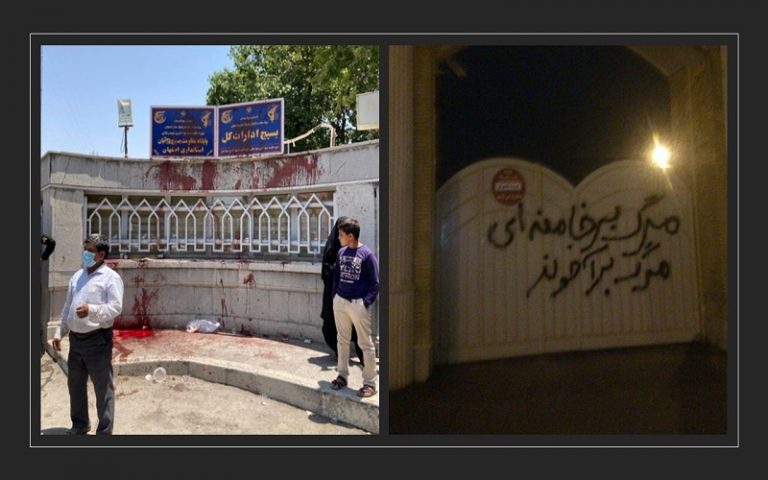
On Sunday, dozens of Iranian cities saw mass protests by retirees, who are demanding that their pensions be increased in line with inflation, and literacy movement teachers, who are angry about their terrible living conditions; all of which is all down to the corruption of the mullahs.

During the demonstrations, held in Arak, Ahvaz, Ardebil, Borujerd, Isfahan, Ilam, Kermanshah, Karaj, Kerman, Khorramabad, Lahijan, Mashhad, Shiraz, Tehran, and Tabriz, protesters called on the public to boycott the presidential elections.

Despite the presence of the State Security Force (SSF) and Plainclothes agents, who tried desperately to break up the gatherings, the protesters gathered and chanted:

  • “We will not vote anymore; we have heard too many lies”
  • “We will not rest until we get our rights”
  • “We will not leave until we reach our demands”

As the regime becomes more engulfed with crises, both at home and abroad, protests in Iran are growing in size and scale. At the same time, Supreme Leader Ali Khamenei says that Iran will soon hold its “most sensitive elections”, which is why he called for unity amongst the mullahs, but in spite of this, factional infighting has increased.

This has led to a critical state where officials and the state-run media warn constantly that another major protest is imminent because of all the issues that the people are facing, but still, the mullahs do nothing to fix the problem, so people might explode at any minute.

What are some of these issues? Well the Ebtekar daily laid it out on Sunday as:

  • lack of transparency
  • belligerence
  • weak foreign policy
  • inflation
  • negative economic outlook
  • currency repression
  • mistrust by the people
  • regional adventurism
  • no central bank independence

The Mardom Salarie daily wrote that “people’s livelihood is turning to a major economic and social catastrophe”, while the Jahan-e Sanat said that the “Iranian people’s economic misery is a very deep well, and [the presidential] candidates are only digging it deeper”.

One of Iran’s apologists Sadegh Ziba Kalam said: “Why are people disappointed? Why are the youth frustrated? Why is there unemployment? Why is there economic insecurity? Candidates act as they were not chief executives, mayors, governors, judiciary chief or not the parliament’s speaker.”

As the rulling theocracy faces more protest from all around, even from communities that traditionally supported them, they will continue to use violence to stop these protests and maintain a semblance of control because if they practised caution, it would still lead to more protests. Simply, protests will continue and an major protests will come, no matter what the government does.

Raisi’s Presenditial Run: An Explainer

Iranian Judiciary Chief Ebrahim Raisi has announced his candidacy for the presidential election in June to much controversy.

In a statement carried by local media, he said: “I have come as an independent to the stage to make changes in the executive management of the country and to fight poverty, corruption, humiliation and discrimination.”

So, who is Raisi and why is him running for President so controversial?

Raisi was appointed to his post in 2019 by Supreme Leader Ali Khamenei, quickly becoming one of the most powerful people in the country and a leading succeeder for Khamenei. Raisi already ran for president in 2017, after Khamenei threw his weight behind him, but ultimately incumbent Hassan Rouhani stayed in power.

But Raisi is best-known for his role in the 1988 massacre of 30,000 political prisoners when he served on the Death Commission and sentenced hundreds to their deaths. His record has not improved since.

Judiciary record

Some 620 people have been executed in Iran since Raisi became Judiciary Chief, many of those from ethnic minority groups or penalised for non-violent crimes, because how else would Iran have the greatest number of executions per capita?

Of those executed during Raisi’s tenure, at least 22 were political prisoners, including Abdol-Basset Dahani, Naser Khafajian, Ghassem Abdullah, Ali Khasraji, Hassan Dehvari, Hossein Silawi, Elias Qalandarzehi, Abdolhamid Mir-Baluchzehi, Hedayat Abdollahpour, Hamid Rastbala, Abdullah Karmollah Chab, Navid Afkari, Mostafa Salimi, Javid Dehghan, Mostafa Salehi, Ruhollah Zam, Omid Mahmoudzehi, Kabir Sa’adat Jahani, Diako Rasoulzadeh, Mohammad Ali Arayesh, and Saber Sheikh Abdollah.

Many of those executed, as well as those that continue to be held in prison, have been subjected to torture, including physical assaults, food and water deprivation, sexual humiliation, denial of medical care, prolonged interrogation, solitary confinement, painful stress positions, and verbal abuse, to obtain false confessions.

Even those who escape execution can experience degrading punishments banned by international law, like flogging and amputation, including several protesters. They are also suffering from horrific prison conditions that violate their human rights because of not just the tortures listed above, but also because of a lack of sanitary conditions during a pandemic and the refusal to separate political prisoners from violent ones.

Iran Human Rights Monitor in this regard wrote: “After the appointment of the murderer Judge Ebrahim Raisi as the head of the Judiciary, dozens of peaceful rights activists and dissidents were sentenced to harsh prison sentences and even execution for peacefully using their right to freedom of expression.”

How Iran’s Economy Was Destroyed by the Mullahs

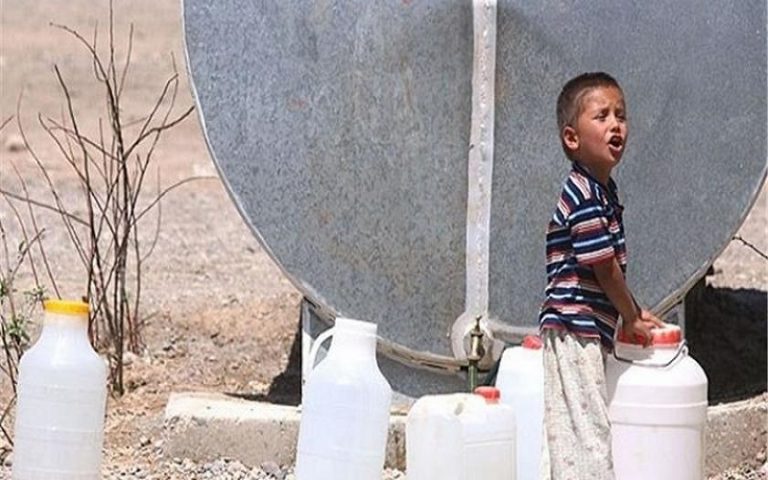
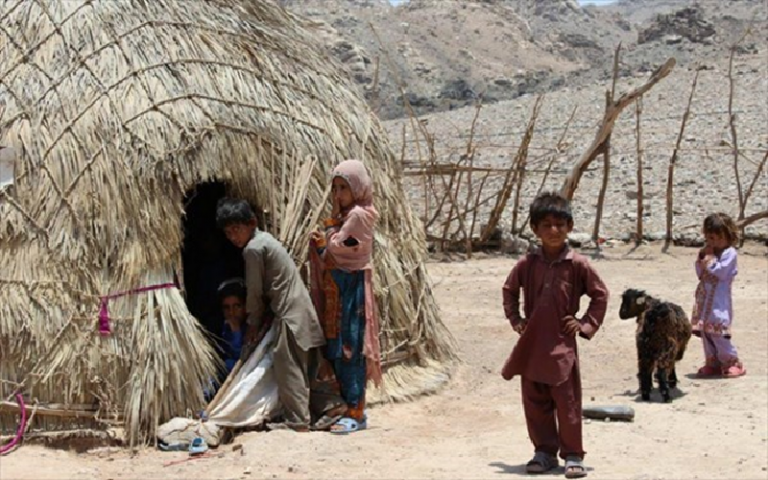
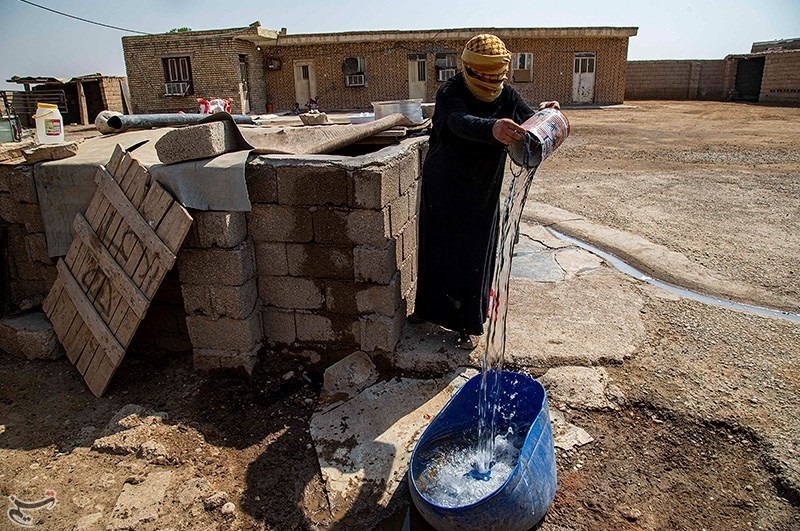
The Iranian government has, through warmongering, terrorism, and institutionalized corruption, destroyed the country’s economy, leaving 80% of Iranians in poverty.

The mullahs falsely claim that sanctions are the issue, but recently economists linked to the officials and the state-run media have publically rejected this.

An Iranian economist Farshad Momeni said Friday: “Improper and ill-considered decision-making methods have faced the country with a lot of corruption and inefficiencies. It is safe to say those wrong policies that create inflation since they are anti-production and based on injustice are roots of all small and big problems of Iran’s economy.”

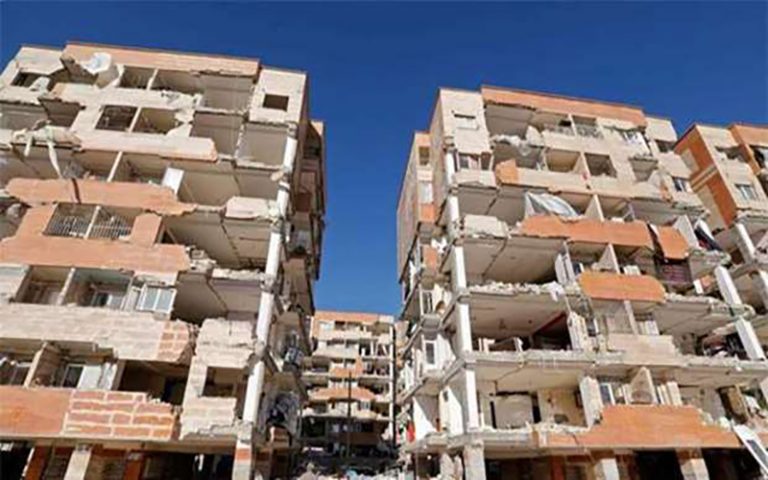
These policies, including the “exchange rate control plan” and “housing constructions”, have lost hundreds of billions of dollars since 1990. Momeni estimates a total of $730 billion have been lost from these two policies alone.

Meanwhile, the state-run media has been focusing on the problems that the economic collapse have caused to the working class, which is much worse than the general population.

Alireza Heidari, Vice President of the Union of Veterans of the Working Society, said Saturday: “Security has been taken away from the working class in various areas. Workers are now concerned about how they can live and earn a living under the current conditions, given the rampant inflation and declining purchasing power. Livelihoods are a major concern that has plagued the working-class community over the past few years, both those employed and retired. They have a pessimistic view of their future living conditions.”

He was talking to the ILNA news agency, which further reported that the government’s “parametric reform” plan for calculating pensions is just a way to reduce the pensions and benefits. Indeed, this is what retirees from all over the country have been protesting every week since January, calling for their pension to rise with inflation so that they can actually afford to live.

The state-run Eghtesad-e Pouya explained at the beginning of the month that the increase in the cost of housing, meat, and oil promises that the workers will have an emptier table in the coming year than ever before, especially because of those who have lost their job amid the Covid-19 outbreak that disproportionately affects low-income people.

One of the MP’s Malek Shariati attacking Rouhani’s government on May 18 said: “The creators of the current situation, especially in the country’s economy, can in no way claim to reform and solve the country’s problems.”

Referring to the registration of members of the Rouhani government for the presidential election, he added: “Most of these people do not have an acceptable record and it is strange that in their speeches they say ‘they are looking to improve the current situation and solve the problems of the country.’”

Finally he added: “Inflation crossed the 50 percent mark and broke the country’s 75-year record, indicating the weakness of the government’s economic team.” (State-run news agency Mehr, May 18, 2021)

Another MP, Behzad Rahimi attacked Rouhani because of the dire economic situation and said: “Mr. President, the people have been crushed under the wheel of your recklessness in the political, social and especially economic spheres, but you are thinking about the color of your beard. Mr. Rouhani, you did not have mercy on the unemployed and frustrated youth who came and joined to your stock market with thousands of hopes and aspirations and with your Excellency’s propaganda, and you are mocking these young people by robbing them of thousands of billions of Tomans of capital.” (ICANA, May 16, 2021)

The Iranian Resistance wrote: “The aforementioned facts show why Iranians from all walks of life chant in their protests, ‘our enemy is right here; they lie it is the US’. The regime’s destructive actions have turned the society into a powder keg, prompting state-run media to warn officials of an uprising.”

Unemployment in Iran a Problem With Political and Social Dimensions

The most important problem of the next decade in Iran is the problem of unemployment, a problem that can even have political and social dimensions, according to Iran experts.

In the summer of 2017, when the twelfth government took office, President Hassan Rouhani announced that his government’s top priority would be to solve the unemployment problem in the country and promised to create 900,000 jobs annually.

The major anti-government protests of January 2018 and November 2019 and the incident of the coronavirus pandemic changed the priorities of Iran’s government in preventing any protests and the rise of the people.

For nearly a decade, Iran’s economic growth has been close to zero, which means that according to the logic of economics, the creating of new job opportunities and eliminating previous job opportunities should be close to zero. However, the problems seem to be so great in Iran, that no one can address the unemployment crisis.

The population of Iran in 2011 was reported to be about 75 million and now, in 2021, it is estimated at about 84 million. About nine million people have been added to the population of Iran during this decade, but apparently there is no prosperity in the Iranian labor market, and this means that if four years ago the employment crisis was just a light wind and its alarm siren a little whistle, now this light wind has become a storm and its alarming siren has becoming a deafening sound.

The official unemployment rate in Iran is not accurate. The latest data of the ‘Labor Force Survey Plan’ in 2018, provides a more accurate picture of this issue. According to the Statistics Center of Iran, that year about 23.8 million people were employed throughout Iran, of which about 13 million (equivalent to 5%) were employed at least 44 hours a week.

On the other hand, of the total population of employees in 2018, about 9.7 million people (equivalent to about 40.8%) worked less than 44 hours per week, which in fact, in general, indicates ‘underemployment’. Simply put, nearly 41% of all Iranians who were employed in 2018 did not have a full-time job (in the sense of a full-time job).

However, data from the Statistics Center of Iran, last updated in April 2021, show that the unemployment rate in Iran has declined in recent years. This may seem strange at first glance, because we all know that the general state of Iran’s economy has steadily deteriorated in recent years.

However, economic logic supports this data, because by reducing the actual (or nominal) wages of workers, it becomes easier and cheaper for the employer to employ labor. Accordingly, the unemployment rate (according to the definition of the Statistics Center, the ratio of unemployed population to active population (employed and unemployed), multiplied by 100) in the winter of 2020 across the country, was equal to 9.7 percent.

Unemployment rates in Iran have been declining in recent years, but these statistics are naturally based on self-reported individuals.

This rate was equal to 10.6 percent in the winter of 2019 and 12.5 percent in the winter of 2016. Thus, in the last five years, the unemployment rate has decreased, because the wages of the employees in practice (for example, in terms of their dollar wages) have been lower than before and it has become easier for the employer to pay. For this reason, the employer prefers to hire a larger labor force.

Iran’s Inefficient Government

After World War II many countries around the world started development and growth of their economic power, but Iran has fallen behind many other countries.

International institutions such as the World Bank addressed this issue in the early 1990s and finally made it clear that ‘governance’ is a key issue in the development strategy of countries with poor performance.

They then indexed this new category in the development economics literature, which ‘includes six components: corruption control, government effectiveness, political stability, quality of laws and regulations, rule of law, the right to comment and be accountable, which is considered as a model for development and ‘good governance.’

But the Iranian government does not abide by any of these indexes. Even while government experts analyzed these indexes about Iran, they were scared about the results.

“An examination of the data and statistics of various institutions shows that Iran is not in a good position in terms of governance. This is evident in all the indicators that are built around the category of governance. Iran’s best ranking in 2018 is related to ‘government effectiveness’, in which it is ranked 131st among 209 countries.

“But in other indicators, it is among the last 50 countries among more than 200 countries. The position of the country among the countries of the region (25 countries) is not very suitable, so that in all indicators except the government effectiveness index, it is considered as one of the last 10 countries.

“In addition to the World Bank, Iran is not in a favorable position in the eyes of other international institutions that have described good governance.” (Iran’s Economic Affairs Research Institute / Ministry of Economy, May 2020)

In the above findings, the Minister of Communications, in his final days in office confirmed that ‘good governance’ in Iran is only tantamount to the ‘survival’ of the people and said: “Like it or not, every day one of the thousands of faces of the pain of poverty and deprivation parades before our eyes. The pain of ‘survival’ that can neither be ignored nor reacted to.” (State-run Khabar Online, May 11, 2021)

In the index, Iran was ranked 131st in terms of ‘government effectiveness’ which is considered good for the regime’s officials.

But what are their opinions about the inflation which is tied with the people’s livelihood baskets?

“The most important challenge we have in the country’s economy is the challenge of inflation. This chronic inflation, which has plagued us for more than four decades, reflects the inefficiencies and structural problems that exist in our economy.

“The result of all these inefficiencies in the economy will be an increase in inflation, because eventually the government will have to solve these problems indirectly, without the people realizing it, by creating money.

“That is, the banking system has covered these imbalances by creating money. But the banking system itself has suffered a greater imbalance that has used central bank resources.” (State-run daily Tejarat, May 12, 2021)

One of the members of the Expediency Council about the suffering of the country’s economy and the inefficiency of the government said: “There is no doubt that Iran’s economy is in turmoil. Management is the main challenge of the country’s economy and we have been plagued by mismanagement in all the past years.” (Tejarat, May 12, 2021)

About the high costs and its pressure on the people, he added: “The prices have become so terrible that the sections of the society, especially the minimum wage earners, are shouting what can I do, and the increase in salaries and wages cannot meet these costs, which result in empty tables and the shame of the breadwinner of the family.” (Tejarat, May 12, 2021)

And again, about the government’s inefficiency and irresponsibility, he added: “The fat and lazy government manages the affairs of the country. The presence of about 3.5 million government employees shows how much we rely on government desks and chairs to create jobs.

“This approach causes a lot of costs in the form of salaries and wages to be imposed on the country’s economy, in such a way that a large part of government revenue is spent on government salaries and benefits.” (Tejarat, May 12, 2021)

Iran’s State Media: Which JCPOA Is To Be Revived in the Vienna Talks?

In Iran, the two political currents, if we could call them so, are fighting with each other about the fate of Iran’s 2015 nuclear deal with global powers, known formally by the acronym JCPOA.

The so-called reformist faction, which is now represented by the regime’s president Hassan Rouhani, is struggling to revive the JCPOA. And its rival faction the so-called principlists, which is represented by the regime’s supreme leader Ali Khamenei, is trying to sabotage the reformists’ efforts in the negotiations with the world powers.

Despite all these shows, the regime’s main wish which is under the authority of the supreme leader is to revive the JCPOA, Iran analysts say. The rest of the story seems to be more like a political theatre and is used by Khamenei’s loyalist to revive the spirits of the Basijis, the regime’s forces, and its mercenaries in the region.

The Mehr news agency in an article attacking the government and its efforts to revive the JCPOA on May 14 wrote:

“As Iran’s presidential election approaches, some are seeking an agreement with the West to revive the JCPOA. But there are serious questions that need to be answered. Because the evidence shows that the red lines announced by the leadership in these negotiations have been violated again, and it seems that another pure damage is on the way.”

The article confessing about the failure of the JCPOA and its damages to the regime wrote: “Today, it is clear to any fair observer that the JCPOA was nothing but a loss to Iran. But why did the JCPOA fail to meet expectations as claimed by the JCPOA? The main problems of the JCPOA can be summarized in the following cases:

  1. Lack of necessary guarantees to fulfill the obligations of the Western parties

Contrary to the claims of the Iranian negotiating team, the JCPOA lacked a serious legal mechanism to compel the Western parties to fulfill their obligations. The US presence in this agreement was based on an executive order from the President of this country, which with the change of government in the US, Trump simply violated it and left it! In addition to the United States, European countries have not actually complied with their obligations.

  1. Lack of proper and fair mechanism for resolving disputes

The dispute resolution mechanism in the JCPOA (trigger mechanism) was designed in such a way that practically any protest that Iran made in violation of the Western Covenant could lead to the return of UN Security Council resolutions against Iran! This was one of the main reasons for the government’s appeasement of the violation of numerous Western treaties.

  1. Suspension of sanctions instead of lifting them

Although after the signing of the JCPOA, the President of our country officially announced that all sanctions have been ‘lifted’ and not ‘suspended’, the reality was that these sanctions were suspended for 120 days by the executive order of the US President and its re-suspension required a new order. Thus, despite the suspension of some sanctions because the shadow of sanctions has always been on the Iranian economy, the risk of cooperation with Iran for foreign parties did not decrease and the effect of sanctions remained in place.

  1. Maintaining the structure of sanctions

But the bottom line is that although the Iranian government claimed that the US sanction’s structure was broken, the reality was that the sanctions’ structure was completely safe, and the return of sanctions depended on a signature or even no signature. Therefore, the sanctions had no practical result for Iran and were only suspended on paper.

Interestingly, all the JCPOA’s weaknesses are those that have been repeatedly pointed out as the red lines of negotiations by the system’s leadership, but the Iranian negotiating team acted hastily and inflicted this great damage on the country.”

The article frustrated and fearing the result of the JCPOA’s negotiations asked, “Which JCPOA is to be revived in the Vienna talks?!”

It added: “Now the question is which JCPOA is going to be revived? Is it the same JCPOA in which there is no guarantee that the Western parties will comply in practice with their obligations? Will it be the same JCPOA in which the structure of US sanctions is maintained, and the suspension of sanctions (not their lifting) be conditional on the signature of the US President for 120-day periods?! It is natural that returning to such an agreement will be a repetition of the same sheer damage that the current situation of the country is the result of the same agreement.”


The conclusion of these short summary by the state-run Mehr news agency is very simple. Despite all the factional dispute shows and the regime’s claim about an opening and progress of the negotiations and the lifting of the sanctions, this time the regime is not the winner of the JCPOA negotiations and must pay double the price to satisfy the world powers, which are demanding even more and are adding the regime’s regional meddling, its missile program and its human rights case into the new agreement, which according to the regime’s media is known as JCPOA+ with more damages to the regime.

Iran’s Nurses Struggling To Cope With COVID-19 and Make a Living Forced To Migrate

The phenomenon of migration of Iranian nurses to other countries already existed, but with the outbreak of the coronavirus pandemic, the gap between the employment status and welfare of nurses in Iran and abroad deepened and the rate of migration of nurses abroad increased.

Since the start of the coronavirus crisis last year, nurses have shown that they are at the forefront of public health in the fight against this great pandemic – a fight which would not have been possible without the presence of nurses.

During this period, nurses showed many sacrifices in different countries of the world, including Iran, and as health heroes, they were able to establish their position in defending the health of society and show their important role in combating diseases; however, unfortunately, some of them lost their lives in this way.

With the outbreak of the coronavirus pandemic, various countries, including in the West and the Middle East, were in dire need of nurses and provided many facilities for nurses.

This was one of the main reasons of the migration of Iran’s nurses to other countries. There is a huge difference of quality in facilities and advantages between Iran with those countries.

Although there are no exact statistics on this, it is said that about a thousand nurses emigrate from Iran every year with the motivation of finding better job opportunities and more welfare.

Nurses have been educated for many years and have gained valuable experience and losing them causes serious damage to the health system, which is very difficult to compensate. Iran trains about 10,000 nurses annually, and due to the retirement of many nurses and the growing need of the health system for nurses, the crisis of shortage of nurses is intensifying day by day, and this shortage has a great impact on the quality of nursing services.

Lack of nursing staff on the one hand and the occupation of most hospital beds by the COVID-19 patients on the other hand has caused physical and mental exhaustion of nurses.

Iran’s officials of the Program and Budget Organization and the President made several promises to pay special attention to nurses and solve their problems, and even the regime’s Supreme Leader emphasized on addressing the accumulated demands of nurses, but in practice there was no concrete action in this regard.

The Coronavirus bonus which was promised to the nurses alongside their regular wages was just for the government’s propaganda and was very little and it can even be said that the amounts paid were an insult to the nurses. Reducing working hours was another promise that was made, but not kept, to many of the nurses who worked in hospitals dealing with Covid patients, which caused great dissatisfaction.

A recruitment test was to be held and a significant number of nurses were to be recruited, but the fate of this recruitment test is still unknown and has stopped in Iran’s corrupted bureaucracy cycle.

The country’s medical universities employ many 89-day contract nurses, and it was recently said that they are employed on a one-year basis, but the government has a free hand to expel them anytime it wants.

And so far, the law on nursing tariffs, which was promised many times, is still being passed between the parliament and the government and has not been implemented.

More than 50,000 nurses have become infected with the coronavirus. So, the priority should vaccinate nurses, i.e., those who are at the forefront of providing health services to patients.

While it has been a long time since vaccination began, the government’s negligence and mismanagement in this area has meant that many nurses have not yet received the coronavirus vaccine.

Iran’s Corruption Crisis

There is no doubt that Iran suffers greatly from institutionalized financial corruption, as evidenced by the fact that Transparency International’s corruption perceptions index ranks Iran

149 out of 180 countries, but still officials can shock Iranians and the world at large with the related information.

Former minister Mohammad Gharazi said last weekend that Tehran has had “$4 trillion in revenue” since 1979, but that 2-3 trillion was “destroyed by rent-seeking activities”. Just days before that, attorney general Ali Alghazi Mehr advised that a criminal case was being filed against the former president of the Central Bank Valiollah Seif for his role in a major embezzlement case involving $30.2 billion and 60 tons of gold.

Alghazi Mehr said: “Between 2016 and 2018, not only the country’s currency laws were breached, but also the legal responsibilities pertaining to the intervention of the Money and Credit Council on issues related to currency and the sale of gold coins to prevent the formation of brokerage markets were not respected.”

Last month, judiciary spokesperson Gholamhossein Esmaili said that over 200 judiciary staff members were arrested on corruption charges, with the former executive deputy of the judiciary chief Akbar Tabari held on charges relating to billions of dollars of embezzled money.

Regarding the two others charged alongside him, Tabari said during his trial: “I and [Hassan] Najafi and [Farhad] Mashayekh are like three brothers. If I need 8 trillion rials, these brothers will provide. If I want the Lavasan factory, they will register it under my name! This is friendship. If you don’t have these kinds of friends, you have nothing to say to me. If they want the same from me, I will do it for them.”

Here are some other known corruption cases in Iran that prove just how widespread the issue is:

  • 180 trillion rials: Babak Zanjani, state-affiliated businessman
  • 80 trillion rials: Bonyad-e Shahid foundation
  • 5 trillion rials: Saeid Mortazavi, former attorney general
  • 30 trillion rials: former labour ministry
  • 23 trillion rials: Mohsen Rafighdoost, former Revolutionary Guards commander

The Iranian opposition, People’s Mojahedin Organization of Iran, in this regard wrote: “The flipside of this mega-corruption is the tragic situation of the Iranian people, who have to find shelter in graves, food in [the] garbage, and sell their body organs to earn their keep. With the revelation of every one of these cases, the people become even more outraged and determined to overthrow this regime and bring decency back to their country.”

The consequneces of these unbridled corruption can be see in the dire condition of the people’s lives.

The Friday Prayer’s leader Razavi Ardakani of Shiraz about the people’s situation, while expressing his fear about protests said:

“They said, No, the people will not come (to vote), so, what is happening that they will not come? The pressures of inflation pushed many away from the revolution, these imprudences, so this is the livelihood basket of the people, and that what is important, is the lielihood basket of the people. The worker which his salary is not enough, or the one who does not get paid at all, you (the government) must be aware of the situation of the people.

“Not controlling the prices will stress the people, they may even say bad things, now in Shiraz you cannot find any chicken.” (State-TV Fars Channel, May 13, 2021)

Qasem Soleimani Dashtaki, the governor in Khuzestan admitted on Wednesday, May 12, that the unemployment rate in this province is higher than 45 to 50 percent.

He said: “Usually the announced unemployment rate is not the real unemployment rate. The unemployment rate in Khuzestan is announced at 14.5 percent, but if you look to the province, you will see that this rate is definitely higher. According to the criteria, if someone works two hours a week, it is not included in the unemployment rate statistics, but this does not make sense at all, and in many areas of Khuzestan province, the unemployment rate is higher than 45 to 50 percent.”