Home Blog Page 280

Iran Protests Over the Weekend

There were several protests by different sectors of Iranian society over the weekend, showing once more that the mullahs are widely unpopular among the people, who support regime change as the only way to improve their lot in life.

On Sunday, janitors and utility workers from the education system gathered outside the education ministry offices in Tehran, Lorestan, and Qazvin to protest salary discrimination and dire working conditions. These protests had taken place in other protests after the administrative court of justice reduced the salaries of many workers in a court ruling.

The state-run IMNA news agency reported on May 15 that these workers get 25-30 million rials per month, but the poverty line for a family of four is 100 million rials a month, so they getting less than a third of what they need to survive. Additionally, they are not given money for their uniform or bonuses, which further impoverishes them.

This is further backed up by the Tasnim outlet in February, which reported that over 16,000 utility workers are employed on less than 28-million-rials per month with no bonuses for overtime.

Also on Sunday, contract teachers from non-profit schools, who have advanced degrees and several years’ work experience, protested outside the parliament to demand that officials address their demands, including full payment of their insurance and benefits, as well as wages on par official teachers.

One teacher said: “Our salaries are sometimes even lower than those of workers. We’re not even given the respect of a simple worker. Majlis members must think about the work conditions of thousands of contract teachers and force the education ministry to employ these teachers.”

At the same time, contract teachers in Sistan and Baluchestan province demanded job security, higher wages, and improved conditions.

On Saturday, medical workers from Tehran hospitals and emergency centres, who are members of the Health System Cooperative Company, protested outside the local judiciary offices because the judiciary is refusing to process the corruption file against a construction project controlled by a businessman associated with the government and has returned the investments made eight years ago.

On the same day, municipality workers in Chabahar protested outside the municipality headquarters over wages that have not been paid in three months.

Meanwhile, water and sewage company workers in Izeh held a rally to protest the salaries that have now been delayed for 10 months.

These protests show that the rulling theocracy is increasingly unpopular.

Update:

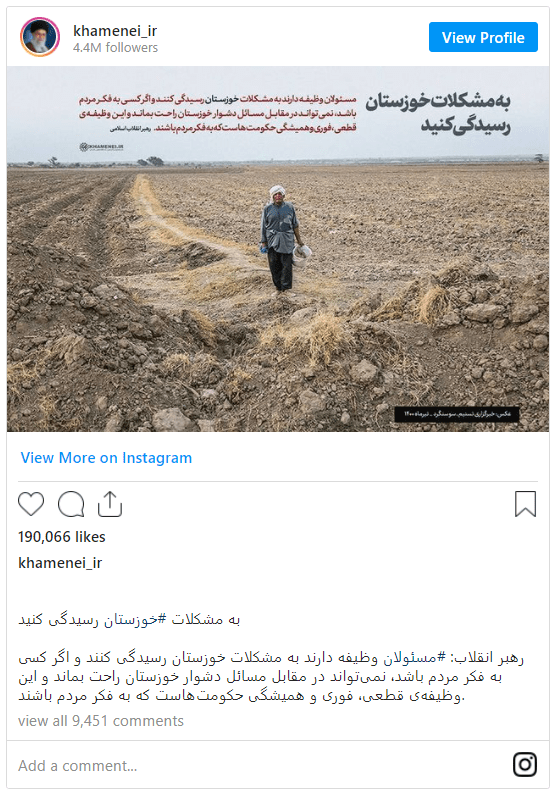
Residents of Barangerd Baghmelk village in Khuzestan province closed the Ahvaz-Izeh road (main route to Isfahan province) on Tuesday, May 25, to protest the lack of drinking water They say that even the bakeries in this city cannot bake due to a 5-day water cut, and the residents not able to buy any water tanker which costs more than 100,000 Tomans.

On Tuesday, May 25, a number of the Ziar city farmers in eastern Isfahan rallied to protest water shortages, especially for agriculture. These farmers, clashed with the police who fired tear gas and plastic bullets at them.

On May 26, official oil workers in Tehran, Khark Island, Gachsaran, Abadan, Assaluyeh, Ahvaz, Bahregan, Mahshahr, etc. staged protest rallies. The rally follows a pre-announced call by official oil workers. These employees are protesting against how the government is increasing the salaries in 2021, which according to the is unjust.

Iran: Khamenei-Controlled Council All but Appoints Ebrahim Raisi as President

Following the Guardian Council’s decision, only seven candidates among 529 individuals were allowed to run for Iran’s Presidential election scheduled for June 18. The council practically paved the path for Iran’s current Judiciary Chief Ebrahim Raisi—who has yet to resign from his position—to take office.

The Guardian Council, which is consisted of six faqihs, or expert clerics, appointed by the Supreme Leader Ali Khamenei and six jurists appointed by the Judiciary Chief, himself appointed by the Supreme Leader, barred potential rivals for Raisi’s presidency. Ali Larijani, the former Parliament Speaker; Mahmoud Ahmadinejad, the former President; and Eshaq Jahangiri, the current Vice-President, were among the disqualified candidates.

Raisi urged the council to reconsider the situation of several candidates, fearing public apathy toward the election. “I have made contacts, and I am holding consultations to make the election scene more competitive and participatory,” he sarcastically wrote on the banned Twitter platform while the Judiciary he leads has appointed six members of the 12-member council.

This election is taking place while the gap between the state and society has unprecedentedly widened and deepened. Fifty percent inflation, high prices of essential goods, systematic corruption, and the government’s failure to address the most fundamental grievances of citizens have caused an imminence distrust and even hatred toward the entire ruling system.

Due to his record, Raisi is considered as Khamenei’s favorite candidate for the election. As the deputy prosecutor of Tehran in 1988, he was a leading implementor of the extrajudicial executions that summer based on the Islamic Republic founder Ruhollah Khomeini’s fatwa.

According to the opposition Mojahedin-e Khalq (MEK/PMOI), the government mass executed at least 30,000 political prisoners in 1988, mostly affiliated with the MEK. “Whoever at any stage continues to belong to the MEK must be executed. Annihilate the enemies of Islam immediately,” read Khomeini’s fatwa.

In an open letter published on May 3, some 152 former United Nations officials, human rights experts, and jurists urged UN High Commissioner for Human Rights Michelle Bachelet to establish a commission of inquiry into Iran’s 1988 extrajudicial executions of thousands of political prisoners.

Previously, on September 3, 2020, seven UN special rapporteurs had announced that the 1988 extrajudicial executions and forced disappearances of thousands of political prisoners may amount to crimes against humanity.

Furthermore, in a backlash to Khamenei’s desire to appoint Raisi as President, Iranian dissidents intensified their activities inside Iran and abroad, revealing Raisi’s crimes against MEK members and supporters in 1988 and his harrowing human rights record as the judiciary chief.

However, in flagrant defiance of international and domestic appeals, the Khamenei-controlled Guardian Council qualified ‘lucky Raisi’ and ‘six hopeful losers’ to run for the Presidential competition. With such action, the supreme leader obviously announced his unilateral path for maximum isolation.

Khamenei practically put an end to the Vienna-based nuclear negotiations despite appeaser counterparties’ willingness to offer sanctions relief to Tehran at all costs. In such circumstances, not only does reviving the 2015 Iran nuclear deal not loom but signing any accord is unlikely.

Meanwhile, the supreme leader as the highest authority was forced to ignore the game of reformists versus hardliners. For years, Iranian ‘reformists’ were terrifying the United States and European governments about a ‘hardline administration’ to gain international privileges. Currently, Khamenei fears the popular slogan during anti-establishment protests, chanted, “Reformists, hardliners, the game is over.”

Indeed, Khamenei’s decision made his domestic opponents concerned severely. In a letter to the supreme leader, ‘reformist’ President Hassan Rouhani urged Khamenei to order the Guardian Council to make changes in final lists declared by the council. “The president has ordered the interior minister to avoid announcing the Guardian Council’s lists,” said Mohammad Mohajeri, a journalist and politician affiliated with Khamenei’s faction.

Notably, an official opinion poll conducted by the Broadcasting Organization (IRIB) in May estimates turnout in the vote would be as low as 30 percent, significantly lower than any election held in the past 40 years.

Recently, in a street interview with the state-run Ara TV Channel on May 20, citizens had announced a boycott of the election. “I would not vote alike,” “I don’t vote,” “Why should I vote,” and “Nothing will change with my vote,” said ordinary citizens during the interview.

It is worth noting that the interview had been conducted and aired several days before the Guardian Council’s declaration about candidates. At the time, ‘reformists’ thought that their candidates would drag people to the polls meaning the society had already rejected the current establishment with its entire divisions.

Regarding Khamenei’s recent decision to purge all rivals, the possible turnout would be far lower than any prior estimation. However, the supreme leader seemingly prefers to clarify all opponents and applies his absolute power to countering growing protests inside the country and international isolation abroad.

Iran Economic Crisis Increases Election Boycott

The state-run media in Iran admitted on Saturday that the country is in an economic crisis and that the Iranian people hate the regime for this, which is why the Iranian people are taking part in a nationwide boycott of the elections.

The Ebtekar daily explained in an article on inflation that the price of basic food items has increased by 1.7 million tomans in just a few days.

It wrote: “Today, we can no longer see the effects of wage increases, the same wages that [officials]claimed should not be increased. Now even this small increase has disappeared. In one sentence, this situation could be described: ‘The livelihood security of wage earners is in serious danger.”

While the Aftab-e Yazd daily warned the authorities that the consequences of this crisis could really be the end of the current ruling theocracy, saying that the government has failed to “increase social tolerance” and the officials’ shortcomings, not least the skyrocketing prices of goods, has led to widespread protests.

It wrote: “Pay attention to the list of skyrocketing prices. The prices of various goods, both domestic and foreign, are rising each second, and no one is responsible… Put yourself in the position of a worker or retiree who has a statistic salary. Are these people motivated to have political participation? Even if a candidate gathers one hundred thousand people in a Clubhouse interview, how on earth would that help those whose earnings do not cover one portion of meat per month?”

The Donya-e Eghtesad spoke about the elections, saying that it doesn’t matter who becomes the next president because these economic crises are not solvable under the current ruling theocracy. They suggested that whoever the president is will only maintain the status quo and that this will cause more challenges, including inflation of 50% and zero growth.

The same day, the Javan daily wrote: “Over the past three decades, and especially the last eight years, the people’s faith, hope, beliefs, and trust in the system have been damaged. Thus, the political participation of the people has decreased. People are well aware of the fact that those behind the current situation can demand changes or change the situation in favour of the people.”

The Hamdeli daily advised that the system is lacking “popular legitimacy” and cannot form a “social movement” because it is unable to pull the wool over the eyes of the people with fake notions of reform and it cannot handle the current “political polarization”.

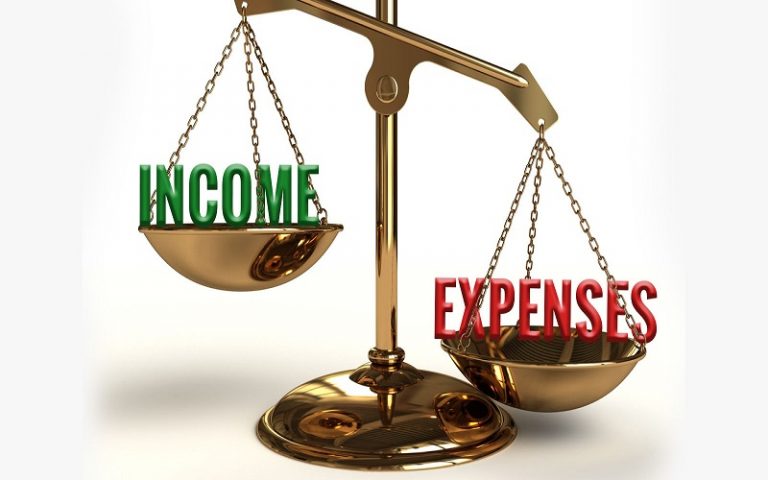
Another aspect of this economic crisis are the high prices of the people’s basic goods.

The state-run news agency ISNA on May 23 on this issue reported about a 70 percent of increase in the prices of six groups of food items. The report then added, that since the beginning of 2021, the increase of inflation in three indicators: monthly, annually and point-to-point has been triggered, while the point-to-point inflation, which indicates the increase in household spending compared to the same period last year, has reached 50 percent.

Oil prices have risen by 30 percent. The unbridled price of the basket of goods of Iranian households in other items is also on the rise. Other items which include these groups: ‘tea, coffee, cocoa, soft drinks and juices’ with an increase of 78.4 percent, ‘milk, cheese and eggs’ with an increase of 75.3 percent, ‘fish and shellfish’ with an increase of 73.1 percent, ‘red meat and poultry’ with an increase of 72.9 percent and finally the group ‘red, white meat and its products’ also increased by 72.9 percent.

In other goods, we can mention the 69.6 percent increase in the cost of ‘sugar, jam, honey, chocolate and sweets’ group, and home appliances and furniture also increased by 67.6 percent.

In terms of the annual inflation, the highest amount belongs to the transport group with 65.1 percent, oils and fats 61.3 percent and furniture and home appliances with 53.7 percent.

Iran’s statistics center said in a report that the annual inflation rate in May 2021 had reached 41 percent, which was an increase of 2.1 percent compared to the previous month.

In its report, the Statistics Center describes the record-breaking liquidity and inflation of 41 percent in the government of Rouhani as the ‘boiling point of inflation’ and wrote:

“Point inflation refers to the percentage change in the price index number compared to the same month last year. The point inflation rate in May 2021 reached 9.46 percent, meaning that the country’s households spent an average of 9.46 percent more than in May to buy a ‘set of identical goods and services.’”

The report also referred to another factor of inflation that takes place through banks, entitled ‘The creation of unruly money by banks, an important factor in causing inflation in Iran’ and wrote:

“Banks create a lot of fiat money on a daily basis, of course, and cause the country’s liquidity to increase continuously. In fact, the main reason for the significant increase in liquidity in Iran, which is a high figure compared to other countries, is the creation of fiat money. The most important loss resulting from this action of banks is the increase in inflation. In fact, it is the creation of unruly money by banks that has caused Iran’s liquidity growth to always be far ahead of economic growth and to create an inflation giant.” (State-run daily Vatan, May 23, 2021)

Iran’s Regime, Fearing Protests, Pleads for Sanctions To Be Lifted

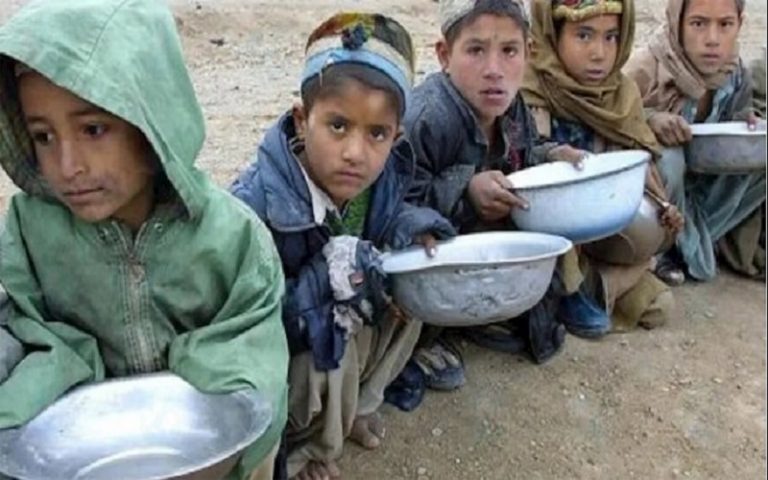
International sanctions have crippled Iran’s regime, and its financial resources and power is almost zero. The regime is no longer able to financially support its proxy groups in the Middle East, and worse it is even not able to pay government officials’ wages.

The situation is so bleak that all the regime’s lobbyists especially in the US are crying and begging the US government for the lifting of the sanctions. We will exclude the people and their situation from these facts because they are the last concern of the regime, and only thing that this regime’s is concerned on them is their fury because of poverty and starvation, resulted by the regime’s policies in wasting their wealth and the country’s national resources in wars and terrorism.

Abolfazl Zohrehvand, a regime-affiliated foreign policy expert and former Iranian ambassador to Italy, frustrated about the situation in an interview with state-run website Nama about the lifting of the sanctions said:

“The issue which is now important is the lifting of all sanctions, and the nuclear or non-nuclear issues are not considered.”

Speaking about the nature of the sanctions, he added: “What has happened so far in Vienna is related to the lifting of sanctions imposed during Mr. Trump’s presidency, and not even to the sanctions imposed during Mr. Obama’s term. The next noteworthy point is that non-nuclear sanctions will not be removed in any way, including the fact that the Revolutionary Guards remains a terrorist organization on the sanctions blacklist.”

About the regime’s freedom in financial exchanges, he added: “During the negotiations, it seems that the central bank is going to be removed from their sanctions so that it will not have any problem in transferring money, but the fact is that U-turn is still under sanctions and we still do not have access to its resources, and they not only will remove U-turn from the sanctions, but other sanctions systems will remain in place.”

He added: “It is possible for us to sell our oil and return some of its money somehow into the country or to import goods in exchange for the sale of oil, and they have mentioned this, but there is no guarantee for the sale of oil and its returning money.  Because U-turn is blocked and it is not possible for us to make financial transactions, which is one of the most important and key issues in sanctions.

“But they promise that we will be able to sell two million barrels of oil for 180 days and their money will be delivered to China, Korea and Japan, and we have to buy goods for that money, and we will easily be able to transfer the money back to the country, because all the ways of transferring money to the country are closed.” (State-run website Nama, May 23, 2021)

Speaking about two other versions of the JCPOA, which the state-run news agency IRNA describes as the Yellow-JCPOA and the Red-JCPOA, is confessing that all the sanctions will be not lifted and is just a delusion.

“However, the other two types of the JCPOA, which are yellow and red JCPOA, because they are related to terrorism and human rights issues, will not be lifted for the time being and will be transferred to a new period of negotiations.” (IRNA, May 23, 2021)

Mocking the president’s claim about the lifting of all the sanctions, it added: “That Mr. Rouhani’s is announcing that all sanctions have been lifted and the country is liberated is a reaction to the election.” (IRNA, May 23, 2021)

Speaking about the regime’s last chance, IRNA added: “The best thing is to move forward step by step. That is, in relation to the fact that we will fulfill our obligations in the JCPOA and return to our obligations in enrichment, which is 5 percent enrichment, and will put some of the centrifuges are under the supervision of the International Atomic Energy Agency, and then we will enter new negotiations on human rights, missiles, Iran’s non-interference in the region, and assistance to groups that are considered terrorists.”

These facts all show that the regime’s claims to prevent the IAEA to have access to its inspection cameras are just hollow bragging, as the regime’s parliament speaker Mohammad Bagher Qalibaf announced on May 23, and is playing with fire, which as experience has shown this will be not fulfilled by the government and will remain just a slogan.

Iran Loses 360 Square Meters of Its Nature Every Second

The destructions and losses that the mullahs’ rule in Iran has imposed on the country and the people are uncountable. One of them is the environmental destruction which is so horrible that even the regime’s officials and state media cannot close their eyes on it, because they are annihilating the future of the upcoming generations.

If this situation continues, in one hundred year there will be no country left for the people, and Iran will become a lifeless desert.

The state-run Aftab Yazd daily acknowledges and warns of the tragedy as follows: “After all, the role of politicians in this catastrophic tragedy is an indisputable fact and truth! Many politicians who are queuing up for the presidency these days need to answer these questions. What measures have been taken for optimal water management, watershed management and water damming? What do they say about solving the national problem of drought, which, if left unchecked, will be a terrible calamity for the future generations?” (Aftab-e-Yazd, May 20, 2021)

Abbas Akhoondi, Minister of Roads and Urban Development, referring to the destruction of 88,000 hectares of national lands between 1973 and 2013, which accelerated after 2003 with the appointment of Mahmoud Ahmadinejad as mayor and in 2005 with his presidency, emphasizes that this process of wasting Iran’s natural resources under the guise of making something revolutionary is continuing with the decisions of the current parliament secrecy and is being pursued and implemented.

“Pursuant to Article 9 of the Housing Production and Supply Plan, which was approved by the parliament on February 14, 2021, it was decided that the Forests, Rangelands and Watershed Management Organization must deliver the national lands located within the city limits, as well as lands approved by the Ministry of Roads and Urban Development for urban development projects outside the cities, to the Ministry of Roads and Urban Development within a maximum of two months.”

But, the destruction is not limited to this. Mohammad Reza Mahboobfar, a state-affiliated environmental expert, “points to the seriousness of the water shortage crisis in the central, eastern and southern regions of the country, where 360 ​​square meters of Iranian nature is disappearing every second.” (Javan, May 30, 2021)

Referring to the uncontrolled abstraction of industries from the country’s surface water resources, he said: “During these years, due to the lack of supervision of the responsible organizations, the life of the Iranian plateau has been endangered and has become a place for political, economic and social conflicts inside the country.

“Groundwater resources in Iran are not in a better situation than surface water resources. Excessive abstraction of groundwater reserves in recent years has led to subsidence and soil salinity, and this issue has posed a serious threat to the future of food and human security in the Iranian plateau. The rate of groundwater depletion in Iran is more than 74 billion cubic meters, and the overdrafts have been three times the compensation and replacement of groundwater in the country.”

Isa Kalantari, the head of the Environmental Protection Agency, comparing the current situation of Iran with the year 1981, said:

“In 1981, we had a total negative balance of 200 million cubic meters of water per year, but this figure has reached 20 billion cubic meters; That means it has increased 100 times.”

“Encroachment to fossil water and pumping it to the surface, use of this water for production, unscientific use of surface water, disregard for the right to environmental water, unsustainable dams and disregard for the right to nature” are just a few facts which are counted by him as the cause of this destruction.

He pointed to the regime’s violation of international laws and disrespecting them and said: “Under the 1992 Rio Agreement, ratified by the United Nations in 1997, countries have the right to use only 40 percent of their renewable water resources; We have been using more than 100 percent of our renewable water capacity for years.” (IRNA, May 18, 2021)

He, who has been the Minister of Agriculture for 12 years, emphasized that Iran’s nature has fallen victim to the country’s macro-policies and wrong decisions. He also offered a horizon for such policies and said:

“Twenty billion cubic meters of natural resources and groundwater are extracted annually, and water resources are looted. With this trend, for another 20 years (2041) there will be no trace of agriculture around the Zagros because we are looting water resources.”

About Iran’s water resources, he added: “Unfortunately, we destroyed nature. We had 500 billion cubic meters of fossil water resources, of which 300 billion cubic meters were salty and 200 billion cubic meters were sweet, and we ran out these 200 billion cubic meters. We have blocked the flow of water and we no longer have running water, the rivers of Iran are dead, except for Sefidrud and Karun rivers, which are taking their last breathes, the rest of the rivers do not reach their destination and are not alive.” (State-run daily Javan, May 20, 2021)

In the middle of this destruction, the regime energy minister also warned that this summer would be one of the driest in five decades.

“The water year 2020-2021 will be one of the worst water years in Iran. And this critical situation can have a negative impact on drinking water supply.” (IRNA, May 18, 2021)

In the last 40 years, mismanagement of water resources and dam construction and water transfer programs and inappropriate agricultural practices, along with the destruction of a significant part of Iran’s forests and natural resources, climate change, all, and countless other things, are included in the confessions of the regime’s Environment Organization chief, and finally he admitted:

“In the policies that have led to the destruction of Iran’s environment, we, the officials of the last 40 years, must be accountable to history and to the decisions that have been taken on a large scale and have destroyed the country naturally.” (IRNA, May 17, 2021)

The State of Iran’s Misery Index

In 2013, during the Presidential election campaign in Iran, Hassan Rouhani, who at the time was running for the presidency, promised to create such an economic boom that people would no longer need a 45,500 toman subsidy.

These promises gave the people a greater sense of well-being. Even after Rouhani become the president for now eight years, he repeatedly made promises of greater prosperity to the people, and even announced in September 2019 that, “as the representative of the Iranian nation, I am ready for any sacrifice, a sacrifice that leads to the realization of the rights of the people and a sacrifice that leads to the welfare of the people.”

Now, with only 100 days left of the eight-year term of the government of prudence and hope, it is better to answer the question of whether this promised welfare was achieved? And the simplest way to prove this are the economic statistics used for this purpose.

In economics, three rates are very important, and by examining these three rates, one can get an overview of the economy. These three rates are: the economic growth rate, unemployment rate and inflation rate.

The two rates of unemployment and inflation, however, are more important to people because, firstly, they feel their increase and decrease daily, and secondly, their changes can have a great impact on their lives. Therefore, given the importance of these two rates, in the early 1970s, Arthur Melvin Okun used these two economic rates to create an index called the Misery Index.

This index, as its name suggests and its calculation method, does not indicate positive and promising events in the economy. In later years, economists such as Robert Barro, Steve Hanke, and others, tried to calculate the misery index more accurately by adding other variables such as GDP, GDP per capita growth rate, interest rates, and housing inflation.

Iran's misery rate
Iran’s misery rate

Since with the increase of the misery index level, the welfare of society is directly affected, this index can be considered as one of the most important criteria for measuring the performance of governments and their survival.

The lower the numerical value of this index, the greater the welfare of the people, and this indicates the better performance of governments. Conversely, the higher the numerical value of this index, it means that the level of welfare of the people has decreased. As a result, the performance of governments in such cases will be questioned.

The chart below shows the misery index from 1997 to the summer of 2020. As can be seen from the chart below, the misery index in 2013, when Rouhani’s government took over the helm of the executive branch, was about 43.2 percent.

This index reached 46% by the end of 2020. In other words, according to the misery index, the welfare of the people has decreased in these years, despite all the promises made for greater welfare by the regime’s government. And this number is hitting a record during this period of 23 years.

The main reason for the increase in the misery index in recent years has been the upward and terrible trend of inflation. And inflation caused by the regime’s corruption and over-spending on its nuclear and missile projects and meddling in the Middle East.

Eventually, the government resorted to printing money and growing liquidity to escape its predicament, which led to further inflation and a subsequent jump in the misery index.

The welfare of the Iranian people is not good these days, and the promises made to increase the level of welfare have not been fulfilled, and now government officials are claiming in a ridiculous way and are happy that they did not allow a famine to break out in the country.

The only way for the next government to get rid off this catastrophe is to stop all its missile and nuclear programs and its interference in the region, then it should provide a program to increase the people’s welfare, by taking control over the inflation and decreasing the unemployment rate, otherwise they will face the people’s fury. But as the experience over the past 40 years shows, this way is impossible for the regime.

A Disastrous Decade for Iran’s Economy

While President Hassan Rouhani falsely brags about his administration’s accomplishments, statistics show that Iran has experienced a disastrous decade in the economic aspect. Contrary to his claims about reforms, Rouhani refused to reform the flawed budget structure and banking system during his term in office.

In such circumstances, economists described the 2010s as a lost decade in Iran’s fiscal history, which severely affected Iranian families’ livelihood and drove millions of citizens below the poverty line.

“During the 2010s, we came into political and diplomatic field twice, and we defeated the enemy twice. It would not be a mistake to name this decade the decade of victory and national salvation. We were not wrong in saying that this decade was the decade of progress in the country and a leap in production and development. A great and dramatic job was done,” said Rouhani during the inauguration of petrochemical plans on April 15.

In response to Rouhani’s odd remarks, Mohammad Hadi Sobhanian, a Kharazmi University Scientific Board member, described the 2010s as “a lost decade in Iran’s economy.”

“During the 2010s, Iran’s economy experienced ebbs and flows. Therefore, regarding the major economic indicators, we can name the 2010s the lost decade of Iran’s economy,” Sobhanian added.

Official statistics show that the economic growth was averagely near zero in this decade, and society passed high inflation records. In 2019, Iran was among six countries with over-25-percent inflation.

At the time, Iran stood as the sixth state with the highest inflation after Venezuela, Zimbabwe, Argentina, South Sudan, and Sudan. Furthermore, the value of Iran’s national currency rial drastically dropped.

However, this is not the whole story. According to the March 2021 report of the Central Bank of Iran (CBI), the inflation rate has continued while the point-to-point inflation reached 50 percent.

In other words, given the country’s lack of economic growth and an unprecedented increase in the prices of people’s living expenditures, citizens are forced to shrink their product baskets each day.

According to the National Statistic Center, the per capita revenue of households decreased by lower than one-third in the 2010s. Meanwhile, the average consumption of the main foodstuff like rice, chicken, red meat, and fish have declined, and the poverty rate has risen.

Why Has Iran’s Economy Deteriorated?

There are enormous reasons for such circumstances. For instance, several economists believe that liquidity is the main reason for inflation. However, why has liquidity soared? Experts point to the government’s massive budget deficits.

Others reckon the unrestrained printing of banknotes by banks is the main reason. To counter banking disorders and to save their reputation, banks handed printing banknotes uncountably.

And a group of observers pointing to CBI’s wrong decisions as to the central dilemma. They explain that given the shortage in oil income, the government used the CBI’s reserved foreign exchange to compensate for its deficits. In this respect, the government’s debts to the CBI increased.

On the other hand, the majority of people had lost their capability to purchase foreign exchange from the government. Therefore, the government could not offset its costs and benefits. Retail businesses could not import raw materials and equipment. The production cycle did not run. The rial was devaluated more. And the country faced rampant liquidity.

Indeed, unsupported currency led the country’s financial system to the brink of collapse. According to the CBI’s report, the volume of liquidity reached 33.08 quadrillion rial [$1.323 trillion], Eghtesadnews.com reported on March 7.

On the other hand, the government constantly increases the prices of essential goods. No day goes by without major hikes in the prices of sugar, bread, rice, edible oil and other basic items. In a nutshell, officials are adding insult to the injuries of people who have nothing more to lose.

Iran’s State-Run Outlets Warn Regime: ‘Do Not Miss the Opportunity’

Iran’s state-run news agency ISNA: “Coronavirus outbreak and deaths overpassing 300, reminds the need to supply and inject the ‘vaccine’.”

Bad situation, warnings, and alarming bells are just some of the expressions seen these days in Iran’s state-run media warning each other about a critical situation that never have been seen in Iran’s government.

Eight of the state-run outlets, Etelaat, Hamshahri, Jomhouri Eslami, Donya-e-Eghtesad, Shargh, Etemad, Sazandegi and Haft-e-Sobh on May 17 in a joint editorial, referring to the most important socio-political debates of the day, ‘warned’ the entire establishment about the consequences of the current situation. The main person who was being warned was the regime’s supreme leader Ali Khamenei.

“Once upon a time, the press avoided using the word crisis in its headlines so as not to add to the anxiety of the people; But now this word is the most commonly and widely used word in publications. These days, the number of crises is uncountable.” (Hamshahri, May 17, 2021)

Now after more than a year after the coronavirus spread in Iran, and the regime’s negligence which lead to the death of more than 293,200 people according to the Iranian resistance, these outlets are warning the regime’s president Hassan Rouhani not to miss the opportunity and start the public’s vaccination as soon as possible.

Without mentioning the main culprit of this situation, which is the regime’s supreme leader Ali Khamenei who banned the government from importing globally reliable vaccines, the state-run media are now implicitly begging the government to act to prevent the people’s fury and protests.

In their joint editorial they wrote:

“It is now clear that rapid vaccination of the masses is the only way to curb the disease and return society to normal life and move the cycles of the economy. We are aware of the impact of oppressive sanctions on the functioning of community health institutions. We are also aware of the importance of trying to obtain a domestically produced vaccine and we appreciate all the efforts made in this field, but we consider it necessary to express our deep concern for the health of the people, considering two issues:

  1. “Contradictory news and information about vaccine imports indicates a fragmentation in the critical decision-making system. While the President calls for the removal of all obstacles to the importation of vaccines, the delay of the executing agencies has raised concerns that there may not be a single will and decision in this regard. The private sector, meanwhile, attributes its failure to import not to external reasons, but to internal barriers.
  2. The political situation in the country and the imminence of the presidential election, based on the experience of all previous periods, has become another reason for our concern. As the first months of the next administration deal with settlement issues, there is a serious concern that the confrontation with the coronavirus will suffer from this political change, and thus there will be irreparable risks to the health of Iranian citizens.

We urge the President, as the country’s chief executive, to hold national committees with the government, the private sector and civil society as soon as possible responsible for investigating the vaccine immediately and planning for its transparent distribution and rapid injection.

It is necessary to review the process of importing foreign vaccines once again and identify and eliminate its natural and abnormal problems and obstacles. Also, ensure that the mass production and production of domestic vaccines are not captured by the destructive competition of the manufacturing institutions.”

They further reflected their fear of the people’s protests, while predicting that after so many deaths they finally are concerned about the people’s health, warning the government:

“We warn that daily delays in this path cause us to increasingly waste time restraining the coronavirus and returning to normal life. End the general worry and anxiety arising from the lack of a clear vision of the situation ahead.” (State-run daily Hamshari, May 17, 2021)

Iran: 50 Percent Increase in the Price of Bread

In Iran, no day goes by without news about an increase in the price of essential goods. In the latest case, the head of the Bakers’ Association in Karaj Hojjatollah Nasiri acknowledged a 50-percent increase in the bread price on May 15. This price increase had gone into effect several days earlier.

“Given the holy month of Ramadan, the official notification of the new bread price was postponed to the next few days,” Nasiri said.

“Amid the chaos of candidates’ registration, [President Hassan] Rouhani increased the bread price,” the semiofficial ISNA news agency reported of the same day.

In recent days, the condition of two mainly edible goods, sugar and bread, has become tense in Iran’s markets. Sugar has become scarce, and the bread price has increased once again.

On May 16, Etemad Online website reported the price of sugar and edible oil has increased by 72 and 35 percent, respectively. “A source familiar with the issue in the Ministry of Industry, Mine, and Trade said, “the retail price of sugar in one-kilo packages was already  87,000 rials [$0.37]… Now, one-kilo package of sugar has become 150,000 rials [$0.46]. The increase of edible oil price has implemented from yesterday,” Etemad Online wrote.

Bread is the most important and commonly used item in Iranian families’ food baskets, regardless of their financial classes. Recently, there were whispers about a rise in the price of essential foodstuffs. Now, people in many provinces witness a silent increase in prices.

In most Tehran’s districts, the bread price has unofficially been raised. Citizens protest the increase in prices and shrinking sizes of bread loaves. Officials initially denied the news. Just like two years ago, they announced that bakeries should obey official directives and sell the bread in accordance with the approved prices.

Officials’ refusal to offer free or cheap flour to bakeries has intensified public anger. Citizens and even state-backed observers believe that the government can easily fix the prices. However, it avoids doing in favor of society due to systematic corruption that has engulfed the entire ruling system.

Notably, on May 3, Shahrvand website had reported that only a very small percent of Iran’s population can afford rice. “As a result of the increase in the price of rice, only 15 million of Iran’s 82-million-strong population can purchase rice without difficulty and consume this nutritious product,” Shahrvand quoted the secretary of the Rice Importers Association Masih Keshavarz as saying.

Furthermore, officials expressed their concerns over the public backlash. “The people can no longer tolerate this amount of high prices. In such circumstances, meat has been removed from people’s food baskets,” said Javad Hosseini-Kia, MP from the western province of Kermanshah.

In reality, he pointed to the removal of essential goods from people’s product baskets. In other words, citizens had to bid farewell to many foodstuffs like meat, fruits, and dairy since a long time ago, and they only struggle to feed their family members with bread.

In this respect, Abufazel Razavi Ardakani, the Friday Imam and the Supreme Leader’s Representative in Shiraz, showed his concerns over the public apathy to the upcoming Presidential election, which authorities fear would lead to a strong rebuke of the entire Islamic Republic system.

“Some say, ‘The people will not participate in the election.’ So, why do they refuse to participate? The pressure of high prices and imprudence have taken many away from the [Islamic] Revolution… A worker whose salary does not cover his expenditures, or someone who does not receive his salary at all… You must be careful about the people’s conditions. Failing to control the prices imposes nervous pressure on people,” Fars news agency quoted Ardakani as saying.

40 Years of Political Disorder in Iran

The Iranian government has a lot of interest to show that there is a consensus and alliance in the political body of the government, but the reality is something else. The reality is that the clerical governing system is facing a 40 year long political disorder, because since Ruhollah Khomeini founded the regime after the 1979 revolution, one of his missions was the elimination of all political institutions and parties.

In practice, after 1981 the only one so-called party in Iran has been the Hezbollah with its Hezbollahies who are now famous as the principlists and the reformists, with its many subsets which the regime described as parties.

Principlists

Party Secretary-General
Combatant Clergy Association Mohammad-Ali Movahedi Kermani
Society of Seminary Teachers of Qom Mohammad Yazdi
Islamic Coalition Party Mohammad-Nabi Habibi
Society of Devotees of the Islamic Revolution Mohammad Javad Ameri
Front of Islamic Revolution Stability Morteza Agha-Tehrani
YEKTA Front Hamid-Reza Haji Babaee


And here we have the so-called reformists nearly all of which are derived from the Hezbollah party of the first years after the revolution.

Reformists

Party Secretary-General
Association of Combatant Clerics Mohammad Mousavi Khoeiniha
Islamic Labour Party Hossein Kamali
Executives of Construction Party Gholamhossein Karbaschi
National Trust Party Mehdi Karroubi
Union of Islamic Iran People Party Ali Shakouri-Rad
NEDA Party Sadegh Kharazi
Islamic Iran Freedom and Justice Organization Mehdi Moghaddari
Moderation and Development Party Mohammad Bagher Nobakht


These two branches have many other subsets, and of course there are many other opposition group and parties which go beyond the scope of this text.

Now near the presidential election we are witnessing how chaff these so-called parties in Iran are. Forty-five well-known figures have been nominated. When listening to their speeches, in most cases there are some very striking features which stand out from the speeches of most of these candidates.

  1. It is possible to identify many candidates, each of whom is the main figure in one of the two main political factions of the country, with, for example, six or seven principlists and six or seven reformists, and all the others are excluded like the past 40 years.
  2. Some have said that I did not want to be a candidate until yesterday or last week, but now I feel that I must be.
  3. Some belonging to the same political faction have drawn their swords from the first days on each other.
  4. Almost everyone agrees that the situation is very bad, and they have come to save Iran.
  5. The vast majority have said that when they saw that there is no capable man who could become president and save the country, they entered the field of the election.
  6. The majority and some of the main figures have said that they have entered independently and do not represent any party or group.

But what do these phrases mean?

  1. All this division and lack of consensus, even that there should be two or three specific candidates from each faction in the field, shows that there is no effective consensus-building political order. Candidates from a faction that has not been able to reach a consensus outside of power are unlikely to be able to build consensus in power, where the interests become more apparent?
  2. The expression, ‘I did not intend to enter until yesterday or last week, now I have decided to enter immediately’ is a sign of the insecurity, unpredictability and instability that prevails in Iran regime’s political body, which is a result of the insecurity and instability that has plagued the economy, culture, and society for decades.
  3. The most complex and empowering human invention which is moving humanity forward is organization. Science with universities organization; industry with factories organization; sports with the organization of the clubs; education with the schools’ organization; and war with the army organization.

But the Iranian people are not benefiting from such an invention in the political field. Therefore no one in Iran can predict the political process.

What we are witnessing today is that politics is unorganized and unpredictable, and the people’s interpretation is right that in Iran mafia gangs are ruling the country under the control of the supreme leader as the ultimate decisionmaker.

  1. Oddly enough, everyone who enters this election show claims to be the savior of the nation. But the truth is that after 40 years of destruction in which all of them are involved, there is nothing left for them to save.
  2. And finally, all the members and officials of this regime know very well that the people do not trust any of them as well as the factions, so they are forced to say that ‘I came independently and do not belong to any faction or party.’