Home Blog Page 3

The Secret of the Kolang Mountain Nuclear Shelter

The Iranian regime’s nuclear secrecy deep inside Kolang Mountain demonstrates its prioritization of destructive nuclear projects and its insistence on military adventurism to preserve the regime’s survival.

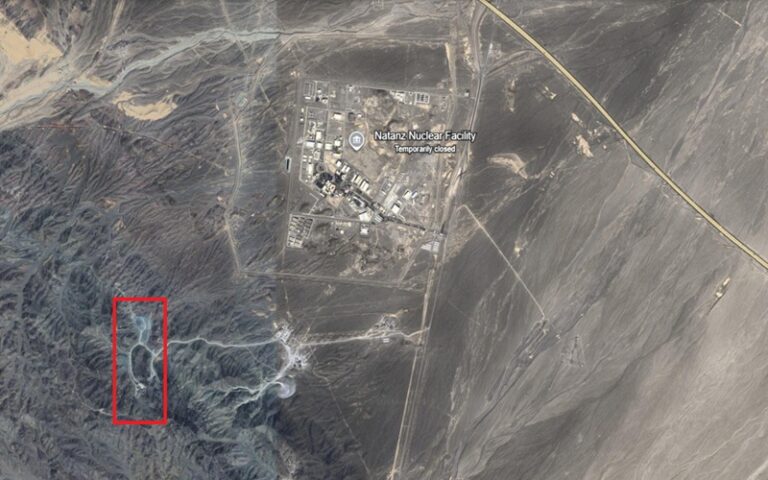
Kolang Mountain; The Iranian Regime’s Nuclear Shelter Amid Fears of a Survival Crisis

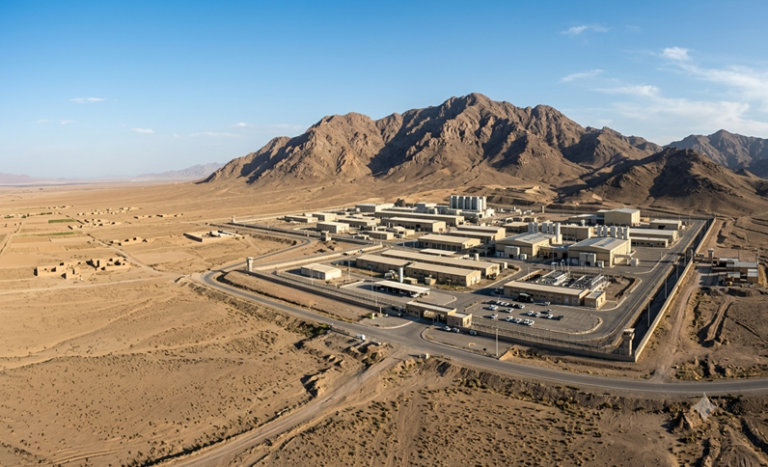
The nuclear facility known as “Kolang Mountain” has become one of the most prominent subjects of security and political analysis in recent weeks. Intelligence reports indicate that the Iranian regime has transferred some of its most sensitive uranium enrichment equipment and stockpiles of highly enriched uranium into deep tunnels within the complex, more than 100 meters underground. This move is viewed as a direct response to the regime’s growing fear of potential attacks and as part of its efforts to prepare for a survival crisis.

Iranian Regime Transfers Thousands of Centrifuges to Underground Mount Kolang Tunnel Complex

Construction of this massive reinforced concrete defensive structure is taking place while the majority of Iranians are struggling with extreme poverty, runaway inflation, and severe economic hardship. By burying billions of dollars in national wealth deep beneath Kolang Mountain, the Iranian regime has once again demonstrated that preserving its rule and ensuring its own survival take precedence over the people’s food security and livelihoods. The continuation of the regime’s destructive policies has not only brought no benefit to Iran’s national interests but has also turned the country into a target for military attacks and international sanctions.

From a military perspective, experts believe that completely destroying a facility at this depth would be challenging even for the most powerful Western bunker-busting bombs, such as the GBU-57. However, repeated strikes against its ventilation systems, power generators, access routes, and entrance portals could render the site completely crippled and inoperable. A recent statement by U.S. President Donald Trump that Kolang Mountain would soon be targeted underscores the seriousness of the military confrontation scenario.

The nuclear adventurism at Kolang Mountain is a clear symbol of the strategic deadlock facing a ruling system that, instead of investing in public welfare and development, spends the country’s resources on its own survival. This approach has further increased the potential for social unrest because of the evident waste of public assets and has made the need for fundamental change to this system more urgent than ever.
Ghezel Hesar Prisoners Enter Ninth Day of Dry Hunger Strike

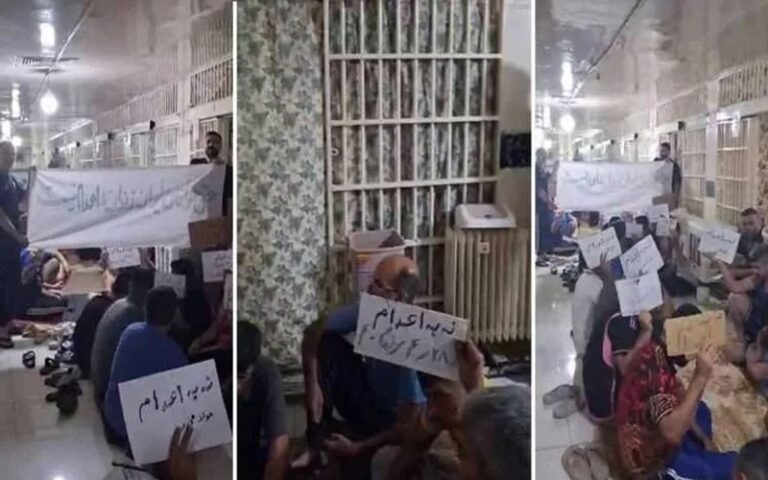
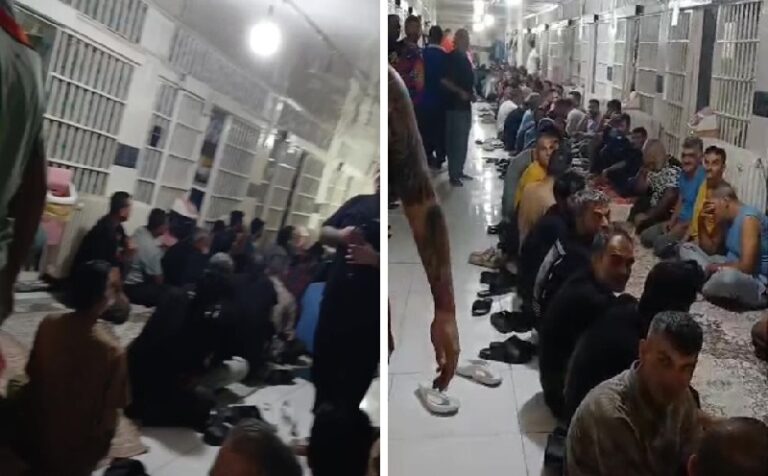
The mass hunger strike by death row prisoners in Unit 2 of Ghezel Hesar Prison in Karaj entered its ninth day on Tuesday, July 21. With around 1,500 prisoners participating across eight prison wards, it has become one of the largest protest movements by death row inmates in recent years.

The strike began on July 13 after six death row prisoners were transferred to solitary confinement, a move the inmates viewed as a precursor to their executions. The protesters are demanding a halt to executions, particularly in drug-related cases, and the return of the transferred prisoners to the general prison wards.

Eighth Day of Hunger Strike by 1,500 Prisoners in Ghezel Hesar Prison

As the prisoners’ demands have gone unanswered, the protest has entered a new phase. Reports indicate that a number of prisoners have sewn their lips shut in protest and, in addition to their hunger strike, have begun a dry hunger strike. Informed sources have also reported a deterioration in the physical condition of several participants, including severe weakness, declining physical strength, and the need for medical care for some of them.

Meanwhile, videos released from inside Unit 2 of Ghezel Hesar Prison show that the prisoners continue to refuse prison food. According to the inmates, despite more than a week having passed since the strike began, neither prison officials nor judicial authorities have taken any action to address their situation or respond to their demands.

Coinciding with the ninth day of the strike, prisoners in Unit 2 of Ghezel Hesar Prison issued a statement calling on the public, independent media, human rights organizations, and the broader public opinion to be their voice. In the statement, they said that in addition to the approximately 1,500 striking prisoners in Ghezel Hesar, more than 5,000 death row prisoners in prisons across Iran are also at risk of execution.

The statement reads:

“Today marks the eighth day of the dry hunger strike by 1,500 death row prisoners in Ghezel Hesar Prison and more than 5,000 death row prisoners in prisons across the country, for whom the noose and death are closer than their jugular vein. We desperately ask all independent media, human rights organizations, and the public to be the voice of those who have no voice.”

The prisoners have called on the people of Iran not to remain silent in the face of the wave of executions and to support death row inmates by chanting “No to Executions.”

The escalation of the protest to include sewn lips and a dry hunger strike has dramatically increased concerns about the prisoners’ health. Families of the prisoners and human rights activists have warned that the continuation of this situation could place the lives of a number of the strikers in serious danger.

The mass protest by prisoners in Unit 2 of Ghezel Hesar Prison is considered one of the most unprecedented collective protests by death row inmates in recent years in terms of the number of participants, its duration, and the methods of protest, including sewing their lips shut and undertaking a dry hunger strike. However, as of the time of this report, there has been no indication that the authorities have addressed the prisoners’ demands, and the strikers have declared that they will continue their protest until executions are halted and their demands are met.

Iran’s Economy on the Brink of Hyperinflation

Masoud Nili, a regime-affiliated economist and faculty member at the Department of Management and Economics of Sharif University of Technology, warned that Iran’s economy has entered what he described as the “station before hyperinflation.” He said the country’s economy has moved beyond the stage of chronic inflation and is now facing extremely high and severe inflation that, if left unchecked, could lead to hyperinflation.

Speaking on Monday, July 20, at the “Iran Economy Outlook 2026” conference, Nili stressed that Iran’s economy is now positioned between chronic inflation and hyperinflation. According to him, the inflation Iranians are currently struggling with is no longer ordinary or merely chronic but has entered a stage of extremely high inflation.

Iran’s Negative Economic Growth: From Statistical Manipulation to the Collapse of Investment

He noted that from 1973, when inflation first reached double digits, until the end of 2017, Iran remained in the category of “chronic inflation.” However, since 2018, the country has moved beyond that stage and entered a period of very high inflation.

The economist identified the halt in economic growth as the first sign of the crisis, saying that unlike the years following the Iran-Iraq War, the country’s economic growth has effectively stalled since 2007. He added that the three main macroeconomic indicators—economic growth, inflation, and unemployment—all present an alarming picture of Iran’s economy.

Nili’s warning comes as, in recent months, amid the war, intensified sanctions, and the naval blockade of Iran’s ports, prices of goods and services, foreign exchange rates, gold prices, and the cost of living have all experienced unprecedented surges.

According to the latest report by the Statistical Center of Iran, the country’s economic growth in 2025 was just 0.2% including oil and negative 0.3% excluding oil, indicating a deep recession in the productive sectors of the economy. A number of economists have also warned that if this trend continues, the inflation rate could reach triple digits—a situation typically accompanied by a sharp collapse in the value of the national currency and growing economic uncertainty.

Hemmati Confirms the Economy’s Critical Condition

At the same time as Nili’s remarks, Abdolnaser Hemmati, the governor of Iran’s Central Bank, also confirmed that Iran’s economy is under severe pressure in the areas of foreign trade, production, investment, the state budget, and the banking system.

Referring to the decline in oil exports due to sanctions and other restrictions, he stated that gross fixed capital formation was negative during the first three quarters of 2025 and fell to negative 13% in the third quarter.

Hemmati also reported a sharp decline in people’s real income, saying that real per capita income, based on constant 2021 prices, fell from about 1.41 billion rials in 2011 to about 750 million rials in 2024. In other words, the real income of each Iranian has nearly halved over the past 13 years, returning to levels seen in the 2010s.

Hemmati stressed that the issue is not merely rising prices, but also the shrinking of the economy’s real resources, with each citizen’s share of the country’s generated wealth declining significantly.

These warnings come just one month after Mohammad Bathaei, head of Iran’s Social Affairs Organization, announced that about 60% of Iranians could no longer withstand additional economic pressure.

Despite these assessments, regime officials continue to urge the public to endure the economic hardship. Gholamhossein Mohseni Ejei, head of the judiciary, said on Monday, July 20, in reference to the current situation: “Standing against the enemy has costs, and we must accept those costs.”

The Painful Situation of the People

What makes Masoud Nili’s remarks particularly significant is not merely his warning about inflation, but the fact that one of the best-known economists close to the government has, for the first time, described Iran’s economy as being on the verge of hyperinflation. Combined with the Central Bank governor’s admission of stalled investment, economic recession, and the halving of people’s real income, the warning presents an unprecedented picture of the depth of the current economic crisis and illustrates the painful condition of Iranian society from a macroeconomic perspective.

Iran’s Regime Executes PMOI Member for Participating in January Uprising

The Iranian regime hanged Mehdi Khanaki, a 25-year-old law student, at dawn today, Wednesday, July 22.

Agents of the Iranian regime’s security forces arrested Mehdi Khanaki in Karaj on January 21 and subjected him to brutal torture.

Mizan, the Iranian regime judiciary’s news agency, stated that the execution of this member of the People’s Mojahedin Organization of Iran (PMOI/MEK) was carried out on charges including “possession of weapons and military ammunition,” including “five handguns, 90 rounds of ammunition, and nine magazines.”

Mizan also wrote that authorities seized from Mehdi Khanaki’s home “detonation remote controls, 11 homemade grenades, 12 homemade flares, 30 homemade shoulder-fired explosive tubes, bombs, highly destructive explosive junction devices, and significant quantities of raw materials for manufacturing bombs and explosives.”

Mizan added: “Mehdi Khanaki was an active member of a group” and that “according to the technical examinations conducted and the opinions of experts and the weapons and ammunition laboratory, the weapons discovered from Mehdi Khanaki were used in shootings during the January 2026 unrest.”

The People’s Mojahedin Organization of Iran (PMOI/MEK) is the largest and most organized Iranian opposition group. It has engaged in armed resistance against the Iranian regime and has lost 120,000 of its members in its confrontation with the regime.

30 Tir Uprising: The Historical Legacy of Iran’s Stand Against Dictatorship

0

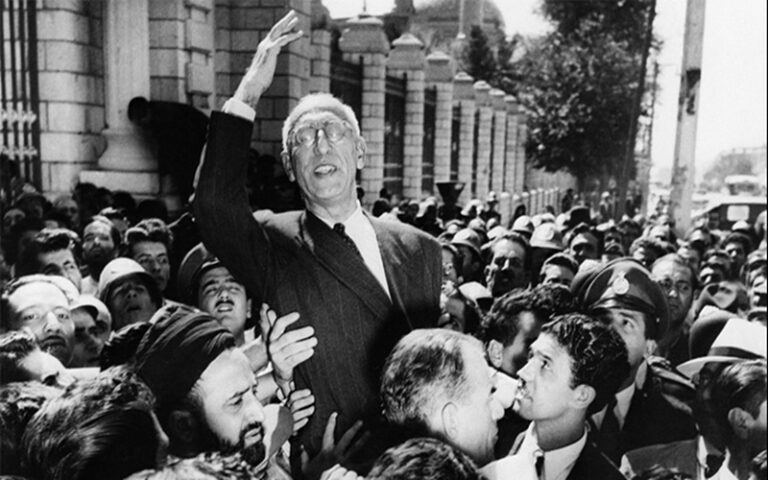
The 30 Tir Uprising of July 21, 1952, stands as one of the defining moments in Iran’s modern history. On that fateful day, hundreds of thousands of Iranians filled the streets under the slogan “Either Death or Mosaddegh.” Confronting the armed forces of the Pahlavi monarchy, they marched in defense of constitutional government, national sovereignty, and democratic rule.

The popular uprising in defense of Prime Minister Mohammad Mosaddegh demonstrated the Iranian people’s determination to defeat royal dictatorship—a legacy that continues to shape their rejection of all forms of authoritarian rule today.

The Roots of Resistance: From Oil Nationalization to Crisis

The roots of the uprising lay in Iran’s long campaign to reclaim control over its natural resources and political independence. For decades, Iran’s oil wealth had been dominated by unequal agreements with foreign powers. Concessions granted under the 1901 D’Arcy Agreement and later reinforced during the reign of Reza Shah left Iran’s vast petroleum resources largely under foreign control while much of the population lived in poverty.

Prime Minister Mohammad Mosaddegh emerged as the leading figure challenging this system. Through his efforts in parliament and his leadership of the national movement, Iran nationalized its oil industry in March 1951, ending the monopoly of foreign oil interests and asserting the country’s sovereign rights. However, his government quickly came under immense pressure from both external powers and the royal court, which viewed his reforms as a direct challenge to the Shah’s authority.

The immediate crisis erupted when Mosaddegh resigned after Shah Mohammad Reza Pahlavi refused his request to place the armed forces under civilian authority by allowing him to appoint the minister of war. The Shah replaced him with Ahmad Qavam, whose government threatened severe repression against any opposition.

The People Stand Against the Shah

Instead of intimidating the population, Qavam’s threats ignited nationwide resistance. On July 21, 1952 (30 Tir 1331), businesses closed across Tehran and other cities. Workers, merchants, students, drivers, and citizens from all walks of life flooded the streets, their voices echoing through the cities:

  • “Either Death or Mossadegh”
  • “Mossadegh Will Prevail”
  • “Death to Qavam”

The monarchy responded with military force. Soldiers opened fire on unarmed demonstrators, killing and wounding hundreds. Despite the bloodshed, the uprising succeeded. Facing overwhelming public resistance, the Shah was forced to dismiss Qavam and restore Mossadegh as prime minister.

The victory proved that organized popular resistance could compel even an entrenched dictatorship to retreat. Mossadegh never forgot the sacrifice of those who lost their lives during the uprising. He wished to be buried alongside the victims of 30 Tir and later described the day as unforgettable because Iranians from every social class united in defense of national independence.

Critical Lessons from History

While the uprising achieved a major victory, the military coup of August 1953 later exposed the vulnerabilities of a popular movement lacking sufficient organizational structures to withstand coordinated domestic and foreign intervention. The overthrow of Mossadegh underscored the vital importance of organized political resistance capable of protecting democratic gains against authoritarian restoration.

Mossadegh himself recognized this challenge in later years. Reflecting on liberation movements elsewhere, including Algeria’s struggle for independence, he emphasized that nations seeking freedom must be prepared to make sustained sacrifices in pursuit of liberty and sovereignty.

A Lasting Rejection of Dictatorship

The events of July 21 carry another important historical lesson: the uprising showed that the Iranian people rejected the concentration of power in the monarchy and demanded accountable government based on the will of the people.

That legacy remains highly relevant today. As various political figures seek to revive or rehabilitate the image of the former monarchy—including efforts by Reza Pahlavi to present himself as an alternative to the current regime—the historical record tells a different story. The people who filled Iran’s streets in July 1952 were not fighting to preserve royal rule; they were risking their lives to curb the Shah’s authority and defend democratic governance. The July 21 Uprising stands as enduring evidence that Iran’s democratic aspirations have long been incompatible with authoritarian monarchy.

The Enduring Meaning of July 21

The legacy of July 21 extends far beyond a single historical event. It embodies the Iranian people’s enduring commitment to freedom, national independence, and representative government.

Over the decades, Iranians have repeatedly demonstrated that their opposition is not merely directed at one particular regime, but at dictatorship in all its forms—whether exercised in the name of monarchy or theocracy. This consistent demand has echoed through successive generations, from the Constitutional Revolution to the National Movement, and from the struggle against the Shah’s dictatorship to contemporary calls for a democratic republic based on popular sovereignty, political pluralism, and respect for fundamental human rights.

Ultimately, the July 21 Uprising remains one of the clearest expressions of the Iranian people’s determination to shape their own destiny. Its legacy is not simply the restoration of a prime minister, but the affirmation of a core principle: no ruler stands above the will of the people. More than seventy years later, that principle continues to resonate. The events of July 1952 remind the world that the Iranian people have repeatedly rejected authoritarian rule and continue to aspire to a future founded on democracy, the rule of law, and popular sovereignty rather than the return of any form of dictatorship, whether monarchical or religious.

Iranian Regime Transfers Thousands of Centrifuges to Underground Mount Kolang Tunnel Complex

The Iranian regime has transferred thousands of uranium enrichment centrifuges to tunnels beneath “Mount Kolang,” also known as “Pickaxe Mountain.”

The Wall Street Journal, citing Israeli and U.S. officials, reported that Israeli intelligence assessments indicate the Iranian regime transferred thousands of uranium enrichment centrifuges to deep tunnels beneath “Mount Kolang” last autumn after its main nuclear facilities were damaged in U.S. and Israeli strikes. The underground complex is also known as “Pickaxe Mountain.”

Trump: The Final Phase of Destroying the Iranian Regime’s Missile and Nuclear Capabilities Has Begun

According to the report, Israel has shared its intelligence with Washington and has urged the U.S. government to intensify military operations against the Iranian regime’s nuclear infrastructure. U.S. President Donald Trump had previously identified the underground complex as one of the potential targets for U.S. strikes.

The Wall Street Journal also wrote that Israeli Prime Minister Benjamin Netanyahu is seeking to persuade Trump to resume broader attacks against the Iranian regime, with the aim of further weakening the nuclear program and the reconstruction of damaged facilities.

The report is based on intelligence assessments and statements by U.S. and Israeli officials and has not yet been independently confirmed by the International Atomic Energy Agency (IAEA) or officials of the Iranian regime.

The Final Farewell of Two Political Prisoners Sentenced to Death in Iran

Abolfazl Sepahi and Alireza Sepahi, two prisoners sentenced to death in the case known as the “Alikhani Square” case in Isfahan, are on the verge of execution. According to published reports, the two prisoners have had their final meeting with their family members, a meeting that has drawn widespread attention among human rights activists because of the family’s exceptional circumstances.

Abolfazl Sepahi and Alireza Sepahi are cousins. Their family relationship means that the possible implementation of the death sentences would cause one family to lose two of its members at the same time.

Iranian Regime Executes Two Defendants in Isfahan Protests

The Final Meeting with a Mother Who Is Also Imprisoned

According to published information, the prisoners’ final meeting took place in the presence of the family’s mother, who is herself serving a five-year prison sentence. She was transferred from prison to the visitation site with the coordination of prison authorities for the meeting.

According to informed sources, the meeting was one of the most heartbreaking moments documented in the case, as the mother was forced to say goodbye simultaneously to her son and her son-in-law.

The Alikhani Square Case and Growing Concerns

Abolfazl and Alireza Sepahi are among the defendants in the case known as the “Alikhani Square” case in Isfahan, a case related to the events of January 8 and the nationwide protests in the city.

After four members of the Basij paramilitary force were killed during those events, Iranian regime security forces arrested at least 59 people, and judicial proceedings in the case began.

Ultimately, 12 of those arrested were sentenced to death. Two of them were executed last week, while another 23 defendants reportedly received prison sentences ranging from five to 10 years.

Concerns over the fate of those sentenced in this case intensified after two of the condemned prisoners, Erfan Esfandiari and Gol Mohammad Mohammadi, were executed in the early hours of Sunday, July 19, 2026.

Erfan Esfandiari was 18 years old at the time of his arrest. Gol Mohammad Mohammadi, a 23-year-old Afghan citizen, was another defendant in the case who was executed last week.

According to published information, 24-year-old Alireza Sepahi has been given four death sentences, while 23-year-old Abolfazl Sepahi has received three death sentences.

Other individuals sentenced in this case include Ghaem Hosseini, Shervin Bagherian, Amirhossein Safari, Amirhossein Maleki, Ali Dashti, Abolfazl Ebrahimi, Alireza Raeisi, and Amirhossein Ebrahimi Analoucheh.

Some of those sentenced were under the age of 20 at the time of their arrest, and several have received multiple death sentences, an issue that has prompted reactions from human rights organizations.

Iran’s ‘No to Executions Tuesdays’ Campaign Marks130th Week

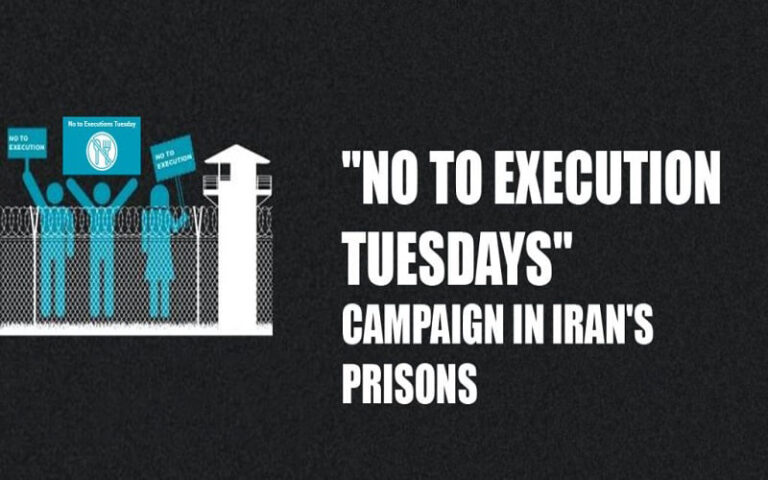
On Tuesday, July 21, the “No to Executions Tuesdays” campaign expanded to 59 prisons across Iran with the addition of Neyshabur Prison in its 130th week. At the same time, the strike by prisoners in Unit 2 of Ghezel Hesar Prison, which houses more than 1,500 inmates under death sentences, marked a new phase in prisoners’ protests.

To mark the occasion, the “No to Executions Tuesdays” campaign issued a statement. The statement reads:

The “No to Executions Tuesdays” campaign, while condemning the escalating executions in Iran, honors the memory of all executed prisoners, especially those who sacrificed their lives for freedom and in the struggle against authoritarian dictatorship.

Collective Hunger Strike at Ghezel Hesar Prison Calls for Halt to Executions

Over the past week, Iran’s authoritarian regime once again took the lives of four political prisoners through the medieval practice of execution: Aref Khoshkar at Ghezel Hesar Prison, and Mohammad Amini Dehaghani, Erfan Esfandiari, and Gol Mohammad Mohammadi at Isfahan Prison.

Like many other political prisoners sentenced to death, these four oppressed prisoners were tried in unfair proceedings and executed. May they rest in peace, and may their memory be honored.

According to reliable statistics, at least 280 prisoners have been executed since March 22, 2026, the first day of the Iranian calendar year.

In opposition to and protest against these inhumane executions, more than 1,500 prisoners in Unit 2 of Ghezel Hesar Prison have been on strike and protesting for more than a week, demanding the abolition of the death penalty.

All prisoners in this ward have been sentenced to death, most of them on drug-related charges. It is clear to everyone that the principal importers and producers of narcotics in Iran are the leaders of the Iranian regime and commanders of the Islamic Revolutionary Guard Corps (IRGC). To cover up this blatant wrongdoing, the regime sends to the gallows, on a daily basis, people who have become entangled in drug-related offenses because of poverty and deprivation.

The prisoners of Ghezel Hesar and the “No to Executions Tuesdays” campaign have now stood firm in opposition to the death penalty in Iran for 130 consecutive weeks.

In this regard, a group of prisoners at Neyshabur Prison also announced in a statement that they are joining the campaign. Accordingly, on Tuesday, July 21, during the campaign’s 130th week, participants in 59 prisons across Iran are observing a hunger strike as part of the “No to Executions Tuesdays” campaign.

Eighth Day of Hunger Strike by 1,500 Prisoners in Ghezel Hesar Prison

The hunger strike and sit-in by about 1,500 prisoners sentenced to death in Unit 2 of Ghezel Hesar Prison in Karaj entered its eighth day on Monday, July 20. The prisoners, protesting the continued implementation of death sentences, have called for an end to what they describe as the Iranian regime’s “execution machine.”

According to published reports, over the past week the striking prisoners have staged a sit-in while holding placards bearing slogans including “Prison and execution are not the rights of Iran’s youth.” They declared their support for the “No to Execution Tuesdays Campaign” and stressed that they will continue their protest until their demands are met.

Collective Hunger Strike at Ghezel Hesar Prison Calls for Halt to Executions

The strike continues as reports indicate that prisoners have been deprived of some basic facilities and that the physical condition of a number of the hunger strikers has deteriorated. It is also reported that prison authorities have attempted to prevent news of the protest from spreading by restricting prisoners’ communication with the outside world.

As the sit-in entered its eighth day, hundreds of family members of prisoners sentenced to death gathered outside Ghezel Hesar Prison the previous day, calling for a halt to executions and the saving of the prisoners’ lives. Chanting slogans against executions, the demonstrators urged international bodies and human rights organizations to take action to prevent the implementation of these death sentences.

According to reports, security forces and prison guards were deployed to disperse the protesters and attempted to prevent the gathering from continuing, but the families persisted with their protest despite the security pressure.

At the same time, the National Council of Resistance of Iran (NCRI), in a statement, called on the United Nations, the UN Special Rapporteurs on human rights, and other international bodies to support the striking prisoners and take action to stop the implementation of death sentences and dispatch an international fact-finding mission to prisons in Iran.

Trump: The Final Phase of Destroying the Iranian Regime’s Missile and Nuclear Capabilities Has Begun

0

U.S. President Donald Trump announced that the United States’ military operation against the Iranian regime has entered a broader phase, with the objective now being to eliminate all of the regime’s missile and nuclear capabilities.

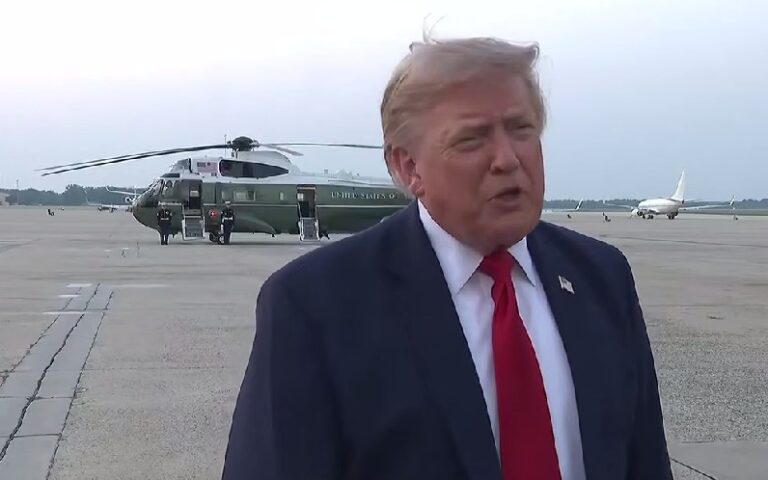
Speaking to reporters on Monday, July 20, following the 2026 FIFA World Cup final, Trump claimed that the Iranian regime has lost most of its military capabilities and now retains only a limited number of missiles, drones, and military production capacity.

How Iran’s Regime Uses the War to Preserve Its Rule

Referring to the recent U.S. strikes, he said that what is now underway is far larger than the initial phase of the operation. According to Trump, the United States initially sought only to prevent the regime from acquiring a specific capability but is now moving to eliminate it entirely.

The U.S. president added that America’s objective is to eliminate any possibility of the Iranian regime acquiring a nuclear missile.

Trump also claimed that the United States has control of the Strait of Hormuz and that the Iranian regime has no control over the strategic waterway. He announced that new strikes against Iranian military targets were carried out on Sunday evening and said they inflicted very heavy blows on the regime.

CENTCOM: Ninth Wave of Strikes Successfully Completed

At the same time, the U.S. Central Command (CENTCOM), the unified combatant command responsible for U.S. military operations in the Middle East, announced that its forces had successfully completed the ninth consecutive wave of strikes against military targets in Iran.

According to the CENTCOM statement, the strikes targeted military command centers, air defense systems, coastal surveillance facilities, naval capabilities, missile and drone launch sites, as well as the Iranian regime’s communications networks.

According to CENTCOM, the objective of the operation is to reduce the Iranian regime’s ability to threaten commercial vessels and civilian mariners in the Strait of Hormuz and to safeguard international maritime security.

The command also emphasized that U.S. forces remain on full alert under the orders of the commander in chief and that military operations against Iranian regime targets will continue if necessary.

IRGC Claims Retaliatory Strikes

In response, the Islamic Revolutionary Guard Corps (IRGC) claimed that it had targeted U.S. military bases in Kuwait, Bahrain, Jordan, and the U.S. military headquarters in Syria in retaliation for the American attacks. The IRGC also claimed it had attacked what it described as “violating oil tankers” in the Persian Gulf, a claim that has not been independently verified.

Trump also said that the recent U.S. strikes were carried out in response to the killing of three American service members and stressed that the operation will continue until the Iranian regime’s ability to acquire missile and nuclear capabilities has been completely eliminated.