Home Blog Page 35

Twenty-Third Day of Protests in Iran; Regime Admits to Heavy Losses from the January Uprising

Incendiary Attack on District Governor’s Office in Khoy and Assault on Police Station in Eslamshahr

On the twenty-third day of the nationwide uprising of the Iranian people, on Monday, January 19, various cities across the country witnessed the continuation of protests and street clashes between the public and the regime’s repressive forces.

The National Council of Resistance of Iran (NCRI) announced in its statement number 52 the expansion of clashes and hit-and-run confrontations between protesting youth and repressive forces in several cities across the country. This statement focuses on events on Saturday and Sunday, January 17 and 18, and explains the field and political dimensions of these developments.

According to this report, over these two days Tehran and several other cities, including Khoy, Eslamshahr, Kermanshah, and Sarpol-e Zahab, became scenes of widespread clashes between rebellious youth and regime repressive forces. In Tehran, various areas such as Valiasr Street, Saadat Abad, Salehiyeh, Tehranpars, and Ekbatan Township witnessed street battles. During these clashes, protesters voiced their opposition to the ruling establishment by chanting slogans such as “Death to the dictator” and “Death to Khamenei.”

In the city of Khoy, intense street battles were reported on Saturday night. In response to indiscriminate gunfire by repressive forces, rebellious youth set fire to the district governor’s office and a Basij center. The Basij is a paramilitary force affiliated with the Islamic Revolutionary Guard Corps. During these clashes, slogans such as “I will kill, I will kill the one who killed my brother; I will kill, I will kill whoever killed my sister” and “Until a cleric is shrouded, this homeland will not be a homeland” were chanted. The previous night, two other Basij centers in Khoy had also been set ablaze during confrontations with the city’s youth.

Attack on a Police Station in Eslamshahr

In Eslamshahr as well, protesting youth clashed with special riot units and stormed the police station known as Qaemieh, disarming agents who were firing at the people. These events indicate an escalation in direct confrontation between protesters and law enforcement and security forces.

In Kermanshah province, reports indicate widespread clashes in several locations. In the village of “Aineh Vand,” near Sarpol-e Zahab, local residents and courageous youth from the Qalkhani tribe managed to break the encirclement imposed by regime forces. In an armed confrontation, while repelling agents who had entered the area to arrest wounded protesters, part of the regime’s forces were disarmed. Clashes also occurred in Taq-e Bostan between youth and repressive forces, and in the city of Kermanshah, a Basij member named Morteza Hashmati was killed during confrontations with the public.

On Monday, January 19, the popular uprising and protests entered their twenty-third day. This comes as the Iranian regime and its repressive apparatus, by imposing an undeclared form of martial law and a complete internet shutdown, are attempting to conceal the popular uprising and the dimensions of the regime’s horrific crimes.

Heavy Losses Inflicted by the People’s Uprising on the Repressive Apparatus

Ebrahim Azizi, the head of the Security Commission of the Iranian regime’s Majlis (parliament), admitted to part of the extensive damage inflicted on the regime during the January uprising and reported serious blows.

According to him, during this uprising more than 2,200 motorcycles and vehicles belonging to the regime’s law enforcement forces were set on fire.

Azizi also stated that 250 Basij bases in schools and 90 regime seminaries were targeted and destroyed. The Basij is a paramilitary force subordinate to the Islamic Revolutionary Guard Corps.

The head of the Majlis Security Commission added that in these events, 3,709 members of the law enforcement forces, the Basij, and the IRGC were seriously injured figures that demonstrate the depth of the blow dealt by the uprising to the regime’s repressive structures.

LCI France Exposes the “Commercialization of the Bodies of the Killed” in Iran

The French news network LCI, in a report broadcast on Friday, January 16, quoted Iranian witnesses as saying that in Iran “an organized system for the commercialization of the bodies of those killed” has taken shape.

According to this report, families are forced to pay sums to retrieve the bodies of those killed, calculated based on the number of bullets that struck the body. Witnesses said that up to 4 billion rials were demanded for each bullet (approximately 2,858 dollars).

LCI, referring to joint investigations by Iranian media with the participation of TF1 and France 24, reported the existence of a profiteering structure that exploits the suffering of families.

In one account, a father in Tehran found his daughter’s body in a morgue after two days of searching and was confronted with a financial demand based on the number of bullets to retrieve it. LCI described this process as “extremely ruthless.”

Mike Pence: Change in Iran Will Transform the Middle East and the World

Mike Pence, the former vice president of the United States, said in an interview with CNN that the Iranian regime is the world’s largest state sponsor of terrorism.

He said that in addition to brutally suppressing the people of Iran, the regime exports terrorism across the region and endangers the lives of American citizens and those of other countries in the Middle East and around the world.

Pence emphasized that change in Iran would benefit the United States and its allies, adding that if Tehran’s rulers continue their reign of terror against the Iranian people, all options are on the table.

He stressed that change in Iran would not be limited to the country itself, but could transform the Middle East and even global security and political dynamics.

Davos Meeting Criticized for Inviting Iranian Regime FM Abbas Araghchi

Lindsey Graham, a prominent Republican senator from the United States, published a message on the social media platform X criticizing the invitation of Abbas Araghchi, the foreign minister of Iran’s regime, to the World Economic Forum meeting in the Swiss city of Davos and addressed the organizers of the meeting, writing:
“What the hell are you thinking? I cannot think of a worse message to send to the protestors.”

This year’s Davos meeting is being held from Monday to Friday, January 19 to January 23. Fox News, a major U.S. cable news network, had previously reported that despite the horrific killing of protesters by Iran’s regime, officials of the World Economic Forum had invited Abbas Araghchi to attend the meeting.

Senator Graham, in his post, compared inviting the foreign minister of Iran’s regime to speak at the Davos forum at the present time to
“Inviting the Iranian Foreign Minister to speak now would be akin to inviting Hitler to a world event after Kristallnacht. This decision gives tone deaf a new meaning.”

Large-scale demonstration in Paris

On November nine, 1938, forces led by the Nazi Party in Germany attacked Jewish homes, shops, and synagogues in a number of cities in Germany and Austria, smashing windows and setting buildings on fire. This event is known in history as Kristallnacht, referring to the large amounts of shattered glass that covered the streets after Jewish property was destroyed.

Graham added: “European elites have lost their moral compass. This is the strongest sign yet of moral decay when it comes to people who enjoy freedom and abandoning those who are struggling for it.”

Hillel Neuer, an international human rights lawyer and the executive director of United Nations Watch, also published a message on X addressing Abbas Araghchi, writing:

The World Economic Forum has so far not responded to these protests. The invitation of Araghchi to Davos comes as the organizers of the Munich Security Conference withdrew their invitation to officials of Iran’s regime due to the bloody crackdown on nationwide protests in Iran.

“Deployment of Lebanese militias to Iran” to suppress protests

The German magazine Der Spiegel reported on Sunday, January 18, citing the German News Agency, that over the past ten days movements have been observed involving Shiite militias leaving Lebanon. According to Spiegel, these individuals were mainly members of Hezbollah, the Iran-backed Lebanese militant group, who traveled to Iraq under the cover of religious pilgrimage and then entered Iran to suppress protests.

Earlier, CNN, a major U.S. news network, had reported, citing a European military source and an Iraqi security source, that Iraqi militias had entered Iran in recent weeks to help Tehran suppress the latest nationwide protests. The informed Iraqi source told CNN that close to five thousand Iraqi militia forces entered Iran through a crossing in Maysan province and the Zarbatiyah border crossing in Wasit province in southern Iraq.

Fouad Hussein, Iraq’s foreign minister, met on Sunday during his visit to Tehran with Massoud Pezeshkian, the president of Iran’s regime, Mohammad Bagher Ghalibaf, the speaker of the regime’s parliament, Abbas Araghchi, the regime’s foreign minister, and Ali Larijani, the secretary of the Supreme National Security Council of Iran’s regime.

According to the state-run Tasnim News Agency, Pezeshkian emphasized the “strong and historical relations” between Iran and Iraq in his talks with Fouad Hussein and said: “Naturally, if we, the Islamic ummah, stand together and alongside one another, no power will be able to threaten us.”

Iraq’s foreign minister also noted that Iraqi officials are following the recent events in Iran “with special sensitivity and on a moment-by-moment basis,” saying: “The focus of all their contacts and communications with officials and leaders of other countries has been the security situation in the region centered around Iran.”

Large-scale demonstration in Paris

On Sunday, January 18, the protests and uprising of the Iranian people entered their twenty-second day. At the same time, global support for the Iranian people’s uprising continues.

As part of the wave of international support for the nationwide uprising of the Iranian people, a large-scale demonstration was held in Paris on Saturday, January 17, 2026. This protest gathering, which took place at the Panthéon square, became a scene for expressing solidarity with the courage and resilience of the Iranian people in the face of the ruling regime’s repression.

A wide range of political groups, labor unions, and human rights organizations took part in the demonstration. Participants, holding placards and chanting slogans such as “Neither Shah nor mullahs,” “Neither monarchy nor supreme leadership,” and “Long live freedom,” emphasized their opposition to all forms of dictatorship and their support for the Iranian people’s right to self-determination. These slogans reflected the protesters’ shared demand for freedom, democracy, and popular sovereignty in Iran.

According to reports, organizations and groups such as “Justice for Iran,” the “League for the Defense of Human Rights in Iran,” the “Women’s Alliance for Democracy,” the CGT labor union, the “French Human Rights League,” the “International Federation for Human Rights,” MRAP, “SOS Racisme,” “Russia Liberties,” as well as groups of activists in solidarity with Ukraine, were actively present at the gathering. The presence of this diverse array highlighted the linkage of human rights and democratic struggles at the international level and the convergence of demands against repression and human rights violations.

Speakers at the rally, referring to the bloody suppression of protests in Iran, called for accountability for perpetrators of human rights violations and for increased political and legal pressure by the international community against the Iranian regime. They also stressed the need for practical support by governments and international institutions for the Iranian people’s uprising and for recognizing the right to resist repression. This demonstration sent a clear message from Paris to the world: the uprising of the Iranian people is not alone, and their voice is being heard on the international stage.

Twenty-Second Day of the Protests; Horrifying Reports on the Number of Those Killed in the Uprising

On Sunday, January 18, the uprising of the Iranian people entered its twenty-second day. While, following the deadly crimes of Ali Khamenei, the supreme leader of the Iranian regime, in the killing of thousands of protesters, the regime’s security forces are trying to extinguish protests across society, the regime remains incapable of restoring international internet access. Meanwhile, global support for the Iranian people’s uprising continues.

Two horrifying reports from Iran

Amid the continuation of nationwide protests in Iran, two reports published by the international media outlets “The Sunday Times,” a British newspaper, and “Reuters,” a global news agency, reveal unprecedented dimensions of human casualties resulting from the Iranian regime’s suppression of the protests—figures that seriously call the regime’s official narratives into question.

In a report published on January 18, The Sunday Times quoted doctors and medical sources as saying that at least 16,500 Iranian protesters have been killed by the Iranian regime’s repressive forces during the recent protests, and that about 330,000 others have been injured. According to the report, the bulk of the killings occurred over two days referred to as the “complete massacre,” namely Thursday, January 8, and Friday, January 9. The Sunday Times described this event as the most brutal suppression by the clerical regime in its 47 years of existence. The report also refers to images of large numbers of slain protesters’ bodies at the Kahrizak forensic medicine center, indicating the scale of this crime.

These figures stand in stark contrast to the official statements of Iranian regime officials. Abbas Araghchi, the regime’s foreign minister, had earlier claimed in an interview with Fox News, a U.S. television network, that “only a few hundred people” had been killed in the protests. However, according to U.S. media reports, Ali Khamenei in his Saturday, January 17 speech effectively confirmed that several thousand people had been killed. The Sunday Times also notes that the Iranian regime has a long record of killing protesters and that Khamenei has repeatedly personally ordered bloody crackdowns on protests.

Meanwhile, Reuters also reported on Sunday, January 18, quoting “an Iranian official in the region,” that government authorities have confirmed the deaths of at least 5,000 people. The official, who requested anonymity, said that the most intense clashes and highest casualties occurred in Kurdish-populated areas of northwestern Iran. However, he described the protesters as terrorists and armed rioters and blamed them for the deaths of “innocent citizens,” without providing evidence for this claim.

At the same time as the publication of these reports, Donald Trump, the president of the United States, described Ali Khamenei as a sick person on Saturday and said that Iran has become the worst place in the world to live due to weak leadership. This collection of reports further exposes the deep gap between the Iranian regime’s official narratives and the on-the-ground realities of the protests.

Argentina Officially Designates Islamic Revolutionary Guard Corps as a Terrorist Organization

The government of Argentina has officially designated Iran’s Islamic Revolutionary Guard Corps, a powerful military and security force under the direct command of Iran’s regime leadership, as a terrorist organization and added it to the country’s list of terrorist groups. This decision was taken within the framework of security policies and counterterrorism efforts and allows government and judicial bodies to pursue and restrict assets, activities, and any financial or organizational links associated with the IRGC.

Argentine officials have stated that this move aims to counter transnational threats, prevent the financing of terrorism, and strengthen national security. Under this decision, any form of cooperation, financial support, or logistical assistance to the IRGC on Argentine soil is criminalized.

Iran’s Islamic Revolutionary Guard Corps has previously faced extensive sanctions and restrictions by several countries and international bodies due to its role in military, security, and cross-border operations. Argentina’s new decision could have significant political and diplomatic consequences for bilateral relations as well as at the regional and international levels.

Iran’s Regime Pressurizes Families of Killed Protesters

After the deadliest suppression of protests in Iran in several decades, Iranian regime authorities have expanded their crackdown beyond the streets to morgues, hospitals, and families’ homes, turning the bodies of protesters into a tool for quelling dissent and controlling the official narrative.

Reports show how the bodies of protesters killed in the recent demonstrations are collected, stored, and then handed over under strict security measures.

Morgues under the control of security forces

Videos published on social media show the continued transfer of the bodies of killed Iranians to the Kahrizak Forensic Medicine complex, a state-run forensic center south of Tehran.

In one of these videos, dated Wednesday, January 14, dozens of bodies are seen laid on the floor of large, warehouse-like halls inside the complex.

Ali Khamenei Confirms Death of Thousands of People During Recent Protests

In the same video, a trailer can be seen from which security forces are unloading more bodies.

Similar videos and reports received from Tehran, Mashhad, Isfahan, and Rasht report that large numbers of bodies are being held in forensic centers and hospitals.

According to field reports, morgues and hospitals are under heavy security, and access to these locations is entirely controlled by Iranian regime security forces.

Families who went to these centers seeking information about their missing relatives have described a chaotic atmosphere, long lines, and a lack of effective communication.

Pressure on families

Families attempting to retrieve the bodies of their relatives face intimidation and pressure from security forces, including plainclothes agents and members of the Islamic Revolutionary Guard Corps (IRGC).

Iranian regime security forces have raided the homes of victims’ families and even their neighbors, searched mobile phones, verbally abused family members, and in some cases fired at walls during nighttime raids.

According to these sources, authorities have told families that bodies will only be handed over in the early morning hours. They have also said that burial ceremonies must be held individually and must end by four a.m.

Several families have also reported being warned that if they do not accept these conditions, their loved ones’ bodies will be buried collectively without their consent.

Paying the cost of bullets

One of the most frequently mentioned points in public accounts is the demand for money from families in exchange for handing over the bodies of those killed.

According to multiple sources, Iranian regime authorities tell families they must pay for each bullet used to kill their loved ones. Depending on the case, the demanded amounts range from 700 million rials to 2.5 billion rials per bullet.

At the current exchange rate, these figures are approximately equivalent to 480 to 1,720 dollars. At a time when the average monthly income of a worker in Iran is estimated to be less than 100 dollars, paying such amounts is practically impossible for many families. However, reports from Iran have also mentioned amounts of up to 7,000 dollars for handing over a body.

Iranian regime authorities had also employed this practice during previous protest crackdowns, but according to informed sources, its implementation during the recent protests has been unprecedented and on a much broader scale.

A message has also been published from the mother of one of those killed, in which she says she buried her child in the garden of their home.

Forced membership in the Basij

A number of families reported that government security officials pressured them to identify their killed relatives as members of the Basij, a paramilitary force affiliated with the regime.

According to reports by human rights organizations and informed sources, families have been told that if they agree to the issuance of a Basij membership card for their loved ones, the bodies will be handed over without charge.

According to human rights groups, in several cities, free handover of bodies has been conditioned on families declaring that their relatives were Basij members and were killed by protesters.

Human rights organizations view this as the imposition of a false identity and an attempt to inflate the official casualty figures of Iranian regime security forces; an action aimed at reinforcing the government’s claim of the presence of “terrorist elements” in the protests.

Severe pressure on medical centers

Published accounts present a picture of intense pressure on hospitals. The high number of gunshot victims and bodies of those killed has pushed medical centers into crisis, and security forces, through direct intervention, prevent the handover of bodies or the holding of burial ceremonies.

According to one account, security forces raided the homes of families who had managed to receive the bodies of their loved ones.

Another account refers to the suicide of a nurse. According to this report, after being confronted with a large number of killed protesters, she took her own life under severe psychological pressure.

Messages received from Isfahan speak of widespread killings, mass arrests, and authorities refusing to hand over the bodies of those killed.

Suppressing mournings

It appears that the government’s restrictions on funeral and burial ceremonies for those killed are intended to prevent public mourning from turning into a focal point for further protests.

Some families have said they were forced to bury their loved ones hastily, in silence, and under the surveillance of Iranian regime security forces.

Some said they were ordered to refrain from speaking publicly or publishing images, while others reported continued monitoring and surveillance after the burial.

Ali Khamenei Confirms Death of Thousands of People During Recent Protests

Ali Khamenei, the supreme leader of the Iranian regime, referring to the recent protests, confirmed the killing of several thousand people and said the Iranian regime does not intend to drag the country into war, but will not let go of “domestic and international criminals.”

On Saturday, January 17, Ali Khamenei, in a meeting with individuals close to the regime held on the occasion of “Eid al-Mab’ath,” confirmed the killing of several thousand people during the Iranian national uprising and said: “We do not intend to take the country toward war, but we will not let domestic criminals go. We will not let international criminals go either.”

Slight Increase in Iran’s Internet Connectivity After 200 Hours of Complete Shutdown

Some sources say that the Iranian regime’s repressive forces mainly killed several thousand people over two consecutive nights, Thursday and Friday, January 8 and 9.

In explaining the Iranian regime’s method of operation, Khamenei referred to the “early Islamic wars” and the way the first Shiite imam acted, describing him as “victorious in all battles” and implicitly comparing himself to him.

At the same time as these remarks, reports circulating on social media from various cities across the country indicate that the bloody suppression of protests, deployment of military forces, raids on homes, confiscation of CCTV camera memory cards, and intensified movement controls have effectively imposed a state of martial law over large parts of Iran.

Khamenei’s warning to Trump

In another part of his remarks, Khamenei said that Donald Trump, the president of the United States, was personally involved in this “sedition,” had “encouraged the seditionists,” and had said he would provide “military support.”

He said that from the beginning of the revolution until today, “America’s domination was eliminated under the leadership of Imam Khomeini,” adding: “From day one, they have been thinking about restoring this domination.”

Khamenei said: “We put out the sedition, but this is not enough. America must be held accountable.”

Khamenei added: “Just as the Iranian nation broke the back of the sedition; it must also break the back of the seditionist.”

At the same time as these remarks, the Persian-language account of the U.S. State Department on X announced: “We have heard reports that the Islamic Republic is preparing options to target U.S. bases.”

The message emphasized that Washington is closely monitoring developments and has the necessary readiness.

The post quoted the U.S. president as saying that “all options remain on the table” and that in the event of any attack on U.S. assets, the Iranian regime would face a very, very powerful force.

Human Rights Watch: Growing Evidence of Mass Killings of Protesters in Iran

At the end, the Persian-language account of the U.S. State Department on X warned that this position had been stated before and was being reiterated: “Don’t play with President Trump.”

In another part of his remarks, Khamenei said: “I will not allow insults against the president or the heads of other branches and active officials of the country.”

This comes as he himself is the sole target of overthrow slogans by protesters in cities across the country, with demonstrators throughout Iran chanting “This year is the year of blood / Seyed Ali (Khamenei) will be overthrown” and “Death to the dictator.”

Slight Increase in Iran’s Internet Connectivity After 200 Hours of Complete Shutdown

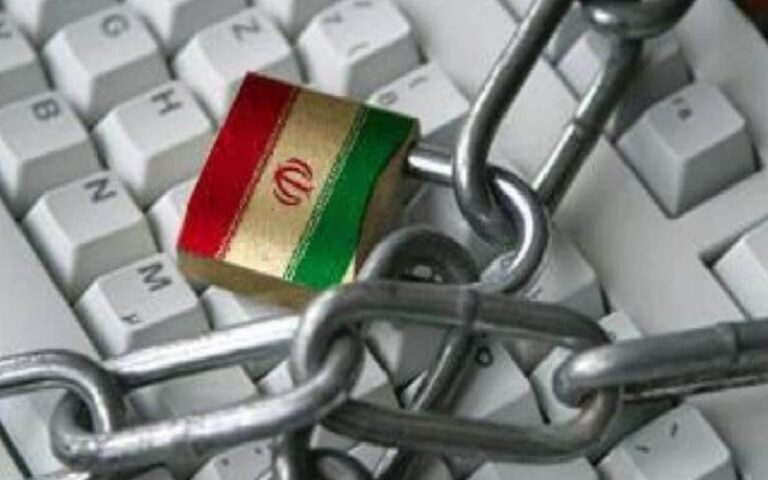
NetBlocks, an internet monitoring and data analysis website, announced that more than 200 hours after the nationwide and complete internet shutdown in Iran, user connectivity has increased only very slightly. The overall level of access remains at around 2% of normal conditions.
According to NetBlocks, an internet monitoring and data analysis website, user connectivity to the network has increased only marginally after more than 200 hours of a nationwide and complete internet shutdown in Iran.

At the same time, the overall level of access is still reported to be around 2% of normal conditions, and it has been stated that there are no signs of the internet returning to a normal state.
According to experts, the reported increase in access is limited and applies only to a small portion of government infrastructure and specific networks; therefore, general public access to the internet remains largely impossible.
At the start of the third day of the nationwide internet shutdown, NetBlocks had announced that leaders of the Iranian regime continued to publish their own narrative of events online, while the switch they control silences the voices of 90 million Iranians.

Intensifying Repression to Conceal the Scale of The Crime

According to NetBlocks, this digital blackout violates citizens’ fundamental rights and freedoms, and such a nationwide shutdown not only blocks access to information but also conceals the regime’s violence from the eyes of the world and reduces the ability to document events.
The nationwide internet shutdown, along with severe restrictions on telephone communications, including mobile and landline phones, occurred at a time when, according to human rights organizations, thousands of people in various cities were killed by regime forces during the popular protests in Dey.
There is still no precise figure for those killed in the protests in Iran, but the People’s Mojahedin Organization of Iran has put the number at more than 3,000 people. The internet shutdown has kept the scale of the catastrophe shrouded in ambiguity.
With one-way phone connections from Iran, information is being relayed in a very limited manner to families abroad. Nevertheless, there are also limited methods for making phone calls from outside the country into Iran.
Some figures estimate the number of those killed at 12,000 people, while others assess it to be far higher. However, the lack of independent access to sources inside the country has eliminated the possibility of accurately verifying the number of those killed and detained.

Iran’s regime cut off the internet nationwide starting on January 8, coinciding with the expansion of protests, in an effort to intensify repression. It is said that widespread images of the bodies of those killed and reports from the protests during these days were published only through a small number of users who had access to Starlink.

Human Rights Watch: Growing Evidence of Mass Killings of Protesters in Iran

Challenges facing Starlink during the Iran protests

Despite reports that some users in Iran have gained access to Starlink satellite internet and that it has been offered free of charge to people during the protests, it appears that internet connectivity via Starlink is also facing many difficulties.
According to a report by Reuters, Iran’s regime is now using jammers and fake GPS signals to disrupt Starlink transmissions.
The report adds that the repression of opponents in Iran is becoming one of the toughest security tests to date for Elon Musk’s Starlink.
This is while, according to the news agency, since its deployment during the war in Ukraine, Starlink has functioned as a vital lifeline against government-imposed internet shutdowns.
Reuters notes that SpaceX, the company that owns Starlink, made this satellite service free for Iranians following the nationwide uprising, an action that places Elon Musk’s space company at the center of another geopolitical flashpoint.
The report adds that a team of engineers based in the United States is now confronting regime measures involving satellite jammers and signal spoofing tactics.
Some experts say that agents of the Iranian regime in Tehran and other cities are using scanner equipment to detect Wi-Fi signals in order to identify Starlink sources in urban areas.
Network security specialists recommend that users who are connected to the internet via Starlink pay close attention to necessary security guidelines and adjust settings in a way that minimizes the risk of identification.

Intensifying Repression to Conceal the Scale of The Crime

As protests and the nationwide uprising of the Iranian people, which began on December 28 in cities across the country, continued, Friday, January 16, witnessed ongoing protests, clashes, intensified state repression, and domestic and international reactions to these developments. This report presents a summarized account of the most important events and news from that day.

Direct fire on protesters

Videos published from the city of Dezful in Khuzestan province show shocking scenes of direct fire by forces loyal to Ali Khamenei, the supreme leader of the Iranian regime, at protesting civilians. These images, from Dezful’s Clock Square, demonstrate the overt use of live ammunition by regime forces against demonstrators and the escalation of organized violence against the popular uprising.

Media narrative-building by institutions affiliated with the IRGC

A news agency affiliated with the Islamic Revolutionary Guard Corps claimed in a statement that protesters “possessed various cold and firearms” and were seeking to “seize ammunition depots and military centers.” The outlet also reported that a number of protesters were arrested during attacks on police stations and military sites. These claims are assessed as part of the authorities’ efforts to justify the bloody crackdown and portray popular protests as armed actions.

Human Rights Watch: Growing Evidence of Mass Killings of Protesters in Iran

Human Rights Watch, in a new report, announced growing evidence of “mass killings” carried out by the Iranian regime’s security forces across Iran and stated that the use of live ammunition against unarmed protesters was deliberate and carried out as part of a state policy.

The report, published on Friday, January 16, stresses that the Iranian regime’s security forces, following the escalation of nationwide protests since January 8, have coordinated widespread killings of protesters, and it is believed that thousands of protesters and bystanders have been killed. According to the organization, existing evidence shows that many victims were killed or seriously injured by gunshots to the head and upper body.

Human Rights Watch stated that severe communication restrictions and a complete internet shutdown have concealed the true scale of these killings. Nevertheless, according to the report, some Iranian officials themselves have acknowledged that the death toll has reached the thousands.

Lama Fakih, deputy Middle East director at Human Rights Watch, said in response to these findings:

“The mass killings by Iran’s security forces since January 8 are unprecedented in the country’s history and once again show that rulers who massacre their own people will continue committing crimes as long as they are not held accountable.”

The necessity of an international response to the crime

According to the published report, Human Rights Watch interviewed 21 people between January 12 and January 14, including eyewitnesses, relatives of victims, journalists, human rights defenders, and medical personnel. These individuals provided the organization with images, audio messages, and accounts of events. Additionally, 51 verified photos and videos were reviewed, and victims’ injuries were assessed by independent forensic medical experts affiliated with the International Rehabilitation Council for Torture Victims.

The report adds that despite widespread communication shutdowns, evidence of protesters being killed has emerged in provinces such as Tehran, Alborz, Kermanshah, Razavi Khorasan, Gilan, Kohgiluyeh and Boyer-Ahmad, Markazi, and Mazandaran. One eyewitness in Kermanshah said in an audio message:

“They are shooting here; tear gas is everywhere. I am stuck in the street on my way back from work. All the roads are blocked, and security forces are firing.”

Human Rights Watch also referred to videos from Tehran showing numerous body bags and piled-up corpses in and around the Kahrizak forensic medicine center. According to the organization, in just a few videos from the same location, at least 400 bodies could be counted, although the actual number is estimated to be higher due to bodies being stacked.

Bags piled with human bodies!

The report goes on to say that state-affiliated media have reported the deaths of at least 121 security force members, a figure that has not been independently verified. However, Human Rights Watch stated it reviewed reports indicating that officials in some cases pressured victims’ families to falsely identify their loved ones as members of the Basij militia in order to receive their bodies.

Citing United Nations principles on the use of force, the organization emphasized that the widespread, coordinated, and lethal use of firearms against unarmed protesters shows that authorities deliberately used lethal force as a state policy.