Home Blog Page 75

It Would Take 70,000 Years to Restore Iran’s Groundwater Resources

As Iran’s water crisis intensifies, Mohammad Darvish, an environmental activist, stated that restoring the country’s groundwater resources would require at least 65,000 to 70,000 years. At the same time, a British publication warned that Tehran may be only weeks away from “Day Zero”—the day when water taps in the city run dry.

The state-run Etemad newspaper, on Saturday, August 2, published a report titled “We Must Wait 70,000 Years for Groundwater to Return,” citing environmental expert and university professor Mohammad Darvish. The article noted that Iran has reached a stage of desertification so advanced that even if water extraction stops, the aquifers cannot be restored.

Water Crisis in Iran: An Uncertain Future

Darvish explained that Iranians have extracted 150 billion cubic meters more than what has been naturally recharged into aquifers over the past three decades. This has led to land subsidence across at least 57,000 square kilometers, averaging one centimeter per year.

In an interview with Etemad, when asked, “So, should we never hope for groundwater restoration?” Darvish responded: “You can wait, for at least another 65,000 to 70,000 years. If you have the patience, you can hope that groundwater conditions will return to their ideal state.”

According to Darvish, today’s situation in Iran is the result of years of excessive extraction and neglect of aquifer replenishment.

He described Iran’s condition as the “final stage of desertification,” stating that many lands no longer have the capacity for construction, road-building, or even laying pipelines and towers, and are effectively unusable.

According to Darvish, based on a report by the Geological Survey of Iran, annual land subsidence now affects 100,000 square kilometers, reaching a rate of two centimeters per year—up from just 11,000 square kilometers in 2016. This alarming growth signals the rapidly accelerating nature of the crisis.

Weeks Away from Day Zero

The British magazine The Week reported on Iran’s critical water situation, stating that Tehran—a city of 10 million—may be only weeks away from Day Zero.

The publication defined Day Zero as the day when water taps across large parts of Tehran run completely dry.

According to the report, Iran is on the brink of water bankruptcy—a crisis driven by drought, climate change, and mismanagement of resources. Analysts warn that it could become a serious threat to Iran’s regime.

At the same time, Tehran’s water authority announced the closure of public restrooms due to water shortages—a decision that seriously impacts the daily lives of children, workers, patients, and city commuters.

Masoud Pezeshkian, the president of Iran’s regime, warned on July 31 that the country is “on the verge of a serious water crisis.”

He had previously stated: “If urgent decisions are not made, we will face a situation in the future that will not be solvable.”

The Week, referring to statements by regime officials, wrote that the water shortage crisis is not only due to recurring droughts, but also the result of excessive groundwater extraction, inefficient agricultural practices, and uncontrolled urban water consumption.

Experts warn that without long-term planning and immediate reform of consumption patterns, the water crisis could not only fuel social unrest but may also become a serious threat to the country’s environmental and political stability.

Iran Ranks 97th Out of 100 Countries in Internet Quality

The Internet and Infrastructure Commission of the Tehran E-Commerce Association published a report stating that Iran ranks 97th among 100 countries in terms of internet speed, disruptions, and restrictions. Despite these limitations, studies indicate that the number of Starlink satellite internet users in Iran is growing.

Hamidreza Ahmadi, deputy chair of the commission, said on Sunday, August 3, that Iran remains among the worst in the world in terms of internet quality, marked by being “highly disrupted,” “restricted,” and “slow.”

Cuba, Turkmenistan, and Sudan are the only three countries ranked lower than Iran.

War, internet blackout, anxiety; connection with Iran has been severed

100 Startups Demand an End to Internet Restrictions

The commission emphasized in its report that although hearing “Iran ranks at the bottom of internet quality indexes” for the fifth time may no longer come as a surprise, society must not grow accustomed to the poor-quality internet endured by end users.

According to the report, Iran’s poor internet quality can only be resolved through changes in domestic policy—such as lifting censorship and improving the network by eliminating deliberate disruptions imposed under the pretext of blocking VPNs.

The report also included a statement from 100 Iranian startups demanding an end to internet restrictions.

Their demands include lifting censorship, increasing international bandwidth and speed, and removing restrictions on emerging protocols such as HTTP/6 and IPV6.

Fast and Secure Internet Protocol Remains Blocked in Iran After the War

The Tehran E-Commerce Association report stressed that various internet disruptions are evident in Iran’s network, some of which were recorded even before the recent war and still persist.

Pouya Pirhosseinlou, head of the Internet and Infrastructure Commission, said during the unveiling of the fifth Internet Quality Report on August 3 at Iran’s Chamber of Commerce that, unlike other services, the HTTP/3 communication protocol has not been unblocked following the 12-day war.

He stated that an official or security directive from Iran’s Supreme Council of Cyberspace has ordered the continued blocking of this protocol.

Approval of Accelerated Implementation of Class-Based Internet in Iran

HTTP/3 is the latest generation of internet data transfer protocol, offering default encryption, faster speeds, and greater stability—particularly on unstable or mobile networks.

While it enables faster and more secure access to websites, its technical features that facilitate bypassing censorship have led to it being restricted or blocked in Iran.

93% of Young Iranians Use VPNs

The commission’s deputy chair stated that in their fifth internet quality report, a special survey conducted in collaboration with ISPA found that 93% of Iranian youth aged 15 to 30 use VPNs.

According to the survey, 86% of all internet users in Iran rely on VPN services.

It also shows that 62.2% of users did not use VPNs or proxies before 2022, when social media and messaging apps like Telegram and Instagram were filtered.

Despite censorship, Instagram remains the first choice for 63% of Iranian internet users.

The survey further reveals that the number of Starlink users—described as a super VPN—is increasing monthly in Iran.

Nima Ghazi, head of the E-Commerce Association, stated that while the official narrative promotes growing the digital economy to 10% of Iran’s GDP, every action being taken in the country contradicts this goal.

At Least Four American Citizens Detained in Iran

According to a report by The New York Times, citing human rights groups, at least four dual Iranian American citizens have been detained in Iran—two were arrested after the 12-day war and the other two in 2024.

On Saturday, August 2, The New York Times quoted sources such as the nonprofit organization Hostage Aid Worldwide, which is in contact with the families and friends of the detainees, reporting that at least two American men and two American women have been arrested in Iran.

According to these sources, three of the individuals are still being held in prison, while one has been barred from leaving the country.

Reports indicate that all four were residents of the United States and had traveled to Iran to visit their families.

Former French Hostage: The Iranian Regime Treats Prisoners Like “Animals”

The families of three of the Iranian-American citizens have requested that their names not be made public, fearing it could worsen their situation.

Two senior officials of Iran’s regime, speaking on condition of anonymity, confirmed to The New York Times that Tehran recently detained two dual U.S. citizens—one a man from New York and the other a woman from California.

They stated that the arrests are part of a broader crackdown aimed at identifying what the regime calls a network of “agents linked to Israel and the United States.”

One of the detainees arrested after the 12-day war is a 70-year-old Jewish man from New York who works in the jewelry industry and has children and grandchildren.

According to human rights groups and his colleagues and friends, he has been interrogated over his travel to Israel.

Another detainee is a woman from the state of California who had been held at Evin Prison but was transferred to an undisclosed location following Israel’s attack on the prison.

Another Iranian-American woman was detained in Iran in December 2024 and placed under a travel ban.

She is currently outside of prison, but both her Iranian and American passports have been confiscated.

According to her American lawyer, who requested anonymity due to the sensitivity of the case, the woman works for a U.S. technology company and runs a charitable foundation for underprivileged children in Iran.

Reports indicate that after the 12-day war, Iran’s regime judiciary escalated her case and filed charges of “espionage” against her.

Reza Valizadeh, a former reporter for Radio Farda, is another Iranian-American citizen imprisoned in Iran. He has been sentenced to 10 years in prison on charges of “collaboration with a hostile government.”

For decades, Iran’s regime has pursued a policy of arresting foreign and dual nationals—a practice widely known as “hostage diplomacy.”

Under this strategy, hostages are used to secure the release of Iran’s frozen assets or to gain the freedom of Iranian nationals imprisoned in the West for involvement in “terrorist activities.”

According to The New York Times, these arrests are likely to further intensify the already tense political climate between Tehran and Washington.

U.S. President Donald Trump has previously stated that the United States will not tolerate the unjust detention of its citizens by foreign governments and that securing their release is a top priority for his administration.

The U.S. Department of State has said it is “closely monitoring” reports of American citizens being detained in Iran.

Following the war, the U.S. State Department issued a new advisory, warning American citizens not to travel to Iran “under any circumstances.”

Majid Kavousifar: A Hero Who Mocked the Executioner’s Gallows

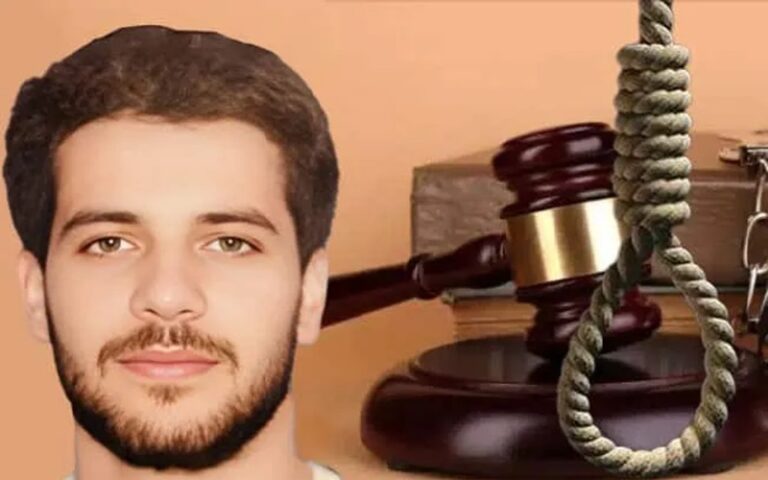
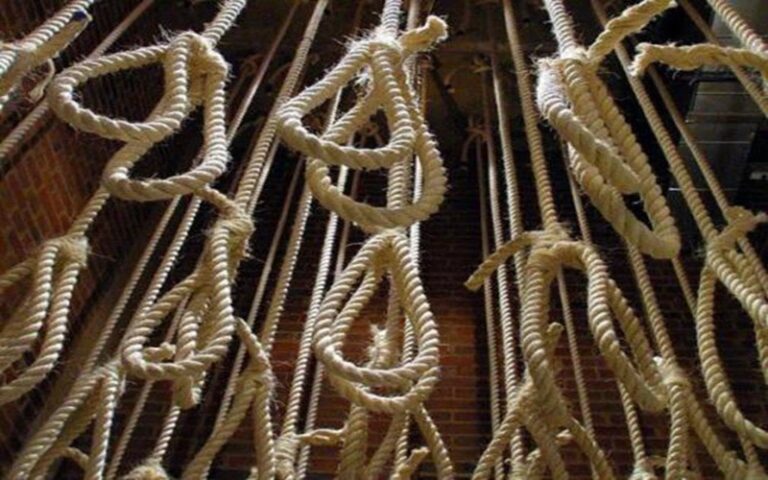
On August 2, 2007, Majid Kavousifar was hanged by the repressive judiciary of Iran’s regime—with a smile on his face.

Majid was a young man who, on August 2, 2005, shot and killed Hassan Ahmadi Moghaddas—Deputy Prosecutor of Tehran and Head of the Ershad Judiciary Complex (the so-called Morality Prosecutor’s Office on Vozara Street)—on Bucharest Street in Tehran. Moghaddas was responsible for the imprisonment, torture, and execution of many people and political and social activists.

Iran’s Regime Executes Political Prisoners Mehdi Hassani and Behrouz Ehsani

After fleeing the country, Majid and his nephew Hossein Kavousifar went to the United Arab Emirates and sought asylum at the U.S. embassy. However, embassy officials handed them over to Emirati police, who in turn extradited them to the Iranian regime.

Following his extradition, the Iranian regime sentenced Majid Kavousifar to death in a show trial. Exactly two years after the killing of Hassan Ahmadi Moghaddas, on the same date, he was hanged.

Death Sentence Issued by “Judge” Salavati

His death sentence was issued by the notorious judge Abolqassem Salavati.

It is worth noting that “Judge” Salavati was sanctioned by the U.S. State Department on December 19, 2019, for his role in extrajudicial executions. While the U.S. added Salavati to its sanctions list, it has never addressed the role of its embassy in handing over Majid Kavousifar to the executioners of Iran’s regime.

Iran hangs judge’s killers in public

Majid Kavousifar Approached the Gallows Smiling and Waving

As Majid Kavousifar was taken to be executed, he smiled and waved to the people with his hands bound.

Reuters selected the photo of Majid Kavousifar and his nephew Hossein Kavousifar—smiling triumphantly as they were hanged from a crane—as its Photo of the Decade.

The photo, taken by a Reuters photographer, captured the moment the two young Iranians were hanged on August 2, 2007.

In its caption, Reuters wrote: “The Iranian regime hanged Majid and Hossein on Thursday in front of hundreds of onlookers for killing a judge who had imprisoned a number of dissidents.”

Air Pollution in Tehran Claimed 6,000 Lives Last Year

Media outlets in Iran reported that air pollution in the capital claimed the lives of 6,000 Tehran residents last year.

The state-run news website Etemad Online wrote on Friday, August 1: “Air pollution is a long-standing issue for Tehran residents; in the first half of the year, they grapple with dust storms, and in the second half, with temperature inversion.”

According to data from the Tehran Air Quality Control Company, the capital experienced only six days of clean air between March 21 and July 27.

During the same period, there were 75 days of moderate air quality, 39 days classified as unhealthy for sensitive groups, five days as unhealthy for all groups, and three days as very unhealthy and hazardous.

Iranian Regime Blamed as Main Culprit Behind Environmental Pollution

Citing this data, Etemad Online wrote: “Although 23 agencies are responsible for air pollution management, since the beginning of this year (March 21), Tehran residents have had to endure polluted air nearly every third day.”

Earlier in June, the research center of Iranian regime’s Majlis (parliament), citing evaluations by the Ministry of Health, announced that in 2023, air pollution was the cause of premature death for over 30,000 people in 57 cities with a combined population of around 48 million.

The economic damage caused by air pollution across the country is estimated at around $23 billion.

Following persistent air pollution and dust haze in Tehran, Reza Shahbazi, deputy head of the Geological Survey and Mineral Exploration of Iran, warned on July 8 that the dried-up Salehiyeh wetland in the southwest of the capital has become the primary source of dust storms.

Reasons Behind the Regime’s Failure to Contain the Air Pollution Crisis

Etemad Online further cited “fragmented responsibilities among agencies and lack of enforceability” as the main reasons behind Tehran’s continued air pollution.

Surge in Mazut Consumption in Iran Amid Rising Exports of Clean Fuels

According to the report, proposed solutions include “establishing a single authority with executive power, providing sustainable funding for pollution-reduction projects, banning the use of outdated vehicles, and holding underperforming institutions accountable.”

Urban affairs expert Mohammadreza Tavakolian criticized the current situation, stating that despite clearly defined responsibilities for the relevant agencies, the lack of sufficient funding and enforceability has left many laws and plans unimplemented, remaining only on paper.

On July 31, the state-run website Tejarat News reported that contrary to previous promises by Iranian regime officials, the burning of mazut (heavy fuel oil) has become an “official and relied-upon option” for the regime in managing its energy crisis—a practice that continued even last year.

The outlet noted the regime’s inability to handle the energy crisis even with mazut-burning, writing: “People are forced to endure air pollution, power outages, and numerous illnesses all at once.”

Thousands of Unemployed Nurses Show Little Interest in Job Postings

Mohammad Sharifi Moghadam, the Secretary-General of Iran’s Nurses’ Home, stated that “thousands of nurses are unemployed” and despite the large number of unemployed nursing graduates, there is very little interest in official job advertisements in major cities. He said no candidates have yet come forward for the recruitment of 10,000 to 12,000 nurses.

On Friday, August 2, Sharifi Moghadam told the state-run ILNA news agency that the “uncontrolled expansion of nursing school capacities” in Iran does not help resolve the employment crisis among nurses.

He reported that many nurses have migrated abroad and added, “Many have chosen to stay home rather than work as nurses, and some have turned to other jobs.”

In recent years, nurses in various cities have repeatedly held protest gatherings over their professional and livelihood issues, but their demands have yet to be fully addressed.

Nurse Shortage Leads to Closure of Hospital Departments in Iran

ILNA reported that the July salaries of many nurses across different cities were significantly reduced—by as much as 80 to 100 million rials (approximately $90 to $112) in some cases—once again sparking their outcry.

It is worth noting that the base salary in Iran is around 150 million rials (approximately $167).

The news agency also emphasized that nurses had previously protested against the coercive treatment by Iranian regime officials.

According to the report, nurses who have protested against low wages, harsh working conditions, and being forced to work overtime have faced punitive actions such as dismissal, forced relocation, or suspension from service.

The Secretary-General of the Nurses’ Home also commented on the dire conditions, stating: “Low salaries and inadequate and irregular payments pose a serious threat to retaining this vital workforce in the country. We are genuinely facing a shortage of nurses, and this shortage has become evident during various national crises.”

Why Are Nurses Not Responding to Recruitment Calls?

After five years, the Ministry of Health announced a recruitment call for 10,000 to 12,000 nurses, but the positions remain unfilled.

This is despite the fact that there are currently around 80,000 nursing graduates in the country. However, even these graduates are not responding to the official hiring announcements.

Iran: Some Nurses Are Homeless and Sleep in Their Cars

The Secretary-General of the Nurses’ Home said that the lack of response from nurses to the latest recruitment call is due to “a decline in motivation to enter the profession and its structural issues.”

Sharifi Moghadam added: “Unfortunately, certain management behaviors at the ministry, hospital, and university levels have forced nurses to quit their jobs, migrate, or change professions. Working and living conditions must be improved in order to retain skilled professionals.”

Regarding the consequences of this crisis on the healthcare system, he said: “Given the current crisis and the lack of trust between nurses and the Ministry of Health, we are facing serious problems in the health system, and these issues may worsen in future crises.”

Previously, the Secretary-General of the Nurses’ Home had reported patient deaths in Iranian hospitals due to a critical shortage of nurses.

In November 2023, he announced that “over 3,000 nurses” leave Iran each year, yet according to him, the Ministry of Health does not recruit even that many to replenish the healthcare workforce.

According to global healthcare benchmarks, there should be either three nurses for every 1,000 citizens, or two active nurses per hospital bed in the country’s healthcare system.

Previous reports have indicated that Iran’s nursing workforce is only “half” of the minimum required standards for a functioning healthcare system.

Iranian Regime Foreign Minister: Iran Still Has Full Capacity to Rebuild Its Nuclear Program

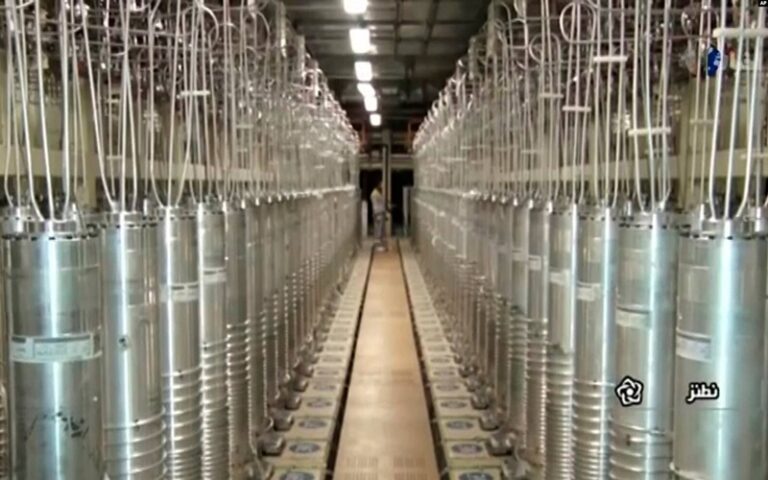
Abbas Araghchi, the foreign minister of Iran’s regime, told Fox News that despite attacks by the United States and Israel, Iran still has the ability to rebuild its infrastructure and resume enrichment, since the necessary scientists, technology, and equipment are still available to Tehran.

In the interview, Araghchi said buildings can be rebuilt and machinery replaced because they have technology. He added that, we have many scientists and technicians who previously worked at our facilities.”

He also added that when and how enrichment will be resumed “depends on the circumstances.”

Grossi Warns of Consequences of Attacks on Iran’s Nuclear Facilities

These remarks come after the United States, in its June attacks, targeted three key nuclear sites in Iran. According to reports, Israel also destroyed most of the regime’s air defense systems, eliminated several senior military commanders, and killed at least 13 nuclear program operatives and hundreds of others.

Israel has claimed that 30 senior security officials and 11 “top scientists” involved in the Iranian regime’s nuclear program were killed in these attacks.

According to Fox News, U.S. officials have said the attacks caused significant damage to the Fordow and Natanz nuclear facilities, and that missiles fired at the Isfahan site have effectively disabled it. Washington claims these attacks have set the Iranian regime’s nuclear program back by several years.

Araghchi, however, insists that Iran still possesses the technology and human resources to rebuild its nuclear program and is relying on domestic capabilities. He also demanded compensation from the U.S. for the damages, saying the Americans must explain why they attacked “in the middle of negotiations” and must provide guarantees that such behavior will not be repeated in future talks. Araghchi said that they must compensate for the damages.

In another part of his interview with Fox News, Iran’s regime foreign minister Abbas Araghchi claimed that the recent attacks, known as the “12-Day War,” proved there is no military solution to halting Iran’s nuclear program. He also said these attacks have intensified internal calls within the regime to weaponize the nuclear program, though according to him, the regime still adheres to the two-decade-old religious decree (fatwa) by its Supreme Leader banning the production of nuclear weapons.

The Heavy Cost of Iran’s Nuclear Program

He reiterated that Iran will not back down from its right to enrich uranium for civilian purposes and declared, without enrichment, they have nothing.

Uranium enrichment remains one of the central points of contention between the Iranian regime and the United States.

Meanwhile, European countries have threatened to trigger the snapback mechanism if no progress is made in the negotiations. Under the terms of the JCPOA (Joint Comprehensive Plan of Action), the remaining signatories—France, the United Kingdom, Germany, China, and Russia—can activate this mechanism if they observe Iranian non-compliance. The United States, having exited the deal during Donald Trump’s presidency, currently does not have the authority to invoke this clause.

At the same time, the United States has imposed new sanctions on the Iranian regime’s oil network and the drone division of its army. European diplomats have also been engaged in talks with Tehran in recent days to find ways to prevent the reactivation of United Nations sanctions—one proposed path being Iran’s full return to cooperation with the International Atomic Energy Agency (IAEA) and the resumption of nuclear inspections.

Araghchi warned that if Europe triggers the sanctions, Iran will halt negotiations, stating that “this would mean the end of the road.”

Rome Summit: Regime Change by the People Seen as Key to a Free Iran

0

On July 31, 2025, the Free Iran World Summit convened in Rome, uniting prominent political figures from Europe and the U.S. to address the deepening crisis in Iran. The summit was held shortly after the Iranian regime executed Mehdi Hassani and Behrouz Ehsani, members of the People’s Mojahedin Organization of Iran (PMOI/MEK). Their sacrifice became a central theme, symbolizing the regime’s growing desperation and the resilience of its opposition.

Speakers condemned the regime’s brutality and emphasized its increasing reliance on repression. A consensus emerged around the “Third Option”—a strategy rejecting both foreign intervention and appeasement in favor of regime change by the Iranian people and their organized resistance.

Maryam Rajavi: A Clear Vision for a Democratic Iran

Maryam Rajavi, President-elect of the National Council of Resistance of Iran (NCRI), delivered the keynote, describing the recent executions as acts of fear, not strength. She emphasized the regime’s weakness and presented a roadmap for a secular, democratic, and non-nuclear republic.

Rajavi denounced the regime’s history of crisis generation—from war to terrorism—and stressed that the current crisis is one of overthrow. She declared the only viable solution is the removal of the regime by the people and their resistance, arguing that it would ensure peace in the region.

Firmly rejecting both clerical and monarchic dictatorships, Rajavi reiterated that the future lies not in returning to the past but in advancing toward a free and democratic Iran. She emphasized that the NCRI offers an organized alternative, committed to transferring sovereignty to the people through free elections.

Human Rights Abuses Under Global Scrutiny

Human rights abuses dominated much of the discussion. Stephen Rapp, former U.S. Ambassador, noted that Iran had carried out 700 executions in the first half of 2025, citing sham trials and torture-based confessions.

Professor Javaid Rehman, former UN Special Rapporteur, condemned the secret executions of Hassani and Ehsani and warned of the regime’s potential for repeating the 1988 massacre, when 30,000 political prisoners were killed. He cited a July 7 editorial from Fars News, affiliated with the IRGC, that called the massacre a “successful experience,” a chilling sign of intent.

Charles Michel, former President of the European Council, echoed the warning, calling for immediate international action. Nazli Afshar, a young Iranian-Italian, spoke emotionally of her uncle, executed during the 1988 massacre, highlighting the intergenerational trauma inflicted by the regime.

Support for the NCRI’s Ten-Point Plan

International figures praised NCRI’s Ten-Point Plan as a viable blueprint for Iran’s future. Former Italian PM Matteo Renzi affirmed that “regime change by the people of Iran and their Resistance” is the only way forward.

Charles Michel labeled appeasement as “complicity,” calling the NCRI a democratic alternative and the Ten-Point Plan a foundation for a free republic. Former U.S. Ambassador Carla Sands and Italian economist Carlo Cottarelli also endorsed the plan, highlighting its commitment to gender equality, secularism, and a non-nuclear Iran.

The Resistance Units Inside Iran

Key attention was given to the PMOI’s Resistance Units operating inside Iran. Andrin Mohseni, a young Iranian from Switzerland, saluted their bravery in confronting state repression. These activists, he said, break the “barriers of fear” and keep the flame of resistance alive.

Hans Ulrich Seidt, former German ambassador, described the Resistance Units as essential to undermining the regime from within, demonstrating that the opposition is both domestic and legitimate.

Exposing the Regime’s Propaganda

The summit also addressed the regime’s campaign to demonize the resistance. Ingrid Betancourt, former Colombian senator, spoke of her own experience with disinformation after supporting the PMOI. She argued the regime labels the resistance a “cult” to discredit a credible alternative.

Charles Michel emphasized that the regime’s obsession with attacking the opposition proves its effectiveness and threat to its survival. Samira Ardalani noted that the regime attempts to tarnish the image of executed dissidents to avoid international backlash.

Rejection of Monarchy and Call to Designate IRGC

A strong stance was taken against restoring the monarchy. Senator Giulio Terzi, former Italian foreign minister, and Linda Chavez, former U.S. official, firmly opposed any return to Shah-era repression. Rudy Giuliani bluntly referred to the Shah’s son as the “son of a mass murderer,” arguing Iran deserves a true democratic republic.

Speakers also called for the IRGC to be designated as a terrorist organization. Senator Terzi urged European governments to act, framing it as a key demand alongside recognizing the right to resist.

Final Message: The Future Belongs to the Iranian People

The Rome Summit concluded with a unified message: the Iranian regime is in its final phase, and only the people of Iran can determine its future. Former UK Foreign Secretary James Cleverly summed it up: leadership must come from within, not be imposed.

The call was clear—no to war, no to appeasement, and yes to supporting the Iranian people and their organized resistance as they fight for freedom, democracy, and sovereignty.

Industry Struggles and Public Anger Grow Amid Water and Power Crisis in Iran

As the water and electricity crisis continues across the country, concerns are growing about its impact on the daily lives of citizens and the operations of production and industrial units. Criticism of the government of Masoud Pezeshkian, the Iranian regime’s president, has intensified due to its failure to contain the crisis.

The state-run newspaper Ham-Mihan reported on Thursday, July 31, that the rationing and increased restrictions on water allocation to the industrial sector—intended to prioritize household needs—have fueled widespread concerns over the economic and social consequences of this approach.

Water Crisis in Iran: An Uncertain Future

The report stated: “Many industries and some refineries are facing shortages in water and electricity, which could lead to higher prices or even scarcity of energy products such as gasoline.”

The state-run ILNA news agency also reported on July 31 about the “slowing of production due to power outages.”

Mohammad Hamidi, secretary of the Electrical Engineering Companies Association of Golestan province, warned in an interview with ILNA that repeated power outages could lead to “reduced production, declining income, and eventually layoffs and worker unemployment.”

He added that the current crisis has “caused serious problems for the people, farmers, and producers, because in today’s world, electricity is not only a basic commodity but also the lifeline of the economy and the most essential element of daily life.”

Pezeshkian Admits to a Severe Water Crisis in the Country

In recent days, many citizens and social media users have harshly criticized the regime’s government for failing to fulfill its previous promises to resolve the electricity and water crisis.

Masoud Pezeshkian, president of the Iranian regime, acknowledged in a speech at the Water Planning Council in Zanjan on July 31: “Tomorrow, we may not have drinking water.”

He called for an “austerity approach in resource consumption, both by officials and the people,” and added: “According to university and water researchers, all regulations have increased water consumption.”

However, Pezeshkian did not clarify which institution within the regime’s power structure is responsible for implementing these reforms, nor did he indicate a timeline for resolving the water crisis if reforms are enacted.

Ahad Vazifeh, head of Iran’s National Drought Center, warned in an interview with the state-run news website Rouydad24 on July 31 of the imminent likelihood that the country could enter a state of “water misery.”

Public Protests Against Power Outages

Videos posted on social media show citizens in Golshahr (Karaj), Parand, and Shahr-e-Rey protesting repeated power outages by chanting slogans against Ali Khamenei, the supreme leader of the Iranian regime.

In these videos, slogans such as “Death to Khamenei” and “Death to the dictator” can be heard.

Mai Sato Condemns Iran’s Amputation Sentences for Three Prisoners

Mai Sato, the United Nations Special Rapporteur on the situation of human rights in Iran, posted a short message on her X (formerly Twitter) account, calling the amputation of three prisoners at Urmia prison a clear example of “violation of fundamental human rights” and strongly condemned it.

She stated: “According to received information, yesterday the amputation sentences for Messrs. Hadi Rostami, Mehdi Sharafian, and Mehdi Shahivand were carried out.”

These three prisoners had been sentenced by the court to the amputation of four fingers from their right hand. According to human rights reports, the sentence was carried out on the night of Wednesday, July 30, using a “guillotine” device in the central prison of Urmia.

This punishment was carried out in the presence of judicial officials, including the prison warden and the deputy prosecutor. After the prisoners received local anesthetic injections and underwent the amputations, they were returned to the prison intake ward with only basic bandaging and without full medical treatment.

In response to this act, Mai Sato described it as “state-sanctioned mutilation” and emphasized that corporal punishments such as amputation are “forms of torture, cruel, inhuman, and degrading treatment.” She added that under international law, including Article 7 of the International Covenant on Civil and Political Rights, “they are absolutely prohibited and no exceptions are allowed.”

The three men were arrested in August 2017 on charges of “theft” and were sentenced to amputation in November 2019 by Branch One of the Criminal Court for Juveniles.

This act has triggered a wave of criticism and concern among human rights organizations and civil society activists both inside Iran and abroad.

Gholamhossein Mohseni Ejei, the head of Iran’s regime judiciary, announced on December 7, 2024, that despite both domestic and international pressure on the regime, the highest number of hand amputation sentences in the past three years had been carried out in Iran.

Ejei, who is regarded as one of the prominent violators of human rights in Iran, at the time described amputation as “a decree issued by God” and added that this punishment continues to be enforced in Iran despite pressure from various organizations.

The issuance and enforcement of amputation sentences in Iran are in clear contradiction with the fundamental principles of human rights, including human dignity. This is despite the fact that Iran is a signatory to the International Covenant on Civil and Political Rights—an international treaty that explicitly prohibits cruel, inhuman, or degrading punishments.

The sentence of amputation is undoubtedly one of these types of punishments, and its implementation constitutes a direct violation of the principle of preserving human dignity—a principle that forms the foundation of many international human rights instruments.

Iran’s regime is among the few governments that continue to use amputation sentences for certain crimes and, unlike many other countries, has not joined the United Nations Convention Against Torture.

Despite repeated appeals from international human rights bodies to end such punishments, Iran’s regime continues to issue and enforce sentences such as flogging and amputation of limbs—sentences that are contrary to human rights standards and a cause for serious concern within the global community.