Home Blog Page 77

Retirees Return to the Streets Across Iran Chanting “We Refuse to Live Under Oppression”

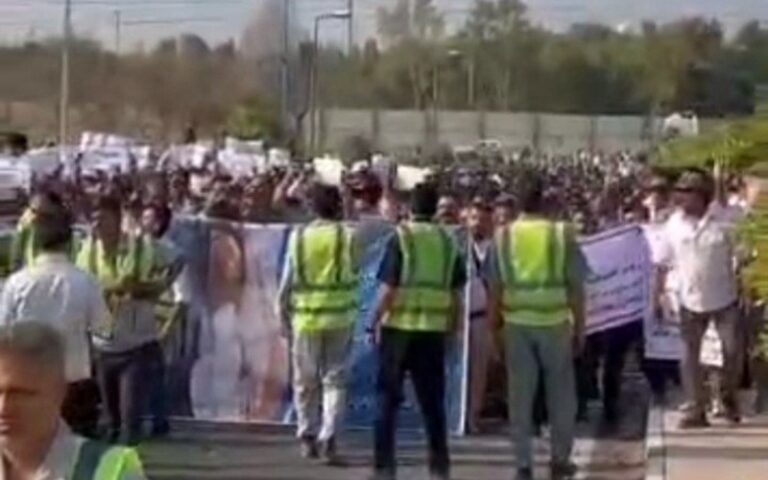
On Sunday, July 27, retirees from the Social Security and Education sectors took to the streets once again in various cities across Iran—from Tehran to Rasht, Arak, and Kermanshah—to raise their voices in protest against poverty, corruption, and the injustice of the regime.

Tehran: Retired Educators Rally in Front of Education Ministry

On Sunday morning, retired teachers gathered in front of the Ministry of Education in Tehran to express their anger over repeated broken promises by Iran’s regime and the failure to pay their retirement bonuses. One protester shouted, choking back emotion: “If they don’t pay our bonus, I will set myself on fire.” With chants like “Incompetent minister, resign, resign,” the demonstrators condemned the regime’s structural corruption and inefficiency.

A New Wave of Protests Over Water and Power Shortages from Nishapur to Amol and Anar

Tehran: Social Security Retirees Protest in Front of Main Office

At the same time, a group of Social Security retirees and retired teachers gathered in front of the main Social Security Organization building in Tehran. With slogans like “Only in the streets can we get our rights,” they demanded immediate attention to their living conditions, payment of overdue benefits, and an end to economic pressure.

Gilan Province: Retirees Sing “Ey Iran” to Symbolize National Solidarity

In Gilan province, retirees turned the atmosphere of protest into a symbol of national solidarity by singing the patriotic anthem “Ey Iran.” With slogans such as “The poverty line rose, our table shrank,” “Retirees are awake, fed up with discrimination,” and “No more promises, no more lies—livelihood is our right,” they demanded full implementation of pension equalization, the elimination of structural discrimination, and improved economic conditions.

Arak: Retirees Protest Dire Living Conditions

In Arak, retirees gathered in front of regime institutions to protest their dire economic conditions, injustice, and the regime’s continued failure to address their demands. These protests are part of a nationwide wave of demonstrations by various segments of the Iranian population.

Kermanshah: United Against Poverty and Corruption

In Kermanshah, Social Security retirees rallied in front of the organization’s office, chanting slogans such as “Unity, unity, against poverty and corruption,” “We want no war, no killing—lasting welfare is what we demand,” and “Our enemy is right here, they lie it’s America.” Protesters voiced their anger at the regime’s looting of national resources. With chants like “Embezzlements are in dollars, our salaries are in rials” and “Enough of warmongering, our tables are empty,” they denounced the regime’s wasteful spending on nuclear and missile programs. They also demanded the release of jailed teachers and workers, while chanting “Workers, teachers, employees, and retirees—unity, unity” to showcase the solidarity of different social classes.

Regime in Crisis: From Looting Salaries to Social Collapse

Iran’s regime, mired in deadly economic crises, has plundered retirees’ salaries and diverted national resources to futile nuclear, missile, and military ventures. The regime’s empty treasury and economic mismanagement have plunged the lives of millions of Iranians into poverty and misery.

These retirees’ protests, now a nationwide movement, are not only driven by economic demands but also serve as an outcry against the regime’s corruption, oppression, and systemic repression.

These demonstrations—joined by teachers, workers, and retirees across various cities—serve as an alarm bell for Iran’s regime.

The international community must end its silence on the Iranian regime’s crimes and, through firm support for the Iranian people’s struggle, targeted sanctions, and political pressure, help pave the way for justice and freedom in Iran.

Water And Electricity Supply Crisis; Efforts for the Rapid Transfer of Water to Tehran

Amid a severe water crisis in Iran and growing public complaints over water cuts, Massoud Pezeshkian, the Iranian regime’s president, visited several dams in Alborz province, including Karaj Dam and Taleqan Dam.

On the evening of Thursday, July 24, following his visit to the Taleqan Dam water transfer project to Tehran, Pezeshkian told reporters: “As you can see, according to reports, the water level behind the Taleqan Dam has dropped by nearly 48 meters, which is a serious warning for the drinking water supply of the capital and nearby cities.”

He promised that efforts are underway to “rapidly transfer water from Taleqan to offset the water crisis in Alborz and Tehran provinces.”

A New Wave of Protests Over Water and Power Shortages from Nishapur to Amol and Anar

At the same time, Pezeshkian urged the public to “definitely conserve water until the current situation stabilizes.”

The state-run IRNA news agency also reported that in the current water year, the reservoirs of dams supplying drinking water to Alborz province have significantly decreased.

According to Iran Water Resources Management Company, Karaj Dam has seen a 60% drop in water levels, Taleqan Dam 33%, Lar Dam 25%, and Latyan Dam 45% compared to the previous year. The state-run IRNA described this situation as “fragile.”

Meanwhile, environmental experts have been warning for years about the threat of “water bankruptcy” in Iran, calling any water transfer project that is incompatible with regional climate conditions a temporary fix.

Water transfer project from Taleqan to Karaj and Tehran

This project by Iran’s Ministry of Energy is not new. Under the administration of former regime president Ebrahim Raisi—who died in a helicopter crash in May 2024—an 1,800-millimeter pipeline, 60 kilometers in length, was laid from Lake Ziaran near the Taleqan Dam to the Bileqan intake near the Karaj Dam.

Now, Pezeshkian’s administration claims it has accelerated the implementation of the project, stating that under the three years of former regime president Ebrahim Raisi, progress had reached only 27%, while under the current 14th government, progress has reached nearly 70% in just eight months.

According to project officials, Phase Two, which aims to deliver water to Tehran, will be completed in early October 2025.

They added that upon completion, the project would enable the annual transfer of “300 million cubic meters of water” to Alborz and Tehran provinces.

As the energy crisis deepens and multi-hour blackouts and water outages become more frequent across Iran, regime officials have resorted to weekday shutdowns to manage consumption. They hailed last Wednesday’s closure as a success and called for the continuation of such measures.

Water Crisis in Iran: Mismanagement, Blackouts, and Public Distrust Amid Environmental Collapse

In the past month, Iranian regime officials have attempted to curb consumption through emergency actions such as frequent water and electricity cuts and closing government offices on certain days.

On Sunday, July 27, Minister of Energy Abbas Aliabadi announced that the Wednesday, July 23 closure in various regions of the country led to a reduction of 19,000 megawatt-hours in electricity consumption compared to the previous day.

He said the shutdown led to a decrease in Tehran’s water consumption by 3,800 liters per second, equivalent to 418,000 cubic meters.

Earlier, some experts had emphasized that reductions in consumption following office closures and reduced mobility are natural, but such measures offer only short-term relief and cannot replace structural policymaking needed to manage the energy crisis.

A major share of electricity consumption in Iran comes from the industrial, administrative, and agricultural sectors, while about 90% of the country’s water is used in agriculture—factors that limit the household sector’s role in resolving the crisis.

Power generation at Karaj Dam likely to stop within two weeks

On July 27, Mohammad Ali Moallem, director of the Karaj Dam, warned that due to water shortages, although the hydroelectric power station at the dam is currently operational, water levels may drop within two weeks to the point where power generation will no longer be possible.

He added that if the water level falls below the lower intake gate, electricity generation will no longer be feasible.

Iran’s Regime Executes Political Prisoners Mehdi Hassani and Behrouz Ehsani

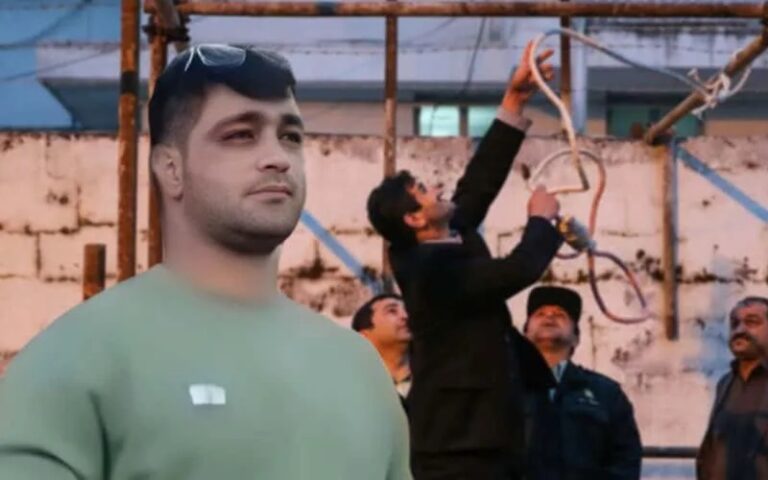
According to the state-run Mizan news agency, on the morning of Sunday, July 27, 2025, Mehdi Hassani and Behrouz Ehsani, two political prisoners, were executed in Iran’s Ghezel Hesar Prison in Karaj. The charge against them was “membership in the People’s Mojahedin Organization of Iran (PMOI/MEK).” This comes despite widespread violations of fair trial standards in their legal proceedings. Their requests for retrial were repeatedly and summarily rejected by the regime’s Supreme Court without thorough review.

The PMOI is the largest opposition group to the Iranian regime. Since 1979, the regime has executed 120,000 of its members.

In mid-September 2024, Mehdi Hassani and Behrouz Ehsani were sentenced to death by Branch 26 of Tehran’s Revolutionary Court, presided over by Judge Iman Afshari. The verdict was upheld on January 7, 2025, by the Supreme Court without holding a court of appeals.

Human rights observers emphasize that this process reflects a lack of judicial transparency and a disregard for the rights of the accused.

The families of the two political prisoners had stated that over the past few months, their access to independent lawyers was severely restricted, and many aspects of the legal proceedings were conducted in a highly securitized environment, away from public scrutiny. Human rights organizations have repeatedly warned that the charge of “membership in opposition groups” has become a tool used by the Iranian regime to suppress political and ideological dissent.

The execution of these two prisoners has sparked a wave of domestic and international condemnation. Human rights organizations have called for an immediate halt to political executions, a review of judicial procedures, and adherence to international legal standards in Iran.

Political prisoner Behrouz Ehsani Eslamloo, born in 1965, was 70 years old, originally from Urmia and residing in Tehran. He held a high school diploma, worked independently, was married, had two children, and was the head of a household that included an elderly mother.

Mr. Ehsani was arrested at his home in November 2022, during the height of the nationwide uprising, and was transferred to Ward 209 of Evin Prison, which is operated by Iran’s Ministry of Intelligence.

After three and a half months of torture and interrogation, he was moved to Ward 4 of Evin Prison.

In mid-September 2024, after 22 months in limbo, Behrouz Ehsani was finally sentenced to death alongside fellow political prisoner Mehdi Hassani by Branch 26 of Tehran’s Revolutionary Court, presided over by Judge Iman Afshari. The court informed his lawyer of the sentence.

The charges against Mr. Behrouz Ehsani were listed as “armed rebellion, waging war against God, corruption on Earth, membership in the PMOI, collecting classified information, and assembly and collusion against national security.”

Political prisoner Mehdi Hassani, born in 1976 in the city of Zanjan, was 48 years old, married, and the father of three children.

Mr. Hassani was arrested on September 11, 2022, in Zanjan County and transferred to Ward 209 of Evin Prison. He was subjected to prolonged physical and psychological torture before being moved to Ward 8 of Evin Prison.

In January, Amnesty International issued an official statement calling for an immediate halt to the executions of political prisoners Behrouz Ehsani and Mehdi Hassani. In its statement, Amnesty said the prisoners had been subjected to torture and other ill-treatment following their arrest—including prolonged solitary confinement—to force confessions, and that their trial in Tehran’s Revolutionary Court had been grossly unfair.

A New Wave of Protests Over Water and Power Shortages from Nishapur to Amol and Anar

In recent days, as environmental, livelihood, and infrastructure crises—especially water shortages—have intensified across the country, a wave of popular protests has swept through Iran. The failure to address people’s most basic needs has once again turned the streets into scenes of angry outcries.

On Wednesday, July 25, residents of the village of Barzanun near Nishapur blocked the main road in protest against the ongoing water cuts. Villagers say the water crisis has paralyzed daily life, destroyed agricultural crops, killed livestock, and left people without enough drinking water. The complete indifference of officials to this situation has been the main trigger behind the eruption of these protests.

Protests Over Water Shortages in Iran

In the city of Baladeh, part of the Amol region in northern Iran, another protest was held in response to two fatal accidents caused by mining operations. Protesters, chanting “No to Mines,” expressed their anger over environmental insecurity and the loss of lives due to the incompetence of officials. They demanded an immediate halt to all mining activities in this mountainous area.

In the city of Anar, dozens of residents gathered in front of the local electricity department on the evening of July 22 to protest repeated power outages and the resulting damages. Citizens sarcastically questioned local officials, asking what kind of amenities their families enjoy during blackouts—while ordinary people are left to suffer in the heat, darkness, and face damage to electrical appliances.

It is worth noting that in recent days, the city of Sabzevar has also witnessed widespread protests for several consecutive days over water and power outages. People blocked streets and gathered in front of the governor’s office, chanting slogans such as “We have no water, no power—Governor, are you asleep?” The use of tear gas against protesters not only failed to disperse them but also further fueled public anger. Sabzevar has now become a symbol of protest against discrimination and the regime’s incompetence in managing essential resources.

These protests clearly reflect the widespread social discontent over the regime’s inability and irresponsibility in providing the most basic needs—from access to drinking water and electricity to the protection of lives from industrial exploitation and environmental destruction. As the country stands on the brink of a hotter-than-ever summer, the people—standing against oppression and incompetence—are entering a new phase of social upheaval.

European Troika: We Are Ready to Activate the Snapback Mechanism

The nuclear talks between Germany, France, and the United Kingdom with Iran held in Istanbul yielded no tangible results. The European Troika threatened that if Iran does not comply with its nuclear commitments, they are prepared to activate the snapback mechanism provisioned in the 2015 nuclear deal between Tehran and world powers.

On the evening of July 25, Germany, the United Kingdom, and France announced that if Iran fails to meet specific commitments regarding its nuclear program, they are ready to trigger the automatic reimposition of sanctions.

NCRI-US Reveals Iran’s Secret Nuclear Weapon Program – The Kavir Plan

Germany’s Foreign Ministry published the joint statement of the European Troika on the social media platform X (formerly Twitter). The statement declared that the European Troika is prepared to activate the snapback mechanism for reimposing sanctions. However, if Iran abides by its legal obligations and meets specific criteria, the deadline for reimposing international sanctions will be extended. The three European countries, which are parties to the 2015 nuclear deal (JCPOA), called on Iran to “choose the path of diplomacy.”

European Demands from Iran

Germany, France, and the United Kingdom also called for the resumption of inspections by the International Atomic Energy Agency (IAEA) of Iran’s nuclear program. They are also demanding information about the whereabouts of approximately 400 kilograms of highly enriched uranium.

Nevertheless, Majid Takht-Ravanchi and Kazem Gharibabadi, deputy foreign ministers of Iran’s regime, stated after the nuclear talks in Istanbul that the European parties had agreed to continue the negotiations. However, they made no comment on the European trio’s specific demands.

Where Is the 400 Kilograms of Highly Enriched Uranium?

One of the key demands of the European countries is to receive information about the storage location of approximately 400 kilograms of highly enriched uranium.

Since the U.S. attack on Iran’s regime nuclear facilities, the whereabouts of these materials have remained unclear.

Iran’s regime has so far provided no information regarding the disappearance or transfer of its enriched uranium.

Grossi: IAEA Inspectors Will Return to Iran

Rafael Grossi, Director General of the International Atomic Energy Agency (IAEA), expressed optimism that IAEA inspectors will be able to return to Iran by the end of this year.

Speaking to reporters, Grossi emphasized the importance of discussing the details of resuming inspections with Tehran now.

Grossi has called on Iran to provide transparency about its nuclear program.

On Friday, while nuclear negotiations between Iran and the European Troika were taking place, the IAEA Director General stated that Iran’s regime has consistently lacked transparency regarding its nuclear program and has, at times, violated provisions of the Nuclear Non-Proliferation Treaty (NPT).

Only 50,000 Construction Workers in Iran Have Been Insured Over the Past Five Years

While hundreds of thousands of construction workers in Iran are waiting to receive insurance coverage, Abbas Shiri, a labor activist and inspector of the Supreme Association of Construction Workers’ Trade Unions, stated that from 2020 to 2025, fewer than 50,000 workers in Iran have been covered by insurance.

On Thursday, July 24, in an interview with the state-run ILNA news agency, Shiri said: “For example, in Qom Province during this period, only 460 workers were insured, while we have around 300,000 to 400,000 workers waiting for insurance.”

The labor activist criticized the slow process in addressing the workers’ situation and stressed that during the previous administration, the issuance of trade union licenses faced serious delays and political considerations prevented follow-up on the livelihood conditions of construction workers.

The Minimum Wage for Iranian Workers in 2025 Announced

He added: “With the introduction of the amendment to Article 5 of the Construction Workers’ Insurance Law, a proposal to increase funding was submitted to the Majlis (Iran’s parliament), and it took four years for the plan to be finalized. However, the approved plan has so far failed to achieve anything.”

Earlier, on May 9, 2025, labor activist Davoud Keshvari stated that more than 500,000 construction workers in Iran are without insurance, describing the denial of insurance to such a number as nothing short of a social catastrophe.

At that time, this labor activist called the allocation of only 4,000 to 5,000 quotas for 500,000 workers “insulting,” and said it means a worker has to wait for 10 years just to access his most basic right—insurance.

Alongside these criticisms, other labor activists also warned about the critical situation of workers’ insurance.

In another part of his interview with ILNA, when asked “What is the current status of insurance for construction workers?”, Shiri responded: “Some time ago, a meeting was held with trade unions and Social Security officials, and a directive was drafted to improve the insurance process.”

However, he emphasized that the directive has fundamental flaws and, unless it is revised, it cannot meet the workers’ needs.

On May 19, Pejman Jozi, head of the Construction Industry Association, announced that more than 97% of workers lack insurance coverage due to not having a skill certification card.

At that time, he said: “In 2022, only 42,000 workers managed to obtain skill cards, while we have more than 1.6 million active construction workers.”

Reports show that the discrepancy between official statistics, insurance capacity, and on-the-ground realities reveals the depth of the structural crisis in providing social support for construction workers.

The Crippled Economy of Iran and the Irreversible Paths

In recent years, Iran’s economy has faced complex crises, any one of which could destabilize an entire economic system. From energy imbalances and international sanctions to unstable domestic policies and stagflation, all these challenges have severely disrupted the supply chain, production, and foreign trade.

Energy Imbalance and Production Shutdowns

Energy imbalance is one of the most serious problems directly pressuring manufacturing businesses. Electricity and gas shortages have led to frequent outages and a significant increase in production costs. Energy-intensive industries such as steel, cement, and petrochemicals are facing reduced production capacity due to the inability to secure a stable energy supply, which in turn has disrupted the supply chain for raw materials and final products.

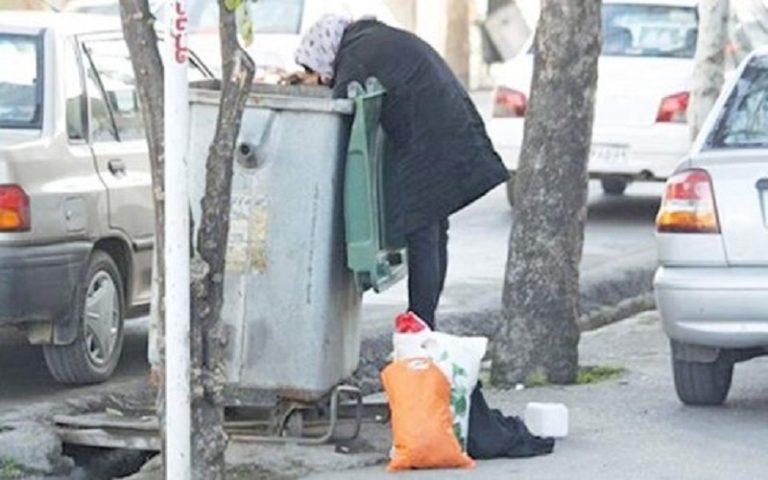
Iran’s Economy in Freefall: A Looming Hunger Crisis

Sanctions and Economic Isolation

U.S. sanctions and the potential reimposition of United Nations sanctions following the expiration of Resolution 2231 in October 2025 have placed Iran’s economy under severe strain. These sanctions have restricted access to foreign currency, raw materials, and technology. Import-dependent sectors, such as the cellulose industry, face currency-related bureaucracy and frequent production halts. Additionally, the logistical costs of circumventing sanctions have diminished Iran’s export competitiveness.

Collapse of Foreign Trade

According to customs reports, non-oil exports in spring 2025 fell by 9.3% in weight and 14.4% in value. Petrochemical products suffered the most, with a 28.7% drop in weight and a 24.5% drop in value. Limited export markets, global volatility, and sanctions are among the main causes of this decline. Moreover, the economy’s heavy dependence on petrochemical exports and lack of diversity in the export basket have made Iran’s economy even more vulnerable.

Imports also declined by 4.35% in weight and 11.73% in value, indicating a reduced capacity to procure capital and technological goods. The focus on Asian trade partners and a $1.374 billion non-oil trade deficit have increased pressure on foreign currency reserves and fueled inflation.

Unstable Policies and Business Confusion

Frequent changes in currency, customs, and tax policies have made economic planning impossible. The increase in interest rates from 23% to nearly 40% has made financing difficult for manufacturers. While taxes and insurance premiums are aggressively collected, there is no effective support for production. These conditions have driven many businesses toward closure or downsizing.

Stagflation and Declining Demand

Stagflation, resulting from a combination of external pressures and inefficient domestic policies, has led to a steep drop in domestic demand. The construction industry, which traditionally drives other sectors, has nearly come to a halt. Production of compressed wood panels has fallen from 4 million cubic meters to 1.2 million. Rising production costs and declining profitability have pushed many businesses to the brink of bankruptcy.

A Uncertain and Risky Future

The future of Iran’s economy is highly dependent on political developments. If sanctions intensify, non-oil exports may drop by another 20% to 30%. A military conflict could disrupt export infrastructure and halt oil and gas exports. Even assuming a nuclear agreement, structural and bureaucratic problems would prevent full utilization of any opportunities.

A Futureless Economy

Under the rule of the mullahs, Iran’s economy is trapped in a vortex of domestic and international crises. Energy imbalances, sanctions, unstable policies, and stagflation have paralyzed supply chains and trade. The decline in exports, reduced competitiveness, and trade deficits are clear signs of a bleak future, unless the regime is replaced with a government that serves the people’s interests.

Call By 301 International Figures to Prevent a Repeat of the 1988 Massacre in Iran

Three hundred prominent political and legal figures, along with Nobel Prize laureates, have called for global efforts to prevent a repeat of the 1988 massacre in Iran.

These 301 international figures include:

Former world leaders, heads of state, ministers, and ambassadors, former UN officials and rapporteurs, and distinguished legal experts, lawmakers and leading human rights advocates, and Nobel Prize winners.

The statement by the 301 international figures reads:

We call on the global community to urgently confront the escalating wave of political executions and entrenched impunity in Iran. The risk of another mass atrocity, reminiscent of the 1988 massacre, is alarmingly real.

On 12 July 2025, three opposition activists—Farshad Etemadi-Far, Masoud Jamei, and Alireza Mardasi—were sentenced to death by Branch 1 of the Ahvaz Revolutionary Court after two years of torture, accused of ‘waging war on God’ (moharebeh) over their support for the opposition PMOI (MEK). In July 2025, the Supreme Court rejected a fourth request for judicial review for political prisoners Behrouz Ehsani and Mehdi Hassani, leaving them at imminent risk on death row.

There are currently dozens of political prisoners on death row on similar charges.

Since President Masoud Pezeshkian took office, executions have surged—with over 1,300 carried out, some 650 in 2025 alone.

These incitements and executions echo the horrors of 1988, when a fatwa from then-Supreme Leader Khomeini led to mass executions targeting PMOI members and other dissidents.

309 Experts Urges UN Action to Prevent Repeat of Iran’s 1988 Massacre of Political Prisoners

The July 2024 report from the UN Special Rapporteur on Iran described those extrajudicial executions and enforced disappearances as ongoing crimes against humanity and genocide.

Warning signs are mounting. On 4 July 2025, ten UN Special Procedures expressed alarm over the crackdown since hostilities began on 13 June 2025 and the subsequent ceasefire, noting that state-media rhetoric, including calls for ‘surveillance’ and ‘killings’, echoes the ‘1988 atrocities.

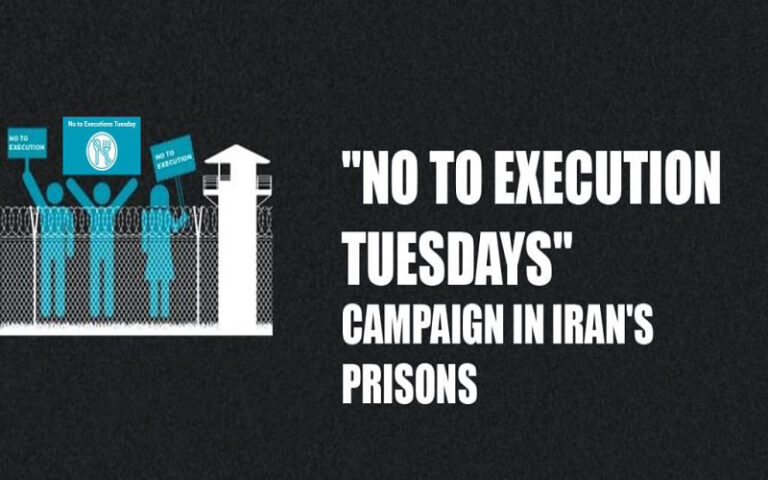
Political prisoner Saeed Masouri, a key figure in the ‘No To Executions Tuesdays’ campaign, recently smuggled out a letter from Qezel Hesar Prison after an attempt to forcibly transfer him. He warns that his removal is a prelude to executing others on death row and that, just as in 1988, ‘a crime is in progress’. We must not repeat the silence of 1988. We urge the UN Special Rapporteur on Iran, Dr Mai Sato, her colleagues in the Special Procedures, and the Independent International Fact-Finding Mission on Iran (FFMI) to condemn these incitements and executions. We call on UN High Commissioner Volker Türk to speak out unequivocally against Iran’s systematic human rights violations.

We further call on Canada and other co-sponsors of the UN General Assembly’s Third Committee resolution on Iran to include an explicit reference to the 1988 massacre in this year’s resolution.

The international experts, spanning over 60 countries, warn that “the risk of another mass atrocity, reminiscent of the 1988 massacre, is alarmingly real” and urge UN Special Rapporteur on Iran Dr. Mai Sato, High Commissioner Volker Türk, and member states to condemn these incitements.

At least 74 people executed in Iran over the past month

From June 22 to July 22, the Iranian regime hanged at least 74 people across prisons throughout the country. During this period, the judiciary issued death sentences for at least 17 others, and the Supreme Court confirmed the execution orders for at least two other individuals.

On July 23, the human rights website HRANA released its latest monthly report on the state of human rights violations in Iran. It stated that over the one-month period, it had documented 63 reports related to the right to life (executions), including 74 executions, 17 death sentences, and two confirmed execution verdicts.

HRANA cited examples of death sentences issued during this period by the Iranian regime’s judiciary, including five individuals arrested during the 2022 nationwide protests in the city of Urmia and three political prisoners in Ahvaz.

The “No to Executions Tuesdays” campaign continued into its 74th week across 47 prisons in Iran

HRANA stressed that violations of the right to life can have devastating consequences, including fostering a sense of insecurity and instability in society. It warned that such violations could fuel a culture of violence and further erode public trust in governmental and judicial institutions.

In addition to the executions, prison conditions have further deteriorated. HRANA reported that between June 22 and July 22, there were 2,492 cases of prisoners being held in unsuitable conditions, 102 instances of legal limbo, 100 cases of denial of communication rights, 74 instances of detainees being held incommunicado, and 52 cases of pressure and coercion against prisoners.

HRANA also recorded, during the same period, 13 cases of medical neglect, 11 transfers of prisoners to solitary confinement, 8 hunger strikes, and 1 case of a prisoner being killed.

Another part of HRANA’s report addresses the excessive and deadly use of weapons and violence by military and security forces.

According to the report, at least 12 civilians lost their lives due to gunfire by security agents during this period, and 20 others were injured.

Additionally, at least three kulbars (cross-border porters, often ethnic Kurds who carry goods across Iran’s western borders) and two fuel carriers were killed during this time. One kulbar and three fuel carriers were also injured. Landmine explosions in border areas resulted in the deaths of at least two civilians and the amputation of another.

Among the most shocking incidents this month was a shooting by guards at a military facility in Khomein (a town in central Iran), which led to the deaths of four civilians, including a four-year-old girl named Raha Sheikhi. In another incident in Tarik-Darreh, Hamedan Province, two civilians were killed, and one was injured.

HRANA concluded its report by emphasizing that the widespread human rights violations in Iran—including frequent executions, inhumane prison conditions, suppression of freedom of expression, and deadly violence by military forces—can only be curbed through reform of judicial and security structures, accountability of officials, and consistent pressure from domestic and international human rights organizations.

Danish Universities Restrict Access to Iranian Researchers Due to Security Concerns

Citing increasing security threats, Denmark has adopted stricter policies regarding the admission of foreign researchers, with Iranian researchers in particular facing disqualification.

According to Danish media, the country’s security and academic officials have warned that access to sensitive information in fields such as quantum technology, green energy, and artificial intelligence could increase the risk of information leaking to foreign governments.

Aarhus University, one of Denmark’s most prestigious academic institutions, announced that it has rejected applications from at least 24 foreign researchers so far this year. A significant portion of these applicants held Iranian, Russian, or Chinese citizenship.

University officials stated that the primary reason for these rejections was the risk that these individuals might gain access to information that could be transferred to third countries.

Denmark’s Security and Intelligence Service (PET) has warned that countries such as Iran may use researchers for espionage purposes, including through financial inducement, threats, political pressure, or cyberattacks.

In this context, some universities, including the University of Copenhagen, have established specialized teams to conduct security screening of applicants.

Nevertheless, some academics have expressed concern that these restrictions may harm international scientific collaboration.

Denmark, which currently holds the rotating presidency of the Council of the European Union, has placed greater emphasis on protecting scientific and research infrastructure as part of its defense and security policies.

In the fall of last year, members of the Danish parliament, during a session of the immigration committee, stressed the need for stricter measures against the anti-democratic activities of Iran’s regime.

On July 1, 2025, German prosecutors announced that a Danish citizen had been arrested in Denmark on suspicion of spying for Iran’s regime. His activities were allegedly aimed at gathering information on locations and individuals connected to the Jewish community in the city of Berlin.

Concerns over espionage and sabotage activities by Iran’s regime and its affiliated elements have been growing in Europe.

The intelligence services of the United Kingdom, Sweden, and the Netherlands have held the Iranian regime responsible for criminal activities and for using criminal gangs on their soil.