Home Blog Page 78

Protests Over Water Shortages in Iran

0

Residents of Sabzevar, a city in eastern Iran, took to the streets for the second consecutive night. They gathered in front of the Sabzevar Governor’s Office, chanting slogans such as “Our rights are only earned in the streets” and “Water, electricity, life are our basic rights” in protest against frequent power outages in the region.

Meanwhile, the regime declared Wednesday a public holiday. The crisis has paralyzed the country, and now people—more exasperated than ever—are faced with a government that is this time openly demonstrating its inability to govern.

According to provincial authorities across the country, on Wednesday, July 23, schools and government offices in 23 provinces will either be closed or operate remotely.

Tehran Faces the Most Severe Water Crisis in a Century

In a bizarre move, Tehran’s Water and Wastewater Company announced the distribution of bottled water to residents—but shortly afterward, retracted the statement.

Reza Sepahvand, a member of the regime’s parliament, warned about the possibility of nationwide water rationing in Tehran and other provinces. But such warnings are nothing new. For years, environmental activists have raised alarms, only to be silenced and repressed. Over the past years, Iran’s regime has imprisoned numerous environmental activists under the pretext of “national security threats.”

In response to the extreme heat, Fatemeh Mohajerani, the government spokesperson, shamelessly described Wednesday’s shutdown as “an opportunity to breathe.”

She suggests people rest, travel, and spend time with family—amid deadly heat, without water, without electricity.

Governance in Iran is structured in such a way that only a specific class is able to live comfortably.

Even Isa Kalantari, former head of Iran’s Environmental Protection Organization, warned that “we should be concerned about the very existence of Iran.” Masoud Pezeshkian, the current president of Iran’s regime, also admitted, “If we don’t act now, there may be no solution tomorrow.”

Iranian Regime President Calls Claims of Nuclear Program’s End a ‘Delusion’

Masoud Pezeshkian, the president of Iran’s regime, stated in an interview with Al Jazeera that the regime is prepared to “strike deep into Israel.” He added that the claim that Iran’s nuclear program has ended is a “delusion.”

Following regime’s foreign minister Abbas Araghchi, Pezeshkian also reiterated Iran’s claimed right to enrich uranium.

On Tuesday, July 22, in an interview with the Al Jazeera television news network, Pezeshkian reiterated Tehran’s stance on its claimed right to enrich uranium and declared that the idea Iran’s nuclear program had ended is a “delusion,” because, according to him, the program “exists in the minds of scientists,” not just in “nuclear facilities.”

This was Pezeshkian’s first interview with Al Jazeera following the 12-day war between Iran’s regime and Israel.

EU Sanctions Hossein Shamkhani: A Blow to the Oil and Weapons Network of Iran’s Regime and Russia

In the interview, Pezeshkian emphasized that Iran’s regime “does not seek war but also does not rely on the permanence of a ceasefire and is prepared to defend itself.” He added that “we are ready for any Israeli military action, and our forces are prepared to strike deep into Israel again.”

He acknowledged that Israel inflicted blows on Iran but also claimed that Iran “powerfully struck deep into Israel” and alleged that Israel “conceals its own losses.”

In the interview, Pezeshkian admitted that there are “some intelligence infiltrations” within Iran’s military levels but attributed the primary cause of these infiltrations to Israel’s use of “American technology and capabilities.”

Pezeshkian Reiterates Uranium Enrichment Right One Day After Iran’s Foreign Minister’s Statement

On the evening of Monday, July 21, Abbas Araghchi, the foreign minister of Iran’s regime, stated in an interview with Fox News that Tehran would not relinquish its uranium enrichment program.

He stated that it is clear they cannot abandon enrichment because it is an achievement of their scientists and a matter of national pride. According to Araghchi, any nuclear agreement that is reached must include the right to enrich uranium for Iran.

The regime’s foreign minister also acknowledged that Iran’s nuclear facilities had suffered serious damage and admitted that the enrichment program is currently halted due to the severity of these damages.

U.S. President Donald Trump reacted to Araghchi’s remarks in the Fox News interview by reposting part of his statements on his Truth Social account and issuing a warning to Tehran.

Trump had previously asserted that a U.S. military strike on Iran’s nuclear facilities in June had resulted in the complete destruction of all three sites.

Arrest of 2,000 People During Iran-Israel War

Gholamhossein Mohseni-Ejei, the judiciary chief of Iran’s regime, announced on the evening of Tuesday, July 22, that approximately 2,000 people had been arrested during what was described as the “12-day war between Iran and Israel.” He stated in a televised interview that the arrests continued even after Israel’s attack. While he claimed that “many” of those arrested were released after investigations, he emphasized that individuals accused of collaborating with Israel remain under interrogation and “intelligence extraction.”

Meanwhile, in a rare move, the Intelligence Organization of the Islamic Revolutionary Guard Corps (IRGC) sent warning text messages to Iranian citizens, alleging an “increase in activities by enemy intelligence services.” It claimed these services were recruiting individuals through mobile applications to “betray the country.” These warnings come at a time when regime security officials are deeply concerned about Israel’s extensive intelligence infiltration at the highest levels of the regime, especially following the repeated assassinations of military commanders and nuclear scientists.

Mohammad Saeed Izadi, Quds Force Commander, Reportedly Killed in Israel Strikes Against Iran

In recent weeks, dozens of individuals have been arrested by security agencies in various cities across Iran. This wave of arrests has intensified alongside a rise in civil protests, worsening economic conditions, widespread public dissatisfaction with the political and economic situation, and ongoing crackdowns at universities and on social media.

Evidence suggests that in the face of severe intelligence failures, an inability to contain foreign security infiltrations, and fear of popular uprisings, Iran’s regime has resorted to an iron-fist policy marked by fear and intimidation. The use of terms like “infiltration” and “intelligence warfare” in the media and official statements, along with repression of media outlets, civil activists, and academics, indicates a regime no longer capable of maintaining control through legitimate means and instead leaning on security and deterrent measures. Observers warn that these policies will not only prove ineffective but will further fuel public discontent and increase the likelihood of a social explosion.

Iran’s Regime Uses the Pretext of Intelligence War with Israel to Intensify Repression of Its Citizens

The Iranian regime fully understands that its primary war is with the people, and that only the Iranian people are capable of ending this regime.

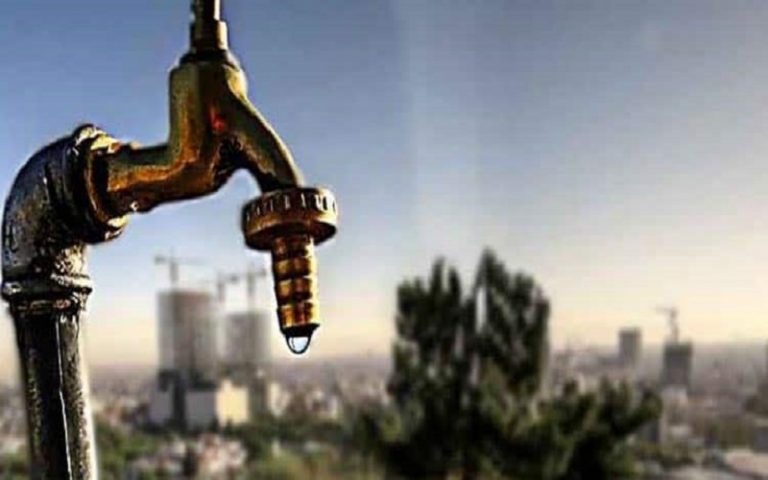
Water Crisis in Iran: Mismanagement, Blackouts, and Public Distrust Amid Environmental Collapse

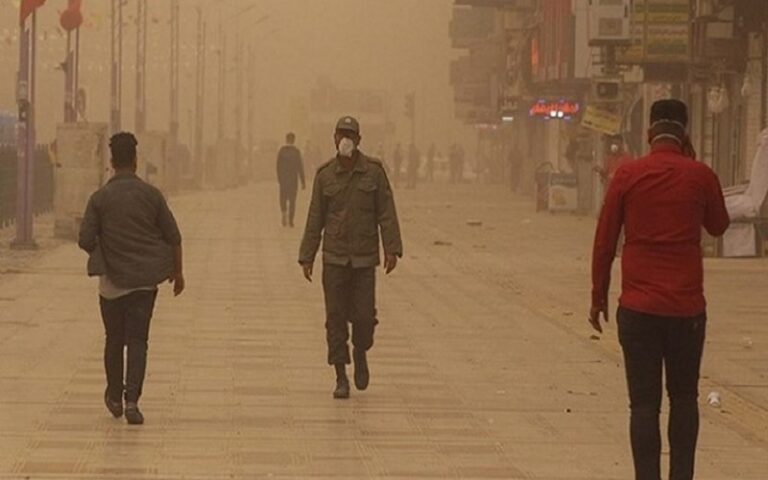
With the ongoing heatwave and severe shortages of water and electricity across Iran, officials of Iran’s regime have implemented widespread shutdowns or reduced working hours for government offices in various provinces.

As the heatwave continues and water and electricity shortages become more critical in Iran, officials of the Iranian regime have resorted to implementing full-scale closures or reduced working hours for government offices in different provinces across the country.

According to the latest decisions, Tuesday, July 22 and Wednesday, July 23 will see complete shutdowns in several Iranian provinces, while others will implement reduced working hours.

Tehran Faces the Most Severe Water Crisis in a Century

According to the resolutions of provincial crisis committees, on Wednesday, July 23, government offices in Tehran, Yazd, Kerman, Mazandaran, Alborz, Qom, Khuzestan, Hormozgan, Bushehr, and North Khorasan will be completely closed.

In some provinces, including Semnan, Kohgiluyeh and Boyer-Ahmad, Kermanshah, Ilam, Sistan and Baluchestan, and South Khorasan, office hours have been reduced, and government offices will operate only between 6:00 a.m. and 11:00 or 12:00 noon.

Additionally, the Director General of Crisis Management for Lorestan Province announced that due to the ongoing heatwave and the necessity of managing energy consumption, all government offices, banks, and educational centers in the province will be closed on Tuesday, July 22.

Isa Kalantari, regime’s former head of Iran’s Environmental Protection Organization, stated on Monday, July 21, regarding the country’s water crisis: “Today we must be worried about Iran. Worried about the existence of a country whose resources are under tremendous pressure, and this is an undeniable reality.”

Masoud Pezeshkian, president of Iran’s regime, stated during the cabinet meeting on Sunday that, referring to a report by the Ministry of Energy on the “water imbalance,” he said: “The water crisis is more serious than what is being discussed today, and if we don’t take urgent action starting now, we will face conditions in the future for which there will be no remedy.”

Fatemeh Mohajerani, the government spokesperson, also announced on the same day that due to the extreme heat and the energy crisis, Wednesday would be a public holiday in Tehran province.

Officials of Iran’s regime, under these circumstances, have shifted responsibility onto the people, urging citizens to “conserve” and issuing warnings about the critical state of the country’s dam water reserves.

Iran is on the verge of environmental collapse not because of its climate, but due to structural mismanagement. Policies such as unregulated dam construction, expansion of unsustainable agriculture in arid regions, and disregard for efficient water usage have internally corroded the country’s water infrastructure.

In this regime, decisions regarding water resources have not been based on scientific assessments, but rather on political and security considerations. Many major dam construction and water transfer projects have not been carried out based on expert studies but were implemented under the supervision of military and unaccountable institutions.

The people of Iran face not only water shortages but also complete distrust toward the regime responsible for managing this crisis. The destruction of agriculture, frequent blackouts, forced migration of rural populations, and growing public discontent are all symptoms of a political and managerial condition that is neither natural nor inevitable—it is the direct result of decisions made knowingly.

At Least 56 Prisoners in Iran Face Execution on Political Charges

According to a report by HRANA (Human Rights Activists News Agency), at least 56 prisoners across Iran’s prisons currently face execution sentences on political or security-related charges.

In a report published on Monday, July 21, HRANA stated that the largest number of these death sentences were issued by Tehran’s Revolutionary Courts. Branch 15 presided over by Abolghasem Salavati; Branch 26, led by Iman Afshari; and Branch 28, headed by Mohammadreza Amoozad, played prominent roles in handing down these rulings.

Fifteen of these prisoners are supporters of the People’s Mojahedin Organization of Iran (PMOI/MEK), the largest opposition group to Iran’s regime.

The 78th “No to Executions Tuesdays” Campaign Held in 48 Prisons Across the Country

Multiple death sentences have also been issued against political and security prisoners in the cities of Urmia, Mashhad, Ahvaz, Rasht, Zahedan, and Mahshahr. These judicial branches have each condemned more than one political prisoner to death.

The primary charges against many of these prisoners include “armed rebellion” (baghi) and “enmity against God” (moharebeh). Several individuals, after having their verdicts overturned by the Supreme Court, were resentenced to death in parallel branches of the Revolutionary Courts.

HRANA, citing the accounts of several prisoners’ lawyers, emphasized that many of them were denied the right to a fair trial, were not granted access to independent legal counsel, and faced judicial proceedings that lacked transparency.

Names of political prisoners sentenced to death

Among the 56 political prisoners sentenced to death, Varisheh Moradi and Pakhshan Azizi are being held in Qarchak Prison in Varamin, and six people, including Akbar Daneshvar kar, Seyyed Mohammad Taghavi Sangdehi, Babak Alipour, Pouya Ghobadi Bistuni, and Vahid Bani-Amarian, are being held in the Greater Tehran Prison.


At least 14 political prisoners sentenced to death are being held in Ghezelhesar Prison in Karaj, including Seyyed Abolhassan Montazer, Eidou Shahbakhsh, Abdulghani Shahbakhsh, Abdolrahim Qanbarzehi Gorgij, Soleiman Shahbakhsh, Milad Armoon, Alireza Kafaei, Amir Mohammad Khosh-eghbal, Navid Najaran, Hossein Nemati, Alireza Barmarzpournak, Behrouz Ehsani, Mehdi Hassani, and Saman Mohammadi Khiyare.

Hatem Ozdemir, Mehrab Abdullahzadeh, Razgar Beigzadeh Babamiri, Pejman Soltani, Ali Ghasemi, Kaveh Salehi, and Tifour Salimi Babamiri are in Urmia Prison, and Yousef Ahmadi is in Sanandaj Prison.

Farshid Hassanzehi, Mohammad Zein al-Dini, and Adham Narouei are imprisoned in Zahedan Prison, and Mohammad Javad Vafaei Sani, Isa Eidmohammadi, and Mohammad Mehdi Soleimani are imprisoned in Vakilabad Prison in Mashhad.

Abbas Dris and Ali Obeidavi are being held in Mahshahr Prison, Ali Mojadam, Mohammadreza Moghadam, Moein Khanfari, and Adnan Ghobeishawi are being held in Sepidar Prison in Ahvaz, and Salem Mousavi, Malik Davarshenas (Mousavi), Habib Dris, Masoud Jamei, Alireza Mardasi, and Farshad Etemadifar are being held in Sheiban Prison in Ahvaz.

Three political prisoners, Manouchehr Fallah, Peyman Farah Avar, and Sharifeh Mohammadi, are also being held in Lakan Prison in Rasht.

HRANA wrote in its report that Ahmadreza Jalali, Amir Rahimpour, Roozbeh Vadi, Shahin Basami, and Afshin Ghorbani Mishaei are being held in detention centers with undisclosed locations.

At least 1,000 people were executed in Iran in 2024, a 25 percent increase over the previous year.

It is necessary for the international community, human rights organizations, and public opinion to actively pursue these cases and put pressure on the Iranian government to prevent the unjust execution of these sentences.

Over a Month of Silence After Ali Younesi’s Enforced Disappearance from Evin

On Sunday, July 21, a court session was held to address new charges fabricated against Ali Younesi and Amirhossein Moradi, two gifted students and political prisoners. These elite students from Sharif University of Technology were once again tried on the charge of “propaganda against the regime.” However, the shocking aspect of the court session was Ali Younesi’s absence—he has been transferred to an unknown location for over a month now, and there is no information about his condition.

According to Aida Younesi, sister of the political prisoner, “Sunday’s court session was held without Ali’s presence.” Aida Younesi wrote on X (formerly Twitter):

“Yesterday was the ‘court’ date for a new case against Ali Younesi and Amirhossein Moradi, but Ali was not brought to the court session. It’s been more than a month since my brother was abducted from Ward 4 of Evin Prison, and except for a brief phone call with my mother 21 days ago, we have no news about him.”

Iranian Political Prisoner Ali Younesi Transferred from Evin Prison to an Unknown Location

She went on to explain that their mother went to the court in the hope of seeing her son, even if for a moment, but remained behind closed doors. Ali Younesi’s lawyers also protested their client’s absence in the session. Addressing judicial and security officials, Aida Younesi posed the following question:

“Where is Ali? Why are you depriving him of his most basic rights such as contact with family and lawyer?”

New case fabricated against elite students

In the new case, Amirhossein Moradi was also tried on charges of “propaganda against the regime through publishing multiple statements from prison.” The court session was held at Branch 29 of Tehran’s Revolutionary Court, presided over by Judge Ali Mazloum. Reports indicate that Moradi appeared in court in handcuffs and shackles and was interrogated and tried under tight security measures.

Meanwhile, there has been no official explanation from the judiciary regarding the reason for Ali Younesi’s absence or his current place of detention.

The abduction of Ali Younesi from Evin Prison

Ali Younesi, a political prisoner and computer engineering student at Sharif University of Technology, was suddenly and violently transferred on Wednesday, June 18, from Ward 4 of Evin Prison to Ward 209, which is operated under the supervision of the Ministry of Intelligence.

Unofficial reports suggest that following an attack on Evin Prison and damage to certain sections of the facility, he was moved to an unknown location. Since then, there has been no information about his health, whereabouts, or conditions.

Ali Younesi and Amirhossein Moradi were arrested on April 10, 2020, by security agents. The arrest was carried out without a judicial warrant and involved severe violence.

Amirhossein Moradi is a physics student at Sharif University and the recipient of the national silver medal in the Astronomy Olympiad in 2017.

Ali Younesi, a computer engineering student at Sharif University, won the national silver medal in Astronomy Olympiad in 2016, the gold medal in 2017, and the gold medal in the International Astronomy and Astrophysics Olympiad held in China.

After 808 days of detention in solitary confinement and security wards, on June 26, 2022, the two elite students were transferred to Evin’s general wards following a harsh sentence of 16 years in prison.

Ali Younesi’s sister stressed in her message:

“My brother was even deprived of the fundamental right to be present at his own court session. He has been abducted for more than a month, and the authorities give us no answers. This behavior is against all legal and human standards.”

The 78th “No to Executions Tuesdays” Campaign Held in 48 Prisons Across the Country

Political prisoners in 48 prisons across Iran joined the 78th week of the “No to Executions Tuesdays” campaign by going on hunger strike to protest the issuance and implementation of death sentences.

In this week’s statement, the participating prisoners condemned the wave of executions, repression, and violence against the people, stating that the regime’s goal with these acts is to instill fear and terror in society.

They reaffirmed their commitment to continuing the “No to Executions Tuesdays” campaign, writing: “Our voice is the cry of ‘No to executions’; a voice that will grow louder and clearer every Tuesday until the day executions are permanently abolished in Iran.”

UN Report: Iran’s Regime Guilty of Mass Executions and Repression

In their statement, they emphasized:

The execution-driven regime has once again launched a wave of repression and violence against society, particularly targeting political prisoners. According to published reports, at least 71 executions were carried out between June 22 and July 22—a one-month period. These sentences were handed down without fair trials and were based on forced confessions, leading to executions by hanging.

In addition to the execution wave, political activists and imprisoned members of the “No to Executions Tuesdays” campaign are facing intensified pressure. Threats, torture, exile, arrests, summonses of campaign members’ families, and the denial of basic rights are only part of the systematic repression directed at the voice of protest in society.

On the other hand, by opening fire directly at the people, the regime reveals its true anti-people nature. The shooting of a small child, Raha Sheikhi, is just one small example of these crimes.

The regime’s goal with these relentless acts of violence is to spread fear and silence a society that, despite all the pressure, continues to insist on its legitimate demands for justice, freedom, human dignity, and the right to self-determination.

The members of the “No to Executions Tuesdays” campaign wholeheartedly condemn the violent, inhumane, and unjust wave of executions and repression of prisoners. Execution is not a path to justice—it is a tool of terror. We once again emphasize that no human life should be taken by governments, especially under conditions where there is no fair trial process and the fundamental rights of the accused are blatantly and systematically violated.

Our voice is the cry of “No to executions”—a voice that will grow louder and clearer every Tuesday until the day executions in Iran are stopped forever.

On Tuesday, July 22, 2025, in the 78th week of the campaign, political prisoners participating in the “No to Executions Tuesdays” will go on hunger strike in 48 prisons across the country.

In the past week, Iran’s regime has significantly increased pressure on political prisoners. The regime is planning to exile Saeed Masouri, the longest-held political prisoner in Iran, to Zahedan Prison. Saeed Masouri has been imprisoned without any furlough for the past 25 years.

Tehran Faces the Most Severe Water Crisis in a Century

As Iran’s energy crisis intensifies, officials of the Iranian regime are shifting responsibility onto the public, urging citizens to “conserve” and warning of the critical state of dam water reserves.

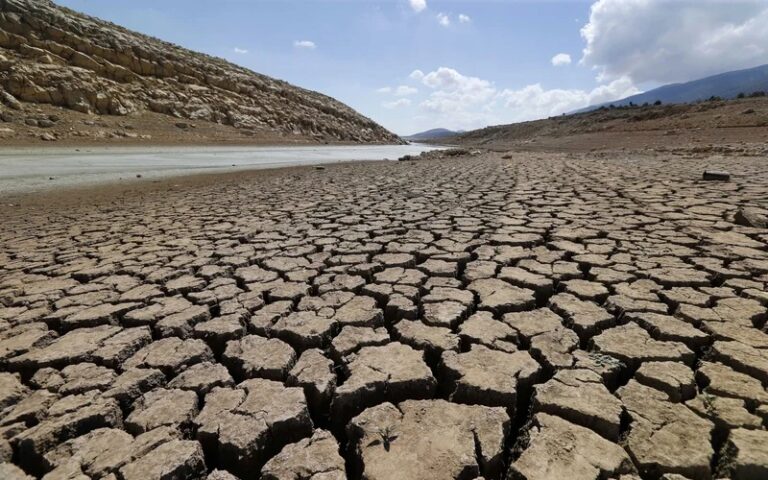
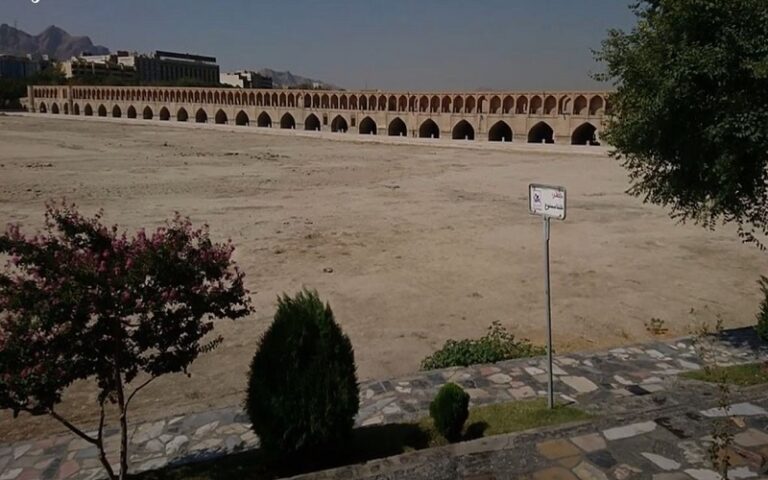
On Sunday, July 20, the Tehran Water and Wastewater Company announced that the droughts of the past five years, combined with the sharp decline in rainfall this water year, represent an unprecedented situation in the past 60 years and have severely affected Tehran’s water resources.

According to the company, the current reserves in the dams that supply water to Tehran are at their lowest level in the past 100 years.

Severe Water Crisis Sweeps Across Various Iranian Cities

The utility advised residents living in multi-story residential complexes to install a storage tank and then a pump on the ground floor or basement level to “compensate for pressure drops.”

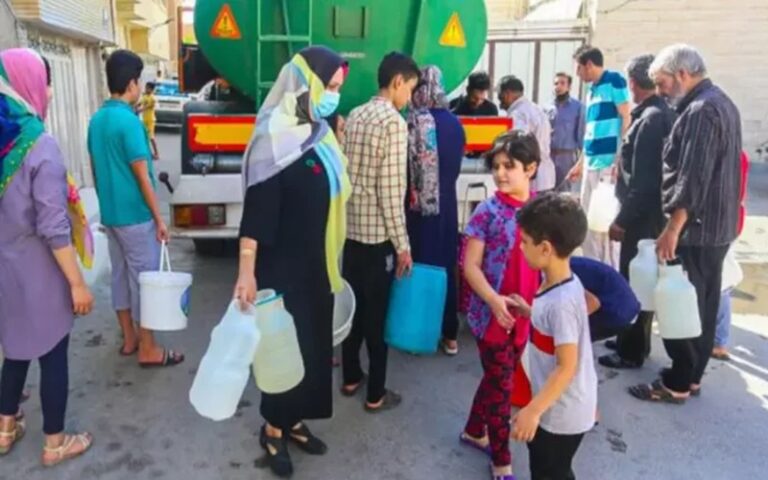
A video circulating on social media dated July 20 shows water being delivered by tanker trucks to residents of Shahriar County in Tehran Province.

Dozens of residents from various cities report that they experience at least two power outages per day, each lasting at least two hours, and water is cut off for at least four hours daily.

Regime-affiliated media, citing a “500 million cubic meter deficit” in Tehran’s dams, reported that the total reserves currently stand at around 414 million cubic meters. Under normal conditions, this figure should be 925 million cubic meters at this time of year.

Lar Dam is only 7% full and, with a 34% decrease compared to last year, is in a severely deteriorated state.

Latyan and Mamloo Dams at 20% Capacity, Amir Kabir at 38%

Tehran City Council Chief Urges Conservation Despite 24-Hour Water Cuts

Reports from several Iranian cities indicate water outages lasting for many hours—and in some cases, up to a full day or longer.

On July 20, Mehdi Chamran, the chairman of Tehran City Council, referenced the water shortage crisis in the capital and said: “The Ministry of Energy is trying to supply water.”

He continued: “We are still facing water pressure drops and occasional outages, and people must help manage the situation through conservation.”

Iranian citizens are being forced to install water tanks and pumps in their homes.

Energy Mafia Is the Main Driver of Iran’s Water and Power Crises

Banafsheh Zahraei, a professor of water resources management at the University of Tehran, stated that the four main dams supplying water to the capital will dry up by mid-September.

According to EcoIran, citing official statistics as of July 12, 54% of the country’s dam reservoirs are empty, and 17 dams have less than 20% of their capacity filled.

The filling level of 10 dams is under 10%, putting them dangerously close to complete dryness.

This list includes Lar and Latyan dams in Tehran, as well as Shamil and Niyan in Hormozgan Province.

The Water Industry publication reported that from the beginning of the current water year (starting September 22, 2024) until July 12, total inflow to the country’s dams has dropped to approximately 22.4 billion cubic meters.

A multilayered mafia involved in policymaking, resource exploitation, and project implementation is the main cause of the water and energy crises in Iran.

In addition to water shortages, electricity and internet services have also been cut for several hours each day in numerous Iranian cities in recent weeks.

Following power outages in the Tabriz marketplace, some shopkeepers have been forced to use electric generators to continue their operations.

This situation is similar in other Iranian cities and has affected all types of businesses.

Iran’s Regime Threatens to Cause Insecurity in the Region If Snapback Sanctions Are Enacted

With the confirmation of the upcoming talks between the European Troika and the Iranian regime in Istanbul, the state-run daily Farhikhtegan wrote that Europe intends to suspend the snapback mechanism in exchange for the return of International Atomic Energy Agency (IAEA) inspectors. The deputy chairman of the Iranian regime’s parliament’s National Security Commission also referred to keeping the Strait of Hormuz open as Tehran’s bargaining chip in the negotiations.

Abbas Moqtadaei, deputy chairman of the regime’s parliamentary commission on national security and foreign policy, told the state-run Borna News Agency that if Europe activates the snapback mechanism, Tehran’s response would be to target the “security of a vast network of waterways.”

Iran’s Nuclear Power Dream: From Fantasy to Reality

He added that this would not be limited to the region, the Persian Gulf, and the Strait of Hormuz, but would also include other maritime areas, given the Iranian regime’s naval capabilities and developments.

Ismail Baqaei, spokesperson for the Iranian regime’s Foreign Ministry, announced early Monday, July 21, that nuclear negotiations with the three countries—Britain, France, and Germany—will resume on Friday, July 25, 2025, in Istanbul at the deputy foreign minister level.

Later that day, Baqaei described Iran’s talks with the European countries as being at the level of deputy ministers and added: “Wherever we feel diplomacy can be used to achieve the rights of the Iranian nation, we will not hesitate.”

Recently, the three European countries had warned the Iranian regime to immediately resume diplomatic talks and take concrete steps to resolve the nuclear issue. Otherwise, the snapback mechanism would be triggered on August 31.

Referring to these threats, Moqtadaei stressed: “If the Europeans exert pressure, we also have our own tools… We can create trouble for them in the region, especially in West Asia, the Persian Gulf, and the Sea of Oman.”

Over the past years, the Iranian regime has repeatedly threatened to close the Strait of Hormuz but has never carried out the threat.

On June 22, Esmail Kowsari, a member of the regime’s parliamentary commission on national security, stated that the Majlis (parliament) has approved a plan to close the Strait of Hormuz. However, this resolution is not binding, and the final decision lies with the Supreme National Security Council.

The Strait of Hormuz is a strategic passage between the Persian Gulf and the Sea of Oman and is one of the most vital shipping lanes in the world, with more than 21 million barrels of oil and about one-third of global liquefied natural gas exports passing through it daily.

The Iranian regime also relies on this strait for exporting its oil and importing goods.

Leverage: Return of IAEA Inspectors

In a report referring to the July 25 talks, the state-run daily Farhikhtegan wrote that none of the officials have yet made any statements about the mechanism or agenda of the negotiations, but the likely topic will be the activation of the snapback mechanism.

The paper wrote that Europe wants the International Atomic Energy Agency’s monitoring in Iran to resume and for the inspectors to return.

According to this outlet, the European side has conditioned the postponement of the snapback mechanism on the IAEA Director General presenting a satisfactory report to the European Troika and the UN Security Council.

Following the U.S. attack on Iranian regime nuclear facilities, Tehran’s pressure tactics and bargaining chips in negotiations with both the U.S. and Europe appear to revolve around threats to close the Strait of Hormuz, withdrawal from the NPT, increased uranium enrichment, allowing IAEA inspectors back into Iran, and even the release of European hostages, including French nationals imprisoned in Iran.

On July 20, Iranian regime foreign minister Abbas Araghchi sent a letter to UN Secretary-General António Guterres warning against the possible activation of the snapback mechanism against the Iranian regime and wrote:

“…E3 lacks any legal, political, and moral standing to invoke the mechanisms of the JCPOA and UN Resolution 2231 (2015).”

Following the end of the 12-day war with Israel, Araghchi equated Europe’s activation of the snapback mechanism with a military attack on the Iranian regime and made the start of negotiations conditional on guarantees of no further military assaults.

EU Sanctions Hossein Shamkhani: A Blow to the Oil and Weapons Network of Iran’s Regime and Russia

On Monday, July 21, the European Union issued an official statement sanctioning Hossein Shamkhani, son of Ali Shamkhani—senior advisor to the traitorous Ali Khamenei—for his key role in circumventing oil sanctions on Russia and participating in the so-called “shadow fleet” oil network.

The statement describes Hossein Shamkhani as a key player in exporting Russian oil to China and India, generating substantial revenue for the Kremlin through companies based in Dubai and a network of financial institutions in Geneva, Singapore, and London.

The EU also accuses Shamkhani of using companies such as Admiral Group, Milavos Group, and the Ocean Leonid Fund to manage tankers that operate without flags, insurance, or GPS trackers, thereby providing critical infrastructure to bypass sanctions.

From Oil to Weapons: Shamkhani at the Frontline of Iran-Russia Cooperation

Western media investigations, including by Bloomberg, had previously revealed that Shamkhani’s financial network is involved not only in oil trade but also in transferring Iranian weapons to Russia. He is accused of overseeing the pipeline for shipping missiles, drones, and military components from Tehran to Moscow via the Caspian Sea.

Bloomberg: Shamkhani’s Son’s Influence in the International Banking System

In Bloomberg’s January report, Shamkhani was identified as a “shadow billionaire” and a covert operative of the regime embedded in Western financial systems. According to the report, twelve Western intelligence officials and informed sources confirmed that Shamkhani operated under cryptic aliases such as “Hector” or simply “H.”

A Blow to the Iranian Regime’s Covert Financial Core

The sanction against Hossein Shamkhani, alongside the EU’s simultaneous move to lower the oil price cap for Russia, is part of a targeted package aimed at undermining the financial resources of both Russia and Iran’s regime in the Ukraine war.

With this action, the European Union has sent a clear message: Iran’s regime is no longer merely supplying drones for the war in Ukraine—businessmen tied to Ali Khamenei, the regime’s supreme leader, are bolstering the war’s economic backbone.

These sanctions not only expand the scope of measures against Russia, but also explicitly place Iran’s regime among the official backers of the Kremlin’s war machine.

By sanctioning Hossein Shamkhani, the European Union has effectively acknowledged and targeted a global network of financial corruption, arms trafficking, and money laundering operated by the Iranian regime.