Home Blog Page 76

Hunger Strike of Political Prisoners in Ghezel Hesar Prison Enters Sixth Day

Hunger strike in solitary confinement in protest against repression and executions

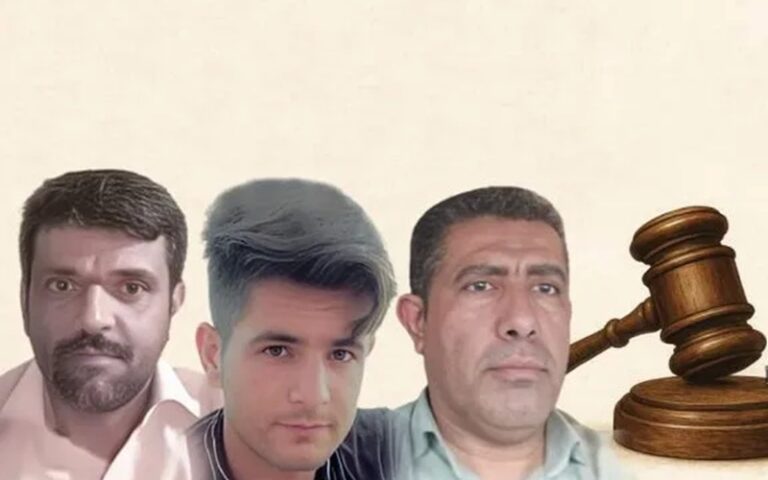
The collective hunger strike by political prisoners in Ghezel Hesar Prison has entered its sixth day. Despite being under extremely harsh conditions and intense pressure in solitary confinement, they continue to resist the wave of executions, forced transfers, and violent repression. The hunger strike, which began on July 26, is a response to the brutal raid by special guard forces on Hall 4, the beating of inmates, their forced transfer to solitary cells, and the secret execution of two political prisoners, Mehdi Hassani and Behrouz Ehsani Eslamloo.

Iran’s Regime Executes Political Prisoners Mehdi Hassani and Behrouz Ehsani

These two prisoners were active supporters of the “No to Execution Tuesdays” campaign and were accused of being members of the People’s Mojahedin Organization of Iran (PMOI/MEK). Their death sentences were carried out without the process of a fair trial and without informing their families. Judicial officials have even refused to reveal the location of their burial—a pattern previously observed in the cases of other executed political prisoners.

79th Week of ‘No to Executions Tuesdays’ Held in 48 Prisons Following Execution of Mehdi Hassani and Behrouz Ehsani

Coordinated repression aimed at breaking resistance inside the prison

According to reports, on Saturday, more than 100 security agents from the prison guard, the IRGC Intelligence Organization, and other suppression units raided the political prisoners’ ward. The inmates were shackled, blindfolded with black hoods, and transferred to solitary confinement cells. At the same time, Saeed Masouri—a prominent figure in this protest campaign—was exiled to Zahedan Prison after 25 years of incarceration.

Systematic Human Rights Violations and a Threat to Saeed Masouri’s Life After 25 Years of Imprisonment

It appears that this crackdown is part of a broader regime plan to silence the growing voice of opposition to executions within the prisons. The “No to Execution” campaign has continued for over 79 weeks in 48 prisons across the country and has now become one of the most serious protest movements within the judicial system.

Hunger strike: silent protest inside locked cells

The political prisoners of Ghezel Hesar, currently held in Unit 3 solitary cells, continue their hunger strike under extremely harsh conditions. They are deprived of family contact, medical services, fresh air, and basic human rights. According to one of their close contacts, the physical condition of some strikers has been reported as critical. However, prison officials have not only failed to take any action but are actively trying to conceal the hunger strike and censor related news.

Deadly silence from the judiciary

The regime not only refuses to respond to the protests but continues its path of repression more intensely by deliberately hiding the prisoners’ conditions, perpetuating the psychological torment of their families, and denying the legal rights of the inmates. The families of Mehdi Hassani and Behrouz Ehsani have repeatedly contacted judicial authorities to learn about the fate of their loved ones but have been met with complete silence.

U.S. Imposes Largest Sanctions Package Against Iranian Regime’s Shipping Industry

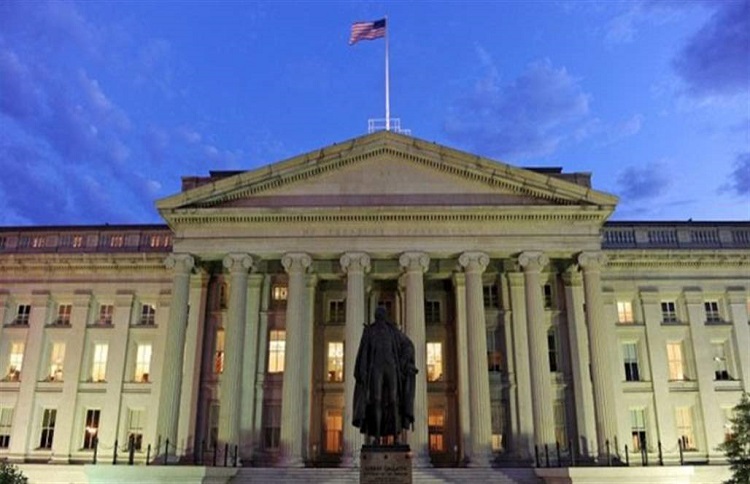
In what it described as the most severe wave of sanctions against Iran’s oil and shipping sectors since 2018, the U.S. Department of the Treasury sanctioned more than 115 individuals, entities, and vessels. A significant portion of these sanctions target the shipping network operated by Mohammad Hossein Shamkhani, the son of Ali Shamkhani, senior adviser to regime supreme leader Ali Khamenei.

According to the Treasury Department’s statement, Mohammad Hossein Shamkhani exploited his father’s influence to establish a complex network of shell companies, vessels, and foreign passports that he used to transfer oil, petroleum products, and other cargo from Iran and Russia to global buyers—earning tens of billions of dollars annually.

The sanctions list includes companies based in the UAE, Switzerland, Turkey, Cyprus, Singapore, Panama, the Marshall Islands, Saint Vincent, and Liberia. The network uses clandestine tactics and money laundering methods to conceal its ties to Tehran and Moscow.

EU Sanctions Hossein Shamkhani: A Blow to the Oil and Weapons Network of Iran’s Regime and Russia

The U.S. State Department, via its Persian-language platform, wrote that the Shamkhani family has used black-market wealth to purchase luxury properties around the world and even acquired Dominica passports through large-scale investments to conceal their travel and connections.

In a statement, U.S. Treasury Secretary Scott Bessent said the Shamkhani family’s shipping empire demonstrates how regime operatives exploit their positions to amass vast wealth and finance the Iranian regime’s dangerous behavior.

Sanctions package targets 115 entities and individuals

Bessent added that the more than 115 sanctions imposed constitute the largest action since the launch of the U.S. maximum pressure campaign against Iran under President Donald Trump. These measures aim to target regime operatives who profit while Tehran continues to threaten U.S. national security—placing American interests as the top priority.

However, Iranian regime foreign ministry spokesperson Esmail Baghaei condemned the sanctions as “illegal and oppressive,” claiming they are a “clear sign of U.S. hostility” and amount to “crimes against humanity” and “a blow to the welfare of the Iranian people.”

With the latest round, the number of Iranian individuals, entities, and vessels sanctioned by the United States this year has surpassed 500.

Italian Senate Majority Supports Iran’s Resistance, Urges IRGC Terror Designation and Embassy Closures

A majority of Italian Senators have issued a forceful statement denouncing Iran’s clerical regime over a sharp rise in executions, particularly of political prisoners. The declaration highlights that since President Pezeshkian assumed office ten months ago, at least 1,200 executions have been carried out. Many of those targeted, it notes, are opposition activists—especially members of the People’s Mojahedin Organization of Iran (PMOI/MEK). In the final months of 2024 alone, nine political prisoners affiliated with the PMOI were reportedly sentenced to death.

The statement was endorsed by a broad cross-party coalition, including one serving minister, two former ministers, Senate floor leaders, committee chairs, and numerous vice-chairs. It condemns what it describes as a systematic campaign of arbitrary arrests, torture, and politically motivated death sentences aimed at suppressing dissent. The signatories emphasize: “Standing with the Iranian people in their demand for regime change is both the correct policy and a moral imperative.”

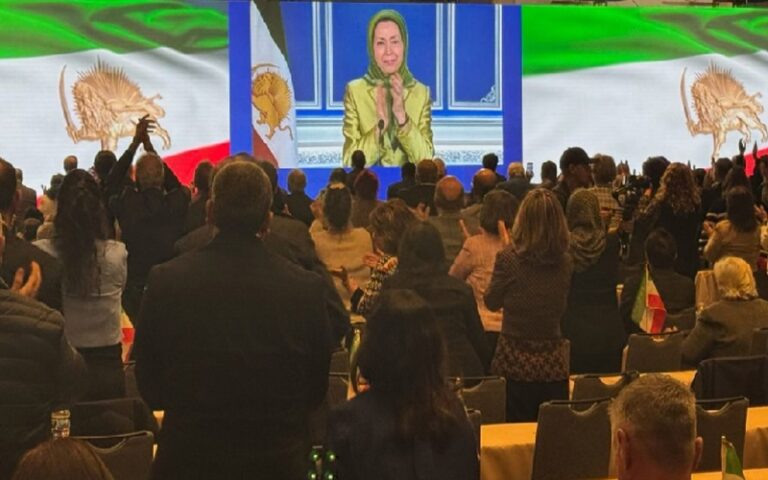
The Senate majority expressed its support for the Ten-Point Plan put forward by Maryam Rajavi, the President-elect of the National Council of Resistance of Iran (NCRI). Her proposal envisions the creation of a secular, democratic republic founded on gender equality, the abolition of the death penalty, and a non-nuclear Iran.

Calling for “concrete and decisive action” from democratic governments, the Senators stressed that backing the Iranian people’s pursuit of freedom and justice is essential to achieving long-term peace and security in the region.

  • Condemning the surge in executions, particularly of political prisoners, and calling attention to at least 1,200 executions in just ten months.
  • Backing Maryam Rajavi’s Ten-Point Plan for a secular, democratic, non-nuclear Iran with equal rights and abolition of the death penalty.
  • Listing the Islamic Revolutionary Guard Corps (IRGC) as a terrorist organization in Europe, describing it as “long overdue.”
  • Closing Iranian regime embassies implicated in terrorism and repression abroad.

The statement outlines several key measures and concludes that firm international engagement is necessary placing the Iranian people, their organized resistance, and the broader demand for democratic change at the heart of any principled approach to Iran.

Macroeconomic Imbalances in Iran Reach Critical Levels

In recent years, Iran’s economy has faced profound challenges that can be summed up in one word: “imbalance.” These imbalances—described by some as a form of “bankruptcy”—have manifested in various sectors, from natural resources like water to energy infrastructure and financial markets.

Water Bankruptcy: A Sign of Resource Imbalance

One of the clearest signs of imbalance in Iran is the dire state of its water resources. Kaveh Madani, head of the United Nations University Institute for Water, Environment and Health, calls the situation not a crisis, but “water bankruptcy.” He argues that a crisis implies a solvable condition, whereas Iran has moved beyond that point and reached an irreversible state. Water rationing in some regions and the severe depletion of water sources are visible signs of this bankruptcy. It is the result of years of mismanagement of water resources, overexploitation of underground reserves, and neglect of environmental sustainability.

Iran’s Economy in Crisis: Investment Collapse and Soaring Inflation

Roots of Economic Imbalance: Delusion and Miscalculation

Vahid Shaqaqi-Shahri, a state-affiliated economist, believes that Iran’s macroeconomic imbalances stem from abandoning rationality and wisdom in governance. He argues that populist policymaking, unrealistic delusions, and detachment from economic realities—combined with decades of sanctions—have brought Iran’s economy to its current state. These imbalances have resulted from flawed policies such as price controls, preferential currency handouts, and extensive government interference in the economy. Such approaches, reminiscent of failed experiences in countries like Cuba and Venezuela, have led to a sharp decline in investment, decaying infrastructure, and depletion of resources.

The 2010s were a decade of stagflation for Iran’s economy, with an average inflation rate of 27% and economic growth below 1%.

Energy Imbalance and Its Impact on the Private Sector

One of the primary victims of Iran’s macroeconomic imbalances is the private sector, especially critical industries like steel and cement. Unprecedented power outages—which began even before the summer—have severely disrupted production in these sectors. Electricity supply to some industrial units has dropped by 80% to 90%, resulting in halted production lines and reduced work shifts. These restrictions have not only diminished productivity but have also caused serious damage to machinery and the financial structures of these units.

The energy imbalance, which in 2024 extended even into the spring, deprived industries of the opportunity to compensate for lost production during non-peak seasons. This situation, coupled with the lack of coordination between the Ministry of Industry and Mining and the Ministry of Energy, has placed the private sector under even greater pressure. For example, signed agreements intended to manage electricity restrictions have been violated, and promises of improved conditions have remained merely words.

Financial Markets and Investment Imbalance

Mehran Fathi, a capital market expert, highlights the imbalances in Iran’s financial markets. Chronic inflation—with an official rate of over 32%—and a 60% increase in the free-market exchange rate have severely reduced investors’ purchasing power. A negative real interest rate (around -10%) has rendered bank deposits unprofitable, pushing investors toward alternative markets such as gold, foreign currency, and real estate. The stock market has also underperformed, with the main index growing by only 19% to 23%, and the equal-weight index by just 7% to 9%, reflecting the gap between large export-driven corporations and smaller firms.

Gold and coins have delivered the highest returns—over 100%—but this success stems from inflationary concerns and a deep lack of trust in the national currency. The fixed-income market, too, has suffered from negative real returns and has failed to keep up with inflation.

Imbalance in the Rationality of Delusional Rulers

Iran’s macroeconomic imbalances—from water bankruptcy to energy crisis and financial market instability—are the product of years of mismanagement, destructive economic policies, and the economic irrationality of the Iranian regime’s officials. These imbalances have not only worn-down economic infrastructure but also eroded trust in policymaking and the business environment. A lack of institutional coordination, short-term decision-making, and disregard for structural reforms have brought Iran’s economy to the brink of one of its most difficult decades. These conditions—marked by chronic inflation, stagflation, and declining investment—reflect the depth of a crisis that has surfaced from the underlying layers of the economy and can no longer be concealed.

Water Crisis in Iran: An Uncertain Future

Iran, a country with an ancient civilization that has long struggled with water scarcity, now stands on the brink of a full-scale water crisis. This crisis is not merely the result of natural factors—it is clearly the outcome of decades of mismanagement, poor governance, and inaction at the highest levels of the regime.

While neighboring countries along the Persian Gulf—with much drier climates—have contained this crisis through investment in technology and careful planning, Iran, despite its vast oil and gas wealth and previously abundant water resources, has today turned into a mirage in the desert.

A review of Iran’s development plans over the past decades reveals that water issues, instead of being prioritized, were consistently sidelined in policymaking.

Inaction and lack of foresight regarding this vital resource have far-reaching consequences. While many countries around the world are moving toward integrated and sustainable water resource management, Iran remains mired in basic challenges such as water loss due to outdated infrastructure and an irrigation system that has not been modernized.

Agriculture, which consumes nearly 90% of the country’s water, continues to rely on traditional and inefficient methods, while serious plans for transitioning to modern, water-efficient agriculture have rarely been implemented.

The regime’s support for water-intensive industries without considering environmental concerns, or requiring them to adopt water-recycling technologies, is another example of this mismanagement.

Beyond the lack of investment in modern technologies, the absence of a national vision and long-term strategy for managing this vital resource in Iran is glaring. Short-term, fragmented decision-making without regard for long-term consequences has only worsened the crisis.

Water And Electricity Supply Crisis; Efforts for the Rapid Transfer of Water to Tehran

The absence of a strong, centralized authority capable of coordinating all stakeholders and implementing comprehensive plans is another major weakness. The division of responsibilities among numerous institutions without sufficient coordination has led to confusion and overlapping duties, effectively preventing the execution of large-scale initiatives.

Many cities across Iran experience repeated water cuts during the summer. Villages have dried up, and farmers have been forced to migrate.

This situation not only has wide-reaching economic and social consequences but also has fueled public dissatisfaction and eroded trust in the regime’s management system.

Iran’s Water Crisis Is a Crisis of Governance and Political Will

Iran’s water crisis is, more than anything, a result of mismanagement and a lack of political will rather than a natural phenomenon. Over the years, there were numerous opportunities to adopt necessary measures and invest in infrastructure and modern technologies—opportunities that were simply squandered.

In some provinces, even water transfer projects have failed due to a lack of proper technical and environmental assessments. People have taken to the streets to voice their demands, but Iran’s regime has consistently chosen repression over accountability.

Today, the people of Iran—who could have been spared this crisis through proper use of national wealth and sound management—are left chasing the illusion of water during the scorching summer. This is a bitter reminder of how incompetence and lack of foresight by a ruling system can drag a country, despite all its potential, into catastrophe.

One of the most painful images of the water crisis is that of people standing in long lines for water under the blazing summer sun—citizens of a country rich in energy resources but deprived of their most basic need.

This contradiction can only be explained by the words “incompetence” and “systemic corruption.” Instead of using oil revenues to build water infrastructure, Iran’s regime has funneled them into regional interventions, domestic repression, and institutionalized corruption.

Ongoing Repression of Imprisoned Iranian Students: New Court Session for Ali Younesi

On Monday, July 28, a new court session was held for Ali Younesi, a top student from Sharif University of Technology, as part of a renewed case against him. This session followed an initial hearing on July 20 targeting him and fellow student Amirhossein Moradi, where both were once again prosecuted on charges of “propaganda against the regime”—this time in Younesi’s absence.

Younesi was absent from the first session due to the unknown location of his detention. His absence and the complete lack of information about his condition deepened the concerns of his family and Iran’s academic community.

Over a Month of Silence After Ali Younesi’s Enforced Disappearance from Evin

Ali Younesi’s sister, Aida Younesi, wrote the following on her X (formerly Twitter) account:

“After three months of waiting and not knowing, my mother was finally able to see Ali. They brought him from Qom Prison to the Revolutionary Court. From the day Ali was abducted from Ward 4 of Evin and taken to solitary confinement, to after the bombing and his transfer to Greater Tehran Prison, and finally his exile to Qom Prison, my parents have spent every moment in anxiety and silence.”

Government abduction and torture of top students

According to received reports, about a month ago Ali Younesi was suddenly and without prior notice transferred from Greater Tehran Prison to Qom Prison. His mother, after three months without any news, was finally able to visit him—but received no reassuring answers regarding his health.

Meanwhile, Amirhossein Moradi was transferred to Greater Tehran Prison after parts of Evin Prison were damaged. In last week’s hearing, Moradi appeared in Branch 29 of Tehran’s Revolutionary Court, presided over by Judge Mazloumi, while handcuffed and shackled.

Both students—Younesi and Moradi—were violently arrested in 2020 and subjected to months of torture and pressure in solitary confinement in Ward 209. Younesi is a computer science student and a gold medalist in the International Astronomy and Astrophysics Olympiad; Moradi is a physics Olympiad medalist.

Under similar circumstances, Saeed Masouri, another prominent political prisoner, was suddenly exiled to Zahedan Prison—an action taken in a climate of opacity that has left families in deeper confusion.

Sources report that on July 26, the special guard unit stormed the political prisoners’ ward of Ghezel Hesar Prison. Following the assault, prisoners were violently beaten, handcuffed and shackled, and transferred to solitary confinement or unknown locations. All contact with families was severed, and visitation rights were suspended.

In this context, families who went to the prison on July 28 for visitation were met with closed gates and silence from officials. No information has been provided about the prisoners’ whereabouts, physical health, or legal status.

In response to the executions at Ghezel Hesar Prison, international analysts and human rights organizations such as Amnesty International and the United Nations have called for the immediate halt of executions, resumption of visitation and phone contact, and an end to the current wave of repression.

They have demanded serious action against political executions, disruptions in legal proceedings, and diplomatic pressure on Iran’s regime to uphold the rights of prisoners.

Systematic Human Rights Violations and a Threat to Saeed Masouri’s Life After 25 Years of Imprisonment

On the morning of Sunday, July 27, Saeed Masouri—the longest-held political prisoner in Iran’s regime prisons—was suddenly exiled from Ghezel Hesar Prison in Karaj to Zahedan Prison, one of the most deprived and dangerous facilities in the country, without any legal warrant. His family has described the move as “punitive and deliberate” and voiced grave concern for his life and well-being.

Sudden Transfer Without Judicial Order

According to reports from inside the prison, the transfer was carried out in the early morning hours without prior notice, by security agents who presented no judicial documentation. A similar attempt in previous weeks had failed due to Masouri’s resistance and support from his fellow inmates.

“A Crime is in Progress”: A Letter from Political Prisoner Saeed Masouri Exposing the Iranian Regime’s Plans

Earlier, on June 15, Ministry of Intelligence agents had also attempted to move this political prisoner to an undisclosed location but were forced to retreat after protests from other prisoners.

Opposition to Executions: A Catalyst for Increased Pressure

In June, Saeed Masouri released a letter from prison in which he strongly condemned the issuance and implementation of death sentences, particularly against political prisoners. Many human rights observers believe that this stance led to increased pressure and punitive measures, such as his exile far from his family.

Following his exile, Saeed Masouri’s family released the following statement:

Exile of Saeed Masouri to Zahedan Prison: A Punitive Transfer After 25 Years in Prison

Saeed Masouri, a political prisoner who has spent more than 25 years in Iranian regime prisons, was exiled to Zahedan Prison without any prior notice or legal warrant. This abrupt action by security agencies comes after years of his detention in Ghezel Hesar Prison in Karaj, near which his family had settled to facilitate visitation.

Exile to Zahedan—a prison known for its deprivation and danger—is clearly an act of increasing psychological and physical abuse of this political prisoner and his family. This transfer not only endangers his basic rights to visitation, medical care, and safety, but is part of a prolonged campaign of deliberate deprivation of his fundamental human rights.

His exile to Zahedan poses a serious threat to his health and safety, and must be met with an urgent response from international human rights organizations.

25 Years Without Furlough: Intensified Deprivation for a Political Prisoner

Saeed Masouri has been imprisoned since 2000. Over these years, he has been denied the right to furlough, open communication, and proper medical care. He has repeatedly faced psychological torture, repeated interrogations, punitive transfers, and solitary confinement.

79th Week of ‘No to Executions Tuesdays’ Held in 48 Prisons Following Execution of Mehdi Hassani and Behrouz Ehsani

The 79th campaign of “No to Executions Tuesdays” was held in 48 prisons on Tuesday, July 29. This round of the campaign came after the brutal crackdown on political prisoners in Ghezel Hesar Prison, the exile of Saeed Masouri—Iran’s longest-held political prisoner—to Zahedan Prison, and the executions of Mehdi Hassani and Behrouz Ehsani.

On Tuesday, July 29, prisoners in 48 prisons across the country participated in a hunger strike as part of the “No to Executions Tuesdays” campaign.

This hunger strike was held while two political prisoners, Behrouz Ehsani Eslamlou and Mehdi Hassani, were executed on July 27 following a violent assault on inmates in Ghezel Hesar Prison.

The full statement of the prisoners participating in the seventy-ninth round of the “No to Executions Tuesdays” campaign is as follows:

Despite the savage attack on the heart of the “No to Executions Tuesdays” campaign in Ghezel Hesar Prison, the campaign continues with resistance and unity.

The regime, incapable of resolving its domestic and foreign crises, has intensified its violence against the people. In this context, the regime of executions and repression, on the morning of Sunday, July 27, unjustly executed two participants in this campaign—political prisoners Behrouz Ehsani and Mehdi Hassani—in Ghezel Hesar Prison, without prior notice and without allowing final visits with their families.

On Saturday, July 26, under orders from Ghezel Hesar Prison’s warden, Allahkaram Azizi, and his deputies, Hassan Ghobadi and Esmail Farajnejad, more than 100 armed prison guards and intelligence agents stormed the ward for political prisoners in Unit 4. All political prisoners in the unit were transferred to solitary confinement with handcuffs, shackles, and bags over their heads. Following this assault, Saeed Masouri, one of the initial signatories of the “No to Executions Tuesdays” campaign, was transferred into exile to Zahedan Prison.

In response to this criminal act, defiant prisoners in Qarchak and Greater Tehran prisons held ceremonies and chanted slogans, reaffirming their commitment to stopping executions.

Also last week, political prisoner Yaghoub Derakhshan, who had previously been arrested on charges of “propaganda against the regime,” was sentenced to death in Lakan Prison in Rasht.

At least 20 people were executed in various prisons across the country over the past week. In addition, during the one-year presidency of Masoud Pezeshkian, the number of executions has reached at least 1,477—higher than previous years and especially far more than during [Ebrahim] Raisi’s presidency.

[Gholamhossein] Mohseni Ejei, head of the judiciary, openly acknowledged the intensification of repression during his press conference last week. He said that over 2,000 people were arrested solely during the so-called “12-day war.”

We, the members of the campaign, believe that the regime’s aim behind this relentless violence is to instill fear and silence a society that, despite all the pressure, continues to insist on its rightful demands for justice, freedom, human dignity, and the right to self-determination.

We, the members of the “No to Executions Tuesdays” campaign in 48 prisons across the country, condemn the inhumane and unjust executions and repression of prisoners. We call on all awakened consciences and freedom seekers—both inside Iran and internationally—to amplify the cry of “No to Executions” by actively supporting this campaign and to prioritize its expansion by all means possible, despite the regime’s efforts to suppress it.

We express our deep concern about the condition of political prisoners involved in this campaign, who played an irreplaceable role in initiating this movement and have now been transferred to unknown locations. We urge everyone not to abandon the families of executed prisoners or the campaign’s members. The lives of political prisoners in Ghezel Hesar and other prisons across Iran are in serious danger.

We call on all prisoners, inspired by the defiant women and inmates of Qarchak and Greater Tehran prisons, to hold ceremonies and not allow the blood of the brave who were hanged to be trampled upon, nor the voices of the campaign’s founders to be silenced in obscurity and quiet.

The key to victory for freedom, equality, and the retreat of tyranny and reaction lies in collective unity and solidarity.

Iran’s Economy in Crisis: Investment Collapse and Soaring Inflation

Iran’s economy is trapped in a vortex of structural crises and foreign tensions—a situation that offers no clear path to recovery and instead reveals deeper signs of collapsing economic and social resilience. Official and field data indicate runaway inflation, declining investment, shrinking market activity and business operations, and an increasing inability of households to meet basic needs.

Runaway Inflation and the Strain on Livelihoods

The increase in prices of essential goods, especially food, has gone beyond what can be labeled as mere “price hikes”—it has become a full-fledged economic shock. Official data show that from last winter until June 21, prices of items like rice, beans, and lentils have surged by at least 70%. Iranian rice, a staple of household meals, experienced another 50% price jump in late June, rising from 1.5–1.8 million rials per kilogram to 3 million rials (with the free-market exchange rate at 900,000 rials per USD). Bread, another essential dietary item, has increased by 52% in provincial capitals and by 40% in smaller cities. These figures represent only part of a harsh reality that has pushed lower-income deciles, minimum-wage earners, day laborers, and precarious workers to the brink of being unable to afford life’s basics.

The Crippled Economy of Iran and the Irreversible Paths

Food inflation is just one part of the story. Rents, transportation costs, energy tariffs, and medicine prices have also seen several double-digit increases, adding even more pressure on households. Meanwhile, items like red meat, poultry, and eggs—already beyond the market’s tolerance threshold—have now risen by another 8% to 11%, effectively becoming unaffordable for much of the population. This situation not only threatens household livelihoods but has also deepened class divisions and fueled widespread social discontent.

Economic Recession and Structural Inefficiency

The Purchasing Managers’ Index (PMI) stands at 42.9 for the overall economy and 42.1 for the industrial sector, signaling a deep recession. This recession is the outcome of a flawed economic structure that simultaneously fuels inflation and stifles growth. Liquidity, which under normal circumstances could stimulate demand, has instead become a burden on both consumers and businesses within this dysfunctional framework. Over the past decades, rather than decentralizing, the government has only grown more bloated and is now incapable of navigating the current crisis. In contrast, the fragile and underdeveloped private sector grows weaker with every new shock. Many businesses are on the verge of bankruptcy, and falling inventory levels, declining demand, and the halt in industrial activity—especially in construction—are exacerbating this fragility.

Mahmoud Najafi-Arab, head of Tehran’s Chamber of Commerce, cited declining investment and the reluctance of foreign investors to enter Iran as a direct consequence of the uncertainty caused by military tensions. Small and medium-sized enterprises (SMEs), which form the backbone of any economy, have become increasingly vulnerable under the weight of bank debts, overdue taxes, and economic shocks stemming from recent tensions. Sanctions, by limiting trade interactions, have put these businesses under severe financial and operational strain. Government-mandated price controls and direct interference have further endangered economic development and people’s livelihoods.

Stock Market in Freefall

The capital market has not been spared from the crisis either. The main stock index has been on a continuous downward trend, including a 6,000-point drop on July 23. This decline reflects the outflow of real investors’ capital into bank deposits and fixed-income funds. Stock market analyst Mohammad Rezanajad says that persistent systemic risk and multiple structural imbalances—such as the water crisis—have pushed the stock exchange into negative territory. The dollar value of the market has dropped to under $100 billion, the lowest point in five years. This has not only eroded investor confidence but also left little room for positive earnings prospects among companies.

Uncertainty and Lost Opportunities

Kamran Naderi, a regime-affiliated economist, noted the effects of geopolitical tensions on Iran’s economy, including slower growth, rising inflation, and disruption of key economic balances. He stated that if current conditions persist, forecasting any positive growth for the second half of the year would be unrealistic. Sanctions—which now have even more damaging effects—combined with failed domestic policies, have placed immense pressure on the country’s economic infrastructure.

Sociologist Alireza Sharifi-Yazdi described uncertainty as the defining feature of this period. The inability to plan—for both the people and officials—has diminished any sense of hope for the future. When the future is unpredictable, motivation for everyday activity is lost.

A Vortex of Inflation, Recession, and Uncertainty

Iran’s economy is trapped in a vortex of inflation, recession, and uncertainty. Failed policies, geopolitical tensions, and a dysfunctional economic structure have not only stunted growth but severely eroded the country’s economic and social resilience. In the midst of this, low-income households, SMEs, and the stock market have borne the brunt of the damage.

Global Condemnation of the Execution of Behrouz Ehsani and Mehdi Hassani

Global Condemnation of the Brutal Execution of Behrouz Ehsani and Mehdi Hassani
Political prisoners and members of the People’s Mojahedin Organization of Iran (PMOI/MEK), Behrouz Ehsani and Mehdi Hassani, were executed by Iran’s regime at dawn on Sunday, July 27.

The execution of these two political prisoners triggered a wave of international condemnation. Political figures and parliamentarians from various countries denounced this crime.

Prominent voices across the political spectrum reacted with fury and grief:

Lord David Alton, UK: “Earlier this week at the UK Parliament, I warned that Iran’s dictatorship was continuing its systematic execution of opponents. Today this tragic news was confirmed. @DavidLammy should urgently make clear the UK’s condemnation of such barbarism.”

Ryszard Czarnecki, MEP:

“At dawn this morning, Behrouz Ehsani and Mehdi Hassani were executed in Iran. They were charged with the bogus crime of ‘waging war on God’ for membership in the PMOI (MEK). We (me personally as well – look for this dramatic picture!) supported them from the EP. Even a resolution was passed in their names. @kajakallas must ACT NOW to save other political prisoners on death row.”

Milan Zver, MEP:

“Political prisoners Behrouz Ehsani and Mehdi Hassani were executed this morning. We tried to help them. But the regime is ruthless.”

Jessika van Leeuwen:

“Shocked to hear that the Iranian regime has executed political prisoners Mehdi Hassani and Behrouz Ehsani this morning. The regime may not listen – but that must not stop us from using our voice.”

Katrin Langensiepen, MEP:

“Today we got the news that Mehdi Hassani and Behrouz Ehsani were executed.”

Arkadiusz Mularczyk, MEP:

“Shocking news from Iran. Behrouz Ehsani and Mehdi Hassani were executed this morning. We strongly condemn this act. The regime continues its war against freedom and human dignity.”

Dorien Rookmaker, MEP:

“The Mullahs of the regime in Iran will be rather sooner than later (@ICC) held accountable for the numerous innocent victims they made. This is premeditated murder. Two political prisoners have been executed again in Iran. Not a word from the international community.”

Dominique Attias, French lawyer and human rights advocate:

“Iran: An opposition movement in exile condemns the execution of two of its members. They never denied their affiliation with the People’s Mojahedin. To die for the freedom of their people. They will be avenged. In the heat of summer, the bloody regime of the mullahs executed Behrouz Ehsani and Mehdi Hassani this morning.”

Antonio Stango, Italian Human Rights Federation:

“At dawn on July 27, the ayatollahs’ regime in Iran hanged political prisoners Behrouz Ehsani and Mehdi Hassani in Ghezel Hesar prison, accused of ‘armed rebellion’ for being members of the PMOI/MEK (People’s Mojahedin Organization of Iran).”

Elisabetta ZamparuttiNessuno Tocchi Caino (Italy):

“This morning in #Iran, #BehrouzEhsani and #MehdiHassani were hanged in Ghezel Hesar prison. They were executed for being part of the Iranian resistance led by Maryam Rajavi and as part of the Iranian regime’s publicly declared intention to repeat the 1988 massacre. That massacre, which took place over a few days, resulted in the execution of over 30,000 political prisoners—a massacre the mullahs continue to describe as a ‘historic successful experience.’ At least 745 executions have been carried out by the Iranian theocracy since the beginning of the year. I had interviewed Mehdi’s daughter, and as Nessuno Tocchi Caino, we appealed to our government and international organizations to prevent these executions. Today, the news of their hanging demands an even more urgent commitment, as many prisoners in Iran’s death rows face the same charges as Mehdi and Behrouz and could face a mass execution. Discussing the crisis and war in the Middle East without considering what is happening in Iran—namely, the Iranian regime’s war against its own people—continues to perpetuate that same crisis and war in the Middle East.”

Paulo Casaca: A new crime of the Mullah

Lilia Lemoine, Argentine politician: The Iranian theocratic regime continues to murder opponents. I hope the Iranian people can overcome this darkness soon.

Executions Reflect the Decline and Bankruptcy of the Mullahs’ Dictatorship

The increasing number of executions in Iran is not a sign of strength, but rather clear evidence of the Iranian regime’s decline and bankruptcy. Unable to respond to the people’s demands, the regime resorts to executions and suppression of political prisoners in a desperate attempt to delay its inevitable downfall by instilling fear.

Global Inaction Fuels the Iranian Regime’s Execution Machine

Four decades of appeasement in the face of the Iranian regime’s crimes—including mass executions, systematic human rights violations, hostage-taking, and meddling in neighboring countries—has not only emboldened its continued repression of the Iranian people, but also encouraged its export of terrorism, warmongering, and pursuit of nuclear weapons.

Global governments’ inaction rendered the appeals of human rights organizations and parliaments to stop the execution of Behrouz Ehsani and Mehdi Hassani fruitless, allowing the Iranian regime to carry on with its atrocities.

Fourteen more political prisoners, accused of being affiliated with the PMOI/MEK, are now on death row. The international community must take firm action, including decisive sanctions and practical measures, to stop the execution machine of Khamenei’s regime.