Home Blog Page 82

IRGC-Linked News Agency Calls for Repeat of 1988 Mass Executions in Crackdown on Opposition

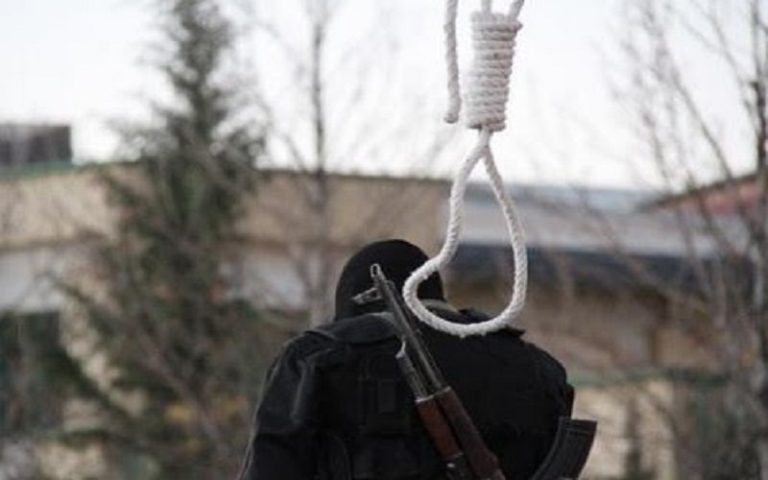
Fars News Agency, affiliated with the Islamic Revolutionary Guard Corps (IRGC), published an article in response to the 12-day conflict between Israel and Iran, describing the mass executions of 1988 as a “successful experience” and calling for their repetition in dealing with today’s opposition to Iran’s regime.

Referring to recent security conditions in Iran, Fars described regime opponents as involved in “transferring information to Israel and smuggling weapons,” claiming their execution is a “legitimate public demand.”

The article states: “Under current circumstances, where some mercenary elements have provided information to the enemy with the support of Israel and Western intelligence agencies, they deserve execution in the manner of 1988.”

Pursuing Justice for Iran’s 1988 Massacre: A Significant Step Forward

In the summer of 1988, Iran’s regime launched a massive wave of political executions targeting thousands of prisoners. This atrocity, known as the “1988 massacre,” claimed the lives of many individuals who had already been tried and were serving their sentences. Within weeks, so-called “Death Committees” used brief ideological questions to decide the fate of prisoners, sending hundreds to execution squads. Human rights organizations have described the executions as crimes against humanity. Families of the victims are still denied the right to know the burial locations of their loved ones. The majority of the estimated 30,000 executed prisoners were members and supporters of the People’s Mojahedin Organization of Iran (PMOI/MEK).

Fars defended the 1980s executions and the position of Ruhollah Khomeini, the former leader of Iran’s regime, stating: “This judicial action was necessary to maintain national security, administer justice, and put an end to the ongoing terrorist threat within the country.”

The IRGC-affiliated outlet continued: “Contrary to the propaganda of hostile networks that portrayed the 1988 executions as anti-human rights and tried to label figures like [former regime president Ebrahim] Raisi as the ‘Ayatollah of Executions,’ public opinion values the necessity of such rightful action.”

Following the recent war between Iran’s regime and Israel, the regime has intensified repression of its citizens, launching a wave of summonses, arrests, and the issuance and execution of death sentences.

The judicial and intelligence agencies of Iran’s regime have accused several detainees of “espionage” and “collaboration” with Israel.

On June 25, Amnesty International warned that Iran’s regime is using executions to repress dissent and instill fear in society.

Bill to Intensify Punishments for Opponents

On June 23, members of Iran’s regime parliament approved the general and detailed provisions of a 9-article bill intensifying punishments for “espionage” and “collaboration” with Israel, the U.S., and “hostile states against national security and interests.”

Under the bill, any “intelligence, espionage, or operational activity” for Israel, the U.S., or “other hostile regimes and groups or any of their agents against national security or interests” is categorized as “corruption on earth” and subject to the death penalty.

U.S. Sanctions 22 Entities Tied to Iranian Regime’s Shadow Banking Network

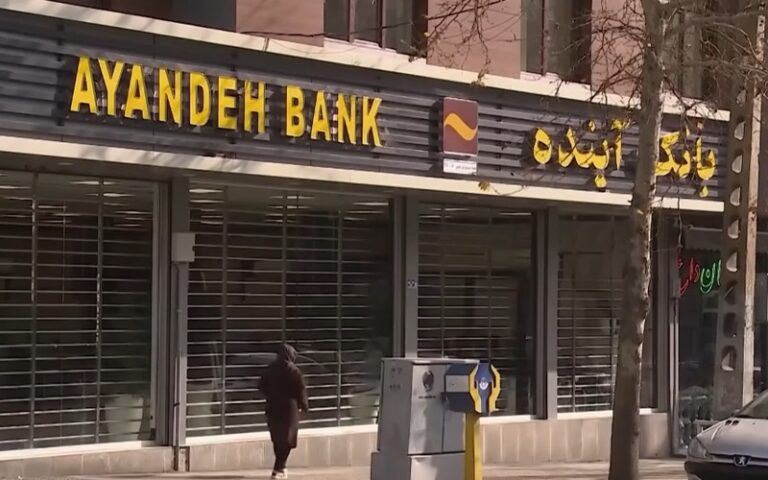
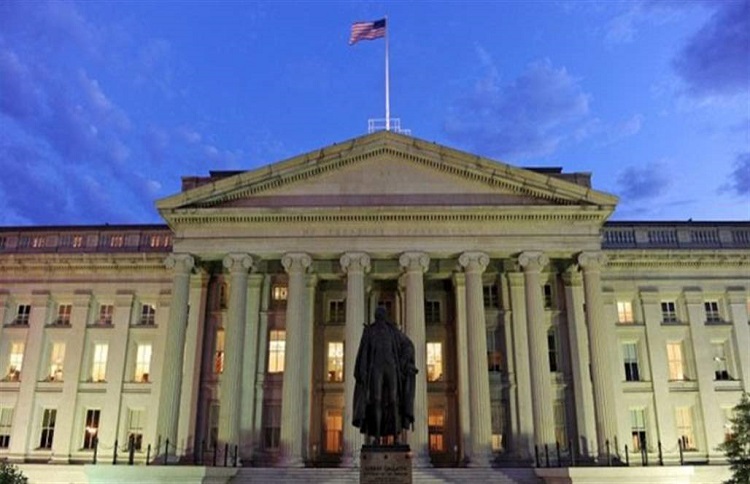
The U.S. Treasury Department announced sanctions against 22 companies and entities based in Hong Kong, the United Arab Emirates, and Turkey, accusing them of helping to circumvent sanctions and finance oil sales for the benefit of the Quds Force, the overseas arm of Iran’s Islamic Revolutionary Guard Corps (IRGC).

On Wednesday, July 9, the U.S. Treasury stated that these entities are part of a so-called “shadow banking” network that uses front companies and offshore accounts to funnel hundreds of millions of dollars in Iranian oil revenues to Quds Force operations, including support for militant proxy groups in the region.

U.S. Treasury Secretary Scott Bessent, emphasizing the Trump administration’s maximum pressure policy against Iran’s regime, said: “The Iranian regime relies heavily on its shadow banking system to fund its destabilizing nuclear and ballistic missile weapons programs, rather than for the benefit of the Iranian people. Treasury remains focused on disrupting this shadowy infrastructure that allows Iran to threaten the United States and our allies in the region.”

U.S. Sanctions Iran’s Construction Sector and 10 Military-Applicable Industrial Materials

This latest action falls under Executive Order 13224 and is part of a second round of sanctions implemented under the directive of the U.S. President as part of the maximum pressure campaign against Iran’s regime.

Earlier in June, the U.S. sanctioned more than 30 individuals and entities linked to two Iranian brothers who had transferred billions of dollars through Iranian exchange offices and foreign shell companies.

According to the report, the Turkey-based company “Pulcular Enerji” purchased several oil shipments in 2024 from sources tied to the Quds Force. These transactions were coordinated with the Lebanese oil broker “Concepto Screen SAL Off-Shore” and Quds Force officials, with payments mostly routed through front companies in Hong Kong and transferred in cash.

Companies such as “Amito Trading,” “Peakway Globa,” “JTU Energy,” “Shelf Trading,” and “Cetto International,” all based in Hong Kong, were used as fronts for these financial transactions.

Quds Force officials also utilized multiple shell companies—including “Radix Trade,” “Ventus Trade,” “Marmerth,” “Moon Imp & Exp,” “Mist Trading,” and “GAH Petrochemical Trading”—to generate hundreds of millions of dollars from the sale of Iranian oil and petrochemical products, which were then transferred to the account of the National Iranian Oil Company.

The report also names companies such as “Enka Trading,” “Finesse Global Trading,” “Lavida Corporation,” and “Bright Spot Goods Wholesalers,” which have transferred hundreds of millions of dollars to the Quds Force.

The Turkish firm “Golden Globe Demir Celik Petrol” has also been identified as a front for the IRGC’s oil operations, conducting hundreds of millions of dollars in annual oil transactions.

This company’s oil deals have involved tankers named “URI” (formerly “BOREAS”), “LUNA PRIME,” “ETERNAL PEACE,” and “TITAN” (formerly “KASPER”).

Under the announced sanctions, all assets and interests of these entities in the U.S. or in the possession of U.S. persons will be frozen.

In addition, any financial dealings or cooperation with these entities by U.S. persons or transactions passing through the U.S. financial system are prohibited.

The Treasury Department has warned that foreign financial institutions cooperating with the sanctioned individuals or entities could face secondary sanctions, including the freezing of correspondent accounts in U.S. banks.

The statement concluded by stressing that the purpose of the sanctions is not punishment but to induce a change in the behavior of Iran’s regime. Sanctioned individuals and entities may be removed from the list through a legal process if circumstances change.

Spanish Court Tries Eight Over Failed 2023 Assassination Attempt on EU Politician

The Spanish National Court is prosecuting eight individuals over the attempted assassination of Professor Alejo Vidal-Quadras in November 2023.

A judge in Spain’s Supreme Court has charged eight individuals with attempting to assassinate Alejo Vidal-Quadras, former Vice President of the European Parliament, in 2023 due to his ties with opponents of Iran’s regime. The attempt ultimately failed.

Investigations reveal that the attackers targeted the politician as a warning to prevent Spain and the European Union from supporting the National Council of Resistance of Iran (NCRI), the main opposition to Iran’s regime.

Dutch Intelligence: Iran’s Regime Likely Ordered the Assassination of Alejo Vidal-Quadras

The judge firmly concludes: they were commissioned to carry out the attack in retaliation for Dr. Vidal-Quadras’s political activities in support of the NCRI and also as a warning to the Spanish government and the EU not to shelter opposition affiliates whom Iran’s regime labels as terrorists.

Judge Santiago Pedraz confirms the theory that the assassination attempt was directly linked to Vidal-Quadras being a prominent European figure opposing Iran’s regime.

Iran’s regime has been involved in a series of covert operations aimed at tracking, intimidating, and even assassinating dissidents, critics, and dissenting voices beyond its borders.

The investigating judge provides detailed explanations of how those involved set up the infrastructure for the assassination attempt.

Naraya Gómez was also involved in renting vehicles and purchasing equipment used for surveillance in the attempted assassination of Vidal-Quadras.

Part of the funding was provided by Shahinaz Kadid, who traveled to Spain in October to join the tracking operation of the former Vice President of the European Parliament.

The investigating judge stated that the attack was ordered by unknown individuals seeking revenge for Vidal-Quadras’s support of the resistance against Iran’s religious dictatorship.

Concerns Over British Couple Detained in Iran

As tensions between Iran’s regime and Western countries have peaked following Israeli airstrikes on Tehran, the family of a British couple imprisoned in Iran since January 2025 on espionage charges has reported one month of complete uncertainty regarding their whereabouts or even whether they are still alive.

According to The Guardian, Lindsay Foreman and Craig Foreman, both 52 years old, were arrested on January 3 while traveling overland from Armenia to Pakistan, in route to immigrating to Australia. They were detained in the southern Iranian city of Kerman.

Officials of Iran’s regime claim the couple “entered the country under the guise of tourists and collected information in several provinces.”

However, Joe Bennett, 31-year-old son of Lindsay, said his family did not know where his parents were being held for over a month. In the past two weeks, they feared the couple may have been killed in the Israeli airstrike on Evin Prison on June 23, which left more than 70 dead.

IRGC Spy’s Secret Trip to Iran After Spying on Jewish Targets in Germany Exposed

British officials eventually informed the Foreman family on Tuesday that the parents are still being held in Kerman and have not been transferred to Tehran.

In an interview with The Guardian, Bennett emphasized: “Every day not knowing brought a deeper kind of dread. Every night, the same questions with no answers. You go to sleep, afraid. You wake up still afraid. And the silence – the not knowing – is just unbearable. So many of our fears remain. How are they doing? Are they being looked after? How are they coping psychologically?

He added that the family believes the best way to protect their lives is for their names to remain visible and present in the media.

According to The Guardian, British diplomats have visited the couple in prison three times so far. During the first visit, Craig had lost a significant amount of weight, though Lindsay was reportedly in relatively good spirits. The second visit lasted only nine minutes and was described as highly chaotic. In the third visit, they were allowed to be together and had access to the prison shop. However, their cell was only three meters by three meters, and they were allowed outside into the yard for just 15 minutes per day.

Bennett said his parents had been granted access to legal representation, but their lawyer does not speak English, which has made communication difficult.

Iran’s regime has a long history of hostage-taking and extortion of the West. Unfortunately, the West’s policy of appeasement has allowed the regime to achieve its goals through such means. Recently, Hamid Nouri, a former prison guard of the regime, and Assadollah Assadi, a regime diplomat who had been imprisoned for a 2018 bombing plot targeting a National Council of Resistance of Iran (NCRI) gathering, were released as a result of the regime’s hostage diplomacy. The West must end its policy of giving concessions to Iran’s regime.

$27 Million Raised in Iranian Regime Campaign to “Target Trump’s Head”

A website called Blood Covenant has launched a campaign to “raise funds for the assassination of Donald Trump, President of the United States,” claiming that over $27 million has been raised so far for this goal.

Previously, Fars News Agency, affiliated with the Islamic Revolutionary Guard Corps (IRGC), reported the launch of a campaign titled Blood Covenant and called on religious groups in Iran and abroad to hold rallies in front of Western embassies or in major city squares to express their support for Ali Khamenei, the supreme leader of Iran’s regime.

The outlet also demanded the implementation of “Islamic rulings for moharebeh” (waging war against God) against both Trump and Israeli Prime Minister Benjamin Netanyahu.

On Monday, Masoud Pezeshkian, the president of Iran’s regime, stated in an interview with American broadcaster Tucker Carlson that the moharebeh fatwa has nothing to do with the Iranian government or Ali Khamenei.

Javan newspaper, which is affiliated with the IRGC, criticized Masoud Pezeshkian’s recent remarks in his interview with Tucker Carlson about the moharebeh fatwa against Trump.

The paper wrote: “We are now a furious nation and cannot speak as we did in times of peace and tranquility. Showing the people’s rage is a form of rationality.”

Alarm Bells for Iran’s Healthcare System as Interest in Medical Specialties Declines

Abbas-Ali Raees-Karami, the president of Tehran University of Medical Sciences, announced a decline in interest among applicants for six core and subspecialty medical fields and warned that the absence of candidates in these fundamental disciplines poses a serious challenge to Iran’s healthcare system.

On July 7, Raees-Karami stated that demand has dropped for six key fields: obstetrics and gynecology, pediatrics, internal medicine, general surgery, anesthesiology, and emergency medicine—all considered foundational medical specialties.

Growing Wave of Professor Migration Poses Serious Challenge To Iran’s Scientific Future

He warned that the admission of only one pediatrics resident in Khuzestan province for the current academic year signals a looming shortage of pediatric specialists in the region within the next three years.

Discrimination, Pressure, Emigration: Mounting Crisis in Iran’s Medical Community

In January 2025, Jalil Hosseini, Deputy Minister of Education at the Ministry of Health, criticized the quota system in Iran’s university entrance exams, warning that such discriminatory admissions have demoralized many students.

Mostafa Moein, who served as Minister of Science under former president Mohammad Khatami, stated in October 2024 that 75% of medical students at the University of Tehran are admitted through quotas. He said: “On what basis are they studying medicine when they enter with a rank of 100,000, while our gifted and talented students with top-100 scores can’t get in?”

In June 2023, the state-run daily Farhikhtegan reported that 6,500 doctors, including 2,300 specialists, had emigrated from Iran in 2022—30% more than the average annual intake of new doctors at Iranian universities.

Rising Suicide Rates Among Medical Students in Iran

The term “quota” refers to individuals who, despite having very low entrance exam rankings, are admitted to top university programs. These individuals are typically affiliated with the regime or its institutions.

According to a March 2024 report from Iran’s Migration Observatory, half of Iranian doctors are considering emigration.

Surge in Suicides Among Medical Professionals

In May 2024, Iraj Khosronia, head of the Iranian Society of Internal Medicine Specialists, issued a warning to health authorities over the consequences of creating obstacles for medical professionals.

He cited a rise in suicides and emigration among doctors and nurses as outcomes of the mounting pressure placed on the medical community.

Khosronia said that the medical community is in a state of “acute distress and anxiety.” He added that officials and members of Majlis (parliament) have not only forgotten the vital role of healthcare workers but have continuously passed restrictive laws that corner medical personnel and force them to either quit or emigrate.

The issue of suicides among physicians and medical residents in Iran has become a crisis in the country’s healthcare system. In 2024 alone, at least 16 residents ended their lives by suicide.

Iran: 5 Prisoners Sentenced to Death 12 Times Over Security Charges

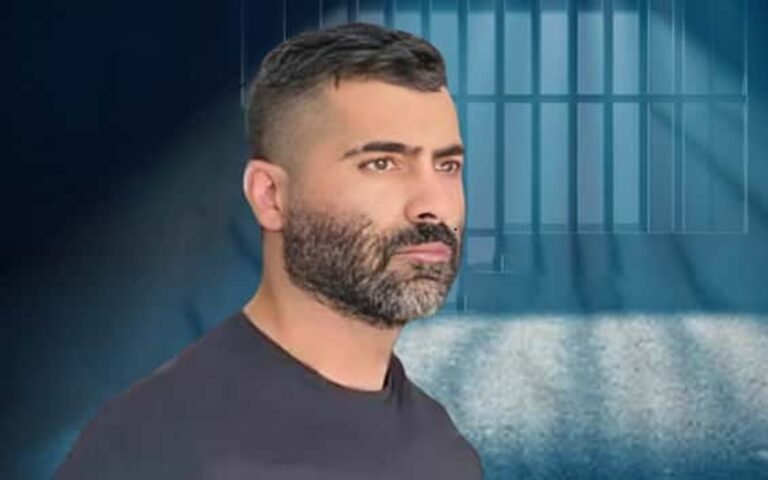
Branch 1 of the Revolutionary Court in Urmia, presided over by Reza Najafzadeh, has sentenced five Kurdish citizens from the city of Bukan to a total of 12 death sentences and 75 years of discretionary imprisonment. The verdict was delivered to their defense attorneys on July 7.

The defendants—Soran Ghasemi (Ali), Pejman Soltani, Kaveh Salehi, Rezgar Beigzadeh Babamiri, and Tayfour Salimi Babamiri—were all arrested during the nationwide protests of 2022. For months, they were held in detention centers affiliated with Iran’s Ministry of Intelligence and the Islamic Revolutionary Guard Corps (IRGC), where they were subjected to intense interrogations, torture, and enforced disappearances. Their families and defense lawyers emphasize that the verdicts were based primarily on confessions extracted under duress and torture, and that the judicial proceedings lacked the minimum standards of a fair trial.

“No to Execution Tuesdays” Campaign Marks 76th Week, Spreads to 47 Prisons Across Iran

Online Sessions Held Without Oversight or Proper Defense

According to informed sources, the trial took place in three online sessions without the presence of any independent observers and without sufficient opportunity for appointed lawyers to mount a proper defense. The attorneys were only allowed to deliver an oral defense at the moment the indictment was read. Charges brought against the defendants include “baghi” (armed rebellion), “moharebeh” (waging war against God), “forming and leading an insurgent group,” “intelligence collaboration with a hostile government,” “trafficking Starlink satellite internet devices,” “assembly and collusion against national security,” and “propaganda against the regime.”

Sentences in Detail

  • Soran Ghasemi, Pejman Soltani, and Kaveh Salehi were each sentenced to three executions and 15 years in prison. Ghasemi and Soltani were also sentenced to an additional 10 and 15 years, respectively, on charges of direct involvement in murder. Salehi was acquitted of this particular charge.
  • Rezgar Beigzadeh Babamiri was sentenced to death twice and 15 years in prison, and in a separate case, he received another 15-year sentence for alleged direct involvement in a murder.
  • Tayfour Salimi Babamiri was sentenced to one execution and 15 years in prison. He is currently released on bail set at 50 billion rials (5 billion tomans).

Accounts of Torture and Coerced Confessions

The families of the defendants reported that the arrests took place in March and April 2023, and that the detainees were held in solitary confinement for extended periods. Deprived of family visits or phone calls, they were subjected to extreme psychological and physical pressure to confess to charges such as collaboration with Mossad and involvement in street violence. In one instance, agents threatened to arrest or execute the defendant’s family members if they did not confess.

Claims of Starlink Smuggling and Mossad Collaboration

The Urmia prosecutor has claimed that the defendants intended to distribute 120 Starlink satellite internet devices in western Iran and that they collaborated with Mossad to disrupt national security. However, lawyers and legal experts argue that no technical documentation or independent evidence has been presented to substantiate these charges and that the case relies solely on confessions extracted under torture. Experts describe such heavy-handed accusations as an attempt to instill fear in society.

Multiple Death Sentences: A Case of Excessive Punishment

Pejman Soltani had previously been sentenced to death in a separate case by the Juvenile Criminal Court of West Azerbaijan province. With this new ruling, he now faces a total of four death sentences. Soran Ghasemi also has three death sentences and a 10-year prison term in a separate case for direct involvement in murder. Legal experts consider these repeated death sentences as an example of “judicial cruelty” and a violation of the principle of proportionality in punishment.

IRGC Spy’s Secret Trip to Iran After Spying on Jewish Targets in Germany Exposed

Germany’s Bild newspaper has reported that Ali S., an Afghan-Danish citizen recently arrested in Denmark on charges of spying for the Islamic Revolutionary Guard Corps (IRGC), had previously traveled to Iran and handed over intelligence on Jewish targets in Berlin to Iranian regime agents.

On Sunday, July 6, Bild published a report detailing Ali S.’s activities and how he was identified and arrested in Aarhus, Denmark.

According to the report, in June 2025, this Afghan-Danish national entered Iran under the cover of a family trip to Turkey. After delivering the gathered intelligence on Jewish targets in Berlin to regime officers, he left Iran using falsified documents, avoiding any official passport stamp.

Italian Media Reveals Scope of Iranian Regime’s Espionage and Propaganda Network in Italy

Bild further noted that Denmark’s domestic intelligence agency, after intercepting communications between Ali S. and a known IRGC Quds Force officer, shared the information with Germany’s domestic security agency.

Ali S.’s ties to the Islamic Center of Hamburg and his frequent visits to the Imam Ali Mosque (also known as the Blue Mosque) had already placed him under surveillance by security agencies.

Identifying Jewish and Israeli Targets in Berlin

On June 4 and 5, Ali S. traveled to Berlin with his family, during which time German security agents monitored his every move through hotel surveillance and 24-hour tracking.

Intercepted conversations at the home of this Afghan-Danish citizen revealed that, on June 23, after returning to Denmark, he told his family he had handed over information, images, and videos about identified targets in Berlin to his contact officer in Tehran.

The transferred data included details such as backdoor layouts, levels of security, and optimal locations for placing explosives or incendiary devices.

According to the prosecutor, the purpose of these activities was to gather intelligence on Jewish sites and individuals specifically linked to Germany’s Jewish community.

This case is considered one of the largest identified Iranian regime espionage operations in Germany in recent years.


Italian Media Reveals Scope of Iranian Regime’s Espionage and Propaganda Network in Italy

The Italian news website Linkiesta has reported that the Iranian regime has established a shadowy and complex network in Italy, using cultural diplomacy, religious centers, academic partnerships, ideological propaganda, and digital operations to monitor dissidents and expand its influence.

In an investigative report published on Monday, July 7, Linkiesta wrote that multiple accounts have surfaced of threats, surveillance, and pursuit of Iranian regime opponents in Rome, Milan, and other Italian cities.

The report quotes an Iranian woman opposed to the regime saying: “After the protests, I was followed, my phone stopped working, and my family in Iran was threatened.”

Another dissident activist reported a suspicious break-in at his home and the disappearance of USB drives. He added that during a protest, an agent from the Iranian regime’s embassy threatened him by saying, “We’re watching you. Your family in Iran will shed tears.”

Iran’s Regime Lays Groundwork for Expanded Executions

According to informed sources cited by Linkiesta, a unit of 15 to 20 individuals operates inside the Iranian regime’s embassy in Rome. This team is involved in cyber monitoring, field surveillance, and reporting directly to Tehran, in coordination with the Ministry of Intelligence and the IRGC.

Tehran reportedly uses its foreign diplomatic missions to covertly monitor dissidents and fund influence operations under the guise of cultural initiatives.

Tehran’s Influence Through Academic and Cultural Institutions

Linkiesta further wrote that, according to reviewed documents, the Iranian regime has invested over €1 million in joint academic projects with Italian universities in recent years.

According to the report, partnerships have been established between Iranian universities—including Allameh Tabataba’i, Beheshti, and Imam Khomeini Universities—and Italian institutions such as Sapienza University of Rome, as well as universities in Florence, Bologna, Turin, and the Polytechnic University of Milan.

Italian Media Reveals Scope of Iranian Regime’s Espionage and Propaganda Network in Italy

The Italian news website Linkiesta has reported that the Iranian regime has established a shadowy and complex network in Italy, using cultural diplomacy, religious centers, academic partnerships, ideological propaganda, and digital operations to monitor dissidents and expand its influence.

“No to Execution Tuesdays” Campaign Marks 76th Week, Spreads to 47 Prisons Across Iran

In its 76th consecutive week, political prisoners across Iran have continued the “No to Execution Tuesdays” campaign, staging hunger strikes in 47 prisons nationwide. In a joint statement, the prisoners urge all human rights organizations and activists to intensify pressure on Iran’s regime to uphold human rights. The full statement reads as follows:

First, we find it necessary to honor the memory of those who lost their lives in the student uprising of July 1999. Though brutally suppressed, that movement laid the foundation for future protests in 2009, 2017, 2019, and 2022—demonstrations that will continue until the people achieve freedom and the right to self-determination.

The Continuation Of The “No To Executions Tuesdays” Campaign In Its Seventy-Fifth Week Across 47 Prisons In Iran

Members of the “No to Execution Tuesdays” campaign express deep concern and growing outrage over the latest wave of executions and intensifying security crackdowns across the country. Since June 22, at least 24 people have been executed in Iran, bringing the total number of executions since March 21, 2025 (the start of the Iranian year 1404), to 428. These horrific figures represent just a portion of the widespread and systematic violations of human rights in Iran.

Beyond this new wave of executions, this week has also seen further deadly repression, including the killing of two young men in Hamedan by regime forces and an armed assault on women in the village of Gunich near the city of Khash, which resulted in the death of two local women. These incidents are clear examples of the regime’s deep-rooted misogyny and its fear of public dissent, aimed at intimidating society.

In this context, Ms. Mai Sato, the United Nations Special Rapporteur on the situation of human rights in Iran, issued a serious warning on July 4 regarding the regime’s exploitation of regional conflicts to suppress national and religious minorities and political dissidents. She emphasized the need to protect the fundamental rights of all citizens based on international law and accused the Iranian regime of continuing systematic repression.

Members of the “No to Execution Tuesdays” campaign also strongly condemn the issuance of death sentences for five Kurdish political prisoners—Rezgar Beigzadeh Babamiri, Pejman Soltani, Soran Ghasemi, Kaveh Salehi, and Tayfour Salimi Babamiri—who were arrested during the 2022 uprising. These inhumane rulings, lacking any semblance of fair trial, have collectively sentenced the five men to 12 executions.

The campaign calls on the international community, human rights organizations, and conscious, freedom-loving individuals not to remain indifferent to the fate of dual-national prisoners such as Ahmadreza Djalali. He was abducted inhumanely by regime security agents on the night of the Evin Prison bombing and, after years of suffering in prison, is now at risk of having a medieval-style death sentence carried out. The campaign urges all not to be intimidated by the regime’s terror tactics and to stand fully in defense of the “right to life” of citizens and prisoners on death row.

The campaign further urges all organizations and human rights defenders to intensify efforts to clarify the situation of prisoners, demand access to prisons, and call for direct dialogue with political prisoners. The testimonies of political prisoners exiled to the Greater Tehran and Qarchak prisons offer just a glimpse of the inhumane conditions that prevail in Iran’s prison system. If this is the state of the prisons in the capital, one can only imagine the atrocities occurring in other facilities, especially those affecting ordinary and unrecognized inmates.

We demand the immediate abolition of all death sentences in Iran and firmly believe that the people of Iran, in solidarity with other oppressed nations, will continue this path of resistance and steadfastness until victory and liberation are achieved.