Home Blog Page 81

Iranian Regime Blamed as Main Culprit Behind Environmental Pollution

These days, Tehran and many other cities across Iran—from east to west—are engulfed by dust storms. According to experts, this phenomenon signals a much deeper environmental crisis.

In recent days, not only major cities such as Tehran but also most western and southwestern provinces of Iran have once again been affected by intense waves of dust and particulate pollution. At times, the air quality index has reached 500, triggering serious health warnings for the public.

Severe Air Pollution in Various Cities of Iran

The head of Tehran’s Environmental Protection Organization has stated that the dust storms will persist in the capital and most provinces until the end of summer.

Just a few days ago, Somayeh Rafiei, head of the regime’s Majlis (parliament) environmental faction, admitted that the National Headquarters for Combating Dust Storms has failed to prevent the expansion of domestic dust storm sources. She stated that not only has the problem not been solved, but the situation has become “worse and more severe.”

Whatever the specifics of the dust crisis in Iran may be, experts agree that dust storms are a symptom and indicator of a far larger environmental catastrophe in the country.

Only a portion—estimated at around 30%—of the dust storms originate within Iran. The rest largely come from the west and south, including Iraq, Syria, Saudi Arabia, and the African Sahara. Territorial degradation in these areas, combined with intensified climate change, has significantly increased the inflow of dust into Iran.

The domestically-generated dust stems from “territorial degradation within Iran.” Desertification, soil erosion, drying wetlands and plains, and land subsidence are among the factors contributing to this degradation.

Water Tensions In 25 Provinces And 53 Cities Of Iran

Iran’s regime has yet to submit any report to the United Nations Climate Change Conference, known as the COP conference. This event is held annually, where countries present their environmental performance and progress to the international community.

Dust Storms: A Constant Affliction and Chronic Disease

According to experts, dust storms are a constant affliction and a chronic illness that severely reduce people’s quality of life. When combined with other factors such as water shortages, power outages, poverty, and insecurity, their destructive effects are amplified.

Certainly, citizens in countries like Qatar, Kuwait, and the United Arab Emirates—who also face dust storms—have far more resilience compared to people in provinces like Baluchestan or Khuzestan in Iran. This highlights the fact that Iran’s regime has failed to provide even the minimal conditions for public resilience, while constantly repeating the claim that solving the dust crisis is impossible without regional cooperation.

Officials of Iran’s regime should ask themselves: who exactly is supposed to cooperate with them? Iraq or Syria—both of which are embroiled in their own domestic crises? Currently, the Iranian regime does not even have sovereignty over its own airspace. So how can it engage in any meaningful regional collaboration with these or other countries to manage the dust storm crisis?

Forty-seven years ago, the Iranian regime launched its so-called path to “self-sufficiency” under the slogan “Neither East nor West.” In the years following the Iran-Iraq war, it prioritized agricultural expansion under the direction of “Jahad-e Sazandegi” (a regime institution ostensibly tasked with rural development).

But this policy proved costly, and it was nature that paid the price—through unrestrained dam construction, failure to allocate water rights to wetlands, land-use changes, and the destruction of forests and pastures. Dust storms are one of the consequences of this misguided policy.

Uncontrolled dam-building and large-scale extraction from water sources have dried up wetlands like Hamoun and Hoor al-Azim. Meanwhile, unsustainable farming, deep plowing, and the conversion of rangelands into croplands have loosened and destabilized the soil. Overgrazing has destroyed plant cover, and the movement of industrial vehicles—as well as remnants of the eight-year war with Iraq in some areas—have further prepared the soil for erosion. The lack of pebbles and vegetation has cleared the path for winds to carry away the soil.

Dust storms are not made up of just soil—they often originate from wetlands contaminated by industrial and domestic wastewater. As a result, the dust particles that spread through different Iranian cities vary and may carry differing levels of toxicity. These dust particles contain heavy and toxic metals.

Iran’s regime must allow at least half of the country’s renewable water resources to follow their natural course into plains and wetlands. This would require diverting 50 billion cubic meters of water annually from the agricultural sector back to nature—effectively shutting down half of Iran’s agricultural activities, while modernizing the remaining half to align with the country’s new climate realities. But the regime will not do this. The IRGC and regime-affiliated institutions derive the most profit from the destruction of Iran’s environment and pay little attention to the country’s future.

Araghchi Reacts to Netanyahu’s Comments on Conditions for an Agreement With Iran

Abbas Araghchi, the foreign minister of Iran’s regime, strongly criticized Israeli Prime Minister Benjamin Netanyahu in a post published on X on Sunday evening, July 13, 2025, responding to Netanyahu’s stated conditions for a potential agreement with Iran.

Araghchi wrote in his post:

The foreign minister of Iran’s regime also wrote in his message that Netanyahu had failed to “erase 40+ years of peaceful nuclear achievements” and claimed that each of the dozens of Iranian scientists killed by Israel “had trained 100+ capable disciples. They will show Netanyahu what they are capable of.”

In an interview aired Sunday on Fox News, the Israeli Prime Minister laid out three conditions for supporting any agreement with Iran’s regime: halting uranium enrichment, banning ballistic missiles with a range over 300 miles (482 kilometers), and abandoning the regime’s proxy forces involved in terrorism.

In this exclusive interview, Netanyahu emphasized that if Iran were to provide guarantees on these three issues, “then we are dealing with a different regime.” Otherwise, he said, Iran should remain isolated and be left to face whatever internal conditions develop.

Netanyahu also stressed that had Israel and the United States not attacked the Iranian regime’s nuclear sites last month, Iran would have been capable of obtaining a nuclear weapon within a year.

The Iranian regime’s foreign minister’s critical post in response to Netanyahu’s remarks drew reactions from Israeli officials.

Gharibabadi: No IAEA inspectors are currently in Iran
Amid escalating rhetoric between Iranian regime and Israeli officials, Kazem Gharibabadi, deputy for legal and international affairs at Iran’s Foreign Ministry, stated that “no inspectors from the International Atomic Energy Agency are currently present in Iran.”

According to the state-run ISNA news agency, Gharibabadi confirmed this during a televised program on Sunday evening, July 13, 2025, adding that “if the Agency has any request or demand, the decision-making authority for that will be the Supreme National Security Council.”

One day after the ceasefire between Israel and Iran, the Iranian regime’s Majlis (parliament) passed an urgent resolution to suspend cooperation with the International Atomic Energy Agency. It declared that any resumption of cooperation would be conditional on receiving security guarantees for Iran.

In his Sunday interview, Gharibabadi referred to this decision, saying, “The parliamentary resolution is clear, and based on it, our cooperation with the Agency is suspended.”

He added: “If certain conditions are met, then based on the parliamentary resolution, the final decision for any kind of cooperation with the Agency lies with the Supreme National Security Council. We have informed the Agency of this, and any request it makes will be considered by that body.”

Tightening Global Pressure On Iran’s Regime Nuclear Program

As the Iranian regime’s nuclear program has come under heightened global scrutiny following the 12-day war with Israel, international sources report mounting overt and covert pressure on Tehran to halt uranium enrichment. Simultaneously, Tehran’s contradictory stances have added complexity and tension to the issue.

The news website Axios reported that Russian President Vladimir Putin has recently, in communications with Iranian regime officials as well as with Donald Trump and Emmanuel Macron, supported a plan under which Iran would have no right to enrich uranium. According to the outlet, Moscow has asked Tehran in secret negotiations to agree to this proposal.

Grossi Warns of Consequences of Attacks on Iran’s Nuclear Facilities

Three European officials and one Israeli official confirmed that Putin has directly proposed to Iranian regime officials that they abandon full-scale uranium enrichment. Other sources told Axios that Russia is prepared, if a deal is reached, to remove Iran’s enriched uranium from the country and return only low-enriched uranium for medical and nuclear power purposes. However, a spokesperson for the Russian Foreign Ministry denied the Axios report.

Araghchi: There will be no agreement without enrichment

In response to reports of a possible “zero enrichment” deal, Abbas Araghchi, Iran’s regime foreign minister, firmly stated:
“We will not accept any agreement that excludes enrichment.”

He also warned that the use of the “snapback mechanism” by the three European countries to reinstate sanctions would mark the end of Europe’s role in the nuclear file. Araghchi stressed that inspections by the International Atomic Energy Agency (IAEA) would continue conditionally, and Tehran would assess its security and technical concerns before resuming full cooperation.

Trump: If Iran resumes pursuit of a bomb, strikes will resume

The Wall Street Journal revealed that Donald Trump, in a meeting with Israeli Prime Minister Benjamin Netanyahu, stated that he would not oppose another military strike if Tehran resumed its pursuit of nuclear weapons.

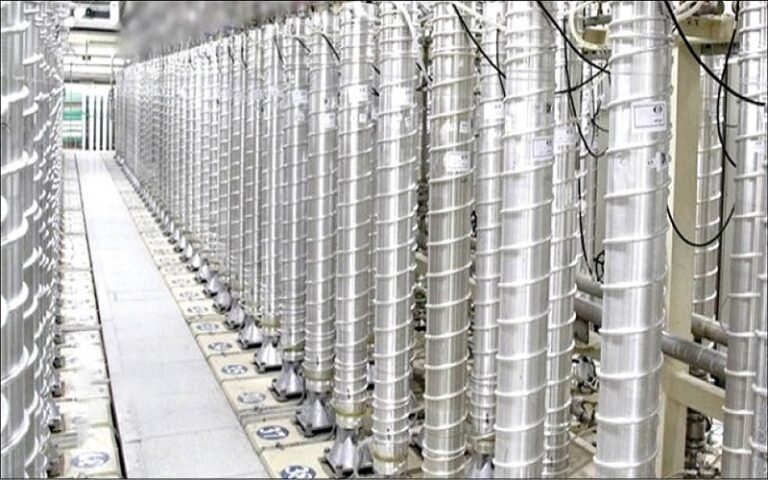
Iranian Regime Close to Building Nuclear Bomb

According to the report, Israel has clearly informed the United States that it is prepared for renewed military action if Tehran revives its weaponization activities. A senior Israeli official also stated that portions of Iran’s uranium stockpile in Isfahan remained intact after recent attacks and could potentially be recovered.

The 12-day war: official casualty figures and silence on military personnel

Meanwhile, Asghar Jahangir, spokesperson for Iran’s regime judiciary, announced that the 12-day war between Iran and Israel resulted in 943 deaths, with eight more individuals still missing. He also confirmed that in the attack on Evin Prison, five inmates with financial crimes were killed and several others escaped.

These figures come as other officials, including the head of the Martyrs Foundation, have estimated the death toll at up to 1,060 and warned it could rise to 1,100. Despite this, none of the regime’s institutions have provided a breakdown between military and civilian casualties, raising many questions among the public.

Recent developments indicate that the Iranian regime’s nuclear program has entered a new phase—one in which not only the United States and European countries, but even Russia, are cautiously distancing themselves from Tehran. The “zero enrichment” plan, now jointly pursued by Moscow and Washington, effectively seeks the complete nuclear disarmament of the Iranian regime. However, Tehran’s public opposition and threats to withdraw from cooperation have further darkened the outlook for negotiations.

Recession And Collapse in Iran’s Financial Markets Continue

The 12-day war and its fragile ceasefire have deepened the structural crises of Iran’s economy. The already ailing economy, previously suffering from severe imbalances in energy, banking, currency, and pension systems, is now trapped in deeper instability, a severe recession, and growing challenges.

Currency market and uncertainty about price increases

Following the Iran-Israel conflict, financial markets entered a recession. The insecure environment and the unstable ceasefire have brought trading to a halt, inflicting serious damage on the economy. With the outbreak of the war, exchange rates surged, and the price of the US dollar even surpassed 950,000 rials. Despite currency interventions and a security clampdown, rates have not returned to pre-war levels.

Billions for War, Nothing for the People: The Cost of Repression and Corruption in Iran

Stock market: heavy decline and loss of trust

Iran’s stock market has experienced a sharp decline over the past two weeks, with capital steadily flowing out. Supportive policies such as market closures, stock insurance, and capital injections have failed to stop the crash. The sell-off continues even after the ceasefire, and the Central Bank’s announcement of a 6 trillion rial injection has not restored investor confidence.

Gold and cryptocurrency markets in forced stagnation

Investors have turned to gold, cryptocurrencies, and fixed-income funds, but to prevent capital flight, the Central Bank has restricted the gold and crypto markets. With restrictions on rial payments and online platform operations, gold trading has effectively halted, and assets have been frozen.

Recession in the housing market

The uncertain environment has pushed the housing market into recession as well. A drop in buyers, an increase in sellers, and capital flight have led to an 8% decrease in asking prices in Tehran. However, despite the price drop, transactions are not occurring, and listings are remaining unsold for extended periods.

Damage to businesses and cost of living

War-related insecurity has led to widespread closures or stagnation of businesses, especially small enterprises. Fear of attacks has even prevented workers from showing up at bakeries. The war has disrupted land and sea transportation to regional countries and rising international insurance premiums for ships have raised import costs. According to an official report, food prices in June rose by more than 10% compared to the previous month.

Rising job insecurity and wave of layoffs

Fear over the end of the ceasefire has led people to cut spending, resulting in widespread stagnation across most businesses. Only essential shops remain open. Declining sales, rising production costs, and falling revenues have pushed companies toward layoffs. The firing of 150 journalists from major media outlets and partial payment of salaries are further signs of the employment crisis.

Damage to infrastructure, banks, and exchanges

The country’s infrastructure has been damaged during the war, and its reconstruction will require significant resources. Cyberattacks on Sepah and Pasargad banks have caused serious disruptions, while the attack on the “Nobitex” exchange led to a theft of $100 million. Currency reserves have also been diverted to military and cyber-security sectors, putting additional pressure on the public budget. Internet shutdowns imposed by the regime have cost the economy $400 million. These factors will widen the budget deficit and intensify future inflation.

Iran’s Regime Expels Over Half a Million Afghans in 16 Days

The United Nations has announced that in just 16 days following the end of military clashes between Iran’s regime and Israel, more than 500,000 Afghan nationals were expelled from Iran. Observers have called this one of the largest forced displacements of population in the past decade.

According to CNN, the International Organization for Migration (IOM) reported that from June 24 to July 9, at least 508,426 Afghans exited Iran through its border crossings with Afghanistan. The organization warned that nearly 65,000 people were returned to Afghanistan on just Tuesday and Wednesday of the past week, and that this pace accelerated after Iran imposed a deadline for undocumented foreigners to leave.

Officials of Iran’s regime had previously announced in March the launch of a plan to deport undocumented Afghan migrants. However, the sudden acceleration of this plan came after the 12-day war between the Iranian regime and Israel—a conflict that began with Israeli airstrikes targeting IRGC positions and nuclear facilities, followed by Iran launching missile attacks on Israeli territory.

In recent weeks, some state-run Iranian media have accused Afghan nationals of collaborating with Israeli intelligence, without providing any evidence. Observers say this narrative may be an attempt by the Iranian regime to deflect public attention from internal crises and justify the crackdown on a vulnerable migrant community.

Surge in Forced Returns and Dire Conditions at Border

According to Myhyang Park, head of the IOM office in Iran, half of all returns in the current year occurred after June 1 alone.

She added that in just one week in July, 250,000 Afghans were returned from Iran, including around 400 unaccompanied or separated children.

Images from the Islam Qala crossing—one of Afghanistan’s busiest border points with Iran—show tens of thousands of migrants waiting under harsh conditions and 40-degree heat to either cross or have their documents processed. Many of them had lived in Iran for years, working in difficult and low-paying jobs.

Testimonies of Abuse and Extortion in Detention Centers

Some of the returnees have shared accounts of their experiences with Iranian security forces and detention. Bashir, a young Afghan man interviewed at Islam Qala, said he was arrested in Tehran and was forced to pay 120 million rials (equivalent to 12 million tomans) as extortion before being transferred to a detention center in the south of the city.

He claimed that in the detention center, detainees were not provided with food or drinking water and were repeatedly beaten and insulted.

Ongoing Arrests, Broadcast of Televised Confessions, and International Reactions

Recently, state-run Iranian media have aired “televised confessions” in which an Afghan individual allegedly admits to providing information about certain locations to a person residing in Germany in exchange for $2,000. No identity or evidence was presented to substantiate the claims.

In another video, police officers are seen detaining a group of migrants, who the reporter claims are Afghans. They are taken away to an undisclosed location without any explanation.

These actions have drawn international criticism.

Nevertheless, Fatemeh Mohajerani, the government spokesperson, told Reuters that “we have always tried to be good hosts, but national security is a priority, and naturally, undocumented foreigners must be returned.”

Iranian-American Arrested at L.A. Airport for Alleged Iran Sanctions Violation

U.S. judicial authorities announced that an Iranian citizen with U.S. permanent residency was arrested upon arrival at Los Angeles International Airport for allegedly sending advanced electronic equipment to Iran in violation of U.S. sanctions.

According to the U.S. Attorney’s Office in Los Angeles, Bahram Mohammad Estavari, 66, a resident of both Tehran and Santa Monica, was the founder and CEO of an engineering firm based in Tehran. Since 2018, he allegedly engaged in the illegal export of electronic equipment and components to Iran.

He was arrested on Thursday, July 10, upon entering the United States at LAX and appeared in federal court in Los Angeles later that same day.

Estavari has been charged with one count of “conspiracy to violate the International Emergency Economic Powers Act” (IEEPA) and three counts of directly violating the law. Prosecutors say he exported components subject to strict export controls to Iran without the legally required authorization from the U.S. government.

U.S. Sanctions 22 Entities Tied to Iranian Regime’s Shadow Banking Network

According to the indictment, Estavari used two front companies based in the United Arab Emirates to carry out the transactions, concealing the final destination of the goods from American and foreign vendors.

He allegedly claimed that the UAE-based firms were the end-users, while in reality, the items were destined for his engineering company in Tehran.

The court documents state that the exported items included advanced computer processors, signal systems for railway infrastructure, and other complex electronic components—all of which fall under strict U.S. export controls and cannot be sold or shipped to Iran without special authorization. Prosecutors emphasized that Estavari was fully aware of the sanctions and deliberately violated them.

Estavari, who obtained lawful permanent residency in the U.S. in May 2020, pleaded not guilty during his federal court appearance in downtown Los Angeles and was released on a $1.3 million bond. His trial is scheduled to begin on September 2.

If found guilty by a jury on any of the charges, Estavari could face up to 20 years in federal prison for each count—a sentence that would mark one of the harshest penalties for sanctions violations in recent years.

Estavari’s case emerges amid repeated warnings by the U.S. government in recent years about the Iranian regime’s ongoing efforts to acquire advanced technologies despite sanctions. Numerous Iranian nationals or individuals of Iranian descent have been arrested and prosecuted for circumventing these sanctions.

In recent months, as tensions between Tehran and Washington have intensified over Iran’s nuclear program, the strict enforcement of sanctions has once again become a central pillar of U.S. policy toward Iran. Cases like the one now opened against Bahram Estavari are seen in this context.

German Authorities Say Aid Worker Has Not Left Iran, Contact Lost

The Stuttgart-based German aid organization STELP announced that Serkan Eren, its founder and a Turkish national who had traveled to Iran on a humanitarian mission, was scheduled to leave the country on June 28. However, he did not exit Iran, and all contact with him has been lost.

In a statement issued on July 10, STELP urged the public to refrain from speculation and unauthorized actions in order to protect Serkan’s safety and ensure peace of mind for his family and loved ones.

In June, Eren had traveled from Stuttgart to Tehran to deliver financial aid.

In an interview with the German media outlet SWR, he said that to avoid being mistaken for an “agent or saboteur,” he had left his bulletproof vest, helmet, and satellite phone in Germany and traveled to Iran with only a backpack and no protective equipment.

SWR had previously reported on his trip to Iran, describing the conditions Serkan Eren experienced after arriving and how he helped local people.

Since the outbreak of the war with Israel, Iran’s regime has launched a widespread wave of arrests targeting citizens, including foreign nationals, on charges such as “collaboration with Israel.”

In one such case, Abbas Araghchi, the foreign minister of Iran’s regime, confirmed in a July 10 interview with the French newspaper Le Monde that Lennart Monterlos, an 18-year-old French-German tourist, had been arrested in Iran.

Iranian Regime Confirms Arrest of French-German Tourist Lennart Monterlos

Regarding the young French citizen who has had no contact with his family since June 16, Araghchi said: “This cyclist was arrested for committing a crime, and a notice regarding this matter has been sent to the French embassy.”

Over the past decades, Iran’s regime’s security and judicial apparatus have repeatedly detained and imprisoned foreign nationals and dual citizens arbitrarily.

France and other European Union member states have described these arrests as politically motivated and part of the Iranian regime’s “hostage diplomacy.”

Human rights activists also consider the arrest of Western nationals by the Iranian regime to be a form of state-sponsored hostage-taking, saying that Tehran uses this tactic to pressure the West and extract concessions.

Iran’s Statistical Center Reports Rise in School Dropout Rates

As warnings persist about the wave of school dropouts among children and adolescents in Iran, data from the Statistical Center of Iran shows that the dropout rate among students in elementary and lower secondary education during the 2023–2024 academic year increased compared to the previous year.

According to the Statistical Center, the overall dropout rate at the elementary level was 1.45%, which marks a 0.25% increase compared to the previous academic year.

Data from the center indicates that the dropout rate among boys in this level reached 1.53%, a 0.32% increase from the previous academic year.

Iranian Officials Downplay the Number of Dropout Students

Among girls, the dropout rate was reported at 1.36%, which is 0.17% higher than the previous year.

On the other hand, the overall dropout rate at the lower secondary level (middle school) was 6.41%, reflecting a 0.94% increase compared to the previous year.

According to published data, the dropout rate for boys in lower secondary education increased by approximately 1.2%, while for girls it rose by 0.65% compared to the previous year.

At the upper secondary level (high school), the dropout rate decreased from 4.04% to 2.69%, marking a 1.35% reduction compared to the previous year.

Over the past years, repeated warnings have been issued about the rising dropout rates among Iranian children and teenagers, often attributed to various issues, including family economic hardship.

In December 2024, Alireza Kazemi, the education minister of Iran’s regime, cited familial, economic, and social factors as the main reasons why students are dropping out of school.

Earlier in November 2024, Gholam-Ali Afrouz, a professor at the University of Tehran, stated that only 70% of Iranian students who enter elementary school eventually graduate from high school.

He emphasized that 30% of students in the country fail to obtain a high school diploma and leave the education system before graduating, entering the job market instead.

In October 2024, Farshad Ebrahimpour, a member of the Iranian regime’s parliamentary education committee, revealed concerning hidden statistics, saying that around 2 million students did not register for the 2024–2025 school year. He cited economic difficulties as the reason many parents and students were unable to complete the enrollment process.

Political Prisoners Held in Inhumane Conditions in Iranian Rgime Prisons

Eighteen days after the Israeli strike on Evin Prison, which resulted in the transfer of male and female political prisoners to Greater Tehran Prison and Qarchak Varamin Prison, reports continue to describe the unbearable and inhumane conditions in these facilities. Despite prisoners’ protests, their dire circumstances remain unaddressed.

The political prisoners transferred to Greater Tehran and Qarchak prisons are being held in severely harsh and degrading conditions.

They report severe overcrowding in their cell blocks, undrinkable salty water, unbearable heat, a lack of basic supplies and medication, and poor sanitary and ventilation conditions.

Following Israel’s strike on Evin Prison in Tehran on June 23, male and female political prisoners were forcibly transferred to Greater Tehran and Qarchak prisons.

Previously, Evin political prisoners had called on officials of Iran’s regime—including prison authorities, judiciary officials, and the Prisons Organization—to issue furloughs or release orders during wartime, as permitted by law. According to state-run media reports, at least 80 people were killed in the Israeli strike on Evin Prison.

Greater Tehran: Absolute Hell

Some inmates have likened Ward 2 of Greater Tehran Prison to a “dog cage” and “absolute hell,” describing overcrowded rooms with 36 to 40 people and no ventilation, leaving them overwhelmed by the extreme heat.

They say the drinking water is salty and undrinkable, the showers are unhygienic, and despite repeated protests, no improvements have been made.

Ali Younesi, a student prisoner, is being held in a newly established security ward at Greater Tehran Prison run by the Ministry of Intelligence. He is among the political prisoners affiliated with the People’s Mojahedin Organization of Iran (PMOI/MEK).

Iranian Political Prisoner Ali Younesi Transferred from Evin Prison to an Unknown Location

Reports indicate that Ahmadreza Djalali, the Iranian-Swedish researcher and death-row political prisoner, is also being held in a Ministry of Intelligence-controlled security ward, isolated from other inmates. He has been denied phone contact with his family by order of this intelligence body.

Imprisoned Women Deprived of Basic Necessities in Qarchak Prison

Reports from Qarchak Women’s Prison in Varamin describe unbearable heat, broken sewage systems, lack of proper ventilation, and no washing machines. The unsafe, substandard kitchen gas system has become a major concern for inmates.

Female prisoners complain of severe restrictions on access to the prison’s store, gym, and other communal spaces. They say they are forced to wash their clothes in pots, and that only one cooling unit has been installed in the quarantine ward.

For more than two weeks, prison authorities have kept them in quarantine to prevent contact with other inmates, depriving them of basic facilities.

Over 1,200 women are held in Qarchak Prison on various charges, including 70 political prisoners. Some of these women are incarcerated along with their children, enduring widespread deprivation, restrictions, and hardship.

State-Run Ham-Mihan Daily Reports on Prisoners’ Dire Conditions

The state-run daily Ham-Mihan reported on Thursday, July 10, that the condition of inmates transferred to Greater Tehran and Qarchak prisons after the June 23 Israeli strike on Evin Prison is poor.

The report notes that families of political and financial prisoners transferred to Greater Tehran Prison have expressed concern over the new conditions, especially sleeping on floors, lack of proper hygiene, and disruptions in phone communication.

The article, highlighting families’ ongoing anxiety as they visit the prison to see their loved ones, quotes the mother of one inmate saying the conditions for prisoners moved from Evin to Greater Tehran remain unchanged.

The mother said, “My son is unhappy with the prison conditions. He still hears the sound of bombs in his ears, hasn’t seen a psychologist in person, and finds the air in the rooms unbearable.”

Mostafa Nili, a defense attorney, stated that these prisons lack access to adequate water and that humane living is not possible under such conditions. He added: “The situation in Greater Tehran and Qarchak prisons isn’t easily solvable, and it would be costly and likely ineffective.”

A knowledgeable source told Ham-Mihan that “the situation is so dire that a pregnant inmate has to sleep on the top bunk of a three-tiered bed. Now, 59 women from the Evin women’s ward are living in quarantine at Qarchak.”

According to inmates, the ward has six small rooms with no proper ventilation, insufficient space, and no kitchen. In some instances, sewage has leaked into the inmates’ rooms.

Ham-Mihan also cited other problems faced by the women, such as broken cooling systems, extreme heat, poor-quality food, and lack of proper access to medication. Quoting one prisoner, referred to as “N,” the paper wrote: “This is a slow death. We would have rather pitched tents in Evin than be transferred here.”

Iranian Regime Confirms Arrest of French-German Tourist Lennart Monterlos

Abbas Araghchi, the foreign minister of Iran’s regime, confirmed in an interview with Le Monde that Lennart Monterlos, an 18-year-old French-German tourist, has been arrested in Iran. This young French citizen has had no contact with his family since June 15.

On Thursday, July 10, Araghchi told Le Monde that the cyclist had been arrested for committing a crime, and that a notice had been sent to the French Embassy. He did not provide further details.

The French Foreign Ministry also stated that it is in contact with Iranian regime officials and Monterlos’s family.

The ministry, stressing that his life may be in danger, declined to make any further comment.

On July 7, the French Foreign Ministry also announced that Monterlos, who had traveled to Iran, had not been in contact with his family since June 16.

On July 6, a French diplomatic source described the disappearance of the 18-year-old as “a matter of concern,” adding that they are in contact with his family.

The unnamed source also emphasized that French citizens are advised not to travel to Iran, citing Iran’s regime’s deliberate policy of taking Western citizens hostage.

After receiving his high school diploma, the French-German tourist embarked on an adventurous trip from France to Japan. He had shared various photos from his journey, including his arrival and travels in Iran, on his Instagram page.

Iranian Authorities Transfer Detained French Couple to Undisclosed Location

News of this tourist’s disappearance emerges amid growing concerns over the fate of Cécile Kohler and Jacques Paris, two other French nationals imprisoned in Iran.

They face charges including “espionage for Mossad,” “plotting to overthrow Iran’s regime,” and “corruption on earth”—accusations that could potentially lead to the death penalty.

Over the past decades, Iran’s regime’s security and judicial institutions have repeatedly and arbitrarily arrested and detained foreign nationals and dual citizens.

France and other European Union member states have described these arrests as politically motivated and part of the Iranian regime’s “hostage diplomacy” strategy.