Home Blog Page 88

A Look at the Criminal Background of Amir Ali Hajizadeh, One of the Killed IRGC Commanders in Iran

Brigadier General Amir Ali Hajizadeh, the former commander of the IRGC’s Aerospace Force, was directly involved in widespread human rights violations.

He was particularly responsible for violations of the right to life and the deaths of civilians. The downing of Ukraine International Airlines Flight 752 on January 8, 2020, occurred during his tenure as commander. This tragic incident resulted in the deaths of all 176 people on board.

As the commander of the IRGC’s Aerospace Force, Amir Ali Hajizadeh was responsible for the downing of the Ukrainian passenger plane in January 2020.

The plane was shot down only hours after the IRGC launched a missile attack on the Ain al-Asad airbase in Iraq, which hosts U.S. forces.

Denial and Cover-up of the Truth by Amir Ali Hajizadeh

Despite the fact that the Ukrainian airliner was shot down by surface-to-air missiles from the IRGC’s Aerospace Force, officials of Iran’s regime denied the truth for three days, claiming the cause was a technical failure.

This was despite the fact that images and videos from the crash site clearly showed missile impact, and footage of the moment the missile struck the plane had also been made public.

Even one day after the incident, regime officials continued to deny a missile strike. However, Canadian Prime Minister Justin Trudeau held a press conference and confirmed that the definite cause of the crash was a missile strike.

In addition to his role as commander of the forces that shot down the Ukrainian plane, Amir Ali Hajizadeh was also directly involved in the regime’s efforts to deny and conceal the truth.

Despite knowing the cause of the crash within hours after the incident—as he later admitted—he took no action.

While many Iranian citizens were seeking the truth, Amir Ali Hajizadeh held a press conference on January 9 to celebrate the missile strike on the Ain al-Asad base.

At this press conference, Hajizadeh made no mention of the Ukrainian passenger plane being shot down. He called the strike on the Ain al-Asad base a “victory” and spoke about the operation’s success.

Eventually, after three days of denial and once it was confirmed that the plane had been brought down by IRGC air defense missiles, the General Staff of Iran’s Armed Forces accepted responsibility. On the morning of January 11, 2020, the General Staff released a statement, describing the downing of the plane as the result of an “unintentional human error.”

Confession by Amir Ali Hajizadeh and Lack of Legal Accountability

Following the statement, the Iranian regime’s state-run IRINN news network aired a press conference with Amir Ali Hajizadeh.

In that broadcast, Hajizadeh accepted responsibility for the downing of the Ukrainian airliner by forces under his command.

In the pre-recorded report, Hajizadeh admitted that he had been informed of the incident within hours of the crash.

He had also informed higher-ranking commanders of the incident. According to Hajizadeh, the air defense operator had mistaken the passenger aircraft for a cruise missile and fired at it.

Despite Amir Ali Hajizadeh’s direct role as the commander of the forces responsible for shooting down the Ukrainian airliner, the judiciary of Iran’s regime never recognized him as a defendant in the legal case opened on the matter.

On the first anniversary of the downing of the Ukrainian plane in January 2021, Hajizadeh appeared in a detailed television report. In the program, without any mention of the downed aircraft, he referred to the day of the incident and the missile strike on Ain al-Asad base as “a day of God and a great victory.”

Canada: Iran Must Take Full Responsibility for Downing Ukrainian Flight

Background and Victims Associated with Amir Ali Hajizadeh

Amir Ali Hajizadeh’s record includes:

1980: Joined the Islamic Revolutionary Guard Corps (IRGC).

2006 to October 2009: Commander of IRGC Air Defense.

October 2009 to June 13, 2025: Commander of the IRGC’s Aerospace Force.

He was killed on June 13, 2025, during an Israeli strike.

Amir Ali Hajizadeh was placed under U.S. sanctions on July 14, 2019. The sanctions were imposed due to his “malign role and involvement in provocative missile programs and sabotage of commercial ships in international waters.”


Tensions in Iranian and global markets following Israeli attack; sharp rise in currency and gold prices

Following Israeli airstrikes targeting commanders and military infrastructure of Iran’s regime, the prices of foreign currencies and gold are rapidly rising. Global markets have also experienced volatility. The prices of oil, gold, and gas have increased, while global stock indices declined, although these effects eased somewhat later in the day.

In Iran’s domestic markets, although today—Friday, June 13—the official markets are closed, the dollar experienced an unusual surge, rising by more than 100,000 rials and reaching around 938,000 rials by Friday afternoon.

On Thursday, June 12, the dollar was about 837,000 rials.

The euro and the British pound also saw similar increases. By Friday afternoon, the euro, which was about 969,000 rials on Thursday, rose to approximately 1,081,500 rials in the open market.

Iran’s Economy in Freefall: A Looming Hunger Crisis

The pound also increased from around 1,140,000 rials to approximately 1,270,000 rials.

The price hikes in these assets continued until 2:30 PM Tehran time, even though Iran’s official markets had not yet opened.

Global Markets

In the initial hours following Israel’s attack on Iran, Brent crude oil prices surged by more than 7%, even reaching up to 13%, although they later gave up some of those gains.

Even before the attack, the oil market had already reached its highest level in the past two months.

At the same time, natural gas prices in Europe experienced their highest increase in more than five weeks. The main concern was the Strait of Hormuz, a strategic waterway through which about one-quarter of the world’s oil and all of Qatar’s liquefied natural gas exports pass.

Although physical delivery of gas has not yet been disrupted, delays could occur if ships begin avoiding the strait.

Gold, regarded as a safe-haven asset, rose by up to 1.7% before slightly declining. As of Friday morning, gold was trading about $90 below its all-time high of $3,500 per ounce, recorded in April.

In contrast, stock markets reacted negatively, with U.S. indices seeing steeper declines compared to other markets.

Some analysts attribute this to concerns among American investors about the possibility of a wider conflict in the Middle East.

These developments are unfolding while Iran’s regime has yet to deliver its final response, and it remains unclear whether the conflict will escalate beyond limited aerial strikes.

A 73% Increase in Tehran Residents Moving to the Outskirts of the Capital

Domestic media, citing data from a service application, reported a 73% rise in tenant migration from Tehran due to rising living costs.

On Thursday, June 12, newspapers cited data from the service app Achareh, reporting that family relocations from various districts of Tehran to the suburbs of the capital have increased by 73%.

According to public relations data from Achareh—which offers moving services—the rate of relocation from Tehran to suburban areas, including Pardis, Bumehen, Pakdasht, and Baqershahr, increased by about 73% from 2023 to 2024.

Iran: Housing Constitutes 70% of Workers’ Expenses

An analysis of Achareh’s 2024 data shows that 11.5% of moves to Tehran’s outskirts originated from District 4, located in the eastern part of the capital and including neighborhoods such as Tehranpars, Hakimiyeh, Narmak, and Heravi.

Following District 4, Districts 5, 3, and 2 rank next, accounting for 5%, 4%, and 3.5% of all moves to the suburbs, respectively.

It is notable that these districts include relatively affluent neighborhoods such as Punak, Shahrak-e Gharb, Darrous, and Vanak, and now some of their residents have also been forced to leave the city.

Housing Poverty in Iran Is Twice the Global Average

Although these figures are not based on a comprehensive scientific study and are derived from a mobile application with an unknown user base, official data somewhat corroborate the trend.

According to data from the Research Center of Iran’s regime’s Majlis (parliament), housing poverty in Iran rose from 32% in 2011 to about 55% in 2021, while the global average for this indicator is around 20%.

One of the serious challenges facing Iran’s regime is the growing crisis of informal settlements on the outskirts, a phenomenon that could again trigger protests similar to those in Kuy-e Tollab in Mashhad and Eslamshahr near Tehran.

A New Pattern of Informal Settlement

The Social Studies Office of the regime’s Majlis Research Center published a report in November 2022 titled “Informal Settlement in Iran: Approaches, Policies, and Actions.”

According to the report, in 2021, at least 6.187 million people across the country were considered informal settlers or residents of unregistered housing areas.

As in many other parts of the world, informal settlement and migration to urban outskirts were common in Iran. However, the population of these areas was generally composed of migrants from rural areas and small towns.

During the second term of Hassan Rouhani’s presidency, between 2018 and 2021, an unprecedented shift occurred. Due to soaring housing inflation, statistics indicated a rise in migration from urban centers to the outskirts of cities.

Tehran Housing Prices Surge: Average Price Per Square Meter Reaches $1,100

Earlier, Ahmad Vahidi, the interior minister under Ebrahim Raisi’s government, had also confirmed the migration of urban residents to peripheral areas.

In March 2023, Beitollah Satariyan, a faculty member at the University of Tehran, stated that due to extreme pressure in the housing markets of major cities, many citizens can no longer afford to stay in their current residences and are forced to move to smaller spaces or peripheral areas.

He also warned that in some cases; this trend leads to a rise in residence within informal settlements.


Iran’s Brain Drain Crisis: How Corruption and Repression Are Driving a Generation Away

Brain drain is a challenge facing Iranian society. Bahram Salavati, researcher and former director of the Iranian Migration Observatory, told the state-run Entekhab news outlet on June 9: “Every 10 years—starting from 2006, the year that administration came in which they called the ‘miracle of the millennium’—we have seen the number of Iranian students abroad double. If we start at 15,000 that year, it reached 30,000 after the first decade. Then in the late 2000s and early 2010s, it rose from 30,000 to 60,000. But just in the past four or five years, that 60,000 has jumped to 120,000 students. Meaning we did what used to take 10 years in just four.”

Terrifying Brain Drain Statistics: Iran Deprived of Its Human Capital

Salavati continued: “If we continue at this pace, we’ll realize what’s happening. For the first time in this country’s history, we have more than 100,000 students abroad—just in numbers. … The return rate is 1%—that’s extremely dangerous. Migration has become one-way. The concept of brain circulation doesn’t apply to Iran at all. And this is the picture we’re facing in 2025, while the major shocks are still ahead of us.”

Growing Wave of Professor Migration Poses Serious Challenge To Iran’s Scientific Future

According to credible reports, between 2007 and 2021, around 150,000 to 180,000 scientific professionals left Iran—resulting in an annual loss of $50 to $70 billion. Worst of all, only 1% of these elites consider returning, while the global average return rate for skilled migrants is 7%. This means Iran is not only losing its elite to brain drain but is effectively gifting them permanently to other countries.

OECD Data on Iranian Brain Drain

According to data from the Organisation for Economic Co-operation and Development (OECD), over 20% of Iranians living abroad hold higher education degrees. From 1979 to 2018, the number of Iranian emigrants grew from 500,000 to 3.1 million, increasing from 1.3% to 3.8% of the country’s population. The primary destinations for these emigrants are the United States, Canada, Germany, and the United Kingdom. In the United States alone, 96% of patents registered by Iranian inventors between 2007 and 2012 belonged to Iranians residing abroad. Furthermore, 110,000 Iranian researchers and scholars work at universities and research institutions outside the country—equivalent to one-third of Iran’s total research workforce.

Iran: Some Nurses Are Homeless and Sleep in Their Cars

Crisis in Key Sectors: From Doctors to Engineers

Brain drain is not limited to students. The healthcare sector is in even more critical condition. Mohammad Reza Zafarghandi, secretary-general of Iran’s Medical Community, warned that 80% of medical students are considering emigration. In 2022, 6,500 doctors and medical specialists left the country. Additionally, 3,000 nurses emigrate from Iran each year, despite the government spending around $68,000 to train each one.

The situation in the information technology sector is no better. Over 50% of employees in Iran’s tech startups intend to migrate, and most have no plans to return. From pilots and truck drivers to construction workers, people from all walks of life are fleeing. Even 83 out of the 86 recent Olympiad medalists have emigrated.

Cronyism and Corruption: The Silent Killers of Talent

Why has brain drain become a norm? The answer is simple: corruption, cronyism, and the regime’s incompetence.

Each Year, 1,500 Nurses Leave Their Jobs, 500 Emigrate from Iran

Runaway inflation has devalued the national currency by 45% in a single year, reducing professionals’ wages to a joke. An engineer in Iran earns the equivalent of $600 per month, whereas abroad they can earn significantly more.

Brain drain is a national crisis that has robbed Iran of its future. Thirty percent of the population dreams of emigrating, and 62% of those who leave have no intention of returning. This is not merely an economic problem—it is a cultural and social catastrophe.


Trump’s ‘Declining Confidence’ in Possibility of Deal with Iran’s Regime

While the Board of Governors of the International Atomic Energy Agency (IAEA) is reviewing the Iranian regime’s nuclear case and a resolution may be issued, Donald Trump said in an interview that his confidence in Iran agreeing to stop uranium enrichment has decreased.

At the same time, a spokesperson for the US Embassy in Baghdad confirmed the reduction in staff presence at the embassy.

Earlier, Reuters news agency, citing three American and two Iraqi sources, reported that the United States is preparing to evacuate its embassy in Iraq due to rising security risks in the region.

Iranian Regime Close to Building Nuclear Bomb

These sources, however, did not specify which security threats prompted this decision.

An official from Iraq’s Ministry of Foreign Affairs also confirmed a “partial evacuation” of US embassy staff, attributing it to potential security concerns linked to possible regional tensions.

In an interview conducted on Monday, Mr. Trump was asked whether he believed he could persuade Iran to stop its nuclear program. He replied, “I don’t know. I don’t know. I did think so, and I’m getting more and more — less confident about it.”

When asked about the consequences of failing to reach an agreement with Iran, he reiterated that he will not allow Iran to acquire a nuclear bomb and warned that achieving that outcome without war would be preferable.

Mr. Trump has repeatedly warned in the past that if a new nuclear agreement with Iran is not reached, military action would be inevitable.

Iran warns about possible resolution from IAEA Board of Governors

Meanwhile, Aziz Nasirzadeh, the defense minister of Iran’s regime, warned that if nuclear negotiations fail and a war is “imposed” on Iran, “the other side will suffer greater casualties.”

NCRI-US Reveals Iran’s Secret Nuclear Weapon Program – The Kavir Plan

Nasirzadeh expressed hope that the situation between Iran and the US would not lead to conflict, but he also stated, “If a conflict is imposed, the other side will definitely suffer more casualties than us. All American bases are within our reach, and we will target those bases in host countries without hesitation.”

He also added that Tehran has recently tested a missile with a two-ton warhead and does not accept any restrictions in this area.

The IAEA Board of Governors is reviewing Iran’s nuclear case during its quarterly meeting in Vienna. With the session concluding, discussions are expected to continue tomorrow, followed by the issuance of a resolution.

Mohammad Eslami, head of Iran’s Atomic Energy Organization, said after a cabinet meeting that his country will “definitely” respond to any resolution by the IAEA Board. Reza Najafi, the Iranian regime’s permanent representative to the IAEA, stated, “Our response to the adoption of a resolution will be very strong.”

The sixth round of negotiations between Iran’s regime and the US for a new nuclear agreement is scheduled to take place soon.

Tehran says the talks will be held on Sunday in Oman. The news website Axios also quoted a senior US official, who remained unnamed, saying that holding the negotiations on Friday in Oslo, the capital of Norway, was also among the options.

Currently, the Iranian regime and the United States are at odds over uranium enrichment on Iranian soil. The United States has said Iran must cease this activity, but Ali Khamenei, the supreme leader of Iran’s regime, has rejected this demand and called the US’s repeated statements “nonsense.”


Iranian Regime’s Judiciary Announces Execution of 9 Prisoners

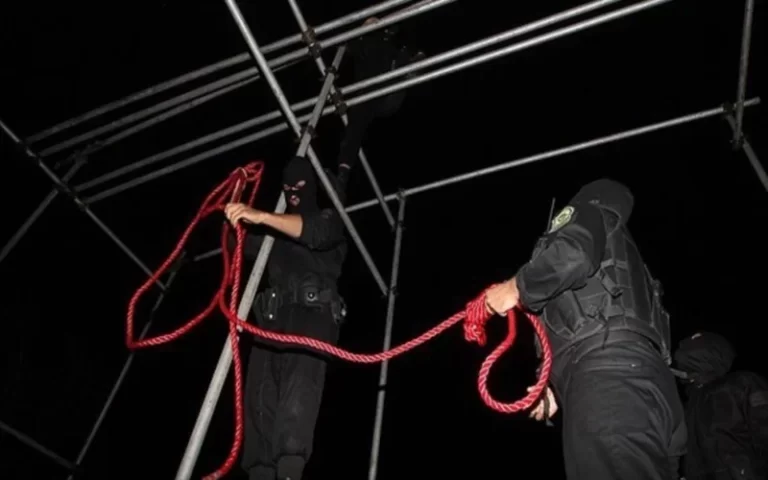
Mizan News Agency, affiliated with the judiciary of Iran’s regime, reported the execution of nine prisoners who had been arrested in 2018 and sentenced to death on charges of “waging war against God through rebellion, armed uprising, and possession of military weapons.”

On Tuesday, June 10, the Judiciary’s media center referred to the executed individuals as members of the “ISIS group” but did not disclose their identities, nationalities, or the time and place of the executions. It stated, “After being arrested and undergoing legal and judicial procedures, they were hanged.”

According to Mizan, the group attempted to enter Iran from the western region on January 27, 2018. They were reportedly surrounded by Islamic Revolutionary Guard Corps (IRGC) forces, and during the confrontation, three IRGC members were killed.

The judiciary’s news agency wrote that after court hearings; the Revolutionary Court sentenced the nine individuals to death. The sentences were upheld by the Supreme Court and subsequently carried out by hanging.

Over 1,000 Executions in Eight Months

Human rights organizations in Iran have previously condemned mass executions and called on the international community to respond urgently to halt the unprecedented wave of executions in the country.

Following the killing of Hassan Nasrallah and the growing threat of war between Iran and Israel, the Iranian regime escalated its implementation of death sentences and announced that this trend would continue.

Since October 1, 2024, over the past eight months and ten days, at least 1,020 people have been executed in Iran—an average of one execution every six hours.

The sharp rise in the issuance, confirmation, and enforcement of death sentences in Iran in recent months has sparked a wave of domestic and international protests. Human rights organizations have repeatedly called for a halt to the executions and the upholding of fair trial standards.

NCRI-US Reveals Iran’s Secret Nuclear Weapon Program – The Kavir Plan

On June 10, 2025, the U.S. Representative Office of the National Council of Resistance of Iran (NCRI-US) held a press conference revealing new intelligence on Iran’s ongoing nuclear weapons program. Alireza Jafarzadeh, Deputy Director of NCRI-US, cited information from the PMOI network inside Iran, exposing the regime’s continuation of nuclear weaponization under the covert “Kavir Plan,” initiated in 2009 by Supreme Leader Ali Khamenei.

NCRI-US Director Soona Samsami stressed, “Tehran’s goal remains the development of the bomb,” calling for urgent international action: activating the UN snapback mechanism, reimposing sanctions, halting uranium enrichment, dismantling the IRGC’s missile program, and permitting “snap IAEA inspections with no exemptions for military or civilian facilities.”

The Kavir Plan replaced the “Amad Plan,” dismantled in 2003 after being exposed. Now disguised as “desert security” operations in Semnan Province, it functions under SPND (Organization of Defensive Innovation and Research), the regime’s body for nuclear weaponization. The program uses missile and radar infrastructure to mask activities and has identified key sites in Ivanaki, Shahroud, and Semnan.

According to the IAEA’s May 2025 report, “four current sites under investigation are linked to Iran’s earlier Amad Plan,” proving continuity in nuclear development. These facilities advance warhead design, missile integration, and explosive testing—operating within a highly compartmentalized, state-run structure built for rapid deployment.

Nuclear Secrecy and Brutal Repression: Two Sides of the Same Coin in Iran’s Struggle for Survival

Technological developments include solid- and liquid-fueled missiles and boosted nuclear warheads with ranges exceeding 3,000 kilometers. Drones, restricted airspace, and map manipulation support secrecy. The NCRI confirmed, “The declared goal of ‘desert security’ has provided an effective cover for the Kavir Plan.”

The Kavir Plan began with a 2009 directive by regime supreme leader Ali Khamenei and was embedded in regime institutions. Semnan Province was declared a military zone under Mahmoud Ahmadinejad’s presidency. SPND’s status was elevated within the Ministry of Defense.

“Since December 2024, the Iranian Resistance has revealed four sites associated with the Kavir Plan: The Ivanaki (Eyvanekey) site, the Noor-al-Din Abad Garmsar radar site, the Shahroud missile site, and the expansion of the Semnan missile site.”

Military zones are divided into Red, Yellow, and Blue. The Red Zone prohibits all civilian access and contains core nuclear operations. Sites include:

  • Rangin-Kaman (Ivanaki): A strategic SPND facility.
  • Ghadir Site: Regional radar and air defense, IRGC-controlled.
  • Me’raj-1: Central missile site for Simorgh warheads.
  • Imam Reza Training Center (Shahroud): Developing warheads for the Ghaem-100 missile.
  • Additional sites support logistics and air defense.

The NCRI stated, “The first four locations listed are part of the Kavir Plan,” while others serve broader military roles.

Security is enforced by the “Kavir Security Unit” and the IRGC’s “Sahib al-Zaman Base.” Agencies use drones with facial recognition, satellite tracking, and surveillance aircraft. Roads were deleted from public maps to prevent discovery. “The IRGC Intelligence Organization has consistently arrested foreign nationals traveling in the region and subjected them to interrogation.”

The original Amad Plan (1999–2003) aimed to develop five warheads for Shahab-3 missiles. Key sites handled uranium extraction, enrichment, warhead fabrication, and explosive testing. This project halted after the NCRI exposed Lavisan-Shian in 2003.

The Kavir Plan, operational since 2009, targets “boosted nuclear warheads for missiles with a range exceeding 3,000 kilometers.” SPND, based in the Noor Building in Tehran, coordinates efforts at Ivanaki, Shahroud, Semnan, and others like Sanjarian and Sorkheh Hesar.

The NCRI emphasized: “Over the past three decades, the regime has not voluntarily reported any of its activities to the IAEA. Instead, they were exposed, most prominently by the NCRI and the PMOI/MEK network inside Iran, and only then did the regime admit to them.”

The regime’s consistent strategy has been “concealment, deception, obfuscation, delaying, and destruction of evidence.”

As the IAEA’s May 31 report showed, Iran’s nuclear program “has pursued no goal other than the production of nuclear weapons from the very beginning.”

NCRI warns that “Tehran’s dash to obtain nuclear weapons has intensified. Make no mistake. Nuclear weapons are the regime’s life insurance policy.” They stress that “the mullahs’ regime is at its most fragile state,” with over 1,300 executions since August and growing internal unrest.

A firm response is demanded:

  • Immediate activation of the snapback mechanism before its October expiration.
  • Permanent halt to uranium enrichment.
  • Verified dismantling of all nuclear sites.
  • Elimination of the missile program.
  • No exemptions from IAEA inspections.

NCRI President-elect Maryam Rajavi affirmed in testimony to the U.S. Congress: “There is no need for foreign boots on the ground or using taxpayers’ dollars.” The solution lies in “the Iranian people and their organized resistance.” She concluded: “A democratic, non-nuclear Republic of Iran is entirely within reach.”

Political Prisoner  Mojahed Kurkur Executed In Iran

In the early hours of Wednesday, June 11, state-run media in Iran reported that the death sentence of Mojahed Kurkur, one of the detainees from the 2022 nationwide uprising, had been carried out in prison. Hours before the announcement, reports circulated on social media that his family had been summoned for a final visit.

On December 20, 2022, Mojahed Kurkur was arrested during a raid by security forces on the village of “Persurakh” near Izeh, in southwestern Iran. In March 2023, Branch 1 of the Revolutionary Court in Ahvaz sentenced him to death on charges of “waging war against God” and “corruption on Earth.” The sentence was upheld by Branch 39 of Iran’s Supreme Court in January 2024 and referred to the Izeh court for implementation.

Mojahed Kurkur executed on the birthday of Kian Pirfalak

June 11 marks the birthday of Kian Pirfalak. Mojahed Kurkur, who was initially accused of killing him but was later found not to be the shooter, was executed on Kian’s birthday under charges of “waging war against God” and “corruption on Earth.”

Kian Pirfalak, a 9-year-old child who was killed by security forces' gunfire in 2022
Kian Pirfalak, a 9-year-old child who was killed by security forces’ gunfire in 2022

Kian Pirfalak, who was born on June 11, 2013, would have celebrated his 12th birthday today.

Kian Pirfalak was a child who was brutally killed by direct gunfire from Iran’s regime security forces during the 2022 uprising. In an effort to cover up its role in this state killing, Iran’s regime charged Mojahed Kurkur with murdering Kian.

Mah-Monir Molaei-Rad, Kian’s mother, repeatedly emphasized that the regime is attempting to hide the role of its forces in Kian’s death, sharing a photo of herself shaking hands with Mojahed Kurkur’s mother. Meysam Pirfalak, Kian’s father, who was also injured in the shooting, published a video calling the accusations against Kurkur baseless.

Mah-Monir Molaei-Rad, Kian's mother
Mah-Monir Molaei-Rad, Kian’s mother

In the video, he said: “I seek justice for my son’s blood. I have not and will not file any complaint against Mojahed Kurkur or the youths of Izeh, because my husband and I saw with our own eyes that security forces, under the command of Commander Eydi Alipour, opened fire on our car, wounded me, and killed my son.”

In the years since, the regime’s pressure on the Pirfalak family and other justice-seeking families of the Mahsa movement has continued. Pouya Molaei-Rad, the cousin of Mah-Monir Molaei-Rad, was shot by police officers at Kian’s gravesite during his 2023 birthday ceremony. He was injured by direct gunfire and died after being transferred to the hospital.

Mojahed Kurkur’s family has not been spared from the regime’s pressure either. His sister, Negar Kurkur, who was a vocal advocate for justice, worked to prove her brother’s innocence until her death from cancer.

The announcement of Mojahed Kurkur’s execution immediately triggered a wave of anger and grief among social media users.

With the execution of Mojahed Kurkur, the number of protesters hanged since the 2022 nationwide uprising has reached at least 11. Previously, Mohammad Mehdi Karami, Mohammad Hosseini, Mohsen Shekari, Majidreza Rahnavard, Majid Kazemi, Saeed Yaghoubi, Saleh Mirhashemi, Milad Zohrevand, Mohammad Ghobadlou, and Reza Rasaei were executed on similar charges, in legal processes that human rights organizations have called “unfair.”

Iran: Detained Protester Milad Zohrehvand Executed, According to Human Rights Orgs

While the executions continue, dozens of other detainees are still awaiting final verdicts—sentences that, given the severe charges brought against them, could also lead to executions. International human rights organizations have repeatedly warned against the Iranian regime’s escalating repression and its use of capital punishment as a tool of political retribution.


The Medicine Crisis In Iran: Over 83% Of The Pharmaceutical Market Is Controlled By Quasi-Governmental Entities

While Iran’s regime claims to intervene in the healthcare economy to support vulnerable groups, a report by the regime’s Majlis (Parliament) Research Center and official statistics show that patients’ share of treatment costs in Iran has risen to as much as 70%, and more than 83% of the pharmaceutical sales market is controlled by 55 quasi-governmental companies.

On Monday, June 9, the state-run daily Shargh, citing a report by the regime’s Majlis Research Center, wrote that around 97% of the medications consumed in the country are produced domestically. However, the majority of this production is controlled by governmental and quasi-governmental bodies. According to experts, this situation has “created monopolies, reduced competition, and weakened transparency in the pharmaceutical industry.”

Medicine Shortages In Iranian Pharmacies And Online Sales

This report, titled “The Share of Quasi-Governmental Entities in the Pharmaceutical Industry Economy,” shows that six quasi-governmental institutions—including the Social Security Organization, the Social Security Investment Company, Bank Melli (National Bank), the Execution of Imam Khomeini’s Order (EIKO), Sobhan Pharmaceutical Investment, and Alborz Investment—own a large number of pharmaceutical companies and hold a significant share of the country’s pharmaceutical market.

More than 83% of the pharmaceutical sales market is held by 55 companies

Shargh’s report states that out of the 296 pharmaceutical companies in the country, only 42 had been listed on the stock market by 2022 and operate transparently. Meanwhile, 55 companies with the highest share of sales by value together control over 83% of the pharmaceutical market.

Among these 55 companies, the Social Security Organization owns nine, the Execution of Imam Khomeini’s Order owns five, and Bank Melli owns four.

Based on this, the Social Security Organization controls 17%, the Execution of Khomeini’s Order 7%, and Bank Melli 5% of Iran’s pharmaceutical market.

In contrast, the private sector as a whole control around 53% of the market, but 36% of that is held by just seven holding companies.

According to the goals set in Iran’s Fourth and Fifth Development Plans, patients’ share of treatment costs was supposed to be reduced to about 30%. However, according to the World Bank, the global average is only around 18%.

Massive government debt and liquidity crisis in the healthcare sector

One of the main causes of this situation is the government’s mounting debt to hospitals, pharmaceutical factories, and pharmacies. Due to repeated delays in payments, some pharmacies announced in March that they would stop selling medication through insurance.

Pharmaceutical companies say that the government’s price controls have caused them financial losses, and the state lacks the capacity to pay compensatory subsidies. The result of these conditions has been a reduction in production and shortages of medicine in the market.

Pharmacies are also facing a similar crisis. Delays in payments by insurance providers have led some pharmacies to only offer medications at full, unsubsidized prices.

Public hospitals have reported that the lack of liquidity has prevented the renewal of equipment, and there are delays in paying the salaries of healthcare staff—a situation that has contributed to the emigration of doctors and nurses.

Iran Will Need to Hire Doctors from Abroad

Millions uninsured and vulnerable to healthcare costs

A 2020 study by Iran’s regime Ministry of Cooperatives, Labour, and Social Welfare showed that about 16% of Iran’s population—equivalent to 13.5 million people—lacked health insurance. In Tehran province, this figure reached 21%. Before the COVID-19 pandemic, Iranians paid approximately 35% of their medical expenses out of pocket—almost twice the global average.

According to the Ministry of Welfare, about 2.4 million Iranians fell below the poverty line in the same year due to high medical costs. International studies also indicate that the cost of surgeries in Iran is higher than in 93 other countries.

Fatemeh Mohammad-Beigi, the secretary of the Health Commission in regime’s Majlis, said in March: “Today we are facing the phenomenon of people giving up on filling their prescriptions. Many go to the pharmacy but return empty-handed because they can’t afford the high prices. People cannot afford to buy medicine or medical supplies. Out-of-pocket spending has risen from 45% to 70%.”

Despite Mohammad-Beigi’s remarks, Mehdi Pirsalehi, head of the Food and Drug Administration, responded to reports of patients foregoing medication purchases by saying: “We have not received any reports of people declining to buy their medicine. Insurance providers have not reported this either. Unfortunately, these are just media talking points.”

Decrease in dental visits and rise in tooth decay

In the field of oral health, financial hardship has also had clear impacts.

Ali Tajernia, then-chairman of the Iranian Dental Association in 2023, stated that most people only visit a dentist when the pain becomes unbearable.

According to him, over the past 20 years, tooth decay among Iranians has tripled, and high costs have reduced visits to treatment centers.

Reports indicate that each six-year-old Iranian child has on average, more than five decayed teeth.

Additionally, individuals aged 30 to 40—those in their socially active years—have lost an average of 12 to 13 teeth, and more than 55% of seniors over age 65 have no teeth at all.


72nd Week of the “No to Execution Tuesdays” Campaign: Ahar Prison Joins as Protests Continue in 47 Prisons

The 72nd week of the “No to Execution Tuesdays” campaign continues in 47 different prisons. On Tuesday, June 10, with the participation of Ahar Prison, the campaign marks its 72nd round across 47 prisons in the country. Prisoners participating in the campaign are going on hunger strike to protest the regime’s widespread and brutal executions.

In their statement, the prisoners condemned the large number of executions carried out in the Persian calendar month of Khordad (May–June) as well as the execution of Afghan nationals.

The full statement from the prisoners participating in the “No to Execution Tuesdays” campaign reads:

The continuation of the 72nd week of the “No to Execution Tuesdays” campaign in 47 different prisons, now joined by Ahar Prison

Iran’s execution-driven regime continues its weekly acceleration of death sentences. Since May 22 alone, more than 95 people have been executed. On just one day, June 2, sixteen individuals were executed—eight of them in Ghezel Hesar Prison.

Seventieth Week of the “No to Execution Tuesdays” Campaign in Iran’s Prisons

Meanwhile, the authoritarian rulers, incapable of addressing the country’s deep economic and livelihood crises, have tried over the past year to suppress public demands through repression and executions. Tragically, this wave of repression has also targeted Afghan nationals residing in Iran. In recent months, executions of Afghan citizens have increased, depriving defenseless individuals—who have no voice to defend themselves—of their right to life at the hands of Iran’s execution apparatus.

The “No to Execution Tuesdays” campaign strongly condemns this new wave of repression and executions and calls on human rights organizations and international bodies to take serious action against these crimes.

This week, once again, we reaffirm our principled, legal, and ethical opposition to the death penalty. Our stance is based on established foundations of international law, states’ obligations to uphold human rights, and the necessity of preserving human dignity.

“The death penalty violates the right to life”—a fundamental right clearly stated in Article 3 of the Universal Declaration of Human Rights and Article 6 of the International Covenant on Civil and Political Rights (ICCPR). No emergency, cultural, political, or security justification can legitimize such a punishment.

According to international legal standards, including interpretations by the United Nations Human Rights Committee, even in countries that have not abolished the death penalty, its use must be restricted to the most serious crimes and carried out with full respect for fair trial standards. However, under the authoritarian rule of Iran’s supreme leader, many defendants are tried without access to independent legal counsel, are coerced into confessions, and face opaque judicial proceedings—a clear example of “extrajudicial execution.”

Execution, particularly when used as a tool to suppress dissent, intimidate society, or maintain political control, is not only incompatible with the principle of proportionality between crime and punishment, but also constitutes a total violation of justice.

In light of these realities, we, the members of this campaign, express our deep concern over the ongoing and increasing issuance of unjust death sentences in Iran. We call for the immediate halt to both the issuance and enforcement of these sentences and urge all awakened consciences to take action in any way they can to oppose them and join the “No to Execution” campaign.

We believe that defending the right to life is a collective and transnational responsibility. Until the noose of execution is removed from Iran’s judicial system, the foundation for freedom and justice will not be established, and many crimes will not cease.